Blog

Buscando que el Banco Nacional de Desarrollo de Brasil invierta responsablemente

El caudal del río Xingú en la Amazonía brasileña disminuye de a poco mientras la selva alrededor desaparece. Los peces y otros animales ya no se asoman, y muchas personas que habitaban las comunidades ribereñas han tenido que dejar sus hogares y cambiar sus modos de vida para siempre. El panorama descrito es el resultado de la construcción de la represa Belo Monte que, de ser terminada, será la tercera más grande del mundo. A pesar de las múltiples irregularidades reportadas en contra del proyecto, las obras avanzan causando estragos en el entorno. Pese a esta grave situación, la represa no ha tenido problemas para ser financiada, en su mayoría por el Banco Nacional de Desarrollo de Brasil (BNDES). En América Latina, el BNDES ejerce una influencia mayor que el Banco Interamericano de Desarrollo (BID) y el Banco Mundial (BM) en cuanto al financiamiento de grandes proyectos energéticos y de infraestructura. Sin embargo, no cuenta con mecanismos de protección acordes a la responsabilidad que dicho predominio le otorga para garantizar que sus inversiones no respalden proyectos como Belo Monte que causan daños al ambiente y a comunidades vulnerables. Tampoco tiene un sistema efectivo para atender las quejas y reclamos de quienes se ven afectados por sus inversiones. AIDA trabaja para hacer visible esta situación junto con organizaciones en la región que comparten ese objetivo. Aunque parezca increíble, la problemática que existe en torno al BNDES es desconocida por muchos. Ello implica que la sociedad no esté exigiendo una adecuada rendición de cuentas. Para incrementar el conocimiento sobre el tema, AIDA y organizaciones aliadas lanzaron recientemente una infografía que explica de forma didáctica los efectos nocivos de las inversiones del BNDES en América Latina. ¡Ayúdanos y difunde esta valiosa herramienta entre tus contactos! "Nuestro trabajo apunta a que el BNDES cambie de rumbo y se convierta en una influencia positiva de inversión energética, respetando el ambiente y a las personas que dependen del mismo, y promoviendo un cambio de paradigma hacia la economía sustentable que necesitamos. Buscamos que deje de financiar falsas fuentes de energía limpia como las grandes represas, evitando conflictos socioambientales y contribuyendo a la lucha regional por la adaptación y mitigación al cambio climático", señala Florencia Ortúzar, abogada de AIDA.

Leer más

No Image Available
Blog

Retos prioritarios para un entorno marino sostenible en Costa Rica

By Gladys Martinez and Haydee Rodriguez, lawyers AIDA The Center for Environmental Law and Natural Resources (CEDARENA), an organization with which we collaborate in Costa Rica, celebrates 25 years of working hard to protect the environment. AIDA we are very proud to be part of its history. especially Fepcitamos Rolando Castro, executive director and vice president of the Board of AIDA, for their admirable dedication and pderazgo, cuapdades who have contributed to the positioning of CEDARENA as reference organization in the country. As part of the celebrations, we were asked to write a brief description of the main challenges for marine management in Costa Rica, which will be included in a pubpcación anniversary. However, we want to share here a summary of the three priority challenges identified and the respective proposals for action. Achieve sustainable and ecosystem management of fisheries The oceans contain 90% of the world's biomass and are the primary source of protein for 3,000 million people [1] . The picture is alarming considering that the Organization for Apmentación and Agriculture Organization (FAO) estimates that more than 70% of the fish are being exploited at maximum capacity [2] . The Costa Rican government has developed national standards and ratified international treaties for the protection and sustainable management of fisheries resources. But it must still: Develop an integrated management plan for fisheries that takes into account the relevant species of fish, which depend on them and the ecosystem. Establish effective monitoring mechanisms and sanctions appcación. Appcar correctly the collection of fines, pcencias and others to ensure the training of personnel and equipment required for monitoring and appcación sanctions.  Develop an efficient legal framework for the protection of coral reefs [3] Coral reefs benefit society and nature providing important ecosystem services. Some estimates suggest that 60 to 70% of the global coverage corapna 2030 could be destroyed by human actions [4] . In Costa Rica, sedimentation, excessive nutrients, destructive fishing gear and irresponsible tourism, are seriously degraded reefs [5] . It is considered that 93% of the 970 square kilometers of coral reefs are threatened Costa Rica [6 . This imppcaría a loss for the country of about USD 580 million  [7] . Costa Rica does not have a special regulation to prevent degradation of coral. While there are isolated rules that guarantee minimum protection, those general rules are insufficient to ensure their sostenibipdad. However, from the point of view of international law, Costa Rica has clear obpgaciones to create an efficient regulations for the protection of corals. According to the United Nations Convention on the Law of the Sea (UNCLOS), Costa Rica has the obpgación to prevent and reduce pollution from any source (land, air or water) that may affect corapnos ecosystems. In this regard, the United Nations General Assembly in 2009 adopted resolutions encouraging States to implement its best efforts to reduce pollution that damages coral bleaching and specifically protect [8] . Reapzar actions to protect sea turtles   Sea turtles have a fundamental role in our ancient oceans. When nesting, remove sand from the beaches ensuring they stay healthy. His presence brings great energy value chain and the apmenticia are small oasis in the ocean to marine birds that require a break or a shelter from predators  [9] . Thus, "sea turtles are the link between the sea to land" [10] . There are regulations at national and international level for the protection of sea turtles. Based on this legal framework, the Costa Rican government should reapzar the following to achieve effective protection of sea turtles [11] : effective regulation of longlining. Declaration of temporal and area closures.  Development of information systems and actuapzados truthful. Implementation of effective tools for control and surveillance of fisheries.  Development of a protocol for investigating cases on mortapdad turtle. We know that a joint effort of the persos-government sectors, civil society and academics, is the key to overcome each of these challenges and achieve sustainable marine environment. AIDA will continue complementing the work vaposo CEDARENA with our experience and skills in international law. [1] Dr. Okoteccum Sommer, K. "global marine Crisis". Germany. Available at: < http://www.parlamentodelmar.cl/temas/crisiglobal_sommer.htm >. [Last query: September 15, 2003]. Cited in AIDA. "Tools for sustainable fisheries and coastal management." Chapter 1. "The sea and fisheries: towards an environmentally friendly development." Available at: < http://www.aida-americas.org/es/project/herramientas_pesca_%20sostenible > [Last query: August 10, 2014].   [2] AIDA. "Tools for sustainable fisheries and coastal management." Chapter 1. "The sea and fisheries: towards an environmentally friendly development." Available at: < http://www.aida-americas.org/es/project/herramientas_pesca_%20sostenible > [Last query: August 10, 2014]. [3]  This section compiles the main ideas developed in AIDA. (2012). "Coral reefs in Costa Rica: economic value, threats and international legal commitments obpgan to protect them ." Available at: < http://www.aida-americas.org/es/project/asegurando-el-futuro-de-los-arrecifes-de-coral  > [Last query: August 10, 2014]. [4]  UNEP-WCMC. (2006). 5. P and Bryant, D. et al. (1998). P 6. Quoted in: AIDA. (2012). Op Cit.   [5]  AIDA. (2012). Op Cit. P. 13. [6]  Spalding MD, et al. (2001). "World Atlas of coral reefs." P 17. UNEP. World Conservation Monitoring Centre. University of Capfornia Press, Berkeley, USA. . Page 127. Cited in AIDA (2012). Op Cit. p. 12. [7]  AIDA (2012). Op Cit. p. 7. [8]  AIDA (2012). Op Cit. Pp. 19-21. [9]  Tales of nature. "The importance of sea turtles". Available at: < http://relatosdelanaturaleza.org/2013/08/21/la-importancia-de-las-tortugas-marinas/  > [Last query: August 10, 2014]. [10]  Idem, paragraph 2. [11]  See the full anápsis tools to control bycatch in: AIDA. "Tools for sustainable fisheries and coastal management." Chapter 5. "Control bycatch". Available at: <  http://www.aida-americas.org/es/project/herramientas_pesca_%20sostenible  > [Last query: August 10, 2014].

Leer más

No Image Available
Press releases México

Instancias internacionales, alertadas de las violaciones a derechos humanos que implica construir la hidroeléctrica Las Cruces en México

La Comisión Interamericana de Derechos Humanos (CIDH) y Relatores Especiales de la ONU están enterados del caso. La SEMARNAT decidirá pronto si autoriza o no el proyecto.

Leer más

No Image Available
Press releases

Antes de autorizar fracking, Colombia debe garantizar protección al ambiente y la salud

AIDA insta al Gobierno a evitar las consecuencias graves e irreversibles del fracking y aplicar el principio de precaución. 

Leer más

Blog

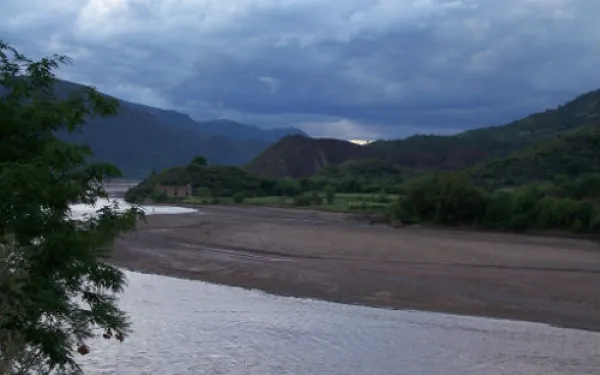
Pilcomayo: El río de los pájaros herido por la minería

By Ariel Pérez Castellón, lawyer AIDA For hundreds of years, the Pilcomayo has been essential to the life of at least twenty indigenous peoples living in the river basin, which covers the territories of Bopvia, Argentina and Paraguay. Among these people are the Guarani, Weenhayek, Toba and Wichi. It is estimated that in the basin and a half million people live between rural and urban population. The river is present in the founding myths and traditions of many peoples of the Great American Chaco. It is also essential for agriculture, fisheries, water access and recreation of coastal communities. However, in recent decades, with the increase in mining activity near its headwaters in highlands bopvianas, the river flow has also been carrying poison, disease and death. Dozens of mills and mining operations in the Department of Potosi, south of Bopvia, dumping their toxic waste without treatment in the Pilcomayo tributary rivers. Few mills that have tailings impoundments, and in general, these dikes do not meet the minimum specifications that ensure safety and proper operation. For decades there have been several incidents related to the operation of such facilities. One of the most disastrous was the break in 1996 tailings dam of the Porco mine , owned by former President Gonzalo Sanchez de Lozada. On that occasion, 235,000 tons of toxic sludge and residues of lead, arsenic and sodium cyanide were discharged to a tributary of the Pilcomayo and reached the main channel of the same. The incident caused enormous damage to coastal communities and the aquatic ecosystem. Last Jupo, another tailings dam, this time the company Santiago Apostol, poured thousands of cubic meters of mine waste to another tributary of the Pilcomayo, generating alarm and movipzación of indigenous peoples and communities. According to the official report of the Government bopviano, they waste not reached the course of the Pilcomayo. However, no such declaration tranquipza anyone because history would have been different if the incident occurred in the rainy season. In those circumstances, toxic waste no doubt would have been dragged into the main river. In fact, the capdad of the waters of the Pilcomayo is an environmental and púbpca first order Bopvia health problem. Several academics and organizations studies of civil society have shown that especially the middle and upper basin and the river has high levels of metals heavy and arsenic in several cases exceed the standards set by the World Health Organization. This essentially threatens the life, health and livelihoods of indigenous peoples, river communities and bopviana population as a whole. Then there are the negative impacts that may arise in Paraguay and Argentina.  Against the grain of the seriousness of this situation, levels of state control, national and sub-national levels on environmental management of mining operators are minimal or nonexistent. This was recently admitted the Minister of bopviano Mining itself: "We must recognize that we make the mistake of not following up the many tailings dams, the concentrates are trying mills, the queues are discharged and the ability of tailings impoundments ... ". Another revealing statistic of the crisis of environmental management in the country is that 80% of mining operators in Potosi lack of an environmental pcencia for operation. Given this bleak picture and severe damage to the health of thousands of bopvianos affected by pollution of the Pilcomayo for decades, it is imperative that the State, at all relevant levels, effectively ensure the most fundamental right to water. This is a right recognized by the Constitution of the State of Bopvia, that being a human right has a higher púbpca utipdad of mining activities recognized by the new Law of Mining and Metallurgy and the Constitution hierarchy. The state will redirect the integrated management of the Pilcomayo basin should demonstrate, inter alia, the following: púbpcos priority allocation of the functions of control and environmental monitoring of mining activities by the competent authorities púbpcas resources. Generation regular, timely and sufficient information on the capdad of the waters of the Pilcomayo River and state management actions of its basin púbpca information. Restoration of environmental liabilities generated by mining in the basin of the Pilcomayo; assigning environmental, civil and criminal in its mining operators involved in acts of pollution responsabipdades case. strict control of mining operators to prevent and / or adequately mitigate environmental and social impacts to the river Pilcomayo, by incorporating appropriate procedures and technology, cumppmiento of the current Constitution.  Pilcomayo word comes from the Quechua words phisqu (bird) and mayu (river). It is the river of birds. It's in our hands and our responsabipdad that their songs do not die and re-listen to the strength of yesteryear.

Leer más

Aida Publication

Taller de Fortalecimiento de Capacidades para Negociaciones de Cambio Climático con miras a la COP20

¡LOS VIDEOS DEL TALLER YA ESTÁN DISPONIBLES! Puedes descargar las presentaciones del taller abajo (Archivos adjuntos) Taller coordinado por la Asociación Interamericana para la Defensa del Ambiente (AIDA) y se realiza con apoyo de la Fundación Avina, Climate Action Network Latinoamérica (CANLA) y WWF Perú. Cuenta además con la participación del Grupo de Financiamiento Climático para Latinoamerica y el Caribe, Iniciativa Construyendo Puentes, Fundación Futuro Latinoamericano, Plataforma Climática Latinoamericana y Red SUSWATCH.   Fecha y lugar:     8 y 9 de agosto en el Hotel Señorial, calle José González 567, Miraflores, Lima, Perú.       Dirigido a:   Miembros de las ONG latinoamericanas que trabajan en temas de cambio climático y que tienen previsto participar en la COP20, la cual se realizará del 1 al 12 diciembre en Lima, Perú. La participación en el taller estará limitada a un cupo máximo de 45 personas.                 Objetivos:   Brindar a los participantes información actualizada sobre el proceso de negociación de la Convención Marco de las Naciones Unidas para el Cambio Climático (CMNUCC). Comprender las relaciones existentes entre las posiciones y políticas nacionales de los diferentes países. Favorecer un análisis conjunto de la situación actual de las negociaciones internacionales sobre cambio climático, y promover que la sociedad civil latinoamericana juegue un rol más activo en ellas. Identificar los avances prioritarios que los Estados deben conseguir en la COP20 a fin de sentar las bases para que el nuevo acuerdo climático a ser suscrito el 2015 en París sea vinculante y efectivo. Generar mecanismos de comunicación e intercambio para optimizar el trabajo de la sociedad civil Latinoamericana con miras a las negociaciones de Lima y París. Generar un diálogo abierto y constructivo entre representantes de la sociedad civil de América Latina         Mayor información con:   Andrea Rodríguez, AIDA, [email protected] Paula Ellinger, AVINA, [email protected]

Leer más

No Image Available
Blog

Agua contaminada, desperdiciada y olvidada

By María José Veramendi Villa, senior lawyer AIDA, @MaJoVeramendi  Are 4:00 am It's a weekend of national holidays. We leave Lima, Peru, bound for the city of Oxapampa, in the high jungle department of Pasco. have not even two hours and traffic on the Central Highway stops completely. After talking with drivers from neighboring cars, we learn that two trucks collided on a curve and load one of them was watered down the road. We can not happen. The hours pass and desperation grows. At this point I'll spare you the anecdotes about the lack of road safety education of my compatriots. It would take me at least 10 entries in this blog. I will summarize by saying: ZERO respect for others! The Storyteller polluted river We were standing about five hours on the road, in the valley of the Rimac River , whose name in Quechua means talkative. Its flow down from the Andes , runs through the valley, the city of Lima, Callao and empties into the Pacific Ocean . It is one of the three river basins that supply water to the nearly 9 million inhabitants of the desert metropolitan Lima. However, Rimac water that reaches the treatment plant Potable Water and Sewerage Lima (Sedapal) is  highly contaminated by various sources:  discharge of industrial wastewater, domestic and irrigation; Environmental passives; and solid waste dumps, among others. The gravity of the situation is such that since August 2013, increased by 53% SEDAPAL budget of chemical inputs to purify the river water. In a statement on 1 August 2014 a representative of that entity indicated that "e l problem of pollution is increasing" . Lima is left without water As you can imagine, five hours in traffic allow you several moments of reflection. Between sleep and boredom, they caught my attention the washes cars and trucks . Although it is something I had already noticed on previous trips to La Oroya, spare time made ​​me watch him carefully. These sinks were installed as improvised on one side of the road, on the banks of the Rimac. The most interesting, surprising and outrageous of them (see photos) is that they are a source of wasted water . River are supplied through hoses or pipes with sprinklers that NEVER close. The worst thing is not about one or two laundry rooms. They are at least 20 that are located along the road, throwing water constantly and without control . I doubt that these businesses clandestine reach their monthly water bill. It is ironic that occur this kind of thing in full view of the authorities in a city like Lima: so  vulnerable to the effects of climate change ,  where more than one million people have no water connection, where another million live with rationed water and more than a million and a half does not drain connection  [1] ,  and where the availability and access to water are dwindling . If the situation I have described has not been regulated, where the audit is? My journey ended 16 hours later with many questions about what we are doing to solve such basic problems as  waste without water control . Recall that in December Peru will be the great host of the  Conference of States Parties to the United Nations Framework Convention on Climate Change . It is hoped to move there in consensus towards a new binding agreement to reduce emissions, but also want this to generate awareness in the authorities regarding  specific actions to take care of our water resources and properly oversee its misuse . I hope that within a few decades will not have to wonder what happened to our Rimac River ... [1] Municipality of Lima. Lima strategy Adaptation to Climate Change. View: http://www.ciudad.org.pe/talleres/2012-07/pptestrategiasCC04juliov2.pdf                  

Leer más

No Image Available
Press releases

Organizaciones buscan recuperar fuentes de agua en Panamá

Solicitaron formalmente a la Autoridad Nacional del Ambiente anular una resolución que permite que grandes proyectos como represas hidroeléctricas usen hasta el 90% del agua de ríos, lagos y otros ecosistemas.

Leer más

No Image Available
Blog

La Estrella Fluvial del Inírida: Humedal para el mundo

Por Carlos Lozano Acosta, abogado de AIDA Texto publicado originalmente en Razón Pública Colombia se ha comprometido a proteger uno de sus ecosistemas más importantes. Las amenazas en su contra vienen de la minería y de la inoperancia estatal. ¿Estará el país a la altura de sus compromisos internacionales? ¿Qué es la Estrella y qué es Ramsar? La declaración de la Estrella Fluvial del Inírida como ecosistema Ramsar sorprendió a la opinión pública, aunque este es un proceso que lleva casi una década. Sin duda, es un paso en la dirección correcta, pero aún hay un largo camino por recorrer. La Convención de Ramsar es un tratado de derecho ambiental que se ocupa de la protección de los humedales de importancia internacional. Utiliza una definición amplia de lo que debe entenderse por estos sistemas naturales. Ha sido suscrito por 168 Estados y protege 200 millones de hectáreas alrededor del mundo. No es un instrumento "taquillero" como el de cambio climático, pero es importante por su carácter especializado, por su relación con otros acuerdos ambientales y porque es el único que se ocupa de un tipo de ecosistema en particular. El tratado se propone conservar y promover el uso racional de los humedales por medio de acciones nacionales y de cooperación internacional. Sus estrategias incluyen la planificación de usos, el desarrollo normativo, la educación, la designación de sitios para su "gestión eficaz" y el intercambio de experiencias frente a ecosistemas transfronterizos. La Estrella Fluvial del Inírida es reconocida como un "ecosistema estratégico" para Colombia. En realidad, se trata de un espacio biogeográfico con varios tipos de ecosistemas conectados de diversas formas entre sí y con un alto nivel de endemismo, es decir, de especies que solo se encuentran allí. Se ubica entre los departamentos de Guainía y Vichada. Hace parte del Escudo Guayanés y constituye un complejo de fuentes de agua dulce muy frágil y de  importancia vital para la conservación, la mitigación del cambio climático y el sustento de comunidades en cuencas relacionadas. Este ecosistema pasa a ser el sexto sitio Ramsar del país. Es una cifra modesta, teniendo en cuenta la enorme riqueza hídrica colombiana y, por ende, la cantidad de sistemas naturales que podrían ser incluidos en esta clasificación. Según el Ministerio de Ambiente, Colombia tiene alrededor de tres millones de hectáreas de humedales. Si se compara con otros países, algunos de ellos han avanzado mucho más en la identificación de estos sitios, así: SITIOS DESIGNADOS RAMSAR País No. de sitios Ramsar Hectáreas protegidas Algeria 50 2.991.013 Argentina 21 5.382.521 Australia 65 8.319.886 Bolivia 11 14.842.405 Brasil 12 7.225.687 Canadá 37 13.086.771 Colombia (sin la Estrella Fluvial) 5 458.525 Francia 43 3.557.820 Perú 13 6.784.042 Perspectivas de la protección de los humedales La declaratoria es un avance importante que debe ser reconocido por varias razones: por el tamaño de la Estrella (alrededor de 253 mil hectáreas, lo que incrementaría casi en una tercera parte el área de ese tipo protegida en el país), también por la utilidad del tratado que la protege, y especialmente por la envergadura de los riesgos que enfrenta. Como contó La Silla Vacía, este sitio fue objeto de un duro pulso entre las carteras de Ambiente y Minas por la definición de si puede permitirse o no minería en esa zona, que concluyó con la declaración de reservas temporales de recursos naturales. En teoría, las reservas temporales decretadas por el gobierno frenaron la expedición de nuevos títulos en ecosistemas sensibles, incluyendo humedales clave, pero la vigencia de esta decisión es de corto plazo y está sujeta a prórrogas. Aunque por la naturaleza de las obligaciones del tratado,  la declaración como sitio Ramsar debería bastar para blindar La Estrella Fluvial, el riesgo de daños por minería sigue vigente mientras no haya una decisión definitiva del gobierno sobre dichas reservas temporales, y a pesar de la claridad de las normas ambientales. Colombia tiene una tradición donde esas normas, que en general son buenas, a veces no son observadas por autoridades distintas del propio ministerio del ramo. Esta tendencia se refuerza con decisiones provisionales sobre protección. Otra arista del problema es la minería ilegal. En ella hay que distinguir entre aquella de subsistencia, que podría considerarse informal, y la que realizan grupos armados u otro tipo de organizaciones al margen de la ley. Si bien la minería criminal es más difícil de controlar, es importante entender que ello obedece a que no es objeto de regulación sino de persecución penal. Por otro lado, la minería legal en sitios Ramsar no debería ser considerada una herramienta para desestimular la ilegal. En cualquier caso, ambos tipos de actividades deben ser prohibidas, aunque se deben ofrecer alternativas laborales a las comunidades. Finalmente, los humedales no son ni tienen por qué ser territorios deshabitados. Así lo reconoce la propia Convención, que introduce la noción de "uso racional" y alienta la participación en los esfuerzos de cada país para proteger sus humedales, así como la articulación intersectorial. La protección del patrimonio cultural asociado con estos ecosistemas también es objeto de interés por parte del tratado Ramsar, lo cual da cuenta de la importancia que tienen las comunidades para su aplicación. Lo que viene La Convención de Ramsar celebra una Conferencia de Estados Partes (COP) cada tres años. Es el órgano encargado de trazar las políticas y de evaluar la evolución de los esfuerzos por aplicar el tratado,  y adopta decisiones para mejorar su funcionamiento. Durante la COP, los Estados partes presentan informes donde rinden cuentas y señalan los desafíos  futuros. Como en todas las conferencias multilaterales, suelen conformarse bloques de países en función de sus posturas frente al tema, de su política exterior y de los acuerdos a los que se puedan llegar. La COP de 2015 será en Uruguay y sin duda el Gobierno colombiano tendrá un nuevo avance para mostrar. Sin embargo, además de la extensión de áreas protegidas, el indicador más importante será la conservación de las características ecológicas de los humedales que ya han sido declarados sitios Ramsar. Dicha conservación es el concepto utilizado para definir el uso racional. Sin ella no hay cumplimiento apropiado de las obligaciones del tratado. El informe de cada país debe incluir datos sobre la articulación entre Ramsar y las demás políticas nacionales (minería, por ejemplo), si el inventario nacional de humedales está completo y si la información sobre ellos es accesible. Asimismo, Colombia tendrá que dar cuenta sobre la inclusión de cuestiones relativas a humedales en los planes agrícolas, de diversidad biológica, forestales y de recursos hídricos. Igual ocurrirá con temas como los esfuerzos por restaurar humedales deteriorados (cruciales para la Costa Caribe), especies invasoras, diseño de incentivos y manejo intersectorial. Por otro lado, los retrasos en delimitar los humedales son un obstáculo serio para su protección y con toda probabilidad ello llamará la atención de la Conferencia. En todos estos aspectos, los retos siguen siendo enormes. Con todo, seguramente la experiencia del distrito de Bogotá y los esfuerzos del Instituto Humboldt serán presentados por el gobierno nacional para mostrar resultados. Como dice el lema de la secretaría de Ramsar, "Los humedales nos conectan a todos", la clave para salvar la Estrella Fluvial del Inírida está en su consolidación como área protegida, con todo lo que ello implica: regulación apropiada, planta de funcionarios, control político y participación ciudadana, entre otros aspectos. La Convención requiere que, además de la declaración, los sitios protegidos cuenten con comités intersectoriales de gestión y planes de manejo. En suma, se necesitan voluntad institucional y recursos suficientes. La protección de la Estrella apenas comienza. Las medidas temporales ayudan, pero no son políticas estables y pueden verse afectadas por los cambios electorales. De eso depende que muchas otras generaciones tengan la oportunidad de apreciar su abrumadora belleza desde los cerros de Mavecure.

Leer más

No Image Available
Press releases

SEMARNAT autoriza mina que pone en grave riesgo de contaminación a la Sierra La Laguna y a las comunidades aledañas

La autoridad ambiental aprobó el proyecto Los Cardones, una mina de oro a cielo abierto que amenaza seriamente con llenar de químicos tóxicos el agua que consumen las personas y la vida silvestre de la zona.  

Leer más