
Project
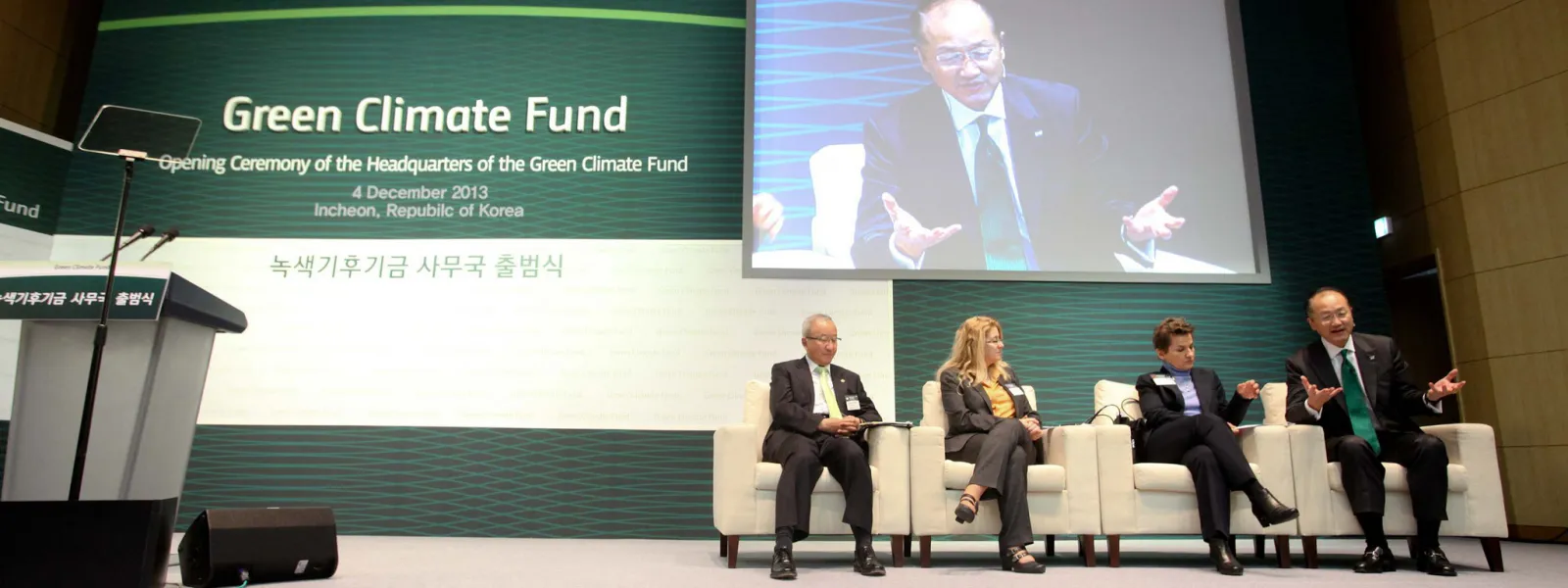
Photo: GCFAdvocating before the Green Climate Fund
The Green Climate Fund is the world's leading multilateral climate finance institution. As such, it has a key role in channelling economic resources from developed to developing nations for projects focused on mitigation and adaptation in the face of the climate crisis.
Created in 2010, within the framework of the United Nations, the fund supports a broad range of projects ranging from renewable energy and low-emissions transportation projects to the relocation of communities affected by rising seas and support to small farmers affected by drought. The assistance it provides is vital so that individuals and communities in Latin America, and other vulnerable regions, can mitigate greenhouse gas emissions and address the increasingly devastating impacts of global warming.
Climate finance provided by the Green Climate Fund is critical to ensure the transformation of current economic and energy systems towards the resilient, low-emission systems that the planet urgently needs. To enable a just transition, it’s critical to follow-up on and monitor its operations, ensuring that the Fund effectively fulfills its role and benefits the people and communities most vulnerable to climate change.
Reports
Read our recent report "Leading participatory monitoring processes through a gender justice lens for Green Climate Fund financed projects" here.
Partners:
Related projects
Don Diego mining project poses grave risk to Mexican marine ecosystem
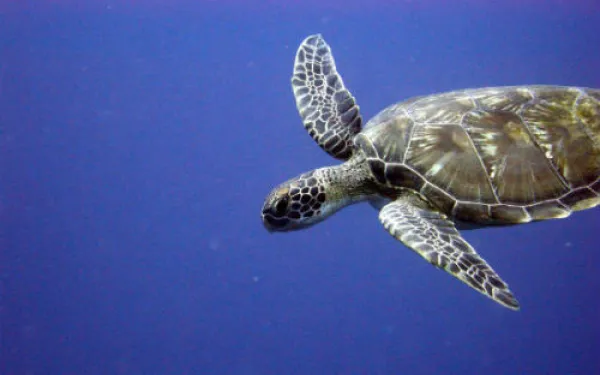
AIDA’s formal comments on the Environmental Impact Statement for the phosphate-mining project, proposed in a Baja California Sur bay, point to insufficient information about safeguards for the ecosystem, which is vital for both coastal communities and endangered species. Mexico City, Mexico. The Interamerican Association for Environmental Defense (AIDA) has commented on the Environmental Impact Statement for the Don Diego phosphate-mining project in Ulloa Bay, Baja California Sur. In their analysis, AIDA proved that the document lacks sufficient technical information to ensure that the project will not seriously damage the Bay. Ulloa Bay serves as an important marine ecosystem for coastal communities as well as for endangered species like the Blue and Humpback whales and the Loggerhead turtle. The Mexican Center for Environmental Law (CEMDA) presented the comments in AIDA’s name to Mexico’s Secretariat of Environment and Natural Resources (SEMARNAT). "The comments show that the Don Diego project, the first of its type in the region, could cause serious environmental damage," said Haydée Rodríguez, an AIDA attorney. The primary reasons the project should not be authorized as presented are: The project could cause irreversible damage to an ecologically vulnerable and biodiverse region, which includes Magdalena Bay, a mangrove ecosystem considered a Marine Region of Importance. The region is also home both to threatened marine species and to others vital to the fishing industry. The Environmental Impact Statement lacks important information about possible impacts on the marine ecosystem and measures to avoid them. The project involves a mining process that will greatly alter the marine environment: large boats will dredge the seabed and extract sand in search of phosphate, but in doing so may also extract living organisms. The project will alter the marine ecosystem by unearthing sediments that contain toxic elements, such as uranium, that will be returned to the ocean after processing. The exposed toxic sediments, along with the dredging and noise of the mining operation, will alter the habitat of endangered species of whales and turtles. The Mexican government has national and international obligations to apply the Precautionary Principle. As such, they should deny permission to the project to ensure that it does not cause serious and irreversible environmental damage. In authorizing the project, the Mexican government would violate international treaties that require it to protect marine environments and threatened and endangered species. The project puts at risk fishing and tourism activities that provide the livelihoods of the region’s coastal communities. You can see our full comments on the Don Diego Environmental Impact Statement here (in Spanish).
Read more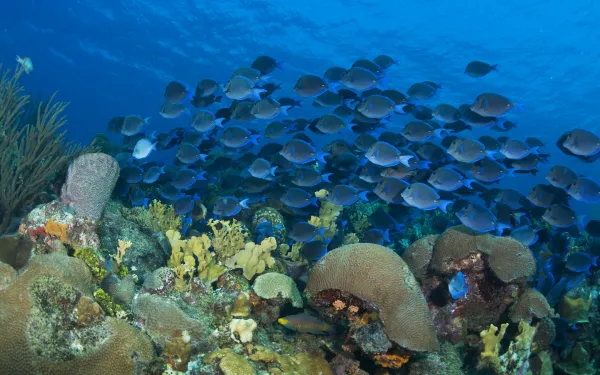
International Regulatory Best Practices for Coral Reef Protection
This Best Practices Guide provides examples of effective regulatory tools for protecting coral reefs. These tools can be adapted to the circumstances of various jurisdictions where reefs are at risk. It is not an exhaustive list of best practices, but rather a compilation of approaches that countries around the world have implemented to regulate human activities that harm coral reefs. This Guide presents basic legal and regulatory tools and practices that can be modified, improved, strengthened, and applied according to the unique circumstances and objectives of each country seeking to implement stronger protections for its coral reef resources. Download the guide Download the summary report
Read moreInternational Regulatory Best Practices for Coral Reef Protection
This Best Practices Guide provides examples of effective regulatory tools for protecting coral reefs. These tools can be adapted to the circumstances of various jurisdictions where reefs are at risk. It is not an exhaustive list of best practices, but rather a compilation of approaches that countries around the world have implemented to regulate human activities that harm coral reefs. This Guide presents basic legal and regulatory tools and practices that can be modified, improved, strengthened, and applied according to the unique circumstances and objectives of each country seeking to implement stronger protections for its coral reef resources. Download the guide Download the summary report
Read more