
What comes next after the High Seas Treaty enters into force?
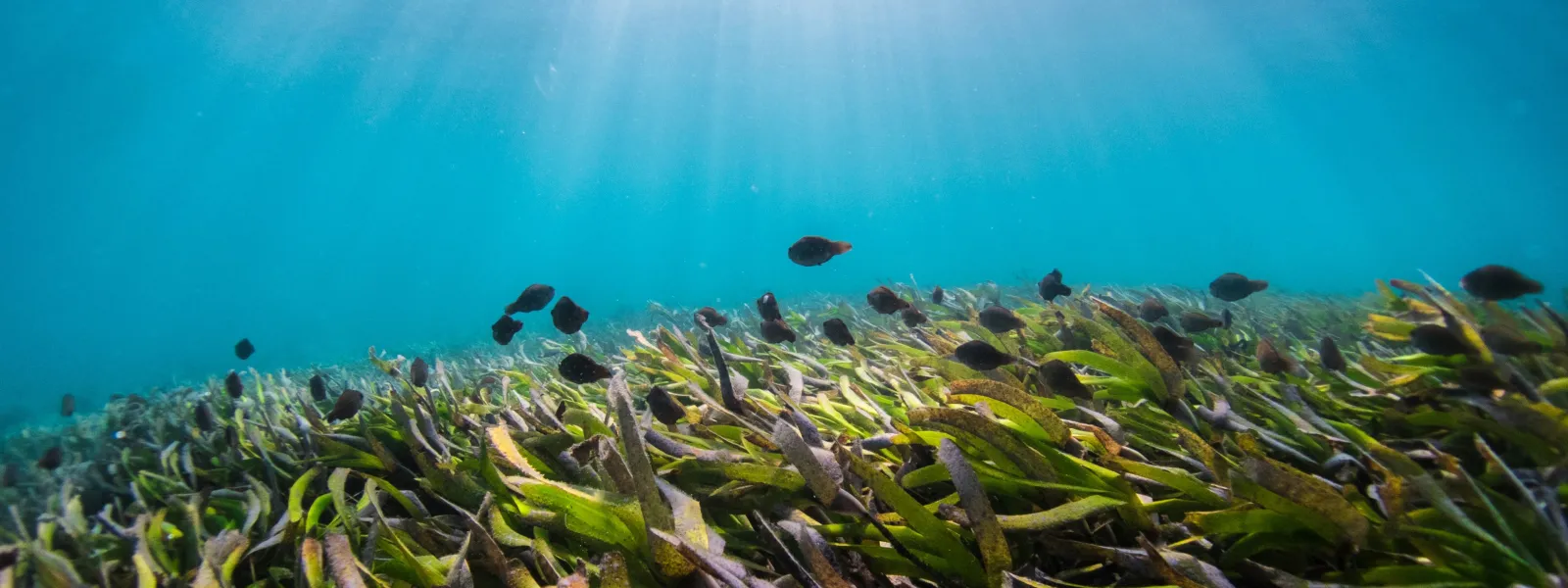
Benjamin L. Jones/Unsplash
The day finally arrived.
On January 17, the High Seas Treaty—officially known as the Agreement on the Conservation and Sustainable Use of Marine Biological Diversity of Areas Beyond National Jurisdiction (BBNJ Agreement)—came into force, thereby becoming international law.
A historic milestone that took more than two decades to achieve, the treaty establishes for the first time a legal framework to protect biodiversity in the high seas—whose waters cover almost half the planet and belong to all countries—and to ensure that the benefits derived from its resources are distributed equitably worldwide.
The implementation of the treaty was activated on September 19, 2025, upon reaching its sixtieth ratification. As of January 15, this year, 83 countries are already States Parties to the agreement.
Ratification means that countries, in addition to signing the treaty, give their formal consent to it, often by ensuring that their national laws are consistent with it.
But what comes next with the entry into force of the High Seas Treaty?
Legal obligations for States
With its entry into force, the States Parties to the agreement must begin to comply with a series of legal obligations contained therein. Although some depend on the functioning of the treaty's bodies and mechanisms, others are applicable immediately, including the following:
- Publicly notify any planned activities under its control that may affect biodiversity in the high seas or on the seabed. These activities must follow the environmental impact assessment processes established by the treaty.
- Promote the agreement's goals when participating in decision-making forums with other international organizations, such as those that regulate maritime shipping, fishing, and deep-sea mining.
- Notify and report on matters related to compliance with requirements concerning marine genetic resources, sharing of non-monetary benefits, and cooperation for technology transfer and capacity building.
Regarding the last point, the treaty establishes a Clearing-House Mechanism (CHM), a source of knowledge that many countries—especially developing ones—would not otherwise have access to.
In general terms, the implementation of the agreement will include, among its most visible obligations, issues of cooperation and coordination between countries based on mechanisms established by the agreement and through links with existing international legal instruments that have historically been applied in isolation.
Proposals for marine protected areas on the high seas
One of the main goals of the treaty is the creation and proper management of marine protected areas (MPAs) on the high seas to conserve and restore the rich biodiversity found in the ocean.
With the treaty now in force, this task cannot begin immediately because its implementation requires the functioning of specific bodies and mechanisms, including the treaty Secretariat, which will receive MPA proposals, and the Scientific and Technical Body, which will evaluate them and issue recommendations on their adoption to the Conference of the Parties.
However, countries can begin now with the broad consultation process stipulated in the treaty to develop proposals for MPAs or other area-based management tools (ABMTs), which must be based on the best available scientific and traditional knowledge.
Although it is up to countries to propose and then decide on the establishment of areas to be declared reserves for protection on the high seas, there are efforts from civil society to advance this issue.
For example, the High Seas Alliance—a coalition of organizations in which AIDA serves as regional coordinator for Latin America—has preliminarily identified eight MPA proposals of high environmental value: three are in the Atlantic (Lost City, Sargasso Sea, and Walvis Ridge), four in the Pacific (Thermal Dome, Salas y Gómez and Nazca Ridges, Emperor Seamounts, and South Tasman Sea), and one in the Indian Ocean (Saya de Malha).
The alliance is supporting the governments of Costa Rica and Chile in developing proposals for MPAs located in international waters adjacent to Latin America—the Thermal Dome and Salas y Gómez and Nazca Ridges.
The first decision-making meeting of the agreement
No later than one year after the High Seas Treaty enters into force—that is, at the end of 2026 or the beginning of 2027—its first Conference of the Parties (COP1) will take place, where key aspects for its implementation and the realization of its benefits will be decided.
Only countries that have ratified the agreement may participate in decision-making; the rest may do so as observers. Countries that have only signed the treaty have a good-faith obligation to refrain from acts that defeat its purpose.
Ahead of COP1, meetings of the Preparatory Commission are being held to develop proposals on the treaty's institutional architecture (its bodies and decision-making processes), which will be presented for adoption at the conference.
With this historic milestone, another key phase now begins: implementation, which will translate it into concrete and lasting measures for the health of the ocean.
Its impact will depend on how it is collectively applied and respected. And its effectiveness will be greater when all countries join the agreement.
Victor Quintanilla Sangüeza

Victor Quintanilla Sangüeza is AIDA's Content Coordinator, working from Mexico. He is a Bolivian freelance communications specialist and journalist. He earned a Bachelor of Science in Social Communication from the Universidad Mayor de San Andrés in La Paz, Bolivia. Victor also holds a master's degree and a PhD in communication from the Universidad Iberoamericana Ciudad de México. He has worked in print and television media, as well as in corporate communication in the public and private sectors. Victor is also a researcher in the field of journalism and technology studies.