Brazil


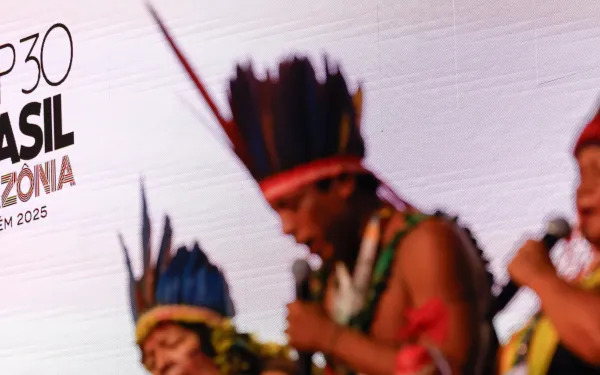
Sesión Plenaria de los pueblos en la 30 Conferencia de la ONU sobre Cambio Climático en Brasil

COP30 ends — with a few achievements to move forward

With more than 25 hours of delay, the 30th UN Climate Change Conference (COP30) has come to an end. The so-called "Amazon COP," held in the Brazilian city of Belém do Pará, leaves behind disappointment for failing to change course, but also some advances that can help push climate action forward. It was not a total failure: multilateralism remains intact, though battered.COP30 was marked by the presence of Indigenous peoples, especially from the Amazon basin, who filled the streets and side events. However, according to reports, only a fraction of these delegations gained access to the formal negotiation rooms, while a disproportionate number of representatives from the fossil fuel industry participated in the official event. This imbalance reflects the democratic health of the climate regime: at the Amazon COP, the power of Indigenous and Afro-descendant peoples was felt in the streets, but their voices remained underrepresented in decision-making spaces.A few days into the conference, the latest synthesis report of updated nationally determined contributions was released. Its message was more bitter than sweet, but it offered one important takeaway: although the gap to keep global warming below 1.5°C remains enormous and complex, the report confirms that the Paris Agreement has indeed helped steer the challenge. We are in a better position than in a scenario without the agreement: projected emissions growth has been slowed, though not nearly enough.At this point, it is clear that COPs will not "save the world," but it also seems impossible to overcome this crisis without the cooperative platform they provide. From that perspective, it is worth asking what COP30 leaves us. The approved agreement: Global MutirãoThe word "Mutirão" references the spirit of collective effort—body and soul—that Brazil sought to bring to the international negotiation process at this COP.The approved agreement reiterates the goal of keeping the planet’s temperature increase below 1.5°C, acknowledging that time is running out. To that end, it proposes two voluntary mechanisms, led by the Presidency, which for now seem more like statements of good intent than tools with teeth: a "Global Implementation Accelerator" and the "Belém Mission for 1.5°C."On financing, the text establishes a two-year work program on Article 9.1 of the Paris Agreement, which concerns the public resources developed countries must provide, understood in the context of Article 9 as a whole.A footnote was added to clarify that this does not prejudge the implementation of the new global goal. Civil society organizations warn that this formulation risks further diluting developed countries’ specific obligations under the narrative of "all sources of financing," without clear rules on who must actually provide the resources and under what conditions. The real value of all this remains to be seen in practice. What was gained: A new mechanism for a just transitionA major achievement of COP30 was the adoption of the Belém Action Mechanism (BAM), a new institutional arrangement under the Just Transition Work Programme. It was the main banner carried by organized civil society.The mechanism is designed as a hub to centralize and coordinate just transition initiatives around the world, providing technical assistance and international cooperation to ensure the transition does not repeat the mistakes of the fossil era.The text incorporates many of the principles championed by Latin American civil society—including human rights, environmental and labor protections, free, prior and informed consent, and the inclusion of marginalized groups—as essential elements for achieving ambitious climate action.Even with gaps in safeguards and governance definitions, the BAM is a concrete step forward for this COP on climate justice. It creates a starting point to discuss not only whether there will be a transition, but how it will be done and under what rules, so as not to replicate the logic of the fossil economy. Its design and implementation will be debated at upcoming COPs, where it will be crucial for the region to arrive with solid, united proposals. Ending fossil fuels and deforestation: Two “almosts” that move us forwardAn agreement to leave behind fossil fuels and end deforestation—directly addressing the main drivers of the climate crisis—"almost" made it into the final decision.More than 80 countries from both the global north and south called for a roadmap to exit oil, gas, and coal. More than 90 supported a roadmap to stop and reverse deforestation by 2030. Although these requests made their way into drafts of the closing decision, they disappeared from the final text after resistance from major fossil fuel producers.Still, we do not leave empty-handed: Brazil, as COP30 Presidency, announced it will advance these roadmaps outside the formal framework of the UNFCCC. For the fossil fuel phaseout, Colombia committed to co-organize, with the Netherlands, the first global conference on the topic in April 2026.Although these items were not secured within the official negotiations, it is worth celebrating that—for the first time—such a broad coalition of countries united to achieve them. These two "almosts" matter: they set a new political and legal baseline for the rounds ahead. Two tools to advance adaptationCOP30 delivered tools to keep adaptation negotiations moving forward.The Mutirão decision calls for tripling collective adaptation finance by 2035, tied to the $300 billion USD per year agreed under the new global goal. This falls short of what the poorest countries asked for (tripling by 2030, with an explicit figure) and lacks clarity or guarantees regarding the role of developed countries. But it is a political anchor worth building on.At the same time, a first package of 59 indicators was adopted for the Global Goal on Adaptation (GGA). Several African countries and experts described them as "unclear, impossible to measure, and in many cases unusable," because they sacrifice precision and grounding in community realities in order to unblock the agreement. In response, the text included the "Belém–Addis Vision," a two-year window to correct flaws and make the framework operational by 2027.In short, we have more promises of money and an indicator framework weaker than necessary, but also a process through which the region can continue pushing for a useful GGA and for fair, sufficient adaptation finance. Loss and damage: Slow and uncertainProgress on this issue has been painfully slow compared with the urgency of the problem. At COP30, the third review of the Warsaw International Mechanism was finally approved. The result is frustrating: discussions have taken a decade while communities are already paying the cost of warming.On the other hand, the Loss and Damage Response Fund, created two years ago, issued its first call for proposals, with an initial package of $250 million USD in grants available over the next six months. The Fund has $790 million USD pledged, but only $397 million USD actually deposited—an enormous gap compared to the hundreds of billions estimated annually for developing countries.The expected political pressure for developed countries to scale up contributions was largely diluted in the final text, although the Fund was at least linked to the new global financing goal agreed at COP29. A new Gender Action PlanCOP30 concluded with the adoption of a new Gender Action Plan under the renewed Lima Work Programme. The Plan identifies five priority areas: capacity-building and knowledge; women’s participation and leadership; coherence among processes; gender-responsive implementation and means of implementation; and monitoring and reporting. It also provides a roadmap to ensure climate action is truly gender-responsive, with indicators to track progress. Methane: A super-pollutant still lacking the spotlight science demandsAt COP30, short-lived climate pollutants—especially methane—gained visibility thanks to a dedicated pavilion and dialogues with regional and global actors. The Global Methane Status Report 2025 was also presented, noting “significant” progress since the 2021 launch of the Global Methane Pledge. However, it warns that current progress remains far from the goal of reducing methane emissions by 30% by 2030.In the official negotiations, the draft of the Sharm el-Sheikh Mitigation Ambition and Implementation Work Programme included an explicit reference to methane mitigation through proper waste management, but that mention was removed from the final text, leaving only a general call to improve waste management and diminishing the focus on the urgent need to reduce emissions of a pollutant whose mitigation is essential to achieving the Paris Agreement goals. Still, during COP30, the global “No Organic Waste (NOW) Plan to Accelerate Solutions” was launched, aiming to reduce methane emissions from organic waste by 30% by 2030.Overall, this COP missed a crucial opportunity to advance its core objective. If we truly want to stay on track with the Paris Agreement, we must treat methane as what it is: a decisive opportunity we are still not seizing. How we close COP30 and prepare for the nextCOP31 will be held in Turkey, under the presidency of Australia. And despite the shortcomings of COP30, there are at least four things to defend and build on:The normalization of the debate on phasing out fossil fuels, with more than 80 countries openly calling for a roadmap and Colombia–Netherlands taking that discussion to a dedicated conference in 2026.A forest agenda that, although left out of the text, carries the promise of a Brazilian roadmap and explicit support from a wide group of countries.A small but real advance on adaptation, with the decision to triple finance and a first set of indicators that, while weak, offer a basis to push for improvements.The creation of a new mechanism for a just transition, which can shape how the transition unfolds—bringing together and strengthening efforts that support and protect workers, communities, and Indigenous peoples. 

Read more

Inauguración de la Conferencia de la ONU sobre cambio climático en la Amazonía brasileña
Climate Change, Human Rights

The home stretch of COP30: Shadows, contradictions, and some glimmers of hope

The first week is over, and the political phase of the 30th United Nations Climate Change Conference (COP30) has begun in Belém do Pará, Brazil. These are the days when decisions must be made.A COP had not been held in a country where public protest is possible since 2021 — and people have certainly made their voices heard. On Saturday, a massive demonstration took place: thousands demanded climate justice in the streets, to the rhythm of Amazonian drums. There was also a theatrical "funeral for fossil fuels," reminiscent of Tim Burton, with monsters and somber widows bidding farewell to an era that must be buried.But it has not all been carnival. Indigenous leaders blocked access to the event several times and even entered the "blue zone" — the restricted area — en masse, denouncing the exploitation of their territories. Their discontent is absolute. Although COP authorities met with the group, they soon sent a letter to the Brazilian government requesting increased security and the dispersal of protests. Human rights and environmental organizations have warned about the risks of criminalizing protest and the harmful message this sends about the role of Indigenous peoples.These protests reflect communities that ended up being a minority in an event that promised to be inclusive. There was also widespread criticism of the disproportionately large number of fossil fuel industry representatives involved in negotiations — a dynamic that makes the path toward climate justice even more complicated.Finally, advisory opinions (AOs) must not be left out of this review. While not formally on the agenda, they have made a strong impact. Their central message is powerful: international cooperation is not optional — it is a legal obligation. It is no surprise, then, that the theme keeps resurfacing: in side events, in constant references by civil society and some national delegations, and in cross-cutting mentions across debates on finance, adaptation, and transition. The AOs are not merely being cited; they are being embraced. Momentum is building to fully unleash their potential at this COP and beyond. Negotiations: Four key issues in “presidential consultations”The COP Presidency acted quickly with a novel approach: to adopt the agenda without delays, it set aside four complex issues and moved them into “presidential consultations.”Article 9.1 — Public Funding from Developed Countries. The debate centers on whether climate financing should come only from public sources or also from private sources, as well as on accountability and reporting standards. Developed nations — which are legally obligated to provide this financing — are resisting, while vulnerable countries urgently need the funds to survive the climate crisis.Unilateral Climate-Related Trade Measures. These include policies such as carbon border taxes. They are considered unfair or protectionist, especially by Global South countries with less capacity to reduce emissions. Negotiations aim to prevent arbitrary trade barriers while respecting climate action.NDCs and Ambition. According to the latest NDC synthesis report, there is a significant gap between current commitments and what is required to stay below 1.5°C. Many negotiators argue that agreeing on concrete measures to close that gap is essential, but large emitters continue to resist.Synthesis of Climate Transparency Reports. Under the Paris Agreement’s Enhanced Transparency Framework, countries must periodically report emissions, actions taken, and financial support provided or received. At COP30, the debate centers on how to make these synthesis reports more robust, comprehensive, and useful. The consultations have been tense and slow. On Sunday, the Presidency published a "summary note" outlining possible pathways, and today a draft decision was released, though reactions are still forthcoming. In the coming days, closed-door sessions will continue and could lead to various outcomes. Based on the draft, it seems increasingly likely that COP30 will end with a “cover decision” consolidating all progress and addressing these complex matters. The final scope will depend heavily on what happens during the next four days. A just energy transition: Promises and a mechanism that worksThe Belém Action Mechanism for a Just Transition is a new institutional arrangement under the UNFCCC, championed by NGOs and Global South countries. Its objective is to bring order to the currently fragmented landscape of just transition efforts. The mechanism would coordinate initiatives, systematize knowledge, and provide quality financing and support — essentially evolving the Just Transition Work Program discussed since COP27.Civil society, particularly the Climate Action Network (CAN), has invested enormous effort in developing a strong decision that advances the creation of this mechanism. The G77 + China — the largest negotiating bloc of developing countries — supported this proposal, earning CAN’s "Ray of Light" award, given to actors making significant contributions to climate justice.Some developed countries presented less ambitious proposals, but even that confirms that convergence is drawing closer. Civil society remains optimistic that a concrete, positive outcome will be achieved — and ready to celebrate it. A path to phase out fossil fuelsThis story began in 2023 at COP28 in Dubai, when, for the first time, the idea of phasing out fossil fuels appeared in an official COP text.Now, at the opening of COP30, Brazilian President Luiz Inácio Lula da Silva explicitly referenced a "route" for the energy transition, while Environment Minister Marina Silva has worked to reinforce the political momentum. Meanwhile, Colombia issued a declaration referencing the advisory opinions and seeking international support for the initiative. Several industrialized countries have revived their position through the Beyond Oil and Gas Alliance.Today, 63 countries support a commitment to "Transition Away from Fossil Fuels." However, this is not yet part of the formal negotiation agenda — initiatives remain fragmented, and efforts proceed in parallel. What could emerge is a concrete action plan, a dedicated section in the final decision, or perhaps a roadmap for a future roadmap. The alternative is that it remains a voluntary coalition of willing countries pushing the idea forward. Climate finance: The central — and most complicated — issueFinance remains the central issue at this COP, and perhaps the most complex. Several deeply interconnected discussions are underway:Article 9.1: Developing countries insist that public financing from developed nations is a binding obligation that cannot be replaced by private investment.Adaptation: A strong consensus is forming to triple the adaptation finance goal (to about USD 120 billion annually) while improving transparency and direct access to funds.The Baku–Belém Roadmap: This initiative seeks to scale up global climate finance to USD 1.3 trillion per year by 2035 through a combination of public, multilateral, and private flows.Loss and Damage Facility: The fund is technically operational but not fully capitalized. New contributions from Spain and Germany are welcome — but insufficient to meet global needs.Tropical Forests Forever Facility: Brazil has proposed this as an “investment model” for tropical forest countries. Civil society has expressed serious concerns: the model depends heavily on volatile market investments and lacks safeguards to ensure the protection of local communities and ecosystem integrity. Adaptation progress, but under the shadow of chronic underfundingDiscussions on adaptation are unfolding on two parallel fronts:Indicators for the Global Goal on Adaptation. Ten years after the Paris Agreement, there is still no consensus on how to track adaptation progress. A working group narrowed approximately 9,000 proposed indicators down to about 100, but technical and political challenges persist. Some African and Arab countries have asked to postpone final adoption until they have the financial resources and capacity to implement them. A prevailing sentiment is: "no indicators without funding" — adopting metrics without support would repeat past mistakes.Adaptation finance. Although adaptation financing is not formally included within the Global Goal on Adaptation, the two issues are inseparable. Without adequate financial support, indicators alone will be ineffective. Following the agreement on a new climate finance goal at COP29, the current debate focuses on aligning that goal with adaptation needs — especially through technology transfer, capacity building, and direct-access funding channels. Substantial gaps remain, and negotiations continue to hinge on how to categorize financial flows (private vs. public, domestic vs. international). 

Read more

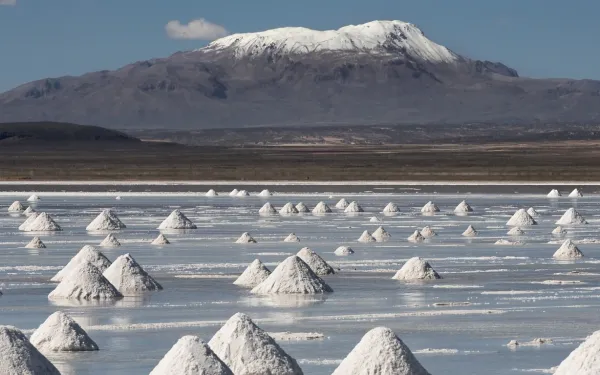
Uyuni, Bolivia

The ABCs of "critical" or transition minerals and their role in energy production

By Mayela Sánchez, David Cañas and Javier Oviedo* There is no doubt that we need to move away from fossil fuels to address the climate crisis. But what does it mean to switch to other energy sources?To make a battery or a solar panel, raw materials from nature are also used.Some of these raw materials are minerals which, due to their characteristics and in the context of the energy transition, have been descriptively named "critical" minerals or transition minerals.What are these minerals, where are they found, and how are they used?Below we answer the most important questions about these mineral resources, because it is crucial to know which natural resources will supply the new energy sources, and to ensure that their extraction respects human rights and planetary limits, so that the energy transition is just. What are "critical" or transition minerals and why are they called that?They are a group of minerals with a high capacity to store and conduct energy. Because of these properties, they are used in the development of renewable energy technologies, such as solar panels, batteries for electric mobility, or wind turbines.They are so called because they are considered strategic to the energy transition. The term "critical" refers to elements that are vital to the economy and national security, but whose supply chain is vulnerable to disruption. This means that transition minerals may be strategic minerals, but not critical in terms of security and the economy.However, given the urgency of climate action, some states and international organizations have classified transition minerals as "critical" minerals in order to promote and facilitate access to these raw materials.They are also often referred to as transition minerals because they are considered essential for the technological development of renewable energy sources, such as those mentioned above. And in the context of the energy transition, energy sources that use these minerals are the most sought-after to replace fossil energy sources. What are the most important "critical" or transition minerals?The most important transition minerals are cobalt, copper, graphite, lithium, nickel and rare earth.But there are at least 19 minerals used in various renewable energy technologies: bauxite, cadmium, cobalt, copper, chromium, tin, gallium, germanium, graphite, indium, lithium, manganese, molybdenum, nickel, selenium, silicon, tellurium, titanium, zinc, and the "rare" earth. What are "rare" earth elements and why are they so called?The "rare" earth elements are the 16 chemical elements of the lanthanoid or lanthanide group, plus Ithrium (Y), whose chemical behavior is virtually the same as that of the lanthanoids.They are Scandium, Ithrium, Lanthanum, Cerium, Praseodymium, Neodymium, Samarium, Europium, Gadolinium, Terbium, Dysprosium, Holmium, Erbium, Tullium, Iterbium and Lutetium.They are so called because when they were discovered in the 18th and 19th centuries, they were less well known than other elements considered similar, such as calcium. But the name is now outdated.Nor does the term "rare" refer to their abundance, because although they are not usually concentrated in deposits that can be exploited (so their mines are few), even the less abundant elements in this group are much more common than gold. What are "critical" or transition minerals used for? What technologies are based on them?The uses of transition minerals in the technological development of renewable energy sources are diverse:Solar technologies: bauxite, cadmium, tin, germanium, gallium, indium, selenium, silicon, tellurium, zinc.Electrical installations: copper.Wind energy: bauxite, copper, chromium, manganese, molybdenum, rare earths, zinc.Energy storage: bauxite, cobalt, copper, graphite, lithium, manganese, molybdenum, nickel, rare earths, titanium.Batteries: cobalt, graphite, lithium, manganese, nickel, rare earths. In addition, they are used in a variety of modern technologies, for example in the manufacture of displays, cell phones, computer hard drives and LED lights, among others. Where are "critical" or transition minerals found?The geography of transition minerals is broad, ranging from China to Canada, from the United States to Australia. But their extraction has been concentrated in countries of the global south.Several Latin American countries are among the top producers of various transition minerals. These materials are found in complex areas rich in biological and cultural diversity, such as the Amazon and the Andean wetlands.Argentina: lithiumBrazil: aluminum, bauxite, lithium, manganese, rare earths, titaniumBolivia: lithiumChile: copper, lithium, molybdenumColombia: nickelMexico: copper, tin, molybdenum, zincPeru: tin, molybdenum, zinc How do "critical" or transition minerals support the energy transition and decarbonization?Transition minerals are seen as indispensable links in the energy transition to decarbonization, i.e. the shift away from fossil energy sources.But the global interest in these materials also raises questions about the benefits and challenges of mining transition minerals.The issue has become so relevant that last September, the United Nations Panel on Critical Minerals for Energy Transition issued a set of recommendations and principles to ensure equitable, fair and sustainable management of these minerals.In addition, as a result of the intensification and expansion of their extraction in countries of the region, the issue was brought before the Inter-American Commission on Human Rights for the first time on November 15.In a public hearing, representatives of communities and organizations from Argentina, Bolivia, Chile and Colombia, as well as regional organizations, presented information and testimonies on the environmental and social impacts of transition mineral mining.Given the current energy transition process, it is necessary to know where the resources that will enable the technologies to achieve this transition will come from.The extraction and use of transition minerals must avoid imposing disproportionate environmental and social costs on local communities and ecosystems. *Mayela Sánchez is a digital community specialist at AIDA; David Cañas and Javier Oviedo are scientific advisors.Sources consulted:-Olivera, B., Tornel, C., Azamar, A., Minerales críticos para la transición energética. Conflictos y alternativas hacia una transformación socioecológica, Heinrich Böll Foundation Mexico City/Engenera/UAM-Unidad Xochimilco.-Science History Institute Museum & Library, “History and Future of Rare Earth Elements”.-FIMA NGO, Narratives on the extraction of critical minerals for the energy transition: Critiques from environmental and territorial justice.-Haxel, Hedrick & Orris, “Rare Earth-Elements. Critical Resources for High Technology,” 2005.-USGS 2014, “The Rare-Earth elements. Vital to modern technology and lifestyle”, 2014.-Final Report for the Inter-American Commission on Human Rights (IACHR) Thematic Hearing: Minerals for Energy Transition and its Impact on Human Rights in the Americas, 2024. 

Read more