
Project
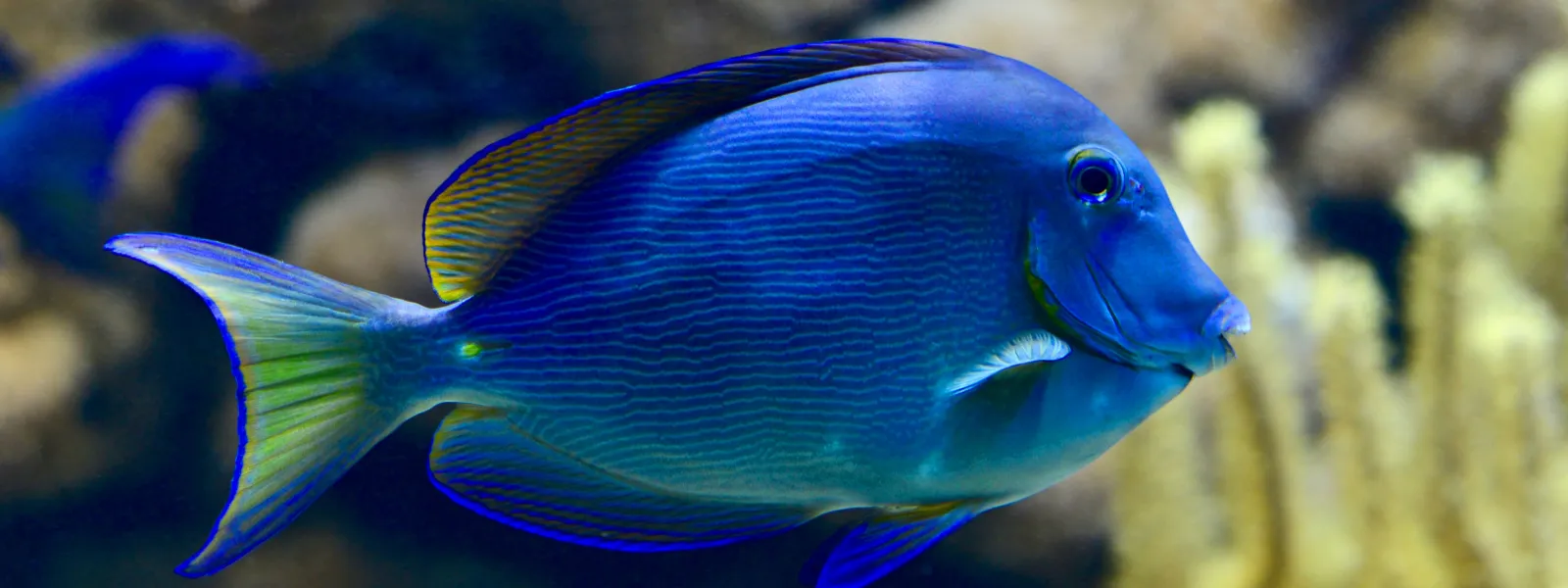
RA Killmer_CC BY-NC-ND 2.0Protecting herbivorous fish, to secure a future for corals
Herbivorous fish rarely go unnoticed. Their brilliant colors illuminate the reef to the delight of scuba divers. But more importantly, these iconic fish are also vital for the conservation of coral reefs.
Herbivorous fish feed on the algae that grow on corals and compete with them for light and oxygen. By eating the algae, these tiny fish play a big role in the survival of the entire ecosystem.
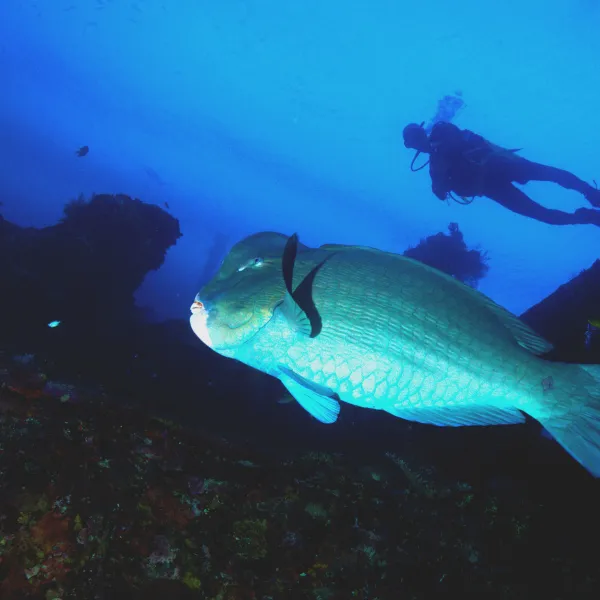
Species of these herbivorous fish include: parrotfish, which eat corals that break off the reef and excrete them as white sand; damselfish, which fend off the macro algae growth that kills coral; and surgeonfish, whose most famous representative is Dory from Finding Nemo.
But corals are quickly losing their greatest allies. Populations of herbivorous fish are dwindling, particularly in the Caribbean.
The overfishing of commercial species is driving artisanal fishermen to capture even the youngest herbivorous fish, preventing those species from replenishing their numbers.
The loss of these fish is one more threat to coral reefs, already fragile ecosystems that are increasingly vulnerable to climate change. Preserving our reefs will ensure we continue to enjoy the services they provide. Among other things, coral reefs act as fish hatcheries, natural barriers against storms and hurricanes, and the source of medicines that treat illnesses like cancer and Alzheimer’s.
Related projects

The IPCC climate report: science has spoken and we must act now
The international scientific community has spoken: the only thing that can save us from a climate catastrophe is a radical and immediate change. The next 11 years are the most important in the history of the planet, in terms of climate change. Our response to their message will determine our future. In its most recent analysis, the Intergovernmental Panel on Climate Change (IPCC) of the United Nations establishes the impacts that could occur if the planet’s average temperature increases by more than 2°C, and compares those with what would happen if we stop warming, or at least keep it below 1.5°C. The 2016 Paris Agreement, an international accord to curb climate change, aims to keep warming well below 2°C with respect to pre-industrial levels, and to continue global efforts to limit it to 1.5°C. The impacts of global warming The IPCC experts’ conclusions are piercing. Those extra 0.5°C would be lethal for millions of people and their ways of life. If the Earth warms 2°C or more, we would experience: more frequent and intense heat waves, droughts and floods; sea level rise of an extra 10 centimeters, implying coastal flooding and filtration of salt water into agricultural areas and freshwater sources—a matter of life and death for roughly 10 million people; double the risk of habitat loss for plants and vertebrates, and triple the risk for insects, considering more than 100 thousand species which were studied; the disappearance of more than 99% of coral reefs, while 10 to 30 percent of what remains could be saved if we were to stabilize the planet’s temperature below 1.5°C; an increase in the range of mosquitoes that transmit diseases such as malaria and dengue; and the devastation of crops and livestock, severely affecting global food security. So, how are we doing now? Not so well. The planet has already warmed 1°C since preindustrial times, and in 2017 the emissions responsible for warming increased again. The commitments nations made to comply with the Paris Agreement are insufficient. Settling on that level of ambition would take us to 3°C warming by 2030, a reality with unimaginable consequences. Changing our climate destiny Let’s talk about solutions. Ensuring that the planet’s warming doesn’t exceed 1.5°C is possible, but it will require unprecedented action. Emissions must lower by 45 percent between 2010 and 2030, and we must achieve carbon neutrality by 2050. That means not emitting more than what the world’s forests and natural carbon sinks can absorb. This will require that: the most polluting industries, particularly those producing fossil fuels, implement radical changes; renewable energy is the norm by 2050, accounting for between 70 and 85 percent of total energy production; coal-fired power plants disappear; transportation runs with clean, renewable electricity; and we expand, maintain, and care for forests and other natural carbon sinks, which are responsible for removing emissions from the atmosphere. The IPCC report also recognizes a monumental opportunity: the mitigation of short-lived climate pollutants (SLCPs)—including black carbon or soot, methane, hydrofluorocarbons and tropospheric ozone. More climatically intense than carbon dioxide, SLCPs are responsible for half of global warming. Because of their short duration in the atmosphere, they could play a key role in reducing warming in the short term. In addition, the reduction of SLCPs brings important benefits for human well-being, including the reduction of pollution that affects public health and better yield of crops. But few countries have included the reduction of short-lived climate pollutants in their national commitments on climate change. At AIDA we’re working so that Latin American nations advance in the control of these emissions. As the region with the greatest potential for renewable energies, Latin America has the opportunity to be an example for the rest of the planet. The threats facing the region are great and avoiding them is well worth the effort. Climate change threatens to shake us from our very roots—melting Andean glaciers, increasing droughts and floods, diminishing freshwater supplies, driving species to extinction, increasing wildfires, favoring the spread of invasive species, losing corals and marine biodiversity, affecting food security, and wreaking havoc on people’s health and livelihoods. The outlook is clear: maintaining global warming below 1.5°C is not an easy task, but science holds it’s possible. We have the scientific knowledge, and the technological and financial capacity to achieve this goal. The responsibility now lies with governments, decision-makers and the private sector—together they must drive unprecedented changes. We must remember that implementing these changes is not just possible, it’s desirable. A world with fewer emissions is a cleaner and a fairer world for us and for future generations. What’s not to like?
Read moreThe IPCC climate report: science has spoken and we must act now
The international scientific community has spoken: the only thing that can save us from a climate catastrophe is a radical and immediate change. The next 11 years are the most important in the history of the planet, in terms of climate change. Our response to their message will determine our future. In its most recent analysis, the Intergovernmental Panel on Climate Change (IPCC) of the United Nations establishes the impacts that could occur if the planet’s average temperature increases by more than 2°C, and compares those with what would happen if we stop warming, or at least keep it below 1.5°C. The 2016 Paris Agreement, an international accord to curb climate change, aims to keep warming well below 2°C with respect to pre-industrial levels, and to continue global efforts to limit it to 1.5°C. The impacts of global warming The IPCC experts’ conclusions are piercing. Those extra 0.5°C would be lethal for millions of people and their ways of life. If the Earth warms 2°C or more, we would experience: more frequent and intense heat waves, droughts and floods; sea level rise of an extra 10 centimeters, implying coastal flooding and filtration of salt water into agricultural areas and freshwater sources—a matter of life and death for roughly 10 million people; double the risk of habitat loss for plants and vertebrates, and triple the risk for insects, considering more than 100 thousand species which were studied; the disappearance of more than 99% of coral reefs, while 10 to 30 percent of what remains could be saved if we were to stabilize the planet’s temperature below 1.5°C; an increase in the range of mosquitoes that transmit diseases such as malaria and dengue; and the devastation of crops and livestock, severely affecting global food security. So, how are we doing now? Not so well. The planet has already warmed 1°C since preindustrial times, and in 2017 the emissions responsible for warming increased again. The commitments nations made to comply with the Paris Agreement are insufficient. Settling on that level of ambition would take us to 3°C warming by 2030, a reality with unimaginable consequences. Changing our climate destiny Let’s talk about solutions. Ensuring that the planet’s warming doesn’t exceed 1.5°C is possible, but it will require unprecedented action. Emissions must lower by 45 percent between 2010 and 2030, and we must achieve carbon neutrality by 2050. That means not emitting more than what the world’s forests and natural carbon sinks can absorb. This will require that: the most polluting industries, particularly those producing fossil fuels, implement radical changes; renewable energy is the norm by 2050, accounting for between 70 and 85 percent of total energy production; coal-fired power plants disappear; transportation runs with clean, renewable electricity; and we expand, maintain, and care for forests and other natural carbon sinks, which are responsible for removing emissions from the atmosphere. The IPCC report also recognizes a monumental opportunity: the mitigation of short-lived climate pollutants (SLCPs)—including black carbon or soot, methane, hydrofluorocarbons and tropospheric ozone. More climatically intense than carbon dioxide, SLCPs are responsible for half of global warming. Because of their short duration in the atmosphere, they could play a key role in reducing warming in the short term. In addition, the reduction of SLCPs brings important benefits for human well-being, including the reduction of pollution that affects public health and better yield of crops. But few countries have included the reduction of short-lived climate pollutants in their national commitments on climate change. At AIDA we’re working so that Latin American nations advance in the control of these emissions. As the region with the greatest potential for renewable energies, Latin America has the opportunity to be an example for the rest of the planet. The threats facing the region are great and avoiding them is well worth the effort. Climate change threatens to shake us from our very roots—melting Andean glaciers, increasing droughts and floods, diminishing freshwater supplies, driving species to extinction, increasing wildfires, favoring the spread of invasive species, losing corals and marine biodiversity, affecting food security, and wreaking havoc on people’s health and livelihoods. The outlook is clear: maintaining global warming below 1.5°C is not an easy task, but science holds it’s possible. We have the scientific knowledge, and the technological and financial capacity to achieve this goal. The responsibility now lies with governments, decision-makers and the private sector—together they must drive unprecedented changes. We must remember that implementing these changes is not just possible, it’s desirable. A world with fewer emissions is a cleaner and a fairer world for us and for future generations. What’s not to like?
Read moreThe IPCC climate report: science has spoken and we must act now
The international scientific community has spoken: the only thing that can save us from a climate catastrophe is a radical and immediate change. The next 11 years are the most important in the history of the planet, in terms of climate change. Our response to their message will determine our future. In its most recent analysis, the Intergovernmental Panel on Climate Change (IPCC) of the United Nations establishes the impacts that could occur if the planet’s average temperature increases by more than 2°C, and compares those with what would happen if we stop warming, or at least keep it below 1.5°C. The 2016 Paris Agreement, an international accord to curb climate change, aims to keep warming well below 2°C with respect to pre-industrial levels, and to continue global efforts to limit it to 1.5°C. The impacts of global warming The IPCC experts’ conclusions are piercing. Those extra 0.5°C would be lethal for millions of people and their ways of life. If the Earth warms 2°C or more, we would experience: more frequent and intense heat waves, droughts and floods; sea level rise of an extra 10 centimeters, implying coastal flooding and filtration of salt water into agricultural areas and freshwater sources—a matter of life and death for roughly 10 million people; double the risk of habitat loss for plants and vertebrates, and triple the risk for insects, considering more than 100 thousand species which were studied; the disappearance of more than 99% of coral reefs, while 10 to 30 percent of what remains could be saved if we were to stabilize the planet’s temperature below 1.5°C; an increase in the range of mosquitoes that transmit diseases such as malaria and dengue; and the devastation of crops and livestock, severely affecting global food security. So, how are we doing now? Not so well. The planet has already warmed 1°C since preindustrial times, and in 2017 the emissions responsible for warming increased again. The commitments nations made to comply with the Paris Agreement are insufficient. Settling on that level of ambition would take us to 3°C warming by 2030, a reality with unimaginable consequences. Changing our climate destiny Let’s talk about solutions. Ensuring that the planet’s warming doesn’t exceed 1.5°C is possible, but it will require unprecedented action. Emissions must lower by 45 percent between 2010 and 2030, and we must achieve carbon neutrality by 2050. That means not emitting more than what the world’s forests and natural carbon sinks can absorb. This will require that: the most polluting industries, particularly those producing fossil fuels, implement radical changes; renewable energy is the norm by 2050, accounting for between 70 and 85 percent of total energy production; coal-fired power plants disappear; transportation runs with clean, renewable electricity; and we expand, maintain, and care for forests and other natural carbon sinks, which are responsible for removing emissions from the atmosphere. The IPCC report also recognizes a monumental opportunity: the mitigation of short-lived climate pollutants (SLCPs)—including black carbon or soot, methane, hydrofluorocarbons and tropospheric ozone. More climatically intense than carbon dioxide, SLCPs are responsible for half of global warming. Because of their short duration in the atmosphere, they could play a key role in reducing warming in the short term. In addition, the reduction of SLCPs brings important benefits for human well-being, including the reduction of pollution that affects public health and better yield of crops. But few countries have included the reduction of short-lived climate pollutants in their national commitments on climate change. At AIDA we’re working so that Latin American nations advance in the control of these emissions. As the region with the greatest potential for renewable energies, Latin America has the opportunity to be an example for the rest of the planet. The threats facing the region are great and avoiding them is well worth the effort. Climate change threatens to shake us from our very roots—melting Andean glaciers, increasing droughts and floods, diminishing freshwater supplies, driving species to extinction, increasing wildfires, favoring the spread of invasive species, losing corals and marine biodiversity, affecting food security, and wreaking havoc on people’s health and livelihoods. The outlook is clear: maintaining global warming below 1.5°C is not an easy task, but science holds it’s possible. We have the scientific knowledge, and the technological and financial capacity to achieve this goal. The responsibility now lies with governments, decision-makers and the private sector—together they must drive unprecedented changes. We must remember that implementing these changes is not just possible, it’s desirable. A world with fewer emissions is a cleaner and a fairer world for us and for future generations. What’s not to like?
Read more