Project
RA Killmer_CC BY-NC-ND 2.0Protecting herbivorous fish, to secure a future for corals
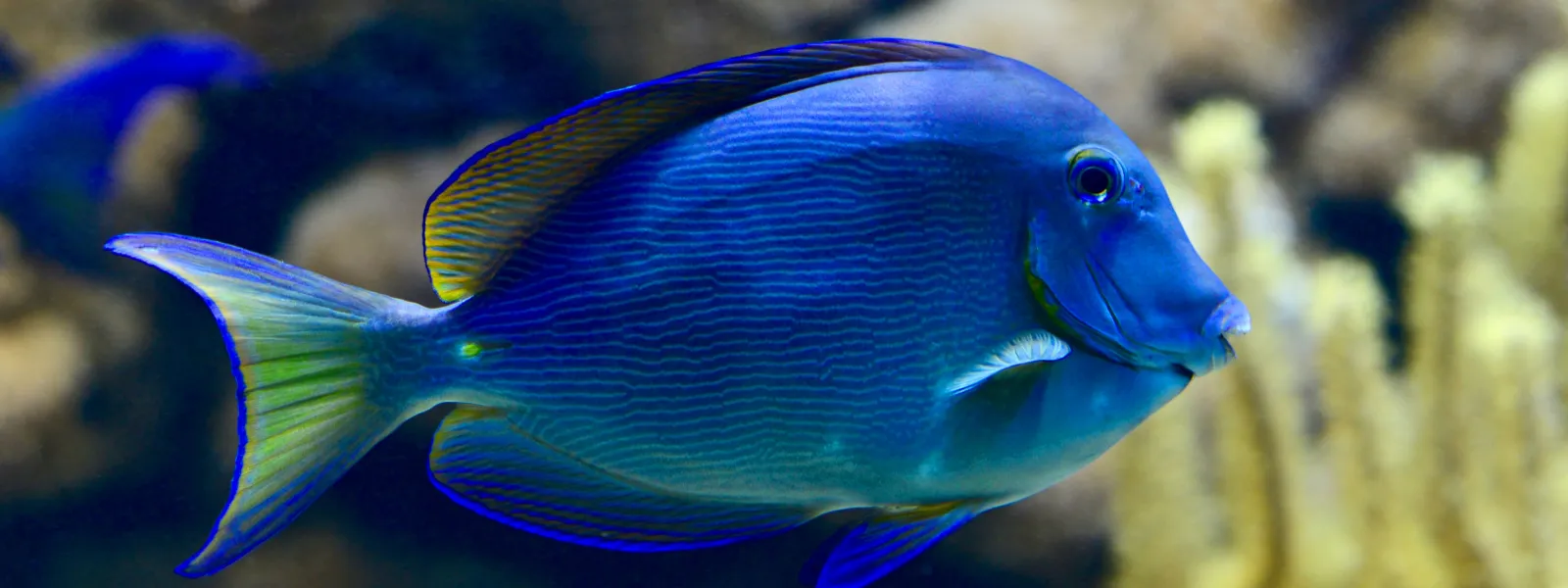
Herbivorous fish rarely go unnoticed. Their brilliant colors illuminate the reef to the delight of scuba divers. But more importantly, these iconic fish are also vital for the conservation of coral reefs.
Herbivorous fish feed on the algae that grow on corals and compete with them for light and oxygen. By eating the algae, these tiny fish play a big role in the survival of the entire ecosystem.
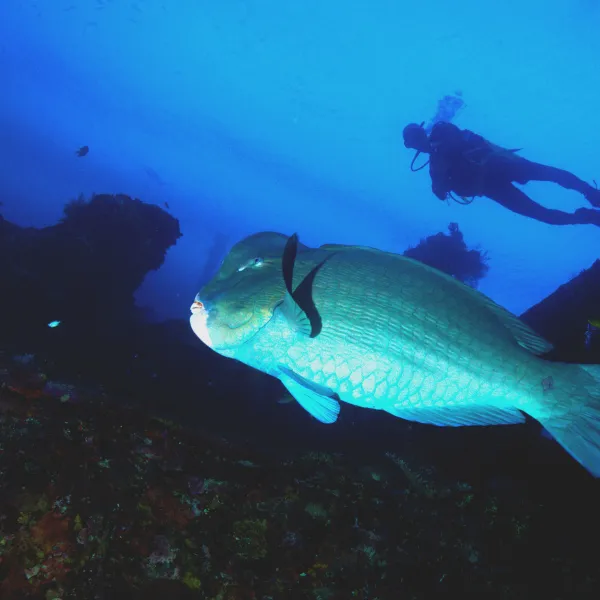
Species of these herbivorous fish include: parrotfish, which eat corals that break off the reef and excrete them as white sand; damselfish, which fend off the macro algae growth that kills coral; and surgeonfish, whose most famous representative is Dory from Finding Nemo.
But corals are quickly losing their greatest allies. Populations of herbivorous fish are dwindling, particularly in the Caribbean.
The overfishing of commercial species is driving artisanal fishermen to capture even the youngest herbivorous fish, preventing those species from replenishing their numbers.
The loss of these fish is one more threat to coral reefs, already fragile ecosystems that are increasingly vulnerable to climate change. Preserving our reefs will ensure we continue to enjoy the services they provide. Among other things, coral reefs act as fish hatcheries, natural barriers against storms and hurricanes, and the source of medicines that treat illnesses like cancer and Alzheimer’s.
Related projects
Belo Monte Dam must comply with conditions before continuing operations
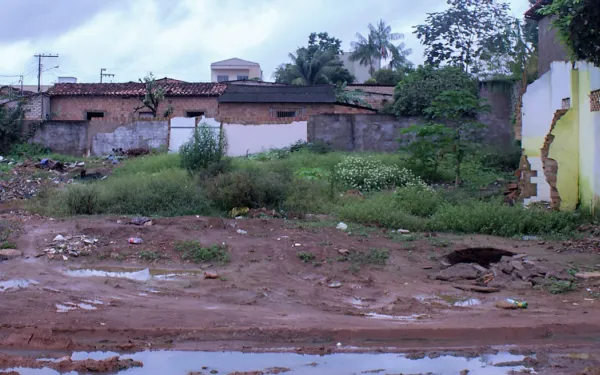
Last week a federal court in Brazil suspended the operating license of the Belo Monte Dam. Prosecutors said the dam's operating company, Norte Energía, failed to complete basic sanitation works in the city of Altamira, which has been directly affected by the hydroelectric project. The decision comes in response to a legal appeal filed by the Federal Public Ministry. The sanitation work was a condition for the dam's licensing, authorized by the Brazilian Institute of Environmental Resources (IBAMA), and should have been completed before the reservoir was filled; it was not. "This is the first time that a federal court has suspended one of Belo Monte's suspensão de segurança, a legal tool that guarantees the dam's operation even though it hasn't completed the conditions required under its operating license. In practice, the decision means that the dam must immediately halt all operations, although the completion of pending work may continue," explained AIDA attorney Marcella Ribeiro. "Beyond being an issue of sanitation, this judgment represents an important step forward in the fight to force the operating company to adequately comply with the conditions necessary for the dam's operation, which favor affected communities." "We hope the Brazilian justice system continues to guarantee the protection of the rights of all those affected by the Belo Monte Dam.”
Read more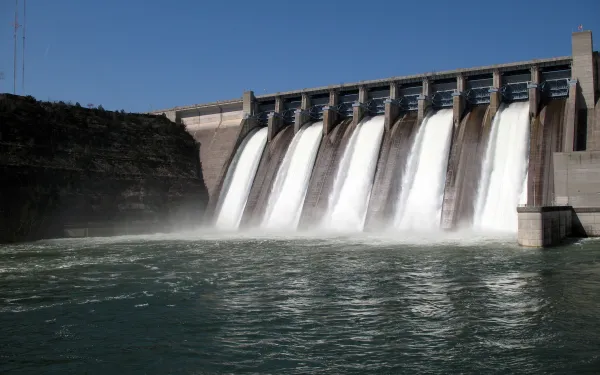
Letter: Concerning the Green Climate Fund and large hydropower
The 282 undersigned organizations write to express our significant concern regarding the use of GCF resources to support large hydropower, and, in particular, the following proposals in the GCF’s pipeline: (i) Qairokkum Hydropower Rehabilitation, Tajikistan; (ii) Upper Trishuli-1, Nepal; and (iii) Tina River Hydro Project, Solomon Islands. The GCF can and should help pay for the incremental costs of renewable energy sources, which are often less “bankable” (though less so all the time). However, we wish to highlight that large dams are different from wind, solar and other technologies because they fail to fulfill the GCF Investment Criteria. For example: (i) Impact potential: Dams emit significant amounts of greenhouse gases, particularly methane, and damage carbon sinks; (ii) Paradigm shift potential: Large hydro is a non-innovative technology that has not seen significant technical or financial breakthroughs in decades; (iii) Sustainable development: Dams have high negative co-impacts with regard to the environment, human rights, and economic cost. By interrupting rivers and flooding lands, they irreversibly harm livelihoods and ecosystems. Because they routinely cost double their estimates, large dams stretch government budgets and increase borrowing costs; (iv) Needs of the recipient: Hydropower projects are particularly vulnerable to climate change, and many countries are already alarmingly over-dependent on hydropower (as is the case with Tajikistan and Nepal). GCF should support efforts in these countries to diversify their energy mix, helping them improve their resilience and adaptive capacities; and, (v) Efficiency and effectiveness: Dams all over the world are losing generation capacity because of climate change-induced droughts. In addition, each of the dam-related projects in the GCF’s pipeline suffers significant deficiencies: Qairokkum Hydropower Rehabilitation: This funding proposal is expected at the April board meeting. The board should reject it. The project aims to extend the life of a Soviet-era dam, built in the 1950s. It is not innovative in any way, deepens Tajikistan’s already alarming overdependence on climate-vulnerable hydro, and fails to address critical environmental problems of the original dam, among other concerns. Upper Trishuli-1: Though not up for consideration at the April board meeting, Upper Trishuli has been in the project pipeline for many months and should be expeditiously removed from it. With more than 30 hydro projects either operating, in construction, or planned on the Trishuli River, the project would have no transformational impact. It faces severe climate and disaster risks, would deepen Nepal’s overdependence on climate-vulnerable hydro, and would have significant impacts on indigenous communities and the environment that have not been adequately studied or addressed. There is also no assessment of the project’s vulnerability to earthquakes, despite the area being highly seismic. Tina River Hydro Project: Expected at the April board meeting, this 15 MW project is intended to reduce the Solomon Islands’ reliance on imported diesel. The project does not include an assessment of climate vulnerability, threatens a world-class biodiversity hotspot, and is very costly. Meanwhile, Solomon Islands has considerable renewable energy potential that has not been sufficiently studied. These issues and others are detailed in a letter sent previously to the Board. Thank you for your attention to this most important matter. We look forward to working with you and the Secretariat to ensure that the GCF is a transformational institution of the highest social and environmental caliber. That cannot be accomplished if the GCF finances large hydropower.
Read moreLetter: Concerning the Green Climate Fund and large hydropower
The 282 undersigned organizations write to express our significant concern regarding the use of GCF resources to support large hydropower, and, in particular, the following proposals in the GCF’s pipeline: (i) Qairokkum Hydropower Rehabilitation, Tajikistan; (ii) Upper Trishuli-1, Nepal; and (iii) Tina River Hydro Project, Solomon Islands. The GCF can and should help pay for the incremental costs of renewable energy sources, which are often less “bankable” (though less so all the time). However, we wish to highlight that large dams are different from wind, solar and other technologies because they fail to fulfill the GCF Investment Criteria. For example: (i) Impact potential: Dams emit significant amounts of greenhouse gases, particularly methane, and damage carbon sinks; (ii) Paradigm shift potential: Large hydro is a non-innovative technology that has not seen significant technical or financial breakthroughs in decades; (iii) Sustainable development: Dams have high negative co-impacts with regard to the environment, human rights, and economic cost. By interrupting rivers and flooding lands, they irreversibly harm livelihoods and ecosystems. Because they routinely cost double their estimates, large dams stretch government budgets and increase borrowing costs; (iv) Needs of the recipient: Hydropower projects are particularly vulnerable to climate change, and many countries are already alarmingly over-dependent on hydropower (as is the case with Tajikistan and Nepal). GCF should support efforts in these countries to diversify their energy mix, helping them improve their resilience and adaptive capacities; and, (v) Efficiency and effectiveness: Dams all over the world are losing generation capacity because of climate change-induced droughts. In addition, each of the dam-related projects in the GCF’s pipeline suffers significant deficiencies: Qairokkum Hydropower Rehabilitation: This funding proposal is expected at the April board meeting. The board should reject it. The project aims to extend the life of a Soviet-era dam, built in the 1950s. It is not innovative in any way, deepens Tajikistan’s already alarming overdependence on climate-vulnerable hydro, and fails to address critical environmental problems of the original dam, among other concerns. Upper Trishuli-1: Though not up for consideration at the April board meeting, Upper Trishuli has been in the project pipeline for many months and should be expeditiously removed from it. With more than 30 hydro projects either operating, in construction, or planned on the Trishuli River, the project would have no transformational impact. It faces severe climate and disaster risks, would deepen Nepal’s overdependence on climate-vulnerable hydro, and would have significant impacts on indigenous communities and the environment that have not been adequately studied or addressed. There is also no assessment of the project’s vulnerability to earthquakes, despite the area being highly seismic. Tina River Hydro Project: Expected at the April board meeting, this 15 MW project is intended to reduce the Solomon Islands’ reliance on imported diesel. The project does not include an assessment of climate vulnerability, threatens a world-class biodiversity hotspot, and is very costly. Meanwhile, Solomon Islands has considerable renewable energy potential that has not been sufficiently studied. These issues and others are detailed in a letter sent previously to the Board. Thank you for your attention to this most important matter. We look forward to working with you and the Secretariat to ensure that the GCF is a transformational institution of the highest social and environmental caliber. That cannot be accomplished if the GCF finances large hydropower.
Read more