
Project
RA Killmer_CC BY-NC-ND 2.0Protecting herbivorous fish, to secure a future for corals
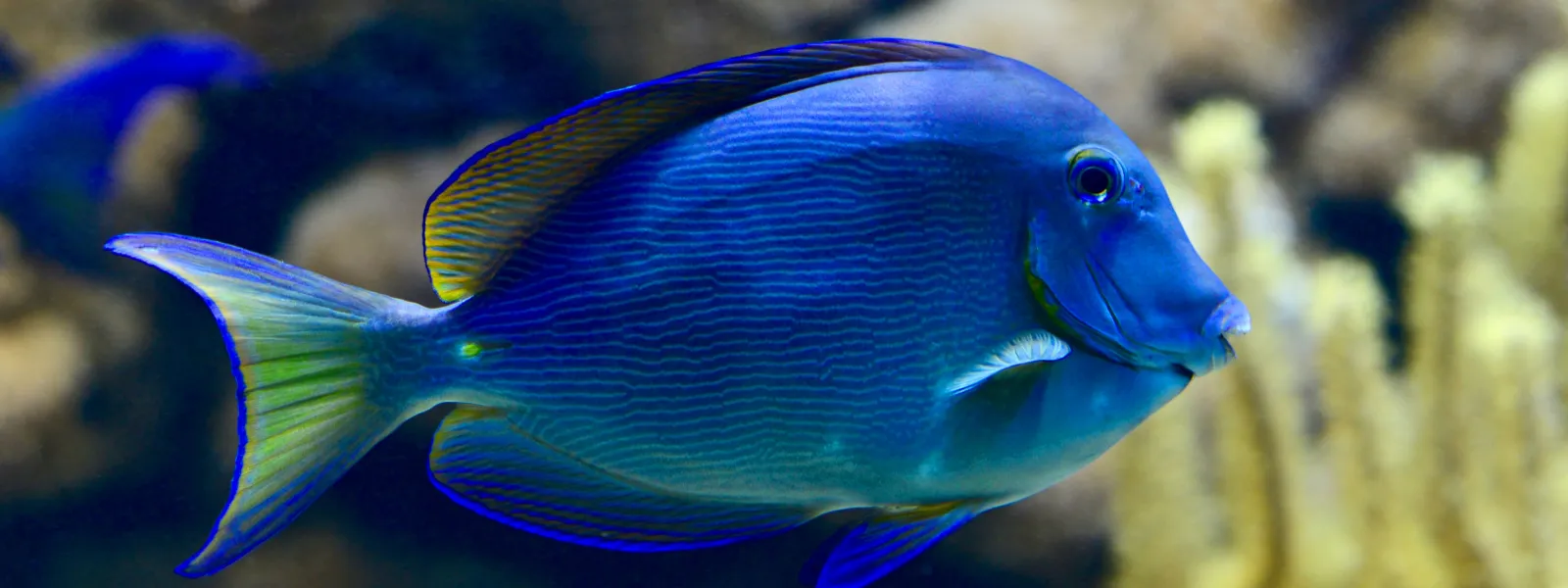
Herbivorous fish rarely go unnoticed. Their brilliant colors illuminate the reef to the delight of scuba divers. But more importantly, these iconic fish are also vital for the conservation of coral reefs.
Herbivorous fish feed on the algae that grow on corals and compete with them for light and oxygen. By eating the algae, these tiny fish play a big role in the survival of the entire ecosystem.
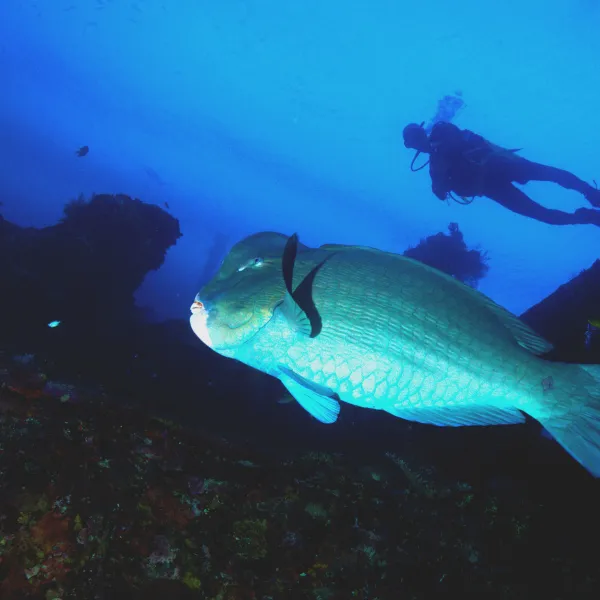
Species of these herbivorous fish include: parrotfish, which eat corals that break off the reef and excrete them as white sand; damselfish, which fend off the macro algae growth that kills coral; and surgeonfish, whose most famous representative is Dory from Finding Nemo.
But corals are quickly losing their greatest allies. Populations of herbivorous fish are dwindling, particularly in the Caribbean.
The overfishing of commercial species is driving artisanal fishermen to capture even the youngest herbivorous fish, preventing those species from replenishing their numbers.
The loss of these fish is one more threat to coral reefs, already fragile ecosystems that are increasingly vulnerable to climate change. Preserving our reefs will ensure we continue to enjoy the services they provide. Among other things, coral reefs act as fish hatcheries, natural barriers against storms and hurricanes, and the source of medicines that treat illnesses like cancer and Alzheimer’s.
Related projects
Victory in Colombia: Citizens Vote to Ban Mining in their Territory
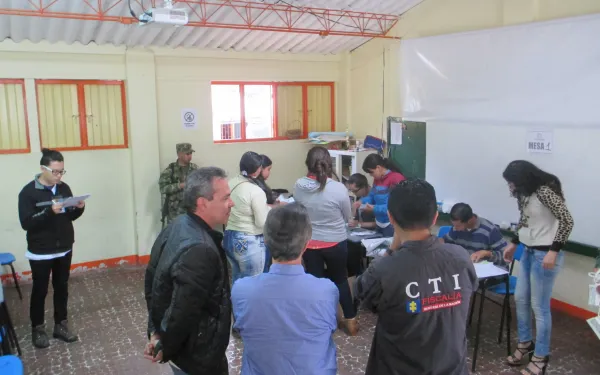
On March 26, 2017, 98% of voters in Cajamarca, Colombia decisively rejected mining in their territory. The results of the referendum (or “popular consultation”) are binding under Colombian law. Now municipal authorities must issue regulations to implement the ban. AIDA was part of the legal team that advised the Cajamarca community and developed a strategy, including the referendum, to stop a proposed mine that threatens to pollute the water supply. AngloGold Ashanti was in the exploration phase of a project called La Colosa (the Collosus)—aptly named, because it would be among the world’s 10 largest open-pit gold mines, the second-largest in Latin America. In a country coming out of a 50-year civil war, the referendum is a victory not only for the environment, but also for democracy. Banning mining through popular consultation demonstrates a commitment to solving environmental conflicts in a peaceful and participatory manner. It also allows citizens to exercise their human right to have a voice in public issues that affect them—a key element of true democracy—and to safeguard their human right to a healthy environment.
Read moreVictory in Colombia: Citizens Vote to Ban Mining in their Territory
On March 26, 2017, 98% of voters in Cajamarca, Colombia decisively rejected mining in their territory. The results of the referendum (or “popular consultation”) are binding under Colombian law. Now municipal authorities must issue regulations to implement the ban. AIDA was part of the legal team that advised the Cajamarca community and developed a strategy, including the referendum, to stop a proposed mine that threatens to pollute the water supply. AngloGold Ashanti was in the exploration phase of a project called La Colosa (the Collosus)—aptly named, because it would be among the world’s 10 largest open-pit gold mines, the second-largest in Latin America. In a country coming out of a 50-year civil war, the referendum is a victory not only for the environment, but also for democracy. Banning mining through popular consultation demonstrates a commitment to solving environmental conflicts in a peaceful and participatory manner. It also allows citizens to exercise their human right to have a voice in public issues that affect them—a key element of true democracy—and to safeguard their human right to a healthy environment.
Read more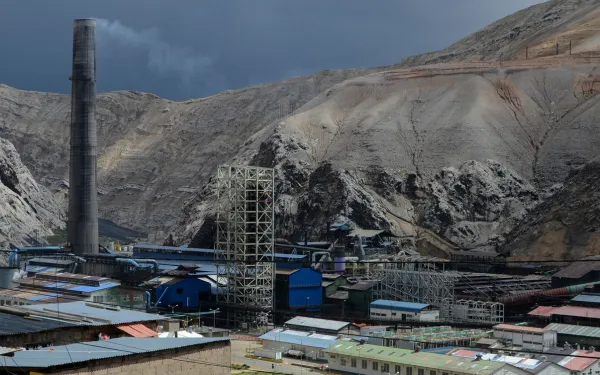
Lowering Peru’s air quality standards is regressive and harmful to public health
The government of Peru has proposed increasing the legal amount of sulfur dioxide in the air by more than 12 times and doubling the allowed level of particulate matter, substances known to cause serious health harms. The proposal ignores both scientific evidence and the government’s obligation to uphold conditions that are suitable for human life and health. Lima, Peru. Peru’s Environment Ministry has proposed new National Environmental Quality Standards for air, which would impact the health of Peruvians everywhere. The proposed standard increases by more than 12 times the limit for airborne concentrations of sulfur dioxide (SO2) and doubles the allowable amount of fine particulate matter. The increased limits ignore scientific evidence that finds these substances can cause lung problems and other illnesses, particularly among the most vulnerable populations such as people with asthma, children, and the elderly. “There is overwhelming scientific evidence to conclude that sulfur dioxide pollution poses a serious health risk, particularly when the contamination reaches high levels over short periods of time, something the proposal does not take into account,” said Anna Cederstav, co-director of the Interamerican Association for Environmental Defense (AIDA). AIDA prepared comments on the proposal that were presented to the government of Peru together with APRODEH. These pointed out that, contrary to the government’s assertion, reducing sulfur dioxide levels in the air would lead to longer life expectancy. This is because, among other reasons, sulfur dioxide also promotes the formation of PM2.5, small particulate matter that lodges in human lungs and causes acute respiratory problems such as bronchitis and pneumonia, as well as premature death. The government proposes to simultaneously double the legal limit for these extremely harmful particles. The organizations also highlighted flaws in the public consultation process. The government published the draft standard on Saturday, April 8, just before the Easter week holiday, giving only 10 working days for public comment on this critical public health issue. They also failed to make public the entire scientific and technical basis for the proposal. In so doing, the government has violated the rights to information and public participation. The comments also emphasize that the government’s proposal violates the American Convention on Human Rights and other international treaties to which Peru is a party, by failing to guarantee the human rights to life and health. While the proposed changes would impact Peru’s entire population, the residents of cities with high levels of pollution, such as La Oroya, would suffer the most severe impacts. La Oroya is an emblematic case because the metallurgical complex operating there—which has for decades been a macro-emitter of pollutants—is in the process of being sold. The government has publically acknowledged that the weakening of the air quality standards is an attempt to promote the sale of the complex. But it ignores the effects those relaxed standards would have on the people of La Oroya, who have seen significant improvements to both their air quality and their health in recent years. People affected by the pollution in La Oroya have sued the State before the Inter-American Commission on Human Rights in an attempt to protect their rights. For ten years, they have been granted precautionary measures due to the risk the pollution poses to their health and life; those measures were recently extended to additional people because the level of risk has continued. “Relaxing air quality standards to facilitate the sale of the complex and increase investment in Peru would be a setback for the protection of health and the environment, which could result in the State being held responsible before the Inter-American Court on Human Rights,” said Christian Huaylinos of APRODEH. “In addition, such actions would violate free trade agreements signed by Peru with the United States and the European Union.” Consult the comments sent to the Environment Ministry of Peru and more information on the case of La Oroya. Press contacts: Rodrigo da Costa Sales, AIDA, [email protected], +51 994767961 Christian Huaylinos, APRODEH, [email protected], +51 959 789 232
Read more