
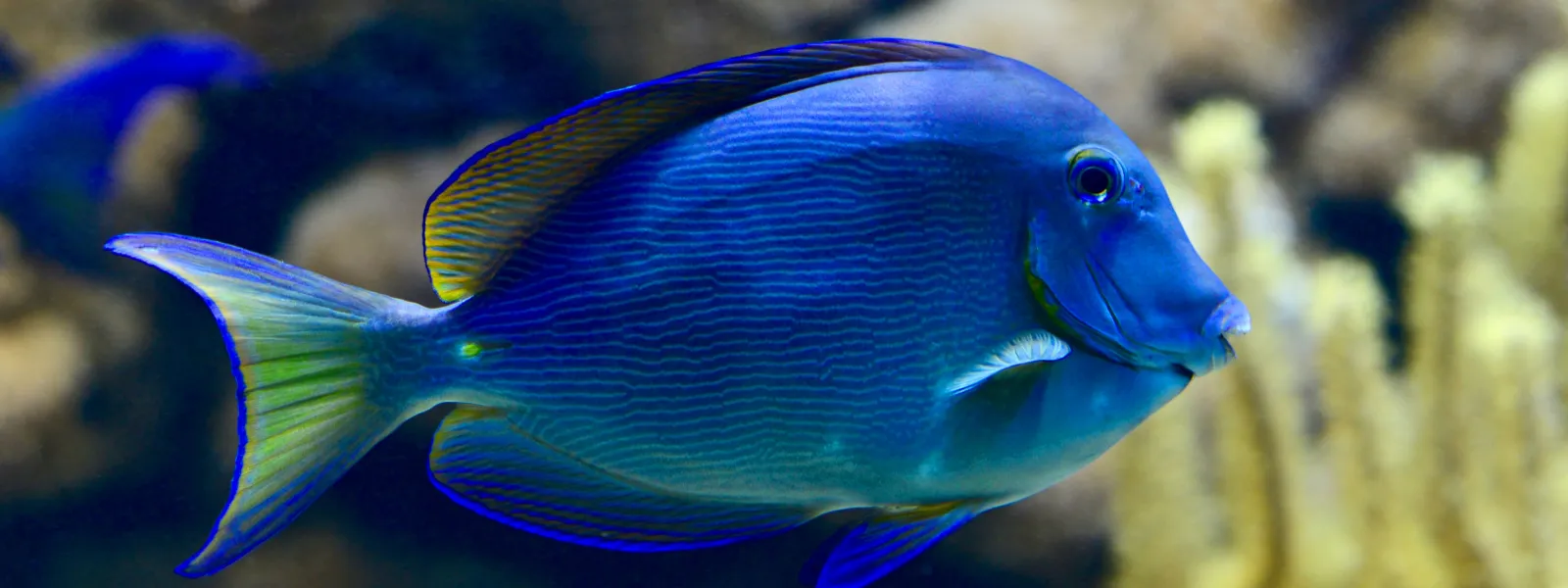
Project
RA Killmer_CC BY-NC-ND 2.0Protecting herbivorous fish, to secure a future for corals
Herbivorous fish rarely go unnoticed. Their brilliant colors illuminate the reef to the delight of scuba divers. But more importantly, these iconic fish are also vital for the conservation of coral reefs.
Herbivorous fish feed on the algae that grow on corals and compete with them for light and oxygen. By eating the algae, these tiny fish play a big role in the survival of the entire ecosystem.
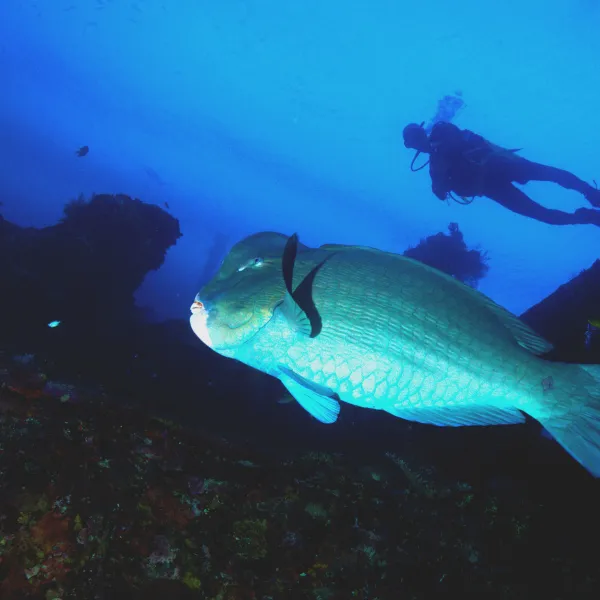
Species of these herbivorous fish include: parrotfish, which eat corals that break off the reef and excrete them as white sand; damselfish, which fend off the macro algae growth that kills coral; and surgeonfish, whose most famous representative is Dory from Finding Nemo.
But corals are quickly losing their greatest allies. Populations of herbivorous fish are dwindling, particularly in the Caribbean.
The overfishing of commercial species is driving artisanal fishermen to capture even the youngest herbivorous fish, preventing those species from replenishing their numbers.
The loss of these fish is one more threat to coral reefs, already fragile ecosystems that are increasingly vulnerable to climate change. Preserving our reefs will ensure we continue to enjoy the services they provide. Among other things, coral reefs act as fish hatcheries, natural barriers against storms and hurricanes, and the source of medicines that treat illnesses like cancer and Alzheimer’s.
Related projects
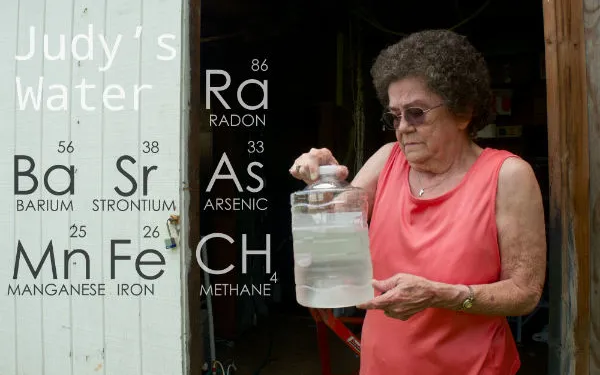
Stopping Fracking: Together We’re Stronger!
It’s an increasingly recognized reality: the world cannot burn its reserves of fossil fuels and expect the planet to be habitable. But energy companies continue extracting fossil fuels in pursuit of near-term profit, rather than adapting their business models for the sake of long-term sustainability. Already, much of the world’s reserves of easily extracted, high-quality fossil fuels have been exhausted. New horizontal drilling technology, combined with hydraulic fracturing (fracking), has made exploitation of hard-to-reach ("unconventional") oil and gas deposits possible. For a variety of reasons, fracking poses very high risks to public health and the environment. AIDA has begun working with civil society organizations and institutions to generate information, stimulate debate, and join forces to prevent the negative impacts of fracking in Latin America. The Risks of Fracking Fracking for unconventional deposits involves drilling into the ground vertically, to a depth below aquifers, and then horizontally through layers of shale rock. Then fracking fluid (a high-volume mixture of water, sand, and undisclosed chemicals) is injected at very high pressure to fracture the shale, thus releasing the oil and gas trapped inside. After fracking fluid surfaces, energy companies typically dump it into unlined ponds. The chemical soup—now also contaminated with heavy metals and even radioactive elements—seeps into aquifers and overflows into streams. The severe and irreversible damage associated with fracking includes: Exhaustion of freshwater supplies. Contamination of ground and surface waters. Air pollution from drill and pump rigs. Harms to the health of people (low birth weight, birth defects, increases in congenital heart defects, deformities, allergies, cancer, and respiratory disease) and other living things. Unregulated emissions of methane, which traps 25 times more heat than carbon dioxide. Earthquakes. Effects on subsistence activities, such as agriculture. For and Against Fracking Given these risks, France, Bulgaria, Ireland, and New York State have turned their backs on fracking, banning it or declaring a moratorium in their territories. In Latin America, however, many countries are opening their doors to fracking. Governments are doing so with little or no understanding of its impacts, and in the absence of an adequate process to inform, consult, or invite the participation of affected communities: Mexico promoted fracking through a landmark energy reform law in 2013. As of 2015, 20 wells have been drilled using this technique. Argentina has the largest number of fracking operations in the region, and the largest reserves of shale gas in America. As of 2014, there were more than 500 fracking wells in Neuquén, Chubut, and Rio Negro[6], including wells in the Auca Mahuida reserve and in Mapuche indigenous territories. In Chile, the state-owned oil company ENAP started fracking on the island of Tierra del Fuego in 2013. More drilling is planned in the coming years. Colombia and Brazil have opened public bidding and signed contracts with oil companies for exploitation of unconventional hydrocarbons through fracking. Bolivia's state-owned oil company signed an agreement in 2013 with its counterpart from Argentina to study the potential of fracking in Bolivia. Better together In October 2014, with the help of AIDA, the Regional Alliance on Fracking was formed to raise awareness, generate public debate, and prevent risks associated with the technique. The alliance seeks to ensure that the rights to life, public health, and a healthy environment are respected in Latin America. The idea for the alliance came from previous regional coordination initiatives promoted by Observatorio Petrolero Sur and the Heinrich Böll Foundation. The alliance currently consists of 33 civil society organizations and academic institutions from seven countries in the region. They are working together to: Identify fracking operations in the region, their impacts and affected communities, and promote civil society strategies to stop them. Organize workshops and virtual seminars on the impacts of fracking. Develop international advocacy strategies to stop fracking in the region. Conduct a regional outreach campaign on the issue. The alliance is strengthened by the expertise of its members, its regional scope, and the institutional support provided by organizations in each country. Given its collaborative nature, it is always open to the participation of new institutions and individuals interested in the subject. Major achievements Many civil society organizations, indigenous peoples, and institutions in the region have been working to stop fracking. They have developed strategies to generate information, raise awareness, promote public debate, and influence decision makers. Their achievements encourage us to improve coordination for greater impact throughout Latin America. Already, their efforts have resulted in: More than 30 municipal orders declaring a ban or moratorium on fracking in Argentina, Brazil, and Uruguay. Many have been based on the precautionary principle, as well as on concerns about surface and ground waters and public health. Judgments suspending contracts for fracking in Brazilian oil basins in Sao Paulo, Piauí, Bahia, and Paraná. Judges have also ordered Brazil’s National Petroleum Agency not to open further bidding until the environmental risks and impacts of fracking are sufficiently understood. Publications on the impacts of fracking, community awareness campaigns, and a bill – supported by more than 60 national deputies and nearly 20,000 people – to ban fracking in Mexico. Greater public awareness of fracking, and public debate, in Colombia and Bolivia. Through regional collaboration, AIDA will continue to make progress on preventing the impacts of fracking in our communities, and promote an energy future that is both renewable and humane.
Read more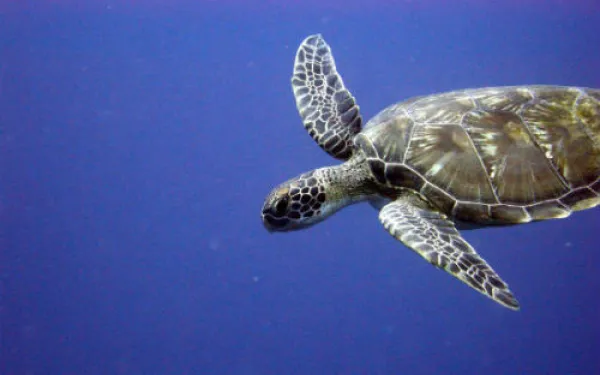
Don Diego mining project poses grave risk to Mexican marine ecosystem
AIDA’s formal comments on the Environmental Impact Statement for the phosphate-mining project, proposed in a Baja California Sur bay, point to insufficient information about safeguards for the ecosystem, which is vital for both coastal communities and endangered species. Mexico City, Mexico. The Interamerican Association for Environmental Defense (AIDA) has commented on the Environmental Impact Statement for the Don Diego phosphate-mining project in Ulloa Bay, Baja California Sur. In their analysis, AIDA proved that the document lacks sufficient technical information to ensure that the project will not seriously damage the Bay. Ulloa Bay serves as an important marine ecosystem for coastal communities as well as for endangered species like the Blue and Humpback whales and the Loggerhead turtle. The Mexican Center for Environmental Law (CEMDA) presented the comments in AIDA’s name to Mexico’s Secretariat of Environment and Natural Resources (SEMARNAT). "The comments show that the Don Diego project, the first of its type in the region, could cause serious environmental damage," said Haydée Rodríguez, an AIDA attorney. The primary reasons the project should not be authorized as presented are: The project could cause irreversible damage to an ecologically vulnerable and biodiverse region, which includes Magdalena Bay, a mangrove ecosystem considered a Marine Region of Importance. The region is also home both to threatened marine species and to others vital to the fishing industry. The Environmental Impact Statement lacks important information about possible impacts on the marine ecosystem and measures to avoid them. The project involves a mining process that will greatly alter the marine environment: large boats will dredge the seabed and extract sand in search of phosphate, but in doing so may also extract living organisms. The project will alter the marine ecosystem by unearthing sediments that contain toxic elements, such as uranium, that will be returned to the ocean after processing. The exposed toxic sediments, along with the dredging and noise of the mining operation, will alter the habitat of endangered species of whales and turtles. The Mexican government has national and international obligations to apply the Precautionary Principle. As such, they should deny permission to the project to ensure that it does not cause serious and irreversible environmental damage. In authorizing the project, the Mexican government would violate international treaties that require it to protect marine environments and threatened and endangered species. The project puts at risk fishing and tourism activities that provide the livelihoods of the region’s coastal communities. You can see our full comments on the Don Diego Environmental Impact Statement here (in Spanish).
Read more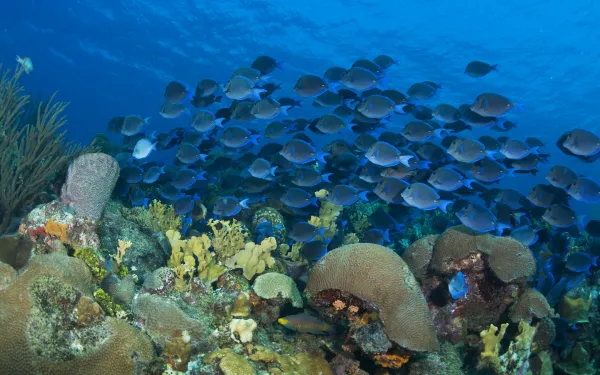
International Regulatory Best Practices for Coral Reef Protection
This Best Practices Guide provides examples of effective regulatory tools for protecting coral reefs. These tools can be adapted to the circumstances of various jurisdictions where reefs are at risk. It is not an exhaustive list of best practices, but rather a compilation of approaches that countries around the world have implemented to regulate human activities that harm coral reefs. This Guide presents basic legal and regulatory tools and practices that can be modified, improved, strengthened, and applied according to the unique circumstances and objectives of each country seeking to implement stronger protections for its coral reef resources. Download the guide Download the summary report
Read more