
Project
RA Killmer_CC BY-NC-ND 2.0Protecting herbivorous fish, to secure a future for corals
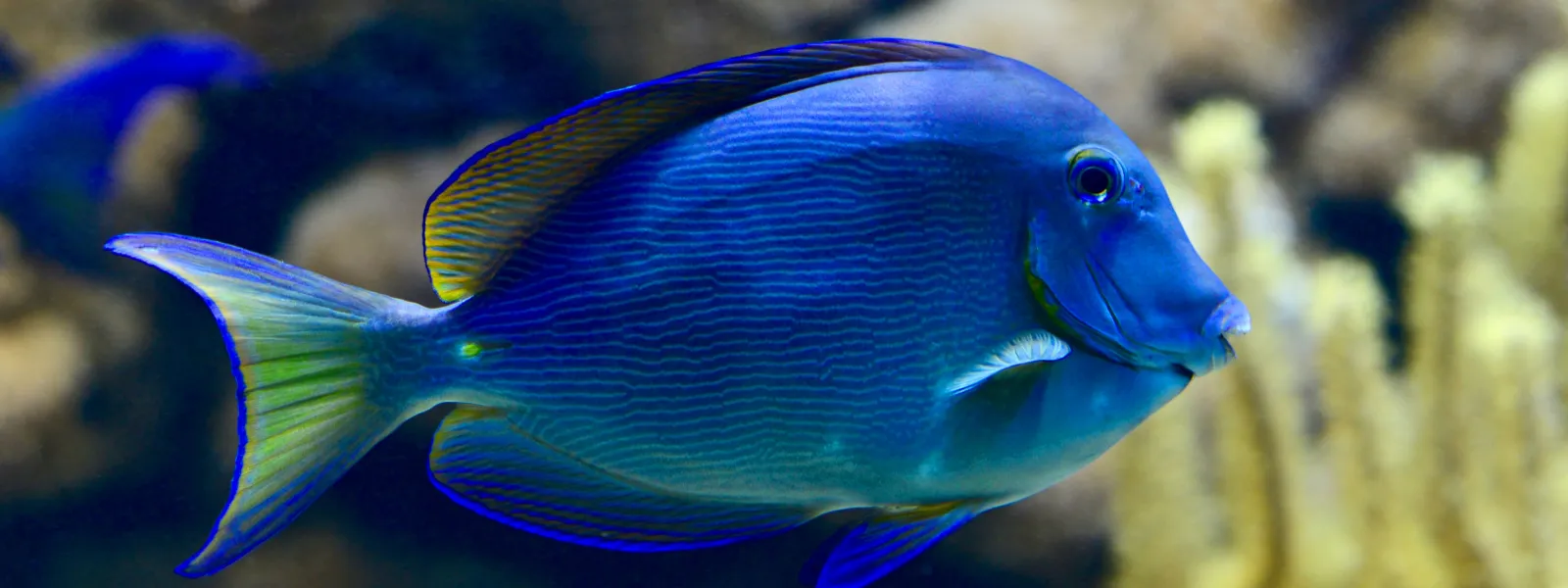
Herbivorous fish rarely go unnoticed. Their brilliant colors illuminate the reef to the delight of scuba divers. But more importantly, these iconic fish are also vital for the conservation of coral reefs.
Herbivorous fish feed on the algae that grow on corals and compete with them for light and oxygen. By eating the algae, these tiny fish play a big role in the survival of the entire ecosystem.
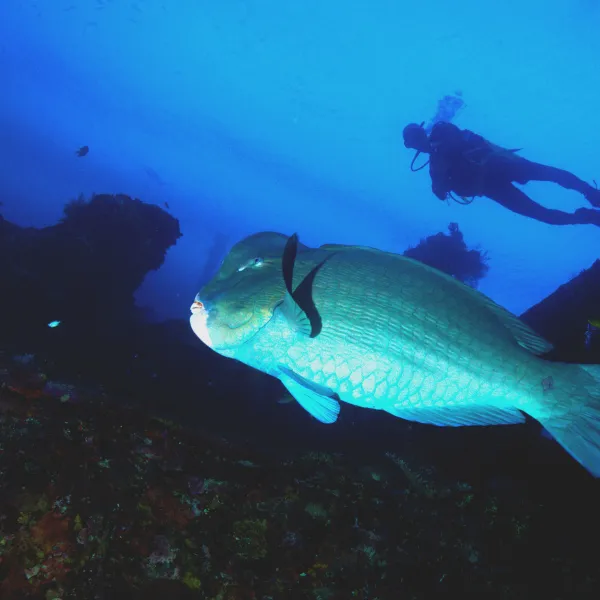
Species of these herbivorous fish include: parrotfish, which eat corals that break off the reef and excrete them as white sand; damselfish, which fend off the macro algae growth that kills coral; and surgeonfish, whose most famous representative is Dory from Finding Nemo.
But corals are quickly losing their greatest allies. Populations of herbivorous fish are dwindling, particularly in the Caribbean.
The overfishing of commercial species is driving artisanal fishermen to capture even the youngest herbivorous fish, preventing those species from replenishing their numbers.
The loss of these fish is one more threat to coral reefs, already fragile ecosystems that are increasingly vulnerable to climate change. Preserving our reefs will ensure we continue to enjoy the services they provide. Among other things, coral reefs act as fish hatcheries, natural barriers against storms and hurricanes, and the source of medicines that treat illnesses like cancer and Alzheimer’s.
Related projects
Living beyond our means
An article from Waterkeeper on the valuable ecosystems services provided by coastal mangrove swamps and the threats these face from developers.
Read moreCivil society groups go to Court to defend Panama Bay
Groups submit arguments supporting government’s case for maintaining wildlife refuge. Panama City, Panama — Today, on International Mangrove Day, two civil society organizations announce their legal support for the government of Panama in a lawsuit brought by developers challenging the protected status of Panama Bay. The groups, the Interamerican Association for Environmental Defense (AIDA) and the Centro de Incidencia Ambiental (CIAM), submitted legal briefs detailing national and international legal arguments for upholding environmental protections established by the government in 2009 through a resolution issued by the environmental authority in Panama. The developers who are contesting the law, Panama Bay Development and Compañia Lefevre, are seeking to open the area to development of vast tourism complexes. Extensive tourism in the area would bring devastating environmental impacts to the sensitive ecosystem. The Panama Bay coastline is ringed with miles of pristine mangroves, which provide critical breeding ground for species relied upon by Panama’s fishing industry. Each kilometer of mangrove-covered coastline generates about $100,000 USD for Panama annually. Mangroves also help protect Panama from the effects of global climate change by buffering the coast from increasingly powerful tropical storms and by storing carbon from the atmosphere in their roots. A mangrove forest can sequester 50 times more carbon than a tropical forest of the same size, making mangroves a conservation priority if countries wish to halt catastrophic climate change. The protected area of Panama Bay is roughly 211,000 acres, slightly larger than the land area of New York City. Panama Bay is one of the earth’s most biodiverse places and is an essential habitat for migratory birds and threatened species such as jaguars and loggerhead turtles. “In the face of ever more powerful and dangerous climate-change-driven tropical storms, destroying coastal mangroves is one of the worst things a country like Panama could do,” said Anna Cederstav, Ph.D., staff scientist and co-director of AIDA. According to Sandra Moguel, an attorney for AIDA in Mexico, “Article four of the Constitution of Panama requires the observance of the rules of international law throughout the territory of that country. Obligations under the Ramsar Convention on Wetlands of International Importance and the Convention on Biological Diversity, both of which have been ratified by Panama, should thus be taken into consideration in deciding the challenge against the natural protected area.” "The creation or declaration of a protected area does not constitute expropriation. What it does is protect and guarantee the right to a healthy environment contained in the Panamanian Constitution” said Maria Acuña, CIAM´s legal advisor.
Read more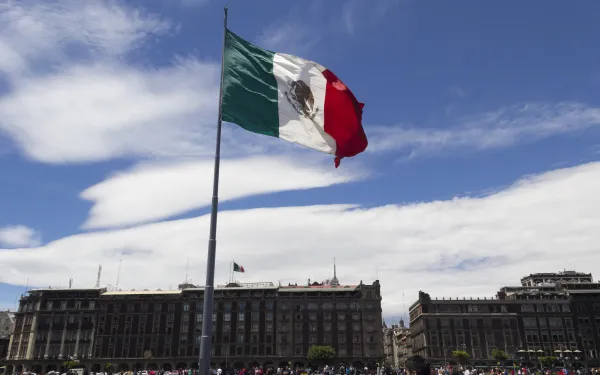
Mexican Constitution protects human rights
On June 9, 2011, Mexico rewrote history. The Mexican Congress approved revisions that expressly recognize human rights in the national constitution for the first time. The new language requires all authorities to adhere to international human rights treaties Mexico is a signatory to when those treaties are more expansive than the "individual guarantees" currently on the books. As modified, Article 1 of the constitution now recognizes human rights in general and incorporates international law. This means groups such as AIDA and communities in Mexico will have better legal tools for defending the right to a healthy environment or clean drinking water. Or, for example, because indigenous communities’ right to free, prior, and informed consent is granted in international law, Mexico will now have to recognize this right. Moreover, although the Mexican constitution already recognized some rights, enforcement has been difficult. The revision provides additional legal tools and thus raises hopes for enhanced protection of those rights. These constitutional changes came after a four-year process initiated by the UN Office of the High Commissioner for Human Rights in Mexico, and involving academics, nongovernmental organization, and independent experts. AIDA contributed by evaluating existing legal tools for protecting human rights as well as international legal obligations. In 2008, the Mexican Congress started considering the human-rights-related constitutional revision, which was finally partially approved in June, 2011. While the Mexican Congress and government should be applauded for its vision, the constitutional change’s effectiveness remains to be seen. Recognizing human rights is only the first step, and the new commitment will mean little without compliance. In coordination with our allies in the country, AIDA will monitor Mexican cases to ensure enforcement of this profound advancement and improved protection of the right to a healthy environment.
Read more