
Project
Alberto Peña Kay
Protecting the Santurban páramo from mining's damage
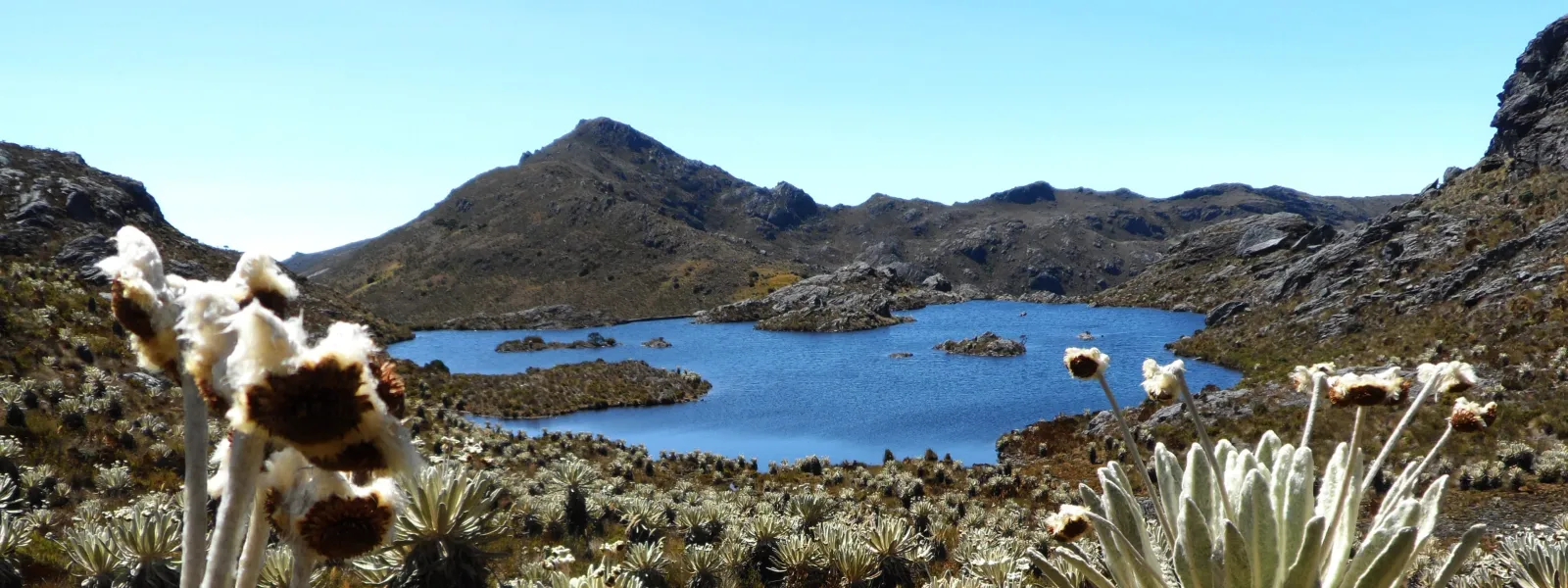
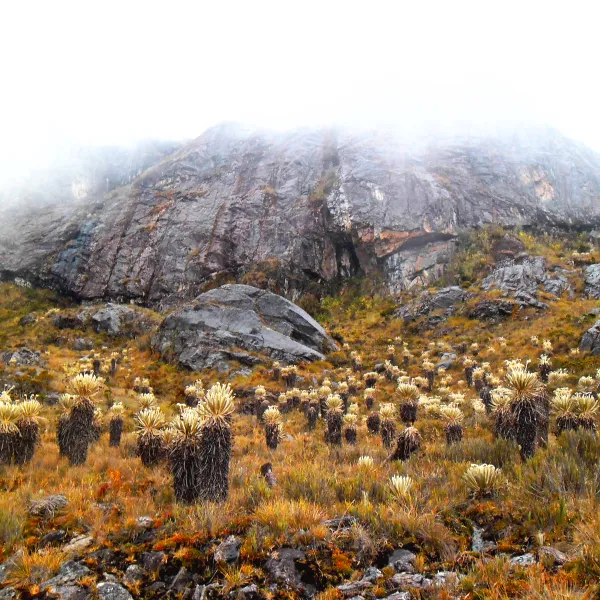
In the Andean region, high-mountain ecosystems known as páramos capture water from the fog and supply it to the lowlands. One such ecosystem is the Santurbán páramo, which provides fresh water to more than two million people in Colombia.
Santurbán, like the other páramos on the continent, also captures large amounts of carbon, making it a key ally in mitigating the climate crisis. It is also a refuge for hundreds of endangered species, including the iconic spectacled bear.
The land in and around the páramo contains gold and other minerals. This has put Santurbán in the spotlight of the multinational mining industry, which for decades has sought to establish large-scale projects in the ecosystem that threaten to degrade it.
The Committee for the Defense of Water and the Santurbán Páramo—a coalition of environmental advocates—has thwarted these ongoing attempts, with support from AIDA and other civil society organizations.
Background
The Santurbán páramo is located in the heart of the Eastern Cordillera of the Colombian Andes, in the departments of Santander and Norte de Santander, at an elevation ranging from 2,200 to 4,290 meters above sea level.
It covers an area of 129,743 hectares and is home to 57 lakes. It serves as a habitat for 457 plant species and 293 species of vertebrate fauna.
There are mineral deposits in Santurbán, primarily gold, but also silver and copper. This explains the region’s mining tradition, particularly in the part of the páramo located in Santander, in the province of Soto Norte. The communities in the area have built their culture and identity around gold mining, which is mainly artisanal and small-scale.
But since the 1990s, the gold deposits in the páramo have also attracted foreign mining conglomerates seeking to develop large-scale projects. This has raised concerns among the population that relies on the Santurbán water sources, who have mobilized in defense of water, their land, and life.
Although national and international regulations prohibit mining in páramos, the Colombian government has granted mining concessions to transnational corporations in Santurbán.
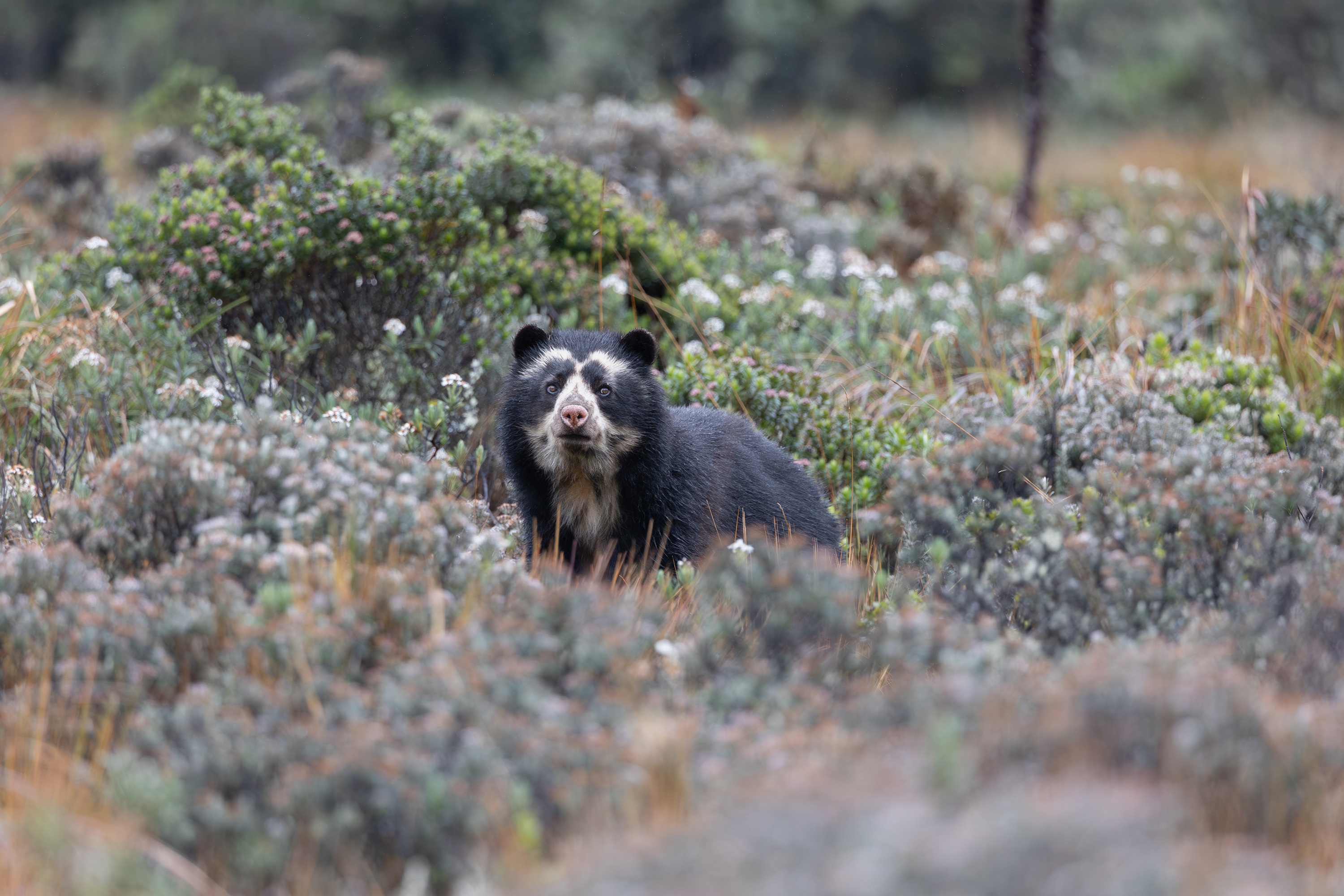
Photo: Keishpixl / Pixabay.
The long struggle to protect the páramo
One of the companies that sought to develop large-scale mining in Santurbán is Eco Oro Minerals Corp.—formerly Greystar Resources—a Canadian company that intended to establish the Angostura open-pit mine there to extract gold and silver. Between 1994 and 1995, the company acquired its mining titles and conducted exploration. And in 2010, it applied for a mining permit.
That was the year AIDA became involved in defending the ecosystem, supporting the Committee for the Defense of Water and the Santurbán Páramo. Our legal work helped convince the Colombian government to deny the mine an environmental permit in May 2011.
In January 2013, the government designated a portion of the páramo (11,700 hectares) as a Regional Natural Park. That year—together with the committee and partner organizations—we carried out a campaign and advocacy efforts to urge the government to recognize the entire Santurbán area as a páramo ecosystem through a delimitation based on scientific criteria. In December 2014, the Ministry of the Environment established a delimitation that protected 76% of the páramo (98,954 hectares).
Furthermore, as a result of a litigation supported by AIDA, in February 2016, Colombia’s highest court reaffirmed that mining in páramos is prohibited.
That same year, in December, the International Finance Corporation (IFC), the World Bank Group’s private sector arm, decided to divest from Eco Oro Minerals. This achievement was the result of a process that began in 2012, when the committee—advised and supported by AIDA and international partner organizations—filed a complaint before an independent accountability mechanism, which concluded that the IFC’s investment in the Angostura project failed to take into account the project’s social and environmental impacts, thereby contradicting the financial institution’s internal policies.
Also in 2016, Eco Oro Minerals filed an arbitration claim against the Colombian government with the International Centre for Settlement of Investment Disputes (ICSID), arguing that it had been adversely affected by government decisions aimed at protecting the country’s páramos, including the delimitation of Santurbán.
In 2017, the Constitutional Court invalidated the delimitation because the affected communities were not consulted. The high court ordered that a participatory delimitation be carried out.
And that year, a new threat to Santurbán emerged when the Canadian multinational Aris Mining applied for an environmental permit for Soto Norte, a gold mining project located near the páramo. Following citizen protests and technical objections, in October 2020, the National Environmental Licensing Authority shelved the project.
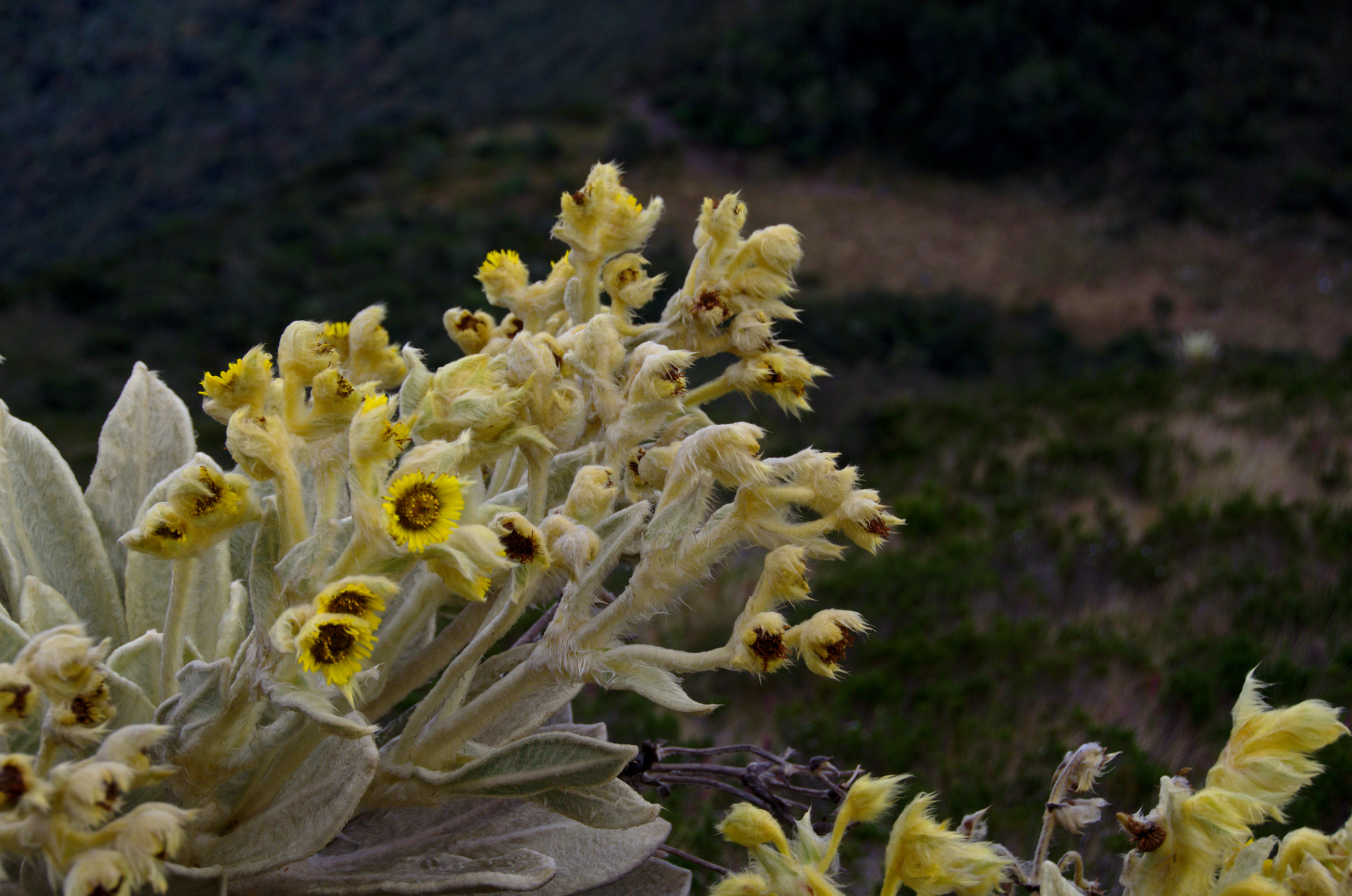
Photo: Aztlec.
Current situation
In March 2025, the Colombian government designated the western flank of the Santurbán massif as a temporary renewable natural resource reserve area, delimiting and protecting an area of 75,344.65 hectares. This resulted in a two-year suspension of the Soto Norte project. However, Aris Mining's contract to formalize Calimineros' small-scale mining activities through the purchase and processing of mineralized material remains in effect.
In addition, the Canadian mining company continues to move the project forward. In September 2025, it released its prefeasibility study, revising the mine’s original design.
Meanwhile, members of the Committee for the Defense of Water and the Santurbán Páramo face threats and stigmatization because of their work. In March 2025, UN Special Rapporteurs and the Working Group on Business and Human Rights denounced these incidents in communications sent to the governments of Colombia, Canada, and the United Arab Emirates, as well as to the companies Aris Mining and MDC Industry Holding Company LLC, the former co-owner of the Soto Norte project.
Regarding the arbitration claim filed by Eco Oro Minerals, in July 2024, ICSID ruled in favor of the Colombian government and rejected the Canadian company’s claim for USD 1.1 billion in compensation.
Concerning the delimitation of Santurbán, in July 2026, the Ministry of the Environment issued a resolution introducing the concept of "progressive delimitation." On that basis, the government proposes to progressively demarcate the páramo, covering 29,199 hectares across 19 municipalities—those where the participatory agreements required by the Constitutional Court in its 2017 ruling have already been finalized. It also proposes two measures on the creation and expansion of reserves to restrict mining in the ecosystem.
Learn more about the impacts of mining on the páramos of Latin America (in Spanish).
Partners:
Related projects

Joint letter: Mexico – Detention of environmental and human rights defender Mr. Marco Antonio Suástegui Muñoz
The 57 organizations and persons signatory to the letter, which work for the protection of human rights and the environment, express their deep concern at the detention of Mr. Marco Antonio Suástegui, leader of the Consejo de Ejidos y Comunidades Opositores a la Presa La Parota – CECOP (Council of Communal Lands and Communities Opposing the La Parota Dam), on 17 June by members of the Ministerial Police of the Attorney General of Justice of Guerrero State. We call upon the Mexican State to take effective and urgent measures to guarantee the human rights of Mr. Suástegui and the important work that the human rights defender performs in defence of the Papagayo River. In particular, we consider it fundamental that the State: Take measures to ensure that the competent authorities guarantee the right to a defence and due process of Mr. Marco Antonio Suástegui, and reverse any action taken in the detention procedure and past transfers that tainted by illegalities, Take measures to guarantee his physical and psychological integrity, and Take all necessary measures to secure the work for the defence of human rights and the environment undertaken by Marco Antonio Suástegui, and take an active role in avoiding any act that hinders the actions taken to defend the Papagayo River.
Read more
Colombia must choose between gold and water: Al Gore
Colombia faces a pivotal choice for its future. It must choose between protecting its high-altitude moors as its water source for millions of people or authorizing large-scale mining in these fragile ecosystems. AIDA, together with its allied organizations, is working to convince the authorities to choose water and this cause recently won a new ally: Al Gore. The former U.S. vice president, a Nobel Peace Prize laureate for his success at raising awareness about climate change, brought up the issue of mining in the moors, known locally as páramos, in April. “Colombia must choose between the gold in the páramo and profits for a few people, or the drinking water that supplies all of its citizens,” he said at an international summit on the environment in Bucaramanga, a city in northeastern Colombia that gets its water from the Santurbán Páramo. We’ve been calling on the Colombian government to protect this moor and others around the country from mining, given that they provide 85% of the country’s water. Will this happen? By law, the government must keep mining out of the páramos. But to do this, their boundaries must first be mapped. This poses a problem. In April, the government unveiled its map showing that the Santurbán Páramo stretches over 42,000 hectares (104,000 acres). That’s more than the 11,000 hectares of previous estimates. But it’s only about half the 82,000 hectares measured by the Alexander von Humboldt Biological Resources Research Institute, an independent state research center that used a larger scale map than the government. The larger scale provides richer details that show how the moor extends further. The government has not adopted an official measurement, leaving important parts of the moor open to mining, an industry it is promoting to spur economic growth. But at what costs? Large-scale mining will cause irreversible damage to these flora-rich moors that not only supply water to millions of people but also help mitigate the effects of climate change by capturing carbon emissions. Gore was clear on what choice he recommends for Colombia or any country facing questions of economic growth versus environmental protect. “Without a planet, there is no economy that is worth anything,” he said. You can help us spread the message by making a donation and signing our petition so that we can continue the fight to save Colombia’s moors. Thank you!
Read moreOrganizations come out in defense of the Veracruz Reef System
Technical and legal arguments are submitted in support of a lawsuit against modifying the boundaries of the Veracruz Reef System National Park in eastern Mexico, a site protected by international obligations to preserve the natural barrier against storms and hurricanes. Veracruz, Mexico. Six civil society organizations have submitted to a Mexican court an amicus curiae brief containing legal and technical arguments that strengthen arguments in a lawsuit against a government decree to modify and reduce the boundaries of the Veracruz Reef System National Park. The proposed modification puts conservation of this internationally important wetland at stake. The organizations submitted the friend of the court brief to the Third Tribunal of the District of Veracruz on April 25. They are the Interamerican Association of Environmental Defense (AIDA), the Mexican Center for Environmental Law (CEMDA), the Strategic Human Rights Litigation Center (Litiga OLE), Pathways and Encounters for Sustainable Development (SENDAS), Pobladores A.C. and the Veracruz Assembly of Environmental Initiatives and Defense (LAVIDA). The Veracruz Reef System in eastern Mexico was declared a natural protected area in 1992 to safeguard its diversity of species and a rational use of its resources, and to encourage research into the ecosystem and its balance. In 2004, the Veracruz Reef System was included as a wetland of international importance under the Ramsar Convention, an international treaty to protect wetlands. The amicus curiae (friend of the court) brief highlights the importance of the reef system for Mexico and the region. “Coral reefs are natural barriers against large waves and storms like Hurricane Karl, which hit Veracruz in 1992,” said Sandra Moguel, a legal advisor to AIDA. “Reefs also provide abundant fishing and valuable information for medical research. They’re great spots for recreation and they help to sustain marine life.” The legal brief also argues that the decree, from Mexico’s National Commission on Protected Areas (CONANP), threatens regional biodiversity, violates the human right to a healthy environment, and breaches Mexico’s international obligations to protect this ecosystem. “The local population is more exposed to suffer the impacts of hurricanes and other climate phenomena, because the decree removes the Punta Gorda and Bahía de Vergara reefs from the national park,” said Xavier Martínez Esponda, regional director of CEMDA for the Gulf of Mexico. The organizations’ brief explains how CONANP’s decree infringes specific national laws and international treaties. For example, the Organization of American States’ Convention on Nature Protection and Wild Life Preservation in the Western Hemisphere states that natural park limits can only be modified by legislative authorities. CONANP is not such an authority. The decree also violates the Ramsar Convention, given that the modification of the national park’s defined boundaries did not follow the procedures established by that intergovernmental treaty for the protection of wetlands of international importance. The brief concludes by making it clear that CONANP’s decree is a regressive measure that erases the benefits of environmental protection attained with the creation of the protected area in 1992. “Setbacks like this can cause irreparable damage,” said Moguel.
Read more