
Project
Alberto Peña Kay
Protecting the Santurban páramo from mining's damage
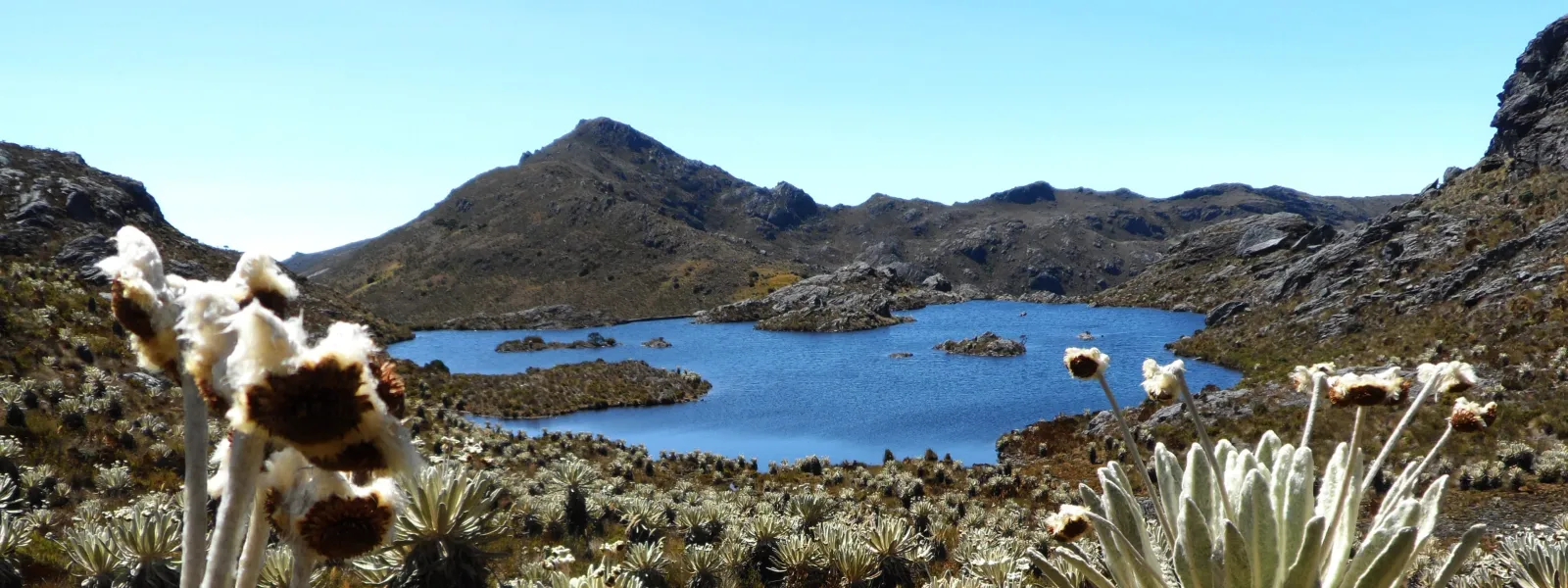
In the Andean region, high-mountain ecosystems known as páramos capture water from the fog and supply it to the lowlands. One such ecosystem is the Santurbán páramo, which provides fresh water to more than two million people in Colombia.
Santurbán, like the other páramos on the continent, also captures large amounts of carbon, making it a key ally in mitigating the climate crisis. It is also a refuge for hundreds of endangered species, including the iconic spectacled bear.
The land in and around the páramo contains gold and other minerals. This has put Santurbán in the spotlight of the multinational mining industry, which for decades has sought to establish large-scale projects in the ecosystem that threaten to degrade it.
The Committee for the Defense of Water and the Santurbán Páramo—a coalition of environmental advocates—has thwarted these ongoing attempts, with support from AIDA and other civil society organizations.
Background
The Santurbán páramo is located in the heart of the Eastern Cordillera of the Colombian Andes, in the departments of Santander and Norte de Santander, at an elevation ranging from 2,200 to 4,290 meters above sea level.
It covers an area of 129,743 hectares and is home to 57 lakes. It serves as a habitat for 457 plant species and 293 species of vertebrate fauna.
There are mineral deposits in Santurbán, primarily gold, but also silver and copper. This explains the region’s mining tradition, particularly in the part of the páramo located in Santander, in the province of Soto Norte. The communities in the area have built their culture and identity around gold mining, which is mainly artisanal and small-scale.
But since the 1990s, the gold deposits in the páramo have also attracted foreign mining conglomerates seeking to develop large-scale projects. This has raised concerns among the population that relies on the Santurbán water sources, who have mobilized in defense of water, their land, and life.
Although national and international regulations prohibit mining in páramos, the Colombian government has granted mining concessions to transnational corporations in Santurbán.

Photo: Keishpixl / Pixabay.
The long struggle to protect the páramo
One of the companies that sought to develop large-scale mining in Santurbán is Eco Oro Minerals Corp.—formerly Greystar Resources—a Canadian company that intended to establish the Angostura open-pit mine there to extract gold and silver. Between 1994 and 1995, the company acquired its mining titles and conducted exploration. And in 2010, it applied for a mining permit.
That was the year AIDA became involved in defending the ecosystem, supporting the Committee for the Defense of Water and the Santurbán Páramo. Our legal work helped convince the Colombian government to deny the mine an environmental permit in May 2011.
In January 2013, the government designated a portion of the páramo (11,700 hectares) as a Regional Natural Park. That year—together with the committee and partner organizations—we carried out a campaign and advocacy efforts to urge the government to recognize the entire Santurbán area as a páramo ecosystem through a delimitation based on scientific criteria. In December 2014, the Ministry of the Environment established a delimitation that protected 76% of the páramo (98,954 hectares).
Furthermore, as a result of a litigation supported by AIDA, in February 2016, Colombia’s highest court reaffirmed that mining in páramos is prohibited.
That same year, in December, the International Finance Corporation (IFC), the World Bank Group’s private sector arm, decided to divest from Eco Oro Minerals. This achievement was the result of a process that began in 2012, when the committee—advised and supported by AIDA and international partner organizations—filed a complaint before an independent accountability mechanism, which concluded that the IFC’s investment in the Angostura project failed to take into account the project’s social and environmental impacts, thereby contradicting the financial institution’s internal policies.
Also in 2016, Eco Oro Minerals filed an arbitration claim against the Colombian government with the International Centre for Settlement of Investment Disputes (ICSID), arguing that it had been adversely affected by government decisions aimed at protecting the country’s páramos, including the delimitation of Santurbán.
In 2017, the Constitutional Court invalidated the delimitation because the affected communities were not consulted. The high court ordered that a participatory delimitation be carried out.
And that year, a new threat to Santurbán emerged when the Canadian multinational Aris Mining applied for an environmental permit for Soto Norte, a gold mining project located near the páramo. Following citizen protests and technical objections, in October 2020, the National Environmental Licensing Authority shelved the project.
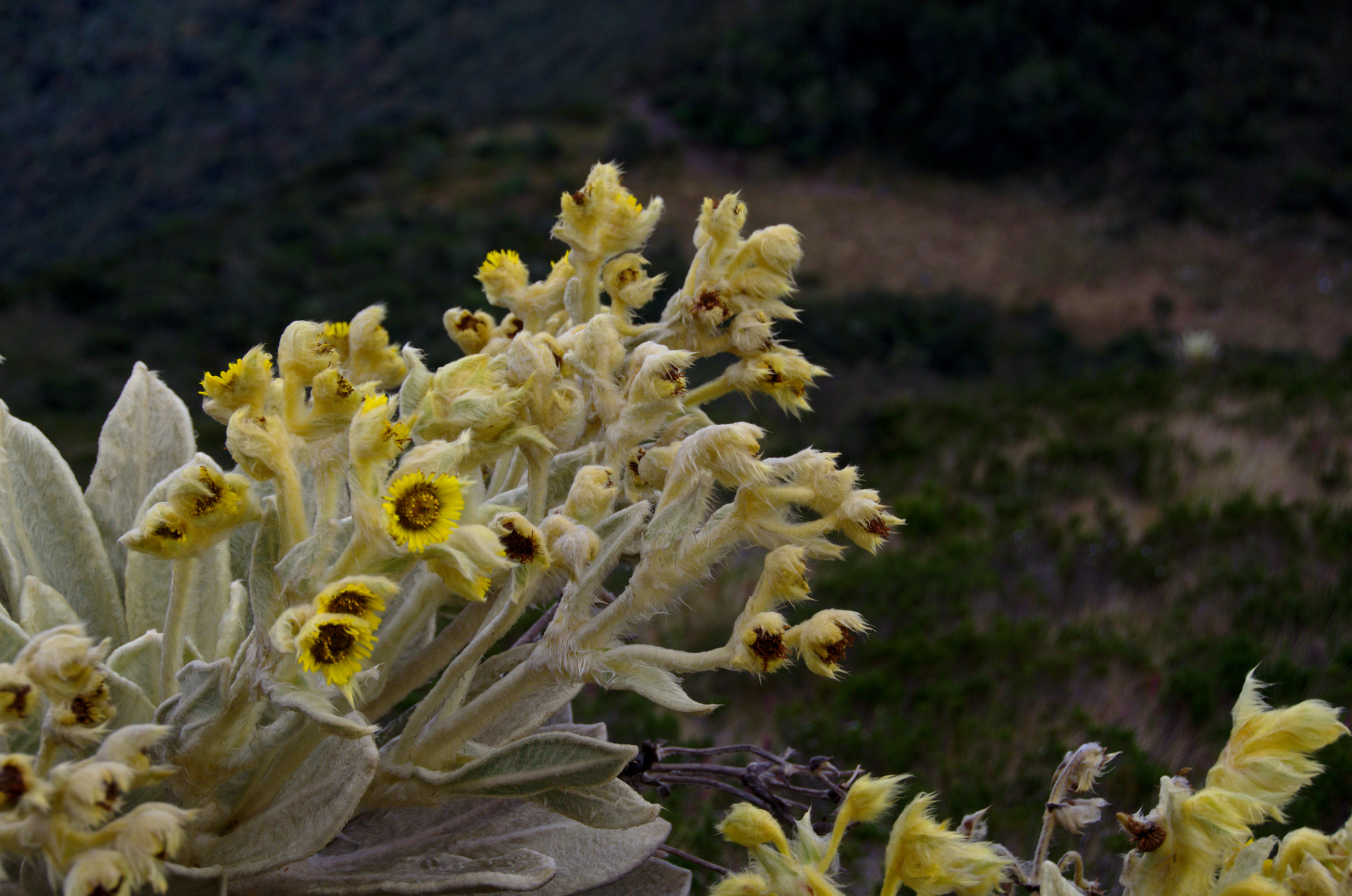
Photo: Aztlec.
Current situation
In March 2025, the Colombian government designated the western flank of the Santurbán massif as a temporary renewable natural resource reserve area, delimiting and protecting an area of 75,344.65 hectares. This resulted in a two-year suspension of the Soto Norte project. However, Aris Mining's contract to formalize Calimineros' small-scale mining activities through the purchase and processing of mineralized material remains in effect.
In addition, the Canadian mining company continues to move the project forward. In September 2025, it released its prefeasibility study, revising the mine’s original design.
Meanwhile, members of the Committee for the Defense of Water and the Santurbán Páramo face threats and stigmatization because of their work. In March 2025, UN Special Rapporteurs and the Working Group on Business and Human Rights denounced these incidents in communications sent to the governments of Colombia, Canada, and the United Arab Emirates, as well as to the companies Aris Mining and MDC Industry Holding Company LLC, the former co-owner of the Soto Norte project.
Regarding the arbitration claim filed by Eco Oro Minerals, in July 2024, ICSID ruled in favor of the Colombian government and rejected the Canadian company’s claim for USD 1.1 billion in compensation.
Concerning the delimitation of Santurbán, in July 2026, the Ministry of the Environment issued a resolution introducing the concept of "progressive delimitation." On that basis, the government proposes to progressively demarcate the páramo, covering 29,199 hectares across 19 municipalities—those where the participatory agreements required by the Constitutional Court in its 2017 ruling have already been finalized. It also proposes two measures on the creation and expansion of reserves to restrict mining in the ecosystem.
Learn more about the impacts of mining on the páramos of Latin America (in Spanish).
Partners:
Related projects
Presentes: Here and now for climate justice
Hope, too, needs a space when we talk about the climate crisis. While it’s true that humanity is facing our greatest collective challenge, it’s also true that there are people, communities, and organizations taking action, right now, to cocreate a better future. We cannot deny that we are already living with the impacts of the climate crisis. Yet we must speak honestly and urgently about them, without paralyzing ourselves in the process. Sharing information is a means to understanding our planet and creating meaningful conversations so that today, in the present moment, our societies can begin to build a more just tomorrow. Presentes was born as a collective and collaborative effort to change the narratives around climate justice. It’s a Latin American alliance that seeks to bring the climate conversation to a wider audience while simultaneously strengthening alliances among those already working for the cause. The challenge lies in demonstrating that when we talk about the energy transition –a fundamental step towards a better future– we must also talk about respecting human rights and the rights of nature, and caring for all forms of life on this planet. What better way to show this than by telling the stories of those working for it every day? Presentes is coordinated by AIDA, with the goal of bringing together civil society organizations, local communities, environmental defenders and citizens from across Latin America. Toward a better tomorrow What can we do to address the climate crisis? What is clean energy? How can we build a more just world for all beings, and what does that look like? There are some of the questions we’ll be exploring, together, through the Presentes platforms. Our goal is to extend this conversation to people from across Latin American, in all phases of their own climate journey. As a starting point, the founding organizations signed a manifesto recognizing that, to achieve a society with climate justice, it is essential to recognize our role in this new environmental reality, and make way for a just change that leaves no one behind, that is fueled by new forms of energy, and that responds to the call of those people who, with dignity and determination, continue to fight for the defense of life on Earth. View this post on Instagram A post shared by Presentes (@presentesorg) These are the pillars of Presentes and the point from which we can, from our own focuses and starting points, begin to visualize a better future for all the beings who live on this Earth. Join your voice to Presentes! Each participant, whether an organization or an individual, helps to enrich the ecosystem of sharing and solidarity that is forming around Presentes. Beginning from where you are now, you can: Add your organization to the alliance. By doing so, you’ll work with the diverse groups that form the Presentes, amplify your own organization's work, and receive a biweekly digital newsletter with valuable information to strengthen your communication efforts. Join the conversation in our WhatsApp group to receive free content to learn more about the climate crisis and how we confront it, together. Follow Presentes on Instagram and Facebook and help the content reach beyond our network, into yours. Because now is the only time there is, it’s the time to be present.
Read more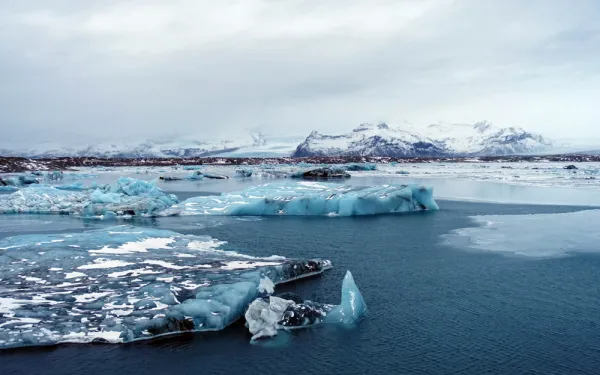
Governments of the world: Climate action is a legal duty
Climate action is a legal duty. After decades of empty promises, it is time for real action and accountability.Climate change is here now. Ecosystems are collapsing at an unprecedented rate. Vast regions of the world are becoming uninhabitable. Billions of people are facing the prospect of a dangerous and uncertain future. Extreme weather events have wreaked havoc across every continent this year alone. The “window of opportunity to secure a liveable and sustainable future for all” is closing fast.For decades, you have pledged to address the climate crisis. In successive treaties and decisions, you promised to slash greenhouse gas emissions. Just last year in Glasgow, you reaffirmed your commitment to limit global average temperature increase to 1.5°C and to ramp up mitigation ambition within the year. Yet countries’ latest global mitigation commitments show that we are completely off track. So far the vast majority of countries have not delivered on their commitment to strengthen their targets this year.We are on the precipice of the most serious intergenerational violation of human rights in history. But affected communities and those who stand with them are not giving up.We – lawyers and activists from across the globe – are standing with frontline communities to challenge your inadequate climate action. We have filed over 80 cases around the world to compel you to ramp-up your climate ambition: from the Netherlands to Nepal; from Canada to Colombia, from Belgium to Brazil, from Norway to New Zealand, from South Africa to South Korea.The law is on our side. Courts in dozens of countries have already recognized that you have a legal duty to address the climate crisis, and that this requires you to take more ambitious climate action. Cases have led to the adoption of new climate laws, stronger mitigation targets, and the closure of coal-fired power plants. The Intergovernmental Panel on Climate Change (IPCC) itself has recognised that climate litigation has the power to shape “the outcome and ambition of climate governance” towards aligning government action to best available science.COP27 is an opportunity for you to change course: to minimize the extent of suffering and human rights violations caused by your failure to address the crisis, and to live up to your legal obligations under domestic and international law.Governments of the world: your delay is costing lives. Strong action is needed now to protect people and the planet.If you continue to fail us, we will continue to turn to the courts to demand accountability.Signatories:Alana (Brazil), AIDA (Latin America and the Caribbean), Aurora (Sweden), The Australian Climate Case (Australia), Grata Fund (Australia), Phi Finney McDonald (Australia), Center for Environmental Rights (South Africa), Natural Justice (South Africa), Client Earth (Global), Climate Action Network Europe (Europe), Climate Case Ireland (Ireland), Ecojustice (Canada), Europäische Klimaklage (Austria), Germanwatch (Germany), Giudizio Universale (Italy), Rete Legalità per il Clima (Italy), A Sud (Italy), Global Legal Action Network (Global), Klimaatzak (Belgium), Klimatická (Czech Republic), Lawyers for Climate Action NZ (New Zealand), Lee Salmon Long (New Zealand), Notre Affaire à Tous (France), Adv. Padam Shrestha (Nepal), Plan B (UK), Protect the Planet (Germany), Russian Climate Case (Russia), Urgenda (Netherlands), Youth4ClimateAction (South Korea). Read and download the letter
Read more
An alliance for clean air in Latin America is born
In the face of environmental injustices, like poor air quality and its harm to human health, our societies respond together and organize in similar ways, without even knowing it. This was one of the takeaways from the Latin American Meeting for Clean Air, which in early August brought together researchers, government officials, youth leaders, civil society representatives and international cooperation agencies from Brazil, Chile, Colombia, Ecuador, Mexico and Peru. They met with three main objectives: to strengthen the link between air quality and climate justice, to exchange lessons learned, and to build networks for international collaboration. "Poor air quality and related health problems are a common problem in Latin America, knowing no borders or territorial boundaries," explained Anaid Velasco, Research Manager at the Mexican Center for Environmental Law (CEMDA). According to the World Health Organization, air pollution affects close to 90 percent of people living in urban areas around the world. Despite the magnitude of the problem, public actions and policies to improve the air we breathe are not fully standardized. In addition, air quality indices across the region are not uniform and do not allow people to be adequately informed of the dangers of air pollution in different environments. This represents a problem and, at the same time, an opportunity to collaboratively create and refine tools. Aware of the opportunity, meeting participants founded the Latin American Coalition for Clean Air (ALAIRE) to respond to three primary goals: To position a narrative that makes air quality a strategic priority in the public health and climate crisis management agendas in Latin America. To influence authorities and promote public policies that contribute to an improved management of the sources that contribute to poor air quality in the region. To advocate for conditions for civil society and the business sector to become involved in compliance with regulations, policies and the improvement of air quality in the continent. "The creation of this coalition is a fundamental step towards improving the air we breathe, across the region," Velasco said. "CEMDA is very proud to be part of it as clean air is a fundamental condition to guaranteeing the human right to a healthy environment." The Latin American Meeting for Clean Air was organized by AIDA, El Derecho a No Obedecer (a project of Corporación Otraparte), Trébola Organización Ecológica, Coalición Respirar, El Poder del Consumidor and the Heinrich Böll Foundation. It had open activities attended by 200 people, as well as closed meetings to reach agreements among the key organizations. The meeting served to reaffirm that the fight for clean air is also the fight to reduce greenhouse gases and confront the climate crisis, as well as a necessity to guarantee the right to health of people in the region. The event also confirmed the importance of citizen science, in which individuals are working to demonstrate the true levels of exposure to poor air quality in different cities in the region, in turn highlighting the urgency to act. The newly formed coalition will empower the efforts of citizens, academics, organizations and other actors, while contributing to the achievement of regional agreements for the development and implementation of public policies that improve air quality and protect human health.
Read more