
Publications

A Guide for GCF Watch Coordinators
A publication for coordinators of GCF Watch, a civil society initiative from the global South aimed at improving monitoring of the Green Climate Fund (GCF), the world's leading multilateral climate finance institution. DOWNLOAD THE FULL GUIDEBasics of the Green Climate Fund (GCF)The Green Climate Fund (GCF) is the operating entity of the funding mechanism of the United Nations Framework Convention on Climate Change (UNFCCC). As such, it provides funding to developing countries for climate change mitigation and adaptation projects and programs.Read and downloadNational Designated Authorities and Green Climate Fund Focal PointsNational Designated Authorities (NDAs), Government institutions, and Focal Points (FPs) are responsible for all matters related to the Green Climate Fund (GCF) in developing countries. They represent the GCF and serve as a liaison or point of contact between the GCF and developing countries. Read and downloadFunding Proposals before the Green Climate FundProposals for project and program funding can be classified according to several criteria: type of access, public or private, amount of funds requested, and risk category.Read and downloadGuide to Reviewing a Funding Proposal before the Green Climate FundThe GCF Watch will consolidate all observations made by civil society before sending to the GCF Board. Your comments will be part of the message directly delivered to the Board!Read and downloadAccredited Entities before the Green Climate FundThe funding granted by the Green Climate Fund (GCF) is channeled through accredited entities (AEs), which are in charge of managing the resources and implementing the projects and programs. The AEs must ensure that projects and programs comply with GCF safeguards, as well as oversee compliance when implementation is the responsibility of executing entities.Read and downloadThe Independent Redress Mechanism (IRM)The Independent Redress Mechanism (IRM) was created to respond to complaints from individuals, groups or communities who feel that they have been adversely affected by projects or programs financed by the Green Climate Fund (GCF) due to non-compliance with its operational policies and procedures, including its environmental and social safeguards.Read and downloadGCF Watch: A Southern Civil Society-Led InitiativeThe platform aims to improve the monitoring of the operations of the GCF through collaboration between organizations working at the level of the GCF Board and organizations and communities in the region that are close to the territories where projects supported by the entity are implemented.Read and downloadGlossary of useful terms for monitoring the Green Climate FundRead and download
Read more
Fact Sheet: SPAW Protocol (Specially Protected Areas and Wildlife)
The Convention for the Protection and Development of the Marine Environment in the Wider Caribbean Region (Cartagena Convention) and its Protocol for Specially Protected Areas and Wildlife (SPAW Protocol) establishes that Contracting Parties have the obligation to regulate the protection of the vulnerable species and ecosystems of the region.The revised criteria for the nomination of species (1, 3, 4, 5, 6 and 10) determines the need to include essential species for vulnerable ecosystems - such as coral reefs, mangroves and seagrasses - in the species lists of Annexes II and III of the SPAW Protocol.The national or regional measures imply in a different way protection processes, biological monitoring of species, fishing recovery zones; analysis of catch data, health status of ecosystems, population dynamics and size; closed periods; and regulation of the capture, possession, transport, trade or total prohibition of the use of the species.In 2018, the Scientific and Technical Advisory Committee (STAC) prioritized the evaluation of herbivorous fish and currently the Species Working Group carries out the evaluation of parrotfish through the integration and analysis of scientific and regulatory data.Eleven of the 17 countries that have signed the Protocol have generated regulatory measures on herbivorous fish. Some regulatory experiences are in force, others are not, and there are those that came into force recently. Download the Fact Sheet in EnglishDownload the Fact Sheet in SpanishDownload the Fact Sheet in French
Read more

A Plan to Decontaminate Our Cities and Contain the Climate Crisis
In an open letter made public at COP25, more than 100 organizations from Latin America and around the world urged governments to include ambitious and measurable targets for confronting air pollution in their new climate commitments, which must be submitted to the United Nations by March 2020.Join the Global Call for Clean Air! SIGN NOW!Read it in Spanish In Portuguese Poor air quality is the environmental problem that claims the most lives worldwide.Each year, more than four million people die from the health damages caused by air pollution. Official data shows that, globally, nine out of ten people breathe polluted air, and that the problem affects more than 80 percent of urban residents. The majority of those affected are in developing countries and the damages most severely impact the most vulnerable sectors of the population: children, pregnant women and the elderly.At the same time, humanity is seriously threatened by a climatic emergency whose impacts are also suffered with greater force by the most vulnerable segments of the population.Both problems, the climate crisis and poor air quality, are related to the atmosphere around us and are a matter of human rights. In this sense, there is an efficient way forward on both fronts. It’s an opportunity we must seize, and it has to do with reducing emissions of short-lived climate pollutants (SLCPs).Short-lived climate pollutants are atmospheric agents that contribute to the climate crisis with much more intensity than carbon dioxide (CO2) and, as their name indicates, remain in the atmosphere a relatively short time, from days to decades—unlike CO2, which can last millennia in the atmosphere. In addition, these pollutants degrade air quality, affect glacial areas and reduce crop yields. They include black carbon, methane, tropospheric ozone and hydrofluorocarbons (HFCs).Aiming to mitigate them implies reducing global warming in the short term and, at the same time, advancing in the decontamination of cities.This opportunity has already been supported by science.The United Nations Intergovernmental Panel on Climate Change (IPCC), which brings together experts on the subject, stressed in its Special Report on 1.5°C that, in order to confront global warming, we must incorporate into our efforts the mitigation of pollutants other than CO2, specifically black carbon and methane.Recently, more than 11 thousand scientists from around the world joined the call. In a public declaration recognizing the climate emergency, they identified among the measures necessary to solve it the prompt reduction of short-lived climate pollutants, noting that this would reduce warming by more than 50 percent in the coming decades.The forthcoming update of Nationally Determined Contributions (NDCs)— containing the climate commitments that governments must submit to the United Nations Framework Convention on Climate Change (UNFCCC)—opens the possibility of betting on the mitigation of these pollutants and contributing effectively to the fight against the climate crisis and poor air quality.The deadline for governments to submit new and more ambitious Nationally Determined Contributions is March 2020.For all of the reasons stated above, the undersigned organizations consider that the States that are part of the UNFCCC must respect human rights, protect them with the highest standards, and consider them in their climate commitments.In this sense, we ask that governments:Include ambitious and measurable targets for the reduction of short-lived climate pollutants in the update of their NDCs by March 2020.Detail in their commitments the means of implementation, which must ensure compliance with the targets they set.Frame the fulfillment of commitments in comprehensive policies that recognize the different levels of impact among the population, with special emphasis on the protection of children and other vulnerable groups.Specify the monitoring, reporting and verification procedures that will accompany the implementation of their commitments.Ensure that local governments and companies respect the policies established and adapt their actions to the urgent need to improve air quality. Download the letter
Read more
Declaration: Peoples’ Summit on Climate, Rights and Human Survival
We envisage a world where people thrive as part of nature and where human rights – including the rights of Indigenous Peoples – and the environment come before corporate profit, in an era in which people are more connected with each other and with the planet. We want to live in safe, equal, peaceful and just societies. In societies where every individual and all communities enjoy fair, secure and sustainable livelihoods; participate in decision-making on matters that affect their lives; and have access to information and justice. In a world where the commons are protected and sustainably managed by communities, and where governments and corporations act responsibly and are accountable for the consequences of their actions. We see the opportunity and urgent need to transform our economic, social, legal and political systems to ensure equity and the protection of human rights, to halt the climate crisis and mass extinctions, to protect our children’s future, to hold polluters accountable for their actions, and to make fossil fuels and all unsustainable business practices a relic of the past. We believe that this vision requires protecting, supporting and being in solidarity with those who are suffering from the violence of the climate crisis and those fighting for climate justice.The climate crisis can and must be addressed. An array of effective policy and technical solutions are already known, available and immediately deployable. Governments and corporations bear the primary responsibility for taking the actions that could address and reverse the drivers of climate change and build resilient, adaptable and sustainable communities. We will invigorate our existing efforts around mobilizing the most powerful, united and diverse Peoples’ movement ever assembled. Real and transformative climate action will not be possible without a fully-engaged civil society and population.To achieve climate justice, we, the undersigned, agree to the following:We will increase our efforts to place human rights at the core of climate activism. We will do so by following the lead of Indigenous Peoples, youth, women, people living in poverty, persons with disabilities, fisherfolk, peasants, pastoralcists, local communities, workers, and other disproportionately-affected groups, who are leading the call for climate justice and against activities that destroy the planet. We will demand immediate, bold, people-powered and human rights-consistent action of unprecedented scale to reduce greenhouse gas emissions, in order to protect people, ecosystems, and biodiversity from the climate breakdown. Such actions require transformative change of our economic, social and political systems, to address inequalities in all aspects of life. This transformative change includes the equitable distribution of resources, particularly reducing the unnecessary consumption of resources by privileged groups. It is essential that we achieve drastic and rapid reductions in emissions globally and a fossil-free future, to keep the temperature rise as low as possible and no higher than 1.5°C degrees, as current levels of warming are already resulting in human rights violations. We will demand that all government climate policies, measures, and actions respect, protect and fulfil human rights – including the right of people to be fully informed and empowered to participate in a meaningful way in climate decision- making – and that corporations fulfil their responsibilities to respect human rights across their supply chains. We will oppose any policy or action taken to combat climate change or support adaptation that comes at the cost of human rights, and those that would deepen inequalities and cause impoverishment, hunger, dispossession, and economic, social and political exclusion. We will increase the pressure on those countries and corporations most responsible for climate change and with the most resources available. We demand that all countries urgently establish and enforce science-based emission reduction targets compatible with the protection of human rights, and that they meet these targets on or ahead of schedule. We will oppose attempts to transfer the burden and responsibility for change from high-emitting countries to countries with fewer resources and lower historical emissions, and from corporations and privileged groups to less-privileged groups. We will compel those bearing more responsibility for the crisis to own their actions and take measures accordingly. We will call upon those States with the greatest responsibility for climate damage and with the most resources to provide the necessary financial and technological resources to countries in the global south to facilitate their ambitious actions for climate change mitigation and adaptation. We demand that those States also provide adequate means – including compensation – to affected communities and individuals to address the loss and damage caused by the climate crisis, in full consultation with them and respecting their individual and collective customs and rights. We will promote transparency and adequate use of those resources and will oppose the creation of additional financial burdens and debts as a result of this support. We will relentlessly challenge corporate capture of policies and institutions, and we will hold accountable climate destructive industries and their financial backers. We will demand a just, fair and inclusive transition away from fossil fuels and towards sustainable agriculture and renewable energy that empower Indigenous Peoples, workers, peasant farmers, pastoralists, fisherfolk, and communities, rather than disenfranchise them. We will seek measures to ensure that all people, particularly those facing discrimination, have access to climate education and to the resources, training, knowledge, and decent jobs required for a people-powered transition to a decarbonized and resilient society. We will work for the protection, respect, and fulfilment of the rights of Indigenous Peoples, including to their ancestral lands and territories. We will seek the protection, recognition, and promotion of local and traditional knowledge that has proven effective and appropriate in addressing the climate crisis as well as enabling the transition and resilience so urgently needed in our food systems, always with the consent of, and for the benefit of, Indigenous Peoples. We will demand effective and adequate access to justice for individuals and communities whose rights are impacted by the climate crisis or lack of climate action – including those facing climate-induced loss and damage and those whose rights are threatened due to climate-related displacement. We will work to ensure that they are able to enjoy access to justice and effective remedies and that those responsible for climate harms are held to account. We will proactively use national, regional and international human rights bodies and legal instruments to ensure that human rights and obligations are effectively upheld to promote climate justice. We will support all environmental human rights defenders, in particular those who individually and collectively protect their territory, access to land, livelihoods, and the environment, and those campaigning to defend the people and the planet from destructive activities and climate breakdown. We will demand a safe and enabling environment in which all human rights defenders, particularly those facing multiple and intersecting forms of discrimination and inequality, are effectively protected and able to defend and promote human rights without fear of punishment, reprisal, or intimidation. Read the full declarationRead the declaration in SpanishRead the declaration in Portuguese
Read more
Letters to the Inter-American Commission 10 years after the admission of the case of La Oroya
In a letter to the Inter-American Commission on Human Rights (IACHR) on the tenth anniversary of the admission of their case, people affected by heavy metal poisoning in La Oroya, Peru call on the Commission to issue the Merit Report on the case. This step implies the hope of achieving justice in the face of the human rights violations the residents of La Oroya have been suffering for more than a decade. The case of La Oroya was the first to demonstrate the serious problem of heavy metal pollution in Peru and the first to be brought before an international mechanism. Seeing as instances of heavy metal pollution have increased in the country due to mining and oil activities, the resolution of the case of La Oroya in favor of the affected people is vital to promoting a comprehensive public policy on the subject, which should be adequately implemented in compliance with Peru's international human rights obligations. That is why, together, AIDA and the Association for Human Rights (APRODEH)—which legally represent the affected people—as well as the National Platform of People Affected by Metals, Metalloids and Other Toxic Chemicals and the Technical Board on Human and Environmental Health, reiterate the community's request for justice through two accompanying letters, also addressed to the Commission. Letter from the affected residents of La Oroya "Today we know that our body is contaminated, but we don't know what the adequate treatment is for its recovery, despite daily suffering... Our case demonstrates the problem of heavy metal contamination that has been manifested across the country, in the face of which a prompt and adequate response from the Commission would not only contribute to positively transforming our realities and guaranteeing our rights, but would also allow for new paths toward justice and environmental health for the thousands of people currently affected by toxic metals in Peru..." Read the Letter (in Spanish) Letter from AIDA and APRODEH "... it's important to reiterate that case of La Oroya not only constitutes, in itself, an urgent and relevant case for the petitioners and for the mandate of the Commission, it is also an emblematic and strategic case in the context of Peru. A pronouncement from the Commission in the case of La Oroya, which would obligate the Peruvian government and send the case before the Inter-American Court, could create an important antecedent and provide guidelines for Peruvian cause, contributing to the guarantee of rights for various communities throughout the country, which have been grouped together in the National Platform of People Affected by Heavy Metals in Peru. Together, their main demands are the creation of a public policy for those affected by heavy metals, and the created of a multi-sectorial commission to bring attention to the problem..." Read the Letter (In Spanish) Letter from the National Platform of People Affected by Heavy Metals and the Technical Board on Human and Environmental Health "A timely statement from the Inter-American Commission on Human Rights on the Merit Report of the case of La Oroya would contribute to granting justice to dozens of families in that community who, over the past decade, have dedicated much of their lives to the defense of their health and of a healthy environment. It would also serve as an important antecedent for the Peruvian State to stop diluting the management of this situation and to implement the measures needed to attend to the environmental and public health problem associated with heavy metal pollution and, in this way, advance in compliance with its international human rights obligations..." Read the Letter (in Spanish)
Read more
Infographic: Lakes Poopó and Uru Uru, at-risk Bolivian wetlands
Located in the central-eastern Bolivian highlands, lakes Poopó and Uru Uru are important sources of water for indigenous and rural communities and the area's planet and animal life. Both ecosystems, considered Wetlands of International Importance under the Ramsar Convention, are at serious risk due to mining activity, river diversion and the climate crisis.
Read more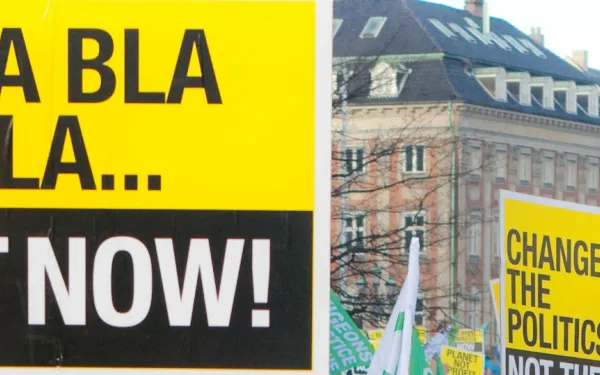
Putting people’s fundamental rights at the core of solutions to the climate emergency
Announcing the First Ever Global Summit on Human Rights and Climate Change The People’s Summit on Climate, Rights and Human Survival – the first ever global summit on human rights and climate change – will be hosted by leading civil society groups and the UN Human Rights Office in New York on 18-19 September. The People’s Summit aims to galvanize the human rights community to urgently scale-up its efforts on climate justice, creating the most diverse movement ever assembled to tackle the climate crisis. The People’s Summit was announced in an open-letter below, which was published on the Thomson Reuters Foundation. The human rights and environmental communities must seek solutions together. It’s time for all of us to come forward as one to face the climate crisis. Our organisations seek a world where people thrive in a safe and healthy environment, where human rights come before corporate profits. To make it happen, we need to face the climate crisis united in the strongest and most diverse movement ever assembled. Only together can we make world leaders take this emergency seriously. Real solutions to the climate breakdown must place people and our fundamental rights at the core. This is an invitation to all those who value human dignity and wellbeing to fully throw their weight behind the call for global climate justice. And to those working to protect our planet to center their efforts in communities, particularly the people most impacted and least responsible for the climate crisis. The human rights community can bring key constituencies, power and skills to the fight for climate justice. The strength of a collective movement to overcome the climate crisis needs to match the gravity of the problem. Our organisations are coming together to make it happen, and we are urging the environmental and human rights communities to join us. To meet the challenge we, the people, must be more connected with each other and more committed to our planet than ever before. This is a matter of survival. Rampant carbon emissions have triggered unprecedented, dangerous and destabilising changes in our climate. Corporate and governmental neglect has already exposed millions to increasingly extreme weather disasters. We must reverse course now; the window of opportunity to act is closing. Make no mistake. The impacts of climate change already hinder our rights to health, food, water, housing, work and even life itself. These impacts are even more severe for people already in vulnerable situations in places impacted by severe weather, poverty or oppression. Our societies cannot keep on like this. People need access to justice, governments must work for the people and corporations need to be accountable for their actions. Now is the time to act. The signs of a shared will to do so are everywhere. Students are taking to the streets to call for a safe future. Indigenous Peoples are speaking up for the defense of land, water and communities’ rights. Workers are demanding safe and well-paying jobs in better, cleaner industries. Women’s rights activists are putting forward a wealth of feminist solutions. Religious leaders are calling on us to protect communities and nature. Scientists are gathering and sharing evidence to guide us out of the crisis. We know the challenge, and the answers are there. Solutions are available now, including renewable energy sources, respect for fundamental rights and traditional knowledge, and a true focus on the needs of the people over corporate greed. All of our organisations work on climate change already, some more explicitly than others. But now is the moment for us to connect the dots between our causes and join forces. A climate emergency is upon us, and we must act now. Environmental human rights defenders, Indigenous Peoples and local activists have long risked everything to fight environmental degradation. They are now joined in their struggle by growing mass movements such as the school climate strikes, Extinction Rebellion and campaigners calling for a Green New Deal. In this new era of climate activism, the human rights community cannot remain on the sidelines. It is more urgent than ever that we step up by working together to protect the communities and individuals on the frontlines of the climate struggle. That is why 150 non-governmental leaders and activists from different communities are coming together on September 18 and 19 for the ‘People’s Summit on Climate, Rights and Human Survival’. Our organisations will be there along with the United Nations Human Rights Office to support people demanding immediate and ambitious climate action from their governments to protect communities. We believe in unleashing the potential of a diverse movement to safeguard present and future generations. We are united to demand climate justice. Confirmed signers: Astrid Puentes, Co-Executive Director, Interamerican Association for Environmental Defense (AIDA) Bridget Burns, Director, Women’s Environment and Development Organization Carroll Muffett, President and CEO, Center for International Environmental Law Chris Grove, Executive Director, ESCR-Net Ellen Dorsey, Executive Director, Wallace Global Fund Gillian Caldwell, CEO, Global Witness Iago Hairon Souza, Coordinator, Engajamundo Jennifer Morgan, International Executive Director, Greenpeace International Kumi Naidoo, Secretary General, Amnesty International May Boeve, Executive Director, 350.org Phil Bloomer, Executive Director, Business & Human Rights Resource Centre Philip Alston, Center for Human Rights and Global Justice Chair, New York University Sharan Burrow, General Secretary, International Trade Union Confederation Sofia Monsalve, Secretary General, FIAN International Steve Trent, Executive Director, Environmental Justice Foundation Thalita Silva e Silva, Coordinator, Engajamundo
Read more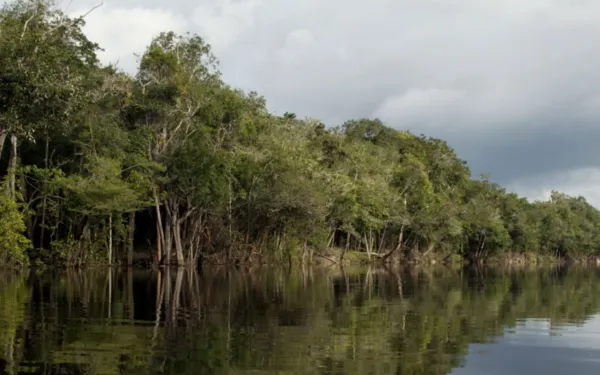
The GCF should thoroughly assess the policies and practices of the BNDES and require conditions for its accreditation
The Board of the Green Climate Fund (GCF) is considering an application for accreditation of the Brazilian National Development Bank (BNDES, Banco Nacional de Desenvolvimento Econômico e Social). The accreditation process of the BNDES is an opportunity to strengthen the Bank’s policies and procedures designed to identify, address and remediate environmental and social impacts linked to its activities and operations. With the new administration of President Jair Bolsonaro, Brazil is suffering severe setbacks in its environmental, social and climate policies and agenda. Brazilian environmental agencies are being dismantled, while renowned and effective mechanisms such as the Amazon Fund are at risk of becoming inoperative or even eliminated. In such a context, the effectiveness of the country’s environmental and social (E&S) governance and its instruments, agencies and institutions, risks being severely undermined. In order to fulfil its mandate to promote a paradigm shift towards low-emission and climate resilient development pathways within the context of sustainable developmentthe GCF should ensure that local systems and institutions are adequately equipped to deliver the sustainability outcomes intended by the Fund. The GCF should carefully assess BNDES’ existing E&S policies and procedures and ensure that approval is conditioned upon commitments and measurable steps by the Bank, with political support from the Brazilian government, to further strengthen its policies and procedures to address following shortcomings related to: Disclosure of environmental and social (E&S) information; Design of E&S policies and monitoring tools; Human rights standards and the rights of indigenous peoples and other traditional communities; Grievance mechanism; Commitments concerning climate change. Read the full statement here
Read more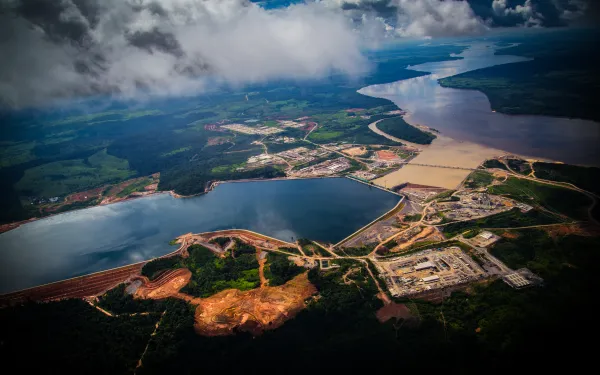
The False Promises of Hydropower
How dams fail to deliver the Paris Climate Agreement and UN Sustainable Development Goals A Joint Statement by Civil Society Organizations on occasion of the 2019 World Hydropower Congress in Paris, France We live in an age of urgency. Scientists have warned that we have little time to act to bring climate change under control and protect the integrity of life on our planet. Confronting the climate crisis requires creative solutions that both protect nature and respect human rights. Facing these challenges, we cannot remain silent onlookers while corporate profiteers, financiers, and their allies peddle false solutions for addressing climate change and implementing sustainable development. A flagrant example of such deception is the attempt to portray large hydroelectric dams as a ‘clean and green’ source of energy, as can be seen at the 2019 World Hydropower Congress. Organized in Paris by the industrial lobby of the International Hydropower Association (IHA) in partnership with UNESCO, the conference’s title reads, “Delivering the Paris Climate Agreement and the Sustainable Development Goals.” Such glossy portrayals of hydroelectric dam projects—with an eye toward capturing financial incentives through mechanisms like Climate Bonds and the Green Climate Fund—conveniently ignore a long legacy of social and environmental catastrophes, economic waste and, all too often, massive corruption schemes that are the antithesis of truly sustainable development. ... A Call for Action The undersigned civil society organizations call on the members of the International Hydropower Association, governments and international financial institutions to implement the following urgent actions: Steer priorities, investments and financial incentives away from additional hydroelectric projects and towards energy efficiency and truly sustainable renewable energy options (solar, wind and biomass and, when appropriate, micro-hydro). Special attention should be given to opportunities for technological innovation, decentralized generation and improving energy access among isolated, off-grid communities. Eliminate financial incentives for new hydroelectric projects within climate change mechanisms, such as the Green Climate Fund and Nationally Determined Contributions, and within programs to promote implementation of the UN Sustainable Development Goals (with the possible exception of micro-hydro projects). Commission independent audits of controversial existing dam projects and basin-wide cascades in terms of their social and environmental consequences, identifying steps to mitigate impacts and ensure just reparations for affected communities, based on direct consultations. When such measures are prohibitively expensive or otherwise inviable, the de-commissioning of dam projects should be promoted. Ensure the alignment of operational procedures for existing hydroprojects with relevant territorial plans at the basin level, such as integrated water resource management and protected areas that ensure key ecological processes and the rights of local communities, based on the concepts and tools of participatory, adaptive management. Ensure that renewable energy policies and projects adopt, across the board, robust guidelines to safeguard human rights and environmental protections, such as ILO Convention 169 and the UN Principles on Business and Human Rights. No energy facilities that potentially impact the territories and livelihoods of indigenous peoples and other traditional communities should be authorized without obtaining the free, prior and informed consent of the community and ensuring the cooperative design of co-management strategies. Among the benefits of such a paradigm shift in energy strategies and development planning will be major contributions toward protecting the world’s last free-flowing rivers, vital for climate resiliency, biodiversity conservation and sustainable livelihoods. Energy companies and governments must halt all efforts to dam the world’s remaining free-flowing rivers and concentrate instead on: i) improving efficiency and the sustainability of existing hydropower projects and cascades; and ii) investing in energy efficiency and truly sustainable renewables. Moreover, governments must urgently promote the permanent legal protection of the world’s last free-flowing rivers, including transboundary watercourses, with due respect for the territorial rights of indigenous peoples and other traditional communities, who play fundamental roles as the guardians of healthy rivers. Read the Full Statement Here
Read more