Press releases Costa Rica

Costa Rican court issues first criminal sanction against shark finning

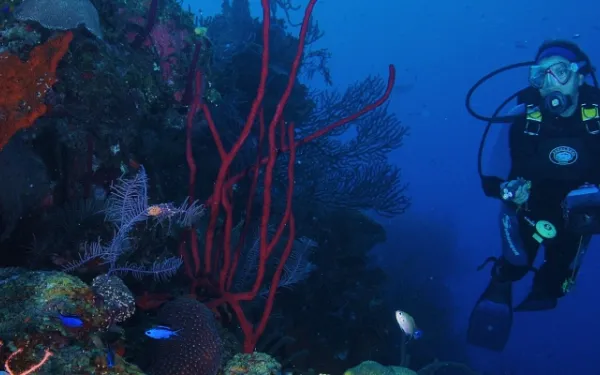
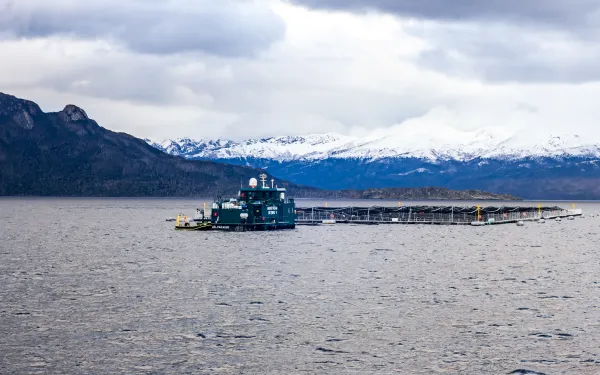
In a historic decision, a Puntarenas court convicted a businesswoman for shark finning. The woman had brought shark fins to port separated from the body, a practice illegal in Costa Rica, with intentions of selling them abroad. 

Read more

Incendio forestal en la comuna Empedrado, región del Maule, Chile.
Blog Chile

Why Chile is burning and what we can do about it

The risk of the current fires was latent. More should have been done to prevent them, and to have been better prepared to face them.

Read more

Blog Colombia

The Santurbán páramo: Closer to the sky

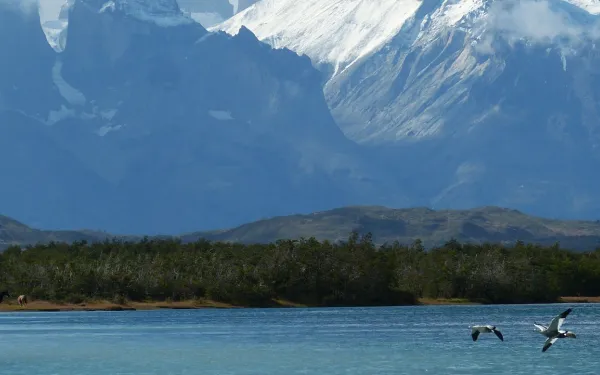
By Laura Yaniz The International Finance Corporation, part of the World Bank Group, said “No” to the Angostura mining project in Colombia’s Santurbán páramo. What does this decision mean? It’s one step closer to the protection of this priceless ecosytem.  In Santurbán, the rocks become guardians of mirrors of water that reflect the sky. Frailejones stand watch over the remains of glaciers. Condors gaze down upon tiny visitors. The world sits closer to the sky. Santurbán is a páramo, an ecosystem only found high in the Andes Mountains. The Canadian company Eco Oro Mineral has set their sights on these lands because, as rich as they are in water, they are rich too in minerals. The IFC had invested in the company’s Angostura mining project but, at the end of 2016, they made the wise decision to withdraw that investment. It was an important victory in the ongoing fight to save Santurbán, the water source of millions of Colombians. But what exactly would be saved? And what is the allure of Santurbán? Alberto Peña Kay, a local hiker and photographer, speaks through the images he captures of the many reasons this unique ecosystem must be protected: Frailejones (espeletias) are endemic plants that, because of the extreme conditions of the high-Andean climate, have uniquely adapted to protect themselves from the cold, the high levels of UV radiation, and the lack of nutrients. Their succulent leaves absorb water from the clouds, which they then store in their trunk. Some of these plants grow just one centimeter a year.  “When I first came to this páramo and photographed it, I knew I had to keep coming back. This place inspired my passion for photography.” “Many don’t see this place as I do; they look upon it with economic eyes, eyes set on mining and extraction.”  “At our best, we see the potential here, and recognize that it’s something we can’t lose. There are so many reasons to conserve these lands.” Why? "First, it’s my department, the great Santander.  Second, the biodiversity: here live icons like the condor, the puma and the frailejone. Third, this páramo supplies water to more than half of the people who live in Santander and Northern Santander.” "[In Santurbán], I realized I could get closer to the sky." Really, Santurbán speaks for itself. We must save this piece of heaven on Earth, it's well worth the fight! 

Read more

Blog Brazil

Meeting the Munduruku, sharing the lessons of Belo Monte

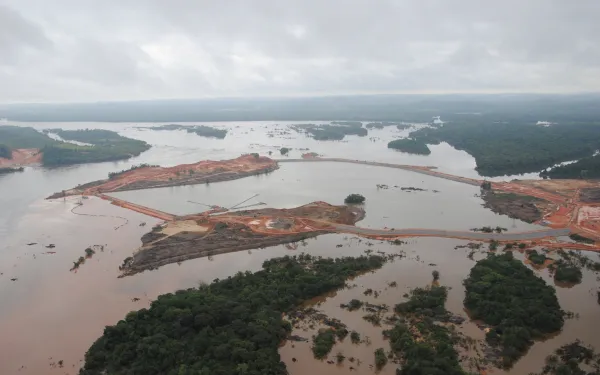
Beneath a thatched-roof hut along the Tapajós River, Munduruku people from communities across this region of pristine Amazon rainforest gathered for a general assembly. There were tribal elders and children, mothers and fathers, representatives from NGOs and government bodies. They came together to discuss problems, and to find solutions. They came to chart a course forward that would enable them to continue to live and grow in harmony with the natural world. October’s assembly was their first meeting since the announcement of the cancellation of the Tapajós Dam; its license was denied due to the severe environmental impacts it would cause. The rejection was a triumphant victory for the movement to protect Brazil’s Amazon, after years of disappointment and defeat caused by the nearby Belo Monte Dam. Yet, touting energy and economic gains, the Brazilian government plans to build dozens more large dams in the region.  I was there because of Belo Monte: to share stories, strategies, and lessons learned from our advocacy for the people of the Xingú River who have been impacted by the dam. With me I brought a team from Climate Reality who produced a short documentary to share these stories with the world.  While the fight for the people of the Xingú has been long, we remain committed to achieving justice for them. By taking their case before the Inter-American Commission on Human Rights, we intend to influence decision-making in Brazil and discourage the implementation of more large dams in the Amazon, including those planned for the Tapajós River basin. The devastation caused by Belo Monte has become a cautionary tale for neighboring tribes like the Munduruku. Because of the harm done to the people and life of the Xingú, the Munduruku understand exactly what they have to lose if the dam on the Tapajós were to happen. They would lose their homes, their sacred sites, and their connection to their ancestors. They would lose their river. Like the Xingú is to the Kayapo and Juruna people, the Tapajós is to the Munduruku. It is their highway and their supermarket; a sacred waterway, and a divine gift. They thank their gods for the bounty provided by their healthy jungle home, for the tinguejada (fish), and for all that the river gives them. It was an honor to be present to witness the strength and unity of the Munduruku people. It was humbling to join my voice with theirs. I hope that the voices of the Munduruku are heard. I hope their territory is respected, and the dam and other development projects stopped for good. And I hope the Brazilian government learns the lesson that countless indigenous people already have—large dams must stay out of the Amazon!

Read more

Blog

2016: 6 reasons to maintain hope for the environment

By Laura Yaniz 2016 was not an easy year. It was especially trying for the fight to protect the environment in Latin America. The loss of brave defenders broke our hearts. The international political environment became so tense after the US presidential election that we learned to take nothing for granted. The effects of climate change hit us hard, and then harder. But it has not all been grim. This year has also given us important reasons to keep the hope alive. Progress, good news and important victories lay a path to a brighter new year. Here are six pieces of good news to help you recharge and have hope for our natural world:  1. The World Bank said “No” to mining in the Santurbán páramo Just ten days before the end of the year, the International Finance Corporation, part of the World Bank Group, decided to divest from Canadian company Eco Oro Minerals. Their funding withdrawal includes the Angostura mining project, which has for years threatened the Santurbán páramo, a water source for millions of people in Colombia. It is a victory to which AIDA and our allies have contributed greatly. Now it’s the government’s turn—in accordance with national laws, they must deny all environmental permits for mining projects in Santurbán, and all other Colombian páramos. The fight for Santurbán isn’t over. Next year we’ll continue to closely monitor Eco Oro, who has filed an international arbitration suit against Colombia for measures the nation has taken to protect its páramos, among them, the high court decision to ban all mining in these sensitive ecosystems.  2. The Indigenous struggle gains strength, and wins! The struggle of the Sioux tribe against the Dakota Access pipeline became a global movement. The largest gathering of Native Americans in history inspired solidarity from artists, veterans, activists, and indigenous groups around the world. They won an important victory when the project was suspended. In Brazil, after years of perseverance, the Munduruku people of the Amazon also emerged victorious when the government denied the environmental license for a dam on the Tapajós River that would have threatened their culture and way of life. These important achievements give us hope. They highlight the need to uplift the voices and support the struggles of the world’s indigenous peoples who, according to the World Bank, protect 80 percent of our planet’s biodiversity.  3. A new climate accord is underway On November 4, the Paris Agreement on climate change entered into force. It happened years sooner than anticipated. The global political achievement was propelled by the ratification of the accord by Latin American and European nations, as well as by China and the United States (the two largest emitters of greenhouse gases). The validity of the agreement impels all nations, developed and developing, to make their commitments a reality. During the 22nd UN Climate Convention in Morocco, as a civil society observer, AIDA contributed to ensuring progress was made on securing funding to help developing countries confront the impacts of climate change. The additional news that the ozone is recovering—a fact made possible by the Montreal Protocol—gives us hope that global commitments like this one can actually bear fruit.  4. Our oceans are protected Important steps were made, nationally and internationally, to protect our world’s oceans and the many incredible creatures that call them home. Mexico created the largest expanse of natural protected areas in its history; the nation’s protected oceans are now nearly half the size of its landmass. In the United States, the expansion of a Hawaiian marine reserve made it one of the largest protected areas on Earth. In Ecuador, the Galapagos Islands reserve was also expanded to protect the sensitive marine life it shelters. Beyond national borders, the global community made important progress on protecting our common waters through the development of a new treaty to protect the high seas. AIDA has brought the voice of Latin America into that discussion. 5. Dam-free rivers In Chile, after decades of strong opposition, one company announced it was giving up on building large dams on five virgin rivers. In Peru, the new government announced that Amazon dams are not on their agenda. In Brazil, the government denied a dam that would have altered the course of the Tapajós River. In the United States, dam removal is well underway, enabling the return of native species and the restoration of ecosystems. Additionally, a recent scientific study confirmed that dam reservoirs are a major source of greenhouse gases, worsening climate change. The findings strengthen arguments we’ve been making for years—large dams are not a solution to climate change; they are part of the problem.  6. Your support Our work this year on behalf of Latin America’s environment would not have been possible without your support. When you write to us, donate photographs, join our team of volunteers and interns, or make a donation, you encourage us to keep fighting. These are messages of hope that remind us how important it is to keeping working for a better future for our children, for yours, and for those of the communities we support. We know that you don’t just follow our work, but bring it home and do all you can, in your daily life, to care for the planet, our collective home. Thank you for giving us hope! Happy 2017! 

Read more

Press releases Colombia

World Bank divests from Eco Oro Minerals and mining project in Colombian Páramo

The International Finance Corporation (IFC) – the private lending arm of the World Bank – has decided to divest from Canadian mining company Eco Oro Minerals. The company’s Angostura gold mining project is located in the Santurbán Páramo, a protected ecosystem that provides water to millions. 

Read more

Blog

Clear accounting for dams and climate change

By Astrid Puentes Riaño (column originally published in El País) “Our climate is warming at an alarming, unprecedented rate and we have an urgent duty to respond,” world leaders concluded at the 22nd United Nations Climate Conference (COP22). Representatives from more than 200 nations gathered in Morocco from November 7 to 18 for the first global meeting since the Paris Agreement on climate change entered into force. We should respond with urgency, but also with intelligence. Today, thousands of large dams are being planned and built around the world. More than a million dams already block half the rivers on the planet. Hundreds of hydropower projects are planned or under construction in the Amazon alone. Many are promoted as clean energy and as solutions to climate change. But that’s just not true. Researchers at Washington State University recently concluded that dams are an important source of greenhouse gas emissions. In addition to carbon dioxide and nitrous oxide, dams release large amounts of methane, a gas that traps 34 times more heat than carbon dioxide. The findings were published in the scientific journal Bioscience. Far from being a solution, dams actually aggravate climate change. Until now, scientific evidence had suggested that dams in tropical areas emit greenhouse gases. The WSU study, however, concluded that reservoirs emit greenhouse gases regardless of their latitude or their purpose (power generation, flood control, navigation or irrigation). The researchers concluded that, globally, reservoirs emit approximately 1.3 percent of all greenhouse gas emissions generated by mankind. That’s greater than the total annual emissions of Canada. Further studies are required to quantify exactly how much dams emit and to understand how they vary according to the particular conditions of each reservoir. For now, it seems that variables such as temperature and eutrophication (increased nutrients in water that increase algae and decrease oxygen) may be the most relevant. Currently, greenhouse gas emissions from dams aren’t monitored. Yet every day, they’re released into the atmosphere, contributing to climate change. Globally, our climate accounts aren’t complete. The WSU study marks a milestone in our understanding of the true role dams play in creating climate change. It’s essential that scientific policies, programs, standards, and analyses take these emissions into account. National and international bodies—including the Intergovernmental Panel on Climate Change, the World Bank, the Inter-American Development Bank, the Green Climate Fund, and private companies—must incorporate current and future dam emissions in their assessments. Only then will be have clear accounts. Only then can we avoid, by ignoring clear evidence, continuing to make climate change worse—particularly for the most vulnerable among us. It’s worth noting that dams have severe impacts on human rights. They’re also very expensive and take decades to plan and complete. What’s more, viable alternatives to dams have already been found—cheaper, more efficient, and quicker to build.  To respond to climate change with urgency, intelligence, and effectiveness, we have to be clear on its causes. We have to account for all significant contributors, including dams. We have this opportunity today. And we have no more time to lose. 

Read more

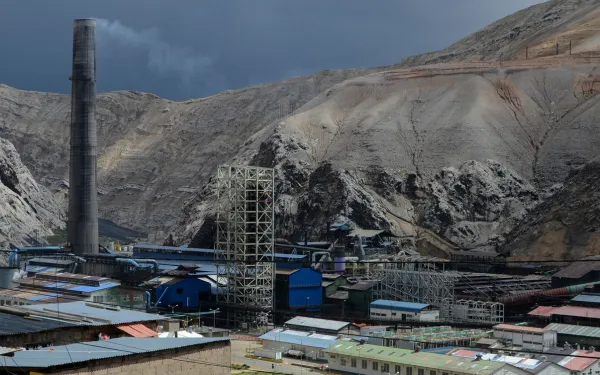
Dos niños ven el Complejo Metalúrgico de La Oroya en Perú
Blog Peru

La Oroya: Over a decade’s wait for justice

From the time Isabel* was born, she has breathed toxic air.She’s had heavy metals in her blood for all 13 years of her young life.Her hometown, La Oroya, a small city in the Peruvian Andes, was labeled in 2007 as one of the world’s most polluted places. A metal smelter has been operating there for nearly a century, with little regulation and no attention to human health.Children like Isabel suffer most from toxic pollution. Their developing brains and bodies are terribly vulnerable to lead and other heavy metals, which inhibit growth and often cause permanent damage.Nearly all of La Oroya’s children have heavy metals in their blood, at concentrations many times limits established by the World Health Organization. And many residents suffer from chronic respiratory illness.Their health issues result directly from corporate leaders’ disregard for the environment and for the people who live near the smelter. The State of Peru also bears responsibility for its inaction.That’s why a group of residents joined together to fight for the their children’s health and their city’s future.Isabel’s father, Pablo, has been a vocal leader in the community’s struggle against the government and the US-owned corporation responsible for contaminating their air, their land, even their water. He sees no other way forward.“What kind of world will we leave for our children if we don’t defend our land, if we don’t defend our biodiversity?” he said in a recent interview. A group of 65 residents joined as petitioners in a case AIDA and other organizations brought before the Inter-American Commission on Human Rights 10 years ago. Since then 14 more have added their names to the complaint; four have died. Today, they still wait for justice.In 2007 the Commission recommended precautionary measures that urged the State to adopt adequate measures to diagnose the beneficiaries and treat those at risk of irreparable damage. Since then, air quality in La Oroya has improved somewhat, but the recommended health system is still woefully inadequate.The Commission has yet to file its report on the merits of the case. A finding of merit would include more forceful recommendations. If the State still doesn’t respond, AIDA will take the case to trial before the Inter-American Court of Human Rights.For now, all the petitioners can do is wait some more.Despite the years gone by, we won’t stop fighting until the people of La Oroya see justice.We believe their courage and struggle will have an impact beyond their community, setting a precedent for future cases across the Americas. Because a victory would establish in international law that damages from toxic contamination are human rights violations.And that would mean a brighter future not just for Isabel and La Oroya, but also for communities wherever shortsighted corporations dump their toxic by-products. __* Name changed to protect privacy.

Read more

Aida Publication

Letter to Green Climate Fund Board: Improve Decision Making

Letter signed by 70 international civil society organizations:  As members of civil society following the Green Climate Fund (GCF), we are writing to express our concern about the way the Board reached some of its most important decisions during the 14th Board Meeting (B.14). We would also like to share some thoughts on how to improve upon this process in the future. We are especially referring to the practice of “package approval” that was used to approve funding proposals and new accredited entities. Weak process. The Board approved 10 proposals worth $745 million without discussing each one separately. The Board’s assessment of each of the funding proposals should be made individually and with the utmost care, to ensure that the objectives, principles, policies, and operational modalities of the Fund are respected and complied with. Furthermore, there was no opportunity for active observers to highlight individual comments for each of the funding proposals (they could merely air some concerns during the overarching discussion of all funding proposals). The same can be said with regard to the package approval of eight accredited entities. There was no public discussion of the merits and/or shortcomings of each approved applicant entity and no possibility of civil society input. Civil society has vital contributions to make, and for our engagement to be meaningful, active observers must be given the opportunity to share important points regarding each proposal and accreditation application during Board meetings. Indeed, the Board’s way of working has actually been in conflict with the GCF’s own Governing Instrument, which states that “the Fund will operate in a transparent and accountable manner”. Approval despite clear failures of GCF policy compliance. The Board repeatedly overlooked the failure of a number of proposals to comply with GCF policies and procedures. For example, public notification for a number of projects was out of compliance with the Fund’s information disclosure policy, which requires a 120-day notification period for proposals with high social and environmental risk. Mandatory gender action plans were missing from several projects, and stakeholder consultations in some cases were highly inadequate. Yet the Board approved all of the projects with one package decision. The Board even pushed through proposals without the requisite guiding policy in place. For example, programs to be implemented via sub-projects were approved, yet the GCF does not have a policy regarding whether or not high risk sub-projects must come back to the Board for approval. We believe they should, to ensure the GCF’s accountability, and to preempt some of the serious environmental, development, and social shortcomings widely seen at other multilateral institutions that finance sub-projects via financial intermediaries. Precedent-setting. While the Board stated that “the approach taken to approving funding proposals at B.14 does not constitute a precedent,” we are concerned that, at this point, the Board has taken such an approach multiple times. Steps to put a stop to these modalities becoming the de facto modus operandi must be taken in the lead up to B.15, including: Timely public disclosure on the GCF’s own website that, at minimum, follows GCF rules (i.e. 120 days for ESIAs for high risk funding proposals, 30 days for medium risk, and three weeks prior to board meetings for all other materials). All annexes and the Secretariat’s due diligence should also be disclosed for funding proposals; Publication of applications for accreditation as soon as they are filed, as well as operationalization of formal mechanisms for third party input (from affected communities, indigenous peoples, civil society, etc.); Individual consideration of each funding proposal and each applicant for accreditation during public sessions of the Board; Opportunities to consider civil society interventions during the debate on each individual proposal, rather than at the end of agenda items; Where formal (or informal) working groups are established to consider conditions to be placed on proposals, there should be a clear process to allow the consideration of civil society feedback, at a minimum in writing, but preferably through the direct participation of the CSO active observers or their alternates; Discussions on more complex and/or controversial proposals require several rounds of debate. In these cases, civil society observers should be given the opportunity to make further interventions responding to new proposals, conditions and amendments. Civil society observers are committed to working with the Board to improve the accountability and transparency of Board decisions, in particular on funding and accreditation approvals. As a learning institution, the GCF needs to take the time to look at the merits of individual proposals and applicants in order to clearly elaborate how they can support the paradigm shift in recipient countries. We therefore urge the Board to better prioritize valuable time during the upcoming Board meetings to allow for meaningful discussions.

Read more

Blog Brazil

In the Hamlet of Mïratu, the Juruna mourn the death of Jarliel

By Marcelo Salazar, Instituto Socioambiental (ISA) AIDA translation of a blog originally published by ISA Jarliel died while diving for fish in water 25 meters deep. One of his brothers blames the Belo Monte Dam, which pushed all the fish into deeper waters, forcing fishermen to follow. Before the dam, fish were plentiful in the waterfalls and shallows of the river. Jarliel Juruna, known as Jarla, died on October 26, 2016 while diving for brown acari, a common Amazonian catfish. He was 20 years old. Jarliel was roughly 25 meters deep when he stopped breathing; his lifeless body floated to the surface. It was a tragedy for Mïratu, in the Paquiçamba indigenous territory; it was a tragedy for the Juruna people* of the Volta Grande; and it was a tragedy for the Xingu River, in the Brazilian Amazon. He left his parents, siblings, wife, and newborn son, all in shock. They had no idea where to go or what to do next. In near total silence, Giliarde Juruna, chief of Mïratu and one of Jarliel’s brothers, kept his gaze fixed on the forest behind the straw house that holds the community kitchen. Another brother, Jair Juruna, known as Negão, was outraged:  "We’ve never had to fish acari in such deep waters. But because of the dam, the fish that have always been right here, in the waterfalls and in the shallows, have disappeared. And we have families to support. Norte Energía [the dam-building consortium] is playing with our lives. Where are the productive projects? If things were working, we would have other jobs and we wouldn’t need to risk our lives to support our families. Now look what’s happened." On the other side of the continent, Bel Juruna was in Peru representing her people in a meeting of Latin American indigenous leaders. She was speaking about the violence that the Belo Monte operators brought to her community and the people of the Xingu. When she heard the news, she was devastated. She wasn’t able get home in time to attend Jarliel’s burial; to say goodbye to her youngest brother, whom she had helped to raise. Jarla was a happy and playful young man, dedicated, completing his high school degree and dreaming of college. He was one of his village’s fighters, present in many of the peaceful occupations of the Belo Monte Dam complex, fighting for the rights of the indigenous people of the Xingu. One day, the full story behind Belo Monte will be told. The very real impacts the dam has had on the life of the people of the Xingu will be recognized. May Jarla now join the great Mïratu fighters on another plane—and unite his efforts with those who remain on Earth to fight against Belo Monte and against other forms of destruction of the indigenous and traditional communities of the Xingu. *Proprietors of the River The Yudja, or Juruna (as they’re know in the region), live on the islands and banks of the Xingu. They are known as “proprietors of the river” for their great ancestral knowledge of its flow, and for having migrated for centuries from the mouth of the Xingu to its headwaters. Mïratu, one of the villages in Paquiçamba indigenous territory, sits roughly 10 km below one of Belo Monte’s reservoirs. The hamlet suffers various impacts from the dam, including changes in their traditional fisheries. In collaboration with (the?) Universidad Federal do Pará and ISA, and with the support of the Mott Foundation, the Juruna people are engaged in independent monitoring of their fisheries, which reveals the damages suffered in recent years. Jariel was one of the monitors in Mïratu. 

Read more