
Project
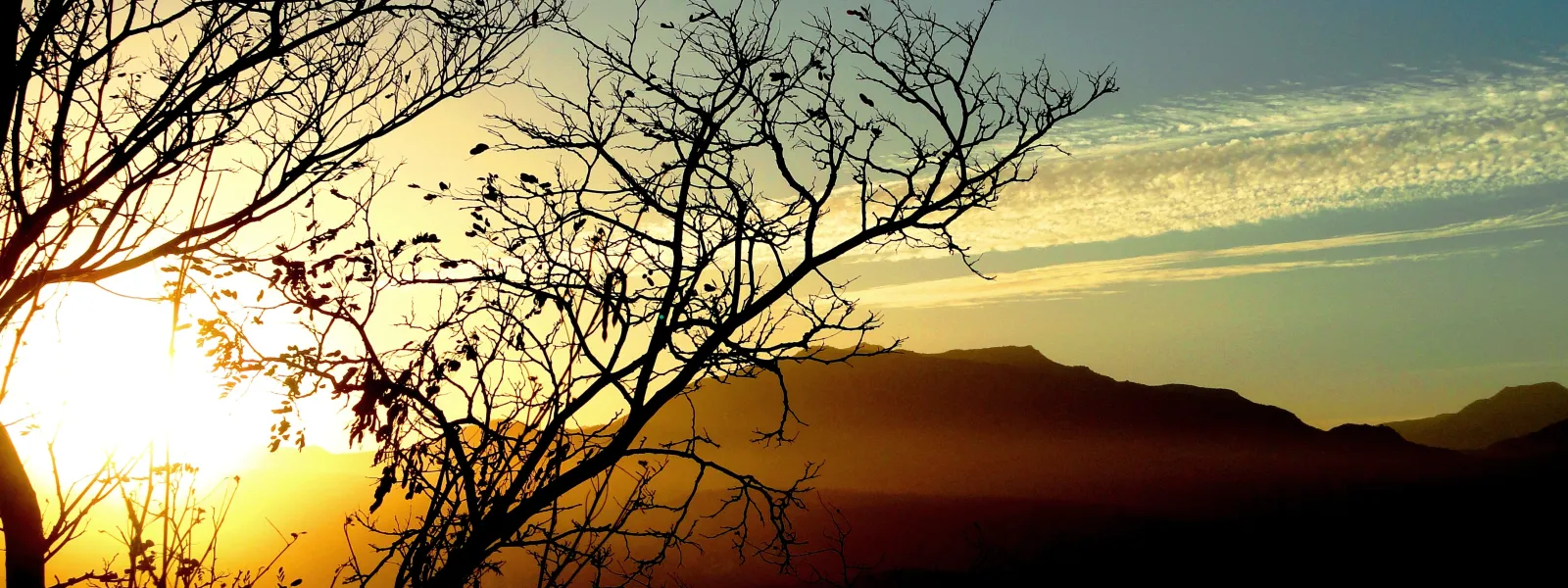
Photo: Ana Rodríguez Carrington (CC BY 2.0)Victory: Biosphere Reserve in Baja California Saved from Toxic Mine
Known as an “ecological treasure house,” the Sierra La Laguna Biosphere Reserve at the southern tip of Baja California will not be spoiled by toxic mine waste, thanks in part to AIDA’s advocacy.
The reserve was once an island, so it’s home to rare plant and animal species. Canyons, swimming holes, and hot springs can be found in its granite mountain range and lowland tropical forests.
Thanks to AIDA and our partners in Mexico, the Mexican government denied an environmental permit for the Paredones Amarillos gold mine, halting the project for the time being. To protect the biosphere reserve, AIDA helped educate community groups and decision makers about the mine's risks. This helped to build the political momentum necessary for the government to deny the permit.
To extract gold from the mountains, the Canadian company Vista Gold proposed to carve out huge quantities of rock—each ton containing a mere gram of gold–-grind it into sludge, and treated it with cyanide. The company planned to dump massive amounts of toxic waste (called “tailings”) behind a dam intended to store it forever. Unfortunately, tailings dams can break for various reasons, as happened at Bolivia’s Porco mine in 1996. When that dam collapsed, more than a quarter million metric tons of tailings flooded the river and contaminated 500 miles (800 km) of waterways in Bolivia, Argentina and Paraguay.
The mine could also cause acid mine drainage. When sulfur-containing rocks are exposed to air and water, sulfuric acid forms, which causes toxic heavy metals to dissolve and drain into the watershed. The risk of acid mine drainage in Sierra La Laguna was significant and the human and environmental cost would have been tremendous: thousands of people and countless wildlife in the reserve rely on its water for survival.
Depleting freshwater is a further threat because mines use tremendous quantities of water. Owing to the scarcity of water in the reserve, Vista Gold proposed to build a plant on the Pacific coast to remove salt from sea water in a highly energy-intensive process, and then pump the water 45 km to the mine site. The desalination plant posed a threat to the endangered leatherback sea turtle.
Singly and together, the mine’s impacts would have devastated a rare jewel, a unique and lush paradise worth saving for future generations.
Related projects
Nature first: it’s time to build environmental consciousness
Speaking in front of more than 500 people was a unique and beautiful experience, above all for the reason I came together with such an amazing group of people. We were seven diverse individuals with two powerful things in common: our love for the natural environment and our work to preserve it. We were in Santiago, Chile as part of the conference, “Nature first: a new deal with the environment.” The great interest the audience had in the event filled me with such joy, as did the opportunity to speak beside my colleagues from The Naturalists, a series of interviews in which professionals from distinct environmental professions were invited to speak about what being a naturalist implies in the modern world. The video series and this event was put on by Ladera Sur, an online platform and community built around nature, the environment, the outdoors, travel, and much more. It was Ladera Sur that introduced us as 20thCentury Naturalists, a great honor and an even greater obligation. But what does “nature first,” a title with such urgency, really mean? It means that, for too long, nature has been subsidizing our technological advancements and even our quality of life. We live in a world in which those who have the means can do practically anything. Perhaps some of us have stopped to think about tomorrow, and how it may be difficult for our children or grandchildren to enjoy even the simplest things in life. But the time has come to reorganize our priorities. We have neither the time, nor the credit, to continue borrowing from nature. Before proceeding with any potentially harmful project or activity, we first must demonstrate that the activity would not hurt the health of the planet. Only after assuring that is it worth asking whether a project is also good business, or if it will make our lives easier or more comfortable. This is not the position of an eco-terrorist, nor is it counter to economic development. It’s simply looking ahead at the reality of a living on a sick planet—a planet on whose health we depend. The good news is that the changes we need to make to resolve the environmental crisis are not only achievable; they are what people living on this planet actually want. A world with low emissions is a cleaner and more just world; a world driven by renewables means less pollution and more equitable access to energy; a world with more protected natural areas is a greener, healthier, more verdant world; it is rich in biodiversity and has a greater capacity to provide clean air and water. See the complete video of the conference below.
Read more
Inter-American Commission to examine rollback of indigenous rights in Brazil
In a hearing before the Inter-American Commission on Human Rights, civil society organizations will demonstrate how measures adopted by the administration of Brazilian President Jair Bolsonaro are undoing decades of human rights protections in the country. Rio De Janiero, Brazil. On May 9, the Inter-American Commission on Human Rights (IACHR) will hear how measures adopted by the government of President Jair Bolsonaro have rolled back protections for human rights in the country, creating a dangerous situation for indigenous communities and violating Brazil’s international obligations to protect human rights. The hearing was requested by the Interamerican Association for Environmental Defense, International Rivers, Conectas, Teles Pires Forum, Operation Native Amazon and Brazil Indigenous People Articulation (APIB) in an effort to halt further rollbacks, and to demand a reversal of the government’s actions that are currently threatening indigenous communities. The hearing will form part of the Commission’s 172 Period of Sessions, which is taking place in Kingston, Jamaica from May 3 to 10, 2019. During the hearing, organizations will detail how reforms made by the Bolsonaro government in matters of law, public policy, foreign policy, and other areas, violate the preservation of indigenous communities’ way of life in the country. The case will also show how those reforms violate communities’ rights to life, culture, food, a healthy environment, clean water, and the delimitation of their ancestral homelands, among others. The government has diminished legal and administrative protections for indigenous communities through the following actions: The transfer of key functions from the Ministry of Environment to the Ministry of Agriculture. Increased precarity for employees at the Brazilian Institute for the Environment and Renewable Natural Resources. Weakening of the Chico Mendes Institute for the Conservation of Biodiversity and of the process for granting environmental permits. The threat of exposing indigenous lands to the dangers of mining. Measures adopted by the Ministry of Environment that fragment the legal order that guarantees minimum conditions for the protection of the environment and indigenous rights. The transfer of authority for the demarcation of indigenous lands from the National Indian Foundation to the Ministry of Agriculture. The threat of withdrawing Brazil from international treaties like the Paris Agreement and others valuable agreements to protect the environment and human rights. In addition to these rollbacks, the above organizations assert that the situation has been aggravated by increased deforestation, encroachment on indigenous lands, and violence against environmental and human rights defenders. press contacts Victor Quintanilla (Mexico), AIDA, [email protected], +521 5570522107 Eloy Terena (Brazil), Brazil Indigenous People Articulation (APIB), [email protected], +55 61 9695-1377
Read more
Clean air and climate justice: the best gifts for our children
Today Mexico celebrates Children’s Day. The best gift we can give to millions of boy and girls is clean air and climate justice. It’s the only thing I want to give to my children that, sadly, I can’t, at least not this year. Mexico City, where we live, has had bad air quality 112 of the 120 days of 2019, thus far. Those of us who live in this city have suffered from contamination, particularly over the last month; three “environmental contingencies” (air pollution alerts) for ozone were declared for a total of seven days. In recent years, contingencies have occurred during peak ozone season—February 15 to June 15—a period in which tropospheric ozone (present in the air we breathe) exceed the maximum levels allowed by Official Mexican Law. This gas, present throughout the year, rises when the burning of fossil fuels by vehicles and industries is compounded by changing weather conditions: less rain and winds, and more solar radiation. This prevents the air pollution that we produce from dispersing into nearby areas. Increased ozone causes serious damages to the environment and public health, particularly to children. According to the Pan American Health Organization, ozone in the air can affect lung function, making breathing difficult. Thus, the group most vulnerable to contamination also includes people with respiratory diseases, older adults and athletes. Authorities recommend that the people, particularly vulnerable groups, abstain from outdoor activities during the contingencies, particularly between 1:00 and 7:00 p.m. Other measures include increasing vehicle restrictions and reducing the consumption of liquefied petroleum gas. Despite its harsh realities, ozone season is not a new or surprising phenomenon, nor is it normal. It shouldn’t be normal for parents to resign ourselves to its presence, to birthday parties indoors and not letting our children go to the park with their friends. I understand the impossibility of controlling the rain, sun and wind; but ozone is another story. There are clear measures that could and should have been implemented years ago to prevent the ozone season from being unavoidable in Mexico City. Already fully identified, they include: improving the quality of gasoline, vehicular technology and fixed sources; ensuring safe and adequate public transportation and bicycle infrastructure; and effectively controlling fleets of private and public transport. Until now, these actions have been incomplete, inefficient and unable to solve the underlying problem. But the improvement of air quality during gasoline shortages has demonstrated that such solutions are possible. What’s more, actions aimed at reducing air pollution could have a double benefit. Tropospheric ozone is a greenhouse gas that aggravates climate change. It is a short-lived climate pollutant that stays in the atmosphere for only a few weeks, meaning that actions to control it have an almost immediate effect on public health, ecosystems and the climate. Therefore, in addition to improving the health of millions of people living in cities, Mexico has the opportunity to fulfill its international obligations on climate change. Diminishing ozone season requires the urgent and structural change of public policies, laws and their application. New standards must include a human rights perspective that prioritizes public interest and the health of children, and others, above vehicular mobility. While the development and implementation of these measures may not be easy, it’s essential we take the first steps toward the results we want to achieve. Government efforts require the support of our entire society. Companies must contribute to the implementation of solutions, acting with due diligence. Academics, civil society organizations, trade unions and other sectors must contribute with our knowledge and participation to ensure that the plans and programs are ambitious and effective, and that they promote a just transition. Every resident of the city has a duty to contribute. A few weeks ago, Professor David Boyd, the United Nations Special Rapporteur for Human Rights and the Environment, published a report reiterating the obligation of States to guarantee the right to clean air, and the duty of companies to contribute. The report has recommendations related to tropospheric ozone that could be very useful for Mexican authorities. The enjoyment of clean air is a right that has yet to be met. Today almost two million children (from 0 to 14 years old) live in Mexico City, including mine. They and a large part of the more than 35 million children across the country could enjoy clean air; most live in cities and towns with air quality problems. According to organized trade, the celebration of Children's Day in Mexico involves an expenditure of 17 billion pesos ($900 million dollars) in gifts, an amount that could be used for authorities, companies and individuals to implement actions to ensure that the children of the country have something much more valuable: the ability to breathe air that does not endanger their health. This would be aligned with the goal of those who instituted the celebration of Children's Day in Mexico in 1924, and with the intention of the United Nations to establish one day a year to honor the importance of children's rights. Air pollution is, unfortunately, a regional and a global problem. Peru and Colombia also celebrate their children this month. Since their cities are among the most polluted in Latin America, what is reflected here can also be applied to those countries, and the continent as a whole. My gift for my children this year will be to continue working for better air quality in Mexico City, and to collaboratively build a future—hopefully a not-so-distant one—in which climate justice is a reality.
Read more