Project
Photo: Alejandro Balaguer / Fundación Albatros MediaVictory: Panama Bay is Legally Protected
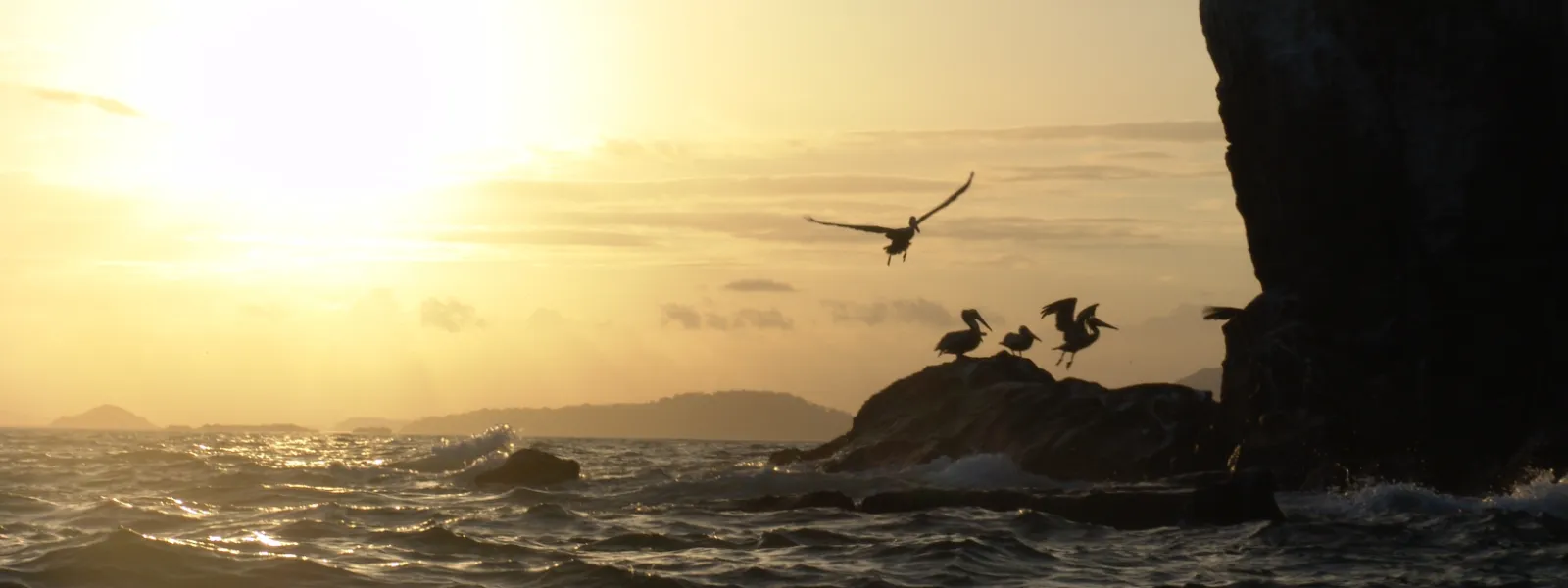
Panama Bay, one of the world’s most important nesting and roosting sites for migratory birds, is now permanently protected, thanks in part to AIDA’s expertise in international law.
The bay supports endangered species, including jaguars and loggerhead turtles, as well as the vast majority of the country’s fishing industry. Its coastal mangroves capture 50 times more carbon pollution than a tropical forest of similar size. Mangroves also protect coastal communities from storm surges that grow in severity as the climate warms. Panama has already lost 75 percent of its mangroves.
In 2012 tourism developers had secured a Supreme Court decision overturning the National Environmental Authority’s decision to protect the bay as a wildlife refuge.
AIDA worked with the Environmental Advocacy Center (CIAM), a Panamanian environmental law organization, to defend Panama Bay’s protected status. We submitted a brief containing arguments based on international law. We made analogies between Panama Bay and Las Baulas National Marine Park in Costa Rica. In a legal case about Las Baulas, a balancing test found that the public right to a healthy environment outweighed the interests of tourism developers.
Then, on February 2, 2015—World Wetlands Day—Panama passed a law creating Panama Bay Wetland Wildlife Refuge. The law emphasizes the importance of an ecosystem approach to management and the rational use of wetlands, as described in the Ramsar Convention.
AIDA and CIAM will continue working to see that the law is implemented properly and to ensure the protection of Panama Bay wetlands.
Related projects
A journey through Chilean Patagonia: Living on and caring for the edge of the world
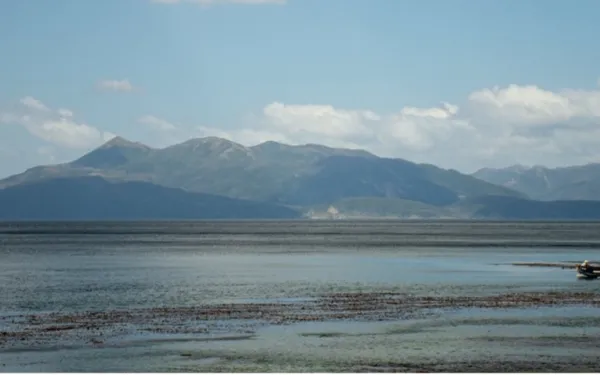
In Chilean Patagonia, at the southwestern tip of the American continent, the land breaks up into peninsulas, isthmuses, and islands surrounded by fjords and channels, forming hundreds of labyrinths.It bridges the sea and the land, a fragile yet vital network of ecosystems, with areas that remain pristine and life flourishing in every corner.To experience Patagonia is to inhabit a "maritorio," a worldview that sees "territory" from and within the sea. Photo: Fernanda Núñez Espinosa. It is to be surrounded by mountains that fade into the water, by glaciers that release small, silvery streams you can glimpse in the distance through the mist.It means exploring one of the planet's most pristine areas, a refuge for rich marine biodiversity. It means sharing the environment with a variety of cetaceans, including the great blue whale, fin whale, and sei whale; Chilean, common, and bottlenose dolphins; sea lions and elephant seals; and colonies of Magellanic, Humboldt, and other penguins.You walk through southern forests filled with lenga trees—native trees with deep roots and slender trunks—up to 400 or 500 years old and reaching over 30 meters. You feel the wind's constant presence on your face as it whistles through the waterways, shapes the foliage, and steers the ships. Photo: Fernanda Núñez Espinosa. A "maritorio" as identityThe first Spanish settlers arrived in this region around 1520. Beginning in the late 18th century, European and North American sealers and whalers traveled through the Strait of Magellan but did not settle there permanently.In 1843, Chile took control of the region by founding Fort Bulnes. However, indigenous peoples, including the Kawésqar, already lived there. Photo: Fernanda Núñez Espinosa. The Kawésqar sailed Chilean Patagonia's waters for thousands of years. They lived off the sea and traveled in canoes that served as their daily homes. As they sailed, they hunted for food (fish, shellfish, or sea lions), cooked over open fires, and attended births. They could read the wind and the tides as if they were their own language. The sea was not merely a resource; it was an extension of themselves, their memory, and their identity.But their relationship with the sea was violently disrupted. Seal hunters, whalers, traders, and settlers decimated the Kawésqar population by spreading diseases such as measles, tuberculosis, and smallpox. Their way of life was also disrupted: staple foods began to run short because of the indiscriminate hunting of sea lions and otters.The Kawésqar were forced to give up their nomadic lifestyle, change their clothing, and speak Spanish. Some families were relocated to missions, where they were exposed to disease and forced to live in closed communities and change their customs.The descendants of that population lost touch with their roots to escape the consequences of systematic persecution. The genocide of "the elders" is not a distant story: the older descendants heard about it directly from their grandmothers, grandfathers, mothers, and fathers, who endured that violence and managed to survive. Photo: Fernanda Núñez Espinosa. Returning to the sea: A way to resist current threatsThe ecosystems of Chilean Patagonia and the indigenous communities that live there have been facing a new threat for years: the expansion of industrial salmon farming. Research shows that between 2009 and 2023, the number of salmon farming concessions granted rose from 1,108 to 1,380—nearly 25%—in the Los Lagos, Aysén, and Magallanes regions. Another 157 applications for new concessions are currently pending.Fattening pens are scattered throughout the marine area, extending into remote parts of the Southern Ocean, even within protected areas. Accumulated waste (including feces and uneaten feed) creates oxygen-depleted zones. In addition, cetaceans have been killed or injured by collisions with vessels, most of which serve the salmon farming industry.Salmon farms are restricting the Kawésqar people’s freedom of movement: They can’t even travel through their own waters!The waterways were their home and their main source of food. Today, few Kawésqar families make their living from fishing. According to community members, they must spend more and more hours on the water to catch as much fish as before. Under these conditions, many people see salmon farming as one of their few job options. Photo: Fernanda Núñez Espinosa. The Kawésqar people’s connection to the sea—the foundation of their lives and culture—has suffered from a history of dispossession that has not ended, but has merely taken on a different form. The violence of colonization has now become the violence of boundless industrial growth.In light of this situation, the Kawésqar community "Grupos Familiares Nómades del Mar" is leading a project focused on diving and reconnecting with the sea. It seeks to restore the direct bond with the waters their ancestors navigated—a bond that salmon farming is putting at risk.The initiative primarily targets children. But as the diving classes progressed, moms, dads, and older community members were encouraged to enter the water. Some of them had been afraid of those waters, but now they dive into them as naturally as their ancestors would have.It is an act of memory and resistance: to look once more beneath the sea's surface where they were born and to restore to the new generations of Kawésqar a living connection to their maritime heritage—one that is not merely recounted, but felt. Photo: Fernanda Núñez Espinosa. Chilean Patagonia is not just a breathtaking landscape.It is a living space where Kawésqar communities—with support from AIDA, Greenpeace, and FIMA—continue to fight to halt the expansion of salmon farming and the damage it causes, so the sea remains theirs.
Read more
Groundwater: The importance of what we can’t see
Did you know that beneath the ground we walk on lies the planet’s most abundant source of fresh water?These are aquifers, underground geological formations that store 99% of the world’s liquid fresh water.That groundwater provides nearly half of the world’s drinking water; it is the sole source of drinking water for one-third of the world’s population (about 2.5 billion people); and it accounts for 43% of the water used for irrigation.Therefore, keeping this resource accessible and high-quality is essential to the lives, health, and food security of millions of people.Despite their importance, aquifers face risks from extractive activities. One such activity is exploiting unconventional oil and gas deposits through fracking, or hydraulic fracturing, a technique that can lead to groundwater contamination. Key aquifers at risk: The case of BrazilSome of the world’s most important aquifers are located in Latin America, primarily within Brazil. They include:The Guaraní Aquifer System, a transboundary aquifer shared by Brazil, Argentina, Paraguay, and Uruguay. It supplies water to about 90 million people, meeting domestic, agricultural, industrial, and tourism needs across more than 1 million km².The Greater Amazon Aquifer System, which spans several Brazilian states and adjacent areas of the Amazon basin in neighboring countries, is one of the world's largest underground water reservoirs and accounts for more than 80% of the water circulating in the Amazon cycle. These strategic water reserves are currently at risk because fracking activities in Brazil could overlap with both aquifers, according to maps. The future of fracking in Brazil—and waterBrazil’s Superior Court of Justice is currently deciding whether to authorize fracking in the country to extract unconventional oil and gas.The technique involves drilling a straight well deep into the ground and then turning the drill to create an L-shaped well. Workers inject a mixture of water, sand, and chemical additives (some of which are toxic) into the well at very high pressure to fracture underground rocks and extract the hydrocarbons they contain.Fracking could contaminate the Guaraní and Greater Amazon aquifers if the toxic chemicals used to fracture the rocks seep through well leaks or surface spills. For this reason, and because of its high water consumption, the technique may jeopardize the water security of populations that rely on these groundwater sources, including indigenous communities and peoples in voluntary isolation.Because water from aquifers isn't just for drinking. It also irrigates crops, keeps rivers flowing, and sustains unique ecosystems.Even though we can't see them, aquifers hold a treasure that is vital to humanity.Protecting them means protecting life.
Read more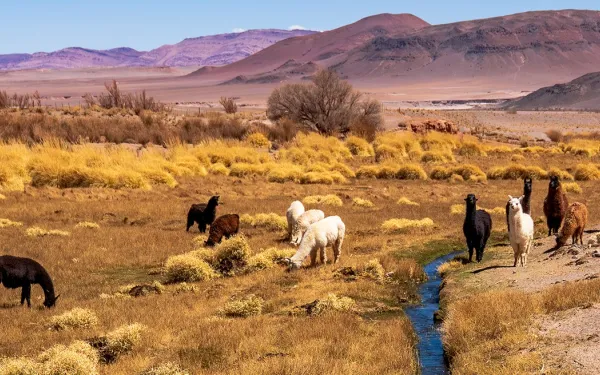
A raw materials transition instead of a raw materials rush: Civil society calls for a change of course in raw materials policy
Berlin. From today until October 8th, more than 35 organizations from Germany and numerous other countries will share their perspectives at events on raw material extraction and global justice during Alternative Raw Materials Week. With 25 events on the circular economy, human rights, and environmental protection, the week is intended as a civil society intervention in current international raw materials policy. The highlight will be the Raw Materials Summit on October 6, 2026.While Germany and the EU are securing their supply of critical raw materials and pushing ahead with new raw materials projects, a broad coalition of civil society organizations warns against sacrificing environmental, human rights, and participatory standards in the pursuit of faster raw materials supply.Hannah Pilgrim, coordinator of the Raw Materials Working Group and initiator of Alternative Raw Materials Week: "The federal government is setting completely the wrong priorities with its raw materials policy. It cannot keep up in a race against China or the U.S. Instead, it should focus on a sustainable raw materials policy that prioritizes reducing external dependencies by cutting raw materials consumption and expanding the circular economy. To be taken seriously by raw materials-rich partner countries, it must defend hard-won standards in the areas of human rights and the environment.Through the Alternative Raw Materials Week, we bring together voices that need to be heard more clearly in the current debate: from mining regions, academia, labor unions, and international civil society.”Víctor Quintanilla-Sangueza, Content Coordinator of the Interamerican Association for Environmental Defense (AIDA): “European raw materials policy poses significant risks to the people of Latin America because of the serious environmental and social impacts associated with mining lithium, copper, and other raw materials. That is why we join critical forums for debate—such as the one facilitated by the Alternative Raw Materials Week—to amplify the voices of affected communities. We are countering the prevailing narrative of the energy transition with one that puts life at the center. We are questioning who is setting the rules for transition processes in the Global North and who is bearing the costs. We conduct this work in collaboration with communities and organizations in Latin America, including the Andean Wetlands Alliance”.During Alternative Raw Materials Week, various international guests from Argentina, Bolivia, the Democratic Republic of the Congo, and Portugal will be available for interviews. Here is a selection:Pía Marchegiani - FARN, ArgentinaNik Völker - MiningWatch Portugal Check the events calendarPress contactsAK Rohstoffe | [email protected] | + 49 (0)30 41 93 41 82Press | [email protected] | +49 1577 7764 847
Read more