Latin America


We all deserve to breathe clean air

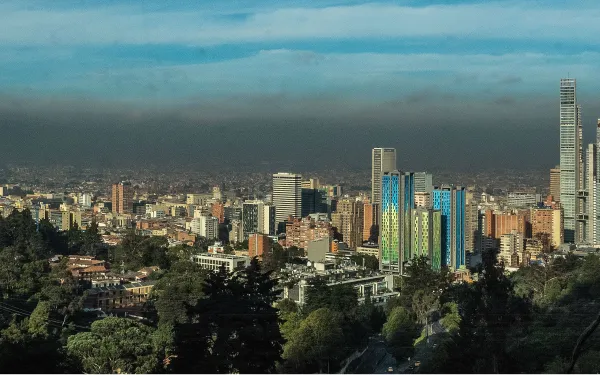
I was born and raised in Bogota, Colombia’s bustling capital city. When I was a child, I grew accustomed to the chaos of the streets—thousands of cars and buses spewing black smoke into the air, the endless honking of horns. It was normal to see massive smokestacks and smell bad odors. I thought all cities were that way, and that nature and clean air only existed in places far from home. I was used to having health problems: headaches, rashes, eye and throat irritation, coughs and hay fever. I never questioned why my sisters and I were constantly fighting these “environmental allergies.” Pollution even prevented me from enjoying the outdoors. I couldn’t easily walk or ride my bike, for example, because my lungs struggled from the soot emitted by passing trucks and buses. There were days I had to leave my house wearing a mask, and times when we were forbidden from playing outside due to the pollution. Air pollution: a silent killer As an adult, I realized that environmental allergies are not the norm. Often, they are caused by constantly breathing in black carbon, ozone, sulfur dioxide and other pollutants that cars, buses and factories emit into the atmosphere each day. I realized that air pollution is a serious threat to quality of life and to a person’s health, especially among the most vulnerable, like our children and the elderly. According to the World Health Organization, millions of people die each year from illnesses related to air pollution. In Latin America, it is the number one environmental health risk, and causes more than 150,000 premature deaths per year. Cities like Mexico City, Monterrey (Mexico), Cochabamba (Bolivia), Santiago de Chile, Lima (Peru), Medellin (Colombia), San Salvador (El Salvador) and Bogota have the highest levels of air pollution in the region. When cities are allowed to expand without regulation, population skyrockets—and with it, so do the number of cars and trucks and factories. I worry about the future of my family in that scenario. I don’t want the air we breathe to negatively impact our health. My husband, who is not from Bogota, moved there to be with me. One year later, he was diagnosed with asthma. When my daughter was just two months old, she had a respiratory infection that put her in intensive care for several days. The cause of both their illnesses: the city’s poor air quality.   Stopping the contamination The majority of the world’s population lives in cities. And while we can’t expect our cities to be pristine, natural ecosystems, they should provide people with the minimal conditions they need to lead dignified, healthy lives. That’s why AIDA works to improve air quality in Latin America, advocating for the protection of our children and other populations highly vulnerable to atmospheric contamination. We are raising awareness among policy makers about the importance of regulating short-lived climate pollutants (SLCPs), which stay in the atmosphere for a relatively short period of time. Unlike carbon dioxide, which can stay in the atmosphere for centuries, SLCPs remain in the air from a few days to a few decades. SLCPs include soot (also known as black carbon) and methane gas. These contaminants are major contributors to climate change, degrade air quality and have serious impacts on food security and human health. Effectively reducing them could significantly improve air quality and advance the fight against climate change in the short-term. Through our experience in international law, we’re seeking ways to regulate these short-lived pollutants across Latin America. Because having clean air to breath is one of life’s basic needs. Clean air shouldn’t be a luxury.  

Read more
Human Rights

Yearning for better times for Nicaragua

Leaving your country behind is an act of courage, especially when you don’t have much. My grandparents were courageous—they fled Nicaragua’s armed conflict in the 1970s, arriving in Costa Rica with nothing but three children in their arms and the hope for a better future. Costa Rica treated them well, and their grandchildren have been able to lead lives of privilege and opportunity. But my grandmother has always dreamed of returning to her country one day. And although I feel proudly Costa Rican, I have learned to love Nicaragua too, especially after getting to know it. Since April, Nicaragua has been in the midst of an armed conflict that has given rise to a large-scale humanitarian crisis. As the conflict continues, the number of people trying to flee Nicaragua has grown, as have requests for asylum in Costa Rica. As of August, more than 300 people had been killed since the conflict began. Unfortunately, the crisis doesn’t seem to be coming to an end anytime soon. Given the urgency of the situation, in May the Inter-American Commission on Human Rights created a Rapid and Integrated Response Coordination Unit with the mission of paying special attention to the human rights situation in Nicaragua. That month, members of the Commission visited cities at the center of the conflict: Managua, Masaya, León and Matagalpa. The resulting report presents evidence of gross human rights violations that have occurred during the country’s social protests. Among those violated were the rights to life, physical integrity, health and medical treatment, freedom of expression and of the press, and freedom of movement. The Nicaraguan State is obligated to guarantee those rights under international law. Thanks to social media, it has been possible to stay informed of what’s been happening in Nicaragua, practically in real time. You can get constant information via Facebook or Twitter by searching the hashtag #SOSNicaragua. The Commission also regularly publishes information on Facebook and Twitter. If you’d like to do something for those affected by the conflict in Nicaragua, you can donate to the Nicaraguan Association for Human Rights or the non-profit organization SOS Human Rights Nicaragua from Costa Rica, which works to support Nicaraguans here in Costa Rica. My grandmother never saw a Nicaragua free of human rights violations. She has always wanted to return to the land where she grew, where her parents were born and where one of her sisters still lives. I hope that everyone who has had to flee Nicaragua during this conflict will be able to return and see their country free, while also fully enjoying their human rights. Hopefully, through democracy, peace will return to that beautiful nation.     

Read more

Oceans

World’s first legally binding treaty to protect the high seas: Landmark UN negotiations open

New York. Treaty negotiations to conserve and protect nearly two thirds of the ocean open today at the United Nations (UN) in what is widely regarded as the greatest opportunity in a generation to turn the tide on ocean degradation and biodiversity loss. Following over a decade of discussions at the UN, the two-week Intergovernmental Conference (IGC) is the first of a series of four negotiating sessions through 2020 for a new legally-binding treaty to protect marine biodiversity in areas beyond national jurisdiction*, commonly known as the high seas. The ocean beyond 200 nautical miles (370 kilometres) from a country’s shorelines is considered international waters – “the high seas” - and is globally shared. There is no overarching law in place to safeguard its biodiversity or its vital role in provisioning services – such as generating oxygen and regulating the climate. “The high seas cover half our planet and are vital to the functioning of the whole ocean and all life on Earth. The current high seas governance system is weak, fragmented and unfit to address the threats we now face in the 21st century from climate change, illegal and overfishing, plastics pollution and habitat loss. This is an historic opportunity to protect the biodiversity and functions of the high seas through legally binding commitments” said Peggy Kalas, Coordinator of the High Seas Alliance, a partnership of 40+ non-governmental organisations and the International Union for the Conservation of Nature (IUCN).  The ocean’s key role in mitigating climate change, which includes absorbing 90% of the extra heat and 26% of the excess carbon dioxide created by human sources, has had a devastating effect on the ocean itself. Managing the multitude of other anthropogenic stressors exerted on it will increase its resilience to climate change and ocean acidification and protect unique marine ecosystems, many of which are still unexplored and undiscovered.  Because these are international waters, the conservation measures needed can only be put into place via a global treaty.  Professor Alex Rogers of Oxford University who has provided evidence to inform the UN process towards a treaty said: “The half of our planet which is high seas is protecting terrestrial life from the worst impacts of climate change. Yet we do too little to safeguard that or to protect the life within the ocean which is intrinsic to our collective survival. Protecting the biodiversity of the high seas by bringing good governance and law to the whole ocean is the single most important thing we can do to turn the tide for the blue heart of our planet.” Through the UN, states will discuss how to protect and conserve the high seas by establishing: Marine Protected Areas (MPAs): MPAs are widely acknowledged as essential for building ocean resilience, but without a treaty there is no mechanism to enable their creation on the high seas. Environmental Impact Assessments (EIAs): Although some activities are partially regulated in some areas of the high seas, there is no legal framework for conducting EIAs to guard against potential environmental harm. Benefit sharing and technological transfer: Many countries are concerned that they will not benefit from research into high seas species and will lose out on potentially vast new ocean genetic resources, such as discoveries of marine genetic resources (MGRs) that could provide new pharmaceuticals, nutraceuticals and other uses. The negotiations will also aim at improving mechanisms to build capacity and transfer technology in developing countries relating to the high seas. Gladys Martínez, senior attorney of the Interamerican Association for Environmental Defense (AIDA)’s Marine Program, said: “We’re hopeful that this intergovernmental conference will achieve important advances toward the creation of a treaty for the conservation and sustainable use of high seas biodiversity. We’re particularly pleased to see the commitment with which Latin American nations are approaching this important negotiation.”   Notes to editors: * ‘Areas beyond national jurisdiction’ means the areas of ocean outside the EEZs and continental shelves of individual states i.e. in most cases beyond 200 nautical miles offshore. It includes, as well as the high seas, the deep sea Area as defined in Part XI of the United Nations Convention on the Law of the Sea (known as UNCLOS), which is the deep seabed beyond the continental shelves of coastal States. For more information see http://highseasalliance.org The process so far: Treaty timeline Press contacts Victor Quintanilla (Mexico), [email protected], +521 5570522107 Mirella von Lindenfels (at the UN during the negotiations), + 44 7717 844 352  

Read more

Toxic Pollution

We have to talk about the bees

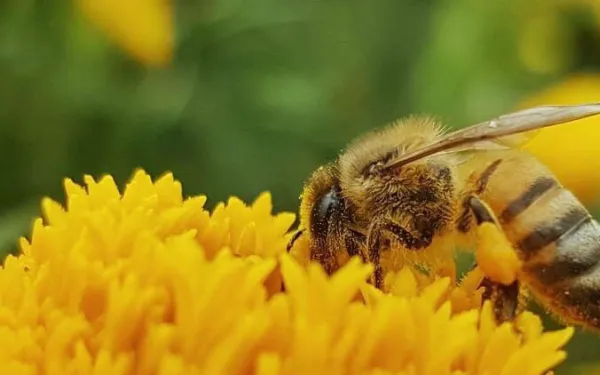
When I was three years old, I threw rocks at a hive until I was attacked by an enraged swarm of bees. It was one of my first memories and, despite the pain it caused me, I harbor no resentment toward bees, wasps, or bumblebees. It was my fault, my mother told me. They were just defending themselves. She taught me about their stingers, the queen bee, and the honey the produce. She told me how they feed on pollen and flower nectar, something a three-year-old can understand. With time, I learned that plants like coffee, apples, and cotton all rely on pollination by bees to reproduce. Twenty-five years ago, the bees didn’t seem to be in any danger — they were everywhere in my small town in the state of Veracruz, Mexico. Later, I moved to Mexico City, where people “reported” bees to the Civil Protection agency, and firefighters were called in to kill them. To prevent attacks, the city made life difficult for bees: in city parks, trees and flowers were sprayed with chemicals and pesticides, and water sources were dried up. That tactic has spread to agricultural fields around the world. Today, it is rare to see bees, bumblebees, or wasps flying around those spaces. The problem with pesticides The problem with bees became visible around 2006, when beekeepers and farmers in the United States reported losing 70 percent of their bee colonies during one winter season. Until that point, keepers would lose around 15 percent of their colonies during the coldest months. But the decline of bee populations wasn’t isolated that season. Various European nations also began reporting losses in the early 2000’s. According to a European Union report published in 2014, the region loses a third of its bee population every year. Unfortunately, little data exists for Latin America and efforts to monitor bee populations have only just begun. We know that beekeepers in Mexico have reported losses of between 30 and 80 percent of their colonies. Chile reportedly loses nearly half its colonies in the winter, a percentage that was previously between 15 and 20 percent. The Abejas Vivas (Living Bees) collective has recorded the disappearance of more than 10,000 hives in Colombia, and some regions of Argentina have reported the sudden death of nearly 90 percent of their hives. Why should we care? Seventy-five percent of our food production relies on pollinators—vertebrates and invertebrates alike—including bees. The UN Food and Agriculture Organization (FAO) asked countries to adopt policies and food systems that are more favorable to pollinators. “We cannot continue focusing on growing our food production with processes based on the general use of pesticides and chemical products that threaten our crops and our pollinators,” said FAO Director José Graziano da Silvo. The sudden mass death of bees—known as Colony Collapse Disorder—is caused by a number of factors: an increasingly extreme and unstable global climate, the increased use of pesticides and fungicides, parasites like the varroa destructor (a mite that attacks bee hives), and the deterioration of ecosystems that bees rely on for food. Each of these factors creates stress for the bees. According to an article in Science, “exposure to chemicals and a lack of food can endanger bees’ immune systems, making them more susceptible to parasites.” Taking steps to protect bees In April, the European Union banned three neonicotinoide insecticides, which are commonly used for producing corn, cotton, and sunflowers. These pesticides are a risk to not just honeybees, but also to wild bees, other insects, and some larger animals. Of course the ban—a decision passed down by the European Food Safety Authority—has not made pesticide companies happy, but the European Union’s objective is critical: to guarantee food production in its member nations. In the United States, despite the fact that the Environmental Protection Agency has called for the protection of pollinators, the current government reversed the ban on certain insecticides in natural protected areas, a policy enacted by the previous administration. While scientists are working to better understand Colony Collapse Disorder, bees continue to die, putting our food security at greater risk. Many studies are focused on domesticated honeybees, whose columns are the easiest to count. But there exist around 20,000 species of pollinators—including wild bees, wasps, bumblebees, other insects, and vertebrates like birds and bats. There are few studies on the impacts of pesticides, changes in soil makeup, and climate variations on wild pollinating species, but these species are also likely to be at risk. Some plants depend exclusively on certain wild pollinators—plants like orchids, cacao (chocolate), coffee, and agave (tequila). That’s why we have to talk about the bees, and the other animals that help provide us with fruits, vegetables, and grains. Losing these species endangers the livelihoods of small-scale food producers, and a drop in food production would disproportionately affect society’s most vulnerable populations. What can we do? Twenty-five years ago, my mother planted flowers and told me that they would attract bees, which would ensure there would always be more flowers. Beyond the simple but meaningful act of sowing native flowers for local pollinators, we must demand that our food production systems respect the natural environment they depend on. And finally, it’s important to note that although bee deaths are caused by a number of different factors, human activity is the one thing they all have in common.     

Read more

Renewing AIDA’s Board of Directors

We proudly welcome the new members of our Board: Xavier Martínez Esponda, Monica Roa and Manuel Pulgar-Vidal. All three are outstanding legal professionals dedicated to the defense of the environment and human rights in Latin America. AIDA’s Board of Directors has been renewed following internal elections, with the incorporation of three new members for the next period of three years. We’re honored to welcome: Xavier Martínez Esponda, a prominent Mexican attorney and Technical Operating Director of the Mexican Center for Environmental Law (CEMDA); Monica Roa, an accomplished Colombian attorney and defender of women’s rights; and Manuel Pulgar-Vidal, a renowned Peruvian environmental attorney, former Minister of Environment of Peru and current leader of the Climate and Energy Practice at WWF International. Manuel Pulgar-Vidal is returning to AIDA’s Board of Directors, which he chaired for eight years after helping to found the organization in 1998. The Board is currently chaired by Manolo Morales of Ecuador, Executive Director of the ECOLEX Management and Environmental Law Corporation. It has as Vice President, Jerónimo Rodríguez of Colombia, Sub-director of Natural Wealth Program at Chemonics International; as Chief Financial Officer, Martin Wagner of the United States, Director of the International Program at Earthjustice; and as Secretary, Margot Venton of Canada, attorney at Ecojustice. Other members include Rafael González of Costa Rica, President of Justice for Nature (JPN) and Pedro Solano of Peru, Executive Director of the Peruvian Society for Environmental Law (SPDA). AIDA is the only regional organization of Latin American experts providing free legal and technical support in defense of the environment and human rights in the Americas. We are constantly seeking new ways to strength the organization, including through the important roles of our Board members.  

Read more

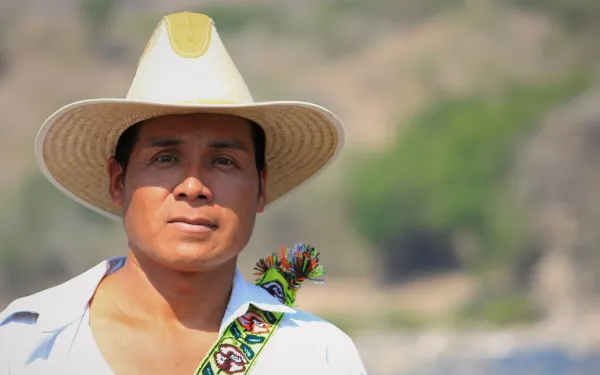
Man in Hat

Why we work to protect human rights in Latin America

The attorneys who make up AIDA’s Human Rights and the Environment Program work to protect people and communities whose rights have been violated or are at risk from the degradation of their natural environment. They know that there is an undeniable connection between the full enjoyment of human rights and a healthy environment. Here’s why they do what they do: “I DO IT BECAUSE IT’S IN MY BLOOD.” Astrid Puentes, AIDA Co-Director “I work in defense of the environment and human rights because they are essential aspects of life, and they are linked. I do it because it’s in my blood: my father was a farmer, my grandparents and great-grandparents too. Part of my connection with nature comes from my family; it’s my inheritance.  I’ve always wanted to contribute to making the world better, particularly in my home country of Colombia, which has so many natural resources but also so much social injustice. I dedicated my career as an attorney to helping make my country a better place. When I became a mother, that motivation only grew, and now I feel a great responsibility to do everything I can so that my children will have a better planet.” Early in her career, Astrid helped stop a proposal by the Colombian and United States governments to spray a transgenic fungus on the Amazon, which would have seriously damaged a vital ecosystem that many people depend on. It was the first successful case in which Astrid was directly involved. “I DEFEND HUMAN RIGHTS BECAUSE I BELIEVE THAT DIGNITY AND EQUALITY ARE INALIENABLE RIGHTS.” Liliana Ávila, Senior Attorney “I defend human rights because I believe that dignity and equality are inalienable rights. I believe in the value of differences and in the struggles of those who have not known their rights. These convictions have made me feel indignation, shame, and rage for the way rights human rights have been infringed upon in my country — Colombia — as well as in Latin America and the world at large. I defend human rights because, for me, they are the realization of the human aspiration to build a more just world.”   Last May, Liliana was moved by the story of an indigenous woman in Guatemala whose community depended on a nearby river, which was suffering water shortages due to the construction of a dam. With the water from that river, the woman watered flowers in her garden, which brought her happiness when life made her sad. That story filled Liliana with hope because she knew that, though her work, she could help keep those flowers blooming.  “MY GREATEST MOTIVATION COMES FROM MY AWARENESS OF INEQUALITY AND INJUSTICE.” Daniel Iglesias, Fellow “My greatest motivation comes from my awareness of the inequality and injustice that characterize the modern world, in large part due to the effects of global capitalism. It is our responsibility to fight to eliminate those inequalities. Defending human rights through solidarity and by denouncing injustice is a fundamental way to achieve that goal.”   As a human rights attorney, Daniel come face-to-face with injustices such as indigenous communities being stripped of their land, people deprived of their freedom of expression, and those who have been affected by the damages caused by extractive industries. Those experiences inform Daniel’s work with AIDA in Mexico, and feed his desire to continue working for social and environmental justice in the region. “I GREW UP knowing I HAD RIGHTS.” Marcella Ribeiro, Legal Advisor “I grew up knowing I had rights. I knew I would never lack food or water and that the beach in front of my house in Brazil would never be polluted because I had the right to a healthy environment. But when I learned that people living in favelas and those affected by droughts didn’t know they had rights, and didn’t organize to claim them, I decided to devote myself to fighting so their voices are heard and their humanity is recognized.”   Marcela worked in Brazil’s favelas educating residents about their human rights. Since then, she has understood that social justice will always be possible as long as people are allowed to enjoy their social, cultural, economic and environmental rights.   

Read more

Statement on the United States’ departure from the UN Human Rights Council

Today AIDA, as an organization that works to protect the right to a healthy environment in the Americas, released the following statement after the United States decided to withdraw from the United Nations Human Rights Council: We consider it a worrying and unfortunate maneuver that could isolate the United States from the international community and weaken its ability to positively influence human rights protection around the world. This decision sends a negative message, especially to countries with serious human rights situations, about which the United States has expressed concern. From our perspective, this decision shows that the administration has also ignored the thousands of people and organizations in the United States that have spoken out against internal policies, including those involving the separation of migrant families and climate change. It’s important to bear in mind that, despite their departure from the Council, the human rights situation in the United States may continue to be evaluated by that body, as it is for other nations that participate in the U.N. Faced with this decision, we urge other States to respond by demonstrating their leadership to ensure the effective protection of human rights globally. The importance of human rights isn’t about a political perspective, isn’t about a party, is about decency and humanity. PRESS CONTACT: Víctor Quintanilla (Mexico), AIDA, [email protected], +521 5570522107  

Read more

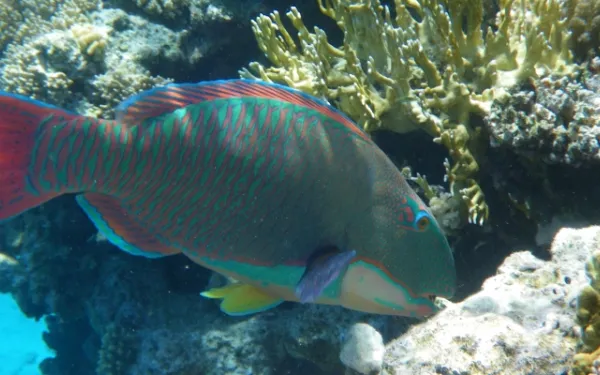
Pez loro
Coral reefs, Oceans

To keep corals healthy, we must protect herbivorous fish

We all know coral reefs are fragile environments, highly vulnerable to climate change and pollution. But did you know they also had to compete for light and oxygen with the tiny macro-algae that cover their surface? That’s why some of corals' best friends are herbivorous fish—species like parrotfish and surgeonfish that feed on algae, helping to keep corals healthy. But in the Caribbean, unsustainable fishing practices are causing a decline in populations of parrotfish (and other herbivorous fish), putting the health of corals at risk. That’s why, in AIDA’s marine program, we’re launching a large-scale project dedicated to the conservation of herbivorous fish throughout Latin America—focused on the nations of Colombia, Costa Rica, Guatemala, Honduras, Mexico and Panama. Herbivorous fish conservation  The parrotfish is one of the most important fish living in coral reefs. They spend most of the day nibbling on corals, cleaning algae from their surface. They also eat dead corals—those bits and pieces that protrude from the reef—and later excrete them as white sand. A key element to maintaining sustainable fisheries is catching only adult fish—those that have already matured and reproduced. But in the Caribbean right now, people are fishing juvenile parrotfish. Though not a commercial species, parrotfish are being captured because they’re some of the only fish left in the reef. The irresponsible nature of commercial fishing in the region has caused a drastic decline in both commercial and herbivorous fish. “A key element of maintaining a sustainable fishery is catching only adult fish, which have already matured and reproduced. But what’s happening in the Caribbean is the fishing of young parrotfish,” explained Magie Rodríguez, AIDA marine attorney. Most fishing is done with gillnets and hooks, which cause high levels of by-catch—unwanted populations of marine species caught in commercial fishing. Harpoons and traps are also used, which prevent younger, smaller fish from escaping and continuing their life cycle. Surgeonfish and damselfish are two other herbivorous fish—both small and quite beautiful—falling victim to irresponsible fishing practices. Their popularity in tropical home aquariums has led to a decline in their wild populations. Remember Dory, from Finding Nemo? She was a surgeonfish, and the movie’s popularity led to an increased demand for her species in aquariums. What the movie didn’t tell you is that the surgeonfish’s small, sharp teeth are highly adept at chewing algae, preventing the plantlife from essentially choking coral reefs of oxygen and light. Conservation strategies  AIDA’s project for the conservation of herbivorous fish in the Caribbean is in its initial phases. Our objective is the implementation of diverse strategies, across the six Latin American nations, to protect these fish and, by extension, the reefs they call home. “To restore the balance of the coral ecosystem, it’s necessary to achieve the recovery not just of herbivorous fish populations, but also of commercial species,” Rodríguez said. So we’re talking not just about fishing bans, but also about the general adoption of sustainable fishing tools that take into account the tourism potential of coral reefs. The project will also contemplate adequate wastewater management strategies, consumer education, and collaboration between governments, NGOs, universities and scientists. Corals are, among other things, a source of economic income and food for coastal communities that live from fishing and tourism. Plus, they are natural barriers against storms and hurricanes. “Corals do a lot for us and we have to take care of them,” Rodríguez added. “We’ve come to find that the best thing we can do to keep corals healthy is to protect the herbivorous fish that call them home.”

Read more

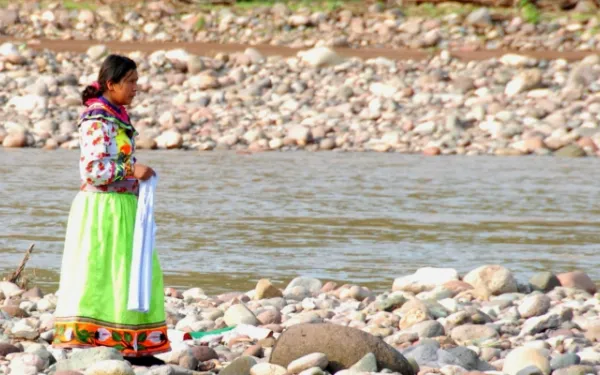
Mujer indígena camina a orillas del río San Pedro Mezquital en Nayarit, México

Women, water and life: the vital connection

As a woman and an environmental defender, I find it necessary to commemorate the role of women in the protection of our natural heritage. I feel a special pull toward making visible the links between environmental defense, courage, and gender.  Women are the first victims of environmental deterioration, but they’re also the greatest protagonists in the defense and conservation of nature.  Although it may seem like women and the environment are two different topics, there are subtle—but strong—links between the two, particularly when it comes to water. Women have an important relationship with water—they are both sources of life and fundamental to existence. It’s not surprising, then, that women can often be seen leading struggles in defense of water, especially within indigenous and rural populations. Joan Martínez Alier, professor of economics at the Autonomous University of Barcelona and an expert in political ecology, explained to Agencia EFE that often, socio-environmental conflicts involving mining or the privatization of water directly affect the survival of communities and, for that reason, women act in defense of water as they would in defense of their land or their family: bravely and completely. Little is known, however, about the knowledge and experience of women in water management. In many cases, especially in the Global South, the administration of water resources, as well as the elaboration and implementation of related policies, doesn’t take into account gender roles and lacks a differentiated approach. In rural Colombia, for example, women bring water to their homes from rivers or springs, boil it for use in the kitchen, and care for it. Despite their central role, they are not consulted when decisions are made locally or nationally about the water supply. It’s necessary to bring visibility to the role women play in water management, give equal recognition to the interests of men and women, and promote equal access to decision-making spaces. Only in that way can we advance towards greater equality. It’s important to remember that Latin America is one of the most dangerous regions in the world to be an environmental defender, and more dangerous still for women. Many women, who fight silently from their communities or from their leadership roles, have suffered the violence and injustice that comes with defending what is theirs. I must take a moment now to remember and honor Berta Cáceres, the indigenous activist and leader of the Civil Council of Popular and Indigenous Organizations of Honduras (COPINH), who dedicated her life to the defense of the Gualcarque River. Berta was murdered in March 2016, after years of threats stemming from her opposition of the Agua Zarca Dam. She may be gone, but her spirit, and her commitment to justice, is still very much alive. I’d also like to mention my colleagues, courageous friends, and allies who through their struggles are shaping a more just and equitable world. They believe, with all their hearts, that gender justice comes hand-in-hand with environmental justice. In our current reality, equality, more than a starting point, is a goal we must work towards. Concrete actions are needed to counterbalance the discrimination that affects us all. That’s why it is fundamental to incorporate the gender approach in any plan, program, project or mechanism of public administration. As the World Bank mentions in a 2002 report, the way to ensure both men and women benefit more equitably from policies is to make their needs and experiences an integral part of them. Life depends on women, as it does on water. That’s why we proudly act as stubborn defenders of not just water, but of all natural resources and of those who depend on them. Although not always visible, our struggle is as present as the water that travels in so many ways across our planet. It’s important that we come together in support of one another—in our victories and our defeats. May we continue sharing our fears and our fights and, above all else, may we never abandon the defense of our territory—because it defines us and to it we owe everything. I’ve always thought that water has the face of a woman. Every day now, I see it more clearly.  

Read more