
Project
Liliana Ávila /AIDAMayan women’s struggle before the Inter-American Development Bank in Guatemala
Mayan communities succeeded in getting the IDB Invest to develop a responsible exit plan after withdrawing its financing for two hydroelectric projects that negatively impacted ecosystems and the livelihoods of indigenous peoples, especially women, in the micro-region of Yichk'isis (Ixquisis).
In the struggle to defend their water, territory and way of life, indigenous Mayan communities in the Yichk'isis (Ixquisis) micro-region of northern Guatemala convinced the Inter-American Development Bank Group to withdraw its financing of two hydroelectric dams whose implementation violated their rights. The decision was also significant in that the IDB, for the first time, designed a responsible exit plan.
That historic advance was the result of the complaint that the communities filed in August 2018—with the support of AIDA, the Plurinational Ancestral Government of the Akateko, Chuj, and Q'anjob'al Native Nations, and the International Platform against Impunity. The complaint was filed with the Independent Consultation and Investigation Mechanism (MICI), the IDB Group's accountability office.
In resolving the case in September 2021, the MICI concluded that IDB Invest failed to comply with its own operational policies and safeguards, in the framework of the financing granted to the company Energía y Renovación S.A. for the implementation of the San Mateo and San Andrés hydroelectric projects.
Learn more about this achievement
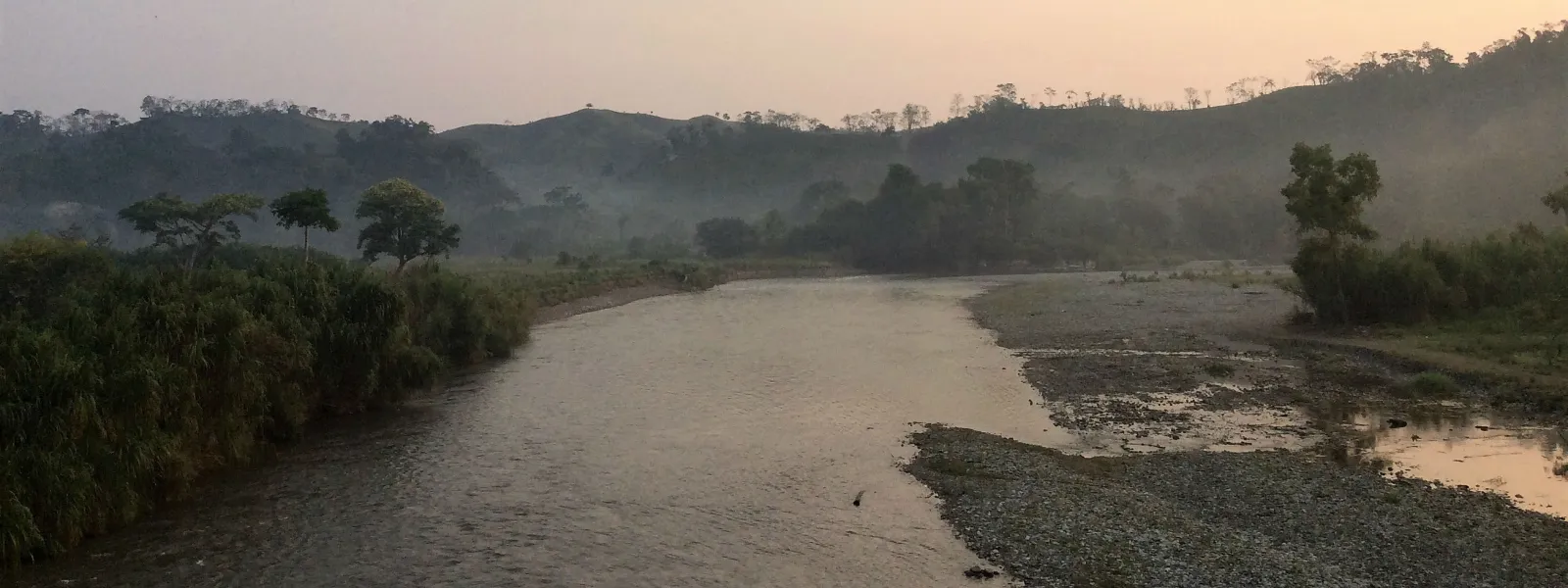
In the mountains of Northwestern Guatemala, near the border with Mexico, the land is rich and fertile. Several important rivers and many other water sources feed the soil.
The residents of these mountains, many indigenous women of Mayan descent, have long depended on the waters to nourish them, to provide them with fish, as well as for agriculture, sanitation, and cooking.
But the construction of the San Mateo and San Andres dams has caused water scarcity and the contamination of rivers and other natural resources long cherished by the communities.
The near lack of water has also drastically reduced harvests, lessening the income gained from selling corn, wheat, beans, coffee, sugar cane and other products in the market. As a result, the conditions of poverty in the area have deepened.
And the risk situation is profound, particularly for women, who have played a very important role in the defense of water and territory threatened by hydroelectric projects, and are therefore victims of intimidation and stigmatization.
As guardians of their land and water, they have come to its defense and they’ll continue to prevent environmental deterioration from further harming their families.
Read our fact sheet on the case

Related projects
How can we save coral reefs?
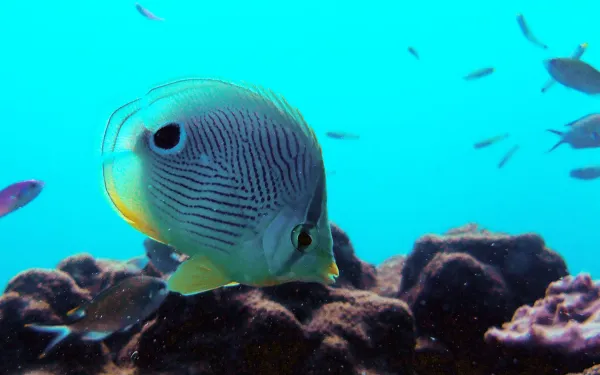
By Haydée Rodríguez When I tell people I live in Costa Rica, they imagine my home on the beach, facing the ocean, waves rolling in from the endless horizon. In reality, I live in a city like any other, one hour from the Pacific coast and three from the Caribbean. Although my life hasn’t exactly been a tropical vision of paradise, I’ve been in love with the ocean since I was a girl. That love has only deepened the more I came to understand the mysteries of the sea, the services it provides and the marvelous creatures that call it home. Of all the species that live in the sea, corals are among my favorites. Thanks to my career at AIDA, I have been able to both learn a lot about these tiny animals, and work to identify effective ways to protect them. Many people don’t know about the incredible connection we have with corals. It’s a connection that exists even for those of us who don’t have the privilege of living by the sea. What are corals and what do they do for us? Although at first glance they look like large rocks, corals are actually living organisms with an exoskeleton. They have a mutualistic relationship with photosynthetic algae called zooxanthellae, which are responsible for their brilliant coloring. The algae use sunlight to produce food and some of the nutrients that the corals need to survive. In exchange, the corals provide the algae with a protected environment. A group of corals forms a reef, a highly biodiverse ecosystem, widely known as the jungle of the sea. Coral reefs provide many benefits to humanity: Reefs are spawning grounds for many varieties of fish—the fish you eat are linked, in one way or another, with a coral reef. Reefs are natural shock absorbers that protect coastal communities from storms and hurricanes. Reefs are tourist destinations that generate important national income: one square kilometer of coral reef provides services valued at up to $600,000 a year, according to the United Nations. The bad news is that these benefits could be lost if we don’t act now to preserve coral reefs. It’s estimated that 60 percent of the world’s coral reefs could disappear by 2030. That would mean that our children may enjoy them for only a brief time, and our grandchildren may know them only from photographs in their science and history books. What are the threats and how can we help fight them? Unsustainable fishing methods, such as trawling, which destroys any coral in its path. Before eating or buying seafood, it’s worth asking how it was fished. Becoming responsible consumers is our right and our obligation. We must demand in restaurants and grocery stores products that have been taken from the sea without harming corals or other species of importance. Inadequate tourism practices harm coral reefs. When exploring the wondrous corals reefs, snorkelers and divers must avoid touching or stepping on them at all costs. We must remember that corals are living creatures, which our weight and the equipment we carry into the sea can harm. When we buy souvenirs like necklaces and crafts, we should reject products that use or incorporate corals. We do not need corals to decorate our homes or bodies, but the ocean needs them to maintain its equilibrium. A recent study found that, when they come into contact with the ocean, sunscreens that contain oxybenzone (a chemical compound) could, even in low concentrations, damage the DNA of corals, deforming them and eventually causing death. We must avoid using this type of product, and instead use safe sunscreens and clothing to protect us from the sun. Here is a list of sunscreens that are safe for corals. The fertilizers used on crops leech into rivers and eventually reach the ocean, severely harming corals by increasing the production of algae, which in large quantities block the sun and prevent corals from receiving nutrients. We must opt for fruits and vegetables grown organically and demand responsible agriculture. Improving legal protection of coral reefs Another important way of saving coral reefs is by seeking change in our countries. We must urge our governments to improve the laws protecting these sensitive creatures. At AIDA, we have recently published A Guide to International Regulatory Best Practices for Coral Reef Protection. The document contains ideas to strengthen laws and promote the conservation of coral reefs around the world. I invite you to share the guide with decision-makers in your country. Or if you prefer, send me ([email protected]) the contact information of people who may be interested in implementing the recommendations contained within, and I will send them the guide directly. Corals play a more important role in our lives than many of us understand, and their future is in our hands. We must save coral reefs to ensure that our children and our grandchildren can enjoy the many benefits of these wondrous creatures.
Read more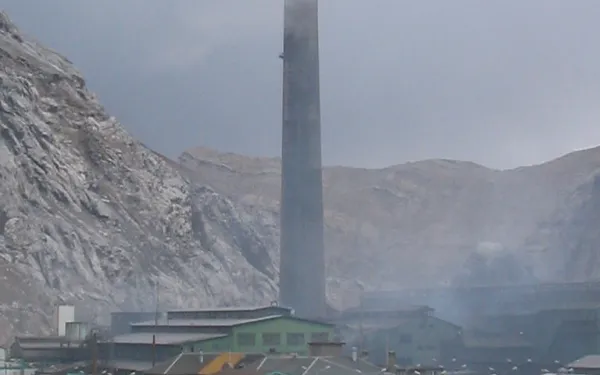
Still Waiting for Justice in La Oroya
Part 1 of a 2-Part Series on the Human Rights Situation in La Oroya, Peru. By María José Veramendi Villa Juana[1] is tired. She and her neighbors have been waiting eight years for a ruling; eight years for a decision that could better their lives, clean their air, attend to their sick children and families. What began as a courageous and hopeful quest for justice has become a discouraging waiting game. Since 2007, a group of residents in La Oroya, Peru, has acted as petitioner in a case before the Inter-American Commission on Human Rights, Community of La Oroya v. Peru. For nearly a century, their city has been contaminated by the operation of a metallurgical complex (smelter) within its borders. The smelter has blackened the air, poisoned their bodies, and released toxic chemicals into the land and water. La Oroya was once identified as one of the most polluted cities in the world. The severe contamination has, and continues to have, grave impacts on the health of the city’s residents. Realities of La Oroya When AIDA’s co-executive director Anna Cederstav first arrived in La Oroya in 1997, women were walking around with scarves covering their faces, a vain attempt to ease the pain of breathing. Juana explained that she had felt the steady burning in her eyes and throat—the effects of contamination—since she could remember, but didn’t pay it any mind. Like most of the population, she thought it was normal. She didn’t really know what clean air was because she’d never experienced it. AIDA has worked for nearly two decades with the community of La Oroya. In 2002, we published the report La Oroya Cannot Wait with the Peruvian Society for Environmental Law. That report began to reveal to the community the severity of the pollution and health risks they were facing on a daily basis. The community realized they had to do something. Juana said it was in 2003, more than 80 years after the smelter began operating, that she became aware of the contamination. Through work with her parish, she was able to access information and learn about what was happening in her city. From there, she connected the dots—the respiratory problems in her family were, in fact, a result of her city’s extreme contamination. The quest for justice Residents submitted their case before the Inter-American Commission after their attempts at justice within Peru produced no remedy. A 2006 ruling by Peru’s Constitutional Tribunal against the State ordered it to adopt measures to protect the health of the community, but the State took no such action. In 2007, the Commission urged the Peruvian state to carry out precautionary measures—a specialized diagnosis of 65 residents and treatment for those who showed irreversible damage to their lives or personal integrity. Juana said receiving news of the precautionary measures was a happy moment because “we knew that we were winning something. At the beginning, everything went well and we believed that everything would be fixed, (but) with the passing of months—years—there were no answers.” Then, in 2009, the Commission issued a report admitting AIDA’s petition, declaring that the State’s omissions in the face of pollution could, if proven, represent human rights violations. But still, nearly a decade after the petition was first filed, the victims await a decision, the precautionary measures have yet to be enforced, and the State’s responsibility for the acts have yet to be established. “It’s taking a really long time, and not all of us have the patience or desire to keep waiting,” Juana said. Time affects the victims, wearing them out until they begin to waver and give up fighting for their right to justice. They become even more vulnerable as they face a city hostile to anyone who fights for their rights to life and health, a state that denies its responsibility and looks for any excuse to avoid assuming responsibility, and a company that wants to polish its reputation and use its economic power to manipulate the government. Where is the law in these cases? Where is justice? Juana explained that leaving La Oroya would be impossible for her family, because there they have work. She remains committed to achieving change with the lawsuit. But that’s not the case for everyone. La Oroya contains thousands of stories of families whose lives were radically changed due to the city’s contamination and the subsequent damages to their health and lives. There are those who had to abandon their homes because they did not see a future in the city, and those who have been unable to leave La Oroya because their entire lives and family are there. Then there are those who have suffered painful attacks and insults from their own neighbors in a community worried about losing jobs, but who march forward with the conviction that, one day, change will come and La Oroya will be a better and fairer place for them, their children, and their grandchildren. I trust and hope that the law will deliver justice to salvage those years of waiting. [1] The name has been changed to protect the client. This blog is based on a longer article Maria José wrote on the case entitled La Oroya: A Painful Wait for Justice. It was published as Chapter 8 of DeJusticia’s book, Human Rights in Minefields: Extractive Economies, Environmental Conflicts and Social Justice in the Global South. Read the full account here.
Read more
Reducing Short-Lived Climate Pollutants: A life jacket in times of climate change
By Florencia Ortuzar, AIDA attorney They’re all around you – the air conditioner hanging from your neighbor’s window, the charcoal powering your grill, the black smoke pillowing out of a passing truck, even the cows dotting the fields outside town. These familiar aspects of our daily lives are just some of the sources of short-lived climate pollutants (SLCPs). When released, SLCPs warm our atmosphere. But, compared to carbon dioxide, they have a relatively short lifespan. Consequently, their effective mitigation could provide a life jacket on the troubled waters of climate change. That’s why SCLPs are worth considering as the world moves rapidly toward the new global climate accord to be signed at the 21st Conference of Parties (COP21) of the United Nations Framework Convention on Climate Change (UNFCCC). The meeting in Paris this December will be the most important in the global climate negotiations thus far. The new accord it produces could help us out of the planetary dilemma we’re currently in. The task is difficult. There have been 20 conferences of the UNFCCC so far, none of which has made substantial progress. Emissions have increased each year since the convention began, except for 2008 and 2009, when they decreased due the global economic crisis (not, notably, due to human will to survive). Sometimes, it’s hard to keep hope alive, but at AIDA, we never lose it. What are SLCPs? These contaminants include black carbon, tropospheric ozone, methane and hydroflourocarbons (HFC). Each one of them is different, but they share two main characteristics: they are major contributors to global warming, and, once emitted, they remain in the atmosphere briefly. The second feature is the one to which we must draw attention if we seek to mitigate climate change in the short term. Unlike SLCPs, carbon dioxide (CO2) can remain in the air for centuries. That means that even if we stopped all emissions today, the CO2 emitted would continue to warm the atmosphere for a very long time. How big of a problem are they? The Intergovernmental Panel on Climate Change (IPCC) has estimated that SLCPs are responsible for more than 30 percent of global warming. More recent studies estimate between 40 and 45 percent. Mitigating carbon dioxide, responsible for the majority of the greenhouse effect, is essential to maintaining the climatic equilibrium of the earth in the long term. But the opportunity offered through the mitigation of SLCPs is much more immediate, and its effects could be felt in our daily lives. Advantages of reducing SLCPs The desirability of reducing SLCPs is much greater if we consider that, in addition to heating the atmosphere, these contaminants cause other problems that directly affect human health and the natural environment. Black carbon and tropospheric ozone, for example, are the cause of millions of premature deaths each year, since they increase the risk of respiratory and heart disease. They also damage crop yields, so their control would help improve food security worldwide. What does the Convention say? The Convention and its Kyoto Protocol do not recognize SLCPs as a concept, although the Protocol does include methane and HFCs in the greenhouse gases it seeks to combat. But this lack of recognition may change with the new climate accord. The current agreement includes a list of specific polluting gases that States must reduce. With the new agreement, however, countries will be free to decide what to include in their gas mitigation targets. Mexico has become a notable example in this regard by unconditionally committing, through its Intended Nationally Determined Contributions (INDCs), to reduce black carbon by 51 percent by 2030. This percentage has the potential to rise to 70 percent with international assistance. The work at hand At AIDA we work to inform governments of the measures they could take to effectively reduce short-lived climate pollutants in their countries. We advocate for the adoption of solutions whose effectiveness has already been tested in various parts of the world. We are preparing a report that reviews current regulation of these pollutants in three Latin American countries: Brazil, Chile and Mexico. We hope this report will facilitate progress towards a better approach to SLCPs in these countries. We will then continue working on this important issue in the rest of the region. You can find more information about SLCPs HERE!
Read more