
Project
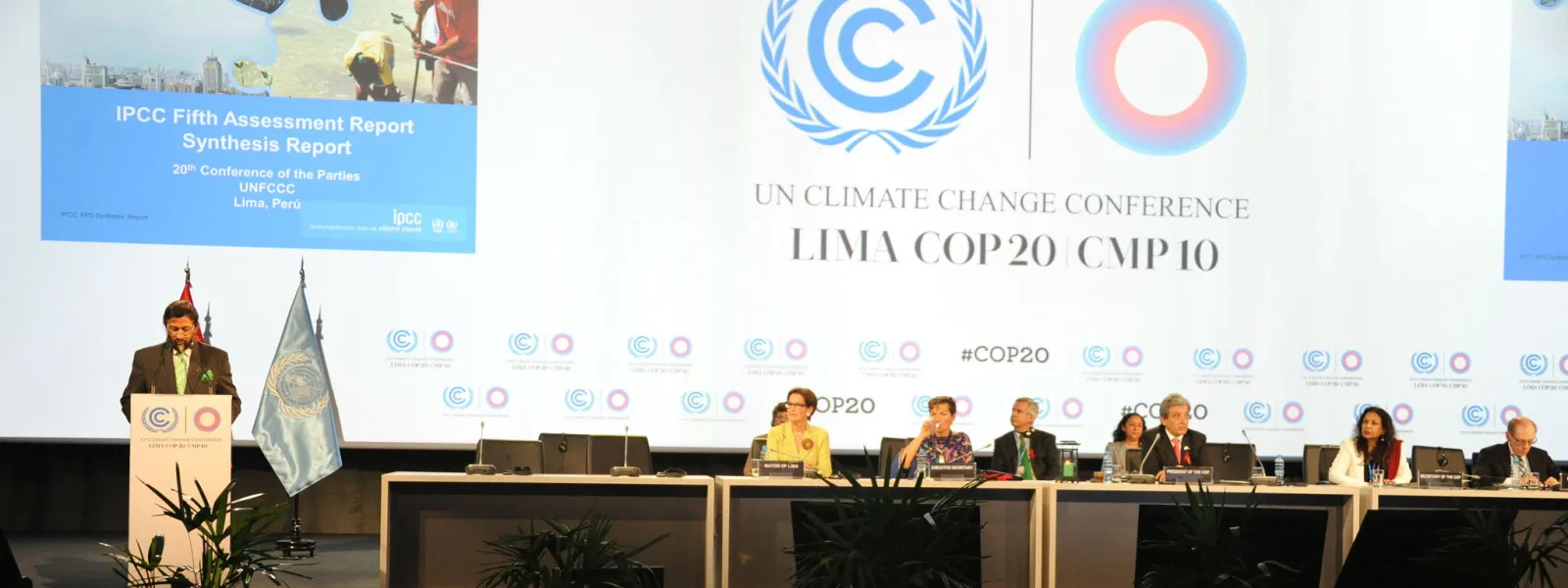
Photo: UNFCCCMonitoring the UN Climate Negotiations
As changes in climate become more extreme, their affects are being hardest felt throughout developing countries. Since 1994, the United Nations Framework Convention on Climate Change has laid out actions to limit the increase of global average temperatures and confront the impacts of climate change.
The States that are Parties to the Convention meet every year in the so-called Conference of the Parties (COP) to review their commitments, the progress made in fulfilling them, and pending challenges in the global fight against the climate crisis.
At COP21 in 2015, they adopted the Paris Agreement, which seeks to strengthen the global response to the climate emergency, establishing a common framework for all countries to work on the basis of their capacities and through the presentation of Nationally Determined Contributions (NDC) that will:
- Limit the increase in global temperatures to 2°C compared to pre-industrial levels and continue efforts to limit it to 1.5°C;
- Increase the capacity of countries to adapt to the impacts of climate change; and
- Ensure that financing responds to the goal of reducing greenhouse gas emissions.
Our focus areas
THE CLIMATE CRISIS AND HUMAN RIGHTS
The climate crisis, due to its transversal character, has repercussions in various fields, geographies, contexts and people. In this regard, the Preamble to the Paris Agreement states that it is the obligation of States to "respect, promote and fulfill their respective obligations on human rights, the right to health, the rights of indigenous peoples, local communities, migrants, children, persons with disabilities and people in vulnerable situations and the right to development, as well as gender equality, the empowerment of women and intergenerational equity."
AIDA at the COP
COP25: Chile-Madrid 2019
At COP25 in Madrid, Spain, we advocated for the inclusion of the human rights perspective in various agenda items. We promoted the incorporation of broad socio-environmental safeguards in the regulation of Article 6 of the Paris Agreement, which refers to carbon markets. We closely followed the adoption of the Gender Action Plan, as well as the Santiago Network, created "to catalyze technical assistance […] in developing countries that are particularly vulnerable to the adverse affects of climate change." We also encouraged the inclusion of ambitious and measurable targets for the reduction of short-lived climate pollutants in the climate commitments of States.
Related projects
Lessons for moving into a world without fossil fuels
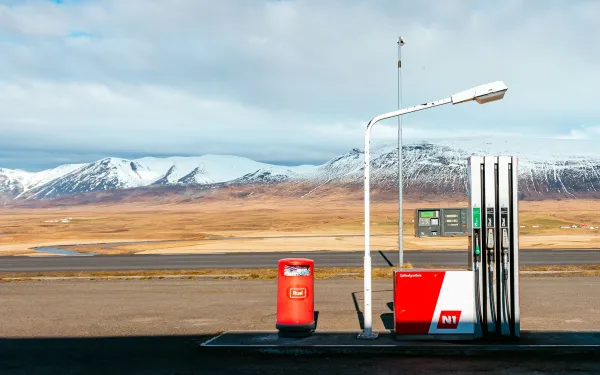
By Javier Dávalos and Florencia Ortúzar Recent social conflict in Ecuador, triggered by the abrupt suspension of diesel and gasoline subsidies, has demonstrated the need for a just energy transition that takes people into account. Measures aimed at ending government support for the production and use of fossil fuels must be progressive and consensual. The extraction of coal, oil and gas produces significant emissions of carbon dioxide and methane, contaminants that cause global warming. Burning these fuels to produce energy also contributes greatly to air pollution, which kills millions of people annually. Nevertheless, governments worldwide spend between 160 and 400 billion dollars each year to subsidize the fossil fuel industry, according to information from the United Nations Environment Program. Total financial support for renewable energy reaches only 121 billion. If we really want to combat the climate crisis and improve our air quality, we much change this situation. Understanding subsidies Public incentives to producers and consumers of coal, oil and natural gas include payments to consumers or businesses and tax deductions. Therefore, even if fuel prices rise steadily, subsidies keep them artificially low. As a result, transportation and trade costs are contained and remain internationally competitive. These subsidies weigh heavily on national economies, which are left without resources that could well be allocated to sectors such as health and education. Support for the industry deepens our dependence on fossil fuels and ties us to a crippling economic system that the planet desperately needs us to escape. It’s important to understand that this dependence is much more acute for the most vulnerable among us, for whom each dollar counts toward quality of life. A just energy transition The events in Ecuador have taught us a valuable lesson: a desirable result does not necessarily justify the way it is carried out. There, the subsidies for diesel and gasoline were eliminated by decree, unilaterally and without prior national dialogue, hitting the poorest sectors of society hardest. This provoked an intense and violent social conflict that forced the government to revoke its decree, which had not even considered the fight against the climate crisis (let alone a just energy transition). Actions of this type, which imply important changes in the basic needs of the population, like the fuel needed for transportation, must be accompanied by protective measures for society’s most vulnerable. It’s time to leave fossil fuel subsidies behind. But their elimination must be framed in serious plans that seek a real transition to a low-carbon way of life. And must be accompanied by supportive actions such as the promotion of local economies, the protection of ecosystems that naturally regulate the climate, the effective improvement of public transport systems, and investment in renewable energy sources. Only in this way will we begin walking in the direction of climate justice. A new social pact to tackle inequality Chile has also erupted in protests in recent weeks. Events there confirm that forgotten segments of society will no longer bear the burden of inequality, and that the time has come to change course. The Chilean crisis is not directly related to fossil fuels subsidies, but it is related to a fundamental problem in Latin America: abysmal social inequality that has for too reigned in our region. Deep social discontent erupted after the government increased the price of public transportation without considering the social consequences it would have. When commodity prices rise, the most vulnerable will always be the hardest hit. Therefore, these changes must incorporate actions that close social gaps rather than aggravate them. Like Ecuador, Chile has shown us that it is time to aim further, beyond palliative measures that affect the pockets of the poorest, in search of a new social pact. The current social and environmental crisis can be taken as a unique opportunity to begin building a more just society, putting an end to the serious inequalities that have long afflicted our countries, our region and the world.
Read more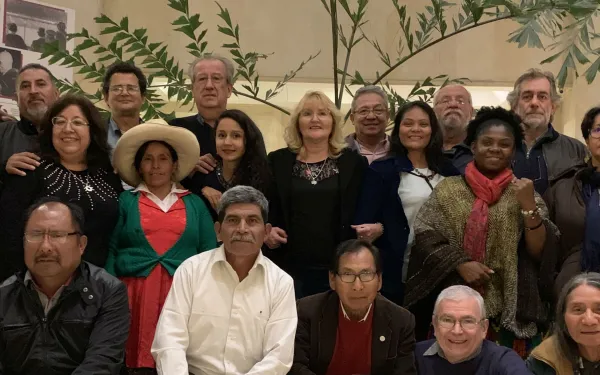
Bogota Declaration for the protection of environmental defenders
As people from 10 different countries who have been awarded the Goldman Environmental Prize, in addition to other environmental defenders, who are contributing to the protection of the environment and the struggle for life, who have come together today in Bogotá with colleagues from throughout our region, we express our solidarity with advocates and communities in Colombia and throughout Latin America and the Caribbean that are currently facing the highest level of risk for their work to protect life on Earth. Therefore, we call on governments, companies, financial institutions, investors, and entities to actively and effectively protect and respect the life and rights of advocates, those of their families, and their communities. We are aware of the serious human rights violations of vulnerable populations, especially of local communities and indigenous people, communities of African descent and farmers, which we face in Latin America and throughout the world. We demand an end to legal persecution and criminalization of our brothers and sisters who defend life and justice, and justice for those whose lives have been forcibly taken from them in this struggle. We hope that our work inspires many young people and others, whose work in turn inspires many more globally. We are convinced that, together, we can address the climate crisis—through collaborative work focused around knowledge and respect for the rights and diverse communities of the world. We call on humanity to stand in solidarity and act in accordance with the work of advocates, and to use peaceful means, art, and motherly love to continue achieving the transformation that the planet and humanity require to protect both people and life. We urge Colombia to continue promoting the dream of achieving peace between Colombians and nature. Turning the page on violence is the path for the next generations to inherit: a better Colombia, Latin America, Caribbean and world. Signatories Francia Márquez (Colombia) Goldman Environmental Prize, 2018 Bertha Zuñiga Cáceres (Honduras), daughter of Bertha Cáceres, Goldman Environmental Prize, 2015 Ruth Buendía (Peru), Goldman Environmental Prize, 2014 Nohra Padilla (Colombia) Goldman Environmental Prize, 2013 Sofía Gatica (Argentina) Goldman Environmental Prize, 2012 Francisco Pineda (El Salvador) Goldman Environmental Prize, 2011 Humbero Ríos Labrada (Cuba) Goldman Environmental Prize, 2010 Jesús León Santos (Mexico) Goldman Environmental Prize, 2008 María Elena Foronda Farro (Peru) Goldman Environmental Prize, 2003 Jean La Rose (Guyana) Goldman Environmental Prize, 2002 Elías Díaz Peña (Paraguay) Goldman Environmental Prize, 2000 Oscar Rivas (Paraguay) Goldman Environmental Prize, 2000 Jorge Varela (Honduras) Goldman Environmental Prize, 1999 Berito Kuwaruwa (Colombia) Goldman Environmental Prize, 1998 Juan Pablo Orrego (Chile) Goldman Environmental Prize, 1997 Evaristo Nugkuag (Peru) Goldman Environmental Prize, 1991 Stiefen Petrust (Suriname) Eliana Torrico Tejada (Bolivia) Danielle Duarte Gomes (Brazil) Antonia Melo Da Silva (Brazil) Liliana Ávila (Colombia) Juana Hofman (Colombia) Javier Ibarraga Ospina (Colombia) Alix Mancilla (Colombia) Blanca Inés Pérez (Colombia) Rosa Peña (Colombia) Astrid Puentes Riaño (Colombia, Mexico) Andrea Cerami (Mexico) Jorge García Lucas (Guatemala) Severina Morales Pérez (Guatemala) Joaquín Raymundo González (Guatemala) Jovita Tzul (Guatemala) Julián López (Mexico) Marcelina López (Mexico) Leydy Aracely Pech Martín (Mexico) Elena Villafuerte (Mexico) Liliana Caruhuaz (Peru) Eddy Peña (Peru) Katherine Sánchez (Peru)
Read more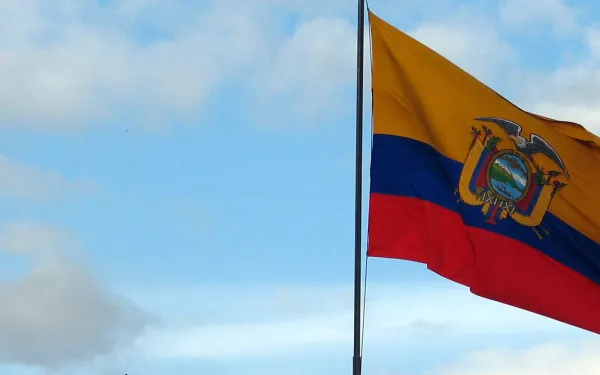
AIDA Statement on the Situation in Ecuador
The Interamerican Association for Environmental Defense (AIDA) recognizes the positive steps made in Ecuador through the United Nations-mediated dialogue between the government and the indigenous movement. The mediation follows weeks of conflict stemming from the government’s elimination of diesel and gas subsidies through decree 883. In a context of global climate emergency, it is necessary to eliminate subsidies for fossil fuels and any other market distortion that promotes their continued exploitation and use. However, no measure will be successful if it is not done with full awareness of the impacts it implies for the most vulnerable segments of the population, directly affected by increased prices of transportation and consumer goods. The energy transition must be progressive and respectful of human rights. Only in this way will we be able to move towards true climate justice. Measures such as those adopted in Ecuador must also be framed within proper planning, aimed at moving towards a low-carbon economy, as well as reducing dependence on oil, large-scale mining and other sectors that contribute to the climate crisis. AIDA commends the commitment of the government and the indigenous movement to developing a new decree in a joint and participatory manner. The recent conflict demonstrates the need to strengthen a plurinational and multicultural State, where decisions are discussed and agreed upon with indigenous peoples and all national actors. Ecuador now has the opportunity to set a key precedent at the global level by designing comprehensive policies that support the fulfillment of its climate commitments and at the same time respect and protect its people, especially vulnerable groups. We hope that the dialogue will be successful and will serve as an example of the collective construction of climate solutions to ensure participation, respect for human rights, gender equity and, in short, the well-being of present and future generations. press contact: Victor Quintanilla (Mexico), [email protected], +5215570522107
Read more