
Project
Amazon Watch / Maíra Irigaray
Barragem de Belo Monte no rio Xingu: 10 anos de impactos na Amazônia e de busca por reparações
A usina hidrelétrica de Belo Monte causou um desastre ambiental e social no coração da Amazônia: um dos ecossistemas mais importantes do planeta.
Essa situação só piorou desde que a usina começou a operar em 2016. A busca por justiça e reparação para as comunidades indígenas e ribeirinhas afetadas continua até hoje.
Em 2011, a Comissão Interamericana de Direitos Humanos (CIDH) concedeu a essas comunidades medidas de proteção, que até hoje não foram totalmente implementadas pelo Estado brasileiro.
E, desde junho daquele mesmo ano, a CIDH mantém um processo contra o Estado por sua responsabilidade internacional no caso.
A CIDH pode encaminhar o caso à Corte Interamericana de Direitos Humanos, que tem o poder de emitir uma sentença condenatória contra o Estado brasileiro.
Consulta o expediente de fatos do caso
Após 10 anos de operação da usina hidrelétrica e mais de 15 anos de violações de direitos humanos documentadas, é hora da justiça ser feita para as comunidades afetadas.
Leia a carta aberta das organizações que levam o caso à CIDH
Leia nosso comunicado à imprensa
Contexto
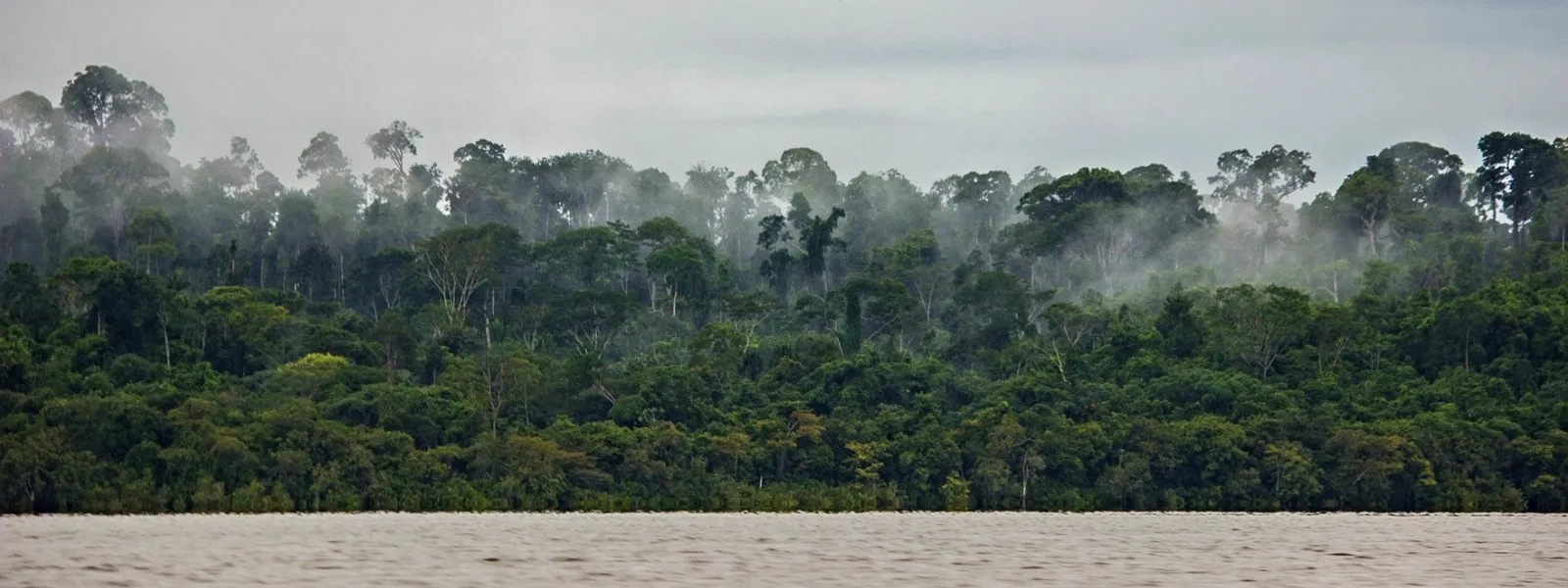
A usina hidrelétrica de Belo Monte — a quarta maior do mundo em capacidade instalada (11.233 MW) — foi construída no rio Xingu, no estado do Pará, norte do Brasil.
Foi inaugurada em 5 de maio de 2016, com uma única turbina. Naquela época, 80% do curso do rio foi desviado e 516 km² de terra foram inundados, uma área maior que a cidade de Chicago. Desse total, 400 km² eram de mata nativa. A usina começou a operar em plena capacidade em novembro de 2019.
Belo Monte foi construída e é operada pelo consórcio Norte Energia S.A., composto principalmente por empresas estatais. Foi financiada pelo Banco Nacional de Desenvolvimento Econômico e Social (BNDES), que aportou ao consórcio 25,4 bilhões de reais (aproximadamente US$ 10,16 bilhões), o maior investimento de sua história. Portanto, o BNDES também é legalmente responsável pelos impactos socioambientais associados ao projeto hidrelétrico.
Décadas de danos ambientais e humanos
As violações dos direitos humanos e a degradação da Amazônia remontam ao início do projeto. Em março de 2011, a Norte Energia iniciou a construção da barragem sem consulta adequada e sem o consentimento prévio, livre e informado das comunidades afetadas.
A construção levou ao deslocamento forçado de mais de 40.000 pessoas, rompendo laços sociais e culturais. O plano de reassentamento em Altamira — cidade diretamente afetada pelo projeto hidrelétrico — incluía moradias na periferia da cidade, sem serviços públicos adequados, moradias dignas para as famílias reassentadas e moradias diferenciadas para aqueles pertencentes a comunidades indígenas.
A operação da barragem de Belo Monte impôs uma seca permanente e artificial na Volta Grande do rio Xingu, agravada pelas secas históricas na Amazônia em 2023 e 2024. Como resultado, a morte de milhões de ovos de peixe foi documentada por quatro anos consecutivos (de 2021 a 2024) e, nos últimos três anos, não houve migração de peixes rio acima para desovar e se reproduzir. Assim, a pesca artesanal, principal fonte de proteína para os povos indígenas e comunidades ribeirinhas, foi severamente afetada: o consumo de peixe caiu de 50% para 30% do total de proteínas consumidas, sendo substituído por alimentos processados. Em suma, houve um colapso ambiental e humanitário que resultou no colapso da pesca como modo de vida tradicional, insegurança alimentar e falta de acesso à água potável para milhares de famílias, empobrecimento e doenças.
Além disso, a construção da barragem aumentou o desmatamento e intensificou a extração ilegal de madeira e a insegurança em terras indígenas e tribais, colocando em risco a sobrevivência dessas comunidades. Outra consequência foi o agravamento da pobreza e dos conflitos sociais, bem como a sobrecarga dos sistemas de saúde, educação e segurança pública em Altamira, cidade considerada a mais violenta do país em 2017, onde houve aumento do tráfico de pessoas e da violência sexual. Também foram registrados casos de violência contra defensores de direitos humanos envolvidos no caso.
Em 2025, durante a 30ª Conferência das Nações Unidas sobre Mudanças Climáticas (COP30), realizada no Brasil, o Ministério Público Federal classificou os danos causados por Belo Monte como ecocídio.
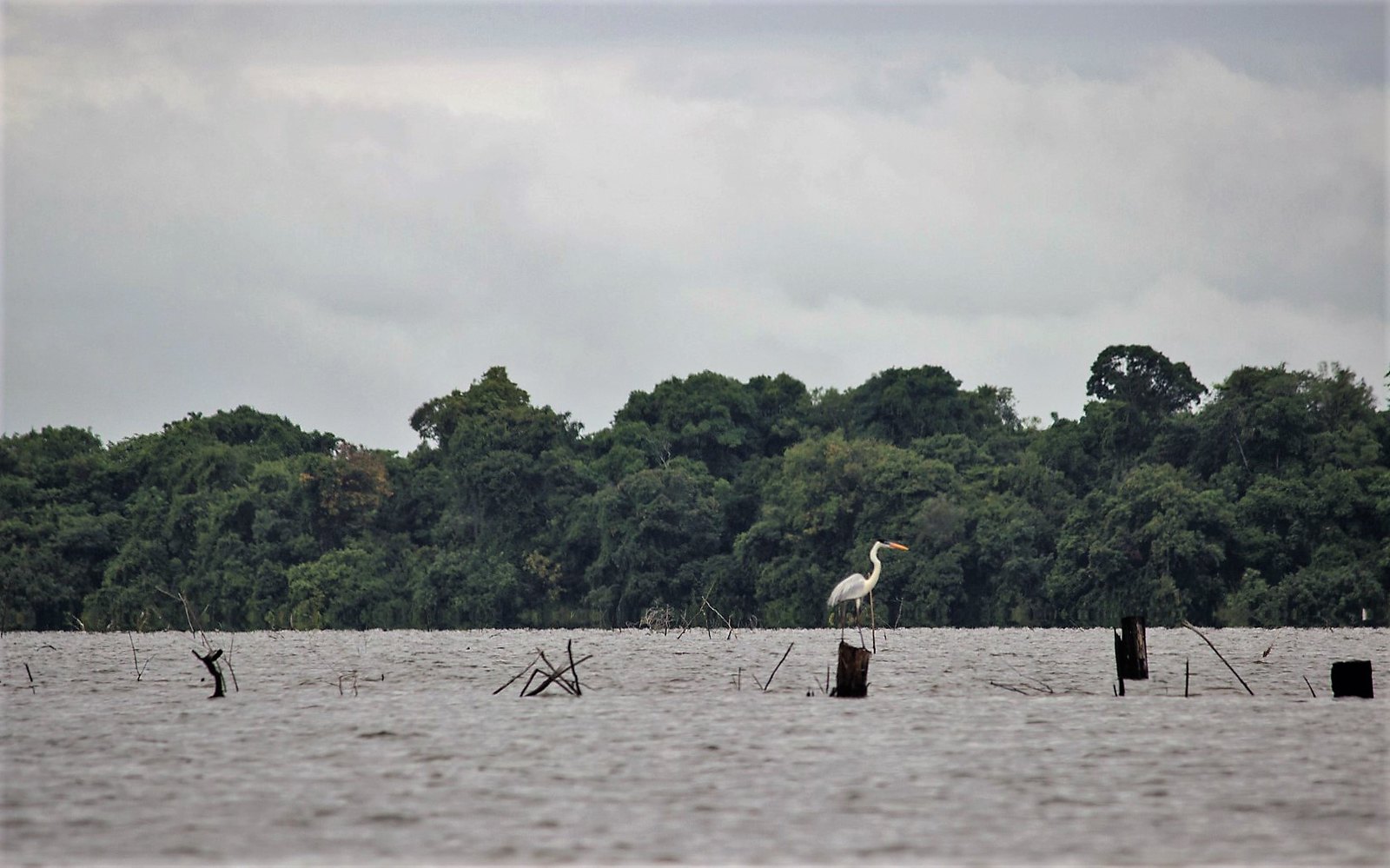
Foto: Amazon Watch / Maíra Irigaray.
A busca por justiça e reparação
Ao longo dos anos, o Ministério Público Federal do Pará, a Defensoria Pública e organizações da sociedade civil impetraram dezenas de ações judiciais em tribunais brasileiros para contestar as diversas irregularidades do projeto, bem como seus impactos. A maioria das ações permanece sem solução, algumas há mais de 10 anos.
Essas ações não obtiveram sucesso porque o governo federal tem reiteradamente anulado decisões favoráveis às comunidades afetadas, recorrendo a um mecanismo pelo qual o presidente do Supremo Tribunal Federal pode suspender uma decisão judicial com base unicamente em argumentos genéricos como "interesse nacional" ou "ordem econômica".
Diante da falta de respostas eficazes em nível nacional, a AIDA — juntamente com uma coalizão de organizações aliadas — levou o caso à Comissão Interamericana de Direitos Humanos (CIDH) e, em 2010, solicitou medidas cautelares para proteger a vida, a integridade e a saúde das comunidades indígenas afetadas.
Em 1º de abril de 2011, a CIDH concedeu essas medidas e solicitou ao Estado brasileiro a suspensão das licenças ambientais e de quaisquer obras de construção até que as condições relativas à consulta prévia e à proteção da saúde e integridade das comunidades fossem atendidas.
E, em 16 de junho de 2011, apresentamos uma denúncia formal à CIDH — juntamente com o Movimento Xingu Vivo Para Siempre, a Coordenação das Organizações Indígenas da Amazônia Brasileira, a Diocese de Altamira, o Conselho Missionário Indígena, a Sociedade Pará de Defesa dos Direitos Humanos e a Global Justice — contra o Estado brasileiro por sua responsabilidade internacional nas violações de direitos humanos contra os povos afetados neste caso. A denúncia foi apresentada em dezembro de 2015.
Em 3 de agosto de 2011, a CIDH modificou as medidas cautelares para solicitar — em vez da suspensão de licenças e obras — a proteção dos povos que vivem em isolamento voluntário, a saúde das comunidades indígenas e a regularização e proteção das terras ancestrais.
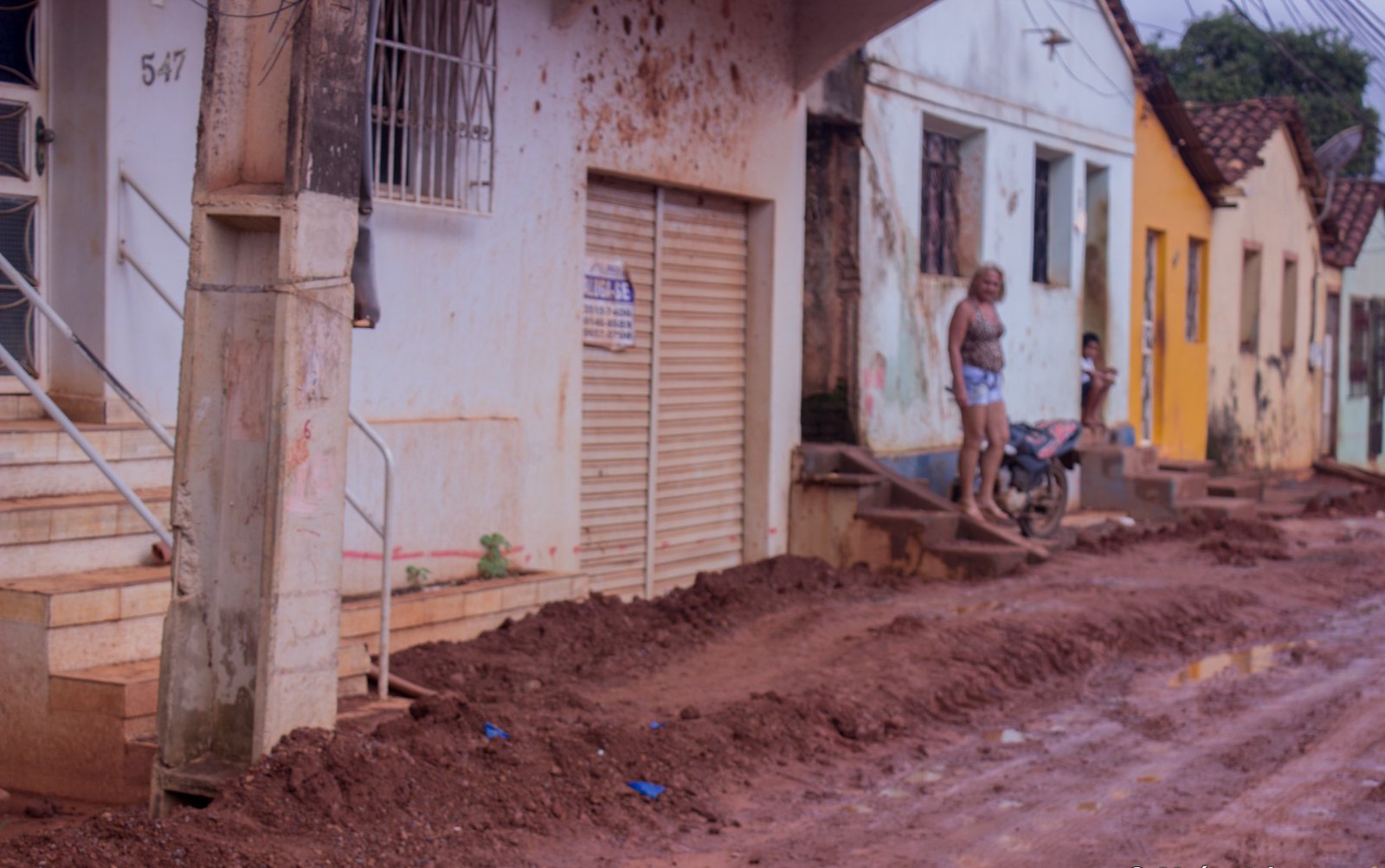
Foto: Amazon Watch / Maíra Irigaray.
Situação atual
As medidas de proteção concedidas pela CIDH permanecem em vigor, mas o Estado brasileiro não as cumpriu integralmente, relatando apenas ações genéricas. As comunidades documentaram as contínuas violações de seus direitos. A situação que motivou o pedido dessas medidas — o risco à vida, à segurança e aos meios de subsistência das comunidades — persiste e se agravou com a usina hidrelétrica operando em plena capacidade e com as recentes secas extremas na Amazônia.
Além do ocorrido em Belo Monte, existe o risco de maiores danos sociais e ambientais decorrentes da implementação de outro megaprojeto de mineração na Volta Grande do Xingu. Lá, a empresa canadense Belo Sun pretende construir a maior mina de ouro a céu aberto do Brasil.
Os impactos sinérgicos e cumulativos da usina e da mina não foram avaliados. O Estado excluiu povos indígenas, comunidades ribeirinhas e comunidades camponesas do processo de licenciamento ambiental do projeto. Apesar disso, dos protestos indígenas e de outras irregularidades em torno do projeto, o governo do estado do Pará autorizou formalmente a mina em abril de 2026.
Belo Monte, assim como outras usinas hidrelétricas, agrava a emergência climática ao gerar emissões de gases de efeito estufa em seu reservatório. Além disso, é ineficiente diante das secas prolongadas e intensas causadas pela crise, pois perde capacidade de geração de energia.
O caso perante a Comissão Interamericana
Em outubro de 2017, a CIDH anunciou que decidiria conjuntamente sobre a admissibilidade (se o caso preenche os requisitos para admissão) e o mérito (se houve, de fato, violação de direitos humanos) da denúncia internacional contra o Estado brasileiro.
Quinze anos após a apresentação da denúncia, as comunidades afetadas e as organizações que as representam ainda aguardam essa decisão. Caso a CIDH conclua que houve violações de direitos humanos e emita recomendações que o Estado brasileiro não cumpra, poderá encaminhar o caso à Corte Interamericana de Direitos Humanos, cujas decisões são vinculativas.
Uma possível decisão da Corte Internacional de Direitos Humanos neste caso estabeleceria um precedente jurídico regional em relação aos direitos dos povos indígenas e ribeirinhos, à participação pública em megaprojetos e à responsabilidade do Estado no contexto da crise climática. Isso é particularmente relevante à luz do Parecer Consultivo nº 32 da Corte, que reafirmou as obrigações dos Estados de proteger pessoas e comunidades em todo o continente da emergência climática.
Partners:
Related projects
Protecting the Colombian páramos: It’s more than just rules
By Carlos Lozano, legal advisor, AIDA,@CLozanoAcosta The consensus in Colombia is that páramo ecosystems are important and must be protected. These high-altitude wetlands are a source of clean water for over two million people. They play a key role in combating climate change, and they host a wealth of strategic biopersity. Half of the world’s páramos are found in Colombia, where they provide the country with 70% of its potable water [1]. Colombia’s print media, for the most part, has shown support for protecting the páramos, backed by a critical mass of congruent public opinion. Progress has been made to conserve the páramos with new regulations and public policies, but challenges remain. Hampering the conservation efforts are the poor implementation of regulations, local community protests, persuasive mining interests and, most recently, a national agrarian strike [2]. National laws incorporate provisions to protect the páramos, including a prohibition of mining activities, among other things. Unfortunately, Colombia’s Constitutional Court recently ruled against reforms to the Mining Code (Law 1382 of 2010) that included a provision expressly forbidding mining in the páramos. Despite this setback, there is a series of domestic rules that, when interpreted as a whole, retain the prohibition on mining. Other legal safeguards exist in the country’s judicial system. The Colombian Constitution, for example, makes general references to environmental protection in articles 8, 58, 79, 80, 333 and 334. The law for the National Environment System (Law 99 of 1993) states that páramo areas are subject to special protection and that human consumption of páramo water is prevalent. The Constitutional Court also has said that the zones banned from mining in the country are not limited to national parks (case C-339 of 2002), and the National Development Plan (Law 1450 of 2011) stipulates that páramo ecosystems cannot be used for further agricultural activities, the exploration or exploitation of oil and minerals or for the construction of oil refineries. What is more, Colombia is obliged to protect the páramo through binding international laws including conventions on biological persity, wetlands of international importance (Ramsar) and climate change. All of these make strong arguments for the protection of the páramos. In spite of the clear legal framework in place to protect the páramos, a nationwide debate is underway as to what defines the páramos and where its official boundaries lie. The discussion was settled with a scientific territorial demarcation drawn up by the Humboldt Institute, initially mapped at a scale of 1:100,000 and then with some areas at a scale of 1:25,000 in accordance with the National Development Plan. The cartography is a serious and rigorous work, so much so that it won an award of excellence from Colombia’s Alejandro Ángel Escobar Foundation for its significant and meaningful contribution to science. The National Development Plan law states that the delimitation should be adopted as part of a legal administrative act so that it becomes a mandatory standard. There are no legal arguments preventing the proper demarcation from being adopted as soon as possible. It’s likely that a strict demarcation of the páramos would have social and economic impacts on the local community. But these do not outweigh the potential harm that could result as a consequence of allowing high-impact activities like mining in the páramos. A particular harm would be the disruption of clean water supplies. Moreover, a weaker demarcation that allows the continuation of local economic activities (including mining and agriculture) not only harms the environment but also fails to recognize the importance of these pristine ecosystems. The course of action we recommend for Colombia is: i) To adopt the demarcation of the Humboldt Institute mapped at as detailed a scale as possible, according to the National Development Plan law; ii) To work with local communities, making a gradual and concerted effort to properly implement and enforce the requirements of the demarcation, including the cessationof industrial activities and iii) Employ mechanisms to compensate for the demarcation’s impacts, including effective economic and industrial restructuring where necessary. [1] ALEXANDER VON HUMBOLDT BIOLOGICAL RESOURCES RESEARCH INSTITUTE. Andean Páramo Project: The Great Book of the Páramo, page 61. [2] Since August, some sectors of the Colombian farming community have mobilized in protest against the impact of free trade agreements on local food production: http://www.bbc.co.uk/news/world-latin-america-23829482. The strike has caused a sharp drop in the popularity of President Juan Manuel Santos and with it, his chances for re-election. Some analysts argue that with the current situation governance is weak. That means sectors like mining have a strong incentive to lobby the government to gain concessions. It could also lead to the implementation of an unsatisfactory páramo demarcation.
Read moreIndigenous rights controversies around Belo Monte consume Brazilian judicial system
Dam license could be suspended due to violations of social and environmental conditions. Altamira, Brazil. Recent lawsuits by Brazil’s Federal Public Prosecutors (MPF) concerning the Belo Monte dam are demanding accountability from the dam-building Norte Energia consortium, Brazil’s National Development Bank (BNDES), and the state environmental agency IBAMA for noncompliance with mandated mitigation measures concerning the Juruna and Xikrin Kayapó, two indigenous groups affected by the mega-project. The lawsuits demonstrate that conditions placed upon the dam’s environmental licensing have not been met and call for compensation for socio-environmental impacts of the dam, currently under construction on the Xingu River in the Brazilian Amazon. The MPF filed a lawsuit in late August showing that Norte Energia was deliberately reneging its obligation to purchase land and provide health services for the Juruna indigenous community Km 17, one of the most vulnerable to the impacts of Belo Monte’s construction due to its proximity to the constant movement of heavy machinery and workers. This lawsuit led the national indigenous foundation FUNAI to issue a complaint to IBAMA, demanding that Norte Energia be held accountable for noncompliance with this formal condition of the environmental licenses for Belo Monte. The Federal Court of Pará State responded this week by giving Norte Energia 60 days to purchase the Juruna land and deliver health care or face daily fines of R$200,000 (US$87,000). “The situation here has only gotten worse,” said Sheyla Juruna, a member of the Km 17 community known for her local and international activism in defense of her community’s rights. “Belo Monte created the illusion that people would get everything they didn’t have. That’s when the problems began. Support from FUNAI never came and our health conditions are precarious. Civil society thinks that the indigenous have rights, yet our rights are being violated every day.” Following the ruling in favor of the Juruna community the MPF filed another lawsuit targeting the neglect of BNDES, IBAMA, and Norte Energia stemming from the absence of prior analysis of impacts and associated compensation measures for Xikrin Kayapó communities that are also threatened by Belo Monte. The lawsuit charges that these three institutions violated the rights of the Xikrin Kayapó when they allowed construction to commence on the project without measuring the impacts it would cause to the indigenous group, whose villages are based on the Bacajá River, a tributary to the Xingu directly adjacent to the dam’s most serious impacts. The MPF has asked the Judiciary to suspend Belo Monte’s installation license, paralyzing the project until Norte Energia can present findings on the project’s impacts and its corresponding compensations for indigenous communities. The lawsuit is unprecedented in its scope as it could force the consortium and BNDES, financier of 80% of the dam’s costs, to indemnify affected indigenous groups of the Xingu for the delay in measuring and mitigating its socio-environmental repercussions. “We truly have reason to celebrate seeing BNDES is finally being charged as a responsible party in Belo Monte’s disastrous impacts,” said Maíra Irigaray Castro of Amazon Watch. “It is time for financiers to pay for the criminal negligence exemplified by noncompliance with conditionalities, which they should also be monitoring for all projects that they finance.” Norte Energia’s failure to comply with Belo Monte’s legally mandated conditions is not new. IBAMA released a report in July confirming that the compliance has worsened as the dam’s construction has sped up. The report shows that only four out of 23 conditions concerning local urban populations have been met. “Last week we had a meeting with representatives of the government and local people and their discontent is clear,” said Antonia Melo, coordinator of the Xingu Alive Forever Movement. “There is no fresh water, no electricity, no health care, no schools and no sanitation. We cannot accept that the conditions, that are fundamental rights guaranteed by our constitution, be undermined in this way. IBAMA must suspend construction, as defined by law, until these conditions are met.” “These legal actions add to the existing evidence of the severe impacts that the Belo Monte dam is having on human rights and the environment in the Xingu, and of the responsibility of all Brazilian agencies involved in the project,” said María José Veramendi of AIDA. “We look forward to a positive result of these legal actions and that Brazil will effectively comply with applicable national and international laws, as all agencies involved can be legally responsible and the State can be internationally responsible for these human rights violations” pointed out Veramendi. Per FUNAI’s request, as well as the lawsuits brought by the Public Prosecutors, both IBAMA and the Federal Judges could suspend the dam’s installation license until all the requirements and conditions are met. “The characterization of Amazonian dams as clean and cheap energy is based on the ability of project proponents, including BNDES, to “externalize” their true social and environmental risks and impacts. These lawsuits are significant in that they’re sending a signal that they are indeed being held accountable for their decisions and the damage that they cause to the environment and indigenous peoples,” said Brent Millikan, Amazon Program Director at International Rivers.
Read moreAndisols: Vitally important and vulnerable soils
Have you ever heard of Andisols? They are a vitally important building block for ecosystems in the Americas including Andean forests and high-altitude wetlands known as páramos, not to mention the cultivation of food. In this post, I’ll explain more about these soils and why it’s crucial to protect them. The Food and Agriculture Organization of the United Nations (FAO) defines Andisols as a type of volcanic black soil typically found in mountainous regions. Andisols occupy roughly 1% of the world’s land surface area, primarily in the Ring of Fire, a string of volcanoes and active tectonic hotspots along the edges of the Pacific Ocean. The ring runs through Chile, Ecuador, Mexico, Japan, Indonesia, New Zealand and other countries, with among the world’s greatest amount of Andisols found in Colombia. Andisols are an essential tool for agriculture and can be used to cultivate sugarcane, tobacco, potatoes, tea, vegetables, wheat, rice and other crops. These soils also sustain fragile ecosystems in the Andes mountains from forests to páramos, helping to provide essential nutrients and regulate the water cycle. In short, Andisols play a vital role in Colombia’s natural landscape. On the world stage, the protection of Andisols is equally important to sustain the food requirements of an increasing global population. By 2050 there will be some nine billion people, and, according to the FAO, to feed them we will need to produce “another one billion tons of cereals and 200 million tons of livestock products per year.” Right now, soil conservation, the protection of ecosystems and sustainable food production are merely transcendental topics for humanity. A rational and respectful use of soils is strategically important. In 2050, a hungry person will not be able to eat banknotes, electronic devices, cars, gold bullion or gasoline. We will face a serious problem if no fertile soil is left for food cultivation. Already today millions of people that go hungry due to unequal food distribution. FAO data from 2011 shows that “almost one billion people are undernourished, particularly in Sub-Saharan Africa (239 million) and Asia (578 million).” While Andisols play a critical role in food production and ecological health, the development of extractive industries – primarily energy and mining – are causing serious negative impacts on these rich soils in Colombia. Public policies must be put in place to regulate and guarantee environmentally sustainable management of these essential soils because the country’s food security and sovereignty depend on them, as does the conservation of mountain ecosystems. To properly protect Andisols, we need to implement a legal framework to ensure they are used in a responsible and environmentally sustainable way for food production and that they are protected from harmful extractive industries. The FAO World Soil Charter of 1982 provides the following guidance to the world’s governments, including Colombia’s: “Develop a policy for wise land use according to land suitability for different types of utilization and the needs of the country.” Regardless of any directives from the United Nations or whatever other international organization, Colombia’s future rests in our own hands. We need to think about how we can guarantee our viability, survival and, of course, our food. We must also consider how to fulfill our responsibility of caring for a country with an incredible wealth of biopersity, from flora and fauna to water supplies and Andisols.
Read more