
Project
Shutterstock.
Pollution of the Motagua River in Guatemala: The Poqomam Maya people’s quest for environmental justice
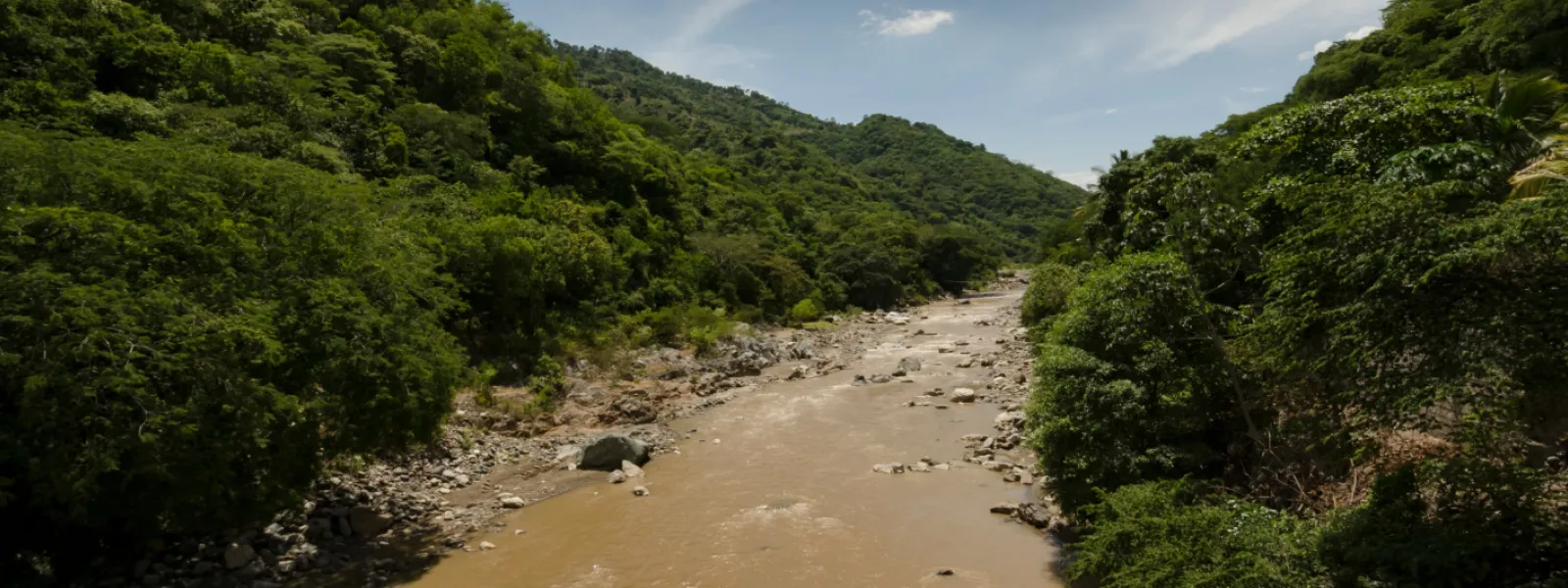
The Motagua River basin—Guatemala’s largest and most important river—is severely polluted with wastewater, solid waste, and other types of debris.
This is a cross-border issue because the Motagua’s polluted waters flow into the Caribbean Sea, reach the coast of Honduras, and threaten the Mesoamerican Reef System.
For decades, this has violated the rights to health, water, development, and a healthy environment of all the people living in the river basin.
In June 2025, the Poqomam Maya community of Santa Cruz Chinautla—supported by AIDA, the Indigenous Peoples’ Law Firm, and allied organizations—achieved an unprecedented legal victory to halt degradation in the basin. In response to the lawsuit it filed, a Guatemalan court ordered the municipality of Chinautla to comply with a series of obligations to curb the pollution of the area’s rivers and soil.
The government's response to the ruling has so far been limited to technical working group meetings. Meanwhile, the community continues to work toward the proper implementation of the ruling and to take other actions to defend its territory and its rights.
Background
The Motagua River, which is 486 km long, flows through 96 municipalities and 14 departments in Guatemala. It originates in Quiché, a department located in the northwest, and empties into the Caribbean Sea.
Polluting activities occur throughout the entire basin, including sub-basins and micro-basins. The largest volume of pollution comes from Guatemala City, the country’s capital, and is carried by the waters of the Las Vacas River, which in turn receives a large amount of waste from the Chinautla River.
The Chinautla River, which flows through the municipality of the same name, carries solid waste from a landfill located in Zone 3 of the capital—where trash from at least 14 municipalities in the department of Guatemala is dumped—as well as sewage generated by some 500,000 people living in the northern part of the capital, which undergoes no prior treatment.
Other sources of pollution include the numerous illegal dumps in the municipality of Chinautla, the waste that private vehicles and garbage trucks dump along the banks of its rivers, as well as the sand-mining companies—which began setting up operations in the area between 1996 and 1997—whose activities weaken the rivers' basins, causing solid waste to be more easily carried away by the river currents.
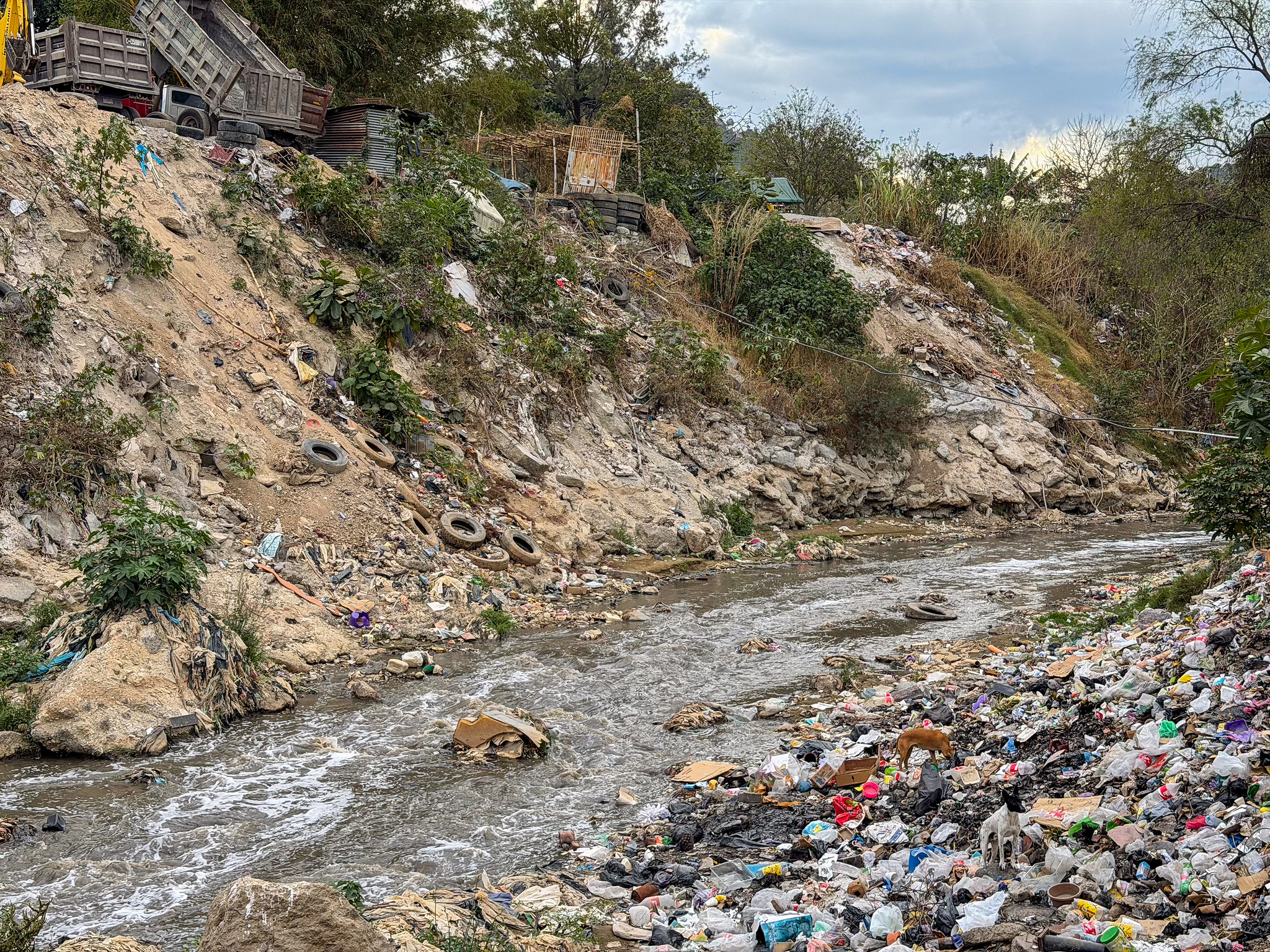
Photo: Mayela Sánchez García.
The situation extends beyond national borders. Every year, the Motagua River discharges some 20,000 metric tons of plastic into the Caribbean Sea, making it one of the rivers that contributes the most plastic pollution to the ocean worldwide, according to estimates contained in a 2025 report by the Inter-American Commission on Human Rights (IACHR).
The river flows into the Mesoamerican Reef at its mouth, so pollution also threatens to degrade one of the largest and most biodiverse transboundary reefs on the planet, which spans the territorial waters of Belize, Guatemala, Honduras, and Mexico.
In addition, the contaminated water reaches the coast of Honduras and spreads into Amatique Bay, located along the eastern coast of Guatemala, affecting the Caribbean Sea.
The roots of this chronic, cross-border problem are structural. Data from the Integrated Environmental Management of the Motagua River Basin project, funded by the United Nations Development Program (UNDP), show that in Guatemala, 66% of municipal solid waste is not collected, and there is no guarantee that the remaining 34% is disposed of properly. Furthermore, of all landfills nationwide, 88.32% are illegal or lack municipal authorization.
In other words, the core issues that need to be addressed are the mismanagement of solid waste and water resources in Guatemala; noncompliance with existing regulations on wastewater discharge and the disposal and treatment of solid waste and residues; and the lack of a water law.
The Poqomam Maya people's quest for justice
The rivers of Santa Cruz Chinautla, a community of the Poqomam Maya people located just twelve kilometers from Guatemala City, have become conduits of pollution that are degrading the Motagua River.
For decades, the local population has seen its health and livelihoods—including pottery, one of the main economic activities and a source of identity—damaged due to the lack of waste management in the municipality of Chinautla and the urban area of the country’s capital, as well as the activities of sand-mining companies.
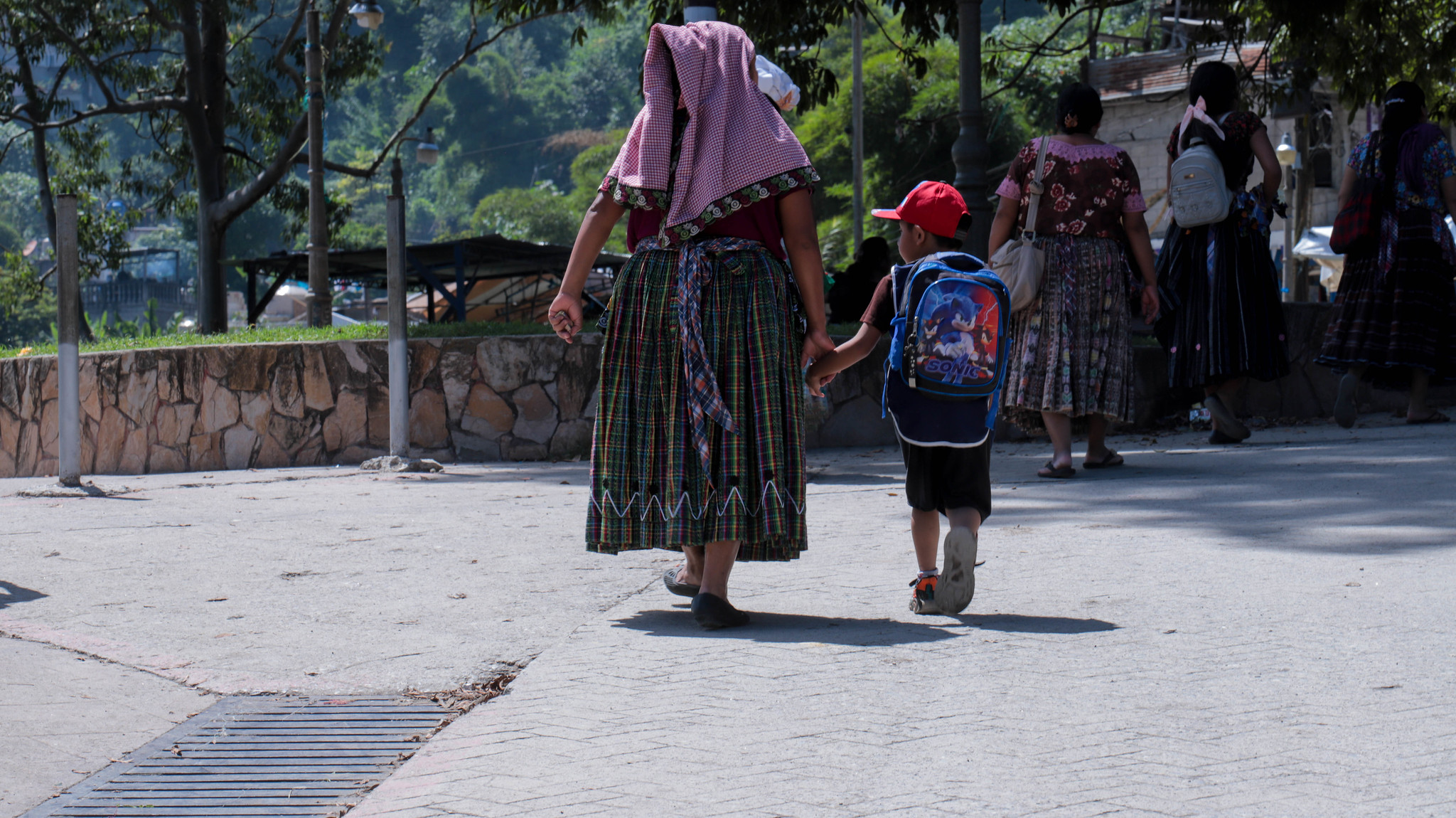
Photo: Mario Winter.
Voices for the Motagua River: Olga Vázquez.
Voices for the Motagua River: Nazario Pascual.
In early 2000, the Maya community organized to stop sand mining on their territory. At that time, the companies held mining permits that remained valid through 2021 and 2022. And although the permits expired, some companies continued to operate after requesting extensions. In June 2022, the indigenous authorities of the Poqomam people began a sit-in protest in front of the Piedrinera San Luis company, which they maintained for four years.
In July 2024, the Special Rapporteur on Economic, Social, Cultural, and Environmental Rights of the IACHR visited Santa Cruz Chinautla. During his visit, traditional authorities and community members spoke about the environmental, water-related, health, economic, and cultural impacts of the pollution in their rivers.
That same year, in October, the community—with support from AIDA, the Indigenous Peoples’ Law Firm, and partner organizations—filed a lawsuit (petition for amparo) against the municipality of Chinautla over its failure to take measures to address the contamination of its rivers and soil caused by improper solid waste management and the existence of illegal landfills.
AIDA’s scientific team, together with local residents and community authorities, collected key information on illegal landfills in the area. This community science initiative supported the litigation by highlighting the severity of the pollution, demonstrating the ongoing use of such practices, and providing evidence of the municipal authorities’ failure to fulfill their legal obligations regarding waste management.
Learn more about this community science initiative.
In June 2025, the Poqomam community won the support of the Guatemalan justice system when a constitutional court ordered the municipality of Chinautla to effectively address the claims in the lawsuit aimed at stopping the pollution of the rivers and soil in Santa Cruz Chinautla.
This is the first time a Guatemalan court has recognized a community's right to a healthy environment and its central role in finding solutions.
Find out the details of the legal victory.
Current situation
Since the ruling was issued, the municipality of Chinautla has held a series of “technical working groups” with representatives from the central government, civil society, and the community. A smaller group of technical experts was later created to develop a work plan with clear goals. Several months have passed without the municipality convening these working groups.
Furthermore, in December 2025, the IACHR noted in its report Human Rights Situation in Guatemala that the Motagua River basin is facing a severe pollution crisis that has had profound impacts on biodiversity and has resulted in systematic violations of the human rights of local communities, including the Maya Poqomam people.
And in May 2026, the Ministry of the Environment and Natural Resources revoked the license of the sand mining company Piedrinera San Luis for "failure to comply with environmental commitments."
AIDA continues to monitor the implementation of the court ruling to ensure the right to a healthy environment for the Poqomam Maya community and all those living in the Motagua River basin. Meanwhile, the residents of Santa Cruz Chinautla remain organized and mobilized to improve their environment and defend their rights.
Related projects
Letter presenting Latin American civil society organizations' concerns on the dilution of the World Bank's safeguards policies
Latin American civil society organizations "strongly recommend that CODE members send the first draft back to Management. Without structural changes to the Safeguard Policy proposal, we question if the second phase of consultations and the review process will be meaningful". According to them, dilution of the current Bank Safeguards Policy is evident throughout the draft. Basic World Bank requirements to assess and manage environmental risks and impacts before approval are now relaxed by providing the unbounded deferral of appraisal of significant environmental and social risks or impacts to implementation. A second major concern is that the draft proposed Social and Environmental Policy and ESSs significantly shift responsibility for safeguards implementation to borrowers, but provides less clarity than current exists on when/how the use of borrower systems would be preferable and acceptable. It remains unclear how the proposed draft will help the Bank and Borrowers make decisions to prepare or use borrower systems to effectively implement safeguards in countries where major dilutions of national social and environmental frameworks are being proposed or recently approved. "The proposed draft misses opportunities to meet the highest international standards. The draft provides no binding language regarding international human rights standards and allows governments to "opt out" of compliance to the Indigenous Peoples Policy to protect Indigenous Peoples rights, which unequivocally undermines the international consensus regarding the specific and fundamental rights of indigenous peoples over their lands, resources and the course of their own development", the organizations argue.
Read more
Giving People a Voice on Hydropower Projects
Hydropower projects are on the rise in Latin America as governments seek to feed growing economies. But at what cost? The plants may harness the energy capacity of running water, a renewable resource. But poorly planned and implemented dams, especially large ones, can bring myriad harms to the environment and communities. They affect fish and water quality, and they increase emissions of methane, a gas that contributes to global warming. Flooding displaces people from their homes and communities. This costs them their jobs as farmers, fishermen and hunters – and for ethnic and peasant communities, even their cultures and traditions. AIDA works with individuals and communities to protect them from poorly conceived and developed projects by using the law to defend their right to a healthy environment. This month AIDA and other organizations submitted a brief (in Portuguese) to Brazil’s Supreme Federal Court. The information demonstrates that congressional approval of the Belo Monte Dam in 2005 is illegal because the government didn’t guarantee the affected communities in the Amazon their right to consultation and free, prior and informed consent. Some meetings were held after approval of the project, and then with just scant and incomprehensible information in foreign languages for the communities. There was also little forewarning to attend. It was like telling you that your front yard is to become a street after the diggers have already started removing the lawn. The dam – which is to be the world’s third largest – is under construction and already displacing people without anyone giving them a chance to say no to the project in their own front yard. This is the first time that our combined efforts have reached the Supreme Court for a final decision on Belo Monte, said AIDA attorney María José Veramendi Villa. If the court rules against the legality of the project, then construction will have to stop and the harms righted for failing to consult the communities beforehand. If the opposite happens, the project will continue – and so will we. We will continue to provide assistance to the Brazilian Prosecutor’s Office as it pursues more than a dozen other cases against Belo Monte. These are cases that can also advance to the highest court with the goal of protecting communities from this and other dams in the Amazon. Our efforts to help communities fight dam projects are gaining attention. The Personería of San Carlos (the municipal ombudsperson), a town in northwestern Colombia, contacted AIDA to provide expertise in international environmental and human rights law. They want help in preventing the granting of a license for construction of the El Porvenir II Dam on the Samaná Norte, the last undammed river in the area. AIDA attorney and human rights and the environment fellow, Ana María Mondragón, went there to speak at a public environmental hearing for the project. The good news is that the dam has yet to be approved, meaning that there is still time for the communities to find out what could happen and voice their concerns. The government will have to take the community input into consideration before approving the project, with the possibility that the developer may have to amend construction plans – or abandon them altogether. El Porvenir II will affect fishing, a main source of work and food for the largely poor people in San Carlos. It will also flood an area where many Colombians are seeking to recover the lands that they were forcibly displaced from as result of an internal armed conflict that started more than five decades ago. “We have entered at an early stage, before the project has been approved,” said Mondragón. “We intervened in the hearing to show the inconsistencies in the environmental impact assessment made by the company and the harms that the Porvenir II dam would have in the community. We hope this will help the authorities in their decision-making process to not grant the license.” With your help, we can keep assisting Latin American communities free of charge to exercise their right to say what happens on their land and defend themselves with the law.
Read moreOrganizations submit amicus curiae brief to Brazil’s Supreme Federal Court, demonstrating that Congressional authorization of the Belo Monte Dam is illegal
The authorization violates national and international law because the communities affected by the project were not consulted. Construction of the dam continues, causing harms to people, communities and the ecosystem of the Brazilian Amazon. Brasilia, Brazil. Construction of the Belo Monte Dam continues. Meanwhile, biodiversity and the communities of the area already suffer severe damage. Civil society organizations submitted to the Supreme Federal Court an amicus curiae (in Portuguese) (friend of the court) brief that demonstrates that the Congressional decree authorizing the controversial dam is illegal because the government didn’t consult with the affected communities. The brief contains national and international law arguments for the protection of the environment and human rights. The arguments support a legal action filed by the Federal Prosecutor’s Office (Ministério Público Federal), which seeks a Supreme Federal Court ruling that annuls the decree. The Interamerican Association for Environmental Defense (AIDA) prepared the document in cooperation with the Centro de Estudios de Derecho, Justicia y Sociedad (DEJUSTICIA), Instituto Socioambiental (ISA), la Associação Indígena Yudjá Mïratu da Volta Grande do Xingu (AYMÏX) and the Conselho Indigenista Missionário (CIMI). "The Belo Monte project was approved without the State having consulted and obtained the consent of the affected indigenous communities and traditional populations. This, alongside the environmental degradation that began with construction, has placed the individuals and communities in a situation of extreme vulnerability," explained AIDA’s attorney, María José Veramendi Villa. By not guaranteeing the right to free, prior and informed consent of the affected communities before authorizing the project, Congress violated the Brazilian Constitution and Convention 169 of the International Labor Organization (ILO). Even though public information meetings about the project were held, they did not constitute prior consultation because they were held after the project was approved. Additionally, information provided in the meetings was not translated into indigenous languages. Not all the affected people had access to the meetings and those who did received incomplete and last minute information about the project. As well as the issues related to free, prior and informed consultation and consent, the document reinforces the Federal Prosecutor’s arguments with regard to the right to access to justice. This right was violated when the government used a law known as Suspension of Security to suspend lower court decisions against the project and favorable to the affected population, ostensibly to protect public security and the economy. "If the Supreme Federal Court issues a favorable decision, the Brazilian State will have two obligations. Not only will it have to suspend the authorization it gave for the dam’s construction, but also it will have to remedy the past and ongoing harm inflicted on indigenous communities and other populations affected by Belo Monte," said Dejusticia’s international director, César Rodríguez Garavito. "Traditional populations affected by the dam are living in unacceptable conditions for democratic times. There is a judicial decision that recognizes that the right to prior consultation was violated, but at the same time another, preliminary and provisional, decision that authorizes construction to move forward," said Leonardo Amorim, an attorney with Instituto Socioambiental. "Consequently, this population suffers worsening health conditions and invasion of their lands. We hope that the Supreme Federal Court rejects this situation." This past Tuesday, the Xingu Alive Forever Movement (MXVPS), with the support of several organizations, requested a hearing (in Portuguese) with the President (Chief Justice) of the Supreme Federal Court to demand an immediate decision in this legal action, as well as in others that challenge large hydroelectric projects in the Amazon.
Read more