
Project
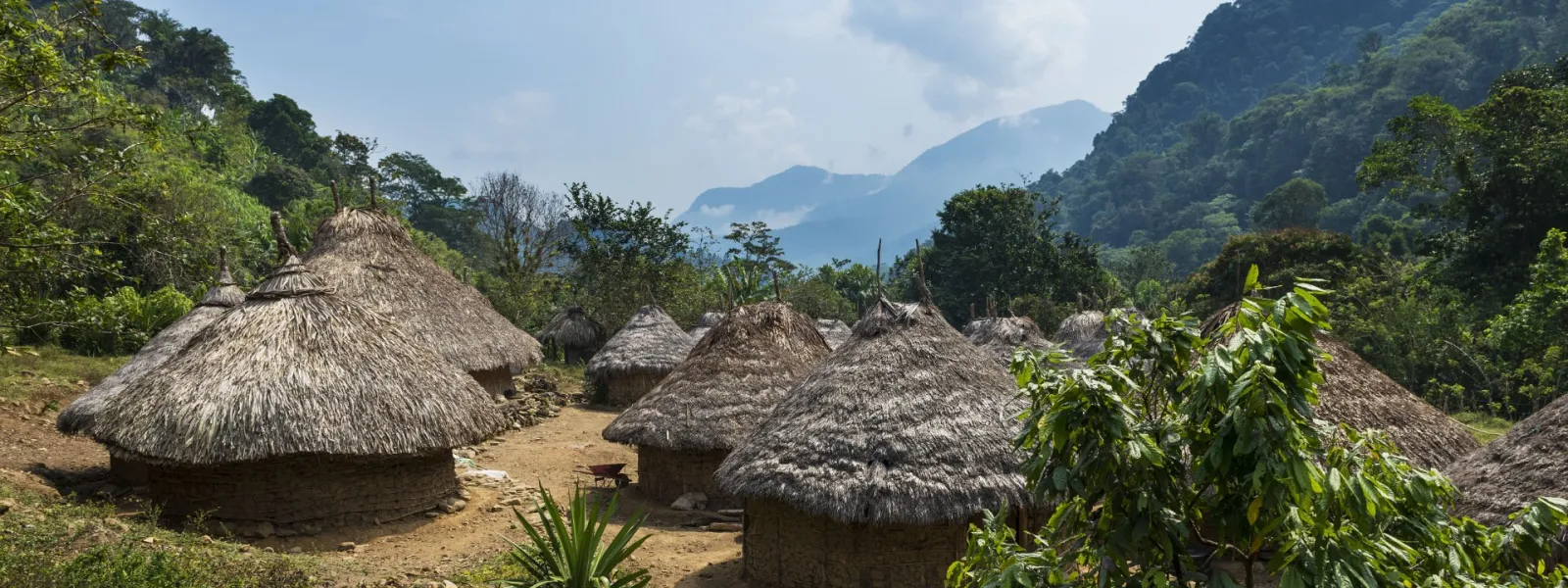
Preserving the legacy of the Sierra Nevada de Santa Marta, Heart of the World
Rising abruptly from Colombia’s Caribbean coast, the Sierra Nevada de Santa Marta reaches 5,775 meters (18,946 ft.) at its highest points, the peaks of Bolívar and Colón. It is the highest coastal mountain system in the world, a place where indigenous knowledge and nature’s own wisdom converge.
The sheer changes in elevation create a wide variety of ecosystems within a small area, where the diversity of plant and animal life creates a unique exuberant region. The melting snows of the highest peaks form rivers and lakes, whose freshwater flows down steep slopes to the tropical sea at the base of the mountains.
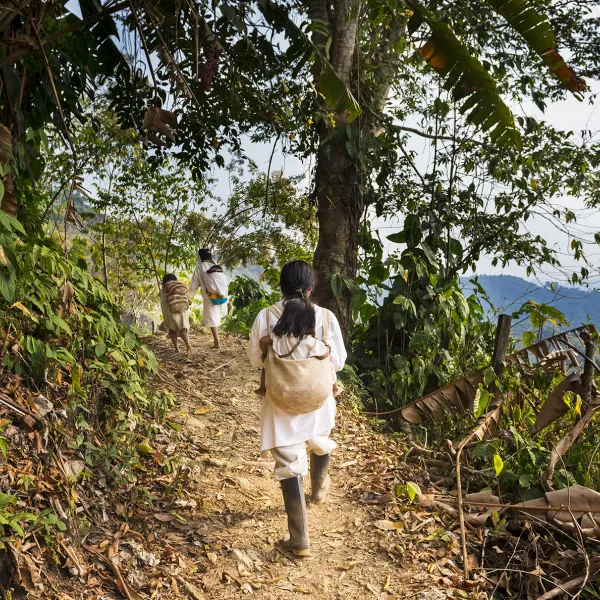
The indigenous Arhuaco, Kogi, Wiwa, and Kankuamo people protect and care for this natural treasure with an authority they have inherited from their ancestors. According to their worldview the land is sacred and shared in divine communion between humans, animals, plants, rivers, mountains, and the spirts of their ancestors.
Despite this ancestral inheritance, development projects proposed for the region have failed to take the opinions of these indigenous groups into consideration. The Sierra Nevada de Santa Marta is currently threatened by 251 mineral concessions, hydroelectric projects, agriculture, urban sprawl, and infrastructure projects.
Many of these concessions were granted without the prior consultation of the indigenous communities, which represents a persistent and systematic violation of their rights.
Mining, which implies the contamination and erosion of watersheds, threatens the health of more than 30 rivers that flow out of the Sierra; these are the water sources of the departments of Magdalena, César, and La Guajira.
These threats have brought this natural paradise to the brink of no return. With it, would go the traditional lives of its indigenous inhabitants, who are dependent on the health of their land and the sacred sites it contains.
The Sierra hosts the archaeological site of la Ciudad Perdida, the Lost City, known as Teyuna, the cradle of Tayrona civilization. According to tradition, it is the source from which all nature was born—the living heart of the world.
The four guardian cultures of the Sierra are uninterested in allowing this natural and cultural legacy to disappear.
Related projects
Environmental law in Latin America: Progress and setbacks
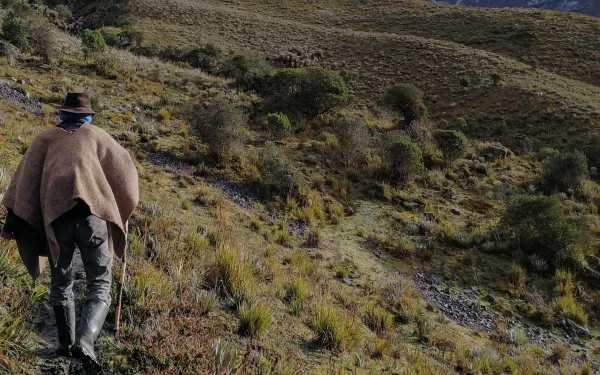
Environmental law in Latin America is currently facing a paradox.The continent has recently seen historic progress in developing binding legal standards to protect the environment and those who defend it. However, this progress coexists with the weakening of legal and institutional frameworks for protecting the environment and the rights of communities in various countries. At the forefront of protecting the environment, the climate, and peopleIn the context of the climate, environmental, and social crises, Latin America has been the birthplace of important legal tools to protect territories, ecosystems, communities, and the global climate.These recent developments have included the Escazú Agreement and Advisory Opinion 32 (OC-32/25) on the climate emergency issued by the Inter-American Court of Human Rights, which reinforce and reaffirm binding standards for climate action, environmental protection, and the defense of human rights.The Escazú Agreement, which entered into force on April 22, 2021, is the first regional environmental treaty—and the first of its kind in the world—to include specific provisions for the protection of individuals, groups, and organizations that promote and defend human rights in environmental matters in Latin America and the Caribbean.It is an international milestone in the areas of participation, information, and the protection of environmental defenders, as well as a model for other continents.As for the Inter-American Court’s ruling, made public on July 3, 2025, it recognizes the right to a healthy climate as an autonomous right—enforceable in its own right—with clear obligations for States in the face of the climate emergency. The court even reaffirms the State’s obligation to keep the planet’s average temperature at 1.5 °C, recognizing that this threshold is already having an impact on human rights.The court also establishes rules for enhanced due diligence, which entail, among other things, the duty of States to conduct environmental impact assessments, to establish clear guidelines for activities that may harm health or ecosystems, and to regulate public and private activities that affect the climate more rigorously and strictly.Furthermore, the ruling recognizes the right to science and the importance of the traditional knowledge of indigenous peoples and traditional communities as a fundamental component of climate action from a human rights perspective, applicable to all countries. Setbacks for protecting the environment and human rightsRecent examples in various countries across the continent show dangerous setbacks in the frameworks for the protection of the environment and community rights, as well as in the institutions responsible for this task.These setbacks jeopardize the rights of indigenous peoples and traditional communities and highlight extractivist pressures that threaten to exacerbate environmental degradation.These dynamics are reflected in the merger of environmental ministries with entities tasked with production or extraction, as well as in the relaxation of environmental assessment processes, which limit the tools available to communities and defenders to protect ecosystems and ways of life. Here are some examples: Chile (2025–2026). Two developments threaten the integrity of the country’s environmental governance: the reform of the regulations governing the Environmental Impact Assessment Service and the legislative process for the Framework Law on the Authorization of Sectoral Permits. Both seek to expedite environmental permits based on sworn statements, without prior oversight or the submission of environmental impact studies or statements. They also incorporate the concept of “administrative silence,” which means that if the administrative authority does not rule on a project’s admissibility, the application is officially accepted for processing.In addition, the government is pushing forward with a major reform to boost investment in Chile. Among other things, the so-called “Miscellaneous Law” makes the Environmental Impact Assessment System more flexible and allows companies to be compensated if environmental courts revoke an environmental permit.Argentina (2022–2026). Mining expansion took hold in the province of Jujuy following a constitutional amendment that did not include consultation with Indigenous peoples or mechanisms for citizen participation, particularly in connection with lithium mining in areas historically inhabited by Indigenous and peasant communities.At the national level, the Ministry of the Environment was abolished in 2023, and its responsibilities were transferred to the Ministry of the Interior. In 2024, the Incentive Regime for Large Investments was created, which grants tax and customs benefits for up to 30 years to megaprojects without requiring environmental impact studies, thereby creating an imbalance between investment rights and environmental rights. In addition, the “glacier law” was amended, marking another setback for environmental protection. Bolivia (2026). The Simplified Mining Compliance Regulations were approved, modifying environmental requirements and exempting project proponents from prior consultation and environmental impact assessments. This enables and expands gold mining in protected natural areas and indigenous territories, violates the rights of indigenous peoples, and disregards the rulings of the Agro-Environmental Court.And in August 2026, President Rodrigo Paz abolished the Ministry of Development Planning and the Environment. As a result of that reform, the Vice Ministry of the Environment was placed under the Ministry of Productive, Rural, and Water Development, an agency headed by an agribusiness executive.Ecuador (2025). Under the banner of “administrative efficiency,” the Ministry of the Environment, Water, and Ecological Transition was merged with the Ministry of Energy and Mines. This led to the creation of the Ministry of Environment and Energy. Experts indicate that this decision could undermine the independence of the environmental authority and, as a result, weaken due diligence principles, facilitate the approval of extractive projects, and reduce environmental oversight powers. Brazil (2025). The new General Environmental Licensing Law (Law 15,190/2025) aims to streamline the granting of environmental permits. The law extends the "License by Adherence and Commitment"—a self-declaration system that does not require a prior impact assessment—to small- and medium-scale activities with low or medium pollution potential. Regarding indigenous participation, the law restricts the mandatory opinion of the National Foundation for Indigenous Peoples to officially recognized lands, thereby excluding from this oversight at least 297 territories currently undergoing regularization. Furthermore, in cases where such an opinion is required, it lacks binding effect, thereby weakening the role of the licensing authority as a guarantor. Subsequently, the regulation was amended by Law No. 15,300/2025 to create the Special Environmental License, intended for projects classified as “strategic” by the Governing Council, with a maximum completion period of one year. Both regulations are being challenged before the Federal Supreme Court through four legal actions. The court plans to review these cases on August 12, 2026, to issue a ruling on the validity of the two laws. The legal frameworks and institutions that make up environmental governance cannot be viewed as mere technicalities or bureaucratic procedures, but rather as tools for protecting the right to a healthy environment. This right is essential to ensuring the enjoyment of other fundamental rights, such as the right to life, food, and water, among others. The weakening of environmental institutions or procedures does not merely “shorten timelines.” It undermines and restricts rights, reduces oversight, and broadens the scope for decisions that may affect territories and ecosystems without sufficient information, meaningful participation, or effective access to justice.The procedures that guarantee the human right to a healthy environment are not obstacles. They are essential to ensuring life. Recognizing the challenges without losing hopeInternational law is grounded in human dignity and the inherent integrity of nature. It is not a matter of declarations or decisions made by any body, but rather the recognition of an order that exists above all else, that precedes and belongs to all people without distinction. It is also a mechanism for preventing conflicts.What is at stake today carries far greater weight than the short-term deregulation efforts of successive governments. The hard-won rights that are now being eroded are the result of years of collective organizing, through which legal, social, and cultural safeguards have been established to protect future generations as well.In this context, strategic litigation and social mobilization are key tools for promoting environmental democracy, preventing setbacks, and establishing precedents that ensure the effective enforcement of already recognized rights. Similarly, the role of Indigenous peoples, traditional communities, and ancestral culture is central not only in terms of the recognition of rights but also in safeguarding territories, ancestral knowledge, and ways of life based on a respectful relationship with nature.None of this can be sustained without the active support of society as a whole. Defending what has already been achieved requires collective awareness, organization, and commitment so that the progress made in the region is not eroded but rather strengthened. This depends on our continued demand for transparency, participation, justice, and respect for standards that reflect the intrinsic natural order of people and the environment.
Read more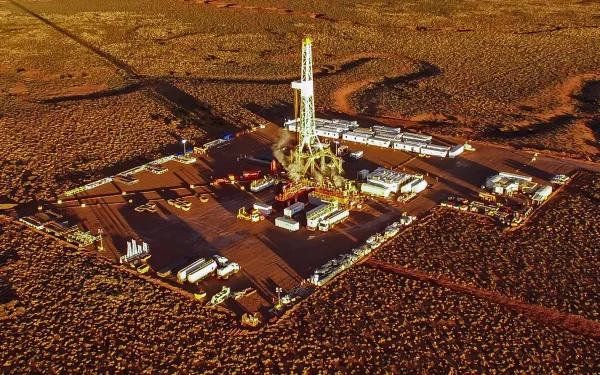
Fracking: A step toward the energy transition or a continued reliance on fossil fuels?
One argument made by supporters of fracking as a step toward the energy transition is that the technique buys time while alternatives to fossil fuels reach maturity and stability.Behind this line of reasoning lies the possibility of extracting more gas and the myth that it is a natural resource—when in fact it is a fossil fuel—and that it allows for the safe generation of energy without causing as much pollution as oil and coal.But a technique that perpetuates the use of fossil fuels—and whose environmental and social harms are widespread and well-documented—cannot be viewed as a solution or a step toward a transition that not only seeks to move beyond fossil fuels but also involves a paradigm shift in the energy system.Furthermore, by increasing dependence on oil and gas, fracking contributes to the worsening of the climate crisis due to methane emissions associated with the gas industry, as methane has a greater global warming potential than carbon dioxide (CO₂).Below, we debunk arguments that promote this technique as a step toward the energy transition. The continuation of an extractivist systemHydraulic fracturing, or fracking, is a technique for extracting gas from underground that involves drilling deep into the ground to inject, at very high pressure, a mixture of water, sand, and chemical additives (some of which are toxic) to fracture underground rock formations and extract the hydrocarbons "trapped" within them.Like the oil and coal industries, fracking uses a non-renewable energy source, intensively exploits natural resources such as water, and causes large-scale disruptions in the areas where it is carried out.Not only does it replicate these patterns of the fossil fuel industry, but its negative impacts are similar—and even more severe—than those of other fossil fuel exploration, extraction, and production activities. These include: water and air pollution, overexploitation of natural resources, land encroachment, ecosystem disruption, and the devastation of flora and fauna.This repetition of patterns seen in the fossil fuel industry means that fracking not only perpetuates dependence on fossil fuels, but also contributes to its expansion and consolidation.In fact, the development of infrastructure for its operation helps create and consolidate markets for long-term gas consumption, since it requires large-scale investments spanning several decades. This can create economic incentives to maintain and maximize its use over time, and discourage or delay decarbonization efforts. "Natural" gas? Less CO₂, but more methaneThe gas obtained through fracking has been called “natural”—a label meant to make it seem clean. But gas from fracking is neither natural nor clean.It’s dirty from start to finish—from the toxic chemicals injected into the ground to extract it to the greenhouse gases emitted during its production and combustion. Not to mention that it’s a fossil fuel, just like oil or coal.Another argument used to suggest that fracking gas is cleaner—and thus to promote it as a "transition fuel"—is that it produces fewer CO₂ emissions than other fossil fuels. This is a half-truth, as it fails to mention that the main component of natural gas is methane, a greenhouse gas whose global warming potential is much greater than that of CO₂.According to the Intergovernmental Panel on Climate Change (IPCC), methane’s global warming potential is approximately 82.5 times greater than that of CO₂ over a 20-year time horizon. This means that, despite emitting less CO₂ during combustion, fracking gas can have a climate impact equal to or even greater than that of other fossil fuels when methane emissions are taken into account.These emissions can occur both during planned events and as a result of leaks throughout the entire production and supply chain.Some studies estimate that methane leaks from unconventional gas operations—such as fracking—can reach up to 12% throughout the production and transportation chain, or that global leaks account for up to 5% of total gas production. Incompatibility with climate and human rights obligationsAs we have seen, fracking means greater dependence on fossil fuels and higher levels of polluting emissions. This not only undermines the argument that it is a "transition fuel," but also shows how this technique runs counter to countries’ international commitments regarding the climate crisis.The Paris Agreement, the most important binding global commitment to address the climate crisis, stipulates that countries must substantially reduce their greenhouse gas emissions—including CO₂ and methane—to limit the rise in global temperatures.How could a country justify that using a technique that involves generating more polluting emissions is consistent with its commitments to reduce them?Implementing fracking is also incompatible with States’ obligation to protect the human right to a healthy environment, especially in light of the impacts of the climate crisis. This principle was established in Advisory Opinion OC-32/25 of the Inter-American Court of Human Rights, which reinforced States' obligation to adopt measures to protect the climate system and the human rights of both present and future generations.At this time, when various countries in the region are considering launching or expanding fracking activities, it is essential that discussions not be limited to technical analyses, but rather address the environmental, climate, and human rights dimensions of these activities in light of the countries’ international commitments.So that narratives attempting to portray fracking as a step toward the transition do not obscure the fact that, in reality, it is an anchor that keeps us tied to our dependence on fossil fuels. Learn more about the impacts of fracking and the actions being taken to curb its expansion.
Read more
Climate-focused environmental assessment: Key to protecting human rights
In a landmark ruling for climate justice in Latin America, on June 16, Costa Rica’s Constitutional Court ordered the government to include a climate impact analysis in the assessment of any project, construction, or activity that could affect the environment.The decision builds on similar achievements in other countries on the continent, resulting from strategic climate litigation.The ruling in Costa Rica was the result of litigation supported by AIDA, in which we filed a legal brief presenting solid arguments demonstrating that incorporating a climate perspective into project assessments is an obligation under national legislation, international agreements, and the experience of other countries in the region.Since the climate crisis is the most urgent environmental and human rights threat the world currently faces, it is important for courts to uphold the requirement that governments assess climate-related risks and impacts before authorizing any project or activity.The procedure established to conduct this analysis—known as an environmental impact assessment (EIA)—is specifically designed to identify, anticipate, analyze, mitigate, and/or prevent the environmental impacts of potentially harmful projects or activities.At the same time, it is a key tool for preventing development proposals from violating the rights of individuals and communities, including the universal right to a healthy environment.Below, we detail the reasons why governments must assess a project’s climate impacts before giving it the green light—these were our contributions to the recent legal victory in Costa Rica. National and international obligationsSeveral national regulations establish the obligation to include climate change criteria in project environmental assessments. In Costa Rica, for example, we have: Decree 42465 of 2019, which requires institutions carrying out public infrastructure projects to assess climate risks, climate change, and other natural or human-induced factors at all stages of the project. Our brief also refers to a series of documents that analyze climate risk in Costa Rica, a country that, due to its location in the Central American tropics, is exposed to extreme weather events—hurricanes, tropical storms, droughts, and floods—whose frequency and intensity have increased as a result of global warming.At the international level, Costa Rica, like other countries on the continent, is a party to treaties and other instruments of international law that entail obligations regarding the environment and human rights, which make reference to the environmental assessment of projects: United Nations Framework Convention on Climate Change. It requires governments to use appropriate methods, such as project impact assessments, to minimize the adverse effects of climate change on the economy, public health, and the environment.Paris Agreement. It requires governments to take and report on the actions they will undertake to reduce climate-damaging gas emissions and to adapt to the impacts of climate change, all of which must respect human rights.Convention on Biological Diversity. It requires countries to implement appropriate procedures to ensure that projects likely to have a significant adverse impact on biological diversity are assessed, with a view to preventing or minimizing such impacts, and to allow for public participation where appropriate.Sendai Framework for Disaster Risk Reduction 2015–2030. It calls on countries to develop, strengthen, and implement relevant actions to align sustainable development and growth, food security, health and safety, climate variability and change, environmental management, and disaster risk reduction.Advisory Opinion No. 23 of the Inter-American Court of Human Rights. It requires that environmental assessments of projects take into account their cumulative impacts, prevent harm to indigenous communities and tribal peoples, include contingency and mitigation plans, and ensure that the assessments are objective, independent, and subject to state oversight. Lessons from other Latin American countriesIn several countries on the continent, the requirement to incorporate climate criteria into environmental assessments has been institutionally established and also upheld by court rulings. Two recent cases illustrate this:Chile. In a 2022 litigation related to the Mejillones thermal power plant, located in the Antofagasta Region, the Supreme Court ordered Chile’s Environmental Assessment Service to analyze the atmospheric component—including those elements that have changed in the terrestrial environment due to climate change—from the start of the project’s implementation to the present.Colombia. In response to a lawsuit challenging the country’s environmental permitting regulations, the Constitutional Court ruled in 2024 that environmental impact studies must include an assessment of climate change impacts: “a global phenomenon determined by multiple biophysical and socioeconomic variables that interact over long periods of time, which is having an increasingly decisive effect on natural processes and impacts territories, communities, and individuals in different ways, with Colombia being one of the most affected countries.” Protecting a healthy environment in the face of the climate crisisAs noted above, incorporating climate change criteria into the environmental assessment of projects is essential for the enjoyment of the right to a healthy environment. This implies:Assessing the impacts that the project or activity may have on climate change. This includes quantifying and documenting direct and indirect greenhouse gas emissions; determining whether, and to what extent, these emissions increase or decrease; and analyzing appropriate mitigation strategies to address anticipated impacts.Considering the effects of the climate crisis (such as climate-induced accidents or disasters) on the development, viability, and sustainability of the project or activity over time, this analysis should inform the decision on its authorization. The climate crisis is not a threat, but a reality that is already severely affecting the region. In this context, it is imperative that development projects continue to undergo proper environmental assessments that require mandatory, systematic consideration of climate impacts for both mitigation and adaptation. Through strategic litigation, AIDA will continue to contribute to this effort. Learn more in our fact sheet, "Climate Change Perspectives in Environmental Impact Studies" (in Spanish). Check out our report, "Global Best Practices for Environmental Impact Studies" (in Spanish).
Read more