
Project
Alberto Peña Kay
Protecting the Santurban páramo from mining's damage
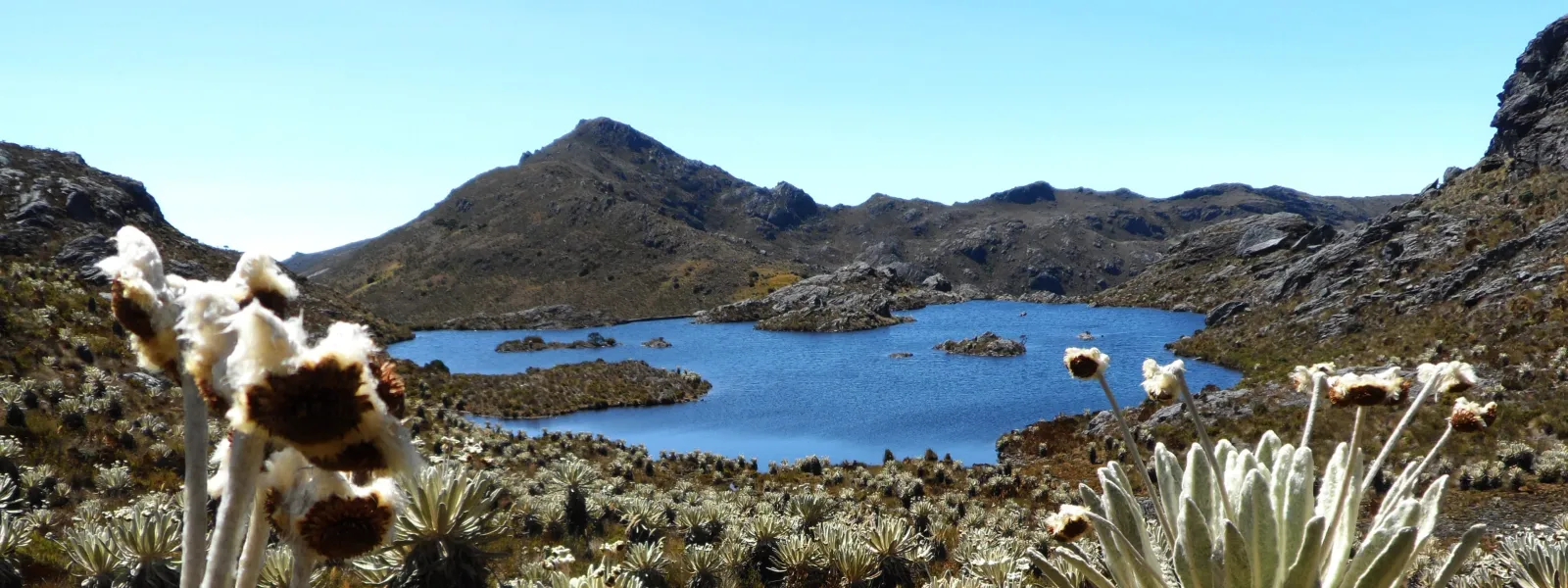
In the Andean region, high-mountain ecosystems known as páramos capture water from the fog and supply it to the lowlands. One such ecosystem is the Santurbán páramo, which provides fresh water to more than two million people in Colombia.
Santurbán, like the other páramos on the continent, also captures large amounts of carbon, making it a key ally in mitigating the climate crisis. It is also a refuge for hundreds of endangered species, including the iconic spectacled bear.
The land in and around the páramo contains gold and other minerals. This has put Santurbán in the spotlight of the multinational mining industry, which for decades has sought to establish large-scale projects in the ecosystem that threaten to degrade it.
The Committee for the Defense of Water and the Santurbán Páramo—a coalition of environmental advocates—has thwarted these ongoing attempts, with support from AIDA and other civil society organizations.
Background
The Santurbán páramo is located in the heart of the Eastern Cordillera of the Colombian Andes, in the departments of Santander and Norte de Santander, at an elevation ranging from 2,200 to 4,290 meters above sea level.
It covers an area of 129,743 hectares and is home to 57 lakes. It serves as a habitat for 457 plant species and 293 species of vertebrate fauna.
There are mineral deposits in Santurbán, primarily gold, but also silver and copper. This explains the region’s mining tradition, particularly in the part of the páramo located in Santander, in the province of Soto Norte. The communities in the area have built their culture and identity around gold mining, which is mainly artisanal and small-scale.
But since the 1990s, the gold deposits in the páramo have also attracted foreign mining conglomerates seeking to develop large-scale projects. This has raised concerns among the population that relies on the Santurbán water sources, who have mobilized in defense of water, their land, and life.
Although national and international regulations prohibit mining in páramos, the Colombian government has granted mining concessions to transnational corporations in Santurbán.

Photo: Keishpixl / Pixabay.
The long struggle to protect the páramo
One of the companies that sought to develop large-scale mining in Santurbán is Eco Oro Minerals Corp.—formerly Greystar Resources—a Canadian company that intended to establish the Angostura open-pit mine there to extract gold and silver. Between 1994 and 1995, the company acquired its mining titles and conducted exploration. And in 2010, it applied for a mining permit.
That was the year AIDA became involved in defending the ecosystem, supporting the Committee for the Defense of Water and the Santurbán Páramo. Our legal work helped convince the Colombian government to deny the mine an environmental permit in May 2011.
In January 2013, the government designated a portion of the páramo (11,700 hectares) as a Regional Natural Park. That year—together with the committee and partner organizations—we carried out a campaign and advocacy efforts to urge the government to recognize the entire Santurbán area as a páramo ecosystem through a delimitation based on scientific criteria. In December 2014, the Ministry of the Environment established a delimitation that protected 76% of the páramo (98,954 hectares).
Furthermore, as a result of a litigation supported by AIDA, in February 2016, Colombia’s highest court reaffirmed that mining in páramos is prohibited.
That same year, in December, the International Finance Corporation (IFC), the World Bank Group’s private sector arm, decided to divest from Eco Oro Minerals. This achievement was the result of a process that began in 2012, when the committee—advised and supported by AIDA and international partner organizations—filed a complaint before an independent accountability mechanism, which concluded that the IFC’s investment in the Angostura project failed to take into account the project’s social and environmental impacts, thereby contradicting the financial institution’s internal policies.
Also in 2016, Eco Oro Minerals filed an arbitration claim against the Colombian government with the International Centre for Settlement of Investment Disputes (ICSID), arguing that it had been adversely affected by government decisions aimed at protecting the country’s páramos, including the delimitation of Santurbán.
In 2017, the Constitutional Court invalidated the delimitation because the affected communities were not consulted. The high court ordered that a participatory delimitation be carried out.
And that year, a new threat to Santurbán emerged when the Canadian multinational Aris Mining applied for an environmental permit for Soto Norte, a gold mining project located near the páramo. Following citizen protests and technical objections, in October 2020, the National Environmental Licensing Authority shelved the project.
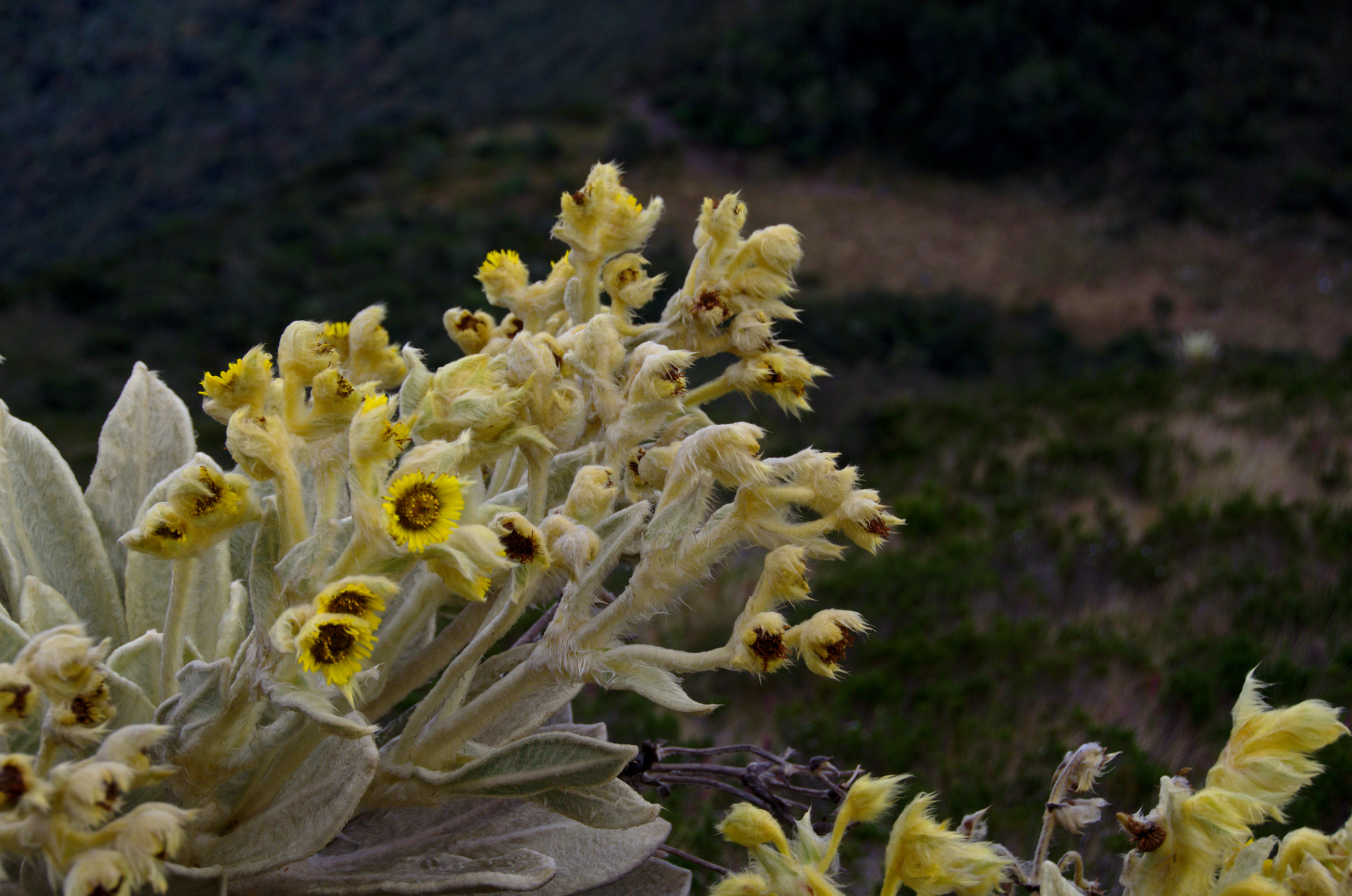
Photo: Aztlec.
Current situation
In March 2025, the Colombian government designated the western flank of the Santurbán massif as a temporary renewable natural resource reserve area, delimiting and protecting an area of 75,344.65 hectares. This resulted in a two-year suspension of the Soto Norte project. However, Aris Mining's contract to formalize Calimineros' small-scale mining activities through the purchase and processing of mineralized material remains in effect.
In addition, the Canadian mining company continues to move the project forward. In September 2025, it released its prefeasibility study, revising the mine’s original design.
Meanwhile, members of the Committee for the Defense of Water and the Santurbán Páramo face threats and stigmatization because of their work. In March 2025, UN Special Rapporteurs and the Working Group on Business and Human Rights denounced these incidents in communications sent to the governments of Colombia, Canada, and the United Arab Emirates, as well as to the companies Aris Mining and MDC Industry Holding Company LLC, the former co-owner of the Soto Norte project.
Regarding the arbitration claim filed by Eco Oro Minerals, in July 2024, ICSID ruled in favor of the Colombian government and rejected the Canadian company’s claim for USD 1.1 billion in compensation.
Concerning the delimitation of Santurbán, in July 2026, the Ministry of the Environment issued a resolution introducing the concept of "progressive delimitation." On that basis, the government proposes to progressively demarcate the páramo, covering 29,199 hectares across 19 municipalities—those where the participatory agreements required by the Constitutional Court in its 2017 ruling have already been finalized. It also proposes two measures on the creation and expansion of reserves to restrict mining in the ecosystem.
Learn more about the impacts of mining on the páramos of Latin America (in Spanish).
Partners:
Related projects
AIDA and CEMDA joint report on the UPR of Mexico
In accordance with the guidelines of the Human Rights Council, the Mexican Environmental Law Center (CEMDA) and the Interamerican Association for Environmental Defense (AIDA) present comments on the extent of Mexico’s compliance with the recommendations the country accepted as part of the 2009 Universal Periodic Review (UPR). We also present comments on other human rights violations related to environmental issues, which we believe should be taken into consideration during the next Universal Periodic Review set to take place later this year.
Read moreGroups seek investigation into Mexico’s approval of four “mega resorts”
FOR IMMEDIATE RELEASE April 11, 2013 Media contacts: Mexico Sandra Moguel, [email protected], +52 (164) 621-02353 USA Sarah Burt, [email protected], +1 (415) 217-2055 Serena Ingre, [email protected], +1 (415) 875-6155 Groups seek investigation into Mexico’s approval of four “mega resorts” Massive tourism developments threaten fragile ecosystems and endangered species San Francisco, USA/La Paz, Mexico. In a petition submitted to the Commission for Environmental Cooperation, eleven conservation groups charged the Mexican government with failing to enforce its own environmental laws in authorizing the construction of four “mega resorts” in the Gulf of California. The Commission is an international body established under the North American Free Trade Agreement to promote cooperation among Canada, Mexico and the U.S. on environmental issues of continental concern. “The Mexican authorities’ approval of massive tourism projects in violation of environmental laws is unacceptable and demonstrates little regard for threatened species, the environment and local communities”, said Sandra Moguel of the Inter-American Association for Environmental Defense, and one of the signers of the petition. “We urge the new Administration and Minister Guerra Abud to ensure that the approval process of development projects is transparent and not arbitrary”. The approval of projects such as Cabo Cortés, Paraíso del Mar, Entre Mares, and Playa Espíritu threatens the unique coral reefs and mangrove ecosystems of the region, and endangered species such as humpback and gray whales, whale sharks, manta rays, sea turtles, sea lions, jaguars, crocodiles and many species of migratory birds. The petition highlights the four projects as examples of the Mexican Ministry of Environment and Natural Resources’ repeated failure to enforce environmental laws when approving large-scale tourist development projects in the Gulf of California. In particular, the government ignores laws requiring effective environmental impact assessment, protection of endangered species, and conservation of coastal ecosystems. The petitioners are requesting that the Commission investigate and develop a factual record to examine Mexico’s lack of enforcement of its environmental laws when authorizing these developments. Such a finding would pressure Mexico to comply with its own environmental safeguards. “These natural treasures are of importance to Mexican communities that depend on them as cultural, economic and recreational resources”, says Judith Castro with the Friends for the Conservation of Cabo Pulmo. “Mexico cannot continue to approve mega projects that displace residents, bulldoze wildlife habitat, and pollute the waters of this vital ecosystem”. Known as the “World’s Aquarium”, the Gulf of California is considered one of the most diverse marine regions on the planet, and is home to thousands of species. Specifically, these mega projects, two of which are already under construction, threatened the following critical areas in the region: Cabo Pulmo National Park: One of the healthiest coral reef systems in the world, a UNESCO World Heritage Site and a Ramsar Wetland of International Importance, Cabo Pulmo is threatened by massive developments like Cabo Cortés. The Cabo Cortés proposal included the equivalent of nearly 30,000 guest rooms in its hotels, condominiums and villas, two 27-hole golf courses, a 490 berth marina, and a system of canals and artificial lakes. Additionally, because the region has a desert climate without sufficient water to accommodate such amenities and the expected population growth, the proposal included a desalination plant that could have discharged hypersaline brine into the reef. While the project was ultimately rejected in June 2012, Cabo Pulmo is threatened by similar developments still being considered. The Marismas Nacionales Wetlands: Playa Espíritu, a project already under construction that includes three golf courses, two marinas, a wastewater plant, and additional infrastructure spread across more than 35,000 acres, threatens the Marismas Nacionales, the most extensive and well-preserved mangrove forest habitat on the western coast of Mexico, and home to more than 280 species of migratory and resident bird species. The Bay of La Paz: One of the most productive water bodies in the Gulf of California and an important area for nesting birds, the Bay of La Paz is jeopardized by two adjacent projects, Paraíso del Mar, currently under construction, and Entre Mares, proposed for construction on a sandbar extending into the bay. Combined, these two projects will develop nearly ten thousand hotel rooms, plus 4,000 homes, two golf courses and a large marina and would bring an additional population of more than 10,000 people in high season. Earthjustice and the Interamerican Association for Environmental Defense (AIDA) are filing the petition on behalf of the Ecological Network for Escuinapa Development (REDES), Friends for the Conservation of Cabo Pulmo (ACCP), WiLDCOAST, SUMAR, Los Cabos Coastkeepers, Alliance for the Sustainability of the Mexican Coastal Northwest (ALCOSTA), the Natural Resources Defense Council (NRDC), Greenpeace México and AIDA. The petitioners are calling on Mexico to protect the marine and coastal ecosystems of the Gulf of California, particularly coral reefs like the ones in Cabo Pulmo. “By approving these projects, Mexico is failing its obligations to protect wetlands, coral reefs and species of environmental and international importance”, said Carolina Herrera, Latin America Advocate with the Natural Resources Defense Council. “What this region in the Gulf of California needs is low-impact sustainable development where the well-being of local communities and the environment is the first priority”. A map of the projects, photos, videos, and background information are available at: http://earthjustice.org/cortes Read the petition here: http://earthjustice.org/documents/legal-document/pdf/petition-to-commission-english
Read more
What’s the latest on the reform of the Inter-American System of Human Rights?
By Astrid Puentes Riaño, co-director, AIDA,@astridpuentes In June, I wrote about how some OAS member states had begun a process to introduce tough reforms on the Inter-American Commission on Human Rights (IACHR) and the Inter-American Human Rights System that would weaken their ability to operate and protect our human rights. I want to bring you up to date on how the discussions are faring. More importantly, though, I want to ask you to get involved by signing thepetitionto ask the member states to strengthen –not weaken– the Inter-American System. More than 3,000 people have already signed! You can sign too! Watch our video message to the Permanent Council of the OAS (Spanish only) The outlook last June was pretty thorny. Seldom has an OAS General Assembly been as tense as the last two, particularly the most recent one when the Inter-American System came under fierce attack and several member states even sought to re-establish it. The Assembly ended with a call to reform the statute at an Extraordinary Assembly, something that’s never happened in the history of the IACHR. The good news is that the member states appear to have somewhat cooled their clamoring. There are more signs of a willingness to talk. The Representative of Brazil made reference to this change during the Permanent Council’s extraordinary session with civil society representatives, saying the confidence and opportunities for negotiations have improved. He said this process should lead to an outcome in which the underlying question of human rights takes precedence over procedural matters. Watch our video message to the Permanent Council of the OAS (Spanish only) It’s an honor that the representative quoted us. Now we have to see if this good message gets translated into action by, for example, addressing the IACHR’s requests on Brazil including those regarding the contentious Belo Monte dam. The Brazilian government must respond and give its perspective on the case. The not so good news is that the process is not yet complete. We’re still waiting for a definition on what the reforms will be and how they will be implemented. For example, part of the reform package proposed by some states is that if the Inter-American Court rejects a request for precautionary measures then the IACHR has to do so too. That, as we have said, fails to recognize the natural differences of the Court and the IACHR and puts them at risk. The IACHR has committed to producing various reports, which will eat up a lot of its resources and thus could affect its duty to protect, its duty to proceed with cases of human rights violations affecting millions of people in the hemisphere. It is understood that neither the Inter-American System nor any of those involved are perfect. There is still a lot to improve. But it is essential that this process concludes with recommendations to make the System more effective. That means that AIDA and our colleagues in the hemisphere will continue to lobby the member states, the OAS and the IACHR itself. We will continue to offer our opinions. We will continue to share our experiences as users of the System. We will continue to fight to prevent any weakening of the System. That is why we ask you to sign TODAY and help us defend the IASHR and, in the process, our human rights. If you as an inpidual or community member believe that you could use one of the IACHR’s decisions in cases involving dams, mining projects, tourism developments, free speech, the protection of women or anything else, then speak out and sign up now! If not you, if not us, then who? Full video of the session In this recording you can hear the Representative of Brazil cite AIDA (last 5 minutes)
Read more