
Project
Alberto Peña Kay
Protecting the Santurban páramo from mining's damage
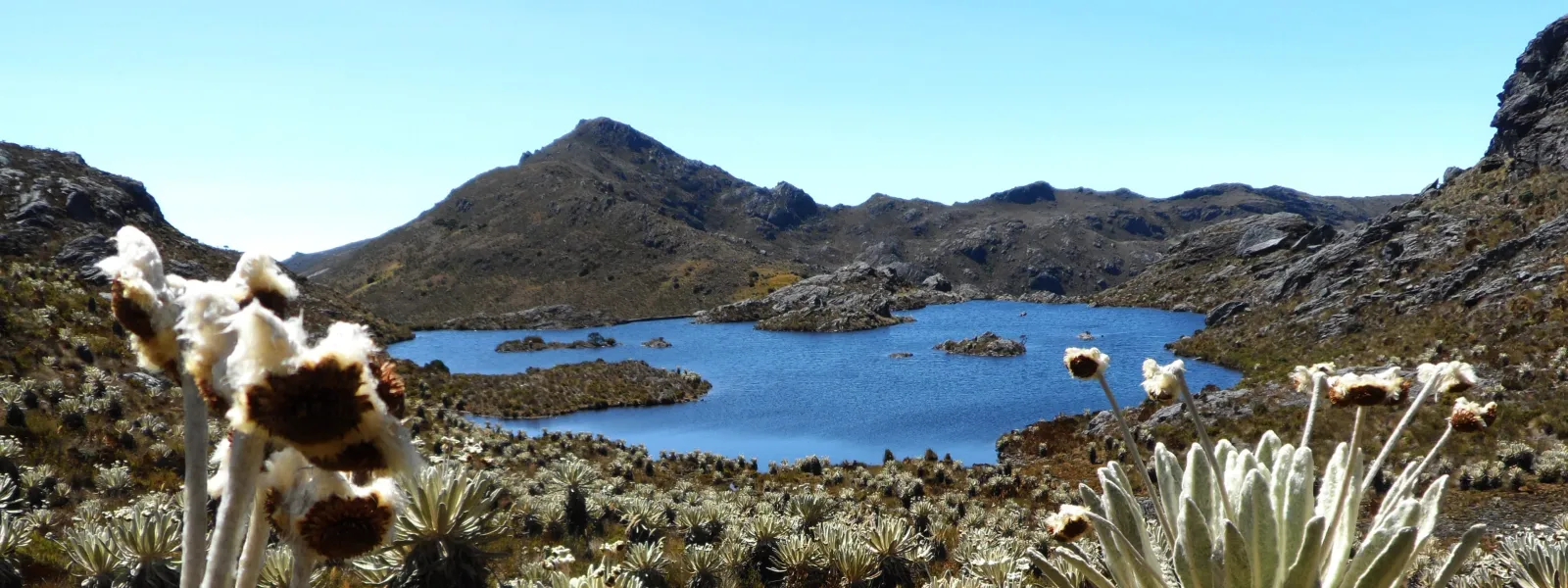
In the Andean region, high-mountain ecosystems known as páramos capture water from the fog and supply it to the lowlands. One such ecosystem is the Santurbán páramo, which provides fresh water to more than two million people in Colombia.
Santurbán, like the other páramos on the continent, also captures large amounts of carbon, making it a key ally in mitigating the climate crisis. It is also a refuge for hundreds of endangered species, including the iconic spectacled bear.
The land in and around the páramo contains gold and other minerals. This has put Santurbán in the spotlight of the multinational mining industry, which for decades has sought to establish large-scale projects in the ecosystem that threaten to degrade it.
The Committee for the Defense of Water and the Santurbán Páramo—a coalition of environmental advocates—has thwarted these ongoing attempts, with support from AIDA and other civil society organizations.
Background
The Santurbán páramo is located in the heart of the Eastern Cordillera of the Colombian Andes, in the departments of Santander and Norte de Santander, at an elevation ranging from 2,200 to 4,290 meters above sea level.
It covers an area of 129,743 hectares and is home to 57 lakes. It serves as a habitat for 457 plant species and 293 species of vertebrate fauna.
There are mineral deposits in Santurbán, primarily gold, but also silver and copper. This explains the region’s mining tradition, particularly in the part of the páramo located in Santander, in the province of Soto Norte. The communities in the area have built their culture and identity around gold mining, which is mainly artisanal and small-scale.
But since the 1990s, the gold deposits in the páramo have also attracted foreign mining conglomerates seeking to develop large-scale projects. This has raised concerns among the population that relies on the Santurbán water sources, who have mobilized in defense of water, their land, and life.
Although national and international regulations prohibit mining in páramos, the Colombian government has granted mining concessions to transnational corporations in Santurbán.
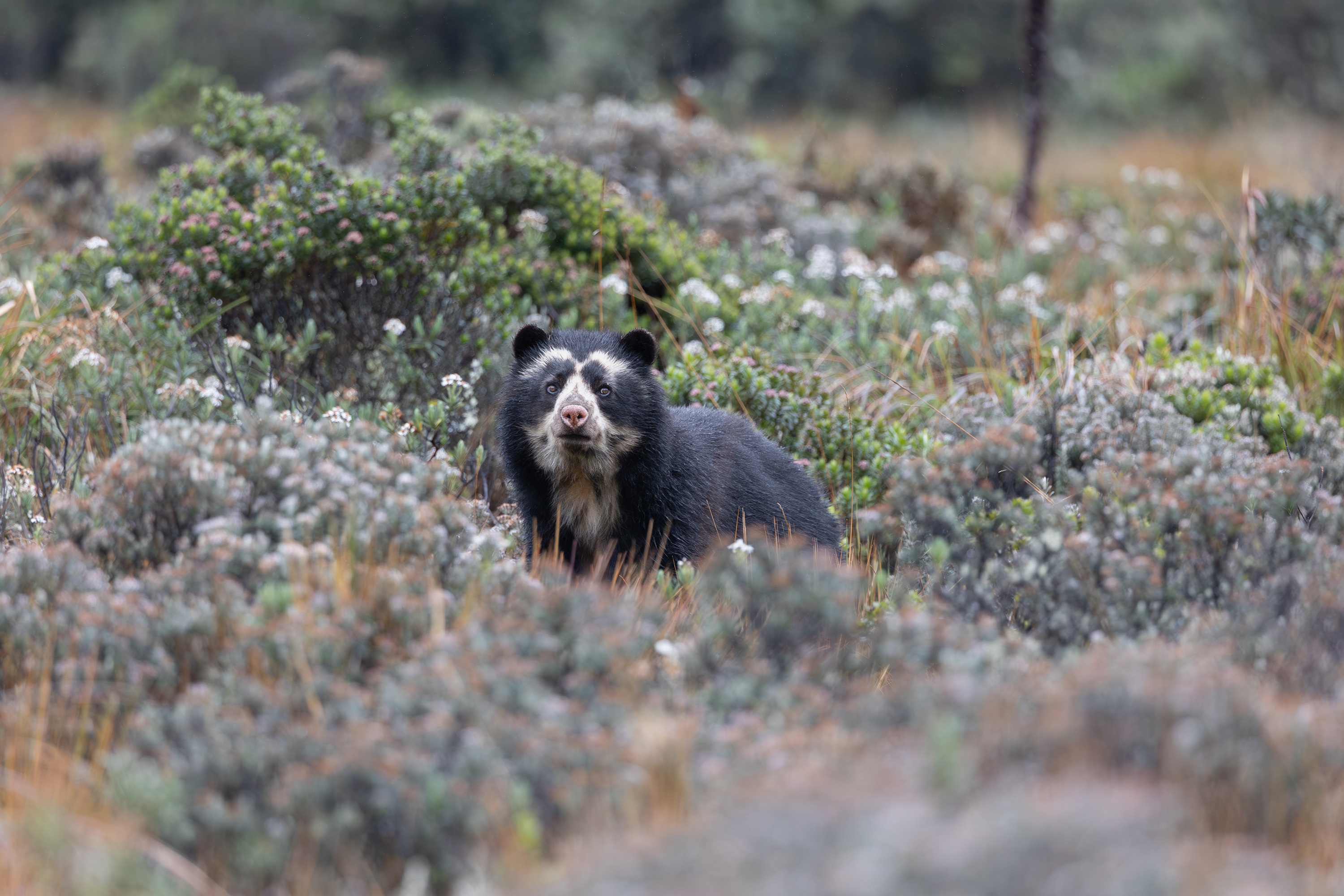
Photo: Keishpixl / Pixabay.
The long struggle to protect the páramo
One of the companies that sought to develop large-scale mining in Santurbán is Eco Oro Minerals Corp.—formerly Greystar Resources—a Canadian company that intended to establish the Angostura open-pit mine there to extract gold and silver. Between 1994 and 1995, the company acquired its mining titles and conducted exploration. And in 2010, it applied for a mining permit.
That was the year AIDA became involved in defending the ecosystem, supporting the Committee for the Defense of Water and the Santurbán Páramo. Our legal work helped convince the Colombian government to deny the mine an environmental permit in May 2011.
In January 2013, the government designated a portion of the páramo (11,700 hectares) as a Regional Natural Park. That year—together with the committee and partner organizations—we carried out a campaign and advocacy efforts to urge the government to recognize the entire Santurbán area as a páramo ecosystem through a delimitation based on scientific criteria. In December 2014, the Ministry of the Environment established a delimitation that protected 76% of the páramo (98,954 hectares).
Furthermore, as a result of a litigation supported by AIDA, in February 2016, Colombia’s highest court reaffirmed that mining in páramos is prohibited.
That same year, in December, the International Finance Corporation (IFC), the World Bank Group’s private sector arm, decided to divest from Eco Oro Minerals. This achievement was the result of a process that began in 2012, when the committee—advised and supported by AIDA and international partner organizations—filed a complaint before an independent accountability mechanism, which concluded that the IFC’s investment in the Angostura project failed to take into account the project’s social and environmental impacts, thereby contradicting the financial institution’s internal policies.
Also in 2016, Eco Oro Minerals filed an arbitration claim against the Colombian government with the International Centre for Settlement of Investment Disputes (ICSID), arguing that it had been adversely affected by government decisions aimed at protecting the country’s páramos, including the delimitation of Santurbán.
In 2017, the Constitutional Court invalidated the delimitation because the affected communities were not consulted. The high court ordered that a participatory delimitation be carried out.
And that year, a new threat to Santurbán emerged when the Canadian multinational Aris Mining applied for an environmental permit for Soto Norte, a gold mining project located near the páramo. Following citizen protests and technical objections, in October 2020, the National Environmental Licensing Authority shelved the project.
Photo: Aztlec.
Current situation
In March 2025, the Colombian government designated the western flank of the Santurbán massif as a temporary renewable natural resource reserve area, delimiting and protecting an area of 75,344.65 hectares. This resulted in a two-year suspension of the Soto Norte project. However, Aris Mining's contract to formalize Calimineros' small-scale mining activities through the purchase and processing of mineralized material remains in effect.
In addition, the Canadian mining company continues to move the project forward. In September 2025, it released its prefeasibility study, revising the mine’s original design.
Meanwhile, members of the Committee for the Defense of Water and the Santurbán Páramo face threats and stigmatization because of their work. In March 2025, UN Special Rapporteurs and the Working Group on Business and Human Rights denounced these incidents in communications sent to the governments of Colombia, Canada, and the United Arab Emirates, as well as to the companies Aris Mining and MDC Industry Holding Company LLC, the former co-owner of the Soto Norte project.
Regarding the arbitration claim filed by Eco Oro Minerals, in July 2024, ICSID ruled in favor of the Colombian government and rejected the Canadian company’s claim for USD 1.1 billion in compensation.
Concerning the delimitation of Santurbán, in July 2026, the Ministry of the Environment issued a resolution introducing the concept of "progressive delimitation." On that basis, the government proposes to progressively demarcate the páramo, covering 29,199 hectares across 19 municipalities—those where the participatory agreements required by the Constitutional Court in its 2017 ruling have already been finalized. It also proposes two measures on the creation and expansion of reserves to restrict mining in the ecosystem.
Learn more about the impacts of mining on the páramos of Latin America (in Spanish).
Partners:
Related projects
Jury finds former owners of lead smelter liable for $358.5 million in damages
Doe Run Investment Holdings Company, Fluor Corporation and A.T. Massey Coal knew that lead pollution was harming children’s health. St. Louis, Missouri — Last Friday, the former owners of a lead smelter in Herculaneum, Missouri, were found liable for $320 million in punitive damages for negligently exposing 16 children and other residents living in the area to harmful lead pollution. “They obviously wanted to send a message: Don't choose profits over people,” said Mark Bronson, a lawyer for the plaintiffs, to the St. Louis Post-Dispatch. The jury awarded $320 million in punitive damages last Friday, July 29, against the Missouri-based Doe Run Investment Holdings Company, Texas-based Fluor Corporation and Virginia-based A.T. Massey Coal, corporations that owned the smelter prior to 1994. A day earlier, a civil judge had ruled that the three companies would have to pay $38.5 million to the families as compensation for health problems and lost lifetime earnings as a result of pollution that occurred between 1986 and 1994. It should be noted that according to court documents the current owner of the smelter, Doe Run Resources Corporation, had already reached a settlement with the plaintiffs for an undisclosed sum. This settlement covered the impacts of harmful pollution that occurred after 1994. DOE RUN PERU AND THE CASE OF LA OROYA Doe Run Resources Corporation is a subsidiary of Renco Holding Company, owned by Ira Rennert. After buying Doe Run Resources, Renco purchased the La Oroya Metallurgical Complex in 1997 and established another subsidiary, Doe Run Peru (DRP), to operate it. DRP has kept the La Oroya smelter idle since 2009, and is negotiating with the government to reopen it. AIDA and the SPDA have worked since 1997 to encourage the Peruvian government to hold DRP accountable for the pollution in La Oroya, which involves contaminants similar to those found in Herculaneum. The government demanded greater environmental controls at the metallurgical complex, which have not been fully implemented. This year, Renco Holdings began a process of international arbitration within the framework of the Trade Promotion Agreement between Peru and the U.S., arguing among other things that Peru has treated the company unjustly in requiring environmental improvements to the Complex. AIDA and the Asociación Pro Derechos Humanos (APRODEH) have brought a case and a request for precautionary measures on behalf of residents in La Oroya affected by the pollution before the Inter-American Commission on Human Rights. "The amount of damages awarded by the US court indicates the severity of lead contamination, particularly in children, and reminds us once again of the magnitude of human rights violations that have taken place in Missouri and in La Oroya," said Astrid Puentes Riaño , Co-Executive Director of AIDA. "So we insist on greater protections in La Oroya to address the situation there." Ramón Rivero, with the Sociedad Peruana de Derecho Ambiental (SPDA), praised the jury’s verdict and believes that it should be a model for similar cases in other parts of the world. “Measures such as the verdict against Doe Run in the United States are corrective actions taken by a government that aim to justly compensate those affected for the harm they suffered. We have to ask ourselves if the measures taken by the Peruvian government to date, with regard to the harm caused by DRP in La Oroya, comprise such just compensation,” said Rivero. “We need to take steps to protect public health that go beyond measurements and controls and that affect the wellbeing of the residents of La Oroya. We also need to evaluate the possibility of increasing the amount of compensatory damages that have been awarded,” Rivero concluded.
Read moreLiving beyond our means
An article from Waterkeeper on the valuable ecosystems services provided by coastal mangrove swamps and the threats these face from developers.
Read moreCivil society groups go to Court to defend Panama Bay
Groups submit arguments supporting government’s case for maintaining wildlife refuge. Panama City, Panama — Today, on International Mangrove Day, two civil society organizations announce their legal support for the government of Panama in a lawsuit brought by developers challenging the protected status of Panama Bay. The groups, the Interamerican Association for Environmental Defense (AIDA) and the Centro de Incidencia Ambiental (CIAM), submitted legal briefs detailing national and international legal arguments for upholding environmental protections established by the government in 2009 through a resolution issued by the environmental authority in Panama. The developers who are contesting the law, Panama Bay Development and Compañia Lefevre, are seeking to open the area to development of vast tourism complexes. Extensive tourism in the area would bring devastating environmental impacts to the sensitive ecosystem. The Panama Bay coastline is ringed with miles of pristine mangroves, which provide critical breeding ground for species relied upon by Panama’s fishing industry. Each kilometer of mangrove-covered coastline generates about $100,000 USD for Panama annually. Mangroves also help protect Panama from the effects of global climate change by buffering the coast from increasingly powerful tropical storms and by storing carbon from the atmosphere in their roots. A mangrove forest can sequester 50 times more carbon than a tropical forest of the same size, making mangroves a conservation priority if countries wish to halt catastrophic climate change. The protected area of Panama Bay is roughly 211,000 acres, slightly larger than the land area of New York City. Panama Bay is one of the earth’s most biodiverse places and is an essential habitat for migratory birds and threatened species such as jaguars and loggerhead turtles. “In the face of ever more powerful and dangerous climate-change-driven tropical storms, destroying coastal mangroves is one of the worst things a country like Panama could do,” said Anna Cederstav, Ph.D., staff scientist and co-director of AIDA. According to Sandra Moguel, an attorney for AIDA in Mexico, “Article four of the Constitution of Panama requires the observance of the rules of international law throughout the territory of that country. Obligations under the Ramsar Convention on Wetlands of International Importance and the Convention on Biological Diversity, both of which have been ratified by Panama, should thus be taken into consideration in deciding the challenge against the natural protected area.” "The creation or declaration of a protected area does not constitute expropriation. What it does is protect and guarantee the right to a healthy environment contained in the Panamanian Constitution” said Maria Acuña, CIAM´s legal advisor.
Read more