
Project
Alberto Peña Kay
Protecting the Santurban páramo from mining's damage
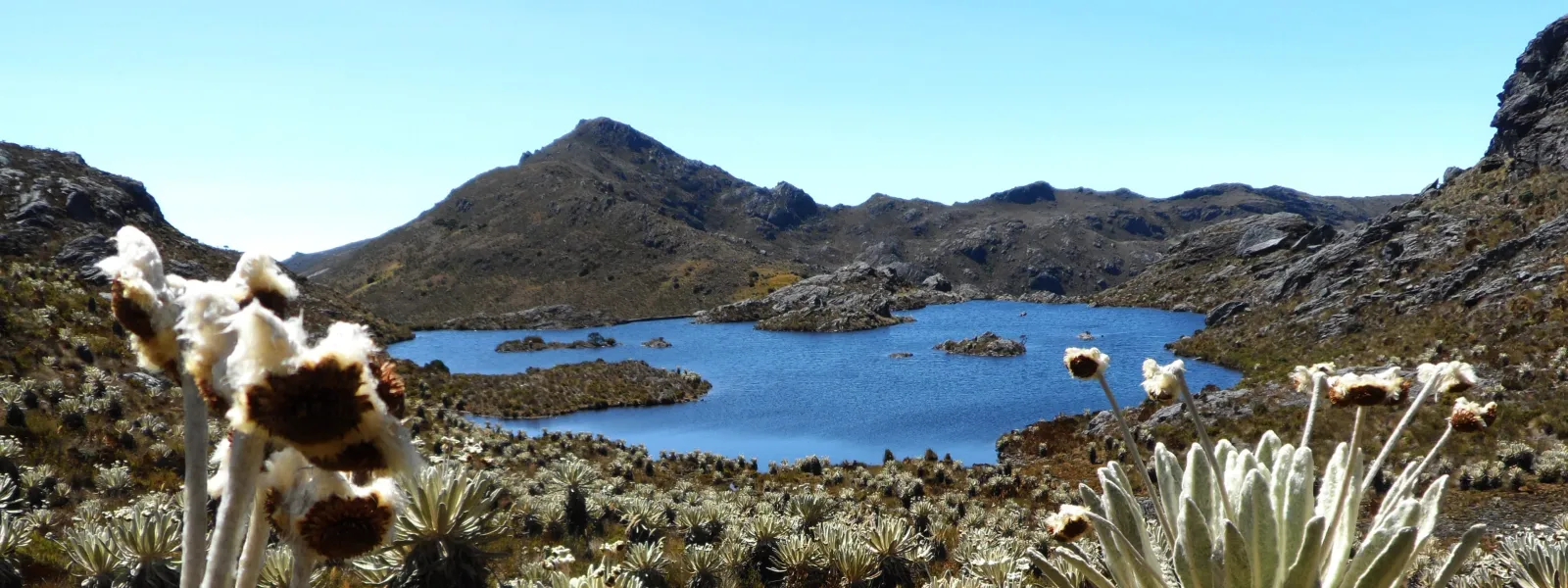
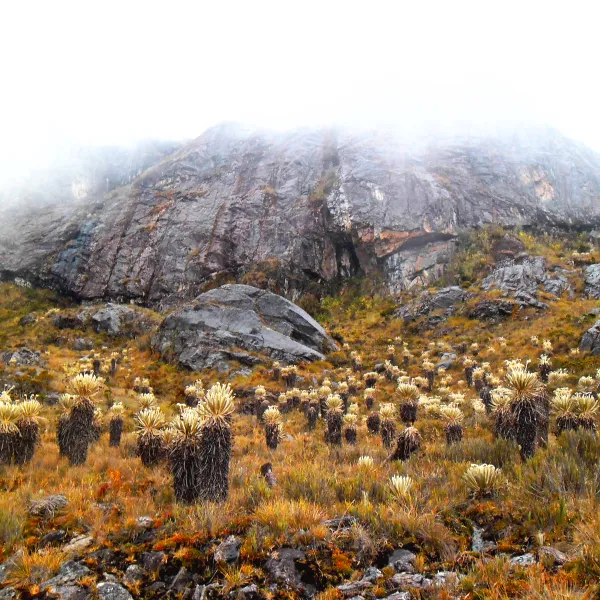
In the Andean region, high-mountain ecosystems known as páramos capture water from the fog and supply it to the lowlands. One such ecosystem is the Santurbán páramo, which provides fresh water to more than two million people in Colombia.
Santurbán, like the other páramos on the continent, also captures large amounts of carbon, making it a key ally in mitigating the climate crisis. It is also a refuge for hundreds of endangered species, including the iconic spectacled bear.
The land in and around the páramo contains gold and other minerals. This has put Santurbán in the spotlight of the multinational mining industry, which for decades has sought to establish large-scale projects in the ecosystem that threaten to degrade it.
The Committee for the Defense of Water and the Santurbán Páramo—a coalition of environmental advocates—has thwarted these ongoing attempts, with support from AIDA and other civil society organizations.
Background
The Santurbán páramo is located in the heart of the Eastern Cordillera of the Colombian Andes, in the departments of Santander and Norte de Santander, at an elevation ranging from 2,200 to 4,290 meters above sea level.
It covers an area of 129,743 hectares and is home to 57 lakes. It serves as a habitat for 457 plant species and 293 species of vertebrate fauna.
There are mineral deposits in Santurbán, primarily gold, but also silver and copper. This explains the region’s mining tradition, particularly in the part of the páramo located in Santander, in the province of Soto Norte. The communities in the area have built their culture and identity around gold mining, which is mainly artisanal and small-scale.
But since the 1990s, the gold deposits in the páramo have also attracted foreign mining conglomerates seeking to develop large-scale projects. This has raised concerns among the population that relies on the Santurbán water sources, who have mobilized in defense of water, their land, and life.
Although national and international regulations prohibit mining in páramos, the Colombian government has granted mining concessions to transnational corporations in Santurbán.

Photo: Keishpixl / Pixabay.
The long struggle to protect the páramo
One of the companies that sought to develop large-scale mining in Santurbán is Eco Oro Minerals Corp.—formerly Greystar Resources—a Canadian company that intended to establish the Angostura open-pit mine there to extract gold and silver. Between 1994 and 1995, the company acquired its mining titles and conducted exploration. And in 2010, it applied for a mining permit.
That was the year AIDA became involved in defending the ecosystem, supporting the Committee for the Defense of Water and the Santurbán Páramo. Our legal work helped convince the Colombian government to deny the mine an environmental permit in May 2011.
In January 2013, the government designated a portion of the páramo (11,700 hectares) as a Regional Natural Park. That year—together with the committee and partner organizations—we carried out a campaign and advocacy efforts to urge the government to recognize the entire Santurbán area as a páramo ecosystem through a delimitation based on scientific criteria. In December 2014, the Ministry of the Environment established a delimitation that protected 76% of the páramo (98,954 hectares).
Furthermore, as a result of a litigation supported by AIDA, in February 2016, Colombia’s highest court reaffirmed that mining in páramos is prohibited.
That same year, in December, the International Finance Corporation (IFC), the World Bank Group’s private sector arm, decided to divest from Eco Oro Minerals. This achievement was the result of a process that began in 2012, when the committee—advised and supported by AIDA and international partner organizations—filed a complaint before an independent accountability mechanism, which concluded that the IFC’s investment in the Angostura project failed to take into account the project’s social and environmental impacts, thereby contradicting the financial institution’s internal policies.
Also in 2016, Eco Oro Minerals filed an arbitration claim against the Colombian government with the International Centre for Settlement of Investment Disputes (ICSID), arguing that it had been adversely affected by government decisions aimed at protecting the country’s páramos, including the delimitation of Santurbán.
In 2017, the Constitutional Court invalidated the delimitation because the affected communities were not consulted. The high court ordered that a participatory delimitation be carried out.
And that year, a new threat to Santurbán emerged when the Canadian multinational Aris Mining applied for an environmental permit for Soto Norte, a gold mining project located near the páramo. Following citizen protests and technical objections, in October 2020, the National Environmental Licensing Authority shelved the project.
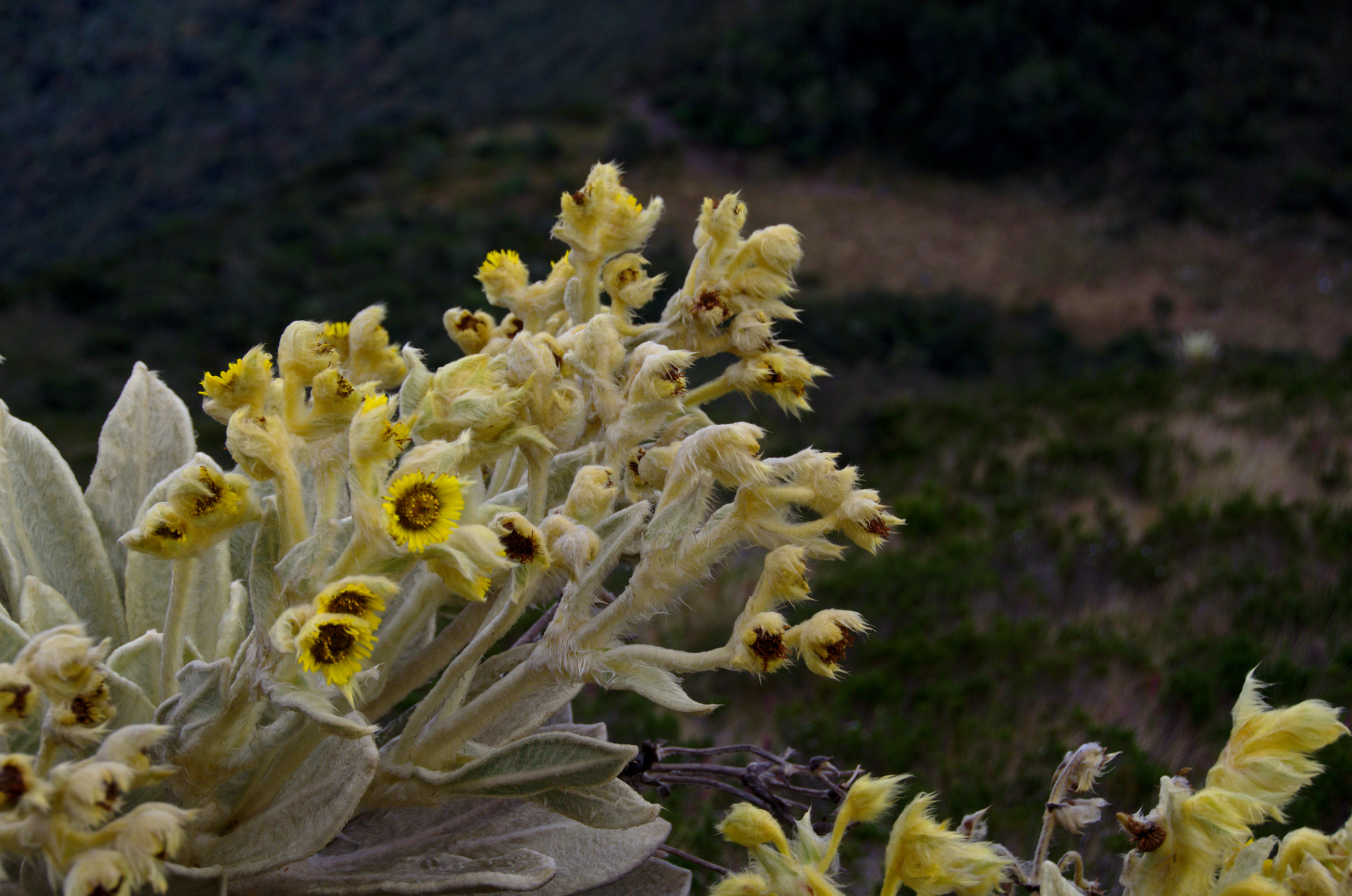
Photo: Aztlec.
Current situation
In March 2025, the Colombian government designated the western flank of the Santurbán massif as a temporary renewable natural resource reserve area, delimiting and protecting an area of 75,344.65 hectares. This resulted in a two-year suspension of the Soto Norte project. However, Aris Mining's contract to formalize Calimineros' small-scale mining activities through the purchase and processing of mineralized material remains in effect.
In addition, the Canadian mining company continues to move the project forward. In September 2025, it released its prefeasibility study, revising the mine’s original design.
Meanwhile, members of the Committee for the Defense of Water and the Santurbán Páramo face threats and stigmatization because of their work. In March 2025, UN Special Rapporteurs and the Working Group on Business and Human Rights denounced these incidents in communications sent to the governments of Colombia, Canada, and the United Arab Emirates, as well as to the companies Aris Mining and MDC Industry Holding Company LLC, the former co-owner of the Soto Norte project.
Regarding the arbitration claim filed by Eco Oro Minerals, in July 2024, ICSID ruled in favor of the Colombian government and rejected the Canadian company’s claim for USD 1.1 billion in compensation.
Concerning the delimitation of Santurbán, in July 2026, the Ministry of the Environment issued a resolution introducing the concept of "progressive delimitation." On that basis, the government proposes to progressively demarcate the páramo, covering 29,199 hectares across 19 municipalities—those where the participatory agreements required by the Constitutional Court in its 2017 ruling have already been finalized. It also proposes two measures on the creation and expansion of reserves to restrict mining in the ecosystem.
Learn more about the impacts of mining on the páramos of Latin America (in Spanish).
Partners:
Related projects
Organization of American States requests immediate suspension of Belo Monte Dam in the Brazilian Amazon
The Inter-American Commission on Human Rights considered that Indigenous Peoples must be consulted BEFORE the dam’s construction begins. Altamira, Brazil / Washington, D.C., USA - The Inter-American Commission on Human Rights (IACHR), part of the Organization of American States (OAS), has officially requested the Brazilian Government to immediately suspend the Belo Monte Dam Complex in the Amazonian state of Para, citing the project's potential harm to the rights of traditional communities living within the Xingu river basin. According to the IACHR, the Brazilian Government must comply with legal obligations to undertake a consultation process that is "free, prior, informed, of good faith and culturally appropriate" with indigenous peoples threatened by the project before further work can proceed. The Brazilian Ministry of Foreign Affairs must inform the OAS within 15 days regarding urgent measures undertaken to comply with the Commission's resolution. The IACHR's decision responds to a complaint submitted in November 2010 on behalf of local, traditional communities of the Xingu river basin. The complaint was presented by the Xingu Alive Forever Movement - (MXVPS), the Coordination of Indigenous Organizations in the Brazilian Amazon (COIAB), the Prelacy of the Roman Catholic Church in the Xingu region, the Indigenous Missionary Council (CIMI), the Pará Society for the Defense of Human Rights (SDDH), Global Justice and the Inter-American Association for Environmental Defense (AIDA). According to the complaint, there were no appropriate consultations with affected indigenous and riverine communities regarding the impacts of the mega-dam project. The document argues that the dam would cause irreversible social and environmental damage, including forced displacement of communities, while threatening one of the Amazon's most valuable areas for biodiversity conservation. "By recognizing the rights of indigenous people to prior and informed consultations, the IACHR is requesting that the Brazilian Government stop the licensing and construction of the Belo Monte dam project to ensure their right to decide," said Roberta Amanajas, SDDH lawyer. "Continuing this project without proper consultations would constitute a violation of international law. In that case, the Brazilian Government would be internationally liable for the negative impacts caused by the dam." The IACHR also requests Brazil to adopt "vigorous and comprehensive measures" to protect the lives and personal integrity of isolated indigenous peoples in the Xingu river basin, as well as effective measures to prevent the spread of diseases and epidemics among traditional communities threatened by the project. "The IACHR's decision sends a clear message that the Brazilian Government's unilateral decisions to promote economic growth at any cost are a violation of our country's laws and the human rights of local traditional communities," said Antonia Melo, MXVPS coordinator. "Our leaders no longer can use economic "development" as an excuse to ignore human rights and to push for projects of destruction and death to our natural heritage and to the peoples of Amazon, as is the case of Belo Monte." "The OAS's decision is a warning to the Federal Government and a call to Brazilian society to broadly discuss the highly authoritarian and predatory development model being implemented in this country," said Andressa Caldas, Global Justice director. Andressa recalls examples of human rights violations caused by other infrastructure projects within the federal government's Accelerated Growth Program (PAC). "There are numerous cases involving the forced displacement of families without compensation, as well as serious environmental impacts, social disruption of communities, rising violence in areas surrounding construction sites and poor working conditions." Criticism of the Belo Monte dam comes not only from civil society organizations, and local communities, but also from scientists, researchers, and government institutions. The Federal Public Prosecutor's office in Pará state has already filed ten civil lawsuits against the mega-project that are still awaiting final decisions. "I am very moved by this news," said Sheyla Juruna, an Indigenous leader of the Juruna community in Altamira. "Today, more than ever, I am sure that we were right to expose the Brazilian Government - including the federal judicial system - for violations of the rights of indigenous peoples in the Xingu and of all those who are fighting together to protect life and a healthy environment. We will maintain our firm resistance against the implementation of the Belo Monte Dam Complex." The IACHR's decision is founded on international law established by the American Convention on Human Rights, Convention 169 of the International Labour Organisation (ILO), the United Nations Declaration on Indigenous Rights (UNDRIP), and the UN Convention on Biological Diversity (CBD), as well as the Brazilian Constitution itself.
Read moreColombian Ministry of Mines announces wetlands protection from open pit mining
Bogotá, Colombia – Colombia has signaled it will halt construction of one of the world’s largest open-pit gold and other metals mine. In a surprisingly bold step March 17, Colombia’s Minister of Mines Carlos Rodado announced “Pursuant to Colombian law, mining projects cannot be developed in wetlands areas.” If enforced, this would prevent construction of the massive Angostura mine in the Santander department, on the Santurban paramo. "This is an important step in fulfilling Colombia’s obligations to its constitution and international wetlands protections,” said Natalia Jiménez Galindo, AIDA's legal adviser in Bogotá. “The State should refrain from approving any phase of the Angostura project, including any additional infrastructure." If built, the Angostura mine would jeopardize the Santurban paramo, a sensitive high-altitude wetland that supply freshwater to more than 1 million people in nearby communities. In collaboration with various partners, AIDA has advocated for the protection of the paramo ecosystems against mining and provided related legal advice to organizations and sending to the authorities an analysis on the international law applicable. “We applaud the Ministry of Mines for recognizing the prohibition against mining in paramos and we expect this will be reflected in an official decision” said Astrid Puentes Co- Director of AIDA. “This will send a strong message from the Government that it is truly interested in protecting paramos and making a difference in climate change”. AIDA calls upon the Colombian government to formally reject the entire Angostura mine project as proposed by Greystar Resources Corporation of Canada. This is the only decision consistent with the norms, the pronouncement by the Ministry of Mines and the Alexander von Humboldt Institute concept.
Read moreOrganization of American States questions Belo Monte Dam project
Human rights body of the OAS solicits official inquiry while Amazonian communities stage major protests. Altamira, Brazil - The Organization of American States (OAS) officially requested the Brazilian government to clarify information on the Belo Monte Dam’s licensing process, which moved forward without ensuring proper consultation with local indigenous groups. This request comes amid heightening local and international controversy around plans to construct the dam complex on the Xingu River in the Brazilian Amazon. The Inter-American Commission on Human Rights (IACHR) of the OAS, solicited the request in response to a complaint filed by several organizations including the Xingu Alive Forever Movement (MXVPS), the Inter-American Association for Environmental Defense (AIDA) and the Para Society for the Defense of Human Rights (SDDH), and supported by another 40 institutions advocating for the rights of indigenous and traditional communities of the Xingu River basin. The complaint demands that the Brazilian government immediately suspend the licensing process for the Belo Monte Dam, stop construction of the project, and guarantee the human rights of affected people and communities. The IACHR gave the government ten days to clarify the steps taken to ensure free, prior and informed consultations with local peoples and the legality of the dams "partial license," among other issues. The request is the first step in a longer proceeding in which local communities are alleging human rights violations stemming from the proposed dam. "When Brazil signs a treaty, it is obliged to comply with its resolutions," said Roberta Amanajás, a lawyer for the Para Society for the Defense of Human Rights (SDDH). "As a signatory to the Inter-American Convention on Human Rights, Brazil must recognize its legitimacy to examine cases such as Belo Monte." "With huge development projects like the Belo Monte Dam Complex, all governments must be held accountable for protecting human rights and the environment of local communities," said Jacob Kopas, a lawyer with AIDA. "The Inter-American Commission has already recognized this in other cases and has urged the suspension of a large dam project in Panama and as large gold mine in Guatemala." Meanwhile, hundreds of fisherman staged a protest on Friday in the city of Altamira to show their opposition to a project that could destroy their livelihoods by decimating the region's migratory fish species. The event, blessed by Dom Erwin Kräutler, Bishop of the Xingu and historic opponent of the hydroelectric plant, was marked by dozens of fishing boats setting out on the Xingu River to symbolize the importance of defending the river and preserving their way of life. "The fisherfolk of the Xingu are committed to organizing in defense of their river," said Kräutler. "From it they pull sustenance for themselves and their families, while their hard work supplies all of the cities along the Xingu. It was very powerful to see them set out in large numbers to fish last week. Their return today has shown that the river is alive and that they want to see it remain alive forever." Today, dozens more fishing boats from surrounding communities affected by the dam have joined the protesters in a show of solidarity, where they will greet the fishermen on their return and share their catch to mark the International Day of Action for Rivers.
Read more