
Project
Alberto Peña Kay
Protecting the Santurban páramo from mining's damage
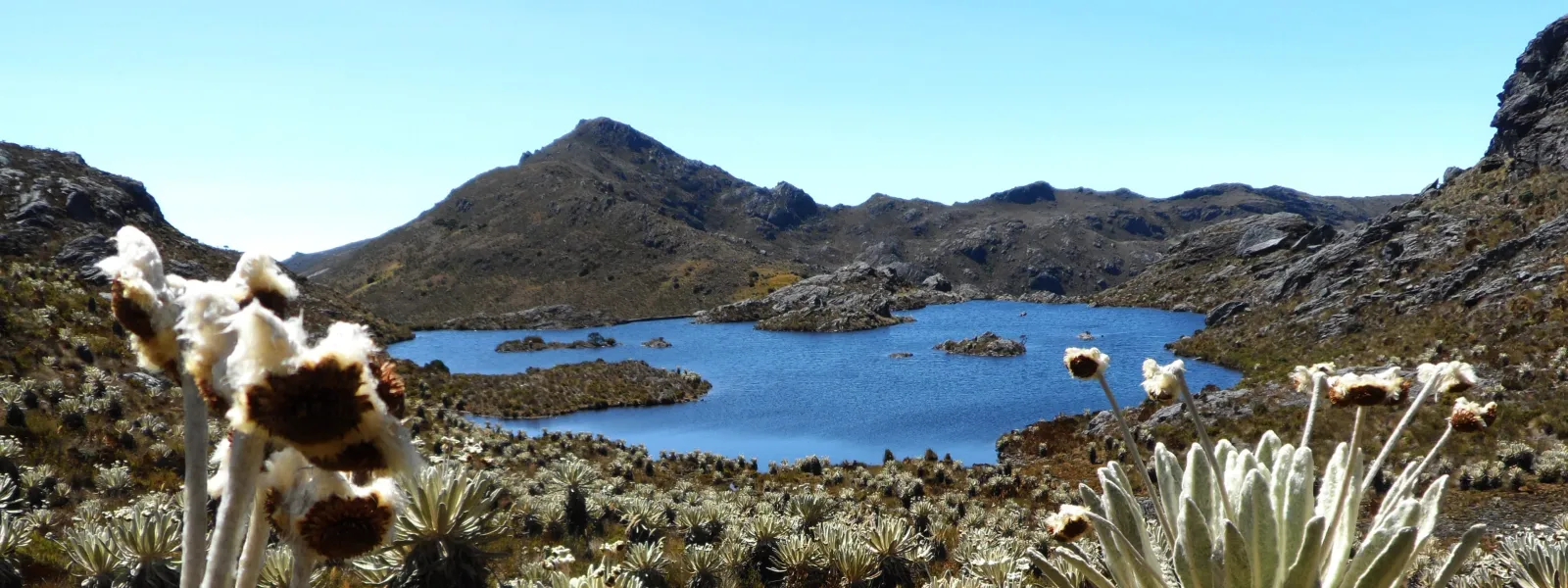
In the Andean region, high-mountain ecosystems known as páramos capture water from the fog and supply it to the lowlands. One such ecosystem is the Santurbán páramo, which provides fresh water to more than two million people in Colombia.
Santurbán, like the other páramos on the continent, also captures large amounts of carbon, making it a key ally in mitigating the climate crisis. It is also a refuge for hundreds of endangered species, including the iconic spectacled bear.
The land in and around the páramo contains gold and other minerals. This has put Santurbán in the spotlight of the multinational mining industry, which for decades has sought to establish large-scale projects in the ecosystem that threaten to degrade it.
The Committee for the Defense of Water and the Santurbán Páramo—a coalition of environmental advocates—has thwarted these ongoing attempts, with support from AIDA and other civil society organizations.
Background
The Santurbán páramo is located in the heart of the Eastern Cordillera of the Colombian Andes, in the departments of Santander and Norte de Santander, at an elevation ranging from 2,200 to 4,290 meters above sea level.
It covers an area of 129,743 hectares and is home to 57 lakes. It serves as a habitat for 457 plant species and 293 species of vertebrate fauna.
There are mineral deposits in Santurbán, primarily gold, but also silver and copper. This explains the region’s mining tradition, particularly in the part of the páramo located in Santander, in the province of Soto Norte. The communities in the area have built their culture and identity around gold mining, which is mainly artisanal and small-scale.
But since the 1990s, the gold deposits in the páramo have also attracted foreign mining conglomerates seeking to develop large-scale projects. This has raised concerns among the population that relies on the Santurbán water sources, who have mobilized in defense of water, their land, and life.
Although national and international regulations prohibit mining in páramos, the Colombian government has granted mining concessions to transnational corporations in Santurbán.

Photo: Keishpixl / Pixabay.
The long struggle to protect the páramo
One of the companies that sought to develop large-scale mining in Santurbán is Eco Oro Minerals Corp.—formerly Greystar Resources—a Canadian company that intended to establish the Angostura open-pit mine there to extract gold and silver. Between 1994 and 1995, the company acquired its mining titles and conducted exploration. And in 2010, it applied for a mining permit.
That was the year AIDA became involved in defending the ecosystem, supporting the Committee for the Defense of Water and the Santurbán Páramo. Our legal work helped convince the Colombian government to deny the mine an environmental permit in May 2011.
In January 2013, the government designated a portion of the páramo (11,700 hectares) as a Regional Natural Park. That year—together with the committee and partner organizations—we carried out a campaign and advocacy efforts to urge the government to recognize the entire Santurbán area as a páramo ecosystem through a delimitation based on scientific criteria. In December 2014, the Ministry of the Environment established a delimitation that protected 76% of the páramo (98,954 hectares).
Furthermore, as a result of a litigation supported by AIDA, in February 2016, Colombia’s highest court reaffirmed that mining in páramos is prohibited.
That same year, in December, the International Finance Corporation (IFC), the World Bank Group’s private sector arm, decided to divest from Eco Oro Minerals. This achievement was the result of a process that began in 2012, when the committee—advised and supported by AIDA and international partner organizations—filed a complaint before an independent accountability mechanism, which concluded that the IFC’s investment in the Angostura project failed to take into account the project’s social and environmental impacts, thereby contradicting the financial institution’s internal policies.
Also in 2016, Eco Oro Minerals filed an arbitration claim against the Colombian government with the International Centre for Settlement of Investment Disputes (ICSID), arguing that it had been adversely affected by government decisions aimed at protecting the country’s páramos, including the delimitation of Santurbán.
In 2017, the Constitutional Court invalidated the delimitation because the affected communities were not consulted. The high court ordered that a participatory delimitation be carried out.
And that year, a new threat to Santurbán emerged when the Canadian multinational Aris Mining applied for an environmental permit for Soto Norte, a gold mining project located near the páramo. Following citizen protests and technical objections, in October 2020, the National Environmental Licensing Authority shelved the project.
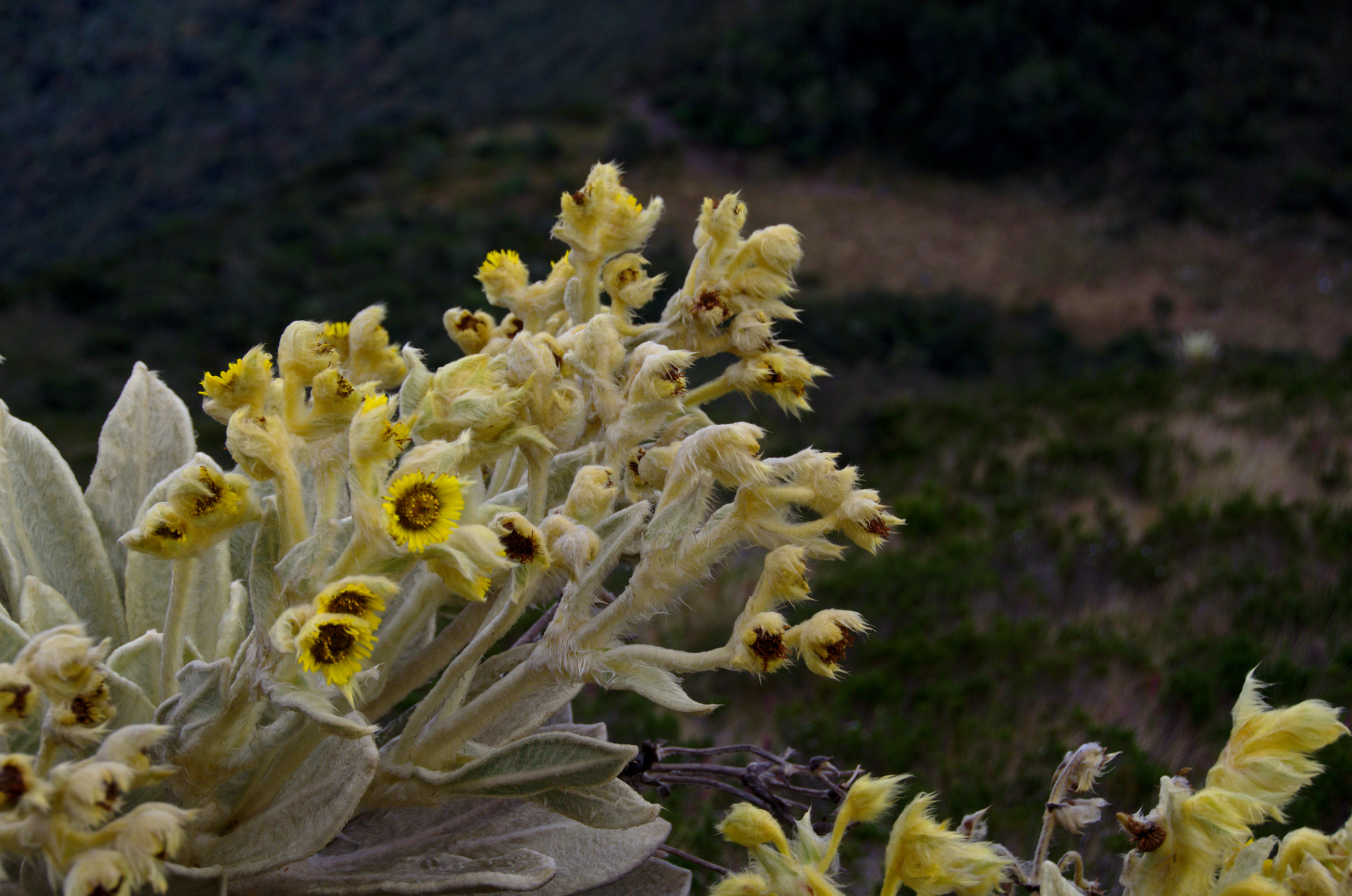
Photo: Aztlec.
Current situation
In March 2025, the Colombian government designated the western flank of the Santurbán massif as a temporary renewable natural resource reserve area, delimiting and protecting an area of 75,344.65 hectares. This resulted in a two-year suspension of the Soto Norte project. However, Aris Mining's contract to formalize Calimineros' small-scale mining activities through the purchase and processing of mineralized material remains in effect.
In addition, the Canadian mining company continues to move the project forward. In September 2025, it released its prefeasibility study, revising the mine’s original design.
Meanwhile, members of the Committee for the Defense of Water and the Santurbán Páramo face threats and stigmatization because of their work. In March 2025, UN Special Rapporteurs and the Working Group on Business and Human Rights denounced these incidents in communications sent to the governments of Colombia, Canada, and the United Arab Emirates, as well as to the companies Aris Mining and MDC Industry Holding Company LLC, the former co-owner of the Soto Norte project.
Regarding the arbitration claim filed by Eco Oro Minerals, in July 2024, ICSID ruled in favor of the Colombian government and rejected the Canadian company’s claim for USD 1.1 billion in compensation.
Concerning the delimitation of Santurbán, in July 2026, the Ministry of the Environment issued a resolution introducing the concept of "progressive delimitation." On that basis, the government proposes to progressively demarcate the páramo, covering 29,199 hectares across 19 municipalities—those where the participatory agreements required by the Constitutional Court in its 2017 ruling have already been finalized. It also proposes two measures on the creation and expansion of reserves to restrict mining in the ecosystem.
Learn more about the impacts of mining on the páramos of Latin America (in Spanish).
Partners:
Related projects
Organizations and communities call for intervention by the IACHR in response to the human rights impacts of mining for the energy transition
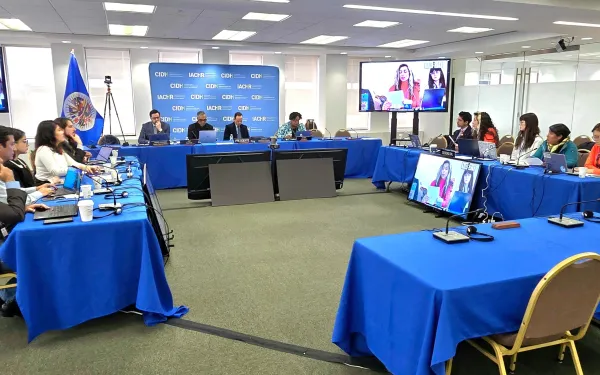
On Friday, November 15, representatives of national and regional organizations from Latin America, together with members of indigenous communities and peoples, participated in a regional public hearing before Commissioners and the Rapporteur on Economic, Social, Cultural, and Environmental Rights (REDESCA) of the Inter-American Commission on Human Rights (IACHR) to discuss the Human Rights violations that mineral extraction for the energy transition is causing on the continent.Specifically, they asked the IACHR to urge States to:Create or strengthen intangible mining-free zones in consideration of their cultural, climate, or ecosystem values.Refrain from modifying regulatory frameworks that protect the environment and indigenous peoples to facilitate investment in mining projects for the energy transition, without considering the protection of human rights.Respect and ensure the framework for protecting the right to a healthy environment, considering synergistic, cumulative, and perpetual impacts, as well as climate impacts; and implement effective mechanisms to supervise and monitor public and private actors involved in the extraction of these minerals.Strengthen their justice systems, taking into account the principles of prevention and precaution against irreparable damage to ecosystems, people, and communities. They also requested that the IACHR prepare a report examining the measures that should be adopted by the States of the region to ensure that the promotion of minerals for the transition does not lead to human rights violations, especially in communities living in areas that are highly vulnerable to the impacts of mining activities.The hearing highlighted, based on specific cases, the serious human rights issues associated with the mining of lithium, cadmium, copper, cobalt, and other minerals used in the development of renewable energy technologies.At the outset, Felipe Pino, Project Coordinator at ONG FIMA, Chile, emphasized that as the rollout of energy transition projects accelerates, there are growing calls for a just transition, which should be interpreted as a wake-up call about the lack of coherence between transition strategies and the basis for climate action: protecting people and ecosystems on the planet. “The communities most affected by the climate crisis are now threatened by strategies to combat climate change. The success of our efforts will depend on whether we are able to resolve this supposed paradox of acceleration versus justice, which is particularly evident in our region,” he said.Pia Marchegiani, Deputy Executive Director of Fundación Ambiente y Recursos Naturales (FARN), Argentina, said: “The great interest surrounding these minerals is also reflected in the enormous geopolitical dispute to gain control over them. Countries in North America, Europe, and Asia have enacted regulations to exploit these minerals and ensure their supply. International organizations such as the World Bank Group and the G20 have developed policies to ensure financing with certain safeguards in place for their use.”Marchegiani also noted that this issue has become so significant that the United Nations Secretary-General himself established a set of guiding principles to ensure justice, equity, and sustainability in the global energy transition. The first of these principles emphasizes the importance of placing human rights at the center of mineral value chains. The second highlights the need to address the transition comprehensively, with a focus on protecting the planet, biodiversity, and the environment.“It is estimated that demand for these minerals will grow exponentially in the coming years. Some forecasts suggest that global demand could quadruple by 2040 if climate agreements are fulfilled. Electric vehicles and batteries account for approximately half of the growth in this demand over the next two decades. This increase in demand translates into enormous pressure for Latin America, which already supplies 40% of the world’s copper production and 35% of lithium,” added Marchegiani.To explain the link between lithium extraction and human rights violations, Óscar Campanini, Executive Director of the Centro de Documentación e Información Bolivia (CEDIB), pointed out: “Lithium is extracted from the salt water beneath the salt flats, which requires the removal of tens of millions of cubic meters of salt water and fresh water. The salt flats in the so-called lithium triangle are located in desert areas where life is only possible thanks to fossil groundwater.”Verónica Gostissa, lawyer and activist at the Asamblea PUCARÁ in Catamarca, Argentina, said: “Since 1997, transnational companies have been extracting lithium from the Salar del Hombre Muerto, a sensitive high-altitude wetland. Due to the use of millions of liters of fresh and salt water, the companies—with the endorsement of the state—have already caused irreversible environmental damage: they have dried up the Trapiche River vega—that is, more than 5 km of river—which has died.”For her part, Lady Sandón, representative of the Environment Unit of the Consejo de Pueblos Atacameños, Chile, stated: “They are trying to secure production for 30 years to exploit lithium in fragile ecosystems such as salt flats, without having carried out consultation processes with indigenous communities, without adequate transparency, without considering those of us who live in the salt flats, arbitrarily choosing which salt flats to protect, without understanding that there is an interconnection of water.”Verónica Chávez, a member of the Comunidad de Santuario de Tres Pozos, one of more than 38 indigenous communities living in the Salinas Grandes Basin and Guayatayoc Lagoon, in the provinces of Salta and Jujuy in Argentina, said: “What we are defending is our life, that of plants, domestic and wild animals, vicuñas, llamas, etc. The lives of our ancestors, lagoons, and salt flats, which are part of our families. We all need water to live; clean water and a healthy territory. We are aware that this is not a task for the future. It is bread for today, hunger for tomorrow, and we will be sacrificed in order to extract this mineral.”Juan Sebastian Anaya, advocacy advisor at the Gaia Amazonas Foundation in Colombia, indicated that the human rights of indigenous peoples, Afro-descendants, and peasants in the Amazon are being affected by the legal and illegal extraction of minerals for the transition. “Today, there are extraction sites for rare earth elements, coltan, copper, and other strategic minerals, most of which operate without any state control… Mining activity is alien to the knowledge systems and legal order of the vast majority of Amazonian indigenous peoples,” he emphasized.Finally, Liliana Ávila, director of the Human Rights and Environment Program at the Interamerican Association for Environmental Defense (AIDA), highlighted that the testimonies reveal at least three cross-cutting elements: violations of the right to water, violations of the right to a healthy environment, and aggravated impacts on indigenous peoples and local communities. “The region has experienced decades of human rights impacts resulting from fossil fuel extraction. It is essential that new forms of energy production overcome this legacy of abuse,” she said.The hearing was requested during the 191st session of the IACHR by the Due Process of Law Foundation (DPLF), the Gaia Amazonas Foundation, and the organizations that make up the Alliance for Andean Wetlands: the Interamerican Association for Environmental Defense (AIDA), a regional organization; the Fundación Ambiente y Recursos Naturales (FARN) and Asamblea PUCARÁ of Argentina; the Centro de Documentación e Información Bolivia (CEDIB) and the Human Rights Collective Empodérate of Bolivia; ONG FIMA, Defensa Ambiental, and Fundación Tantí of Chile. Press contactVíctor Quintanilla (Mexico), AIDA, [email protected], +52 5570522107
Read more
Organizations and communities alert to human rights impacts of mineral extraction for the energy transition
A public hearing before the Inter-American Commission on Human Rights will focus on the impact of the expansion and intensification of extractive operations for transition minerals like lithium and copper on communities in Latin America. Washington DC. On November 15, at a public hearing before the Inter-American Commission on Human Rights, representatives of national and regional organizations, as well as members of communities and indigenous peoples, will present updated information on how the exponential increase in the demand for and extraction of transition minerals has caused serious human rights violations as part of a transition process that is proposed only as a change in the energy matrix and is incapable of addressing inequalities in energy production and consumption, particularly in the Global South.Transition minerals like lithium, copper, cadmium, and cobalt—also called “critical” minerals—have been proposed in many global discussions as one of the main solutions to the climate crisis, as they are used in the development of technologies for the production of renewable energy, thus reducing or replacing the use of fossil fuels. A large part of these minerals are located in Latin America, in areas of great biocultural diversity.At the hearing, participants will present the main threats that mining for energy transition poses to the rights of indigenous peoples and local communities, the right to a healthy environment, access to environmental information, citizen participation, and justice. In addition, concrete cases of human rights violations in the context of mining for energy transition will be presented through testimonies.These impacts are already occurring in countries such as Argentina, Bolivia and Chile, which concentrate about 53 percent of the world's known lithium deposits in their Andean wetlands, extremely fragile ecosystems confronting water scarcity; in Chile and Peru, where 40 percent of the world’s copper is mined; and in the Colombian Amazon, where concessions, mining claims and illegal extraction of transition minerals are violating the rights of indigenous peoples.Several international organizations have spoken out about human rights abuses related to climate crisis response, particularly energy transition processes. In September, the UN Panel on Critical Minerals for Energy Transition issued a set of recommendations and voluntary principles for governments, industry and other stakeholders to ensure equitable, fair and sustainable management of these minerals. These guidelines aim to ensure that the transition to renewable energy is based on fairness and equity, and that it promotes sustainable development, respect for people, and environmental protection in developing countries.The hearing will take place during the 191st period of sessions of the Inter-American Commission. It was requested by the Due Process of Law Foundation (DPLF), the Gaia Amazonas Foundation and the organizations that are members of the the Alliance for Andean Wetlands (Alianza por los Humedales Andinos): the Interamerican Association for Environmental Defense (AIDA), a regional organization; the Fundación Ambiente y Recursos Naturales (FARN) and the PUCARÁ Assembly, of Argentina; the Centro de Documentación e Información Bolivia (CEDIB) and the Colectivo de Derechos Humanos Empodérate, of Bolivia; ONG FIMA, Defensa Ambiental and Fundación Tantí, of Chile.The hearing will be held from 9:00 a.m. to 10:30 a.m. (Washington DC time) and will be broadcast via Zoom, which requires prior registration at the following link: https://www.zoomgov.com/webinar/register/WN_dsEZdrDqSyOA8-i7ikveJQ#/registration. Quotes from representatives of organizations and communities Verónica Chávez, representative of the communities of Salinas Grandes and Laguna de Guayatayoc, Argentina:"All of us who are part of the Salinas Grande watershed are living a situation in which our rights are being affected. We hope that the IACHR can resolve this situation because it is very serious; they are damaging our territories, living beings, and nature itself." Liliana Ávila, director of the Human Rights and Environment Program at the Interamerican Association for Environmental Defense (AIDA):"The energy transition in our countries should be an opportunity to move towards more just and equitable energy production and distribution processes. The human rights framework and the role of the international protection system are fundamental in this regard. It is very important that the Inter-American Commission closely follows this process and promotes the protection of human rights." Verónica Gostissa, attorney with Asamblea Pucará of Catamarca, Argentina:"In our territory, the province of Catamarca, Argentina, we are living a serious violation of our rights, which is reflected first and foremost in the visible environmental impacts. Since 1997, lithium mining has caused significant environmental damage, including the drying up of a branch of the Trapiche River, a damage that persists to this day. Water continues to be taken from this damaged river, despite recognition of the damage by the company and government authorities. Access to public information, participation and consultation, and access to justice are also affected. For years, extractive projects have been approved without adequate procedures, and although a lawsuit filed by the Atacameños del Altiplano indigenous community resulted in a regulation, it does not meet the standards for effective indigenous consultation. In addition, more than 10 lithium projects are being developed in the same territory, the Salar del Hombre Muerto, without any cumulative and comprehensive impact assessment to date." Vivian Lagrava Flores, coordinator of the Colectivo de Derechos Humanos Empodérate, Bolivia:"Indigenous communities reject mining projects, they can even issue their resolutions and say no in the mining consultation process, but their decisions are not binding for governments. International standards are not respected, and the subjugation of territories and the imposition of mining rights are legitimized with discourses of progress and development, but it is not development from the vision of the indigenous peoples, nor from ours." Lady Sandón, representative of the Environment Unit of the Consejo de Pueblos Atacameños, Chile:"There is a lot of ignorance of the law for the native/indigenous people, which favors the state, and that is why the inhabitants of the land, by not knowing, do not enforce their guarantees. The state institutions violate the social, environmental, and cultural aspects; sometimes they use the indigenous people themselves to create divisions and to have supporters or political and mining operators who promote the change of the thinking of the genetic memory that we have as native people. I hope that we can revisit the situation of ancestral indigenous justice as a mechanism that previously established corrections so that the values and principles of ‘Buen Vivir’ are respected." Daniel Cerqueira, program director of the Due Process of Law Foundation (DPLF):"This hearing is an opportunity for the Inter-American Commission to clarify the parameters of action for both States and companies in the management of transition minerals. It is imperative to have specific obligations in this area, as human rights violations resulting from the extraction of these minerals are a reality that tends to worsen in several countries in the region." Juan Sebastian Anaya, advocacy advisor at the Gaia Amazonas Foundation (Colombia):"The indigenous governments of the Amazon exercise their territorial and environmental authority in accordance with the Law of Origin, which guides their knowledge systems and principles of relationship with the elements of the territory, such as minerals. The decarbonization of the energy matrix to maintain consumption standards in the global north should not be done at the expense of indigenous territories and the communities that protect them, govern them and make them flourish with their daily practices."Press contactsVíctor Quintanilla (Mexico), AIDA, [email protected], +52 5570522107Rocío Wischñevsky (Argentina), FARN, [email protected], +54 91159518538 Karen Arita (Mexico), DPLF, [email protected], +52 442 471 9626
Read more
Declaration for the protection of the páramos and montane forests of the Tropical Andes
The undersigned civil society organizations, gathered in the framework of the 16th meeting of the Conference of the Parties (COP16) to the Convention on Biological Diversity (CBD) in Cali, Colombia: 1.URGE States Parties to the CBD to adopt domestic regulations and make international commitments to:recognize the crucial role of the páramos and the montane forest that protects them in global water regulation, mitigation and adaptation to the climate crisis, as well as in the conservation of biocultural diversity;protect the human rights, traditional knowledge and sustainable practices of indigenous peoples and peasant and traditional communities that inhabit the páramos and montane forest; andprohibit large-scale mining or similar practices in paramos and montane forests in terms of their socio-environmental impacts, in accordance with the principles of precaution and prevention. 2. REQUEST the States to include in their national biodiversity strategies and action plans indicators and monitoring mechanisms before the CBD that allow them to adequately measure and report compliance with the commitments they assume to advance in the conservation of these ecosystems under the terms of this declaration, as well as to guarantee the rights of the peoples and communities that inhabit them. 3. REQUIRE States and multilateral financial institutions to mobilize sufficient resources and technical capacities to guarantee the conservation of these ecosystems, as well as the protection of the indigenous peoples and peasant and traditional communities that inhabit them. We submit these requests to the States Parties to the CBD: Taking into account that there is a scientific consensus on the water regulatory power of the páramo and montane forest ecosystems[1] because they not only host endemic flora that captures freshwater from rain and fog, supplying it to the Andean cities located downstream; but also soils, lake and peatland systems that have a high concentration of organic matter and an enormous capacity to retain the liquid. In addition, the páramos wetlands are high Andean wetlands[2] under the protection of the Ramsar Convention on Wetlands of International Importance.Recognizing that páramos and their montane forests are fundamental in the carbon cycle; that due to low temperatures and the slow rate of decomposition of organic matter present in them, their soils, vegetation and wetlands capture and retain carbon dioxide (CO2)[3], contributing to climate change mitigation and adaptation and reducing the impact of meteorological events; and that these ecosystems are carbon sinks under the terms of the United Nations Framework Convention on Climate Change (UNFCCC).Reminding that, due to their biological and climatic characteristics, these ecosystems provide essential services for the population and contain biodiversity that is subject to special protection[4] and are home to endemic and native species of flora and fauna such as frailejones, pajonales, epiphytes, the chivito hummingbird, the Andean condor and the Andean bear, among others.Considering that the indigenous peoples and peasant and traditional communities of the region manage and protect the páramos and montane forests, ensure the preservation of common goods in their territories and are guardians of ancestral knowledge that is crucial for the conservation of biodiversity; that the integrity of the páramos is fundamental for the conservation of these ancestral practicess[5]; and that the páramos and montane forests are reserves of biocultural diversity within the framework of the CBD.Reiterating that the Intergovernmental Panel on Climate Change (IPCC)[6] warned of the impact of the climate crisis on páramos; and that they face other anthropogenic pressures such as fires, monocultures, livestock and invasive species[7].Warning that despite being strategic and sensitive ecosystems, deserving of the greatest protection, some of them are currently under strong pressure to develop large-scale mining projects, while others are at risk of being subject to mining concessions due to non-compliance with regulations and public policies that protect them or the lack of them.Bearing in mind that indigenous peoples and peasant and traditional communities have rejected these mining projects in their territories, even winning by majority vote "popular consultations" with which they have succeeded in defending the use of the land for traditional activities in their territories.Insisting that the removal of vegetation cover and the fragmentation of ecosystems generated by large-scale mining can affect the ecological balance, biocultural diversity and the provision of ecosystem services essential for life; acidify and reduce the amount of freshwater available for life systems; and break ecological and spiritual interconnectivity with other biomes and ecosystems, ending their capacity to capture carbon[8] and causing impacts in perpetuity.Following the warnings made by several UN rapporteurs and working groups on the negative impacts of mining on the environment and on human rights[9].Warning about certain dynamics recently employed by some mining companies in the countries of the region, particularly multinationals -such as the splitting of large mining titles, the change of exploitation method from surface to underground mining, as well as the formalization of small-scale miners in the area to outsource their activities by requesting multiple smaller areas-, which threaten to disguise large-scale mining processes with cumulative and synergistic environmental impacts on páramo ecosystems and montane forests that can be equal or more serious than those of a large-scale mining concession.Recalling that under the CBD States are required to: (i) monitor activities that have or are likely to have significant adverse effects on the conservation and sustainable use of biological diversity[10], such as mining; (ii) establish protected areas for biodiversity conservation[11] based on the traditional knowledge of indigenous peoples and peasant and traditional communities[12]; and (iii) adopt emergency measures when there are serious and imminent risks to biological diversity from natural or other events[13], such as risk from extractive activities. Signed byCentro Sociojurídico para la Defensa Territorial Siembra (Colombia)Colectivo Socio-Ambiental Juvenil de Cajamarca COSAJUCA (Colombia)Comité para la Defensa del Agua y el Páramo de Santurbán (Colombia)Consejo Territorial de Cabildos de la Sierra Nevada de Gonawindua CTC (Colombia)Corporación Ecológica y Cultural Penca de Sábila (Colombia)Movimiento Socioambiental Kumanday (Colombia)Natural Seeds Alliance (Colombia)Proyecto Dulcepamba (Ecuador)Acción Ecológica (Ecuador)Latinoamérica Sustentable (Ecuador)Unión de Defensores del Agua - UNAGUA (Ecuador)Federación de Organizaciones Indígenas y Campesinas del Azuay - FOA (Ecuador)Alianza de Organizaciones por los Derechos Humanos del Ecuador (Ecuador)Legal Defense Institute - IDL (Peru)Red Muqui (Perú)Red Internacional de Forestería Análoga - RIFA (Costa Rica)Mining Watch Canadá (Canada)Both ENDS (Netherlands)Redes del Agua Latinoamérica (Regional)Interamerican Association for Environmental Defense - AIDA (Regional)[1]Buytaert W. et al. Hidrología del páramo andino: propiedades, importancia y vulnerabilidad. Lovaina, U. de Lovaina, s.f.,, p. 10, 11, 23.[2] COP del Convenio de Ramsar, Resolución VIII.39. Los humedales altoandinos como sistemas estratégicos. Valencia, 2002.[3] Robert Hofstede et al. “Los páramos del Ecuador: Pasado, presente y futuro”, capítulo 12, págs 328 – 330, 2023[4] Robert Hofstede et al. págs 158 – 163, 2023.[5] IPBES (2018). The IPBES Regional Assessment Report on Biodiversity and Ecosystem Services for the Americas. Recuperado de: https://www.ipbes.net/assessment-reports/americas[6] IPCC (2013). Panel Intergubernamental de Cambio Climático, Quinto Informe de Evaluación, Recuperado de: http://www.ipcc.ch/home_languages_main_spanish.shtml[7] Ochoa-Tocachi et al., 2016, Tomado de IPBES (2018).[8] Madriñán, S., Cortés, A. J., & Richardson, J. E. (2013). Páramo is the world's fastest evolving and coolest biodiversity hotspot. Frontiers in genetics, 192.[9] Asamble General de la ONU, (i) Relatoría Especial sobre derechos humanos y sustancias y desechos peligrosos. Asamblea General de la ONU. A/HRC/51/35, 8 de julio de 2022, (ii) Relatoría Especial sobre el derecho humano a un medio ambiente limpio, saludable y sostenible. A/79/270, 2 de agosto de 2024, (iii) Grupo de Trabajo sobre la cuestión de los derechos humanos y las empresas transnacionales. Asamblea General de la ONU. A/78/155, 11 de julio de 2023.[10] Convenio sobre la Diversidad Biológica, Art. 7.C.[11] Ibid. Art. 8.C. CDB.[12] Ibid. Art. 8.J CDB.[13] Ibid. Art. 14.E. CDB.
Read more