
Project
Alberto Peña Kay
Protecting the Santurban páramo from mining's damage
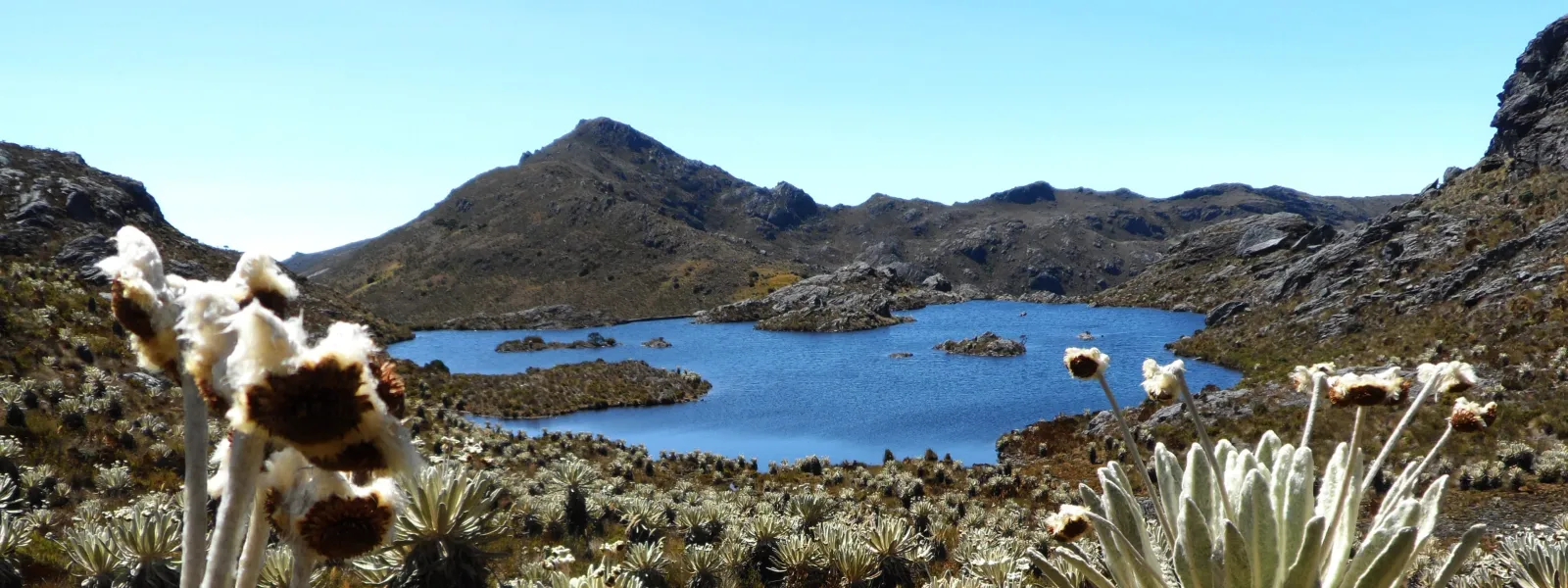
In the Andean region, high-mountain ecosystems known as páramos capture water from the fog and supply it to the lowlands. One such ecosystem is the Santurbán páramo, which provides fresh water to more than two million people in Colombia.
Santurbán, like the other páramos on the continent, also captures large amounts of carbon, making it a key ally in mitigating the climate crisis. It is also a refuge for hundreds of endangered species, including the iconic spectacled bear.
The land in and around the páramo contains gold and other minerals. This has put Santurbán in the spotlight of the multinational mining industry, which for decades has sought to establish large-scale projects in the ecosystem that threaten to degrade it.
The Committee for the Defense of Water and the Santurbán Páramo—a coalition of environmental advocates—has thwarted these ongoing attempts, with support from AIDA and other civil society organizations.
Background
The Santurbán páramo is located in the heart of the Eastern Cordillera of the Colombian Andes, in the departments of Santander and Norte de Santander, at an elevation ranging from 2,200 to 4,290 meters above sea level.
It covers an area of 129,743 hectares and is home to 57 lakes. It serves as a habitat for 457 plant species and 293 species of vertebrate fauna.
There are mineral deposits in Santurbán, primarily gold, but also silver and copper. This explains the region’s mining tradition, particularly in the part of the páramo located in Santander, in the province of Soto Norte. The communities in the area have built their culture and identity around gold mining, which is mainly artisanal and small-scale.
But since the 1990s, the gold deposits in the páramo have also attracted foreign mining conglomerates seeking to develop large-scale projects. This has raised concerns among the population that relies on the Santurbán water sources, who have mobilized in defense of water, their land, and life.
Although national and international regulations prohibit mining in páramos, the Colombian government has granted mining concessions to transnational corporations in Santurbán.
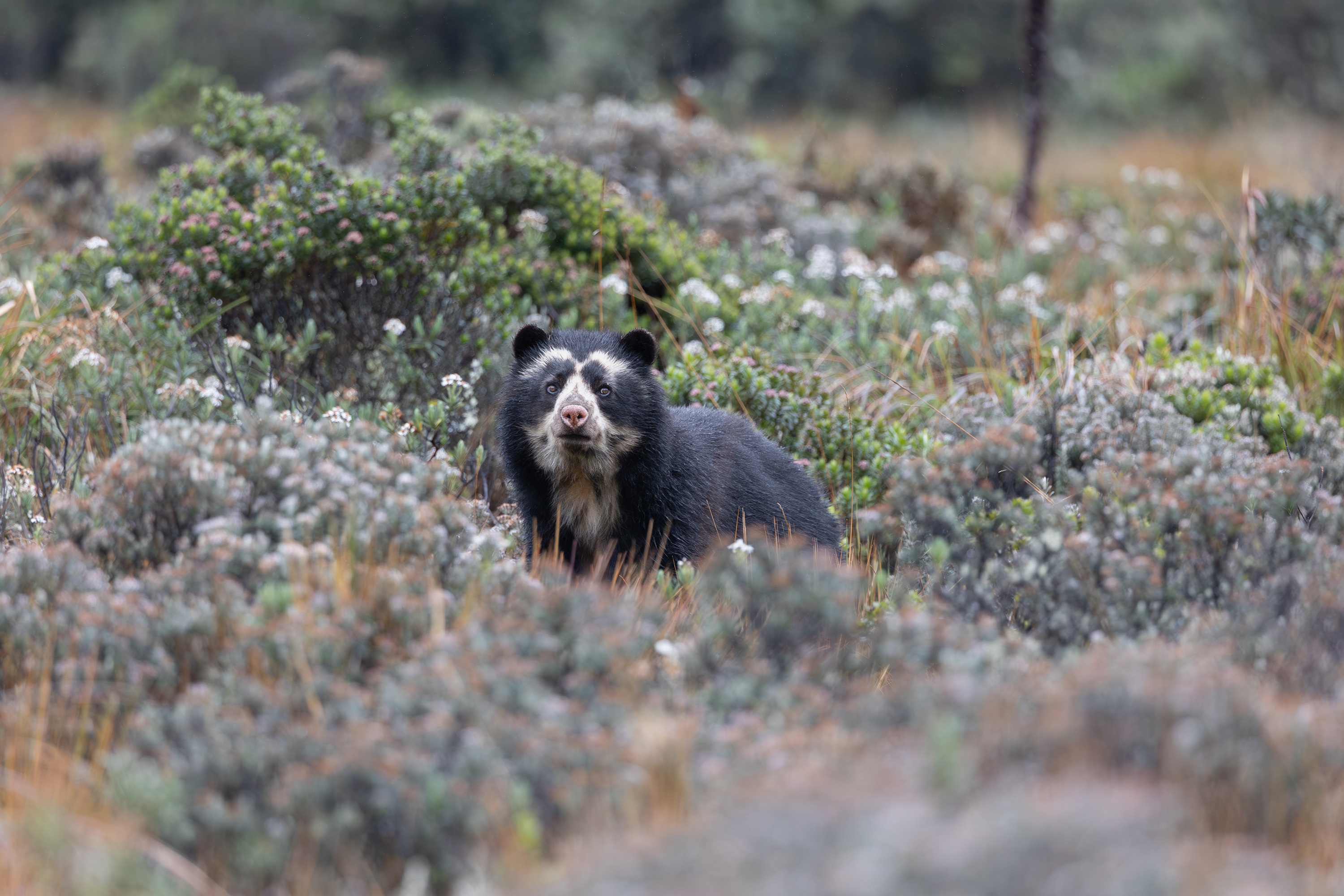
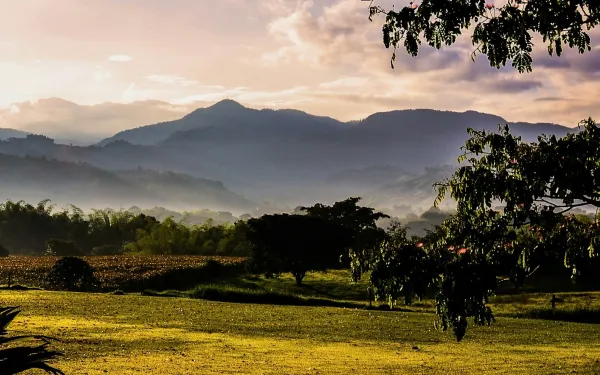
Photo: Keishpixl / Pixabay.
The long struggle to protect the páramo
One of the companies that sought to develop large-scale mining in Santurbán is Eco Oro Minerals Corp.—formerly Greystar Resources—a Canadian company that intended to establish the Angostura open-pit mine there to extract gold and silver. Between 1994 and 1995, the company acquired its mining titles and conducted exploration. And in 2010, it applied for a mining permit.
That was the year AIDA became involved in defending the ecosystem, supporting the Committee for the Defense of Water and the Santurbán Páramo. Our legal work helped convince the Colombian government to deny the mine an environmental permit in May 2011.
In January 2013, the government designated a portion of the páramo (11,700 hectares) as a Regional Natural Park. That year—together with the committee and partner organizations—we carried out a campaign and advocacy efforts to urge the government to recognize the entire Santurbán area as a páramo ecosystem through a delimitation based on scientific criteria. In December 2014, the Ministry of the Environment established a delimitation that protected 76% of the páramo (98,954 hectares).
Furthermore, as a result of a litigation supported by AIDA, in February 2016, Colombia’s highest court reaffirmed that mining in páramos is prohibited.
That same year, in December, the International Finance Corporation (IFC), the World Bank Group’s private sector arm, decided to divest from Eco Oro Minerals. This achievement was the result of a process that began in 2012, when the committee—advised and supported by AIDA and international partner organizations—filed a complaint before an independent accountability mechanism, which concluded that the IFC’s investment in the Angostura project failed to take into account the project’s social and environmental impacts, thereby contradicting the financial institution’s internal policies.
Also in 2016, Eco Oro Minerals filed an arbitration claim against the Colombian government with the International Centre for Settlement of Investment Disputes (ICSID), arguing that it had been adversely affected by government decisions aimed at protecting the country’s páramos, including the delimitation of Santurbán.
In 2017, the Constitutional Court invalidated the delimitation because the affected communities were not consulted. The high court ordered that a participatory delimitation be carried out.
And that year, a new threat to Santurbán emerged when the Canadian multinational Aris Mining applied for an environmental permit for Soto Norte, a gold mining project located near the páramo. Following citizen protests and technical objections, in October 2020, the National Environmental Licensing Authority shelved the project.
Photo: Aztlec.
Current situation
In March 2025, the Colombian government designated the western flank of the Santurbán massif as a temporary renewable natural resource reserve area, delimiting and protecting an area of 75,344.65 hectares. This resulted in a two-year suspension of the Soto Norte project. However, Aris Mining's contract to formalize Calimineros' small-scale mining activities through the purchase and processing of mineralized material remains in effect.
In addition, the Canadian mining company continues to move the project forward. In September 2025, it released its prefeasibility study, revising the mine’s original design.
Meanwhile, members of the Committee for the Defense of Water and the Santurbán Páramo face threats and stigmatization because of their work. In March 2025, UN Special Rapporteurs and the Working Group on Business and Human Rights denounced these incidents in communications sent to the governments of Colombia, Canada, and the United Arab Emirates, as well as to the companies Aris Mining and MDC Industry Holding Company LLC, the former co-owner of the Soto Norte project.
Regarding the arbitration claim filed by Eco Oro Minerals, in July 2024, ICSID ruled in favor of the Colombian government and rejected the Canadian company’s claim for USD 1.1 billion in compensation.
Concerning the delimitation of Santurbán, in July 2026, the Ministry of the Environment issued a resolution introducing the concept of "progressive delimitation." On that basis, the government proposes to progressively demarcate the páramo, covering 29,199 hectares across 19 municipalities—those where the participatory agreements required by the Constitutional Court in its 2017 ruling have already been finalized. It also proposes two measures on the creation and expansion of reserves to restrict mining in the ecosystem.
Learn more about the impacts of mining on the páramos of Latin America (in Spanish).
Partners:
Related projects
Celebrating the appointment of Astrid Puentes Riaño as UN Special Rapporteur
On April 5, during its 55th session, the United Nations Human Rights Council appointed Astrid Puentes Riaño as the new UN Special Rapporteur on the human right to a clean, healthy and sustainable environment. For 18 years, as co-executive director of AIDA, Puentes Riaño led efforts across Latin America to uphold the right to a healthy environment and protect affected communities from environmental harms. Her strategic vision and powerful command of public interest law and advocacy has left a lasting contribution on both AIDA and the larger movement for climate justice in the region. She will be the first woman and first person from the Global South, and the third Special Rapporteur, to assume this important mandate. Gladys Martínez de Lemos, executive director of AIDA, expressed: “Astrid’s career has long been focused on protecting the right to a healthy environment, as a leader of the movement in Latin America. Her new role as Special Rapporteur is a natural and well-deserved progression, and we know her continued leadership on the international stage will strengthen efforts towards climate and environmental justice around the world.” In May Puentes Riaño will replace David R. Boyd, who made tremendous strides as Rapporteur, including the UN recognition of a clean, healthy and sustainable environment as a universal human right. Boyd is a former member of AIDA’s Board of Directors. The Special Rapporteur’s mandate is an essential nexus of environmental and human rights defense, as it exists to: examine human rights obligations linked to the enjoyment of a safe, clean, healthy and sustainable environment; promote best practice in the use of human rights in policy making; identify challenges and obstacles to the global recognition and implementation of the right to a safe, clean, healthy and sustainable environment; and conducting country visits and responding to human rights violations.
Read more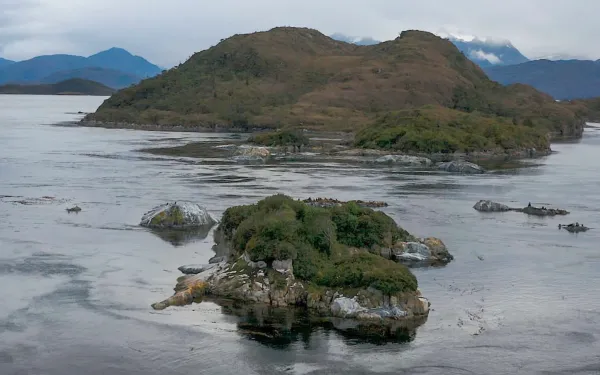
The Kawésqar people and the defense of their "maritorio" in Chile
By Liliana Ávila and Cristina Lux* A little over a month ago, the community Kawésqar Grupos Familiares Nómades del Mar sent us a very special invitation. The appointment was near the sea, near their territory, or more precisely, near their "maritorio", a place of islands, islets and archipelagos. There, the borders between sea and land are blurred and the trees grow sideways, adapted to the strong winds. The maritorio is a concept and also a way of inhabiting and understanding the world. It evokes the image of "territory", but seen from and in the sea. As a concept, it emerged in the context of what is known as nisology, or the study of islands. The place we visited is located in the fjords of Magallanes, the southernmost region of Chile, about two hours from Punta Arenas, the regional capital. The Kawésqar people tell us that less than a century ago, this maritorio was their home. There, their grandfathers and grandmothers sailed among the fjords, built their canoes, fished and dived. They went into the icy sea without special neoprene suits, protected with sea lion oil, and there they learned the secrets that its depths held. In the midst of fjords, winds and intense climates, these people developed their own systems of thought and life. But the lives of the Kawésqar have changed radically in recent decades. They tell us so. The vast territory that previous generations inhabited for centuries is now enclosed. The process of eradication has been accompanied by the commercialization of the land, the creation of extensive pastures and, more recently, the development and expansion of the salmon farming industry. Industrial salmon production has serious and lasting impacts on marine ecosystems. The communities of Kawésqar are well aware of this. Salmon is an exotic and carnivorous species for Chile, raised in huge farms: hectares of cages in the sea. The introduction of exotic species (which threaten native species), the excessive use of antibiotics, salmon escapes, the generation of waste, the treatment of large quantities of dead salmon, the excessive discharge of organic matter into the sea, and the generation of anaerobic environments (total or partial loss of oxygen necessary for life to thrive) are just some of the impacts of salmon farming in Chile. These impacts not only accumulate in the waters and on the seabed, but also penetrate the lives of the Kawésqar communities. The maritorio that their grandfathers and grandmothers sailed is now a desecrated space. The processes of reconstructing their identity, the appropriation of sacred places and the rites that are part of their collective memory have been affected by the development of an industry that sees the sea only as a space of economic exploitation and not as the sacred place where, in the not so distant past, men and women developed their worldviews and ways of life. Despite everything, the Kawésqar are a living people who meet, who gather around the sea and discuss strategies to rebuild their cultural fabric. They also come together to honor their grandfathers and grandmothers, to activate the genetic memory that connects them to the sea, to dive into its waters and fight for a salmon-free sea and for a country that recognizes the cultural diversity that runs through its history. We also connect with the legacy of the Kawésqar. Swimming with people from the community in these seas that have been navigated for thousands of years allowed us to look out a window that blurs the present and shows us alternatives. A present that allows life and coexistence with the sea, its ecosystems and its balance. Their struggle— supported by AIDA, the NGO FIMA, Greenpeace and many other organizations— has borne fruit. It has highlighted the impact of salmon farming in Chile and the need to end our dependence on it. But the challenges are still enormous. Salmon farming continues to ravage the seas inside and outside protected areas, in the most remote areas of Patagonia, occupying spaces that were once shared by all the peoples and creatures that inhabited the territory. Meanwhile, the people of Kawésqar continue to travel through their territory —rewarded and lived in and from the sea— identifying and recomposing their history, swimming in the waters that surround them. They do not lose hope of returning to their sea; they to continue to exist in it. *Liliana Avila is coordinator of AIDA's Human Rights and Environment Program; Cristina Lux is an attorney with the Climate Program.
Read more
Court decision stops new lithium mining projects in Argentine salt flat, sets regional precedent
On March 13, the Supreme Court of Argentina’s Catamarca province ordered a halt on authorizing new lithium mining projects around the Salar del Hombre Muerto, in the department of Antofagasta de la Sierra. The high provincial court established that all projects must comply with the free, prior, and informed consultation of affected communities, thus granting the injunction filed by Román Guitián, Cacique of the Atacameños del Altiplano Indigenous Community.It is one of the most important rulings of recent times regarding care for nature and the protection of the rights of traditional communities.The court ordered the providence’s Ministry of Mining and the Ministry of Water, Energy and Environment to "refrain from granting new authorizations or environmental impact statements with respect to any work or activity" in the area until an environmental impact report with two fundamental characteristics is completed. The first is that it must be "cumulative and integral," covering the entire salt flat and especially the Los Patos River, which is in the same salt flat. The second is that it must consider the total impact of the companies that have applied for water use and extraction permits, and their potential to transform the environment in the same geographical area.Lithium mining in Antofagasta de la Sierra began in 1997 by the multinational company FMC, currently operating as Livent. The local communities denounced that the river and the Trapiche Valley were drying up because of the mining activity.The Alliance for Andean Wetlands (Alianza por los Humedales Andinos) celebrates this achievement of the Atacameños del Altiplano Indigenous Community and the Asamblea PUCARA (Pueblos Catamarqueños en Resistencia y Autodeterminación).The same model of lithium mega-mining that the Catamarca Supreme Court's ruling points to is being reproduced in the Puna region of Chile and Bolivia. In this sense, the sentence is an important precedent for the protection of the environment and affected communities, which should be replicated in all the regions of the continent affected by this extractive model.Governments must take measures to provide the necessary security guarantees for the territorial defense of local communities demanding the fulfillment of their human and environmental rights, both in Argentina and in other countries. Quotes from Alliance membersClaudia Velarde, co-coordinator of the Ecosystems Program of the Interamerican Association for Environmental Defense (AIDA)"What happened in Catamarca is a historic milestone for the protection of water, territory and life in Latin America. The Court's decision confirms that the concept of the cumulative impact of an extractive activity is fully valid and a transcendental aspect of environmental management. It also clarifies that any damage to the environment that may result in a violation of the right to life or personal integrity must be considered significant damage. It is a relevant precedent in every sense and a strong message: national and international environmental regulations must be respected, environmental impact assessments must be strategic and cumulative, the right to environmental participation must be guaranteed, and the energy transition must be just." Ramón Balcázar, executive director of Fundación Tantí and co-coordinator of the Plurinational Observatory of Andean Salt Flats (OPSAL)"This ruling is the result of years of work and shows the importance of articulating knowledge and legal strategies for the defense of territories from a wetland perspective, setting a precedent that should be extended to the entire region for a cumulative assessment of projects, not only lithium, but also metallic mining and the impacts of climate change. Unfortunately, our colleague Román Guitián was the target of death threats after learning of the ruling, in a country like Chile that has ratified the Escazú Agreement. In this sense, we must categorically reject any form of violence against the defenders of the Andean salt flats, as well as the political advantage that institutions linked to the greenwashing of mining have tried to take from such a complex situation." Cristian Fernández, coordinator of the Legal Affairs area of Fundación Ambiente y Recursos Naturales (FARN)"The recent ruling of the Court of Justice of Catamarca, ordering the preparation of a "cumulative and integral" environmental impact study for all lithium projects being developed in the Los Patos River basin, and requiring the local government to refrain from issuing any new permits or authorizations for the activity, represents a milestone in the environmental jurisprudence of our country. It consolidates the path started almost 15 years ago by the Supreme Court of Justice of the Nation when, in the "Salas Dino" case, it demanded a cumulative impact study against the deforestation of native forests in Salta. In doing so, the Catamarca Court set a precedent that could be applied to the ecosystem damage suffered by the provinces of Salta and Jujuy due to the cumulative impact of numerous lithium projects in Salinas Grandes and Guayatayoc Lagoon."
Read more