
Project
Alberto Peña Kay
Protecting the Santurban páramo from mining's damage
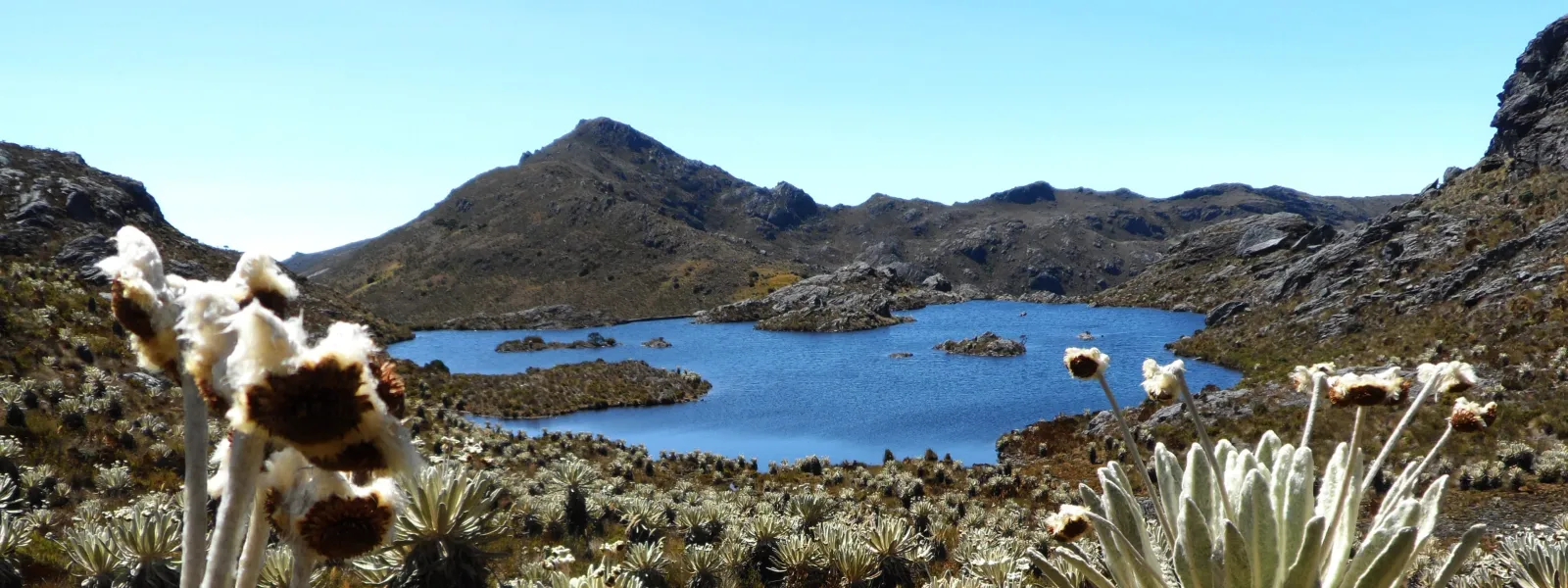
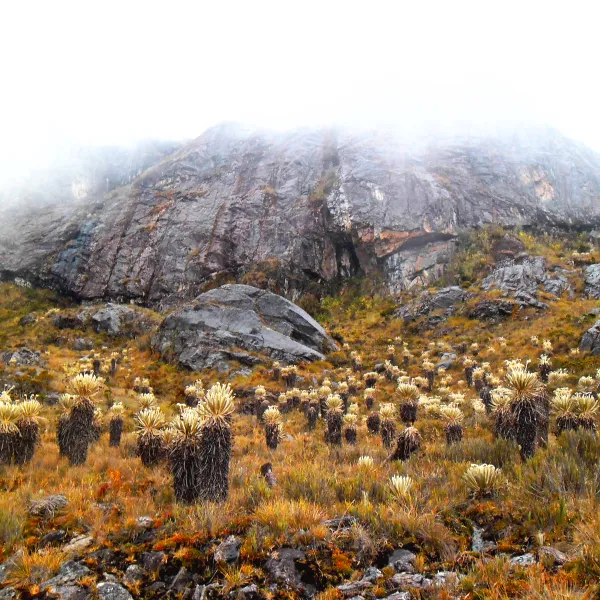
In the Andean region, high-mountain ecosystems known as páramos capture water from the fog and supply it to the lowlands. One such ecosystem is the Santurbán páramo, which provides fresh water to more than two million people in Colombia.
Santurbán, like the other páramos on the continent, also captures large amounts of carbon, making it a key ally in mitigating the climate crisis. It is also a refuge for hundreds of endangered species, including the iconic spectacled bear.
The land in and around the páramo contains gold and other minerals. This has put Santurbán in the spotlight of the multinational mining industry, which for decades has sought to establish large-scale projects in the ecosystem that threaten to degrade it.
The Committee for the Defense of Water and the Santurbán Páramo—a coalition of environmental advocates—has thwarted these ongoing attempts, with support from AIDA and other civil society organizations.
Background
The Santurbán páramo is located in the heart of the Eastern Cordillera of the Colombian Andes, in the departments of Santander and Norte de Santander, at an elevation ranging from 2,200 to 4,290 meters above sea level.
It covers an area of 129,743 hectares and is home to 57 lakes. It serves as a habitat for 457 plant species and 293 species of vertebrate fauna.
There are mineral deposits in Santurbán, primarily gold, but also silver and copper. This explains the region’s mining tradition, particularly in the part of the páramo located in Santander, in the province of Soto Norte. The communities in the area have built their culture and identity around gold mining, which is mainly artisanal and small-scale.
But since the 1990s, the gold deposits in the páramo have also attracted foreign mining conglomerates seeking to develop large-scale projects. This has raised concerns among the population that relies on the Santurbán water sources, who have mobilized in defense of water, their land, and life.
Although national and international regulations prohibit mining in páramos, the Colombian government has granted mining concessions to transnational corporations in Santurbán.

Photo: Keishpixl / Pixabay.
The long struggle to protect the páramo
One of the companies that sought to develop large-scale mining in Santurbán is Eco Oro Minerals Corp.—formerly Greystar Resources—a Canadian company that intended to establish the Angostura open-pit mine there to extract gold and silver. Between 1994 and 1995, the company acquired its mining titles and conducted exploration. And in 2010, it applied for a mining permit.
That was the year AIDA became involved in defending the ecosystem, supporting the Committee for the Defense of Water and the Santurbán Páramo. Our legal work helped convince the Colombian government to deny the mine an environmental permit in May 2011.
In January 2013, the government designated a portion of the páramo (11,700 hectares) as a Regional Natural Park. That year—together with the committee and partner organizations—we carried out a campaign and advocacy efforts to urge the government to recognize the entire Santurbán area as a páramo ecosystem through a delimitation based on scientific criteria. In December 2014, the Ministry of the Environment established a delimitation that protected 76% of the páramo (98,954 hectares).
Furthermore, as a result of a litigation supported by AIDA, in February 2016, Colombia’s highest court reaffirmed that mining in páramos is prohibited.
That same year, in December, the International Finance Corporation (IFC), the World Bank Group’s private sector arm, decided to divest from Eco Oro Minerals. This achievement was the result of a process that began in 2012, when the committee—advised and supported by AIDA and international partner organizations—filed a complaint before an independent accountability mechanism, which concluded that the IFC’s investment in the Angostura project failed to take into account the project’s social and environmental impacts, thereby contradicting the financial institution’s internal policies.
Also in 2016, Eco Oro Minerals filed an arbitration claim against the Colombian government with the International Centre for Settlement of Investment Disputes (ICSID), arguing that it had been adversely affected by government decisions aimed at protecting the country’s páramos, including the delimitation of Santurbán.
In 2017, the Constitutional Court invalidated the delimitation because the affected communities were not consulted. The high court ordered that a participatory delimitation be carried out.
And that year, a new threat to Santurbán emerged when the Canadian multinational Aris Mining applied for an environmental permit for Soto Norte, a gold mining project located near the páramo. Following citizen protests and technical objections, in October 2020, the National Environmental Licensing Authority shelved the project.
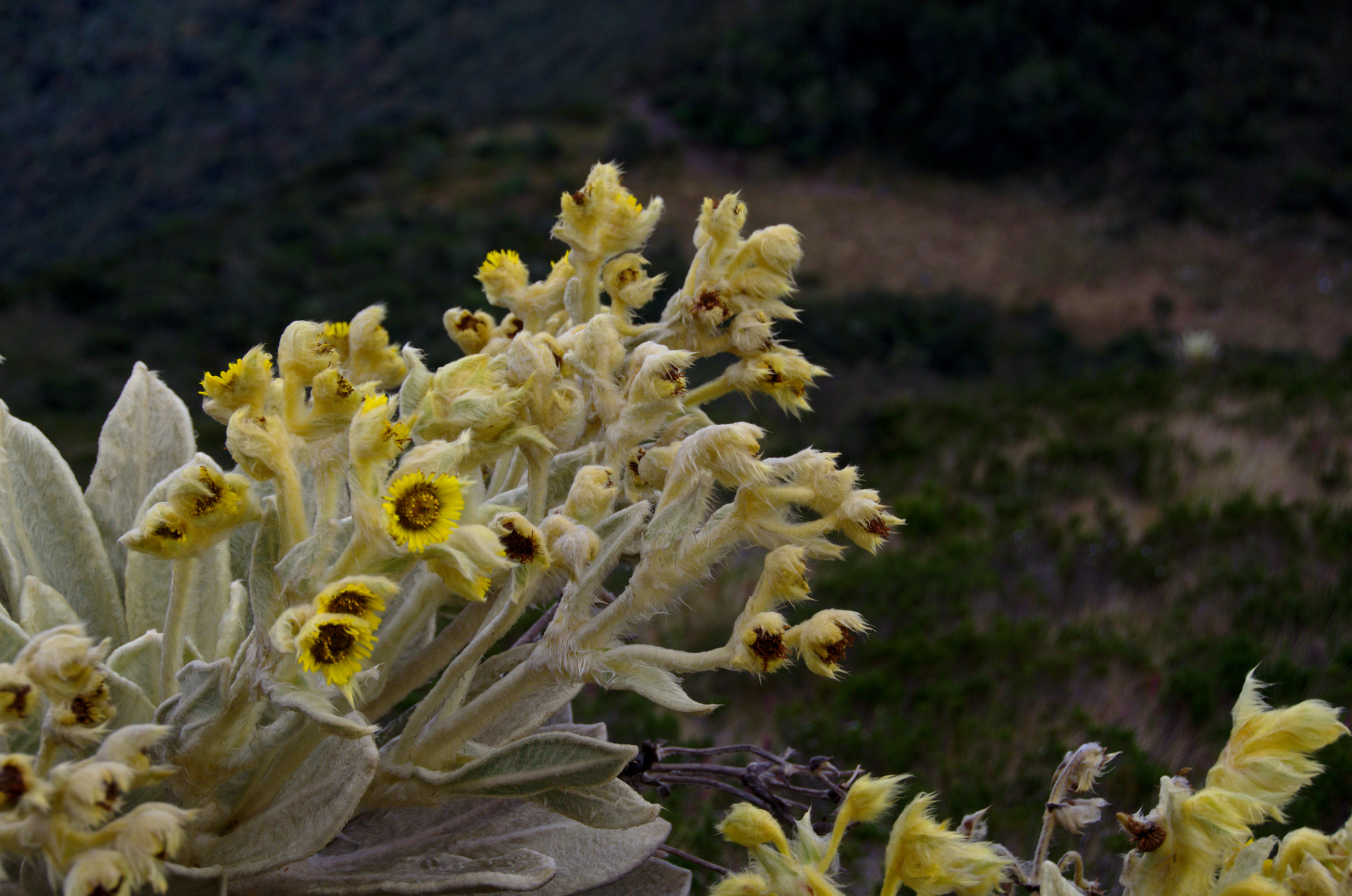
Photo: Aztlec.
Current situation
In March 2025, the Colombian government designated the western flank of the Santurbán massif as a temporary renewable natural resource reserve area, delimiting and protecting an area of 75,344.65 hectares. This resulted in a two-year suspension of the Soto Norte project. However, Aris Mining's contract to formalize Calimineros' small-scale mining activities through the purchase and processing of mineralized material remains in effect.
In addition, the Canadian mining company continues to move the project forward. In September 2025, it released its prefeasibility study, revising the mine’s original design.
Meanwhile, members of the Committee for the Defense of Water and the Santurbán Páramo face threats and stigmatization because of their work. In March 2025, UN Special Rapporteurs and the Working Group on Business and Human Rights denounced these incidents in communications sent to the governments of Colombia, Canada, and the United Arab Emirates, as well as to the companies Aris Mining and MDC Industry Holding Company LLC, the former co-owner of the Soto Norte project.
Regarding the arbitration claim filed by Eco Oro Minerals, in July 2024, ICSID ruled in favor of the Colombian government and rejected the Canadian company’s claim for USD 1.1 billion in compensation.
Concerning the delimitation of Santurbán, in July 2026, the Ministry of the Environment issued a resolution introducing the concept of "progressive delimitation." On that basis, the government proposes to progressively demarcate the páramo, covering 29,199 hectares across 19 municipalities—those where the participatory agreements required by the Constitutional Court in its 2017 ruling have already been finalized. It also proposes two measures on the creation and expansion of reserves to restrict mining in the ecosystem.
Learn more about the impacts of mining on the páramos of Latin America (in Spanish).
Partners:
Related projects

Court decision stops new lithium mining projects in Argentine salt flat, sets regional precedent
On March 13, the Supreme Court of Argentina’s Catamarca province ordered a halt on authorizing new lithium mining projects around the Salar del Hombre Muerto, in the department of Antofagasta de la Sierra. The high provincial court established that all projects must comply with the free, prior, and informed consultation of affected communities, thus granting the injunction filed by Román Guitián, Cacique of the Atacameños del Altiplano Indigenous Community.It is one of the most important rulings of recent times regarding care for nature and the protection of the rights of traditional communities.The court ordered the providence’s Ministry of Mining and the Ministry of Water, Energy and Environment to "refrain from granting new authorizations or environmental impact statements with respect to any work or activity" in the area until an environmental impact report with two fundamental characteristics is completed. The first is that it must be "cumulative and integral," covering the entire salt flat and especially the Los Patos River, which is in the same salt flat. The second is that it must consider the total impact of the companies that have applied for water use and extraction permits, and their potential to transform the environment in the same geographical area.Lithium mining in Antofagasta de la Sierra began in 1997 by the multinational company FMC, currently operating as Livent. The local communities denounced that the river and the Trapiche Valley were drying up because of the mining activity.The Alliance for Andean Wetlands (Alianza por los Humedales Andinos) celebrates this achievement of the Atacameños del Altiplano Indigenous Community and the Asamblea PUCARA (Pueblos Catamarqueños en Resistencia y Autodeterminación).The same model of lithium mega-mining that the Catamarca Supreme Court's ruling points to is being reproduced in the Puna region of Chile and Bolivia. In this sense, the sentence is an important precedent for the protection of the environment and affected communities, which should be replicated in all the regions of the continent affected by this extractive model.Governments must take measures to provide the necessary security guarantees for the territorial defense of local communities demanding the fulfillment of their human and environmental rights, both in Argentina and in other countries. Quotes from Alliance membersClaudia Velarde, co-coordinator of the Ecosystems Program of the Interamerican Association for Environmental Defense (AIDA)"What happened in Catamarca is a historic milestone for the protection of water, territory and life in Latin America. The Court's decision confirms that the concept of the cumulative impact of an extractive activity is fully valid and a transcendental aspect of environmental management. It also clarifies that any damage to the environment that may result in a violation of the right to life or personal integrity must be considered significant damage. It is a relevant precedent in every sense and a strong message: national and international environmental regulations must be respected, environmental impact assessments must be strategic and cumulative, the right to environmental participation must be guaranteed, and the energy transition must be just." Ramón Balcázar, executive director of Fundación Tantí and co-coordinator of the Plurinational Observatory of Andean Salt Flats (OPSAL)"This ruling is the result of years of work and shows the importance of articulating knowledge and legal strategies for the defense of territories from a wetland perspective, setting a precedent that should be extended to the entire region for a cumulative assessment of projects, not only lithium, but also metallic mining and the impacts of climate change. Unfortunately, our colleague Román Guitián was the target of death threats after learning of the ruling, in a country like Chile that has ratified the Escazú Agreement. In this sense, we must categorically reject any form of violence against the defenders of the Andean salt flats, as well as the political advantage that institutions linked to the greenwashing of mining have tried to take from such a complex situation." Cristian Fernández, coordinator of the Legal Affairs area of Fundación Ambiente y Recursos Naturales (FARN)"The recent ruling of the Court of Justice of Catamarca, ordering the preparation of a "cumulative and integral" environmental impact study for all lithium projects being developed in the Los Patos River basin, and requiring the local government to refrain from issuing any new permits or authorizations for the activity, represents a milestone in the environmental jurisprudence of our country. It consolidates the path started almost 15 years ago by the Supreme Court of Justice of the Nation when, in the "Salas Dino" case, it demanded a cumulative impact study against the deforestation of native forests in Salta. In doing so, the Catamarca Court set a precedent that could be applied to the ecosystem damage suffered by the provinces of Salta and Jujuy due to the cumulative impact of numerous lithium projects in Salinas Grandes and Guayatayoc Lagoon."
Read more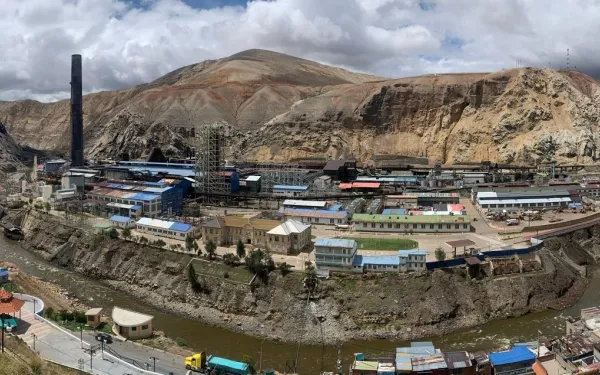
Inter-American Court ruling on La Oroya case sets key precedent for the protection of a healthy environment
The Court found Peru responsible for violating the rights of residents of La Oroya, who have been exposed to unsafe levels of toxic contamination for generations. San José, Costa Rica. The ruling of the Inter-American Court of Human Rights in the case "Community of La Oroya vs. Peru" sets an important precedent for the protection of the right to a healthy environment across the Americas and for adequate state oversight of corporate activities. The first-of-its-kind decision holds Peru accountable for its failure to protect the inhabitants of the Andean city of La Oroya who were exposed to toxic pollution from a smelter complex that operated without adequate pollution controls for a century.The Inter-American Court heard the case in a public hearing against Peru. In the absence of effective responses at the national level and on behalf of the victims, an international coalition of organizations filed a complaint against Peru before the Inter-American Commission on Human Rights in 2006. In October 2021, the Commission established the Peruvian government's responsibility in the case and referred it to the Inter-American Court. In October 2022, more than 16 years after the filing of the complaint, the victims presented the case before the Court in a public hearing, represented by the Interamerican Association for Environmental Defense (AIDA) and the Pro Human Rights Association (APRODEH), with the support of Earthjustice."This ruling is a very important step forward and a key precedent for environmental justice in Latin America, as it is the first case in which the Court recognizes a state’s responsibility for violating the right to a healthy environment and the impact this has on the guarantee of several other rights," said Liliana Avila, coordinator of AIDA's Human Rights and Environment Program. "The Court also referred to the collective and individual dimensions of this right, acknowledging the differential impact of its violation on children, women and the elderly, and the important role of environmental defenders."In its judgment, published on March 22, 2024, the international court established the Peru’s responsibility for the violation of the rights to a healthy environment, health, personal integrity, life with dignity, access to information, political participation, judicial guarantees and judicial protection of the 80 people involved in the case; for the violation of the rights of the children of 57 victims; and for the violation of the right to life of two victims. The Court also concluded that the State was responsible for violating the obligation of progressive development by adopting regressive measures in environmental protection."The decision is a fundamental precedent in international law that establishes the parameters of the State's obligation to regulate, control and remediate the effects of environmental pollution, as well as the obligations derived from the right to a healthy environment as an autonomous right and its interdependence and indivisibility with other fundamental rights of human existence, such as health, life and personal integrity," said Christian Huaylinos, Legal Coordinator of APRODEH. "It is also a great satisfaction for the victim’s two decades long struggle.”For more than 20 years, the residents of La Oroya have been seeking justice and redress for the widespread contamination caused by the La Oroya smelter complex, which was operated by Doe Run Peru from 1997 to 2009. The town has been recognized as one of the most polluted places on the planet."Twenty years ago, when this fight started, I was carrying my banner saying that the health of the children is worth more than gold," recalls Don Pablo, a resident of La Oroya. "We never gave up, and now I am very happy with the Court's decision."In the judgment, the Court ordered the State of Peru to adopt comprehensive reparation measures for the damage caused to the population of La Oroya, including identifying, prosecuting and, where appropriate, punishing those responsible for the harassment of the victims; determining the state of contamination of the air, water and soil and preparing an environmental remediation plan; providing free medical care to the victims and guaranteeing specialized care to residents with symptoms and illnesses related to contamination from mining and metallurgical activities; ensuring the effectiveness of the city's warning system and developing a system for monitoring the quality of air, water, and soil; ensuring that the operations of the La Oroya Metallurgical Complex comply with international environmental standards, preventing and mitigating damage to the environment and human health; providing monetary compensation to victims for material and non-material damages."What we expect now is that the ruling will be implemented, that for the first time the State will fulfill its obligations and guarantee our rights as environmental defenders," said Yolanda Zurita, a resident of La Oroya and a petitioner in the case. "Compliance with this ruling is the least we expect from a state that is committed to guaranteeing the rights of its citizens."Since 1999, the government of Peru has known that almost all the children living near the complex suffer from lead poisoning yet failed to offer proper medical care and remediation. For decades, the population of La Oroya was exposed to extreme levels of lead and other harmful contaminants, including arsenic, cadmium, and sulfur dioxide. Nearly all the children in the case have had lead and other heavy metals in their blood at concentrations many times higher than the guidelines established by the World Health Organization. And many residents suffer from chronic respiratory illness, in addition to stress, anxiety, skin problems, stomach problems, chronic headaches, and heart problems, among others."This ruling issues a warning to governments across the Americas that they cannot sit idly by while multinational corporations poison local communities. Corporations will now be on notice that exposing families to unhealthy levels of industrial pollution is a violation of international law and governments must hold polluters accountable,” said Jacob Kopas, Earthjustice senior attorney. ResourcesCourt's press release on the judgment, available here (in Spanish).Official summary of the judgment, available here (in Spanish).Full text of the judgment, available here (in Spanish).Background information on the case, available here.Folder with photographs, available here.Press contactVíctor Quintanilla-Sangüeza (Mexico), AIDA, [email protected], +521 70522107
Read more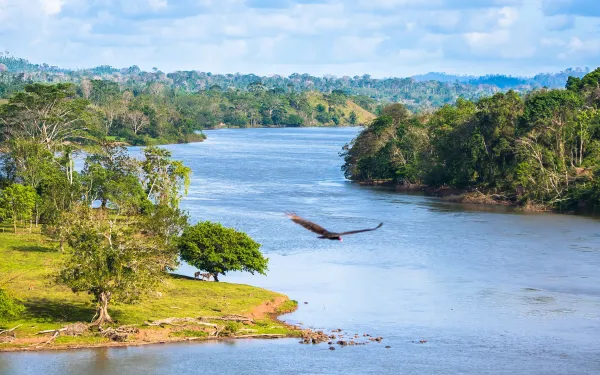
Communities in Nicaragua win Green Climate Fund withdrawal from project that violated their rights
In an unprecedented decision resolving a complaint filed in 2021, the Green Climate Fund terminated a forestry project because the developers failed to comply with the Fund's policies and procedures on socio-environmental safeguards. This non-compliance violated the human rights of indigenous and Afro-descendant communities. The Green Climate Fund, the world's leading multilateral climate finance institution, decided to terminate funding for a forest conservation project in Nicaragua because the developers failed to comply with the institution's policies and procedures on socio-environmental safeguards. The non-compliance violated the rights of indigenous and Afro-descendant communities, as the project threatened to exacerbate the situation of violence from which they were already suffering. The Fund had not made any disbursements for the project and project implementation had not yet begun.The decision, the first of its kind in the Fund's history, is in response to a complaint filed in June 2021 by representatives of the affected communities, with the support of local and international organizations, with the Fund's Independent Redress Mechanism. The Independent Redress Mechanism hears complaints from people who are or may be affected by projects or programs financed by the Fund."This decision is a recognition of the tireless efforts of the communities behind the case, who were able to demonstrate the difficult situation they face, as well as a reminder of the importance of involving local communities in all stages of a project, from its conception," said Florencia Ortúzar, Senior Attorney at AIDA, one of the organizations that accompanied and provided legal support to the complaint process.In the complaint, the communities argued that implementing the project— called Bio-CLIMA: Integrated Climate Action to Reduce Deforestation and Strengthen Resilience in the BOSAWAS and Río San Juan Biospheres— would have serious impacts because:There was no adequate disclosure of information, no indigenous consultation, and no free, prior, and informed consent.The project would cause environmental degradation and increase violence against indigenous communities due to land colonization.The conditions imposed by the Fund's Board of Directors for project approval (including independent monitoring of project implementation and ensuring the legitimate participation of indigenous peoples) were not met.There was a lack of confidence in the Central American Bank for Economic Integration, the entity accredited to channel the funds, as to its compliance with the Fund's policies.There was a lack of confidence in the ability of the Government of Nicaragua, as the implementing agency, to fulfill its obligations in the execution of the project. The goal of the project, for which the Fund committed $64 million USD in 2020, was to restore degraded forest landscapes in Nicaragua's most biodiverse region (home to 80 percent of the country's forests and most of its indigenous peoples) and to channel investments toward sustainable land and forest management.However, the project was designed without adequate consultation, with a complete lack of transparency on the part of the sponsoring bank and ignoring the difficult context of violence and lack of human rights protection still suffered by indigenous communities in Nicaragua, particularly in the project area.In recent decades, the harsh local situation has only worsened because of organized crime, drug trafficking, the expansion of agriculture and cattle ranching, and the promotion of extractivist policies, as well as the lack of state protection.The investigation launched by the Independent Reparations Mechanism, which included field work and face-to-face and virtual interviews with all stakeholders, confirmed some of the allegations made in the complaint, including the lack of adequate consultation processes and the lack of free, prior, and informed consent of the affected communities. This is stated in the investigation’s final report.In July 2023, the Fund's Board of Directors, which was called upon to decide on the future of the project based on the Investigation Report, delegated the task to the Fund's Secretariat. As a result, neither the IRM nor the claimants had any further say in the matter.Finally, on March 7 of this year, the Secretariat announced its decision: to terminate the project's financing agreement, acknowledging that the developers had failed to comply with the Fund's policies, as alleged by the communities in the complaint."The decision is a valuable lesson for the Green Climate Fund, whose policies and safeguards exist to prevent these unfortunate situations and must be applied rigorously and consistently from the conception of projects seeking funding," said Ortúzar. Press contactVíctor Quintanilla (Mexico), AIDA, [email protected], +52 5570522107
Read more