
Project
Alberto Peña Kay
Protecting the Santurban páramo from mining's damage
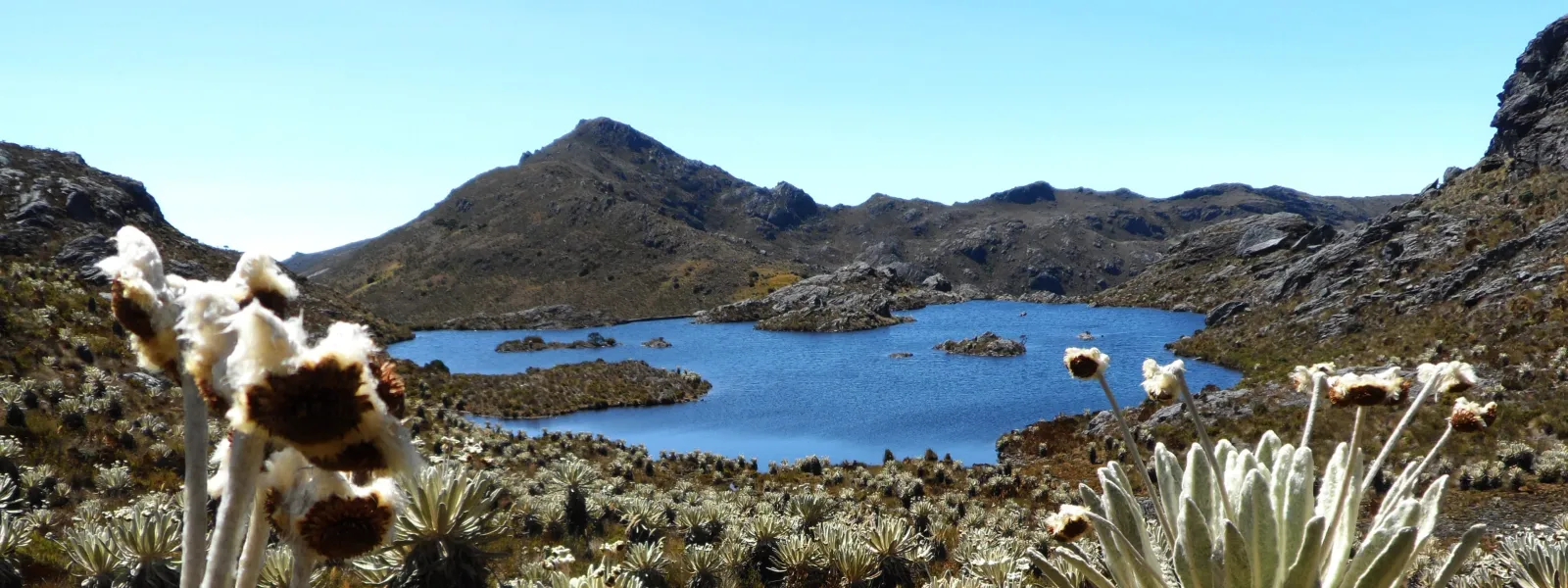
In the Andean region, high-mountain ecosystems known as páramos capture water from the fog and supply it to the lowlands. One such ecosystem is the Santurbán páramo, which provides fresh water to more than two million people in Colombia.
Santurbán, like the other páramos on the continent, also captures large amounts of carbon, making it a key ally in mitigating the climate crisis. It is also a refuge for hundreds of endangered species, including the iconic spectacled bear.
The land in and around the páramo contains gold and other minerals. This has put Santurbán in the spotlight of the multinational mining industry, which for decades has sought to establish large-scale projects in the ecosystem that threaten to degrade it.
The Committee for the Defense of Water and the Santurbán Páramo—a coalition of environmental advocates—has thwarted these ongoing attempts, with support from AIDA and other civil society organizations.
Background
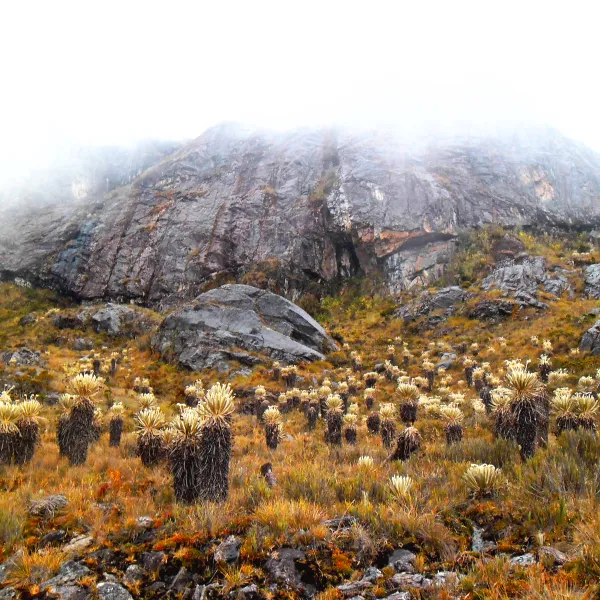
The Santurbán páramo is located in the heart of the Eastern Cordillera of the Colombian Andes, in the departments of Santander and Norte de Santander, at an elevation ranging from 2,200 to 4,290 meters above sea level.
It covers an area of 129,743 hectares and is home to 57 lakes. It serves as a habitat for 457 plant species and 293 species of vertebrate fauna.
There are mineral deposits in Santurbán, primarily gold, but also silver and copper. This explains the region’s mining tradition, particularly in the part of the páramo located in Santander, in the province of Soto Norte. The communities in the area have built their culture and identity around gold mining, which is mainly artisanal and small-scale.
But since the 1990s, the gold deposits in the páramo have also attracted foreign mining conglomerates seeking to develop large-scale projects. This has raised concerns among the population that relies on the Santurbán water sources, who have mobilized in defense of water, their land, and life.
Although national and international regulations prohibit mining in páramos, the Colombian government has granted mining concessions to transnational corporations in Santurbán.

Photo: Keishpixl / Pixabay.
The long struggle to protect the páramo
One of the companies that sought to develop large-scale mining in Santurbán is Eco Oro Minerals Corp.—formerly Greystar Resources—a Canadian company that intended to establish the Angostura open-pit mine there to extract gold and silver. Between 1994 and 1995, the company acquired its mining titles and conducted exploration. And in 2010, it applied for a mining permit.
That was the year AIDA became involved in defending the ecosystem, supporting the Committee for the Defense of Water and the Santurbán Páramo. Our legal work helped convince the Colombian government to deny the mine an environmental permit in May 2011.
In January 2013, the government designated a portion of the páramo (11,700 hectares) as a Regional Natural Park. That year—together with the committee and partner organizations—we carried out a campaign and advocacy efforts to urge the government to recognize the entire Santurbán area as a páramo ecosystem through a delimitation based on scientific criteria. In December 2014, the Ministry of the Environment established a delimitation that protected 76% of the páramo (98,954 hectares).
Furthermore, as a result of a litigation supported by AIDA, in February 2016, Colombia’s highest court reaffirmed that mining in páramos is prohibited.
That same year, in December, the International Finance Corporation (IFC), the World Bank Group’s private sector arm, decided to divest from Eco Oro Minerals. This achievement was the result of a process that began in 2012, when the committee—advised and supported by AIDA and international partner organizations—filed a complaint before an independent accountability mechanism, which concluded that the IFC’s investment in the Angostura project failed to take into account the project’s social and environmental impacts, thereby contradicting the financial institution’s internal policies.
Also in 2016, Eco Oro Minerals filed an arbitration claim against the Colombian government with the International Centre for Settlement of Investment Disputes (ICSID), arguing that it had been adversely affected by government decisions aimed at protecting the country’s páramos, including the delimitation of Santurbán.
In 2017, the Constitutional Court invalidated the delimitation because the affected communities were not consulted. The high court ordered that a participatory delimitation be carried out.
And that year, a new threat to Santurbán emerged when the Canadian multinational Aris Mining applied for an environmental permit for Soto Norte, a gold mining project located near the páramo. Following citizen protests and technical objections, in October 2020, the National Environmental Licensing Authority shelved the project.
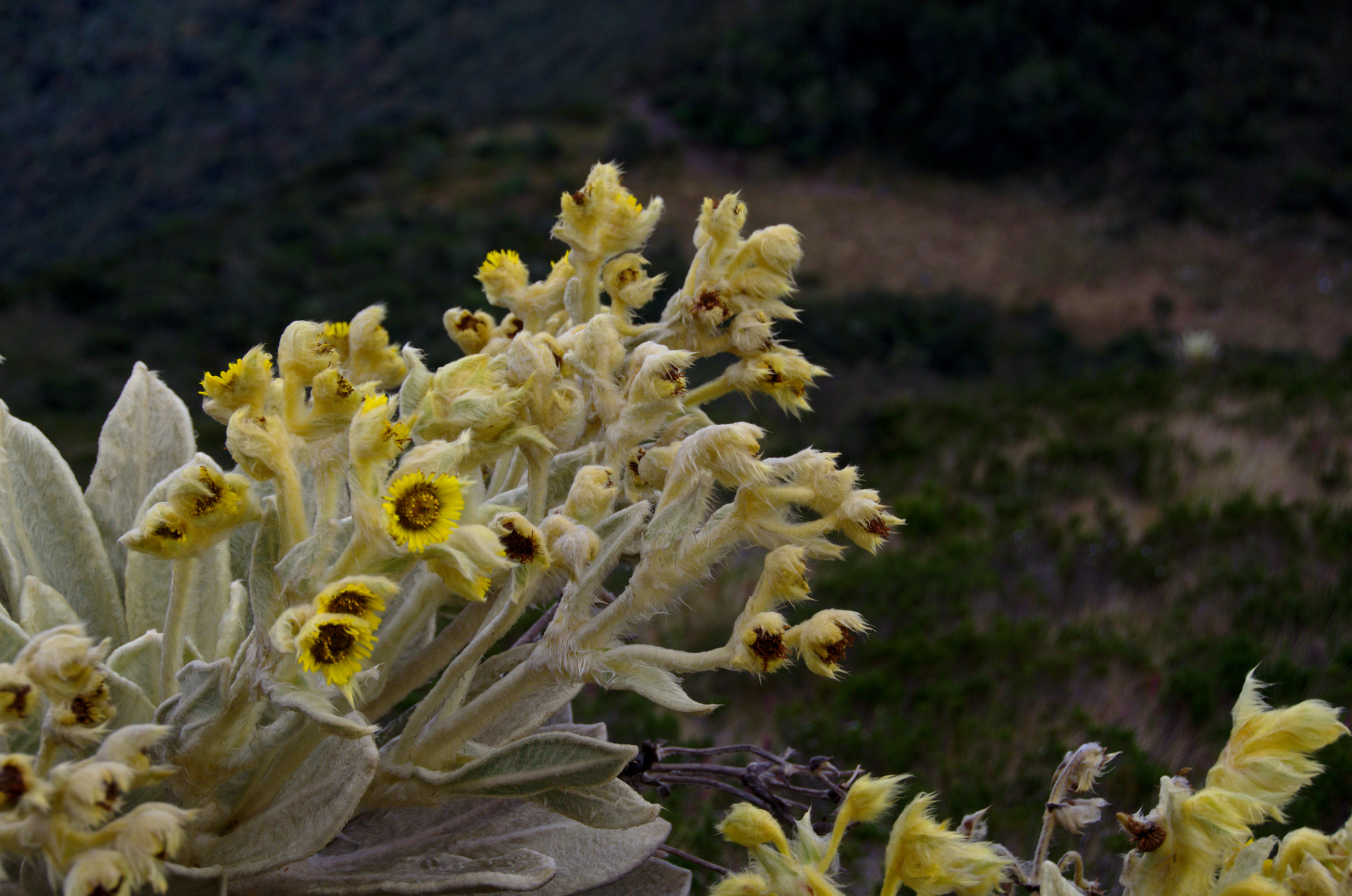
Photo: Aztlec.
Current situation
In March 2025, the Colombian government designated the western flank of the Santurbán massif as a temporary renewable natural resource reserve area, delimiting and protecting an area of 75,344.65 hectares. This resulted in a two-year suspension of the Soto Norte project. However, Aris Mining's contract to formalize Calimineros' small-scale mining activities through the purchase and processing of mineralized material remains in effect.
In addition, the Canadian mining company continues to move the project forward. In September 2025, it released its prefeasibility study, revising the mine’s original design.
Meanwhile, members of the Committee for the Defense of Water and the Santurbán Páramo face threats and stigmatization because of their work. In March 2025, UN Special Rapporteurs and the Working Group on Business and Human Rights denounced these incidents in communications sent to the governments of Colombia, Canada, and the United Arab Emirates, as well as to the companies Aris Mining and MDC Industry Holding Company LLC, the former co-owner of the Soto Norte project.
Regarding the arbitration claim filed by Eco Oro Minerals, in July 2024, ICSID ruled in favor of the Colombian government and rejected the Canadian company’s claim for USD 1.1 billion in compensation.
Concerning the delimitation of Santurbán, in July 2026, the Ministry of the Environment issued a resolution introducing the concept of "progressive delimitation." On that basis, the government proposes to progressively demarcate the páramo, covering 29,199 hectares across 19 municipalities—those where the participatory agreements required by the Constitutional Court in its 2017 ruling have already been finalized. It also proposes two measures on the creation and expansion of reserves to restrict mining in the ecosystem.
Learn more about the impacts of mining on the páramos of Latin America (in Spanish).
Partners:
Related projects

Sharks in Colombia: The risks of weak regulation
Sharks have inhabited the planet for more than 400 million years, one of the oldest and most diverse classes of animals. They’re considered apex predators because they’re at the top of the oceanic food chain. Due to their position, sharks play a fundamental role in marine ecosystems: controlling populations of fish, marine mammals, and some invertebrates. Their contribution, however, has been eclipsed by bad publicity. Sharks have been stigmatized as frightening beasts that are perpetually prepared to attack humans with their razor-sharp teeth. This reputation went viral due to Steven Spielberg’s 1975 classic film, Jaws. Scientific experts say that these types of films inspired dozens of tournaments in which sharks were fished mercilessly, and indiscriminate fishing has diminished the numbers of most species of sharks. According to an article by the magazine Marine Policy, more than 100 million sharks are killed each year. And 17 of the 39 pelagic shark species are threatened with extinction, according to the International Union for Conservation of Nature (IUCN). Of the 400 that exist worldwide, Colombia is home 76 species of sharks, which are distributed through 18 families in the Caribbean (57) and the Pacific Ocean (36). These statistics rank Colombia as the third most diverse country in terms of sharks in Latin America, after Mexico and Brazil. Many of these species, however, are considered vulnerable or at risk of extinction on the Red List of Marine Fishes. Colombian regulations allow small-scale artisanal shark fishing by communities on both coasts, but prohibit industrial scale shark fishing. The reality on the water, however, is that weak enforcement fails to adequately protect these magnificent creatures within Colombia’s boundaries. An ineffective tool Since 1990, the Ministry of Agriculture and Rural Development has produced annual resolutions regulating artisanal shark fishing. The resolution passed this year—known as Resolution 350 and published on October 25, 2019—was widely rejected by environmental and citizens groups across the country. One of the main reasons for this rejection is that the resolution maintains high fishing quotas (quantity of tons allowed) that date from 2011 and include vulnerable or at-risk species. Establishing quotas without scientific evidence on the current state of shark populations encourages overfishing and does not contribute to the conservation of these animals. Sharks have long gestation periods and give birth to few young, making it difficult for their populations to rebound in the face of overexploitation. Furthermore, Resolution 350 establishes a specific quota for shark fins, despite the fact that a prior resolution (Resolution 1743 from 2017) specifically prohibited the practice of fishing for shark fins in Colombia. Thus the new resolution could be misinterpreted and lead to an increase in the illegal market for shark fins in the country. Not only is harvesting fins illegal but it is also a cruel practice that involves cutting the fins off of a captured shark and throwing the still-living animal back into the sea. To meet the quota for shark fins without resorting to the illegal practice, it would be necessary to catch approximately 110,000 sharks. Although not eaten in Colombia, shark fins are highly prized on the international market, particularly in Asian countries. Between 2012 and 2016, more than 800 tons of shark fins were illegally exported from Colombia to Taiwan, China and Hong Kong, according to Fundación MarViva. Fishermen are able to sell sharks to the Asian market without breaking any law by claiming them as bycatch, experts at Colombia’s Fundación Malpelo have pointed out. Towards Effective Protection Colombia has many international obligations to conserve its biodiversity, of which sharks are a part. Some of these are the Convention on Biological Diversity, the Convention on International Trade in Endangered Species of Wild Fauna and Flora, and the Convention for the Protection and Development of the Marine Environment in the Wider Caribbean Region. The National Action Plan for the Conservation and Management of Sharks highlights the responsibility to sustainably manage Colombia’s marine resources, prioritizing the management and conservation of various species. The government must act accordingly. Thanks to recent popular action, Resolution 350 will be modified to eliminate the term “shark fin” and therefore avoid its exploitation. Nevertheless, the Resolution contains other loopholes and weaknesses that must be corrected. It fundamentally important that scientific studies be taken into consideration during the creation of future resolutions. This will allow for fishing, as it is currently practiced, to become a truly sustainable practice. Also, where scientific data is lacking, it is essential that decisions be based on the Precautionary Principle, so as to avoid causing irreversible harm to species and ecosystems. The effective protection of sharks in Colombia requires more than legal measures. It’s also necessary to educate the people about the importance of protecting shark populations and maintaining the health of marine ecosystems, and to share with local communities fishing methods and management strategies that support sustainable fisheries. Sharks are key to the health of our oceans, and the debate brought about by th fishing regulations creates an opportunity to rethink and improve our decisions.
Read more
3 ways to maintain hope in the face of the climate crisis
Those of us who work on environmental issues are bombarded on a daily basis with headlines repeating the message: “Time is up, our days are numbered.” And, to tell the truth, rarely do they seem exaggerated: the IPCC reports, fires in Australia, the disillusionment of COP25, the mocking of the youth movement, assassinations and threats to environmental defenders. During dinner parties and casual get-togethers, people who know I work on environmental issues ask me what they can do for our planet. We start by talking about garbage: produce less of it. This, although seemingly basic, leads to long and heated conversations. Why? Because it questions our means of consumption, how we transport ourselves, feed ourselves, and dress. It makes us analyze our lifestyle and ask ourselves what “quality of life” means for us. Our garbage, after all, is the result of a long chain of emissions, which include the exploitation of land, species, and people. The truth is, everything is connected and it’s impossible to detach ourselves from our impact on the Earth. It’s through this chain of thoughts that many of us fall into episodes of “eco-anxiety.” It’s an increasingly common condition that, if left untreated, can be detrimental to our health. In 2017 the American Psychological Association (APA) described eco-anxiety as “a chronic fear of environmental doom… Watching the slow and seemingly irrevocable impacts of climate change unfold, and worrying about the future for oneself, children and later generations.” The strange thing about this condition is that it can stop us from acting. We might begin to believe there’s nothing we can do and, then, stop paying attention. We might become more lax with our consumption habits and end up aggravating the problem. So what can we do? From what I’ve gathered, our actions can be divided into three areas: the individual, the community, and the citizen-consumer. First things first: Be good to yourself A general rule for helping others is to first help yourself. The climate crisis affects our physical health, food security, human rights, and mental health. According to the APA, emotional responses are normal and negative emotions are necessary for making decisions and living a full life. But extreme emotions and the lack of a plan to resolve the problem can interfere with our ability to think rationally and behave appropriately. Not to mention the fact that those suffering losses due to environmental catastrophes (hurricanes, droughts, and floods) may develop post-traumatic stress. To confront these emotions, the APA suggests that we: Believe in our own resilience and know that we can overcome obstacles. Practice optimism and learn from our experiences. Cultivate self-regulation and emotional self-awareness in order to develop long-term strategies; knowing how to detect them prevents episodes from worsening. Find meaning in your life. Faith or religion work for some; for others it’s meditation or building community. The point is to find something that gives you a sense of peace. Individual actions do help, and people united for a cause can make a difference. Rather than punish ourselves for everything that we can’t do, let’s begin to talk about what we can. How many emissions can we cut back on by riding a bicycle? How many plastic bags can we divert from the sea? How does our consumption help the local economy and our environment? And always, always, take a daily dose of nature to inspire yourself. Second: Your immediate circle Recently, single-use plastic bags were banned in Mexico City. More than one person said that it violated their right to shop as they please; others complained they didn’t know how to shop anymore. I’ve used cloth bags for years. I could have just rejoiced in my own environmental righteousness and bragged on Twitter. Instead I asked myself, “Why not share some recommendations?” Practices that I had already applied to my house were well received by friends and neighbors because they were practical. Building relationships, however brief, is a step toward strengthening our community. Also, it helps to maintain perspective and a sense of humor. Get together with neighborhood groups, volunteer with organizations whose cause you support. Donating time, money, or materials is taking a step beyond your individual actions. Have a friend who wants to eat less meat? Offer them your best vegetarian recipes! Do you know how to program or do graphic design? Do you have a pick up truck? Surely there are groups who would appreciate your help. At AIDA, for instance, we’re often looking for volunteers and interns. The APA recognizes the impacts of the climate crisis on the mental health of certain communities; they are not the same in a city as they are in an area at risk of environmental disaster, or in an indigenous community. Affected communities confront a loss of social cohesion and the loss of important spiritual or recreational places. They also witness an increase in violence, including racial violence, as certain groups become increasingly persecuted. Furthermore, a loss of identity ruptures the unity of these communities, as is happening with the Inuit of Greenland or as we at AIDA have seen in displaced indigenous and riverine populations in the Amazon. Third (I’m sorry): We have to talk about politics and civic engagement This may be a subject you don’t particularly enjoy, but you’re needed here too. The wastewater produced in your home is but a drop compared to untreated industrial waste being dumped into a river. You could ride your bike everyday, but you would still be living in a country that permits industries to emit volatile carcinogenic and greenhouse gases into the atmosphere without accountability. While our goodwill does matter, it just doesn’t have as large an impact as the will (and obligations) of governments and industries to do things right and work for the health of all living things. In Latin America, the election of our local representatives may work differently than it does in the United States. But that doesn’t free us from the responsibility to elect representatives that will work for a cleaner and more resilient future. Indeed, we must demonstrate our interest in that future and demand that they work toward it. Environmental writer Emma Marris explained it well in her New York Times column: “The climate crisis is not going to be solved by personal sacrifice. It will be solved by electing the right people, passing the right laws, drafting the right regulations, signing the right treaties—and respecting those treaties already signed, particularly with indigenous nations. It will be solved by holding the companies and people who have made billions off our shared atmosphere to account.” The balance we’re seeking in AIDA We are proud to be an organization made up of professionals who are deeply passionate about the environment. On a personal level, we share our ideas with each other about how to create a better planet. On a community level, we all support the organization, and there are also those of us that organize civic and neighborhood events. On the level of public policy and participation, AIDA works for environmental justice. We empower communities with the knowledge and tools they need to safeguard and monitor their rights. We take emblematic cases to court and before international bodies to ensure that companies and governments live up to their obligations. We believe that a healthy and equitable future is possible.
Read more