
Project
Alberto Peña Kay
Protecting the Santurban páramo from mining's damage
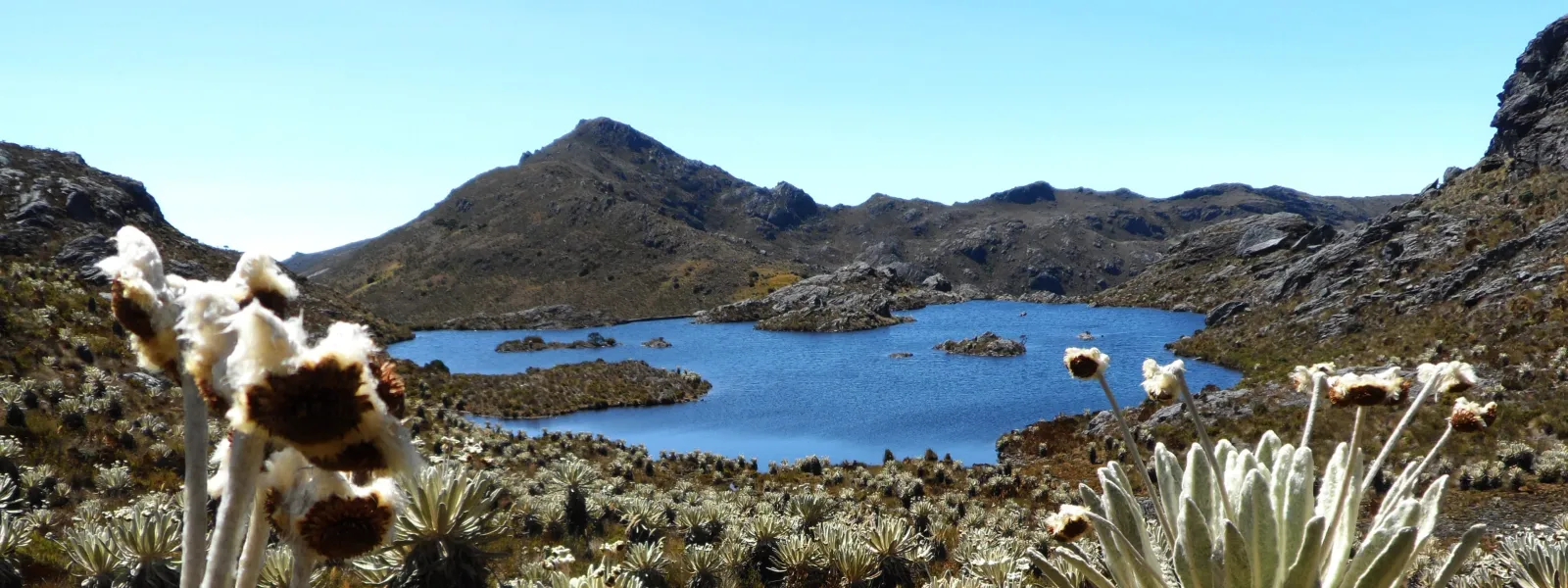
In the Andean region, high-mountain ecosystems known as páramos capture water from the fog and supply it to the lowlands. One such ecosystem is the Santurbán páramo, which provides fresh water to more than two million people in Colombia.
Santurbán, like the other páramos on the continent, also captures large amounts of carbon, making it a key ally in mitigating the climate crisis. It is also a refuge for hundreds of endangered species, including the iconic spectacled bear.
The land in and around the páramo contains gold and other minerals. This has put Santurbán in the spotlight of the multinational mining industry, which for decades has sought to establish large-scale projects in the ecosystem that threaten to degrade it.
The Committee for the Defense of Water and the Santurbán Páramo—a coalition of environmental advocates—has thwarted these ongoing attempts, with support from AIDA and other civil society organizations.
Background
The Santurbán páramo is located in the heart of the Eastern Cordillera of the Colombian Andes, in the departments of Santander and Norte de Santander, at an elevation ranging from 2,200 to 4,290 meters above sea level.
It covers an area of 129,743 hectares and is home to 57 lakes. It serves as a habitat for 457 plant species and 293 species of vertebrate fauna.
There are mineral deposits in Santurbán, primarily gold, but also silver and copper. This explains the region’s mining tradition, particularly in the part of the páramo located in Santander, in the province of Soto Norte. The communities in the area have built their culture and identity around gold mining, which is mainly artisanal and small-scale.
But since the 1990s, the gold deposits in the páramo have also attracted foreign mining conglomerates seeking to develop large-scale projects. This has raised concerns among the population that relies on the Santurbán water sources, who have mobilized in defense of water, their land, and life.
Although national and international regulations prohibit mining in páramos, the Colombian government has granted mining concessions to transnational corporations in Santurbán.

Photo: Keishpixl / Pixabay.
The long struggle to protect the páramo
One of the companies that sought to develop large-scale mining in Santurbán is Eco Oro Minerals Corp.—formerly Greystar Resources—a Canadian company that intended to establish the Angostura open-pit mine there to extract gold and silver. Between 1994 and 1995, the company acquired its mining titles and conducted exploration. And in 2010, it applied for a mining permit.
That was the year AIDA became involved in defending the ecosystem, supporting the Committee for the Defense of Water and the Santurbán Páramo. Our legal work helped convince the Colombian government to deny the mine an environmental permit in May 2011.
In January 2013, the government designated a portion of the páramo (11,700 hectares) as a Regional Natural Park. That year—together with the committee and partner organizations—we carried out a campaign and advocacy efforts to urge the government to recognize the entire Santurbán area as a páramo ecosystem through a delimitation based on scientific criteria. In December 2014, the Ministry of the Environment established a delimitation that protected 76% of the páramo (98,954 hectares).
Furthermore, as a result of a litigation supported by AIDA, in February 2016, Colombia’s highest court reaffirmed that mining in páramos is prohibited.
That same year, in December, the International Finance Corporation (IFC), the World Bank Group’s private sector arm, decided to divest from Eco Oro Minerals. This achievement was the result of a process that began in 2012, when the committee—advised and supported by AIDA and international partner organizations—filed a complaint before an independent accountability mechanism, which concluded that the IFC’s investment in the Angostura project failed to take into account the project’s social and environmental impacts, thereby contradicting the financial institution’s internal policies.
Also in 2016, Eco Oro Minerals filed an arbitration claim against the Colombian government with the International Centre for Settlement of Investment Disputes (ICSID), arguing that it had been adversely affected by government decisions aimed at protecting the country’s páramos, including the delimitation of Santurbán.
In 2017, the Constitutional Court invalidated the delimitation because the affected communities were not consulted. The high court ordered that a participatory delimitation be carried out.
And that year, a new threat to Santurbán emerged when the Canadian multinational Aris Mining applied for an environmental permit for Soto Norte, a gold mining project located near the páramo. Following citizen protests and technical objections, in October 2020, the National Environmental Licensing Authority shelved the project.
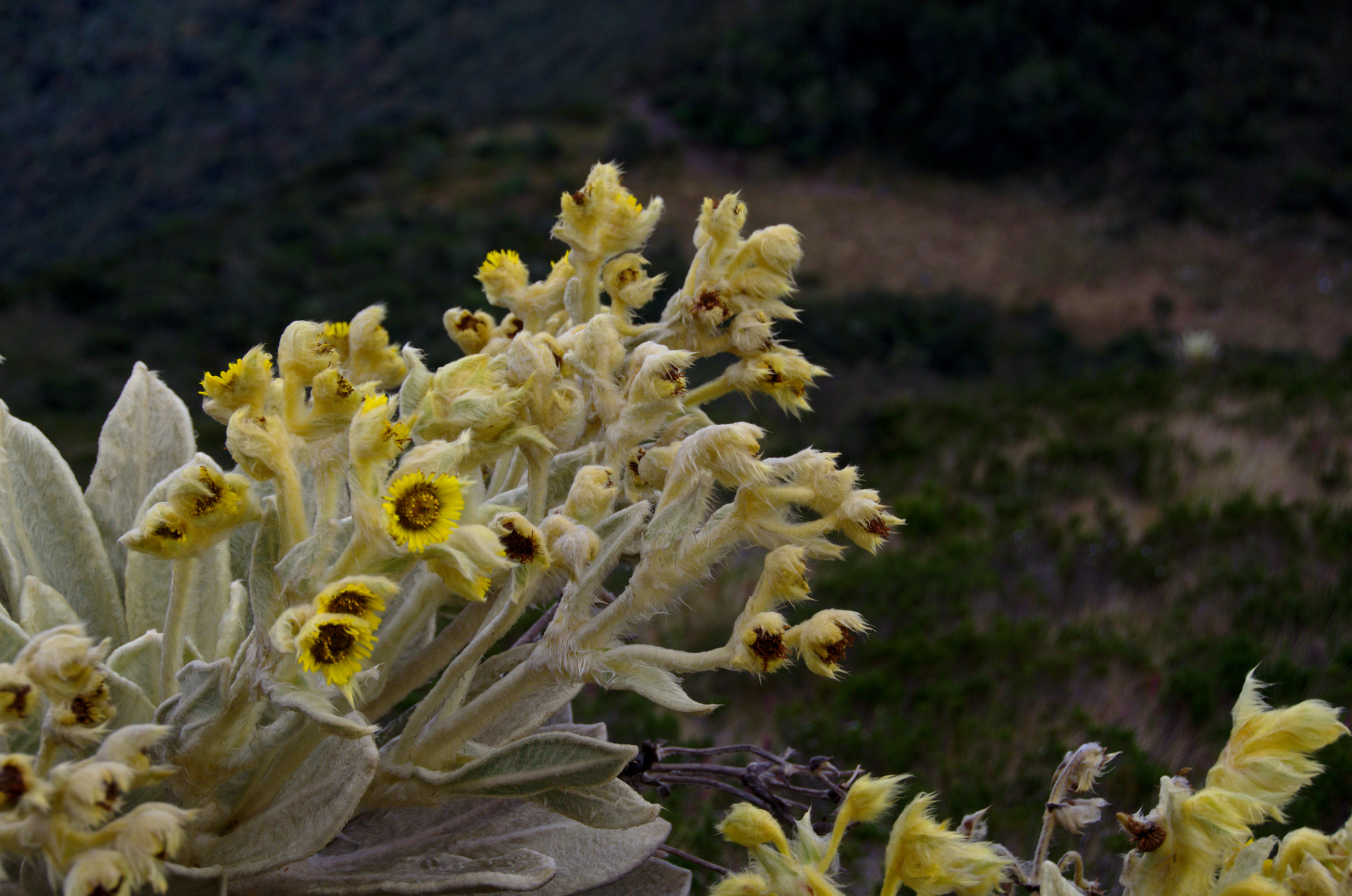
Photo: Aztlec.
Current situation
In March 2025, the Colombian government designated the western flank of the Santurbán massif as a temporary renewable natural resource reserve area, delimiting and protecting an area of 75,344.65 hectares. This resulted in a two-year suspension of the Soto Norte project. However, Aris Mining's contract to formalize Calimineros' small-scale mining activities through the purchase and processing of mineralized material remains in effect.
In addition, the Canadian mining company continues to move the project forward. In September 2025, it released its prefeasibility study, revising the mine’s original design.
Meanwhile, members of the Committee for the Defense of Water and the Santurbán Páramo face threats and stigmatization because of their work. In March 2025, UN Special Rapporteurs and the Working Group on Business and Human Rights denounced these incidents in communications sent to the governments of Colombia, Canada, and the United Arab Emirates, as well as to the companies Aris Mining and MDC Industry Holding Company LLC, the former co-owner of the Soto Norte project.
Regarding the arbitration claim filed by Eco Oro Minerals, in July 2024, ICSID ruled in favor of the Colombian government and rejected the Canadian company’s claim for USD 1.1 billion in compensation.
Concerning the delimitation of Santurbán, in July 2026, the Ministry of the Environment issued a resolution introducing the concept of "progressive delimitation." On that basis, the government proposes to progressively demarcate the páramo, covering 29,199 hectares across 19 municipalities—those where the participatory agreements required by the Constitutional Court in its 2017 ruling have already been finalized. It also proposes two measures on the creation and expansion of reserves to restrict mining in the ecosystem.
Learn more about the impacts of mining on the páramos of Latin America (in Spanish).
Partners:
Related projects
Organizations call for probe into the murder of Jairo Mora in Costa Rica (Spanish only)
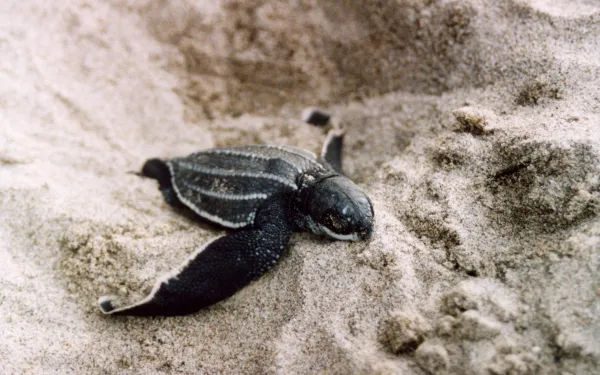
In a letter to Costa Rican General Attorney Jorge Chavarría and René Castro, the minister of environment and energy, local and international organizations expressed deep concern for the murder of Jairo Mora, a young defender of the leatherback sea turtles. He was murdered on May 30, 2013 in Moín Beach, Limón province. The groups said the severity of the crime warrants an immediate and effective investigation to prevent impunity and the repetition of such acts. The following are essential: A serious, impartial, immediate and effective investigation must be carried out to put on trial and punish the individuals responsible for Jairo Mora's murder. Measures must be taken so that the authorities responsible for controlling and monitoring the environment can effectively guarantee the rights of environmentalists, offering adequate support including through patrols to protect natural resources and by earmarking sufficient resources for these purposes. The state must publicly recognize the importance of the work of environmentalists as defenders of human rights, and it must take the necessary measures to stop the violence against them by taking an active position of respect and protection of their rights. In the last paragraph of the letter, the organizations write that “impunity in cases of serious aggression against advocates for defending the environment and natural resources is not only a violation of human rights but also presents a serious threat against environmental sustainability. Therefore, it is necessary for Costa Rica, as a nation committed to defending the environment, to take effective action to prevent such crimes like Jairo Mora's murder don’t go unpunished and don’t happen again.”
Read moreThe city, our ecosystem
By Haydée Rodríguez, legal advisor, AIDA We are witnessing the biggest wave of urbanization in history. More than half of the world’s population lives in cities. The United Nations Population Fund (UNFPA) estimates that five billion people will live in urban zones by 2030 (State of the World Population: 2007).This growth could bring opportunities to improve our lives and fight for environmental sustainability, or it could create more poverty and accelerate the destruction of natural resources. When we talk about the environment it’s easy to imagine a lush greenlandscape or a sunny beach, birds singing and perhaps an animal running free in the forest. It is less likely to visualize a cityscape of asphalt, traffic and honking horns. But it is true that the urban environment also is an ecosystem. Urban ecology: The natural order of cities Urban ecology is a relatively new scientific discipline that seeks to understand how ecological processes function inside urban areas. Unlike other branches of ecology, it requires the collaboration of the social sciences and economics to understand the dominant species of this environment: the human being. In the city, just like in other ecosystems, every aspect contributes toward its definition. The characteristics of urban habitats include traffic, air pollution, population density, movement patterns, the real estate market, infrastructure, transport and natural elements like the availability of clean water, topography and geographic location. Everything surrounding our everyday life – the streets, pavements, parks, buildings, etc. – have been created by humans. The documentary Urbanized analyzes the design challenges in cities, the interaction between different elements and how the environment influences the population. Watch Urbanized trailer. Source: YouTube Beyond chaos: Building sustainable cities Initiatives to promote sustainable cities are on the rise. In the United States, where approximately 250 million people live in urban areas, local governments have created a project called Star Communities - Sustainability Tools for Assessing and Rating Communities (STAR). Through the initiative, each municipality can evaluate the sustainability of their cities in areas ranging from infrastructure to equity and empowerment. Cities can volunteer to join the project by using the methodology for measuring sustainability developed by a multidisciplinary group. To be considered sustainable, STAR requires cities to: 1) Think and take action as a collective system; 2) Be resilient, which is defined as the city’s ability to adapt, recover and evolve in a changing environment; 3) Promote innovation and creativity; 4) Measure the progress of the health and welfare of the people, the environment and the economy; 5) Use resources in a responsible and sustainable way; 6) Collaborate between cities and inpiduals; 7) Promote equity and persity; 8) Inspire leadership; and 9) Seek continual improvement. There is no stopping the progress of growing cities. In Costa Rica, for example, there are ongoing projects like Enamórate de tu ciudad (Fall in love with your city), which aims to improve the quality of life of residents in San José, the capital. Strategies have been put in place to improve safety, promote forms of clean public transport such as bicycles, and hold activities that bring the community together to enjoy the urban environment. City lights shine increasingly brighter across the world. Now is the time to think about what we want our cities to be like. Our urban ecosystem can be an important opportunity for social mobilization (a social process organized and based on dialog to improve our quality of life), education and the empowerment of the population. It can also help us reduce our impact on natural areas and on biopersity. We should seize this positive challenge and dare to see our cities with new eyes.
Read moreMéxico failed to attend the Green Climate Fund’s fourth Board meeting
Senator Ernesto Cordero, Mexico’s representative on the Board, must be held accountable for his failure to attend a key event for establishing financial support for fighting climate change. Mexico City, Mexico. Senator Ernesto Cordero, Mexico’s representative on the Green Climate Fund (GCF) Board, missed the fourth meeting of the entity, held June 25-28 in Songdo, South Korea. At the meeting, Board members started setting the rules of operation of the Fund, a financial mechanism essential for developing countries to secure the financial support needed to combat climate change. According to the GCF Secretariat, Cordero’s absence was because he had to attend important sessions of the Mexican Congress. Also missing at the Songdo meeting was Chile, the alternate member for Mexico. Chile’s representative also informed the Secretariat of his inability to attend the event. With the absence of both of these countries, one of the seats held by Latin America on the GCF Board was left empty. The Board consists of 24 members: 12 representatives from developing countries and an equal number from developed nations. Each member has an alternate who may participate in the Board meetings without voting rights unless they assume the role of the Board member. Latin America has three seats on the Board, broken down by regional groups: Colombia is paired up with Peru, Belize with Cuba, and Mexico and Chile. Each pair also represents other countries. In this regard, Mexico and Chile’s absence from the fourth meeting jeopardizes the interests of the Latin American countries represented by the duo, which includes Brazil and Argentina. It also contradicts the active role Mexico has played in recent years in climate change negotiations worldwide. What is more, a good opportunity was missed to influence the decisions taken in South Korea. The Fund is being developed to become a main source of financial resources to combat climate change, and at this Board meeting critical decisions were taken to this end. These included decisions on the Fund’s mission, the results and performance indicators to follow, procedures for access, home ownership, financial instruments, structure and organization, among others. The formation of the Green Climate Fund must meet the needs of all regions, but especially those in Latin America. Mexico, Chile and the other countries with a seat on the Board must commit to be active and efficient participants, and to be consistent with their national policies on climate change. It is of utmost importance to ensure the involvement of Latin American governments in international spheres like the GCF because this will ensure effective benefits for the people of this region. For more information on the Green Climate Fund, visit this page.
Read more