
Project
Alberto Peña Kay
Protecting the Santurban páramo from mining's damage
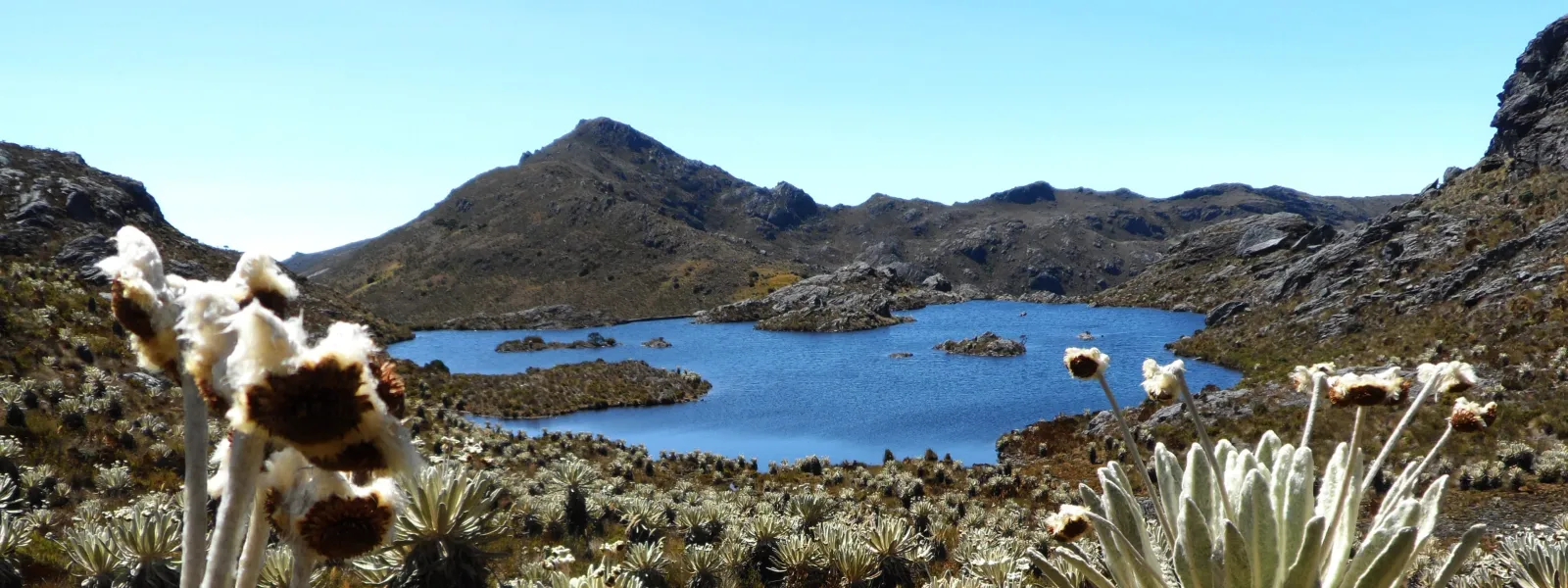
In the Andean region, high-mountain ecosystems known as páramos capture water from the fog and supply it to the lowlands. One such ecosystem is the Santurbán páramo, which provides fresh water to more than two million people in Colombia.
Santurbán, like the other páramos on the continent, also captures large amounts of carbon, making it a key ally in mitigating the climate crisis. It is also a refuge for hundreds of endangered species, including the iconic spectacled bear.
The land in and around the páramo contains gold and other minerals. This has put Santurbán in the spotlight of the multinational mining industry, which for decades has sought to establish large-scale projects in the ecosystem that threaten to degrade it.
The Committee for the Defense of Water and the Santurbán Páramo—a coalition of environmental advocates—has thwarted these ongoing attempts, with support from AIDA and other civil society organizations.
Background
The Santurbán páramo is located in the heart of the Eastern Cordillera of the Colombian Andes, in the departments of Santander and Norte de Santander, at an elevation ranging from 2,200 to 4,290 meters above sea level.
It covers an area of 129,743 hectares and is home to 57 lakes. It serves as a habitat for 457 plant species and 293 species of vertebrate fauna.
There are mineral deposits in Santurbán, primarily gold, but also silver and copper. This explains the region’s mining tradition, particularly in the part of the páramo located in Santander, in the province of Soto Norte. The communities in the area have built their culture and identity around gold mining, which is mainly artisanal and small-scale.
But since the 1990s, the gold deposits in the páramo have also attracted foreign mining conglomerates seeking to develop large-scale projects. This has raised concerns among the population that relies on the Santurbán water sources, who have mobilized in defense of water, their land, and life.
Although national and international regulations prohibit mining in páramos, the Colombian government has granted mining concessions to transnational corporations in Santurbán.

Photo: Keishpixl / Pixabay.
The long struggle to protect the páramo
One of the companies that sought to develop large-scale mining in Santurbán is Eco Oro Minerals Corp.—formerly Greystar Resources—a Canadian company that intended to establish the Angostura open-pit mine there to extract gold and silver. Between 1994 and 1995, the company acquired its mining titles and conducted exploration. And in 2010, it applied for a mining permit.
That was the year AIDA became involved in defending the ecosystem, supporting the Committee for the Defense of Water and the Santurbán Páramo. Our legal work helped convince the Colombian government to deny the mine an environmental permit in May 2011.
In January 2013, the government designated a portion of the páramo (11,700 hectares) as a Regional Natural Park. That year—together with the committee and partner organizations—we carried out a campaign and advocacy efforts to urge the government to recognize the entire Santurbán area as a páramo ecosystem through a delimitation based on scientific criteria. In December 2014, the Ministry of the Environment established a delimitation that protected 76% of the páramo (98,954 hectares).
Furthermore, as a result of a litigation supported by AIDA, in February 2016, Colombia’s highest court reaffirmed that mining in páramos is prohibited.
That same year, in December, the International Finance Corporation (IFC), the World Bank Group’s private sector arm, decided to divest from Eco Oro Minerals. This achievement was the result of a process that began in 2012, when the committee—advised and supported by AIDA and international partner organizations—filed a complaint before an independent accountability mechanism, which concluded that the IFC’s investment in the Angostura project failed to take into account the project’s social and environmental impacts, thereby contradicting the financial institution’s internal policies.
Also in 2016, Eco Oro Minerals filed an arbitration claim against the Colombian government with the International Centre for Settlement of Investment Disputes (ICSID), arguing that it had been adversely affected by government decisions aimed at protecting the country’s páramos, including the delimitation of Santurbán.
In 2017, the Constitutional Court invalidated the delimitation because the affected communities were not consulted. The high court ordered that a participatory delimitation be carried out.
And that year, a new threat to Santurbán emerged when the Canadian multinational Aris Mining applied for an environmental permit for Soto Norte, a gold mining project located near the páramo. Following citizen protests and technical objections, in October 2020, the National Environmental Licensing Authority shelved the project.
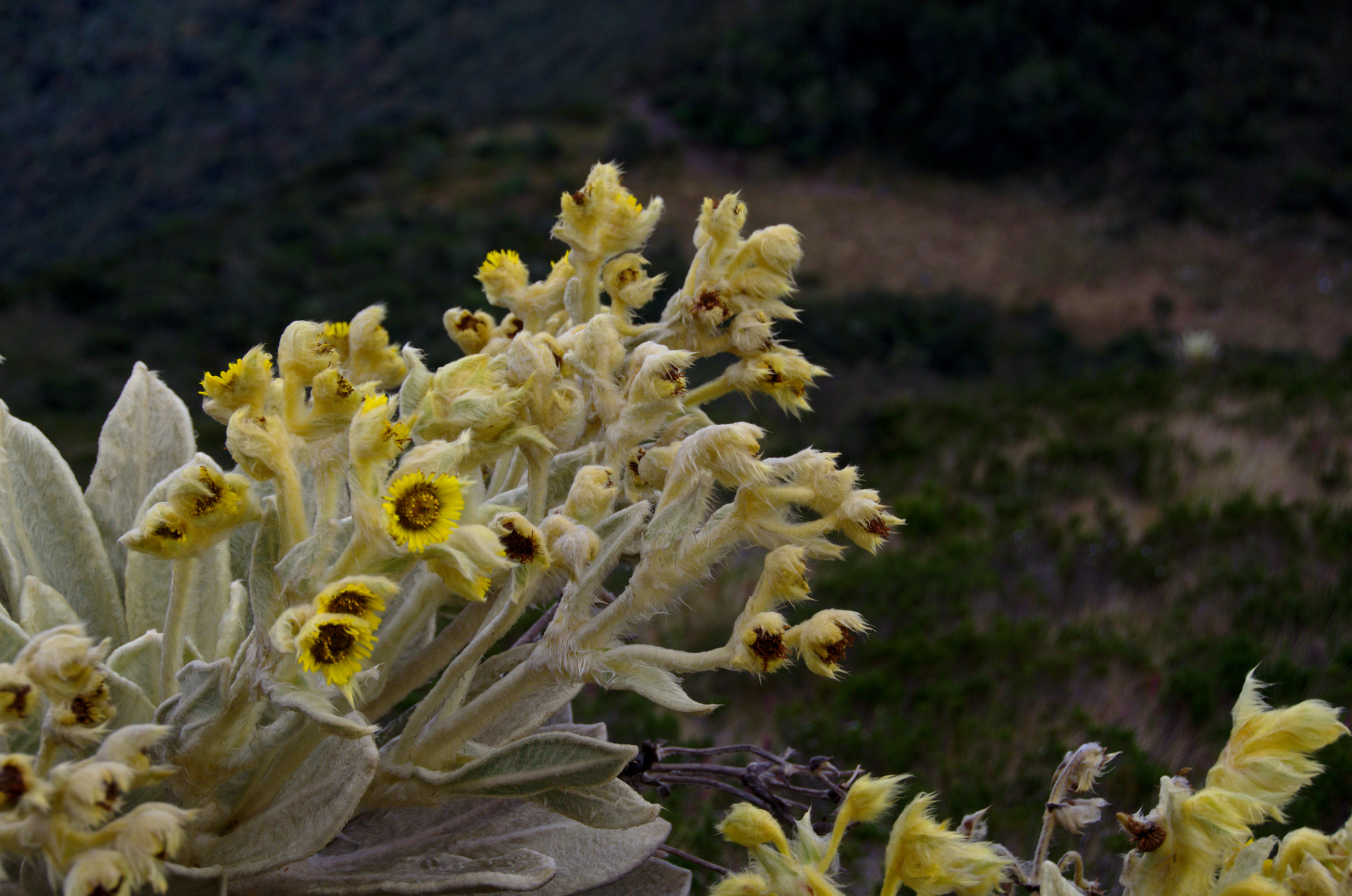
Photo: Aztlec.
Current situation
In March 2025, the Colombian government designated the western flank of the Santurbán massif as a temporary renewable natural resource reserve area, delimiting and protecting an area of 75,344.65 hectares. This resulted in a two-year suspension of the Soto Norte project. However, Aris Mining's contract to formalize Calimineros' small-scale mining activities through the purchase and processing of mineralized material remains in effect.
In addition, the Canadian mining company continues to move the project forward. In September 2025, it released its prefeasibility study, revising the mine’s original design.
Meanwhile, members of the Committee for the Defense of Water and the Santurbán Páramo face threats and stigmatization because of their work. In March 2025, UN Special Rapporteurs and the Working Group on Business and Human Rights denounced these incidents in communications sent to the governments of Colombia, Canada, and the United Arab Emirates, as well as to the companies Aris Mining and MDC Industry Holding Company LLC, the former co-owner of the Soto Norte project.
Regarding the arbitration claim filed by Eco Oro Minerals, in July 2024, ICSID ruled in favor of the Colombian government and rejected the Canadian company’s claim for USD 1.1 billion in compensation.
Concerning the delimitation of Santurbán, in July 2026, the Ministry of the Environment issued a resolution introducing the concept of "progressive delimitation." On that basis, the government proposes to progressively demarcate the páramo, covering 29,199 hectares across 19 municipalities—those where the participatory agreements required by the Constitutional Court in its 2017 ruling have already been finalized. It also proposes two measures on the creation and expansion of reserves to restrict mining in the ecosystem.
Learn more about the impacts of mining on the páramos of Latin America (in Spanish).
Partners:
Related projects
UN Representative on Indigenous Peoples asked to investigate human rights violations caused by Panama’s Barro Blanco dam
Washington, DC, United States. A total of 12 civil society organizations urged the United Nations (UN) Special Rapporteur on the Rights of Indigenous Peoples, James Anaya, to conduct a formal investigation into the human rights impacts of the Barro Blanco dam located on the Tabasará River in Panama. The Panamanian and international organizations also asked Mr. Anaya to call on the government of Panama to immediately halt the dam’s construction until the threats to the rights of the indigenous Ngӓbe people affected by the project have been fully addressed. The Barro Blanco controversy received special attention at the UN climate talks held last week in Bonn, Germany, because the project is registered under the Clean Development Mechanism (CDM), a carbon offsetting scheme established under the Kyoto Protocol. “The Barro Blanco dam will directly affect Ngӓbe people, yet we were not even consulted about the project before it was approved,” said Weni Bagama, an indigenous Ngӓbe leader of the Movimiento 10 de Abril, a community-based movement defending the Tabasará River from development projects. In September 2012, the UN Development Programme (UNDP) conducted a fact-finding mission at the project site and interviewed Ngäbe community members about projected impacts. UNDP’s assessment report confirmed that the dam will flood homes and religious, historical and cultural sites in the Ngӓbe-Buglé territory. The report further documented the project’s impacts, including that the dam will convert the flowing Tabasará River into a stagnant lake ecosystem, affecting the Ngäbe’s diet and means of subsistence. “Despite proof that the dam will have grave impacts on the Ngӓbe way of life and cultural heritage, the construction of the dam continues,” added Ms. Bagama. “We urge Mr. Anaya to investigate the situation and do all he can to protect the rights of the indigenous peoples affected by this project.” “The public forum where the project was discussed was held as a community meeting without a clear notification of its true objective, and there was no representation from the affected indigenous communities,” said Tania Arosemena, Legal Director of the Environmental Advocacy Center, Panama (CIAM by its Spanish initials). “The consultation process did not comply with the minimum standards demanded by national and international law on this matter.” CIAM filed a lawsuit in 2011 on behalf of members of the Ngäbe communities, who challenge the approval of the project’s environmental impact assessment. That suit is pending. Several of the organizations that wrote to Mr. Anaya also raised the Barro Blanco case at the UN climate talks in Bonn last week. “The Barro Blanco project illustrates an urgent need for reform within the CDM,” said Alyssa Johl, senior attorney at the Center for International Environmental Law (CIEL). “Once a project has been registered under the CDM, affected communities have no means to voice their concerns regarding the project’s social and environmental impacts. The UN climate regime must establish a process that allows communities to seek recourse for the harms associated with CDM projects, as well as a process to deregister projects where there are clear violations of CDM rules as in the case of Barro Blanco.” “Given the CDM’s lack of a complaint procedure and the Panamanian government’s failure to protect the Ngäbe’s rights, the communities need Mr. Anaya’s support,” said Abby Rubinson, associate attorney in Earthjustice’s International Program. “We appreciate Mr. Anaya’s past efforts to engage the Panamanian government to respond to the Ngäbe’s concerns, and we ask him to continue to play this much-needed role to prevent further violations.” The Panamanian non-governmental organizations (NGOs) that signed the letter to Mr. Anaya were CIAM, Movimiento 10 de Abril, and Asociación Ambientalista de Chiriquí. CIEL, Earthjustice, Inter-American Association for Environmental Defense (AIDA), International Rivers, Carbon Market Watch, Both ENDS, Collective Voices for Peace, Salva la Selva and Marin Interfaith Task Force on the Americas comprised the international groups that signed the letter to Mr. Anaya.
Read more
Collective Statement to the Colombian government on the collapse of Law 1382
The organizations and persons behind the Statement express our concerns to the Colombian government about the implications of the collapse of the Mining Code in effect since May 11, 2012 (Law 1382, 2010) and the consequent return to the previous Mining Code (Law 685 2001), particularly as concerns the serious consequences to the country’s environment (detailed in the document). To prevent these impacts, we urge you to take the following steps: Present in the shortest time possible a draft of the Mining Code that overcomes the deficiencies of mining regulations and brings the legislation into line with the duties of biodiversity and water protection, while previously guaranteeing that ethnic groups have the right to free, prior and informed consultation. Maintain the moratorium on mining permits until a new Mining Code is submitted and approved. Immediately decree a moratorium on environmental licenses in order to avoid the elimination of environmental protection clauses. Statement available in Spanish only.
Read moreReport on the situation in La Oroya (Peru): When investor protection threatens human rights
The International Federation for Human Rights (FIDH) presented a balance of the controversial case of industrial pollution. Huancayo, Peru – The International Federation for Human Rights (FIDH) released a report on the situation in La Oroya, a city in the central Andean region of Peru that is at the center of a controversial case of industrial pollution caused by a poly-metallic smelter in operation since 1922. For decades, the people of La Oroya have been exposed to high levels of air pollution stemming from the complex’s emissions of toxic substances including lead, cadmium, arsenic and sulfur dioxide. In the middle of the 2000s La Oroya was identified as one of the 10 most polluted cities in the world. According to independent studies, 97% of children between the ages of 6 months and 6 years, and 98% of those between 7 and 12 years old still have high levels of lead in their blood. The percentage reaches 100% in La Oroya Antigua, the area closest to the smelter. The effects of lead poisoning are irreversible. Doe Run Peru, a subsidiary of the U.S.-based Doe Run Company, began operating the complex after its privatization in 1997. Both the company and the Peruvian State have failed to comply with their obligations to prevent environmental impact and respect the human rights of the population of La Oroya. In response, the Interamerican Association for Environmental Defense (AIDA) and other organizations requested the Inter-American Commission on Human Rights (IACHR) in 2005 to issue precautionary measures for people whose health was at serious risk from the pollution in the city. On August 31, 2007 the IACHR ordered the State to adopt measures to protect the health, integrity and life of a group of residents of La Oroya. The precautionary measures require Peru to provide a specialized medical diagnostic to the beneficiaries plus specialized and adequate medical treatment to those who, based on the diagnosis, are in danger of irreparable damage to their physical integrity or lives. Also since 2007, a complaint against Peru has been pending before the IACHR for the violation of human rights due to the toxic emissions from the La Oroya Metallurgical Complex. AIDA, APRODEH, Earthjustice and the Center for Human Rights and Environment (CEDHA) are representing the victims and the beneficiaries of the precautionary measures in the case. “AIDA has been working and monitoring the situation in La Oroya for over a decade. Over this time we have seen the extent of the damage to victims’ health in La Oroya due to the pollution that they have been and continue to be exposed to. The State must assume its obligations and fully comply with the IACHR´s precautionary measures that are in effect”, said Maria Jose Veramendi, an AIDA legal advisor. Meanwhile, parents of children with high levels of lead in their blood have tried to obtain compensation for the damages through a collective action in the United States (Missouri), headquarters of the complex’s parent company The Renco Group. In late 2010, Renco initiated international arbitration alleging its rights as a foreign investor as guaranteed by the Free Trade Agreement between Peru and the United States were violated. Renco asked for compensation of $800 million. “The company not only denied the impacts on the citizens and tried to evade responsibility, but in the face of the protests it pursued a campaign of stigmatization and attacks against those who were trying to defend their rights”, said Souhayr Belhassen, president of the FIDH. This case illustrates the conflict between international human rights law and investor protection. It also exposes the legal strategy of the companies allegedly involved in human rights violations that seek to evade responsibility and deny victims their right to reparation. The FIDH report, entitled Metallurgical Complex of La Oroya: When investor protection threatens human rights, includes a series of recommendations directed at the Peruvian authorities and the company involved. AIDA and APRODEH, as organizations representing the victims of La Oroya before the Inter-American Human Rights System, thank the FIDH and believe that the report is an important contribution to visualize the increasingly serious human rights violations suffered by the residents of La Oroya, who still expect the State to recognize its responsibility and bring justice to their claims. At the same time, the Archdiocese of Huancayo, whose role in defending the right to a healthy environment in La Oroya has been crucial, says the report is a major contribution to its work. See de PDF version of the report.
Read more