
Project
Foto: Andrés ÁngelStopping the spread of fracking in Latin America
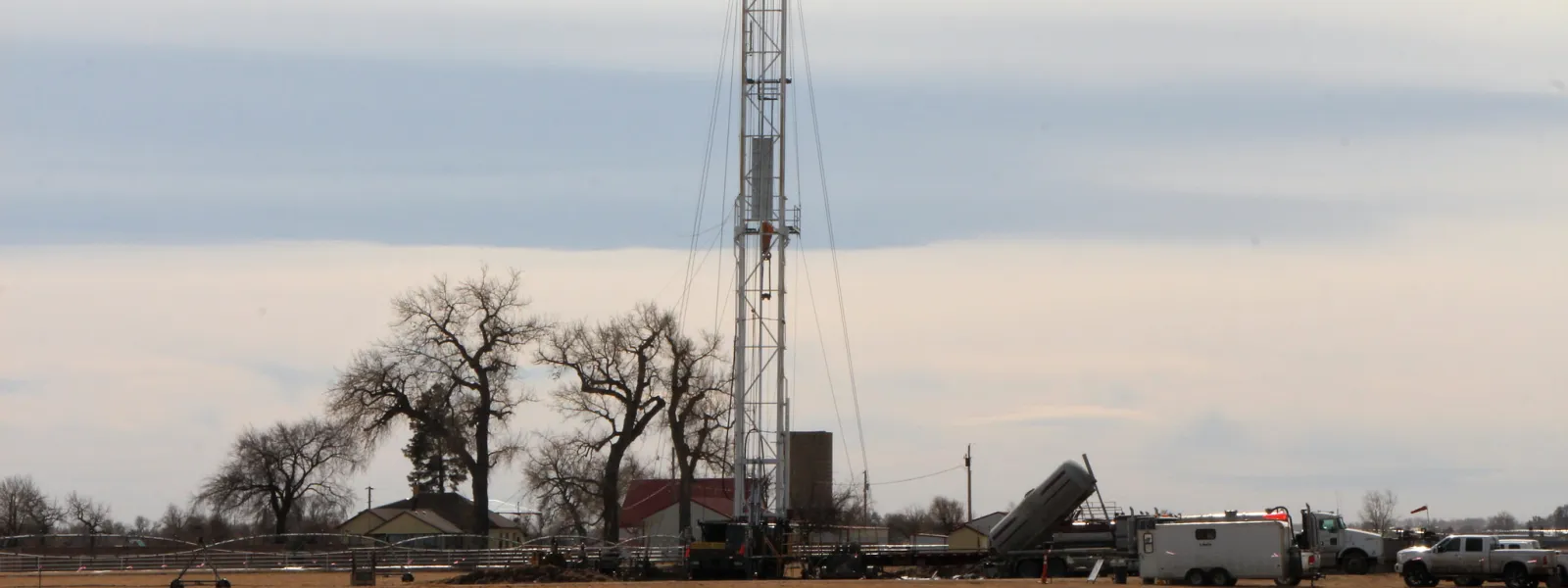
“Fracking” is short for hydraulic fracturing, a process used to extract oil and natural gas from historically inaccessible reservoirs.
Fracking is already widespread in the global North, but in Latin America, it is just beginning. Governments are opening their doors to fracking without understanding its impacts and risks, and without consulting affected communities. Many communities are organizing to prevent or stop the impacts of fracking, which affect their fundamental human rights. But in many cases they require legal and technical support.
What exactly is fracking, and what are its impacts?
A straight hole is drilled deep into the earth. Then the drill curves and bores horizontally, making an L-shaped hole. Fracking fluid—a mixture of water, chemicals, and sand—is pumped into the hole at high pressure, fracturing layers of shale rock above and below the hole. Gas or oil trapped in the rock rises to the surface along with the fracking fluid.
The chemical soup—now also contaminated with heavy metals and even radioactive elements from underground—is frequently dumped into unlined ponds. It may seep into aquifers and overflow into streams, poisoning water sources for people, agriculture, and livestock. Gas may also seep from fractured rock or from the well into aquifers; as a result, water flowing from household taps can be lit on fire. Other documented harms include exhausted freshwater supplies (for all that fracking fluid), air pollution from drill and pump rigs, large methane emissions that aggravate global warming, earthquakes, and health harms including cancer and birth defects.
AIDA’s report on fracking (available in Spanish) analyzes the viability of applying the precautionary principle as an institutional tool to prevent, avoid or stop hydraulic fracturing operations in Latin America.
Partners:

Related projects

Citizens' petition urges Mexican government to revoke authorizations set to harm protected areas
Petition open for signatures on Change.org requests that CONANP and SEMARNAT stop the pending use of explosives in Los Tuxtlas rainforest reserve, and avoid the destruction of the country’s largest coral ecosystem, the Veracruz Reef System. Mexico City, Mexico. Along the Eastern Coast of Mexico, two of the greatest natural treasures in the state of Veracruz are at grave risk from the government-sanctioned expansion of the Port of Veracruz. In response to the shortsighted permission granted by Mexico's Secretary of the Environment and Natural Resources (SEMARNAT), the Interamerican Association for Environmental Defense (AIDA), CEMDA and other civil society organizations have joined together to support a citizens' petition requesting the authorizations be revoked and the country's natural heritage be protected. The petition, launched today on Change.org,[1] urges SEMARNAT to revoke the environmental permit granted to the Port Authority to mine basaltic rock in Los Tuxtlas Biosphere Reserve. It also asks the National Commission of Natural Protected Areas to increase protection of the Veracruz Reef System by adding it to the Montreux Record, a register of sites on the List of Wetlands of International Importance. Registering the Veracruz Reef would allow Mexico access to financial resources to help preserve it. The government authorized the extraction of two million cubic meters of basaltic rock to build the port’s new breakwater. The Los Tuxtlas Management Plan expressly prohibits the use of explosives within the Reserve, but the project requires them to release the rock. The noise and presence of workers will disrupt the habitual behavior of the reserve’s fauna, including the endangered Mexican howler monkey. Removal of rock from Los Tuxtlas will irreversibly alter the topography, vegetation and ecosystem services of the area, in addition to contravening the purposes of the Reserve. It would also increase the region’s vulnerability to climatic events such as tropical storms and hurricanes. To accommodate the port’s new footprint, the government shrunk the surface area of the protected Reef System without sufficient scientific information to understand the impact it would have.[2] The change allows the port to be built on a previously protected area of the reef. This action violates national and international standards and ignores the cumulative impacts that the project will have on the fragile ecosystem due to, among other things, increases in population and maritime traffic. The authorization granted by the Secretary of the Environment and Natural Resources would permit the construction of two breakwalls with a combined length of 7,740 meters, a main basin 800 meters in diameter, nine types of terminal docks, and 30 berths for boats. In total, the proposed enlargement of the Port of Veracruz covers an area of about 910 hectares, double the current size of the port. The removal, fragmentation and siltation of the coral reefs of the Veracruz Reef System and the disappearance of land reclaimed by the sea will irreversibly damage the health of the entirety of Mexico’s most resilient coral ecosystem. The Veracruz Reef System consists of at least 23 coral reefs of varying sizes, shapes and depth. Within its boundaries live coral ecosystems, subtidal seagrass beds, shallow marine waters, mangroves and sandy beaches. In 1992 the government declared it a Natural Protected Area, and in 2002 it was registered as a Wetland of International Importance under the Ramsar Convention, an intergovernmental treaty. The national park is the habitat of sea creatures such as dolphins and sea turtles. As a rich marine ecosystem, it supports abundant fisheries, and its incredible beauty draws sport and tourism to its shores. The coral reefs within are important climate regulators, and serve as a natural barrier against large waves and storms. In 2010, the reef protected the city of Veracruz from Hurricane Karl, a dangerous Category 4 storm.[3] For the great benefits these natural ecosystems provide, the Conserve Veracruz campaign is asking for the signatures and support of citizens around the world to urge the Mexican government to revoke the port’s environmental permit, and instead to fulfill its primary responsibility of protecting Mexico’s rich natural heritage. [1] https://www.change.org/p/semarnat-protect-the-coral-reefs-and-jungle-of-veracruz [2] The federal government issued a new decree removing protection from the Punta Gorda and Bahia Vergara reefs. [3] National Oceanic and Atmospheric Association (NOAA), United States Department of Commerce, available at: http://oceanservice.noaa.gov/podcast/feb10/dd022410transcript.html
Read more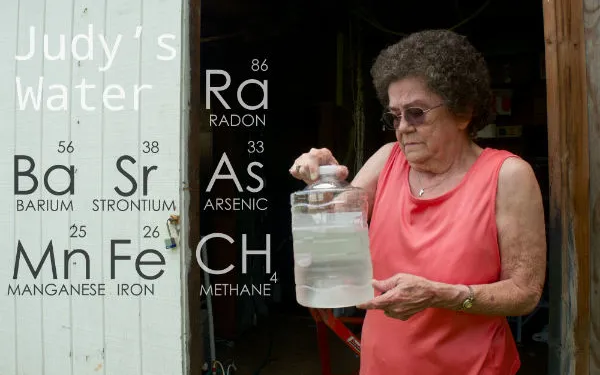
Stopping Fracking: Together We’re Stronger!
It’s an increasingly recognized reality: the world cannot burn its reserves of fossil fuels and expect the planet to be habitable. But energy companies continue extracting fossil fuels in pursuit of near-term profit, rather than adapting their business models for the sake of long-term sustainability. Already, much of the world’s reserves of easily extracted, high-quality fossil fuels have been exhausted. New horizontal drilling technology, combined with hydraulic fracturing (fracking), has made exploitation of hard-to-reach ("unconventional") oil and gas deposits possible. For a variety of reasons, fracking poses very high risks to public health and the environment. AIDA has begun working with civil society organizations and institutions to generate information, stimulate debate, and join forces to prevent the negative impacts of fracking in Latin America. The Risks of Fracking Fracking for unconventional deposits involves drilling into the ground vertically, to a depth below aquifers, and then horizontally through layers of shale rock. Then fracking fluid (a high-volume mixture of water, sand, and undisclosed chemicals) is injected at very high pressure to fracture the shale, thus releasing the oil and gas trapped inside. After fracking fluid surfaces, energy companies typically dump it into unlined ponds. The chemical soup—now also contaminated with heavy metals and even radioactive elements—seeps into aquifers and overflows into streams. The severe and irreversible damage associated with fracking includes: Exhaustion of freshwater supplies. Contamination of ground and surface waters. Air pollution from drill and pump rigs. Harms to the health of people (low birth weight, birth defects, increases in congenital heart defects, deformities, allergies, cancer, and respiratory disease) and other living things. Unregulated emissions of methane, which traps 25 times more heat than carbon dioxide. Earthquakes. Effects on subsistence activities, such as agriculture. For and Against Fracking Given these risks, France, Bulgaria, Ireland, and New York State have turned their backs on fracking, banning it or declaring a moratorium in their territories. In Latin America, however, many countries are opening their doors to fracking. Governments are doing so with little or no understanding of its impacts, and in the absence of an adequate process to inform, consult, or invite the participation of affected communities: Mexico promoted fracking through a landmark energy reform law in 2013. As of 2015, 20 wells have been drilled using this technique. Argentina has the largest number of fracking operations in the region, and the largest reserves of shale gas in America. As of 2014, there were more than 500 fracking wells in Neuquén, Chubut, and Rio Negro[6], including wells in the Auca Mahuida reserve and in Mapuche indigenous territories. In Chile, the state-owned oil company ENAP started fracking on the island of Tierra del Fuego in 2013. More drilling is planned in the coming years. Colombia and Brazil have opened public bidding and signed contracts with oil companies for exploitation of unconventional hydrocarbons through fracking. Bolivia's state-owned oil company signed an agreement in 2013 with its counterpart from Argentina to study the potential of fracking in Bolivia. Better together In October 2014, with the help of AIDA, the Regional Alliance on Fracking was formed to raise awareness, generate public debate, and prevent risks associated with the technique. The alliance seeks to ensure that the rights to life, public health, and a healthy environment are respected in Latin America. The idea for the alliance came from previous regional coordination initiatives promoted by Observatorio Petrolero Sur and the Heinrich Böll Foundation. The alliance currently consists of 33 civil society organizations and academic institutions from seven countries in the region. They are working together to: Identify fracking operations in the region, their impacts and affected communities, and promote civil society strategies to stop them. Organize workshops and virtual seminars on the impacts of fracking. Develop international advocacy strategies to stop fracking in the region. Conduct a regional outreach campaign on the issue. The alliance is strengthened by the expertise of its members, its regional scope, and the institutional support provided by organizations in each country. Given its collaborative nature, it is always open to the participation of new institutions and individuals interested in the subject. Major achievements Many civil society organizations, indigenous peoples, and institutions in the region have been working to stop fracking. They have developed strategies to generate information, raise awareness, promote public debate, and influence decision makers. Their achievements encourage us to improve coordination for greater impact throughout Latin America. Already, their efforts have resulted in: More than 30 municipal orders declaring a ban or moratorium on fracking in Argentina, Brazil, and Uruguay. Many have been based on the precautionary principle, as well as on concerns about surface and ground waters and public health. Judgments suspending contracts for fracking in Brazilian oil basins in Sao Paulo, Piauí, Bahia, and Paraná. Judges have also ordered Brazil’s National Petroleum Agency not to open further bidding until the environmental risks and impacts of fracking are sufficiently understood. Publications on the impacts of fracking, community awareness campaigns, and a bill – supported by more than 60 national deputies and nearly 20,000 people – to ban fracking in Mexico. Greater public awareness of fracking, and public debate, in Colombia and Bolivia. Through regional collaboration, AIDA will continue to make progress on preventing the impacts of fracking in our communities, and promote an energy future that is both renewable and humane.
Read more
Don Diego mining project poses grave risk to Mexican marine ecosystem
AIDA’s formal comments on the Environmental Impact Statement for the phosphate-mining project, proposed in a Baja California Sur bay, point to insufficient information about safeguards for the ecosystem, which is vital for both coastal communities and endangered species. Mexico City, Mexico. The Interamerican Association for Environmental Defense (AIDA) has commented on the Environmental Impact Statement for the Don Diego phosphate-mining project in Ulloa Bay, Baja California Sur. In their analysis, AIDA proved that the document lacks sufficient technical information to ensure that the project will not seriously damage the Bay. Ulloa Bay serves as an important marine ecosystem for coastal communities as well as for endangered species like the Blue and Humpback whales and the Loggerhead turtle. The Mexican Center for Environmental Law (CEMDA) presented the comments in AIDA’s name to Mexico’s Secretariat of Environment and Natural Resources (SEMARNAT). "The comments show that the Don Diego project, the first of its type in the region, could cause serious environmental damage," said Haydée Rodríguez, an AIDA attorney. The primary reasons the project should not be authorized as presented are: The project could cause irreversible damage to an ecologically vulnerable and biodiverse region, which includes Magdalena Bay, a mangrove ecosystem considered a Marine Region of Importance. The region is also home both to threatened marine species and to others vital to the fishing industry. The Environmental Impact Statement lacks important information about possible impacts on the marine ecosystem and measures to avoid them. The project involves a mining process that will greatly alter the marine environment: large boats will dredge the seabed and extract sand in search of phosphate, but in doing so may also extract living organisms. The project will alter the marine ecosystem by unearthing sediments that contain toxic elements, such as uranium, that will be returned to the ocean after processing. The exposed toxic sediments, along with the dredging and noise of the mining operation, will alter the habitat of endangered species of whales and turtles. The Mexican government has national and international obligations to apply the Precautionary Principle. As such, they should deny permission to the project to ensure that it does not cause serious and irreversible environmental damage. In authorizing the project, the Mexican government would violate international treaties that require it to protect marine environments and threatened and endangered species. The project puts at risk fishing and tourism activities that provide the livelihoods of the region’s coastal communities. You can see our full comments on the Don Diego Environmental Impact Statement here (in Spanish).
Read more