
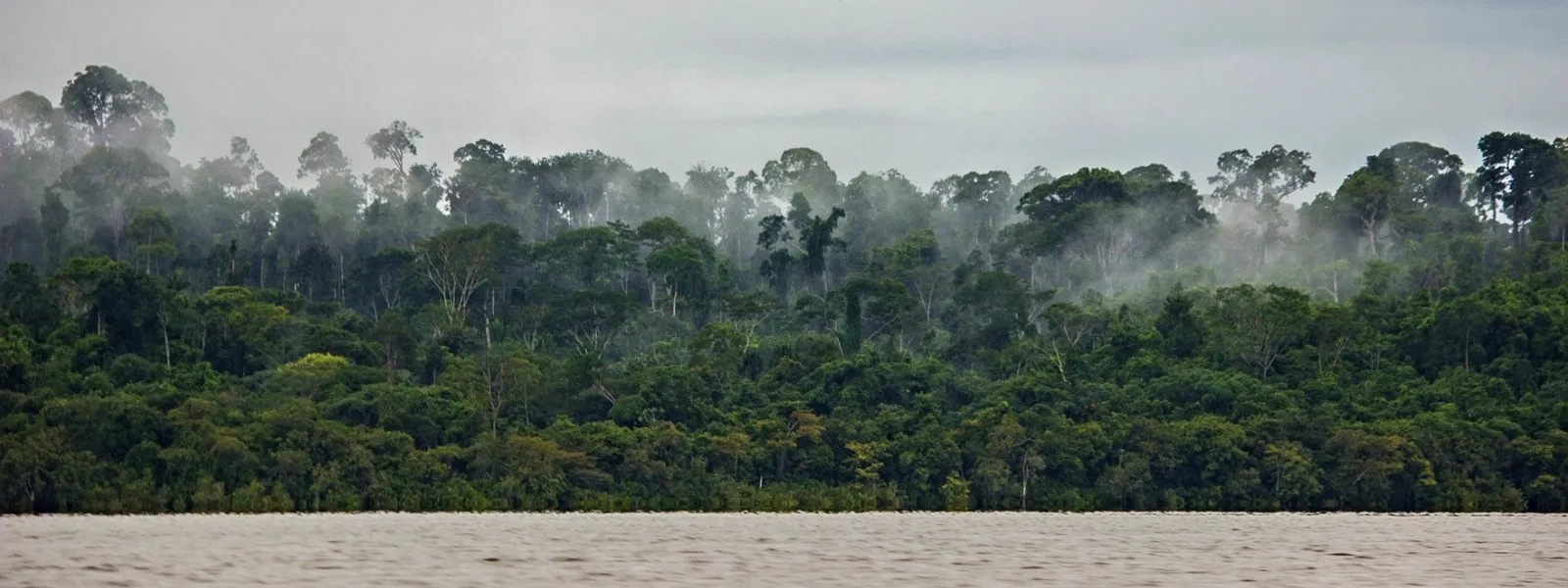
Project
Amazon Watch / Maíra Irigaray
The Belo Monte Dam on the Xingu River: 10 years of impacts in the Amazon and the search for reparations
The Belo Monte Dam has caused an environmental and social disaster in the heart of the Amazon—one of the most important ecosystems on the planet.
This situation has only worsened since the hydroelectric plant began operations in 2016. The quest for justice and reparations by the affected indigenous, fishing, and riverine communities continues to this day.
In 2011, the Inter-American Commission on Human Rights (IACHR) granted them protective measures that, to date, have not been fully implemented by the Brazilian State.
Furthermore, since June of that same year, the IACHR has yet to rule on a complaint against the State regarding its international responsibility in the case.
The IACHR may refer the case to the Inter-American Court of Human Rights, which has the authority to issue a ruling condemning the Brazilian State.
Background
The Belo Monte hydroelectric plant—the fourth largest in the world by installed capacity (11,233 MW)—was built on the Xingu River in Pará, a state in northern Brazil.
It was inaugurated on May 5, 2016, with a single turbine. At that time, 80% of the river’s course was diverted, flooding 516 km² of land—an area larger than the city of Chicago. Of that area, 400 km² was native forest. The dam began operating at full capacity in November 2019.
Belo Monte was built and is operated by the Norte Energia S.A. consortium, which is composed primarily of state-owned companies. It was financed by the Brazilian Development Bank (BNDES), which provided the consortium with 25.4 billion reais (approximately US$10.16 billion), the largest investment in the bank’s history. Therefore, the BNDES is also legally responsible for the socio-environmental impacts associated with the hydroelectric plant.
Decades of harm to the environment and people
Human rights violations and degradation of the Amazon have been occurring since the project’s inception. In March 2011, Norte Energía began construction of the dam without adequate consultation and without the prior, free, and informed consent of the affected communities.
The construction caused the forced displacement of more than 40,000 people, severing social and cultural ties. The resettlement plan in Altamira—a city directly affected by the hydroelectric dam—involved housing units located on the outskirts, lacking adequate public services and decent living conditions for the relocated families, with no special provisions for those from indigenous communities.
Belo Monte's operations have caused a permanent, man-made drought in the Volta Grande (or "Great Bend") of the Xingu River, exacerbated by the historic droughts in the Amazon in 2023 and 2024. As a result, the deaths of millions of fish eggs were documented for four consecutive years (from 2021 to 2024), and for the past three years, there has been no upstream migration of fish to spawn and reproduce. Thus, artisanal fishing, the main source of protein for indigenous peoples and riverside communities, was severely affected: fish dropped from 50% to 30% of total protein consumed, replaced by processed foods. In summary, there was an environmental and humanitarian collapse that resulted in the breakdown of fishing as a traditional way of life, food insecurity, and access to drinking water for thousands of families, impoverishment, and disease.
Furthermore, the construction of the dam increased deforestation and intensified illegal logging and insecurity on indigenous and tribal lands, putting the survival of these communities at risk. Another consequence was the deepening of poverty and social conflicts, as well as the strain on health, education, and public safety systems in Altamira—a city ranked as the most violent in the country in 2017, where human trafficking and sexual violence increased. Violence was also reported against human rights defenders involved in the case.
In 2025, during the 30th UN Climate Change Conference (COP30), held in Brazil, the Federal Public Prosecutor’s Office labeled the damage caused by the Belo Monte dam as ecocide.
The search for justice and reparations
Over the years, the Federal Public Prosecutor’s Office in Pará, the Public Defender’s Office, and civil society organizations have filed dozens of legal actions in Brazilian courts to challenge the project’s various irregularities and its impacts. Most of the claims are still pending resolution, some for more than 10 years.
These efforts have failed because the national government has repeatedly overturned rulings in favor of the affected communities by invoking a mechanism that allowed a court president to suspend a judicial decision based solely on generic arguments such as "the national interest" or "economic order."
In the absence of effective responses at the national level, AIDA, together with a coalition of partner organizations, brought the case before the Inter-American Commission on Human Rights (IACHR) and, in 2010, requested precautionary measures to protect the lives, safety, and health of the affected indigenous communities.
On April 1, 2011, the IACHR granted these measures and requested that the Brazilian government suspend environmental permits and any construction work until the conditions related to prior consultation and the protection of the health and safety of the communities are met.
And on June 16, 2011 —together with the Xingu Vivo Para Sempre Movement, the Coordinating Committee of Indigenous Organizations of the Brazilian Amazon, the Diocese of Altamira, the Indigenous Missionary Council, the Pará Society for the Defense of Human Rights and Global Justice— we filed a formal complaint against the Brazilian State for its international responsibility in the violation of the human rights of the people affected in the case. The case was opened for processing in December 2015.
On August 3, 2011, the IACHR amended the precautionary measures to request, instead of the suspension of permits and construction, the protection of people living in voluntary isolation, the health of indigenous communities, and the regularization and protection of ancestral lands.
Current situation
The protective measures granted by the IACHR remain in effect, but the Brazilian government has not fully complied with them, reporting only on general actions. The communities have documented the ongoing violations of their rights. The situation that prompted the request for these measures—the risk to the lives, physical integrity, and ways of life of the communities—persists and has worsened with the hydroelectric plant operating at full capacity and the recent extreme droughts in the Amazon.
In addition to the impacts of Belo Monte, there is a risk of further social and environmental impacts from the implementation of another mining megaproject in the Volta Grande do Xingu. There, the Canadian company Belo Sun plans to build Brazil’s largest open-pit gold mine.
The combined and cumulative impacts of the dam and the mine were not assessed. The government excluded Indigenous peoples, riverine and peasant communities from the project’s environmental permitting process. Despite protests by Indigenous communities and other irregularities surrounding the project, the government of Pará formally authorized the mine in April 2026.
Like other hydroelectric dams, Belo Monte exacerbates the climate emergency by generating greenhouse gas emissions in its reservoir. And it is inefficient amid the longer, more intense droughts caused by the crisis, as it loses its ability to generate power.
The case before the Inter-American Commission
In October 2017, the IACHR announced that it would rule jointly on the admissibility (whether the case meets the requirements for admission) and the merits (whether a human rights violation actually occurred) of the international complaint against the Brazilian State.
Fifteen years after the complaint was filed, the affected communities and the organizations representing them are still awaiting this decision. If the IACHR concludes that human rights violations occurred and issues recommendations that the Brazilian State fails to comply with, it may refer the case to the Inter-American Court of Human Rights, whose rulings are binding.
A potential ruling by the international court in this case would set a regional legal precedent regarding the rights of indigenous and riverine peoples, public participation in megaprojects, and state responsibility in the context of the climate crisis—a precedent that is particularly relevant in light of the Court’s Advisory Opinion No. 32, which reaffirmed the obligations of States to protect the people and communities of the continent from the climate emergency.
Partners:
Related projects
Calling on Chile to protect Patagonia from the risks of the salmon industry
More than half of the salmon farms in Chile’s Magallanes Region are depleting oxygen from sensitive marine waters, suffocating marine life. Civil society organizations filed an administrative complaint and a petition calling on the government to investigate and punish farm operators, and to enforce existing regulations. Santiago, Chile. Civil society organizations filed a complaint today asking the Superintendent of the Environment to investigate damages caused by salmon farms in the Magallanes Region of Southern Patagonia, and to sanction the companies responsible. According to government reports, salmon farms in the area are depleting the water of oxygen, causing a serious threat to marine life. The organizations also launched a citizen’s petition to support the formal complaint. “Salmon farming concessions have been approved in Magallanes without a detailed assessment of the impacts the industry may have on the region,” said Florencia Ortúzar, an attorney with the Interamerican Association for Environmental Defense. “The damages are already occurring: a report by the Comptroller General of the Republic found that, between 2013 and 2015, more than half of the salmon farms in Magallanes created anaerobic conditions, gravely threatening marine life.” Chile is the world’s second largest producer of salmon. The industry, which developed on coasts further north, has now entered the Magallanes region in the southermost tip of the country. The pristine waters there are highly vulnerable to human activity. Magallanes has the largest number of protected natural areas in the country; it shelters such protected species as the blue whale, the sperm whale, the Magellanic penguin, the elephant seal, the leatherback sea turtle, the southern dolphin, and the Chilean dolphin. “Salmon farms are cultivating more fish than the ecosystem can withstand. They are filling sensitive waters with chemicals and antibiotics,” said Francisco Campos-Lopez, director of #RealChile. “Those chemicals, combined with the feces of the animals, cause a dangerous lack of oxygen in the waters, endangering sea life.” NOTE: More information available at aida-americas.org/salmonfarms Press contacts: Florencia Ortúzar, AIDA Attorney, +56 9 7335 3135, [email protected]
Read more
Remembering Robert Moran
It is with great sadness that we share news about the passing of Dr. Robert E. Moran, a distinguished hydrogeologist who was an immense resource in furthering environmental protection globally and a dedicated partner to AIDA. He died May 15 in a car accident while vacationing in Ireland. With over 45 years of experience in water quality monitoring, geochemical, and hydrological work, Dr. Moran was invaluable in the fight for clean water and responsible mining worldwide. His work as an expert on the environmental impacts of mining led him to collaborate with a wide range of actors, from non-governmental organizations and indigenous communities, to private sector and government clients. He was an admirable scientist and a strong defender of environmental rights. Some of Dr. Moran's recent projects in Latin America included: a review of technical issues at the Veladero gold mine in Argentina following a toxic cyanide spill; providing assistance and training to Colombian government officials on coal mine inspection and water quality monitoring; and preparing reports evaluating the environmental impact statements of the Minero Progreso Derivada II project in La Puya, Guatemala. Dr. Moran also conducted reviews of mining operations and their impacts in Peru, Bolivia, Colombia, and Honduras, as well as in Africa, Europe, Central Asia, the Middle East, and the United States. He dedicated his life to helping others understand and better evaluate the true costs of mining activities. Dr. Moran will be sorely missed by many in the environmental movement and people everywhere whom his life touched. We honor and thank him for all of his magnificent work to defend our planet.
Read more
Love for my daughter and the planet
Before I became a mother, I heard the question a thousand times: “Is it a good idea to bring more human beings into the world?” I often asked it myself. Thinking logically, the most obvious answer is no. The news shows us that we live on an overpopulated planet—one with water shortages, species extinction, alarming pollution and environmental degradation. It seems to be getting ever worse. That´s why, while being a mom is always difficult, being an environmentalist as well makes it even more so. Being an environmentalist is like fighting a million-headed monster: when one problem is solved, another 10 pop up. It means learning daily of the perilous situation facing our planet: the threats, the battles lost, the people and species suffering. Faced with such news, it’s impossible to turn a blind eye. Ignorance can no longer be an excuse for our actions. “What kind of world do you want to leave your children?” This is the question I’m faced with now. Yet it seems almost obsolete. It’s more important to think about what kind of world we want our kids to live in right now. To address this, parents like me are faced with an endless array of factors to consider before deciding something as simple as what to feed our children. It’s no longer enough that the food be balanced and nutritious. Now we must know if the food is pesticide-free, non-GMO, made with only natural ingredients… the list is endless. In Mexico, where I live, few children have the privilege of playing in a river or forest, on a beach or mountainside, or simply in the greenery of a park. In addition to keeping them safe from violence and human trafficking, we must also prevent our children from being exposed to high levels of air pollution. So if the world is so bad, why do we keep having children? They say that frogs do not breed unless they know there will be rain because, without rain, they know their offspring will be in danger. In the animal world, countless species regulate their reproduction based on their close relationship with nature. If conditions are not conducive, they do not reproduce. Are we human beings, then, the only species that reproduces at all costs, regardless of environmental threats? Humans are different from other species because of our awareness, and our ability to see beyond basic survival to things like art, love, empathy, and the search for meaning. Helping to make a difference is what brings meaning to my life. As part of the AIDA team, I work alongside professionals who dedicate their lives to saving rivers, defending human rights, protecting forests, supporting environmental defenders, empowering vulnerable communities, and giving a voice to the voiceless. It’s true that the news bombards us daily with worrisome stories about our planet. But it’s what the news rarely reports that shapes my vision of the future. Every day, I see a growing number of people who are prepared, engaged, and working to build a better world. They are mothers, fathers, children, students, teachers, professionals, and volunteers; they come from every imaginable country and culture; and they are willing to do whatever is necessary to help others. Above all, I see a critical mass of people that believe we can. We can change course, generate alternative energies, lessen our footprint; we can rectify wrongdoings, empower the vulnerable, combat xenophobia and greed; we can spend our money more wisely, and find more democratic ways of doing business. I have the privilege of working alongside a diverse group of people who have committed to fighting the good fight, and who won’t let go of the divine connection to the land that has given us life. These are the people who make me think that having children today is not only feasible, but also desirable. Because we can instill our children with generosity, compassion and respect—not just for themselves and the people around them, but also for the trees, the rivers, the animals, and all living things. Still, I often wonder whether we’ll ever get it right. I wonder if my five-year-old daughter will become an adult in a world where fresh water and clean air are seen as basic human rights; or if they will be commodities within reach of only the privileged few. Though I’ve never questioned whether or not my decision to have my daughter was the right one, I do still return to the question of whether or not the world needs more people. And then I look at my daughter’s shining eyes, at her gentle hands, at her dancing legs, at her infectious smile and her tireless curiosity. In her soft embrace, I feel her generosity, her compassion, and her boundless hope. Her laughter is so deep it could wake the flowers in spring; her spirit so generous it can shine love out on all living things; and her potential so huge she just may be the one to help push our planet towards a brighter future. There is no answer, then, but YES. For my daughter, and all children who carry within the potential for a better world, we will continue working to defend our beautiful planet. Join us! AIDA is an international nonprofit organization that uses the law to protect the environment, primarily in Latin America.
Read more