
Project
Amazon Watch / Maíra Irigaray
The Belo Monte Dam on the Xingu River: 10 years of impacts in the Amazon and the search for reparations
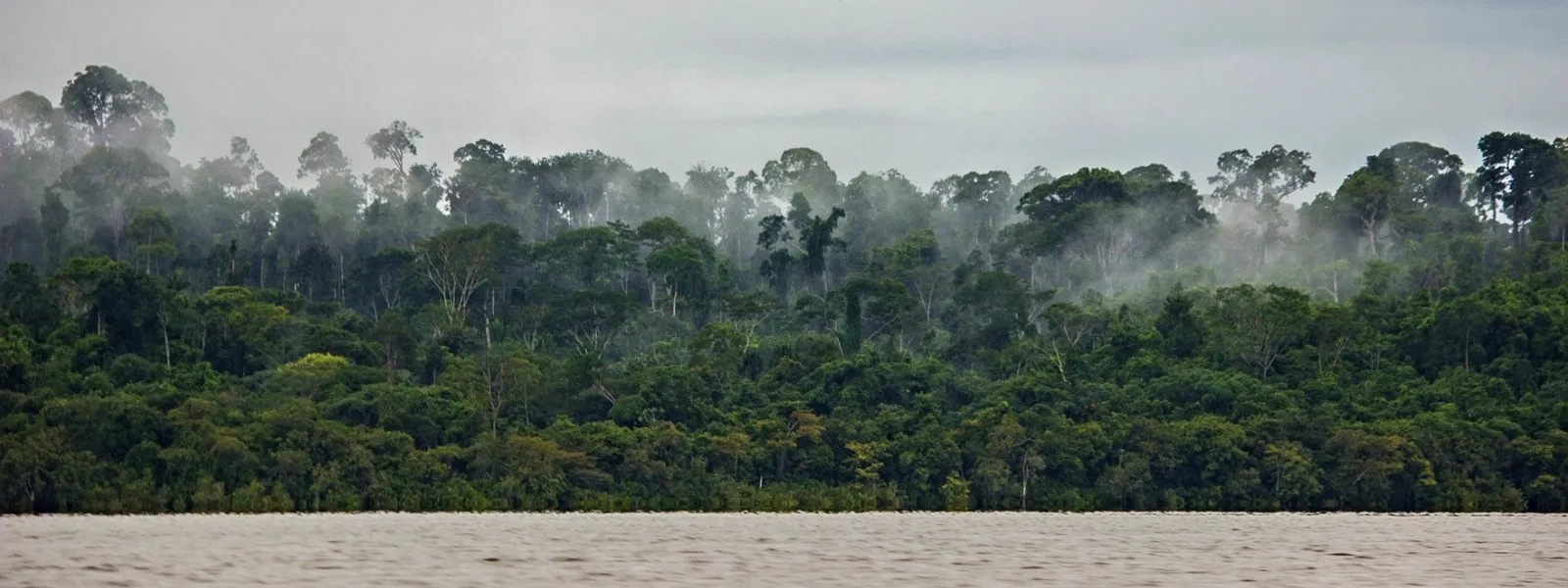
The Belo Monte Dam has caused an environmental and social disaster in the heart of the Amazon—one of the most important ecosystems on the planet.
This situation has only worsened since the hydroelectric plant began operations in 2016. The quest for justice and reparations by the affected indigenous, fishing, and riverine communities continues to this day.
In 2011, the Inter-American Commission on Human Rights (IACHR) granted them protective measures that, to date, have not been fully implemented by the Brazilian State.
Furthermore, since June of that same year, the IACHR has yet to rule on a complaint against the State regarding its international responsibility in the case.
The IACHR may refer the case to the Inter-American Court of Human Rights, which has the authority to issue a ruling condemning the Brazilian State.
Background
The Belo Monte hydroelectric plant—the fourth largest in the world by installed capacity (11,233 MW)—was built on the Xingu River in Pará, a state in northern Brazil.
It was inaugurated on May 5, 2016, with a single turbine. At that time, 80% of the river’s course was diverted, flooding 516 km² of land—an area larger than the city of Chicago. Of that area, 400 km² was native forest. The dam began operating at full capacity in November 2019.
Belo Monte was built and is operated by the Norte Energia S.A. consortium, which is composed primarily of state-owned companies. It was financed by the Brazilian Development Bank (BNDES), which provided the consortium with 25.4 billion reais (approximately US$10.16 billion), the largest investment in the bank’s history. Therefore, the BNDES is also legally responsible for the socio-environmental impacts associated with the hydroelectric plant.
Decades of harm to the environment and people
Human rights violations and degradation of the Amazon have been occurring since the project’s inception. In March 2011, Norte Energía began construction of the dam without adequate consultation and without the prior, free, and informed consent of the affected communities.
The construction caused the forced displacement of more than 40,000 people, severing social and cultural ties. The resettlement plan in Altamira—a city directly affected by the hydroelectric dam—involved housing units located on the outskirts, lacking adequate public services and decent living conditions for the relocated families, with no special provisions for those from indigenous communities.
Belo Monte's operations have caused a permanent, man-made drought in the Volta Grande (or "Great Bend") of the Xingu River, exacerbated by the historic droughts in the Amazon in 2023 and 2024. As a result, the deaths of millions of fish eggs were documented for four consecutive years (from 2021 to 2024), and for the past three years, there has been no upstream migration of fish to spawn and reproduce. Thus, artisanal fishing, the main source of protein for indigenous peoples and riverside communities, was severely affected: fish dropped from 50% to 30% of total protein consumed, replaced by processed foods. In summary, there was an environmental and humanitarian collapse that resulted in the breakdown of fishing as a traditional way of life, food insecurity, and access to drinking water for thousands of families, impoverishment, and disease.
Furthermore, the construction of the dam increased deforestation and intensified illegal logging and insecurity on indigenous and tribal lands, putting the survival of these communities at risk. Another consequence was the deepening of poverty and social conflicts, as well as the strain on health, education, and public safety systems in Altamira—a city ranked as the most violent in the country in 2017, where human trafficking and sexual violence increased. Violence was also reported against human rights defenders involved in the case.
In 2025, during the 30th UN Climate Change Conference (COP30), held in Brazil, the Federal Public Prosecutor’s Office labeled the damage caused by the Belo Monte dam as ecocide.
The search for justice and reparations
Over the years, the Federal Public Prosecutor’s Office in Pará, the Public Defender’s Office, and civil society organizations have filed dozens of legal actions in Brazilian courts to challenge the project’s various irregularities and its impacts. Most of the claims are still pending resolution, some for more than 10 years.
These efforts have failed because the national government has repeatedly overturned rulings in favor of the affected communities by invoking a mechanism that allowed a court president to suspend a judicial decision based solely on generic arguments such as "the national interest" or "economic order."
In the absence of effective responses at the national level, AIDA, together with a coalition of partner organizations, brought the case before the Inter-American Commission on Human Rights (IACHR) and, in 2010, requested precautionary measures to protect the lives, safety, and health of the affected indigenous communities.
On April 1, 2011, the IACHR granted these measures and requested that the Brazilian government suspend environmental permits and any construction work until the conditions related to prior consultation and the protection of the health and safety of the communities are met.
And on June 16, 2011 —together with the Xingu Vivo Para Sempre Movement, the Coordinating Committee of Indigenous Organizations of the Brazilian Amazon, the Diocese of Altamira, the Indigenous Missionary Council, the Pará Society for the Defense of Human Rights and Global Justice— we filed a formal complaint against the Brazilian State for its international responsibility in the violation of the human rights of the people affected in the case. The case was opened for processing in December 2015.
On August 3, 2011, the IACHR amended the precautionary measures to request, instead of the suspension of permits and construction, the protection of people living in voluntary isolation, the health of indigenous communities, and the regularization and protection of ancestral lands.
Current situation
The protective measures granted by the IACHR remain in effect, but the Brazilian government has not fully complied with them, reporting only on general actions. The communities have documented the ongoing violations of their rights. The situation that prompted the request for these measures—the risk to the lives, physical integrity, and ways of life of the communities—persists and has worsened with the hydroelectric plant operating at full capacity and the recent extreme droughts in the Amazon.
In addition to the impacts of Belo Monte, there is a risk of further social and environmental impacts from the implementation of another mining megaproject in the Volta Grande do Xingu. There, the Canadian company Belo Sun plans to build Brazil’s largest open-pit gold mine.
The combined and cumulative impacts of the dam and the mine were not assessed. The government excluded Indigenous peoples, riverine and peasant communities from the project’s environmental permitting process. Despite protests by Indigenous communities and other irregularities surrounding the project, the government of Pará formally authorized the mine in April 2026.
Like other hydroelectric dams, Belo Monte exacerbates the climate emergency by generating greenhouse gas emissions in its reservoir. And it is inefficient amid the longer, more intense droughts caused by the crisis, as it loses its ability to generate power.
The case before the Inter-American Commission
In October 2017, the IACHR announced that it would rule jointly on the admissibility (whether the case meets the requirements for admission) and the merits (whether a human rights violation actually occurred) of the international complaint against the Brazilian State.
Fifteen years after the complaint was filed, the affected communities and the organizations representing them are still awaiting this decision. If the IACHR concludes that human rights violations occurred and issues recommendations that the Brazilian State fails to comply with, it may refer the case to the Inter-American Court of Human Rights, whose rulings are binding.
A potential ruling by the international court in this case would set a regional legal precedent regarding the rights of indigenous and riverine peoples, public participation in megaprojects, and state responsibility in the context of the climate crisis—a precedent that is particularly relevant in light of the Court’s Advisory Opinion No. 32, which reaffirmed the obligations of States to protect the people and communities of the continent from the climate emergency.
Partners:
Related projects
Important progress made towards ocean treaty
States meeting at the United Nations in New York took an important step towards launching negotiations for a new treaty to protect the biodiversity of the high seas (areas beyond the national jurisdiction). Making up two thirds of the global ocean, marine life in the high seas is not effectively protected. A new treaty will rectify this, putting in place measures to protect the rich and globally significant biodiversity and ecosystem services of the high seas and to govern activities undertaken there sustainably. Although the wording of the recommendation did not reflect the very strong support for rapid UN action towards a treaty, it will enable the General Assembly to convene an Intergovernmental Conference. The 35 member organisations of the High Seas Alliance which have campaigned for this treaty were pleased with the recommendation to move forwards. Peggy Kalas of the High Seas Alliance said: “This is a significant step for the high seas and humanity since we are all dependent on the ocean for a healthy planet. A new treaty will bring law and governance to this most neglected and besieged part of our world and we are closer to that goal now. We are profoundly thankful to the many, many states who have worked so hard to achieve this; their determination to protect the global commons for all humankind has been inspiring.” The decision of the Preparatory Committee will now go the UN General Assembly. The overwhelming majority of states are pushing for the next step to be an Intergovernmental Conference (IGC) convened in 2018. An IGC would mean formal negotiations on the text of a new treaty would commence. "Today marks a significant step forward for the world’s ocean," said Lisa Speer, Director of international Oceans at the Natural Resources Defense Council. Sylvia Earle said: “The nations of the world took important steps towards a treaty today. The high seas are half of the world and need the rule of law. To those who have worked so hard at the UN and in support of this moment, we extend an ocean of gratitude and carry forward optimism for a high seas treaty.” Veronica Frank of Greenpeace said: “Although we hoped to see a starting date included for the negotiating conference, it was good to see such overwhelming support for moving the process forward and so many people around the world speaking up for ocean protection. It is now for the UN General Assembly to make that step forward for the ocean and for all the people that depend on it. Anything less would fall short of what is our blue planet needs to recover." Gladys Martínez, an attorney with the Interamerican Association for Environmental Defense, said: “We applaud the commitment of so many delegates to protect nearly half of our planet. We are both proud and grateful for the work of Latin American nations in this regard.” Maria Damanaki of the Nature Conservancy said: “This is a demonstration of global collaboration, and a step towards protecting half of our planet, which today is an unregulated no man's land. We join our partners in the High Seas Alliance in commending the states and organisations that have worked effortlessly to make this happen." “This represents a major step in a long journey driven by a large number of committed states. We need to continue this momentum through to the General Assembly to deliver a resolution for an Intergovernmental Conference” added Tim Packeiser of WWF. In June all States signed on to a global call to action for the ocean, of which the high seas is a major part.
Read more
Letter to Argentine legislators on dams in Patagonia
In a letter sent to the Argentine Congress, civil society organizations expressed their concerns about the construction of large dams in Patagonia. The letter outlines recent scientific studies on the impacts of large dams on the environment, the economy, and local communities, and includes information on existing clean energy alternatives. We write out of deep concern for the crossroads facing the Argentine people: protect the immeasurable ecological heritage of Patagonia, or jeopardize Chinese funding for a significant number of infrastructure and energy projects. We understand that this is not a minor issue, and we hope that the Argentine Congress will make use of the Public Hearing on July 20, not only to evaluate in depth the Kirchner-Cepernic Hydroelectric Complex (KCHC), but also to open up a fundamental conversation for Argentina and all of Latin America: on the development of a truly clean, sovereign, and efficient energy model. We take this opportunity to share information on the negative impacts large dams have on the environment and economies of nations, as well as on affected communities; and on existing alternatives that can provide cheaper and more efficient energy. Argentina must not consider itself obliged to alter one of the last pristine areas on the planet, home of the last glacial river that runs freely from mountain peaks to the ocean. There are currently many energy options that are better than hydroelectric dams. Argentina has the opportunity to be a pioneer in the development and implementation of these renewable energy technologies. Worldwide clean energy trends demonstrate this: in 2015, the world added 63 GW of wind energy and 47 GW of solar energy, compared to just 22 GW of energy from large hydropower plants. In some parts of the world, large dams are being dismantled in recognition that their costs outweigh their benefits; and in others, private companies are discarding large dam projects because they are no longer viable or profitable. Furthermore, the United States of America has decided, as a national policy, to oppose any loan, donation, strategy, or policy to support the construction of any large hydroelectric dam. Wind and solar energy are now economically competitive, faster to build and operate, and less vulnerable to a changing climate. In addition, the falling prices of battery storage, accompanied by innovations in smart grid technology, offers ways to resolve the problem of intermittent renewables without the need to construct new large dams. Large hydropower dams are an obsolete technology. They are highly vulnerable to climate change (they can be paralyzed by droughts and may become dangerous in extreme weather events); worsen climate change by destroying carbon sinks and emitting gases from their reservoirs; harm biodiversity and local communities; cost a fortune; and take too long to become operational. Furthermore, the continued promotion of large dams by construction companies—as in the current case linked to Chinese funding—delays the implementation of available and necessary solutions towards the energy transition that our planet needs.
Read more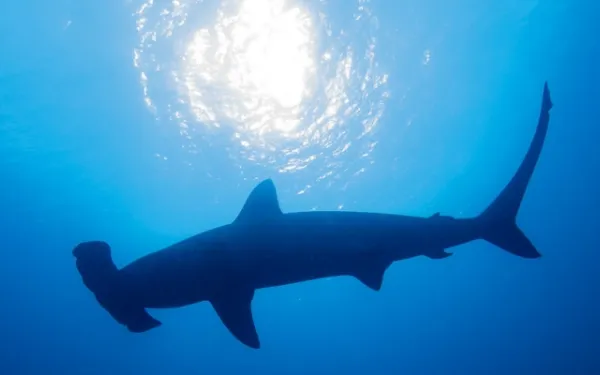
Shark conservation is at risk in Costa Rica
In Costa Rica, it’s now up to the government to decide the future of endangered hammerhead sharks. If the government halted the export of all hammerhead shark products in the next year, it could stave off extinction of these amazing creatures. That’s the recommendation of Costa Rica’s Scientific Advisory Council for the Convention on International Trade in Endangered Species of Wild Fauna and Flora. The Convention is an international agreement to prevent trade from threatening the survival of wild animals and plants. Of the nearly 100 species of sharks and rays in Costa Rica, 15% are in danger of extinction due to overfishing and environmental destruction or degradation. Hammerhead sharks were listed as an endangered species in 2014 and have lost up to 90% of their population. In response, the Scientific Advisory Council recommended in April 2017 that Costa Rica should prohibit export of hammerhead products for at least one year, or until the country reduces hammerhead fishing and the health of the species improves. The role of the fishing industry Shortly after the Scientific Advisory Council made its recommendation, the Costa Rican government issued an executive decree. The Costa Rican Institute of Fishing and Aquaculture (Incopesca) and the Ministry of Agriculture and Livestock were given authority over the export of products made from threatened or endangered sharks. However, both government agencies favor the fishing industry over marine conservation, according to Mario Espinoza Mendieta, researcher from the University of Costa Rica and member of the Convention’s scientific council. “This dynamic tips the balance in favor of the production sector,” Espinoza said. Incopesca’s Board of Directors represent various fishing interests across the country—a position that does not always align with the protection and sustainable use of marine resources, according to Espinoza. Recently, Incopesca was questioned because it failed to prosecute shrimping boats that were illegally fishing in protected waters. Shark commerce While exporting shark products is permitted within the regulations established by the Convention, shark finning—the practice of cutting fins and throwing the shark back into the ocean—is illegal in Costa Rica. Considered a delicacy in some Asian countries, shark fins are often valued at upwards of $100 per kilo. Last February, a Costa Rican court issued the first felony criminal sentence for shark finning against a Taiwanese businesswoman who was found in a port with illegally harvested shark fins. Using international law, AIDA and Conservation International worked with Costa Rica’s Public Prosecutor to help resolve the case. A responsible decision The governments of Colombia and Ecuador have developed campaigns to protect hammerhead sharks. But in Costa Rica, Incopesca is responsible for the future of the species and will hopefully take the Scientific Advisory Council’s recommendations into account. Because the hammerhead’s numbers are so low, it may only take one bad decision to cause their extinction. Other species, including the gray shark, are also at risk from the fishing industry. If Costa Rica wants to preserve its natural wealth for the future, it should set an example of preservation by putting principles of sustainability over economic gain.
Read more