
Project
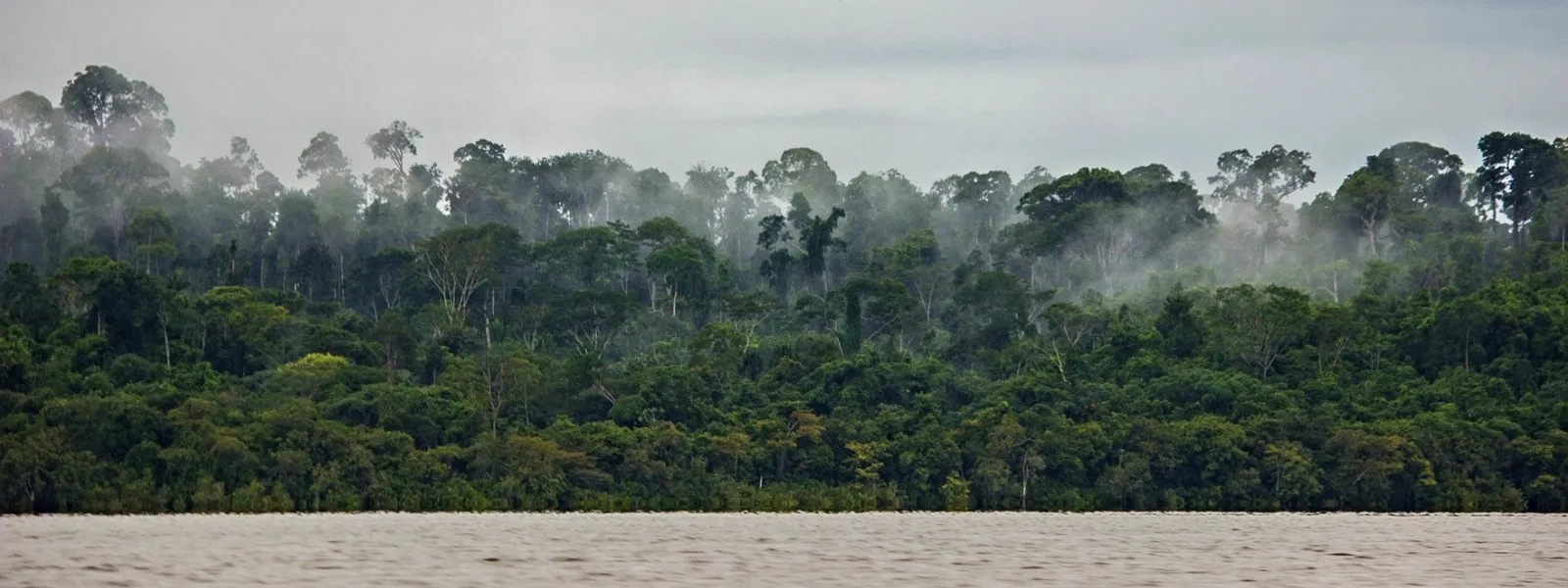
Amazon Watch / Maíra Irigaray
The Belo Monte Dam on the Xingu River: 10 years of impacts in the Amazon and the search for reparations
The Belo Monte Dam has caused an environmental and social disaster in the heart of the Amazon—one of the most important ecosystems on the planet.
This situation has only worsened since the hydroelectric plant began operations in 2016. The quest for justice and reparations by the affected indigenous, fishing, and riverine communities continues to this day.
In 2011, the Inter-American Commission on Human Rights (IACHR) granted them protective measures that, to date, have not been fully implemented by the Brazilian State.
Furthermore, since June of that same year, the IACHR has yet to rule on a complaint against the State regarding its international responsibility in the case.
The IACHR may refer the case to the Inter-American Court of Human Rights, which has the authority to issue a ruling condemning the Brazilian State.
Background
The Belo Monte hydroelectric plant—the fourth largest in the world by installed capacity (11,233 MW)—was built on the Xingu River in Pará, a state in northern Brazil.
It was inaugurated on May 5, 2016, with a single turbine. At that time, 80% of the river’s course was diverted, flooding 516 km² of land—an area larger than the city of Chicago. Of that area, 400 km² was native forest. The dam began operating at full capacity in November 2019.
Belo Monte was built and is operated by the Norte Energia S.A. consortium, which is composed primarily of state-owned companies. It was financed by the Brazilian Development Bank (BNDES), which provided the consortium with 25.4 billion reais (approximately US$10.16 billion), the largest investment in the bank’s history. Therefore, the BNDES is also legally responsible for the socio-environmental impacts associated with the hydroelectric plant.
Decades of harm to the environment and people
Human rights violations and degradation of the Amazon have been occurring since the project’s inception. In March 2011, Norte Energía began construction of the dam without adequate consultation and without the prior, free, and informed consent of the affected communities.
The construction caused the forced displacement of more than 40,000 people, severing social and cultural ties. The resettlement plan in Altamira—a city directly affected by the hydroelectric dam—involved housing units located on the outskirts, lacking adequate public services and decent living conditions for the relocated families, with no special provisions for those from indigenous communities.
Belo Monte's operations have caused a permanent, man-made drought in the Volta Grande (or "Great Bend") of the Xingu River, exacerbated by the historic droughts in the Amazon in 2023 and 2024. As a result, the deaths of millions of fish eggs were documented for four consecutive years (from 2021 to 2024), and for the past three years, there has been no upstream migration of fish to spawn and reproduce. Thus, artisanal fishing, the main source of protein for indigenous peoples and riverside communities, was severely affected: fish dropped from 50% to 30% of total protein consumed, replaced by processed foods. In summary, there was an environmental and humanitarian collapse that resulted in the breakdown of fishing as a traditional way of life, food insecurity, and access to drinking water for thousands of families, impoverishment, and disease.
Furthermore, the construction of the dam increased deforestation and intensified illegal logging and insecurity on indigenous and tribal lands, putting the survival of these communities at risk. Another consequence was the deepening of poverty and social conflicts, as well as the strain on health, education, and public safety systems in Altamira—a city ranked as the most violent in the country in 2017, where human trafficking and sexual violence increased. Violence was also reported against human rights defenders involved in the case.
In 2025, during the 30th UN Climate Change Conference (COP30), held in Brazil, the Federal Public Prosecutor’s Office labeled the damage caused by the Belo Monte dam as ecocide.
The search for justice and reparations
Over the years, the Federal Public Prosecutor’s Office in Pará, the Public Defender’s Office, and civil society organizations have filed dozens of legal actions in Brazilian courts to challenge the project’s various irregularities and its impacts. Most of the claims are still pending resolution, some for more than 10 years.
These efforts have failed because the national government has repeatedly overturned rulings in favor of the affected communities by invoking a mechanism that allowed a court president to suspend a judicial decision based solely on generic arguments such as "the national interest" or "economic order."
In the absence of effective responses at the national level, AIDA, together with a coalition of partner organizations, brought the case before the Inter-American Commission on Human Rights (IACHR) and, in 2010, requested precautionary measures to protect the lives, safety, and health of the affected indigenous communities.
On April 1, 2011, the IACHR granted these measures and requested that the Brazilian government suspend environmental permits and any construction work until the conditions related to prior consultation and the protection of the health and safety of the communities are met.
And on June 16, 2011 —together with the Xingu Vivo Para Sempre Movement, the Coordinating Committee of Indigenous Organizations of the Brazilian Amazon, the Diocese of Altamira, the Indigenous Missionary Council, the Pará Society for the Defense of Human Rights and Global Justice— we filed a formal complaint against the Brazilian State for its international responsibility in the violation of the human rights of the people affected in the case. The case was opened for processing in December 2015.
On August 3, 2011, the IACHR amended the precautionary measures to request, instead of the suspension of permits and construction, the protection of people living in voluntary isolation, the health of indigenous communities, and the regularization and protection of ancestral lands.
Current situation
The protective measures granted by the IACHR remain in effect, but the Brazilian government has not fully complied with them, reporting only on general actions. The communities have documented the ongoing violations of their rights. The situation that prompted the request for these measures—the risk to the lives, physical integrity, and ways of life of the communities—persists and has worsened with the hydroelectric plant operating at full capacity and the recent extreme droughts in the Amazon.
In addition to the impacts of Belo Monte, there is a risk of further social and environmental impacts from the implementation of another mining megaproject in the Volta Grande do Xingu. There, the Canadian company Belo Sun plans to build Brazil’s largest open-pit gold mine.
The combined and cumulative impacts of the dam and the mine were not assessed. The government excluded Indigenous peoples, riverine and peasant communities from the project’s environmental permitting process. Despite protests by Indigenous communities and other irregularities surrounding the project, the government of Pará formally authorized the mine in April 2026.
Like other hydroelectric dams, Belo Monte exacerbates the climate emergency by generating greenhouse gas emissions in its reservoir. And it is inefficient amid the longer, more intense droughts caused by the crisis, as it loses its ability to generate power.
The case before the Inter-American Commission
In October 2017, the IACHR announced that it would rule jointly on the admissibility (whether the case meets the requirements for admission) and the merits (whether a human rights violation actually occurred) of the international complaint against the Brazilian State.
Fifteen years after the complaint was filed, the affected communities and the organizations representing them are still awaiting this decision. If the IACHR concludes that human rights violations occurred and issues recommendations that the Brazilian State fails to comply with, it may refer the case to the Inter-American Court of Human Rights, whose rulings are binding.
A potential ruling by the international court in this case would set a regional legal precedent regarding the rights of indigenous and riverine peoples, public participation in megaprojects, and state responsibility in the context of the climate crisis—a precedent that is particularly relevant in light of the Court’s Advisory Opinion No. 32, which reaffirmed the obligations of States to protect the people and communities of the continent from the climate emergency.
Partners:
Related projects
How to fight fracking with the law
Fracking is spreading rapidly through Latin America. If left to develop blindly, it could cause irreparable harm not just to the environment but also to public health. Claudia Velarde, a Bolivian environmental attorney, believes humanity and Mother Earth should not be seen as different or isolated beings. “The activities that affect the conservation of nature will have repercussions in our lives as well,” she said. This conviction led her to join AIDA’s team of attorneys earlier in 2017, to be part of our efforts to protect the environment from extractive activities like fracking and large-scale mining. For our Freshwater Protection Program, Claudia helps coordinate the work of the Latin American Alliance on Fracking, a coalition that promotes public debate, awareness, and education among civil society groups. The Alliance also supports resistance efforts by communities throughout the region. Confirmed risks The extraction of gas and oil through fracking, or hydraulic fracturing, could have a “nefarious effect” on the quality and availability of potable water. This was the conclusion of the most exhaustive study yet completed by the Environmental Protection Agency of the United States, the nation that pioneered this controversial technique. Oil and gas companies inject fracking wells with large amounts of water mixed with highly concentrated chemicals. The toxic solution fractures rocks to release trapped oil and/or gas. According to the study, the poisonous fluids leach through soil and contaminate groundwater. By contaminating water sources, fracking also affects the lives of the people, animals, plants, and entire ecosystems that depend on them. Ignoring the danger “Dependence on fossil fuels is leading us to an unprecedented environmental and climate crisis,” Claudia explained. “Fracking has serious impacts, so it’s important that people have real and complete information on the policies and procedures related to it.” One procedure that should be followed before any fracking operation is authorized is the preparation of an Environmental Impact Assessment. A proper assessment includes evaluation of possible environmental damages and identification of measures to mitigate the harms. In Latin America, corporations—rather than the governments that regulate them—prepare Environmental Impact Assessments. But often, governments of the region allow companies to skirt this procedure. In Argentina, the environmental authority granted a permit for Petrolera El Trebol to explore and exploit four oil wells conventionally (without using fracking) near Llancanelo Lagoon, a wetland of international importance. Months later, the company decided to frack the wells. Through an abbreviated process, the government authorized the change without requiring a new Environmental Impact Assessment. Faced with this dangerous reality, Argentina’s Foundation for the Environment and Natural Resources (FARN) filed a civil suit, requesting an injunction until the government’s prior authorization is invalidated. The suit argues that, in addition to violating the obligation to require a new Environmental Impact Assessment, the government also failed to respect the affected communities’ right to give their free, prior and informed consent to the project. “We’re appealing to justice to put a stop to this outrage, so the people have an opportunity to discuss, with adequate information, whether or not they approve of these types of activities that cause irremediable environmental damage,” explained Santiago Cané of FARN. “If they do accept fracking, it must be done with the utmost care, using the measures and regulations designed to avoid or mitigate damages.” AIDA is supporting FARN’s legal work with arguments based on international law. The most important is the precautionary principle, which holds that where any uncertainty exists about the risk of serious harm to the environment and human health, the most stringent precautions should be applied. “Given that there is no study with enough technical information on the possible damages of fracking, this principle should be applied to avoid the consolidation of impacts in these and other cases,” Claudia explained. Despite scientific evidence demonstrating many harmful consequences of fracking, the use of the technique is expanding throughout Latin America. Faced with this worrying trend, AIDA will continue working with our partners to find legal solutions with widespread impacts throughout the region.
Read more
Turtles, sharks and tuna: why we’re working to protect our ocean
About a third of the world’s fisheries have crashed, and the rest are in bad shape. It’s a stark reality that affects not just our own food security, but the health and future of the many creatures that travel through the farthest reachs of our ocean. Out in the high seas, far beyond view of our coasts, sharks and whales glide through the deep blue water; a lone sea turtle pops her head up for air, catching a glimpse of the birds soaring overhead. Far from national boundaries, and protected by no country, these deep waters are rich in biodiversity—sustaining everything from corals to mammals to the fish we eat. Despite their importance, these international waters—and the life within them—are at risk. A lack of coordinated oversight has led to overfishing, illegal fishing, pollution, and habitat destruction. Marine life struggles with all these stressors—and a warming climate. A unique refuge Through their interactions with Latin America’s coasts, the high seas form rich environments called outcropping systems. Near Chile, Costa Rica, Mexico, Panama and Brazil, these nutrient-rich waters feed species of great ecological and commercial importance. Within them live the mahi mahi, yellowfin and bluefin tuna, sailfish, swordfish, and others on which the fishing industry—and therefore much of the region’s economy—depends. In fact, deep-sea fishing for tuna and similar species in the Atlantic and Pacific oceans generates more than $1.2 billion in revenue a year, according to the Inter-American Tropical Tuna Commission. In the Eastern Tropical Pacific, it’s estimated that a single hammerhead shark generates as much as $1.6 million dollars in tourism throughout its 35-year lifespan, according to a study by the University of Costa Rica. Beyond the economic value they provide to humans, the high seas also hold tremendous value for the species that depend on them. Five species of sea turtle, most of which are threatened, migrate through these waters to lay their eggs on coastal beaches. The outcropping systems also provide essential breeding grounds for blue and humpback whales. Nobody governs the high seas According to a 2014 Global Ocean Commission report, the degradation of these important ecosystems is driving the entire ocean to the point of collapse. In fact, 12 percent of the species living in the Eastern Tropical Pacific are in danger of extinction, according to the International Union for the Conservation of Nature. Current international legislation has gaps that leave these offshore waters unprotected, further endangering the marine life that lives in them, explains Gladys Martínez, AIDA’s Senior Marine Attorney. The greatest current need is to create marine protected areas, off-limits to commercial activity. We also need an authority that mandates environmental impact assessments for activities on the high seas—something that was not contemplated when the UN Convention on the Law of the Sea, the most sweeping agreement governing world oceans, was created. Our hope is that a new international treaty convened by the United Nations General Assembly will soon fill these gaps. Representatives from governments around the world have already had several successful meetings to pave the way for its negotiation. We’re working as part of the High Seas Alliance—a coalition of 32 NGOs—to ensure the voice of Latin American civil society is heard in the creation of this new treaty, which will protect the deepest reaches of our ocean far into the future.
Read more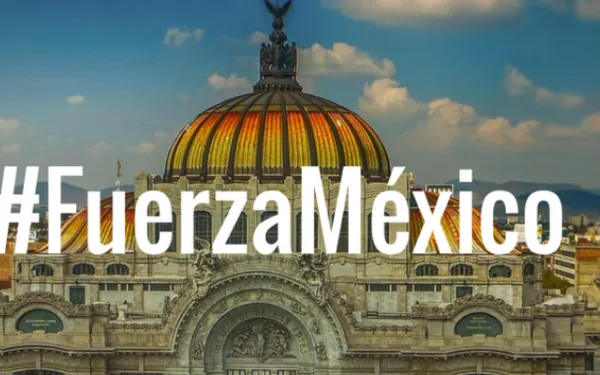
Lessons in Strength and Solidarity from the Mexico City Earthquake
Seconds before 1:15 p.m. on September 19, the Earth reminded us just how fragile life is. As soon as we felt the first movement, and the seismic alert confirmed what was happening, our Mexico City team suspended a call with team members in five countries and took to the streets. Words can’t describe the emotions that engulfed us during the next hours and days. Fear and joy, anxiety and solidarity, nervousness and hope. Just two hours before, we had participated in a simulation in honor of the victims of the devastating earthquake exactly 32 years before. While for some residents of Mexico City these exercises are a repetitive protocol, we in AIDA always follow them because our team consists of professionals from across Latin America, some who don’t have experience with earthquakes. So luckily our team knew what to do. We met at the rendezvous point, as best we could. We were relieved to learn the teams of AIDA and CEMDA—with whom we share offices—were all safe and accounted for. But the calm was short-lived, as reports came in from nearby streets: building collapses, gas leaks, the loss of power and communication. The city suspended all activities. Those who were able showed up to help. Damaged streets were flooded with volunteers. Astrid Puentes, co-director of AIDA, gave shelter to our team in her nearby home. Those who could returned to their homes at the end of the day. Unfortunately, the house where one of our interns was staying was left uninhabitable. These have been difficult days. Work was put on hold as our team joined the relief efforts. We have seen so many signs of solidarity. Despite the tragedy, the humility and confidence of the Mexican people has awakened in us a new sense of hope. Everyone could help in some way. We’ve seen therapists, lawyers, motorcyclists, cooks, blacksmiths, architects, masons, journalists, and clowns offering their knowledge and experience to one cause: helping the victims, whether they knew them or not. We won’t emerge from this situation unscathed. While AIDA’s office remains in good condition, the news of friends who have lost loved ones or their homes continues to arrive. But we’ve seen the spectacular strength and resilience of Mexico’s people; they work with their hands as well as their hearts. We know now that the reconstruction that awaits us will have its foundation in solidarity and empathy. We’re confident that the millions of people who have been awakened, who are acting as conscious and involved citizens, will continue working for our city and our country. And we return to our work this week conscious that thousands of people still need help, not just in Mexico City, but also in the states of Morelos, Puebla, Oaxaca, Veracruz, Tabasco, and Chiapas. We will work for them and for the whole continent. We will work for the Earth, which has reminded us that life is but an instant, and that it’s always worth fighting for. -- In solidarity, AIDA’s team from Mexico City: Astrid, Ava, Cecilia, Laura, Paulina, Rodrigo, and Victor. ¡#FuerzaMéxico!
Read more