

Project
Amazon Watch / Maíra Irigaray
The Belo Monte Dam on the Xingu River: 10 years of impacts in the Amazon and the search for reparations
The Belo Monte Dam has caused an environmental and social disaster in the heart of the Amazon—one of the most important ecosystems on the planet.
This situation has only worsened since the hydroelectric plant began operations in 2016. The quest for justice and reparations by the affected indigenous, fishing, and riverine communities continues to this day.
In 2011, the Inter-American Commission on Human Rights (IACHR) granted them protective measures that, to date, have not been fully implemented by the Brazilian State.
Furthermore, since June of that same year, the IACHR has yet to rule on a complaint against the State regarding its international responsibility in the case.
The IACHR may refer the case to the Inter-American Court of Human Rights, which has the authority to issue a ruling condemning the Brazilian State.
Background
The Belo Monte hydroelectric plant—the fourth largest in the world by installed capacity (11,233 MW)—was built on the Xingu River in Pará, a state in northern Brazil.
It was inaugurated on May 5, 2016, with a single turbine. At that time, 80% of the river’s course was diverted, flooding 516 km² of land—an area larger than the city of Chicago. Of that area, 400 km² was native forest. The dam began operating at full capacity in November 2019.
Belo Monte was built and is operated by the Norte Energia S.A. consortium, which is composed primarily of state-owned companies. It was financed by the Brazilian Development Bank (BNDES), which provided the consortium with 25.4 billion reais (approximately US$10.16 billion), the largest investment in the bank’s history. Therefore, the BNDES is also legally responsible for the socio-environmental impacts associated with the hydroelectric plant.
Decades of harm to the environment and people
Human rights violations and degradation of the Amazon have been occurring since the project’s inception. In March 2011, Norte Energía began construction of the dam without adequate consultation and without the prior, free, and informed consent of the affected communities.
The construction caused the forced displacement of more than 40,000 people, severing social and cultural ties. The resettlement plan in Altamira—a city directly affected by the hydroelectric dam—involved housing units located on the outskirts, lacking adequate public services and decent living conditions for the relocated families, with no special provisions for those from indigenous communities.
Belo Monte's operations have caused a permanent, man-made drought in the Volta Grande (or "Great Bend") of the Xingu River, exacerbated by the historic droughts in the Amazon in 2023 and 2024. As a result, the deaths of millions of fish eggs were documented for four consecutive years (from 2021 to 2024), and for the past three years, there has been no upstream migration of fish to spawn and reproduce. Thus, artisanal fishing, the main source of protein for indigenous peoples and riverside communities, was severely affected: fish dropped from 50% to 30% of total protein consumed, replaced by processed foods. In summary, there was an environmental and humanitarian collapse that resulted in the breakdown of fishing as a traditional way of life, food insecurity, and access to drinking water for thousands of families, impoverishment, and disease.
Furthermore, the construction of the dam increased deforestation and intensified illegal logging and insecurity on indigenous and tribal lands, putting the survival of these communities at risk. Another consequence was the deepening of poverty and social conflicts, as well as the strain on health, education, and public safety systems in Altamira—a city ranked as the most violent in the country in 2017, where human trafficking and sexual violence increased. Violence was also reported against human rights defenders involved in the case.
In 2025, during the 30th UN Climate Change Conference (COP30), held in Brazil, the Federal Public Prosecutor’s Office labeled the damage caused by the Belo Monte dam as ecocide.
The search for justice and reparations
Over the years, the Federal Public Prosecutor’s Office in Pará, the Public Defender’s Office, and civil society organizations have filed dozens of legal actions in Brazilian courts to challenge the project’s various irregularities and its impacts. Most of the claims are still pending resolution, some for more than 10 years.
These efforts have failed because the national government has repeatedly overturned rulings in favor of the affected communities by invoking a mechanism that allowed a court president to suspend a judicial decision based solely on generic arguments such as "the national interest" or "economic order."
In the absence of effective responses at the national level, AIDA, together with a coalition of partner organizations, brought the case before the Inter-American Commission on Human Rights (IACHR) and, in 2010, requested precautionary measures to protect the lives, safety, and health of the affected indigenous communities.
On April 1, 2011, the IACHR granted these measures and requested that the Brazilian government suspend environmental permits and any construction work until the conditions related to prior consultation and the protection of the health and safety of the communities are met.
And on June 16, 2011 —together with the Xingu Vivo Para Sempre Movement, the Coordinating Committee of Indigenous Organizations of the Brazilian Amazon, the Diocese of Altamira, the Indigenous Missionary Council, the Pará Society for the Defense of Human Rights and Global Justice— we filed a formal complaint against the Brazilian State for its international responsibility in the violation of the human rights of the people affected in the case. The case was opened for processing in December 2015.
On August 3, 2011, the IACHR amended the precautionary measures to request, instead of the suspension of permits and construction, the protection of people living in voluntary isolation, the health of indigenous communities, and the regularization and protection of ancestral lands.
Current situation
The protective measures granted by the IACHR remain in effect, but the Brazilian government has not fully complied with them, reporting only on general actions. The communities have documented the ongoing violations of their rights. The situation that prompted the request for these measures—the risk to the lives, physical integrity, and ways of life of the communities—persists and has worsened with the hydroelectric plant operating at full capacity and the recent extreme droughts in the Amazon.
In addition to the impacts of Belo Monte, there is a risk of further social and environmental impacts from the implementation of another mining megaproject in the Volta Grande do Xingu. There, the Canadian company Belo Sun plans to build Brazil’s largest open-pit gold mine.
The combined and cumulative impacts of the dam and the mine were not assessed. The government excluded Indigenous peoples, riverine and peasant communities from the project’s environmental permitting process. Despite protests by Indigenous communities and other irregularities surrounding the project, the government of Pará formally authorized the mine in April 2026.
Like other hydroelectric dams, Belo Monte exacerbates the climate emergency by generating greenhouse gas emissions in its reservoir. And it is inefficient amid the longer, more intense droughts caused by the crisis, as it loses its ability to generate power.
The case before the Inter-American Commission
In October 2017, the IACHR announced that it would rule jointly on the admissibility (whether the case meets the requirements for admission) and the merits (whether a human rights violation actually occurred) of the international complaint against the Brazilian State.
Fifteen years after the complaint was filed, the affected communities and the organizations representing them are still awaiting this decision. If the IACHR concludes that human rights violations occurred and issues recommendations that the Brazilian State fails to comply with, it may refer the case to the Inter-American Court of Human Rights, whose rulings are binding.
A potential ruling by the international court in this case would set a regional legal precedent regarding the rights of indigenous and riverine peoples, public participation in megaprojects, and state responsibility in the context of the climate crisis—a precedent that is particularly relevant in light of the Court’s Advisory Opinion No. 32, which reaffirmed the obligations of States to protect the people and communities of the continent from the climate emergency.
Partners:
Related projects
5 ways our governments can confront climate change
As individuals, we know about the small actions we can take to help reduce the emissions that cause climate change. But what can and should our governments do, seeing as their large-scale actions are fundamental to the welfare of their people? Earth, we have a problem: we’re essentially melting. High rates of greenhouse gas emissions, paired with environmental degradation and the overexploitation of natural resources, have us in a race against time. Ninety-seven percent of scientists agree that climate change is a result of human activities. And if we fail to stop global warming soon, the changes will be catastrophic. Each year, at the United Nations climate conference, global leaders meet to discuss actions we can take to help prevent, and be better prepared for, climate change. At COP21 the first binding global climate accord, the Paris Agreement, was born. This year, during COP23, delegates seek to establish rules to allow for its proper implementation. As individuals, most of us understand what we can do to reduce emissions: save energy, use the car less, recycle more, make better consumption choices, and engage in family planning. But what can our governments do? To discuss their contribution is to talk about large-scale measures that are vital to ensuring a better future for all. 1. Protect and restore key ecosystems Respect for nature is fundamental. Governments must protect ecosystems key to the fight against climate change: rivers, wetlands, oceans, forests and mangroves absorb large quantities of carbon, slowing warming. Mangroves also serve as a barrier against tropical storms, and wetlands absorb excess water from floods, both extreme weather events exacerbated by climate change. “Healing the natural system is the most feasible, realistic and fair option, since it would benefit humanity and all species,” said Florencia Ortúzar, an attorney with AIDA’s Climate Change Program. “In terms of conservation and restoration, we’re in a race against time, and we’re already beginning to witness alarming natural phenomena, like forests so degraded they’re losing their ability to absorb carbon.” 2. Support small agricultural producers According to the FAO, the meat industry is responsible for 15 to 18 percent of all greenhouse gas emissions, exceeding even those of the transportation sector. In addition, it is the most significant source of water use and contamination in the world. Today, 80 percent of all agricultural production goes toward feeding animals not people. The expansion of land for livestock, and the crops to feed them, is the most significant cause of deforestation in the Amazon. Governments can make a difference by supporting small local producers who, unlike large factory farms, employ sustainable practices, care about land restoration, benefit nearby communities, and make animals and crops more resilient to climate change. It’s less about everybody becoming vegetarians, but more about supporting those who produce our food with a respect for nature. 3. Promote green energy Thirty-five percent of all global emissions come from energy production. But as countries bet on more development, they’re also betting on more energy production. But as countries bet on more development, they’re also betting on more energy. While thermoelectric and hydroelectric energies were long considered the cheapest options, technological developments have allowed us to find better, cheaper, more efficient alternatives. With proper long-term planning, nations can avoid old climate-aggravating energy sources (hydropower is not green) and opt for small wind, solar, geothermal, oceanic and other projects that adapt to a place’s unique characteristics. “When thinking about energy, it’s best to bet on a diversified matrix, prioritizing projects that are close to places where people need energy, saving on losses and infrastructure,” Ortúzar explained. “We must give absolute priority to the protection of nature. Every action, public policy, or strategy should be analyzed with nature in mind, and the production of energy is a good starting point.” 4. Combat short-lived climate pollutants Carbon dioxide (CO2) is the most infamous greenhouse gas. Since it remains in the atmosphere for centuries (even millennia), even if we stopped all its emissions sources today, the effects of climate change would continue. The good news is that other contaminants exist that contribute to climate change and only last a few days or years in the atmosphere. They’re known as short-lived climate pollutants, and they’re responsible for 30 to 45 percent of the emissions that cause global warming. These pollutants include black carbon (soot), methane, ozone, and the hydro fluorocarbons found in refrigerants. Their effective control, through national policies and regulations, could accelerate the fight against climate change in the short term. In addition, because they cause serious air pollution, measures to mitigate them would directly benefit human health. 5. Bet on adaptation, not just mitigation In the fight against climate change, work aimed at reducing emissions, stopping their effects and diminishing future consequences is known as mitigation. It is important. However, some communities are already experiencing tragic consequences due to changes in climate over a short period of time. So we also must act to prevent catastrophes, increase resilience, and reduce vulnerability, which is known as adaptation. Projects to mitigate emissions are more attractive financially than those designed for adaptation, which are generally focused on the most vulnerable communities. But it is important to give adaptation the significance it deserves in recognition of the fact that the impacts of climate change are already a grave reality for many. At this year’s COP, representatives are discussing a “loss and damage” mechanism, referring to the compensation that developed countries – the main causes of climate change – must make to developing countries, which suffer significant losses due to adverse climate effects, Ortúzar explained. Our governments must support these discussions and commit to the effective use of resources, so all the world’s people can be better prepared for, and help to prevent, greater changes to our climate.
Read more
Honoring the indigenous connection to the San Pedro Mezquital River
In Northwest Mexico, the Western Sierra Madre Mountains rise like giants from the coastal wetlands of the Gulf of California to the Central Mexican Plateau. Indigenous communities have long found shelter in these isolated lands, and the space to maintain their culture and way of life. The region’s last free-flowing river cuts smoothly through the mountains, carving out fertile valleys, carrying fresh water and life downstream to the wetlands of Marismas Nacionales. The Nayeri and Wixárika people venerate the San Pedro Mezquital River. It brings life to their lands, and many of their sacred sites are dotted along its winding path. Despite its importance, the river—and with it the rights of more than 15,000 indigenous peoples—are at risk from the proposed Las Cruces hydroelectric dam. The dam’s reservoir would flood 14 sacred ceremonial sites, and threaten their culture and way of life. I was honored to walk alongside the Nayeri and Wixárika people last May, and participate in a joint ceremony intended to show their commitment to defending their rights in the face of this government-sponsored megaproject. It’s a commitment that was recently and formally manifested again, when representatives presented their case before the United Nation’s Special Rapporteur on the rights of indigenous peoples. The images I captured of that pilgrimage are a testament to the beauty and strength of the living indigenous cultures of the Western Sierra Madre. We left from the town of Rosamorada in Nayarit State on a pilgrimage to Keiyatsita, a ceremonial site along the San Pedro Mezquital River. We walked single file, winding up into the mountains and then down, again, to the river’s edge. When we arrived to the river, we performed a ritual, and were marked with ashes and creole corn flour to protect us on the journey. Walking beside so many indigenous people, of all ages—mothers and fathers, children and elders—was an enriching and inspiring experience. This particular pilgrimage was historic, as it brought together two different indigenous communities—the Náyeri and the Wixárika—to honor the sacred spaces they share. In a joint declaration, they wrote that, beyond the spiritual reasons for the ceremony, they came together: "to unite against the hydroelectric project Las Cruces and thus show the Mexican government that we are not alone and we are not isolated… After this historic ceremony, both indigenous groups will further strengthen our cultural, spiritual, political and legal struggle and defense against the aforementioned dam, as well as strengthen our ties with other indigenous peoples of Mexico and the world.” They walked to honor the river, to nurture the earth, and to demonstrate their commitment to protecting their sacred spaces. Both indigenous groups see themselves as the guardians of these sites—places like Keiyatsita that provide them with the knowledge and wisdom of how to care for their mother earth. These sites are vital not just to their historical memory, but to their culture and identity. The ceremony at Keiyatsita began in the afternoon. Through prayer, song and dance they expressed their devotion to their native corn gods, Tatei Niwetsika, or mother Maíz, in her five colors—yellow, blue, pink, white and red. In the middle of the night, the animals that walked beside us through the mountains were offered up to the gods amidst the river’s running water. The prayers, songs and ceremony lasted all through the night. These sacred sites along the San Pedro Mezquital river are living spaces, and part of what makes Mexico so rich. They are a reflection of the indigenous cultures and traditions that remain very much alive in the Western Sierra Madre Mountains. They are places that, because of their cultural and spiritual importance, must be honored and protected as part of our international heritage. Indigenous peoples are the best guardians of our planet. And now, they are called on again to protect this unique and precious place—the last free-flowing river in Northwest Mexico and the lands it travels through, from the peaks of Durango to the mangroves of Nayarit along the Gulf of California. Representatives of the indigenous communities of Nayarit stood this week before Victoria Tauli-Corpuz, the United Nationals Special Rapporteur on the rights of indigenous peoples, and voiced their opposition to the dam that threatens their territory and way of life. They explained that they have not given, and will not give, their consent for the advancement of a project that would destroy their sacred sites and the river that provides them with life. Learn more about our fight to protect the San Pedro Mezquital
Read more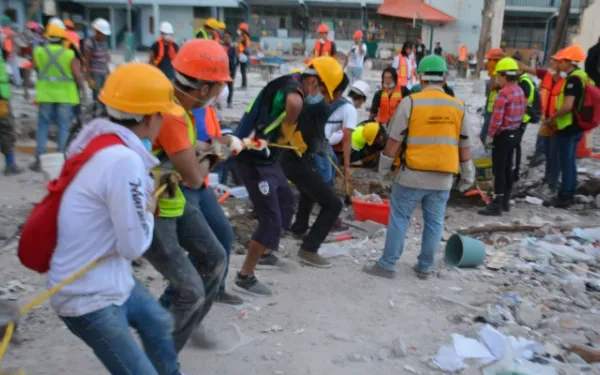
After the Mexico City earthquake, a call to create a better city
About a month ago, on September 19, a 7.1 magnitude earthquake struck near the heart of Mexico City. In the quake’s aftermath, on top of all the tears and fear and aguish, I was overcome with solidarity and love, by the signs of an awakened and united citizenry. I’ve been living here for more than 13 years, and never before have I felt so proud to call this place home. Everyone who could went out to the streets to help. It was impressive to see how we employed our professions, our skills, and our pastimes in the service of others: medicine, engineering, architecture, cooking, masonry, carpentry, psychology, therapy, advocacy, education, communications, acting, and art. Every bit of knowledge was useful in a million different ways. The support of neighbors and local businesses was essential. Restaurants and cafes provided food, drinks, and bathrooms to anyone in need. Internet networks and electricity were offered up free of charge. Thousands of people set to work in the wreckage of collapsed buildings, in collection and aid-distribution centers. We became a real, alive, awakened, tireless, connected and supportive city. With all that has happened over the last month, it is this spirit of citizenship and support that has remained with me. Friends and strangers alike were inspired to help and to share; they were proud of their actions but not seeking any spotlight. I hope we can keep this spirit alive in the months and years to come. Instead of going back to being anonymous, disconnected residents of this monstrous city, people skeptical of the unknown and afraid of the shadows, we can be more. We can reinvent ourselves, remain active and involved citizens; we can be better. It’s the least we can do to honor the people who died, and those who lost their homes and their ways of life. Only then will all this pain be for something greater. If we maintained these habits of generosity, we could drastically improve the quality of life in our city. Perhaps we would be removed from The Economist’s list of the worst cities to live in Latin America. And, most importantly, perhaps we could all live safer, more peaceful and happier lives. What if, in the face of corruption, instead of just complaining, we formed a human chain to denounce it, find solutions, and implement them? Can you imagine the difference we would make? What if, in the face of environmental pollution, we sought to better understand the causes and solutions, and demanded effective action from both the government and those responsible for the damage? What if, in the face of the irregularities of urban development—made evident by the earthquake—we supported citizen-oversight initiatives to ensure that complaints are followed up, and codes and norms are complied with? What if, in the face of inequality, we formed another human chain for the more balanced distribution of resources, to ensure they get where they’re most needed? We’ve seen what we can achieve together, and we know that we can all give more than we normally do. We know now that when there is trust and time, the greatest gift we can give is ourselves. So, a month after the earthquake, I invite you to continue being part of our human chain—for our city, our country, our region, and our planet. By becoming protagonists and finding solutions, instead of being victims and complaining, we can truly make a difference. We’ve seen that the government doesn’t cut it, and that we can do more with our own hands. For my part, I will continue my work as an environmental attorney with AIDA. But I will also commit to remaining connected to my neighbors and community, and to contributing to the reconstruction of our city. And what about you? What human chain did you join the day of the earthquake, and what connections will you choose to form and strengthen now?
Read more