
Project
Amazon Watch / Maíra Irigaray
The Belo Monte Dam on the Xingu River: 10 years of impacts in the Amazon and the search for reparations
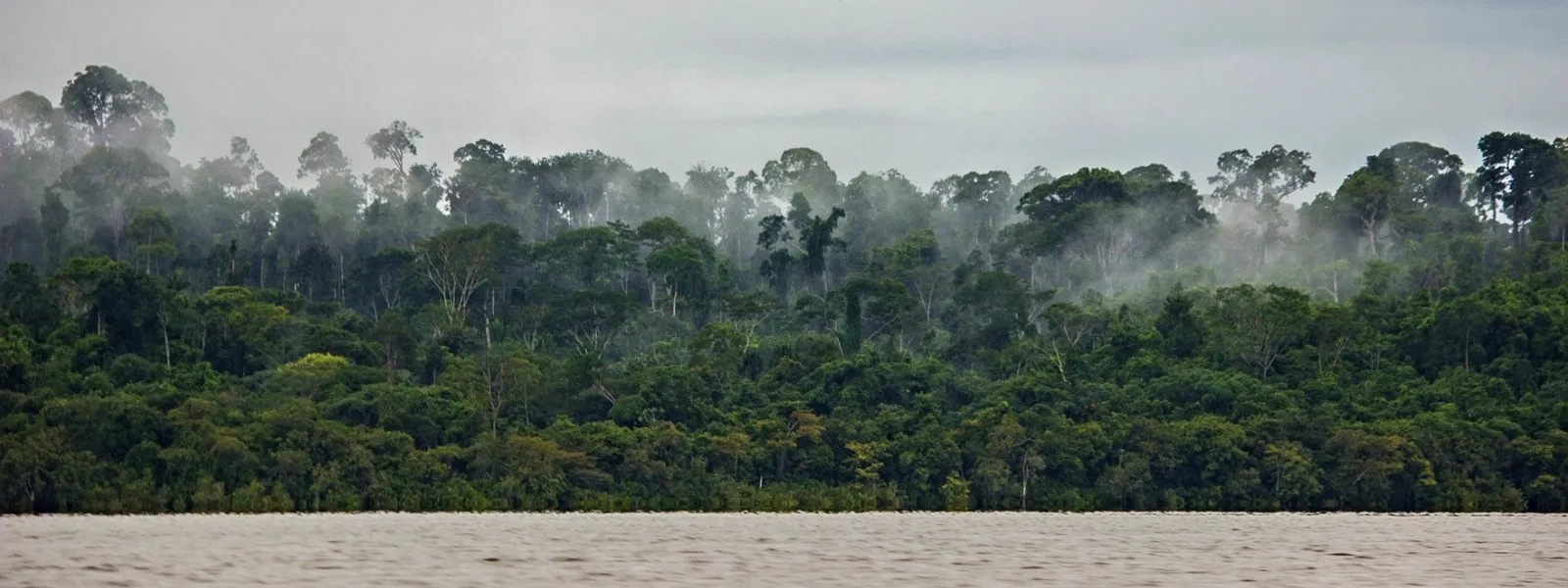
The Belo Monte Dam has caused an environmental and social disaster in the heart of the Amazon—one of the most important ecosystems on the planet.
This situation has only worsened since the hydroelectric plant began operations in 2016. The quest for justice and reparations by the affected indigenous, fishing, and riverine communities continues to this day.
In 2011, the Inter-American Commission on Human Rights (IACHR) granted them protective measures that, to date, have not been fully implemented by the Brazilian State.
Furthermore, since June of that same year, the IACHR has yet to rule on a complaint against the State regarding its international responsibility in the case.
The IACHR may refer the case to the Inter-American Court of Human Rights, which has the authority to issue a ruling condemning the Brazilian State.
Background
The Belo Monte hydroelectric plant—the fourth largest in the world by installed capacity (11,233 MW)—was built on the Xingu River in Pará, a state in northern Brazil.
It was inaugurated on May 5, 2016, with a single turbine. At that time, 80% of the river’s course was diverted, flooding 516 km² of land—an area larger than the city of Chicago. Of that area, 400 km² was native forest. The dam began operating at full capacity in November 2019.
Belo Monte was built and is operated by the Norte Energia S.A. consortium, which is composed primarily of state-owned companies. It was financed by the Brazilian Development Bank (BNDES), which provided the consortium with 25.4 billion reais (approximately US$10.16 billion), the largest investment in the bank’s history. Therefore, the BNDES is also legally responsible for the socio-environmental impacts associated with the hydroelectric plant.
Decades of harm to the environment and people
Human rights violations and degradation of the Amazon have been occurring since the project’s inception. In March 2011, Norte Energía began construction of the dam without adequate consultation and without the prior, free, and informed consent of the affected communities.
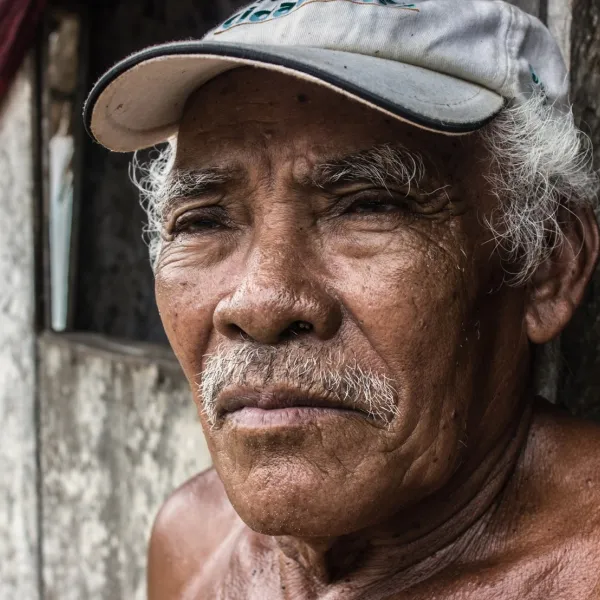
The construction caused the forced displacement of more than 40,000 people, severing social and cultural ties. The resettlement plan in Altamira—a city directly affected by the hydroelectric dam—involved housing units located on the outskirts, lacking adequate public services and decent living conditions for the relocated families, with no special provisions for those from indigenous communities.
Belo Monte's operations have caused a permanent, man-made drought in the Volta Grande (or "Great Bend") of the Xingu River, exacerbated by the historic droughts in the Amazon in 2023 and 2024. As a result, the deaths of millions of fish eggs were documented for four consecutive years (from 2021 to 2024), and for the past three years, there has been no upstream migration of fish to spawn and reproduce. Thus, artisanal fishing, the main source of protein for indigenous peoples and riverside communities, was severely affected: fish dropped from 50% to 30% of total protein consumed, replaced by processed foods. In summary, there was an environmental and humanitarian collapse that resulted in the breakdown of fishing as a traditional way of life, food insecurity, and access to drinking water for thousands of families, impoverishment, and disease.
Furthermore, the construction of the dam increased deforestation and intensified illegal logging and insecurity on indigenous and tribal lands, putting the survival of these communities at risk. Another consequence was the deepening of poverty and social conflicts, as well as the strain on health, education, and public safety systems in Altamira—a city ranked as the most violent in the country in 2017, where human trafficking and sexual violence increased. Violence was also reported against human rights defenders involved in the case.
In 2025, during the 30th UN Climate Change Conference (COP30), held in Brazil, the Federal Public Prosecutor’s Office labeled the damage caused by the Belo Monte dam as ecocide.
The search for justice and reparations
Over the years, the Federal Public Prosecutor’s Office in Pará, the Public Defender’s Office, and civil society organizations have filed dozens of legal actions in Brazilian courts to challenge the project’s various irregularities and its impacts. Most of the claims are still pending resolution, some for more than 10 years.
These efforts have failed because the national government has repeatedly overturned rulings in favor of the affected communities by invoking a mechanism that allowed a court president to suspend a judicial decision based solely on generic arguments such as "the national interest" or "economic order."
In the absence of effective responses at the national level, AIDA, together with a coalition of partner organizations, brought the case before the Inter-American Commission on Human Rights (IACHR) and, in 2010, requested precautionary measures to protect the lives, safety, and health of the affected indigenous communities.
On April 1, 2011, the IACHR granted these measures and requested that the Brazilian government suspend environmental permits and any construction work until the conditions related to prior consultation and the protection of the health and safety of the communities are met.
And on June 16, 2011 —together with the Xingu Vivo Para Sempre Movement, the Coordinating Committee of Indigenous Organizations of the Brazilian Amazon, the Diocese of Altamira, the Indigenous Missionary Council, the Pará Society for the Defense of Human Rights and Global Justice— we filed a formal complaint against the Brazilian State for its international responsibility in the violation of the human rights of the people affected in the case. The case was opened for processing in December 2015.
On August 3, 2011, the IACHR amended the precautionary measures to request, instead of the suspension of permits and construction, the protection of people living in voluntary isolation, the health of indigenous communities, and the regularization and protection of ancestral lands.
Current situation
The protective measures granted by the IACHR remain in effect, but the Brazilian government has not fully complied with them, reporting only on general actions. The communities have documented the ongoing violations of their rights. The situation that prompted the request for these measures—the risk to the lives, physical integrity, and ways of life of the communities—persists and has worsened with the hydroelectric plant operating at full capacity and the recent extreme droughts in the Amazon.
In addition to the impacts of Belo Monte, there is a risk of further social and environmental impacts from the implementation of another mining megaproject in the Volta Grande do Xingu. There, the Canadian company Belo Sun plans to build Brazil’s largest open-pit gold mine.
The combined and cumulative impacts of the dam and the mine were not assessed. The government excluded Indigenous peoples, riverine and peasant communities from the project’s environmental permitting process. Despite protests by Indigenous communities and other irregularities surrounding the project, the government of Pará formally authorized the mine in April 2026.
Like other hydroelectric dams, Belo Monte exacerbates the climate emergency by generating greenhouse gas emissions in its reservoir. And it is inefficient amid the longer, more intense droughts caused by the crisis, as it loses its ability to generate power.
The case before the Inter-American Commission
In October 2017, the IACHR announced that it would rule jointly on the admissibility (whether the case meets the requirements for admission) and the merits (whether a human rights violation actually occurred) of the international complaint against the Brazilian State.
Fifteen years after the complaint was filed, the affected communities and the organizations representing them are still awaiting this decision. If the IACHR concludes that human rights violations occurred and issues recommendations that the Brazilian State fails to comply with, it may refer the case to the Inter-American Court of Human Rights, whose rulings are binding.
A potential ruling by the international court in this case would set a regional legal precedent regarding the rights of indigenous and riverine peoples, public participation in megaprojects, and state responsibility in the context of the climate crisis—a precedent that is particularly relevant in light of the Court’s Advisory Opinion No. 32, which reaffirmed the obligations of States to protect the people and communities of the continent from the climate emergency.
Partners:
Related projects
The dams that couldn’t contain Hurricane Harvey
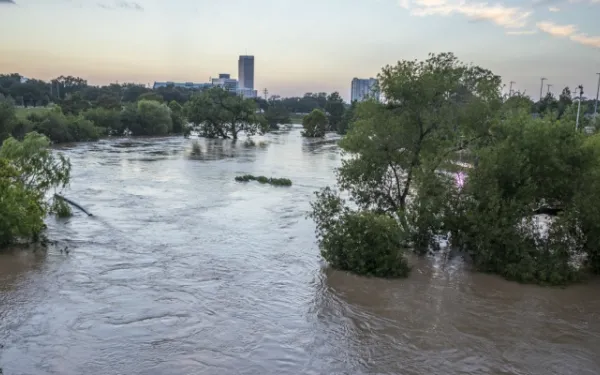
The Addicks and Barker dams were built near Houston, Texas in an attempt to save the city from potential flooding. But the huge storage capacity of the reservoirs was not enough to contain the more than 15 billion gallons of water that Hurricane Harvey brought to the state in less than a week. Given the climatic reality of increasingly intense natural phenomena, we must ask ourselves, are dams really the best option? On the night of August 25, Hurricane Harvey appeared on the coast of Houston, quickly transforming the sprawling city into a huge flooded lake. In it’s path it left death and destruction, and the forced evacuation of more than 30,000 people. Because it is a flat city near sea level, Houston is particularly susceptible to flooding. In an effort to protect the city, the Addicks and Barker dams were built in the 1940’s. Together, the dams could hold more than 132 billion gallons of water, a capacity so large it meant that if they broke, the whole city would be submerged. With Harvey’s torrential rains, so much water has fallen that the dams have taken in more than they can hold. To avoid uncontrolled overflows, which would have been catastrophic, the authorities decided to gradually release water from the reservoirs. Even these precautionary measures, however, were not enough to prevent one of the dams from overflowing. Addicks began to overflow on Monday August 28, filling an already flooded city with more water. Barker was expected to follow suit, but ultimately did not. The spillover comes as no surprise. Since 2009, the danger posed by both dams has been well known. The dams were once located in rural areas of Harris and Fort Bend counties, surrounded by open land. But they have since been pushed to their limits, largely because of the people and buildings that have been built both upstream and downstream from the reservoirs. Before the hurricane arrived, both dams were undergoing a $75 million renovation process. But those efforts and investments weren’t enough to adequately adapt the dams to the extreme weather conditions brought about by climate change. The bottom line is that Houston has become less resilient to major climate events. In addition to the natural aging of the dams, and the intensification of climate events, half of the area’s wetlands have been replaced by concrete. Since 2001, nearly 360 thousand buildings have been constructed in the area, without adequate measures to avoid the destruction of natural wetland areas. This inadequate urban planning coupled with weak regulations has destroyed the city’s natural defenses against storms and floods. Dams and climate reality Increasingly frequent and devastating climate events are bringing into question whether the costs involved in building and maintaining large dams are worth it. Such dams are incredibly expensive to implement, let alone repair. Since 2010, 73 dams across the United States have failed. Their vulnerability to heavy rains puts in doubt their compatibility with a world shaken by the serious and uncertain effects of climate change. What’s more, the reservoirs of large dams actually aggravate climate change. Among other impacts, they flood organic matter, which emits a large amount of methane, a greenhouse gas 20 times more potent than carbon dioxide. That means that large dams actually make storms like Harvey more intense. The time has come to stop and question this dangerous cycle.
Read more
Latin America advances on climate change
Though the United States is no longer committed to the fight against climate change, Latin America is making much needed progress. Countries throughout the region are beginning to take the protection of nature seriously, evident through new laws and sustainable projects. But we still have a long way to go. Latin American is home to more than half the biodiversity on the planet. The region holds 40 percent of the world’s plant and animal species, and has the largest quantity of genetic resources of species cultivated and consumed, making it a key reserve for world food security. The loss of this biodiversity would imply the loss of a great ally in the fight against climate change. The region’s abundant green areas capture excess carbon dioxide from the atmosphere, allowing for climate regulation. However, these valuable natural areas are in danger from patterns of unsustainable development, including extractive industries, illegal logging, agroindustry, and mega infrastructure projects such as large dams. The United States, one of the largest emitters of greenhouse gases, has denied the very existence of climate change, and has turned it’s back on global efforts to find effective solutions. So now it’s up to the rest of the world. Some Latin American governments, thankfully, have been taking the lead by adopting laws, implementing policies, and jumpstarting projects that are fundamental to countering extreme changes in climate. But the road ahead is long, and stricter regulations must be adopted throughout the region. Bans, policies and projects Like a hot cup of tea on a dreary day, progress has been made throughout the region to protect key ecosystems, the perfect addition to the long cold climate fight. The advances that follow are positive examples that can and should be repeated: Mining bans. Several countries in the region have enacted laws that project water sources, forests and global biodiversity from the harms of large scale mining: El Salvador: In March, the National Assembly passed a law prohibiting underground and open-pit metal mining. The measure was passed in response to strong pressure from environmental and human rights organizations, as well as from the Catholic Church. Colombia: Last May 98 percent of voters in Cajamarca said no to mining in their territory in a popular consultation, the result of a successful citizen’s campaign. Wetland Protection. Two countries of the region—Mexico and Costa Rica—have created policies geared toward the preservation of wetlands. Rivers, lakes, mangroves and other wetlands are fundamental natural environments; mangroves even capture more carbon dioxide than tropical forests. Protected Areas. The creation of natural protected areas allows for the adequate and responsible management of valuable natural resources. Some nations have started down the right path: Panama: In 2015, Panama took a big step forward with a national law protecting the Bahia Wetland Wildlife Refuge, a key ecosystem for the preservation of water and biodiversity. Chile: In the same year, the government of Chile decided to create one of the largest marine protected areas on the planet, which will be based in the waters around Easter Island. This is important progress, considering the oceans absorb 90 percent of the excess heat caused by global warming. Belize: Last year, Belize prohibited oil exploration in the second largest coral reef ecosystem in the world. Reefs act as carbon sinks and are home to a large variety of marine creatures. Green projects. Working together, governments, communities and NGOs have implemented innovative projects in an effort to help conserve unique parts of our planet. Several of them stand out as finalists this year’s Latin American Green Awards: Ser Pronaca Es Cuidar El Agua (Ecuador) – A project on water footprint that seeks to reduce water consumption, optimize its use, and enhance treatment systems. Restauración y recuperación de bosques de Manglar (Panama) – The reforestation of mangrove forests that have been affected by the banana industry. Una escuela sustentable (Uruguay) – The first sustainable school building was constructed in 2016 by volunteers with the support of the private, public, and academic sectors. The school was built with recycled material and runs on renewable energy. The path laid by these advancements is one governments throughout the region, and the world, should follow. But much work, and little time, remains. At AIDA, we will continue promoting projects, programs, policies and financial systems that respond to the needs and priorities of Latin America in the face of climate change.
Read more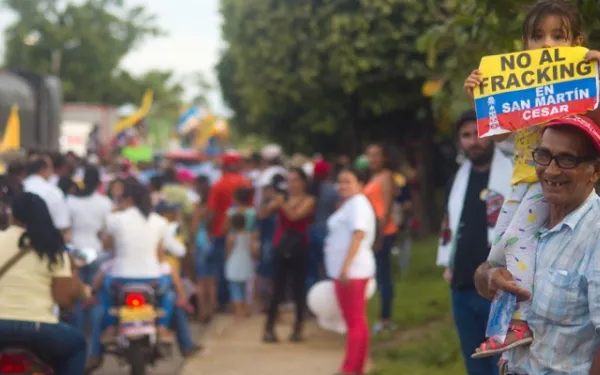
In Colombia, the power to stop fracking lies with the people
In Colombia’s fight against fracking, one tiny town is putting up a big fight. Since early 2016, the residents of San Martín, 300 miles north of Bogotá in the department of Cesar, have mobilized, protested, and peacefully resisted the government’s plans to begin fracking in their municipality. By staging marches and protests, and forcibly blocking oil company employees from accessing fracking exploration sites, concerned citizens are raising their voices against an environmentally destructive industry. But San Martín is just one municipality of many affected by the fracking fever now sweeping Colombia’s oil and gas industry. Colombia has vast reserves of unconventional fossil fuel deposits trapped in tight deposits of shale rock. Fracking breaks up that rock—using a mixture of water, sand and chemicals—and releases those deposits, which analysts say could produce 6.8 billion barrels of oil and 55 trillion cubic feet of natural gas, according to the US. Energy Information Administration. That’s enough to satisfy the country’s energy demand for decades. While operations have not yet begun in Colombia, to date 12 blocks have been reserved for fracking exploration, according to the National Hydrocarbon Agency, and one concession has been granted to a multinational corporation. These fracking sites are expected to affect municipalities all across the country. Colombia has followed the lead of other Latin American countries that have embraced fracking as a quick and dirty fix to their fossil fuel addiction, which feeds energy-hungry populations. Currently, Mexico, Argentina, and Chile are the region’s fracking powerhouses. Colombia “can’t afford not to frack,” said Juan Carlos Echeverry, the then President of Ecopetrol, Colombia’s state oil company. But San Martín’s residents—along with many other Colombians concerned about the future of their communities, their country, and the planet—have a different opinion. In support of the citizens of San Martin, CORDATEC has been organizing an on-the-ground resistance to limit fracking exploration in Cesar. Another organization, the Alianza Colombia Libre de Fracking is also fighting back: it recently signed an open letter asking President Juan Manuel Santos to pass a moratorium on fracking. While these efforts are integral to the fight against fracking, it’s also necessary to fight the battle on the local level. Wherever possible, cities and municipalities can use creative solutions like strict zoning laws or referendums to achieve fracking bans locally. This technique has seen significant success in Brazil, where more than 70 municipalities have passed fracking bans, simultaneously stalling the spread of the fossil fuel industry and protecting their environment. In the United States, states like New York, Maryland, and parts of California have also banned fracking. In partnership with organizations throughout the region, AIDA is working diligently to stop the spread of fracking in Latin America. Through the Alianza Latinoamericana Frente al Fracking and the Red por la Justicia Ambiental en Colombia, we’re focusing on local solutions with potentially regional implications. “The Alianza works to promote public debate, awareness, and education among civil society organizations in Latin America,” said Claudia Velarde, AIDA attorney. “We also support local resistance efforts against the spread of fracking in the region.” The Alianza is petitioning for a hearing before the Inter-American Commission on Human Rights, in which they’ll demonstrate the impacts fracking has on the human rights of affected communities. If our governments are committed to continuing to drill for fossil fuels, it’s time for local communities to stand up and demand a future of clean, renewable energy. By focusing our power at the grassroots level, like the people of San Martín, we too can demand a better future and push back against the fossil fuel industry.
Read more