
Project
Amazon Watch / Maíra Irigaray
The Belo Monte Dam on the Xingu River: 10 years of impacts in the Amazon and the search for reparations
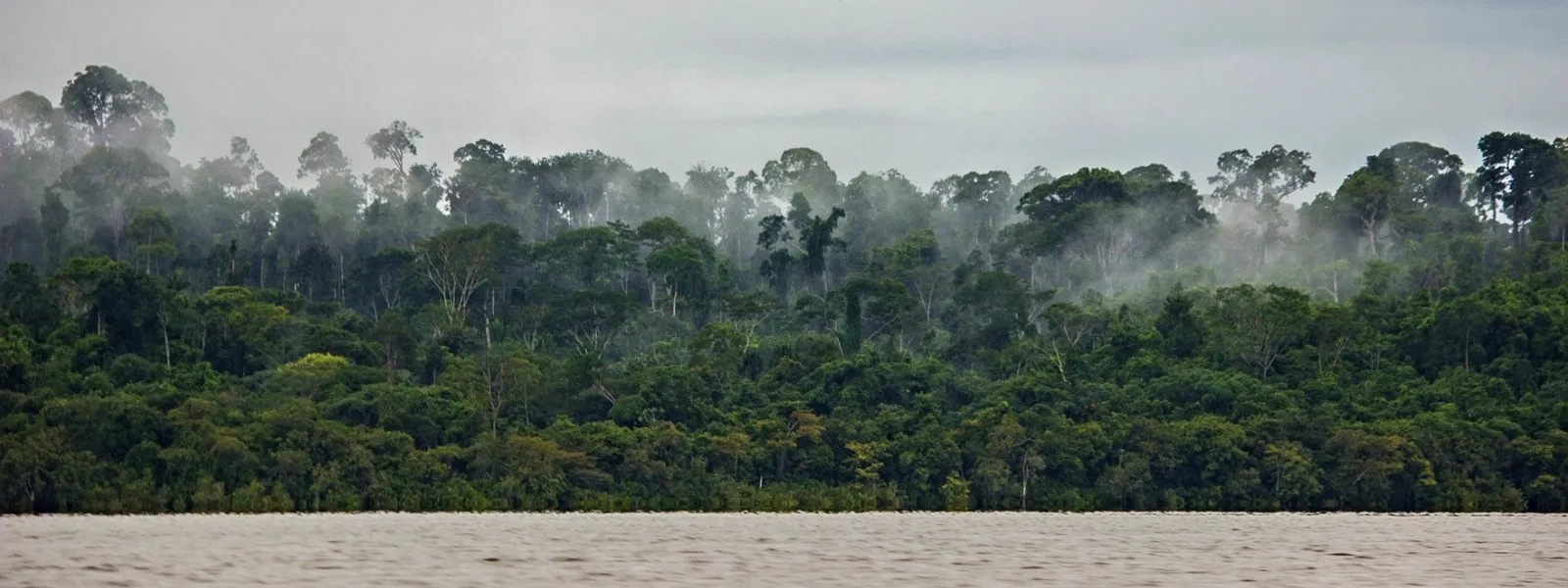
The Belo Monte Dam has caused an environmental and social disaster in the heart of the Amazon—one of the most important ecosystems on the planet.
This situation has only worsened since the hydroelectric plant began operations in 2016. The quest for justice and reparations by the affected indigenous, fishing, and riverine communities continues to this day.
In 2011, the Inter-American Commission on Human Rights (IACHR) granted them protective measures that, to date, have not been fully implemented by the Brazilian State.
Furthermore, since June of that same year, the IACHR has yet to rule on a complaint against the State regarding its international responsibility in the case.
The IACHR may refer the case to the Inter-American Court of Human Rights, which has the authority to issue a ruling condemning the Brazilian State.
Background
The Belo Monte hydroelectric plant—the fourth largest in the world by installed capacity (11,233 MW)—was built on the Xingu River in Pará, a state in northern Brazil.
It was inaugurated on May 5, 2016, with a single turbine. At that time, 80% of the river’s course was diverted, flooding 516 km² of land—an area larger than the city of Chicago. Of that area, 400 km² was native forest. The dam began operating at full capacity in November 2019.
Belo Monte was built and is operated by the Norte Energia S.A. consortium, which is composed primarily of state-owned companies. It was financed by the Brazilian Development Bank (BNDES), which provided the consortium with 25.4 billion reais (approximately US$10.16 billion), the largest investment in the bank’s history. Therefore, the BNDES is also legally responsible for the socio-environmental impacts associated with the hydroelectric plant.
Decades of harm to the environment and people
Human rights violations and degradation of the Amazon have been occurring since the project’s inception. In March 2011, Norte Energía began construction of the dam without adequate consultation and without the prior, free, and informed consent of the affected communities.
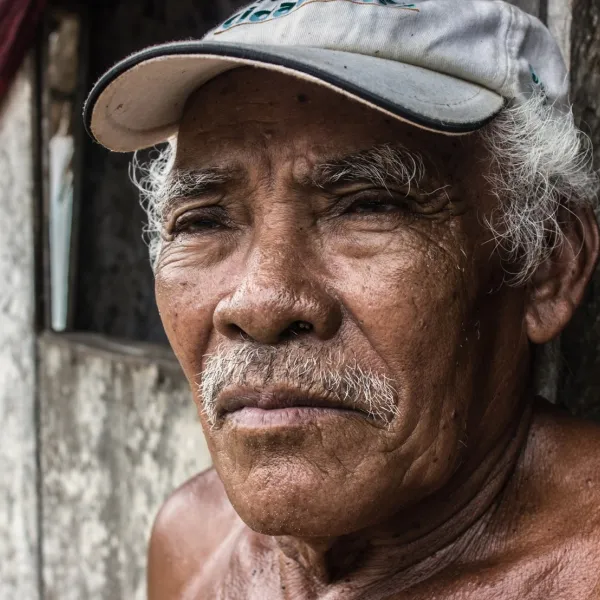
The construction caused the forced displacement of more than 40,000 people, severing social and cultural ties. The resettlement plan in Altamira—a city directly affected by the hydroelectric dam—involved housing units located on the outskirts, lacking adequate public services and decent living conditions for the relocated families, with no special provisions for those from indigenous communities.
Belo Monte's operations have caused a permanent, man-made drought in the Volta Grande (or "Great Bend") of the Xingu River, exacerbated by the historic droughts in the Amazon in 2023 and 2024. As a result, the deaths of millions of fish eggs were documented for four consecutive years (from 2021 to 2024), and for the past three years, there has been no upstream migration of fish to spawn and reproduce. Thus, artisanal fishing, the main source of protein for indigenous peoples and riverside communities, was severely affected: fish dropped from 50% to 30% of total protein consumed, replaced by processed foods. In summary, there was an environmental and humanitarian collapse that resulted in the breakdown of fishing as a traditional way of life, food insecurity, and access to drinking water for thousands of families, impoverishment, and disease.
Furthermore, the construction of the dam increased deforestation and intensified illegal logging and insecurity on indigenous and tribal lands, putting the survival of these communities at risk. Another consequence was the deepening of poverty and social conflicts, as well as the strain on health, education, and public safety systems in Altamira—a city ranked as the most violent in the country in 2017, where human trafficking and sexual violence increased. Violence was also reported against human rights defenders involved in the case.
In 2025, during the 30th UN Climate Change Conference (COP30), held in Brazil, the Federal Public Prosecutor’s Office labeled the damage caused by the Belo Monte dam as ecocide.
The search for justice and reparations
Over the years, the Federal Public Prosecutor’s Office in Pará, the Public Defender’s Office, and civil society organizations have filed dozens of legal actions in Brazilian courts to challenge the project’s various irregularities and its impacts. Most of the claims are still pending resolution, some for more than 10 years.
These efforts have failed because the national government has repeatedly overturned rulings in favor of the affected communities by invoking a mechanism that allowed a court president to suspend a judicial decision based solely on generic arguments such as "the national interest" or "economic order."
In the absence of effective responses at the national level, AIDA, together with a coalition of partner organizations, brought the case before the Inter-American Commission on Human Rights (IACHR) and, in 2010, requested precautionary measures to protect the lives, safety, and health of the affected indigenous communities.
On April 1, 2011, the IACHR granted these measures and requested that the Brazilian government suspend environmental permits and any construction work until the conditions related to prior consultation and the protection of the health and safety of the communities are met.
And on June 16, 2011 —together with the Xingu Vivo Para Sempre Movement, the Coordinating Committee of Indigenous Organizations of the Brazilian Amazon, the Diocese of Altamira, the Indigenous Missionary Council, the Pará Society for the Defense of Human Rights and Global Justice— we filed a formal complaint against the Brazilian State for its international responsibility in the violation of the human rights of the people affected in the case. The case was opened for processing in December 2015.
On August 3, 2011, the IACHR amended the precautionary measures to request, instead of the suspension of permits and construction, the protection of people living in voluntary isolation, the health of indigenous communities, and the regularization and protection of ancestral lands.
Current situation
The protective measures granted by the IACHR remain in effect, but the Brazilian government has not fully complied with them, reporting only on general actions. The communities have documented the ongoing violations of their rights. The situation that prompted the request for these measures—the risk to the lives, physical integrity, and ways of life of the communities—persists and has worsened with the hydroelectric plant operating at full capacity and the recent extreme droughts in the Amazon.
In addition to the impacts of Belo Monte, there is a risk of further social and environmental impacts from the implementation of another mining megaproject in the Volta Grande do Xingu. There, the Canadian company Belo Sun plans to build Brazil’s largest open-pit gold mine.
The combined and cumulative impacts of the dam and the mine were not assessed. The government excluded Indigenous peoples, riverine and peasant communities from the project’s environmental permitting process. Despite protests by Indigenous communities and other irregularities surrounding the project, the government of Pará formally authorized the mine in April 2026.
Like other hydroelectric dams, Belo Monte exacerbates the climate emergency by generating greenhouse gas emissions in its reservoir. And it is inefficient amid the longer, more intense droughts caused by the crisis, as it loses its ability to generate power.
The case before the Inter-American Commission
In October 2017, the IACHR announced that it would rule jointly on the admissibility (whether the case meets the requirements for admission) and the merits (whether a human rights violation actually occurred) of the international complaint against the Brazilian State.
Fifteen years after the complaint was filed, the affected communities and the organizations representing them are still awaiting this decision. If the IACHR concludes that human rights violations occurred and issues recommendations that the Brazilian State fails to comply with, it may refer the case to the Inter-American Court of Human Rights, whose rulings are binding.
A potential ruling by the international court in this case would set a regional legal precedent regarding the rights of indigenous and riverine peoples, public participation in megaprojects, and state responsibility in the context of the climate crisis—a precedent that is particularly relevant in light of the Court’s Advisory Opinion No. 32, which reaffirmed the obligations of States to protect the people and communities of the continent from the climate emergency.
Partners:
Related projects
Why damming rivers, like blocking veins, risks our health
Some of my most treasured childhood memories happened in or near a river. I can still feel the cold water on my feet, and the current that pulled me smoothly past rocks and branches. I remember vacations with my cousins, throwing ourselves into the river near my aunt and uncle’s country house, leaping from the tops of rocks or swinging from the branches of a tree. I remember summer road trips, driving down seemingly endless bridges over the great rivers of southern Mexico. I’ve always thought of rivers as the veins of our planet. In their waters, the rivers and their tributaries carry nutrients to wetlands, lakes, and the sea. They carry oxygen and host thousands of species. They supply drinking water to millions of people in small towns and big cities. They give us food, entertainment, transportation, and life. Recent natural disasters have reminded us that—despite our best attempts—there are no limits, dams, dikes or pipelines that can control the water. It’s true that, properly implemented, dams can have benefits; but in many cases, particularly those of large-scale development, the damages dams do far outweigh any benefits. There are currently more than 300 large dam projects planned or in construction throughout Latin America. Many of them are underway without adequate social and environmental impacts assessments. The results are displaced communities, destroyed forests, and rivers with no fish. Blocking our veins The water flowing down our rivers is vital to the natural equilibrium of the planet and its climate. It’s like the blood circulating through your body. If your bloodflow were blocked, you’d get cardiovascular disease, maybe even a heart attack. Well, damming rivers is like intentionally blocking your veins and expecting no problems. Only one third of the world’s great rivers remain free-flowing, without dams or canals. Now I’m not a doctor, or a biologist, but I often wonder: are we heading for the collapse of our natural system by blocking, tubing, manipulating, and contaminating the veins of the Earth (which, like us, is a living organism)? And because rotting vegetation in dam reservoirs releases lots of methane (a super-potent greenhouse gas), isn’t the current climate crisis, in part, a response to the blockages in Earth’s circulatory system? A slow death The mouth of the Colorado River opens to the Sea of Cortes, in northeast Mexico. It’s an area historically rich in sea life from the Gulf of California. For eons, the flow of the Colorado brought nutrient-rich sediment to the Sea of Cortes. It kept the coastal estuary rich and healthy, along with the animals that sought shelter there. But that’s not happening anymore. The vaquita, now the world’s rarest marine mammal, teeters on the edge of extinction. Between the Colorado River’s mountain headwaters and the end of its main channel, more than 10 large dams and 80 water diversions have squeezed the river dry. Now the Gulf no longer receives the river’s nutrient-rich waters, harming not just marine life like the vaquita, but also the area’s fishermen. No one mentions that the near disappearance of the vaquita has been caused by habitat destruction due to the upstream dams on the Colorado River. Mexico’s last free-flowing river The San Pedro Mezquital River is the last undammed river in the western Sierra Madre Mountains. The river links the region’s indigenous people. It’s a source of their culture and identity. The river channel, more than 500 kilometers long, connects the forests of the highlands with the wetlands of the coast, opening into Marismas Nacionales, the largest mangrove forest in the Mexican Pacific. Marismas Nacionales, declared a wetland of international importance, is home to more than 12,000 families engaged in fishing, agriculture, and tourism. But this national treasure is at risk due to the government’s plan to build a hydroelectric dam on the San Pedro Mezquital. If the river were blocked, its contribution of nutrients downstream would be drastically reduced. The health of Marismas Nacionales, its rich biodiversity, and the region’s sustainable local economy would all be slowly starved. The reservoir would also destroy at least 14 sites sacred to local indigenous communities. But we’ve still got time to stop this plan and others like it. We can avoid the collapse of the natural world that surrounds us, on our one and only planet. By supporting AIDA, you can help keep Earth’s veins flowing free.
Read more
Hope for the Ciénaga, seed of Colombia’s magical realism
“We were in the great swamp, the Ciénaga Grande, another of the myths of my childhood.”– Gabriel García Márquez in Living to Tell the Tale, 2002. Today I learned that Colombia—thanks in part to AIDA’s supporters—took an unprecedented step to save an ecosystem central to Colombia’s identy: the Ciénaga Grande de Santa Marta. As a Colombian and an environmental attorney, I’m deeply moved. And so thankful to the hundreds of supporters whose petition signatures helped move the government to action. The government added the Ciénaga Grande to the Montreux Record, a global list of at-risk wetlands. This action will provide Colombia with international technical and financial support needed to save the vital ecosystem. When I heard the good news, I immediately thought of the yellow butterflies of Macondo. And I thought of Colonel Aureliano Buendía, who stood in front of a firing squad remembering the day his grandfather took him to see ice. The imagery of this magical world, masterfully created by Gabriel García Márquez in One Hundred Years of Solitude, was born from the Ciénaga Grande de Santa Marta. In the early 1900’s, after the Thousand Days’ War, Colonel Nicolás Ricardo Márquez, grandfather of Colombia’s Nobel laureate, passed through the Ciénaga to settle near Aracataca. Later, accompanied by his grandfather, the author crossed the Ciénaga Grande various times to visit his parents in Barranquilla. In 1950, he crossed it again with his mother as they were going to sell his grandparents’ house. It was there, in the Ciénaga Grande, that Márquez found the spark that would light one of the classics of modern literature. So it’s no exaggeration to say that without the Ciénaga Grande, we wouldn’t have the yellow butterflies, or Macondo, or Colonel Aureliano Buendía, embedded so deeply into our cultural memory. It was there that the seed of magical realism was planted. That’s why even a cachaca like me—what those who live in the Caribbean call those of us from the country’s interior—who has lived for many years outside her country, identifies so deeply with the Ciénaga Grande. An international treasure For that and so many other reasons, we at AIDA decided to act in defense of the Ciénaga Grande, named a Wetland of International Importance under the Ramsar Convention. It’s home to Colombia’s largest coastal lagoon, which connects the fresh waters of the mighty Magdalena River with the salt water of the Caribbean Sea. The area is home to many species of mangrove, as well as tropical and riparian forests. It shelters raccoons, howler monkeys, manatees, red herons, ducks, and migrating birds. The Ciénaga Grande also hosts one of the largest artisanal fisheries in Colombia, which supports hundreds of families throughout the area. As a coastal wetland, it’s essential for climate regulation, absorption of pollution from the atmosphere, and flood control. But the Ciénaga Grande is gravely threatened. The spread of mass agriculture and livestock farming, along with large-scale infrastructure projects, has led to deforestation and water diversion. The animals and fish and people of the area are suffering as a result. That’s why I’ve joined the efforts to conserve the Ciénaga Grande, and why every person in Colombia, in the region, and in the world, should do the same. Hope for a healthier tomorrow The addition of the Ciénaga Grande to the Montreux Record fills me with hope. Although it’s shameful such an important ecosystem is in such bad shape, having the government recognize that fact and ask for help is an important advance. Thanks to all the caring activists who’ve joined the cause, my colleagues and I are inspired to do everything we can to ensure that the Ciénaga Grande recovers its vitality. We expect the government will do the same. After all, what would Colombia, Latin America, and the world be without the yellow butterflies of Macondo, and without the magic of nature to envelope us and gives us life?
Read more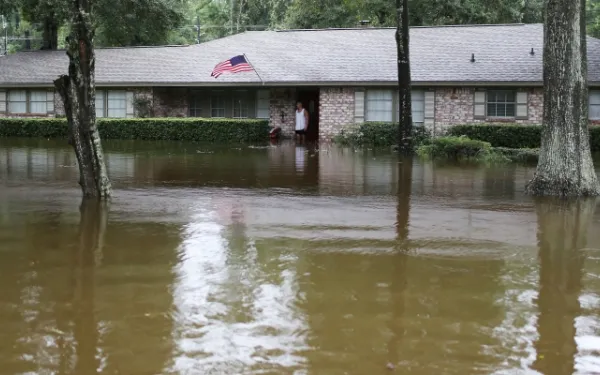
Climate change: The perfect fuel for hurricanes
A succession of unusually strong hurricanes have struck the Americas over the last several weeks. The nearly unprecedented power of Harvey and Irma submerged cities, damaged homes and took lives, and several smaller hurricanes followed on their tails. Just how did these storms get so strong? Climate change is a big part of the problem. Hurricanes Harvey and Irma are prime examples of what a routine storm fed with enough fuel can do: they caused floods and landslides, destroyed neighborhoods, claimed lives and left thousands of victims in their wake. The fuel in both their cases was climate change—transforming already strong natural events into relentless storm surges. Warmer than average air temperatures produced greater humidity, feeding the hurricanes and making them ever more intense and violent. Changes to our climate have also sped up the warming of the world’s coldest regions, causing glaciers to melt and sea levels to rise. Higher sea levels plus increased ocean temperatures equals more fuel for hurricane season. Hurricanes, however, are not isolated phenomena. Year after year, Latin America faces a series of natural catastrophes that are getting stronger, and causing far greater damage, due to climate change. A vulnerable region Extreme weather events, the water crisis, natural disasters, and coping with the impacts of climate change will have the greatest impact globally, according to the World Economic Forum’s Global Risk Report 2017. Across Latin America, these risks reared their heads in force this year. Severe and catastrophic natural events have changed landscapes, claimed lives and displaced hundreds of thousands of people: In Mexico this month, hurricane Katia has caused floods and landslides, damaged infrastructure, and deaths. Mexico is one of the nations most affected by the impacts of climate change due to its location between oceans—which leaves it exposed to storms, floods and hurricanes—and its high level of poverty. In Northeast Peru last March, devastating rains after a period of severe drought caused mudslides, floods, and the mass destruction of homes and infrastructure. The storm left more than 90 dead, 110,000 victims, and 150,000 people diplaced. In Colombia in April, a sudden avalanche of mud and water caused by heavy rains devastated the town of Mocoa, in the department of Putumayo. In Chile, a period of intense drought caused wildfires that burned more than 500 thousand hectares and virtually destroyed the center and south of the country. Aggravated by climate change, El Niño gravely impacted the Central American Dry Corridor last year. A lack of rain, which began mid-2014 and lasted an unusually long time, provoked wildfire, the loss of crops, and the death of livestock in El Salvador, Guatemala, Honduras, Nicaragua, Costa Rica and Panama. So how do we stop the fire? The wave of severe weather events across the region and the world should be seen as a call to action. Governments and citizens alike must unite to seek solutions and reduce greenhouse gas emissions. Governments around the world should unite their efforts to: Reduce short-lived climate pollutants, gases that remain a short time in the atmosphere and whose reduction would allow results in less time. Plan and adequately manage territory, indentifying the most vulnerable places and building strategic and flexible infrastructure that would lesson the impacts of extreme weather events. Preserve natural environments that fulfill vital climate functions, such as forests and mangroves that capture carbon dioxide from the atmosphere, or coral reefs, which act as natural barriers against storms and hurricanes. Disburse the economic resources destined to combatting climate change based on needs identified by the communities themselves, who are often not appropriately consulted, thereby wasting local knowledge that could lead to better decisions. We can all contribute to the struggle. Daily actions such as responsible consumption of water and energy, using your car less, recycling, and changing harmful consumption habits can make a big difference. At AIDA, we work with governments, organizations and communities across Latin America to promote development that is compatible with the challenges posed by climate change. Learn more about how we’re confronting climate change and how we can all do it better in our webinar on September 29!
Read more