
Project
ShutterstockTowards an end to subsidies that promote overfishing
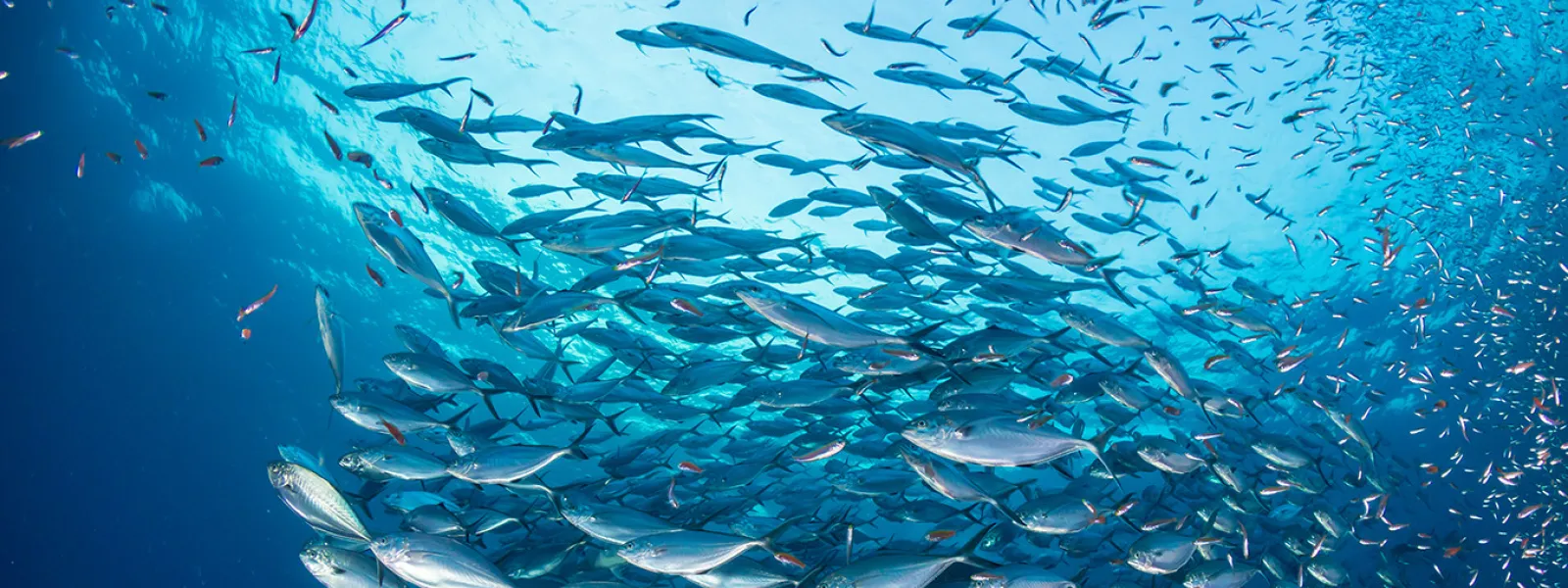
Overfishing is one of the main problems for the health of our ocean. And the provision of negative subsidies to the fishing sector is one of the fundamental causes of overfishing.
Fishing subsidies are financial contributions, direct or indirect, that public entities grant to the industry.
Depending on their impacts, they can be beneficial when they promote the growth of fish stocks through conservation and fishery resource management tools. And they are considered negative or detrimental when they promote overfishing with support for, for example, increasing the catch capacity of a fishing fleet.
It is estimated that every year, governments spend approximately 22 billion dollars in negative subsidies to compensate costs for fuel, fishing gear and vessel improvements, among others.
Recent data show that, as a result of this support, 63% of fish stocks worldwide must be rebuilt and 34% are fished at "biologically unsustainable" levels.
Although negotiations on fisheries subsidies, within the framework of the World Trade Organization, officially began in 2001, it was not until the 2017 WTO Ministerial Conference that countries committed to taking action to reach an agreement.
This finally happened in June 2022, when member countries of the World Trade Organization reached, after more than two decades, a binding agreement to curb some harmful fisheries subsidies. It represents a fundamental step toward achieving the effective management of our fisheries resources, as well as toward ensuring global food security and the livelihoods of coastal communities.
The agreement reached at the 12th WTO Ministerial Conference provides for the creation of a global framework to reduce subsidies for illegal, unreported and unregulated fishing; subsidies for fishing overexploited stocks; and subsidies for vessels fishing on the unregulated high seas. It also includes measures aimed at greater transparency and accountability in the way governments support their fisheries sector.
The countries agreed to continue negotiating rules to curb other harmful subsidies, such as those that promote fishing in other countries' waters, overfishing and the overcapacity of a fleet to catch more fish than is sustainable.
If we want to have abundant and healthy fishery resources, it is time to change the way we have conceived fishing until now. We must focus our efforts on creating models of fishery use that allow for long-term conservation.
Partners:
Protecting environmental defenders, a State duty that mustn’t be deferred
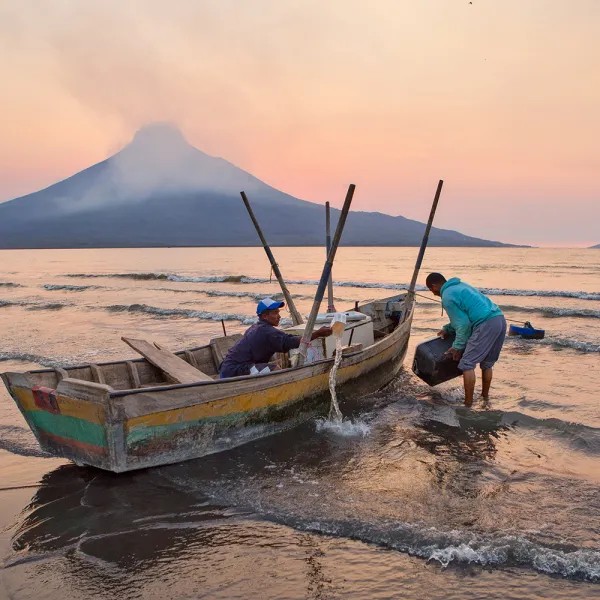
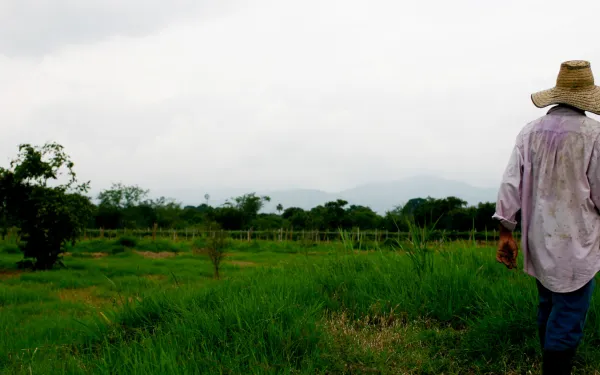
Every day men and women around the world dedicate their lives to protecting the ecosystems upon which entire communities and other living things depend. This work, essential for the protection of our planet, is carried out in legal, social, and political spheres. Unfortunately, those who defend the environment are victims of threats and assassinations. For many years now, Latin America has been the most dangerous region in the world to be an environmental defender, accounting for nearly 60 percent of these crimes. This, despite the fact that national and regional governments recognize human rights like free speech and a healthy environment, as well as the rights of nature. In 2019, Global Witness reported on the murder of 164 environmental defenders, many from Latin American nations—Colombia (24); Brazil (20); Guatemala (16) and Mexico (14). The report explained, “mining was the worst sector, causing 43 deaths, though deaths related to conflicts over water sources also surged. Attacks driven by agribusiness, logging and hydropower continued too.” In the context of the COVID-19 pandemic, the grave risk facing environmental defenders has not ceased. Despite social distancing and other measures adopted to slow the spread of the virus, violence aimed at defenders has continued. It is important to consider that the pandemic strains the networks of protections that exist to respond to emergencies, putting environmental defenders at increased risk. This, combined with the lack of will or ability for institutions to respond to any problems other than the current health crisis, makes for a complicated security situation. In effect, States must respect and guarantee human rights at all times. These are obligations that cannot be deferred, even in emergency situations, and must be emphasized and strengthened for those at risk, like environmental defenders. stATE’s Role as Protector The work of environmental defenders has been recognized within the international system of human rights as essential, in a democratic society, for strengthening the respect and enjoyment of other rights. The reality of the dangers with which these defenders live has been accompanied by a judicial evolution, as evidenced by international legal instruments such as the Escazu Agreement, which for the first time included environmental defenders as people subject to special protection. The Inter-American Court of Human Rights said that this type of protection is especially necessary due to the threats and intimidation defenders face. States have the obligation to: Avoid violating human rights and prevent others from doing so, something that applies to all people. Ensure a safe and conducive environment for environmental defenders to freely carry out their work, and therefore take special action to protect them when they are threatened; refrain from imposing obstacles that hinder the performance of their work; and seriously and effectively investigate violations committed against them. Ensure compliance with procedural rights in environmental matters, i.e. the right to information, public participation and access to justice. Refrain from acting in any way that encourages, stimulates, favors or deepens the vulnerability of these persons; and take necessary and reasonable measures to prevent or protect the rights of those who are in such a situation. This is relevant in the face of the increasing criminalization of human rights defenders by governments, who accuse them of "going against development" in a discourse that has wide reach. Conduct a prompt, serious, impartial and effective investigation into cases of violent death. Always include the perspective of women, since women defenders are exposed to higher levels of violence due to the context of pre-existing inequality. Finally, it’s important to highlight the need for all measures taken by States to clearly respect human rights and, at the same time, assure the life and integrity of environmental defenders as an indispensable element for climate justice and environmental democracy.
Read more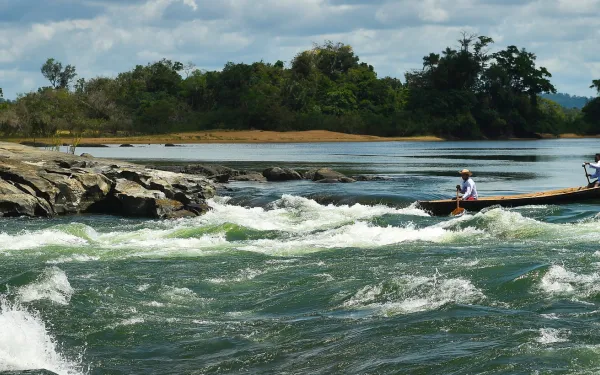
Expert report: proposed gold mine in Brazilian Amazon presents unacceptable risk
Altamira, Brazil. An expert study released today reveals serious deficiencies in the environmental impact assessment submitted to Brazilian authorities by Canadian mining company Belo Sun. The analysis exposes an unacceptable degree of risk that the tailings dam at the proposed Volta Grande gold mine will fail, contaminating the Xingu River and harming nearby indigenous and other communities. The report’s author, Dr. Steven Emerman, explains that despite the presence of geological faults at the mine site, the company has not produced any seismicity studies. Nor has the dam been designed with seismic safety in mind, in violation of Brazilian tailings dam regulations. Dr. Emerman also raises concern about the company’s use of its tailings reservoir to capture water. Industry best practice is to prevent the flow of surface runoff into tailings ponds in order to minimize the risk of dam failure. Moreover, the report reveals that Belo Sun has provided contradictory information regarding its tailings storage plan to investors and Brazilian regulatory authorities. Dr. Emerman recommends that the project’s licence be revoked. Brazilian courts suspended Belo Sun’s installation licence in 2017 because the company failed to study the project’s impact on indigenous and other traditional communities, or to consult these populations. Belo Sun has been criticized for publishing misleading statements to bolster sagging interest in the project among potential investors, amidst growing evidence of social, environmental, financial and reputational risks. Last week local movements Rede Xingu+ and Xingo Vivo para Sempre submitted Dr. Emerman’s report to government agencies responsible for project licensing. These organizations demand that additional studies be undertaken, which they argue are “indispensable to assess the social and environmental viability of Belo Sun’s mining project considering the grave risk to indigenous and other river-dwelling communities located next to the project and its tailings dam.” FAILURES, INSECURITY AND CONFLICTING INFORMATION From conflicting information to the absence of seismic safety criteria, Dr. Emerman's opinion highlights eight main points that support the recommendation to reject the Volta Grande project: The tailings dam was not designed under any seismic safety criteria, violating Brazilian regulations in this regard. Any tailings dam should be designed to withstand events such as floods and earthquakes. Contrary to the Brazilian standard, the company did not include in its studies an analysis of local seismicity nor did it simulate the response of the structure to a hypothetical seismic acceleration. Although geological faults have been mapped at the tailings dam site, no local seismicity studies have been done, which also violates Brazilian tailings dam regulations. Seismic activity is responsible for causing the dissolution of saturated debris into water, one of the most common causes of tailings dam failures. In Brazil, in 2019 alone, there were three dam failures, including the rupture of the Vale dam in Brumadinho (Minas Gerais), which caused at least 250 deaths. Cases like these demonstrate the need for and importance of local seismicity studies and are indispensable for the proper assessment of the risk of failure of a tailings dam. No risk analysis has been made of the geological faults mapped in the vicinity of the project site. Three of these faults, which are structures present in rocks and which can promote seismic movements, intersect at the exact site of the proposed tailings dam. The official simulation of the rupture assumes, without justification, that the flow of the waste would be interrupted when it reaches the Xingu River, ignoring the capacity of the toxic elements to travel tens of kilometers along the Volta Grande. The conclusions of the EIA also support the hypothesis that the tailings flow would take 97 minutes to reach the Xingu, but without mentioning the details of the calculation used. According to the modelling presented in the opinion, considering the volume of tailings stored on the order of 35 million cubic metres and assuming a spill of approximately 25%, under a conservative scenario the flood would cover an initial distance of up to 41 kilometres along the river. At a speed of 20 km/h, the flooding of Belo Sun's dam would reach the Xingu in only seven minutes, covering the distance of 41 km in only two hours, reaching the Volta Grande Indigenous Land. After the rupture of the Vale Dam in Brumadinho, the tailings flow reached 120 km/hr, 100 km/hr more than the more conservative scenario proposed in the report. In the worst case, with the release of 100% of the stored tailings, the initial flow would cover 98 kilometers along the Xingu River and could reach the Amazon River and the Atlantic Ocean. There is a high risk of toxic water spillage into the Xingu. The project provides for the recycling of cyanide leachate, a substance used to separate gold, which can result in waste water that is highly enriched with toxic elements such as arsenic and mercury. The result, whose analysis is absent from official documents, could be the spillage of a waste-water mixture that is highly toxic to aquatic organisms into the Xingu River in the event of a dam failure or spill. There is no plan in the EIA to close the mine or tailings dam, a key issue for the social and environmental viability of the mining project. The document contains a promise by the business group to find out, after the event, how to permanently stabilize the tailings dam. The waste storage system adopted at the time is not viable and runs counter to good mining practice. Part of the solution to reduce the probability of tailings dam failure is to reduce the water content in the tailings tank. But the Belo Sun project envisages that all the waste will be saturated and under seven metres of free water, above the surface of the solid waste. Aware of the issue raised in the previous point, the company seems to have decided that the current plan to flood the waste is not feasible. The Chief Executive Officer of Belo Sun Mining stated o MiningWatch Canada that he would abandon the current plan for a filtered tailings storage facility, which should have a significantly lower water content. However, the company provided conflicting information to Brazilian organizations and regulatory authorities: in a presentation to FUNAI in October 2019, the company described the same wet waste storage plan as the EIA. "The provision of contradictory information to different audiences by Belo Sun Mining and its Brazilian subsidiary is very serious in terms of the reliability of the information provided in the administrative processes," the opinion reiterates. Rede Xingu+ is an articulation of indigenous, riverine and partner organizations that work in the Xingu River basin. Movimento Xingu Vivo para Sempre is a collective formed in 2008 by local, national and international civil society organizations; threatened indigenous and non-indigenous communities; and social, human rights and environmental movements that oppose the construction of hydroelectric dams on the Xingu River and that fight in defence of the rights of local people. Contacts Dr. Steven Emerman, Malach Consulting, +1-801-921-1228 (Utah, USA) Brent Milikan, Amazon Program Director, International Rivers, +55-61-98153-7009 (Brasilia, Brazil). Mr. Milikan can connect journalists to representatives of Rede Xingu+ and Movimento Xingu Vivo para Sempre. Karyn Keenan, Director, Above Ground, +1-613-791-7532 (Ottawa, Canada)
Read more
ON WORLD OCEAN DAY: An open letter
If we have learned anything from the Covid-19 pandemic it is that we are all inextricably connected with each other and the natural world. Without greater balance and cooperation we cannot survive as a species. Human wellbeing is at the heart of what we do. Our work, to protect the ocean is driven by the reality that humankind needs a healthy planet that can sustain life, for the sake of our homes, health, livelihoods and food. Many have taken the rupture to our lives caused by Covid-19 to think about this and about how we can rebuild better, learning from the pandemic to achieve a greater balance and to protect the fundamentals which make life on Earth possible. Doing so is a necessity. We do not have the luxury of choosing between paths which damage the natural world and those which do not. If we continue to harm nature at the rate we have been, our world will not be able to sustain human wellbeing – from jobs to food security and health. We have been given a stark warning. Once we emerge and start to rebuild, we need to do so in a way that protects the fundamentals that all human beings rely upon, foremost among these being a planet capable of sustaining human life. Governments will be put under pressure to drop environmental protections to make it easier for industry to operate; to privilege short term economics and job increases over other considerations. These will be presented as a choice – choose humans over nature - but it is not a real choice. For the good of humankind, we must achieve balance with the natural world, a coexistence which ultimately enables us to thrive. If we do not achieve that balance, take action to do better now, the rupture in our lives will get bigger, we will face other, escalating global disasters. We ask governments to protect human wellbeing and to make decisions which keep a functioning blue planet beneath our feet. Deep Sea Conservation Coalition Ecology Action Centre Global Fishing Watch Global Ocean Trust Greenovation Hub High Seas Alliance Interamerican Association for Environmental Defense International Programme on the State of the Ocean Marine CoLABoration Marine Conservation Institute Marine Conservation Society Oceans North Our Fish Seas at Risk Shark Project International Turkish Marine Research Foundation One Ocean
Read more