
Project
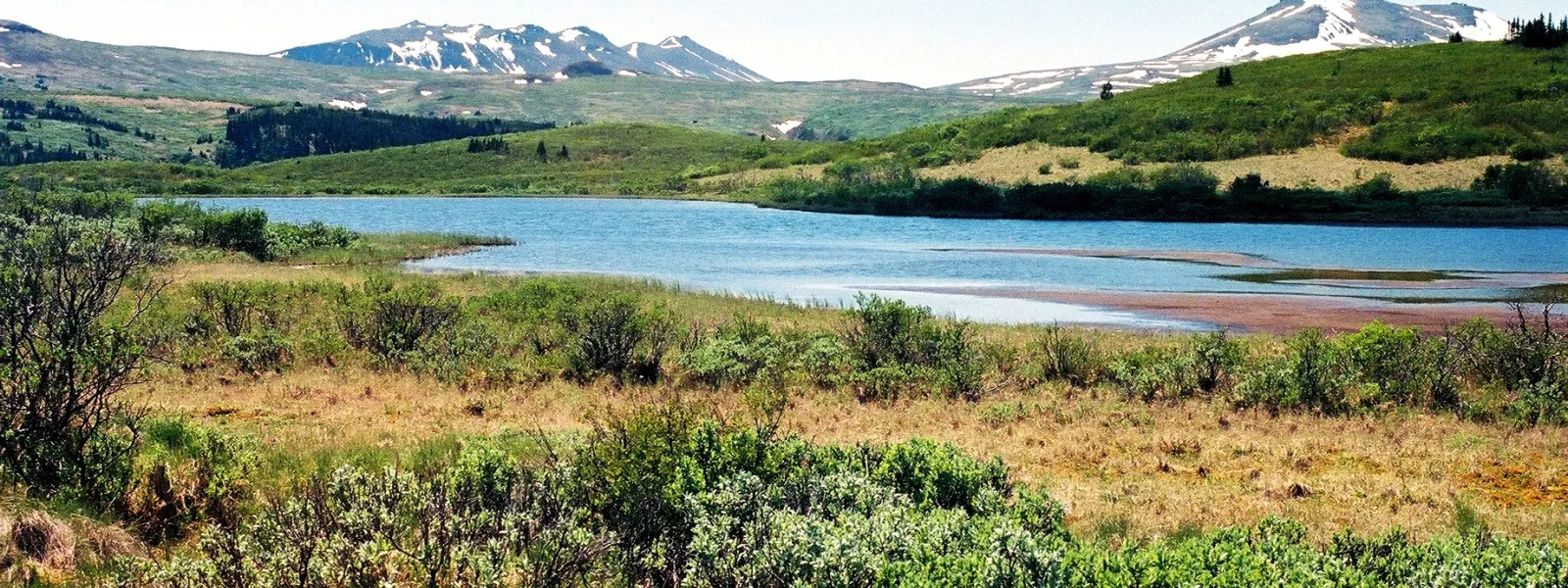
Photo: Steven Ablitt / Cassiar WatchVictory: Canada supports public participation and environmental assessment
Thanks to a court ruling to which AIDA and our allies contributed, Canadian authorities must allow active participation in all mining and industrial megaprojects, as well as comprehensive environmental impact assessments.
The decision came after a long legal battle that began in 2006. That year, an open-pit copper and gold mine called Red Chris was approved without the adequate evaluation of its environmental impacts. It was sleighted to process 30 thousand metric tons a day.
The Imperial Metals company intended to build the mine in the Kapplan River Valley, a remote and pristine natural area home to large mammals such as Dali’s sheep, caribou, bears and moose. In addition, the area is part of the migratory salmon route and the Tathlan indigenous community lives nearby.
The company had fragmented the project into small parts to avoid evaluating the full impact of the project, thus violating international standards and the right to public participation.
In 2009 AIDA filed a brief with Canada’s Supreme Court in support of a lawsuit filed against the project by MiningWatch and Ecojustice.
The ruling remains a powerful tool to protect huge expanses of pristine and valuable land for its biodiversity, water sources, and the culture of indigenous communities.
It was a watershed moment in terms of ensuring companies fulfill their obligations when developing projects that put at risk the natural environment and those who depend on it.
Related projects
Authorization of port expansion violates Mexico's international commitments
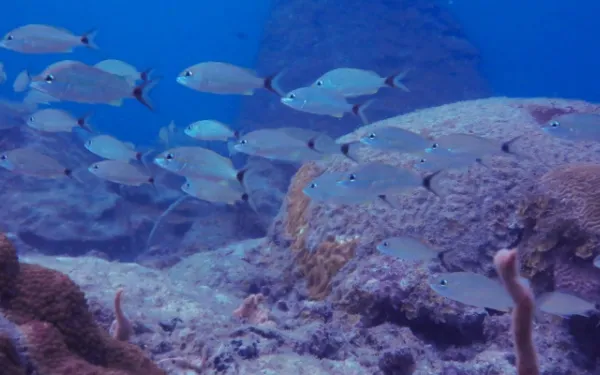
Mexico’s approval of the Port of Veracruz expansion project violates the nation’s international environmental and human rights commitments. To highlight this conflict, AIDA filed an amicus brief supporting residents of Veracruz in their attempt to protect the Veracruz Reef System, currently threatened by the port’s expansion. Veracruz, Mexico. In support of an amparo filed by local residents against the expansion of the Port of Veracruz, the Interamerican Association for Environmental Defense (AIDA) filed an amicus brief before Mexico’s Fifth Circuit Court with detailed information on international standards and treaties to which Mexico is party, and which the government violated upon authorizing the project. “By putting at risk the Veracruz Reef System—the largest in the Gulf of Mexico, whose protection is a matter of public interest—the government also threatens the right to a healthy environment of the people who depend on it,” explained Camilo Thompson, AIDA attorney. “The expansion project was authorized without an adequate evaluation of the impacts it would have.” Mexico granted the project’s environmental permit on November 21, 2013. Just a year earlier, it had reduced the area of the reef system, changing its boundaries to make the project viable. At the time of authorization, adequate scientific information was not available to understand how to avoid damaging the reefs and protect the services they provide to the people of Veracruz. Among their many benefits, the reefs provide income to coastal residents through fishing and tourism, and they act as a natural barrier against storms and hurricanes. Upholding these ecosystem services, local residents, advised by the Mexican Center for Environmental Law, filed an amparo against the project’s authorization, which was admitted by the court in March 2017. In their supporting brief, AIDA argues that, in authorizing the project, the government breached international obligations to protect its natural environment and the people that depend on it. Many of those obligations are outlined in treaties to which Mexico is party, including the Convention on Biological Diversity, the Ramsar Convention on Wetlands, the Inter-American Convention for the Protection and Conservation of Sea Turtles, the United Nations Framework Convention on Climate Change, and the American Convention on Human Rights. The Veracruz Reef System is a Natural Protected Area nationally, and is listed as a Wetland of International Importance under the Ramsar Convention. It serves as a refuge for many marine animals, among them endangered species of sea turtles. “The reefs of Veracruz contain a rich natural wealth that must be protected,” Thompson said. “The expansion project would destroy part of that habitat and lead to the loss of a great amount of biological diversity. It also could lead to stranded vessels, contaminating spills, and the loss of fishing resources that sustain the local economy.” Press contact: Camilo Thompson, AIDA attorney, +521 9671302346, [email protected]
Read more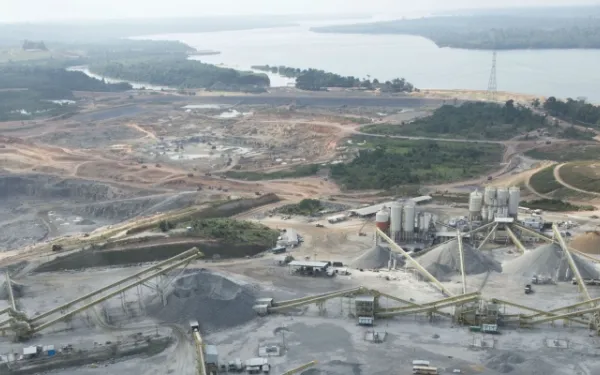
Brazil and the example that should be followed
In an apparent turnaround, the Brazilian government has signaled an end to the construction of large dams in the Amazon. If materialized, it will be a step worthy of imitation. Then the region, and the world, can move towards truly sustainable energy generation that respects the environment and human rights. 2018 began with encouraging news for the energy sector, and for rivers and human rights in Latin America. A senior official with the Brazilian government signaled, in an interview with the newspaper O Globo, the beginning of the end of large dams in the Amazon nation. That statement is backed up by the notable absence of several of these projects in Brazil’s new Ten-Year Plan for Energy Expansion. The about-face is particularly significant since Brazil is a world leader in the construction of large hydroelectric projects, which until a few months ago were relied on to meet the nation’s rising energy demands. Between corruption and lack of financing The decision is a response to various factors, including the social conflicts and environmental impacts that large dams have caused in the Amazon, and major opposition from indigenous communities and civil society organizations. In addition, these projects have involved high costs from the start and, as Edvaldo Santana, former director of the National Electric Energy Agency (ANEEL) told O Globo, they “end up costing much more, despite the licenses.” Large dams have also been at the center of the largest corruption scandal in the history of Brazil, uncovered by the Lava Jato investigation, which went beyond borders to involve politicians and businessmen from 11 Latin American nations. The evidence gathered then prompted the initiation of Leviathan, a special investigation into the Belo Monte Dam due to the signs of high payments of bribes related to its construction. All of the above is in addition to the requirements for environment licenses with which several projects have failed to comply. This is the case of Belo Monte, whose license has been suspended for months, and of the Tapajós Dam, who license was denied last year. On the other hand, the Brazilian government announced the privatization of Electrobras, a public company with a fundamental role in the construction of these large infrastructure projects. With this and the economic crisis that has affected the ability of the Brazilian National Bank for Economic Development (BNDES) to support these mega-projects, the large dams have lost their primary sources of funding. Therefore—and in the face of technological advances and clean energy alternatives—Brazil is beginning to leave behind large dams and take and important step towards truly sustainable energy, and development that respects human rights. This advance could have an important impact on the entire American continent. It could begin a wave of change toward a more modern energy matrix, further removed from the increasingly obsolete large dams. A necessary change In the Amazon basin alone, more than 275 new large dams are planned, the majority in the Andean region. And hundreds more are lined up in Central America and Mexico. To echo Brazil’s announcement, these initiatives could incorporate adequate and comprehensive energy planning with serious cost and risk assessments. In these terms, Pablo Pedrosa, Executive Secretary of Brazil’s Ministry of Mines and Energy, told O Globo, “We are not willing to make moves to disguise the costs and the risks.” Even global entities such as the International Finance Corporation (IFC), part of the World Bank Group, have experienced first-hand the financial, reputational and socio-environmental costs of inadequately evaluating large dam projects. In 2012, the IFC, through the Latin American Fund for Renewable Infrastructure, provided $15 million USD to fund the Santa Rita Dam, which was to be built on the Ictobay River in Alta Verapaz, Guatemala. At the end of last year, the entity’s accountability mechanism concluded that the investment had breached the IFC’s operational policies. The project had failed to comply with the affected community’s right to free, prior and informed consent. Although IFC management denied the findings of its accountability mechanism, the project has been suspended since 2013 and the indigenous communities of the area maintain their opposition to it. Brazil’s recent decision reinforces the global trend of moving away from large dams. Over the last several years in the United States, large dams have been removed to rescue rivers and the benefits they provide, like wild salmon runs on the Snake River in Washington State. Given this good start to the year, it will be essential to ensure the effective implementation of Brazil’s decision. And, following that example, perhaps other Andean-Amazonian countries will also move towards modernity, consider the real costs of large dams, and begin to promote better, cheaper energy alternatives that don’t sacrifice natural ecosystems and the communities that depend on them.
Read more
Salmon farms in Chilean Patagonia approved without adequate environmental evaluation
A study commissioned by the Interamerican Association for Environmental Defense found that more than half of the salmon farms currently operating in the Magallanes region of Southern Patagonia have generated a partial or total lack of oxygen in the water. Nine of those are located in naturally protected areas. Santiago, Chile. A recent study, commissioned by the Interamerican Association for Environmental Defense (AIDA), concluded that salmon farms located in the Magallanes region of southern Patagonia were authorized without the scientific assessments needed to ensure they would do no harm to marine life. “After twenty years of development in other regions, the salmon industry now seeks to expand to the country’s last virgin coasts, without the necessary precautions,” explained Gladys Martínez, senior attorney of AIDA’s Marine Program. “This study demonstrates that neither the companies nor that State have done enough to avoid in Magallanes the severe environmental damage already perpetuated in other regions of the country.” Chilean biologist Héctor Kol produced the report for AIDA, with the support of the Waitt Foundation, analyzing 261 salmon farm projects. Of them, a little less than half have already been authorized and the rest could receive their permits in the short- and medium-term. Of the 126 authorized projects, only 35 are currently in operation. The information produced on each project includes location maps and estimations of the amount of waste being discharged into the waters. The research shows that there are large differences in the quantity of waste that the government authorized for different subsectors of the same geographic areas, without any available explanation as to why. “This demonstrates a clear lack of scientific evaluation, necessary to guarantee the aquatic environment will be able to receive and process the authorized quantity of waste,” said Florencia Ortúzar, AIDA attorney. “More than half of the projects that are currently in operation have already generated a total or partial lack of oxygen in the waters, which seriously impacts marine life. In addition, at least nine of these oxygen-depriving projects are located in natural protected areas.” On May 22, 2017, AIDA filed a complaint before the Superintendency of the Environment requesting the investigation of damages caused by salmon farms in Magallanes, and the sanctioning of the companies responsible. Consult the report here. Interactive Map of Salmon Farms here. More information on salmon farms in Patagonia is available here. Press contact: Florencia Ortúzar, AIDA attorney, +56973353135, [email protected]
Read more