
Project
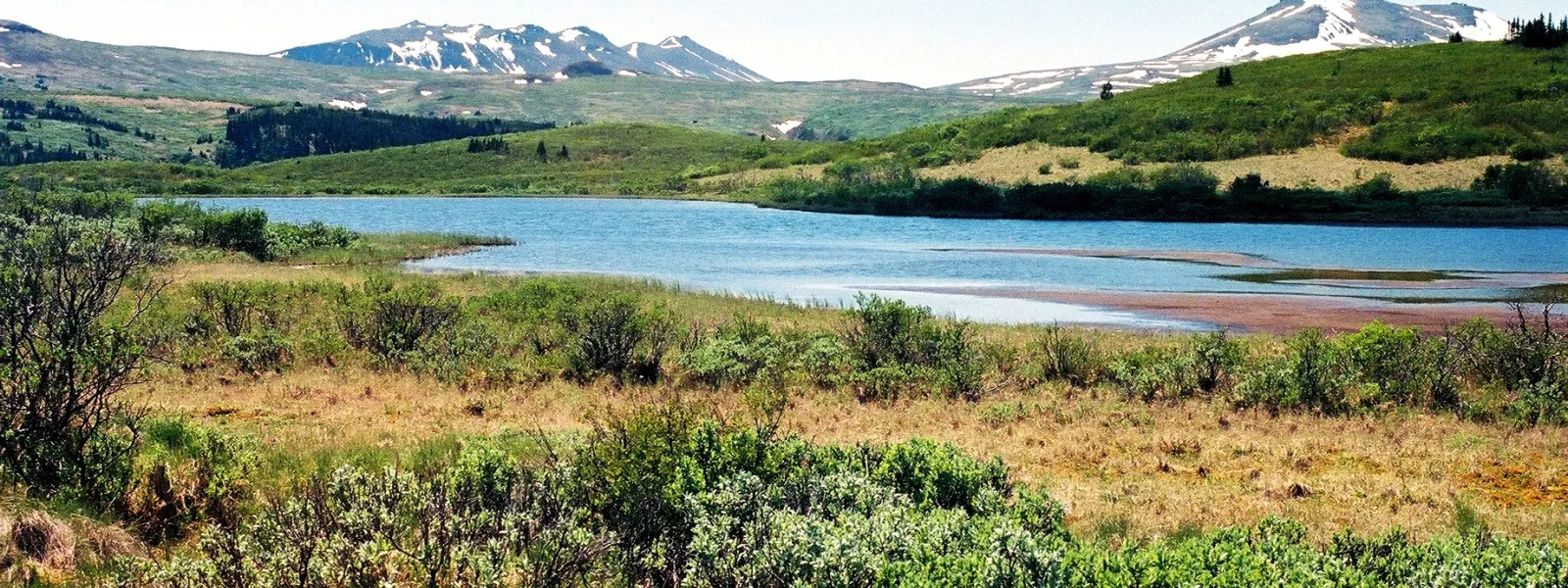
Photo: Steven Ablitt / Cassiar WatchVictory: Canada supports public participation and environmental assessment
Thanks to a court ruling to which AIDA and our allies contributed, Canadian authorities must allow active participation in all mining and industrial megaprojects, as well as comprehensive environmental impact assessments.
The decision came after a long legal battle that began in 2006. That year, an open-pit copper and gold mine called Red Chris was approved without the adequate evaluation of its environmental impacts. It was sleighted to process 30 thousand metric tons a day.
The Imperial Metals company intended to build the mine in the Kapplan River Valley, a remote and pristine natural area home to large mammals such as Dali’s sheep, caribou, bears and moose. In addition, the area is part of the migratory salmon route and the Tathlan indigenous community lives nearby.
The company had fragmented the project into small parts to avoid evaluating the full impact of the project, thus violating international standards and the right to public participation.
In 2009 AIDA filed a brief with Canada’s Supreme Court in support of a lawsuit filed against the project by MiningWatch and Ecojustice.
The ruling remains a powerful tool to protect huge expanses of pristine and valuable land for its biodiversity, water sources, and the culture of indigenous communities.
It was a watershed moment in terms of ensuring companies fulfill their obligations when developing projects that put at risk the natural environment and those who depend on it.
Related projects
Remembering Robert Moran
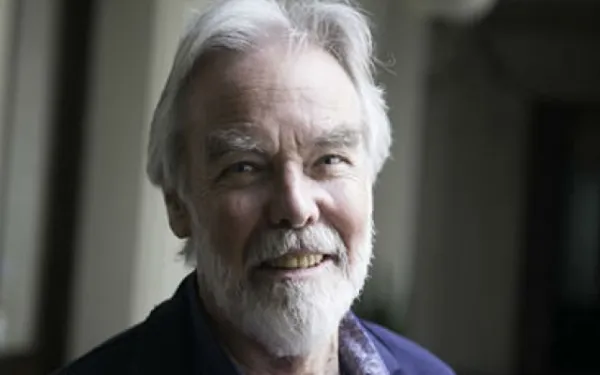
It is with great sadness that we share news about the passing of Dr. Robert E. Moran, a distinguished hydrogeologist who was an immense resource in furthering environmental protection globally and a dedicated partner to AIDA. He died May 15 in a car accident while vacationing in Ireland. With over 45 years of experience in water quality monitoring, geochemical, and hydrological work, Dr. Moran was invaluable in the fight for clean water and responsible mining worldwide. His work as an expert on the environmental impacts of mining led him to collaborate with a wide range of actors, from non-governmental organizations and indigenous communities, to private sector and government clients. He was an admirable scientist and a strong defender of environmental rights. Some of Dr. Moran's recent projects in Latin America included: a review of technical issues at the Veladero gold mine in Argentina following a toxic cyanide spill; providing assistance and training to Colombian government officials on coal mine inspection and water quality monitoring; and preparing reports evaluating the environmental impact statements of the Minero Progreso Derivada II project in La Puya, Guatemala. Dr. Moran also conducted reviews of mining operations and their impacts in Peru, Bolivia, Colombia, and Honduras, as well as in Africa, Europe, Central Asia, the Middle East, and the United States. He dedicated his life to helping others understand and better evaluate the true costs of mining activities. Dr. Moran will be sorely missed by many in the environmental movement and people everywhere whom his life touched. We honor and thank him for all of his magnificent work to defend our planet.
Read more
Love for my daughter and the planet
Before I became a mother, I heard the question a thousand times: “Is it a good idea to bring more human beings into the world?” I often asked it myself. Thinking logically, the most obvious answer is no. The news shows us that we live on an overpopulated planet—one with water shortages, species extinction, alarming pollution and environmental degradation. It seems to be getting ever worse. That´s why, while being a mom is always difficult, being an environmentalist as well makes it even more so. Being an environmentalist is like fighting a million-headed monster: when one problem is solved, another 10 pop up. It means learning daily of the perilous situation facing our planet: the threats, the battles lost, the people and species suffering. Faced with such news, it’s impossible to turn a blind eye. Ignorance can no longer be an excuse for our actions. “What kind of world do you want to leave your children?” This is the question I’m faced with now. Yet it seems almost obsolete. It’s more important to think about what kind of world we want our kids to live in right now. To address this, parents like me are faced with an endless array of factors to consider before deciding something as simple as what to feed our children. It’s no longer enough that the food be balanced and nutritious. Now we must know if the food is pesticide-free, non-GMO, made with only natural ingredients… the list is endless. In Mexico, where I live, few children have the privilege of playing in a river or forest, on a beach or mountainside, or simply in the greenery of a park. In addition to keeping them safe from violence and human trafficking, we must also prevent our children from being exposed to high levels of air pollution. So if the world is so bad, why do we keep having children? They say that frogs do not breed unless they know there will be rain because, without rain, they know their offspring will be in danger. In the animal world, countless species regulate their reproduction based on their close relationship with nature. If conditions are not conducive, they do not reproduce. Are we human beings, then, the only species that reproduces at all costs, regardless of environmental threats? Humans are different from other species because of our awareness, and our ability to see beyond basic survival to things like art, love, empathy, and the search for meaning. Helping to make a difference is what brings meaning to my life. As part of the AIDA team, I work alongside professionals who dedicate their lives to saving rivers, defending human rights, protecting forests, supporting environmental defenders, empowering vulnerable communities, and giving a voice to the voiceless. It’s true that the news bombards us daily with worrisome stories about our planet. But it’s what the news rarely reports that shapes my vision of the future. Every day, I see a growing number of people who are prepared, engaged, and working to build a better world. They are mothers, fathers, children, students, teachers, professionals, and volunteers; they come from every imaginable country and culture; and they are willing to do whatever is necessary to help others. Above all, I see a critical mass of people that believe we can. We can change course, generate alternative energies, lessen our footprint; we can rectify wrongdoings, empower the vulnerable, combat xenophobia and greed; we can spend our money more wisely, and find more democratic ways of doing business. I have the privilege of working alongside a diverse group of people who have committed to fighting the good fight, and who won’t let go of the divine connection to the land that has given us life. These are the people who make me think that having children today is not only feasible, but also desirable. Because we can instill our children with generosity, compassion and respect—not just for themselves and the people around them, but also for the trees, the rivers, the animals, and all living things. Still, I often wonder whether we’ll ever get it right. I wonder if my five-year-old daughter will become an adult in a world where fresh water and clean air are seen as basic human rights; or if they will be commodities within reach of only the privileged few. Though I’ve never questioned whether or not my decision to have my daughter was the right one, I do still return to the question of whether or not the world needs more people. And then I look at my daughter’s shining eyes, at her gentle hands, at her dancing legs, at her infectious smile and her tireless curiosity. In her soft embrace, I feel her generosity, her compassion, and her boundless hope. Her laughter is so deep it could wake the flowers in spring; her spirit so generous it can shine love out on all living things; and her potential so huge she just may be the one to help push our planet towards a brighter future. There is no answer, then, but YES. For my daughter, and all children who carry within the potential for a better world, we will continue working to defend our beautiful planet. Join us! AIDA is an international nonprofit organization that uses the law to protect the environment, primarily in Latin America.
Read more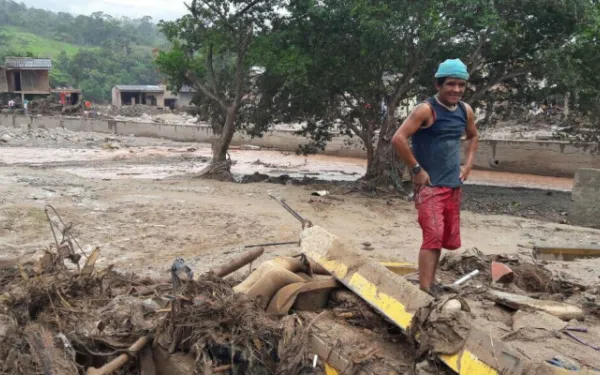
In times of climate change, we must respect nature
(Column originally published in El País) We are living now with the realities of climate change; to act otherwise would be ignorant and irresponsible. But, in case we forget, nature will surely remind us. Over the last months, severe landslides have devastated communities in Peru and Colombia. Together, they left more than 500 people dead, dozens missing, and more than 100,000 victims. Tragedies like these have some things in common: they occurred in cities and regions with high rates of deforestation and changes in land use; in both areas there was evidence of poor planning and regulation. Effectively, these disasters were foreshadowed. They make clear once again the vital need to care for our forests and riverbanks, and to avoid deforestation and erosion. Climate change means hard rains, fires, and hurricanes will become increasingly frequent and more intense. In Mocoa, Colombia, the equivalent of 10 days of rain fell in just one night, causing flash flooding that devastated much of the small town. In many cases, nature is only taken into account after tragedy strikes. But nature, when well cared for, can literally save lives. In Mocoa, a native forest helped protect one neighborhood from being washed away. That’s why environmental protection must be taken seriously, and any exploitation of natural resources must be well planned and sensible. Yet in Latin America, there remains a regional tendency towards unregulated extractivism. Over the last few years, governments across the region have been weakening environmental regulations in the name of development. Meanwhile, year after year, hundreds of people in Latin America and the Caribbean—especially children and others in vulnerable situations—die from events associated with droughts and floods. Activists, movements, mayors, and others seeking to protect land and water from extractive activities are frequently criticized, even criminalized and attacked. In the small Andean town of Cajamarca, Colombia, 98 percent of voters recently chose to ban all mining in their territory. It’s a decision that has sparked national controversy. Critics of the referendum have questioned whether the results are mandatory, despite the fact that Colombian law clearly states, “the decision of the people is mandatory.” Through their popular vote, the people of Cajamarca reminded their government of its commitment to protect their water and natural resources. Communities in Guatemala, Honduras, Costa Rica, Peru, and El Salvador have done the same. While some extraction is necessary in modern society, there must be a healthy balance. Not every project is safe, and alternative development models must be embraced and explored. It’s time to incorporate the environment into public policy and development, once and for all. Two Latin American nations have shown what is possible. In 2011, Costa Rica banned all open-pit metal mining. In March, El Salvador did the same. In both cases it’s a big yet viable change, because alternatives exist and it’s understood that protecting land and water is necessary to secure a healthy future. El Salvador has the second-highest rates of deforestation and environmental degradation, which has led to severe water scarcity. This is why the ban on metal mining passed there. It was no favor to environmentalists; it was based on years of sound analysis. Social and economic studies of the proposal concluded that the best thing for the country was to care for and restore its remaining forests and water sources. The decision prioritized environmental restoration—particularly its social and economic benefits—above the perceived benefits of mining. Environmental degradation is not a problem that exists in a vacuum. That’s why States have signed treaties and other international instruments that recognize their obligation to protect the environment. The Paris Agreement on Climate Change, signed by 34 of 35 States on the American continent, is the most recent. Now, more than ever, these commitments must be honored and fulfilled. Not all extractive projects are viable. Determining their worth must involve sound planning, coupled with policies and legal frameworks that are strong and effective. Environmental Impact Studies must be done carefully, objectively, and independently. Decisions should consider short- and long-term impacts on both local and national levels. We are living now with the realities of climate change; to act otherwise would be ignorant and irresponsible. But, in case we forget, nature will surely remind us.
Read more