
Project
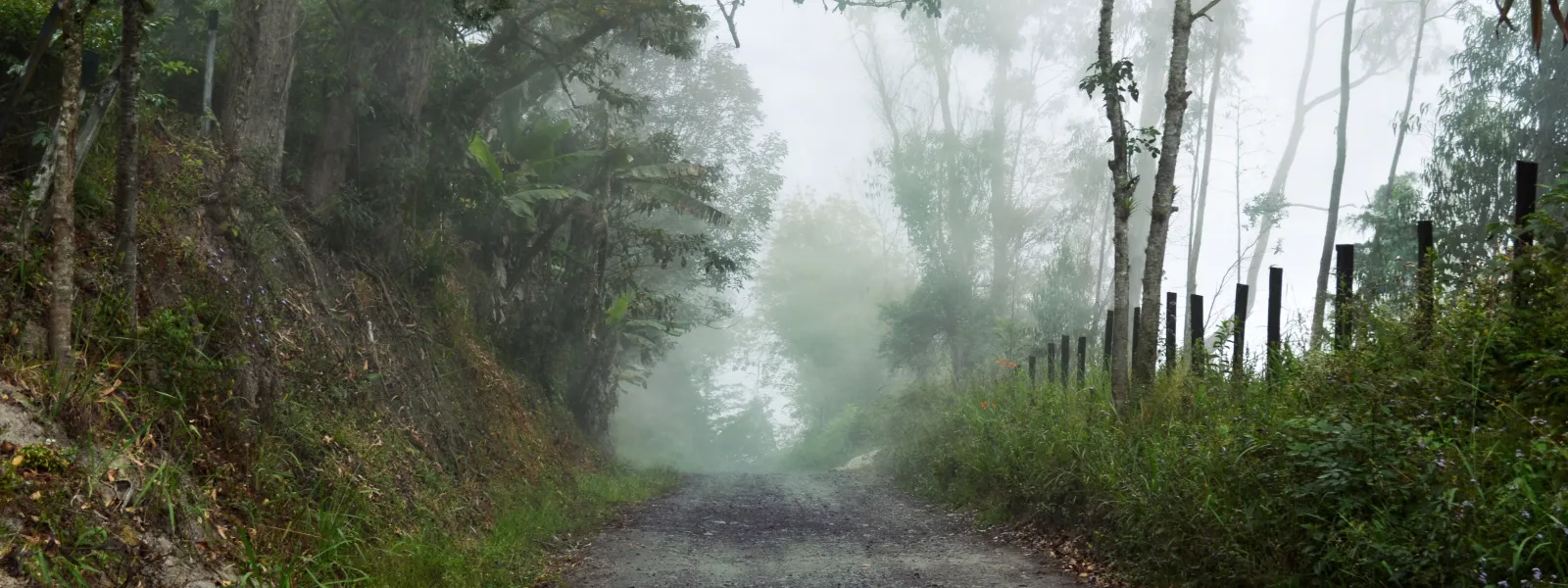
Victory: Constitutional Court Defends Right to Prior Consultation
On January 23, 2008, the Colombian Constitutional Court declared the Forest Law of 2006 to be unconstitutional and therefore, invalid, because lawmakers did not consult with indigenous, afrodescendant, and tribal communities during development of the law as required.
This decision is an advance for these Colombian communities who view many economic development projects and policies as a threat to their traditional territory and cultural identity, as well as the environment. The ruling also establishes a valuable legal precedent that can be used to bolster indigenous and tribal communities’ rights in other legal cases throughout the Americas.
The Colombian government is required by law to consult with indigenous and tribal communities regarding administrative and legislative decisions that may affect them. It is obligated to do so because the Colombian Congress previously adopted into law “Convention 169,” a treaty of the International Labour Organization that protects this right and others.
In this case, the Court decided that indigenous and tribal communities should have been consulted because the Forest Law regulates forest issues in general terms, and contains provisions that “will likely affect areas generally used by the communities, which could impact their lifestyles and their close relationships with the forests.”
The court also declared that the requirement to consult with indigenous and traditional communities cannot be replaced with the general public participation process that the government carried out regarding the Forest bill. Rather, to comply with the law, the government should inform the communities about the proposed law, explain its implications and how it could affect them, and give them opportunities to effectively state their opinions regarding the bill.
As a result of this court ruling and civil society’s call to respect the right to prior and informed consultation, the Colombian government proposed a law to regulate and enforce this fundamental right. The Ministry of Agriculture also began developing a new forest law, this time using a process that complies with prior and informed consent procedures.
The lawsuit was brought by a group of students and professors from the University of Los Andes Law School in Bogota with the support of AIDA. Social organizations including the Proceso de Comunidades Negras, the National Indigenous Organization of Colombia (ONIC) and CENSAT Agua Viva also supported the group in presenting this case.
This group also filed a second lawsuit against the Forest Law alleging that the law violated Constitutional provisions protecting the environment. However, because of the January court decision, no decision will be made on this second suit.
Related projects
Mining Arc threatens majestic lands of Southern Venezuela
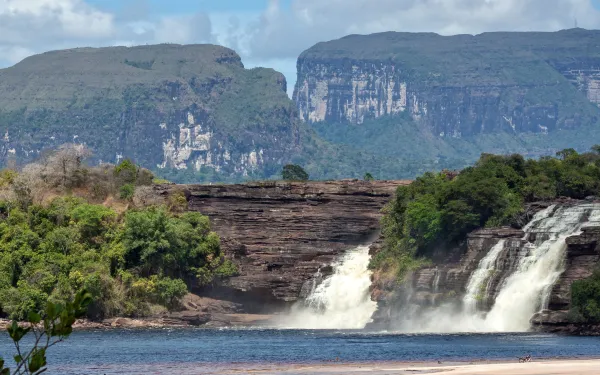
For decades, one of the greatest socio-ecological tragedies in Latin America has been developing in Venezuela. Small-scale gold mining is inflicting irreversible damage to one of the continent’s most biodiverse natural areas. It’s happening South of the Orinoco River, amidst majestic waterfalls, impressive mesas, and long-established indigenous communities. Despite its major impacts on the states of Amazonas and Bolívar, mining there has advanced rather silently. Up until a few years ago, not many researchers were even paying attention. The situation changed in 2011, when then-President Hugo Chavez announced the creation of the Orinoco Mining Arc National Strategic Development Zone, a project finalized five years later through a presidential decree. Photo: Bram Ebus / Infoamazonía. Mining’s large-scale damages The Orinoco Mining Arc involves permitting undefined mining activities in 111,843 square kilometers of territory—an area larger than Guatemala and almost twice the size of the Orinoco Oil Belt. Its implementation has legitimized and exacerbated the damages of small-scale mining, chief among them water pollution, deforestation and the destruction of fertile soils. The project also aims to develop large-scale mining in this mega-diverse region. Now, independent researchers like Carlos Eduardo Pacheco and others, hailing from organizations such as the Venezuelan Society of Ecology and Provita, warn of the huge damages that may occur due to the nation’s lack of environmental regulation. Thanks to their studies, additional research, and an analysis of satellite images, we know that: in the area around the Mining Arc there exist at least five or six large pockets of deforestation, and hundreds of smaller ones; the Caroní and Ikabarú river basins are being destroyed; and damages have reached Caura and Canaima National Parks, as well as the territories of the Pemón, Yekuana, Akawayo and Yanomami indigenous people, among others. The consequences, the researchers warn, are not only ecological; they are social as well. There has been a mass exodus from major cities, people fleeing poverty and heading to the Mining Arc to seek economic opportunity. Photo: Bram Ebus / Infoamazonía. In addition, mining activity has lead to multiple reports of human trafficking, prostitution, drug trafficking, extortion, murder, and the presence of both paramilitary groups and guerillas from Colombia. Many of the mining projects in the zone are under the control of a mafia known as “Pranato Minero,” whose leaders are relatively unknown. Increased mining has also caused serious harms to the health of informal miners and their families due to the use of mercury. Statistics from the Ministry of People’s Power for Health demonstrate a strong increase in mortality—at least 500 percent between 2002 and 2013 in municipalities close to the Arc, including Sifontes, El Callao, Cedeño and Roscio. And large-scale transnational mining hasn’t been left out of the picture. Even Canadian companies that recently sued Venezuela for controversies related to their investments have returned as partners in the mining exploitation of Orinoco. Raising awareness of Orinoco In all this development, where is the social and environmental responsibility? There seems to be no place for accountability in Venezuela, a nation with non-existent institutions and inapplicable laws. We must to ask what we can do, as members of civil society, in the face of this latest chronicle of deforestation, mercury contamination, and outright destruction of the natural world of Southern Venezuela. At AIDA, we’re doing what we can by providing technical and scientific support to the Venezuelan organizations studying the Mining Arc’s development. By supporting them, we’re working to raise awareness of the issue and put one of the most serious social and environmental attacks in the region in the public eye.
Read more
Six advances for Latin America’s reefs in 2018
In 2018, we joined people and organizations around the world in celebrating the International Year of the Reef. AIDA was part of a global movement to increase awareness of the value of reefs and the threats they’re facing. To advance reef conservation in the Americas, we took part in a variety of legal actions to protect reefs in Mexico and the Caribbean. As always, we’re proud to celebrate the small victories we’ve achieved on the road to environmental justice in 2018. Together with our supporters and allies we: Supported a case in defense of the Veracruz Reef In February, we presented an amicus brief in support of an amparo filed by local residents against the expansion of the Port of Veracruz. We outlined how Mexico’s approval of the project in 2013 violated the nation’s international environmental and human rights commitments. Just a year earlier, the government had reduced the area of the reef system, changing its boundaries to make the project viable. At the time of authorization, adequate scientific information was not available to understand how to avoid damaging the reefs and protect the services they provide to the people of Veracruz. To raise awareness of the issue, we also co-produced a documentary, Battle for the Reefs of Veracruz. Alerted the Ramsar Convention to threats to Puerto Morelos Reef We sent an Urgent Alert to the Secretariat of the Ramsar Convention, alerting them to the threats to Puerto Morelos Reef National Park, a national protected area and Wetland of International Importance. Together with a coalition of civil society organizations, we solicited a visit of international experts to evaluate the risks facing the site, particularly changes in land use in coastal ecosystems due to massive and unsustainable tourism development. Created a Working Group on Threats to Mexico’s Wetlands In May, the Working Group on Threats was created within the National Wetlands Committee, which AIDA helped create in order to motivate Mexico to comply with its obligations to protect at-risk wetlands of international importance. Within the framework of this Group, efforts are being made to strengthen national actions to protect Ramsar ecosystems, including reefs and the herbivorous fish that make their home in them. Supported the protection of 10 species of parrotfish in Mexico’s Caribbean In October we presented a letter of support outlining international environmental and human rights arguments for the inclusion of 10 species of parrotfish on Mexico’s national list of at-risk species. While the inclusion has been acknowledged and accepted, official confirmation is expected early this year. Our efforts supported a proposal of the Health Reefs Initiative that seeks to legally protect parrotfish species, which are critical to maintaining a healthy coral reef ecosystem. Parrotfish and other herbivorous fish feed on algae that compete with corals for light and oxygen, thus enabling the reef to flourish. Helped Establish a Working Group on Corals in Costa Rica In coordination with the Ministry of Environment, we helped organize a working group of academic experts, members of civil society and competent governmental authorities that will propose comprehensive solutions to the problems facing the country’s coral ecosystems. Together we will work to ensure integral solutions to protect Costa Rica’s coral reefs. Supported a Working Group on Herbivorous Fish in Guatemala In coordination with the Healthy Reefs Initiative, academics from San Carlos University and members of the government, we’ve supported the creation of a working group to draft a technical-scientific document that outlines the information necessary for a ministerial decree to prohibit the fishing of herbivorous fish in the Guatemalan Caribbean and, thus, protect the nation’s reefs.
Read moreSix advances for Latin America’s reefs in 2018
In 2018, we joined people and organizations around the world in celebrating the International Year of the Reef. AIDA was part of a global movement to increase awareness of the value of reefs and the threats they’re facing. To advance reef conservation in the Americas, we took part in a variety of legal actions to protect reefs in Mexico and the Caribbean. As always, we’re proud to celebrate the small victories we’ve achieved on the road to environmental justice in 2018. Together with our supporters and allies we: Supported a case in defense of the Veracruz Reef In February, we presented an amicus brief in support of an amparo filed by local residents against the expansion of the Port of Veracruz. We outlined how Mexico’s approval of the project in 2013 violated the nation’s international environmental and human rights commitments. Just a year earlier, the government had reduced the area of the reef system, changing its boundaries to make the project viable. At the time of authorization, adequate scientific information was not available to understand how to avoid damaging the reefs and protect the services they provide to the people of Veracruz. To raise awareness of the issue, we also co-produced a documentary, Battle for the Reefs of Veracruz. Alerted the Ramsar Convention to threats to Puerto Morelos Reef We sent an Urgent Alert to the Secretariat of the Ramsar Convention, alerting them to the threats to Puerto Morelos Reef National Park, a national protected area and Wetland of International Importance. Together with a coalition of civil society organizations, we solicited a visit of international experts to evaluate the risks facing the site, particularly changes in land use in coastal ecosystems due to massive and unsustainable tourism development. Created a Working Group on Threats to Mexico’s Wetlands In May, the Working Group on Threats was created within the National Wetlands Committee, which AIDA helped create in order to motivate Mexico to comply with its obligations to protect at-risk wetlands of international importance. Within the framework of this Group, efforts are being made to strengthen national actions to protect Ramsar ecosystems, including reefs and the herbivorous fish that make their home in them. Supported the protection of 10 species of parrotfish in Mexico’s Caribbean In October we presented a letter of support outlining international environmental and human rights arguments for the inclusion of 10 species of parrotfish on Mexico’s national list of at-risk species. While the inclusion has been acknowledged and accepted, official confirmation is expected early this year. Our efforts supported a proposal of the Health Reefs Initiative that seeks to legally protect parrotfish species, which are critical to maintaining a healthy coral reef ecosystem. Parrotfish and other herbivorous fish feed on algae that compete with corals for light and oxygen, thus enabling the reef to flourish. Helped Establish a Working Group on Corals in Costa Rica In coordination with the Ministry of Environment, we helped organize a working group of academic experts, members of civil society and competent governmental authorities that will propose comprehensive solutions to the problems facing the country’s coral ecosystems. Together we will work to ensure integral solutions to protect Costa Rica’s coral reefs. Supported a Working Group on Herbivorous Fish in Guatemala In coordination with the Healthy Reefs Initiative, academics from San Carlos University and members of the government, we’ve supported the creation of a working group to draft a technical-scientific document that outlines the information necessary for a ministerial decree to prohibit the fishing of herbivorous fish in the Guatemalan Caribbean and, thus, protect the nation’s reefs.
Read more