

Project
Victory: Court ends the “lawful” killing of endangered green sea turtles
In February of 1999, the Constitutional Court in Costa Rica declared an end to the "lawful" killing of endangered green sea turtles. The ruling is an important victory for the green sea turtle and potentially other species left vulnerable by their host countries.
Costa Rica has the privilege and responsibility of being a haven for one of the largest remaining populations of this endangered species of marine turtle in the Atlantic Ocean. Every two or three years, female green sea turtles, many of which are decades old, slowly plod from their ocean homes to nest on a 35 kilometer long beach between the Tortuguero and Parismina River.
Costa Rica, rather than fully protecting these ancient guests, previously had a law allowing for the capture and slaughter of almost two thousand green sea turtles annually. Unfortunately, poachers exploited the law to kill many more than the legal limit, with the survival of the sea turtles jeopardized.
In response to inaction by the Costa Rican government, and to safeguard the survival of the green sea turtle, AIDA worked through its partner organization CEDARENA to file suit and challenge the law.
In the law suit, AIDA and CEDARENA argued that the law violated the Costa Rican constitutional guarantee of an environment that is healthy and “in ecological equilibrium.” We presented hard evidence of the hidden impact of the law on the sea turtles. The Court ruled in our favor, and annulled the law.
The ruling itself does not end the threat to green sea turtles. It may however, provide some breathing room for conservationists to concentrate on stopping illegal poaching. Hopefully, they will succeed.
Related projects

Ramsar Secretariat advises Colombia to add Ciénaga Grande to list of world’s most threatened wetlands
Experts at the Ramsar Convention, an international treaty for the protection of wetlands, identified “significant changes” due to human interference in the ecological characteristics of the area. They recommended, among other things, that Colombia enroll the wetlands in the Montreux Record, a register of seriously threatened wetlands requiring immediate attention. Bogotá, Colombia—Following a visit to the Ciénaga Grande de Santa Marta wetlands in August of last year, a mission of international experts from the Ramsar Convention, an inter-governmental treaty for wetland protection, released a report recommending that the Colombian government include the area in the Montreux Record—a register of gravely threatened wetlands requiring immediate attention. “Given the significant changes in the ecological characteristics of the Ciénaga Grande wetlands, we recommend including it in the Montreux Record,” said the report issued last week. These changes “require urgent action by the government of Colombia to maintain and restore the area’s ecological character, and to protect it in accordance with the objectives of the Convention,” the report said. Among changes mentioned in the report are overexploitation and contamination of the wetlands’ waters, diminished fresh water due to increased sedimentation and obstruction of waterways, “huge loss” of mangrove forests caused by road and infrastructure projects that block water flow, and declining fish populations. “Including Ciénaga Grande in the Montreux Record would allow the Ramsar Wetland Conservation Fund to provide economic assistance through grants. It would also allow Ramsar scientists to provide expert advice and recommendations on best practices for the recovery and conservation of the ecosystem,” explained Juan Pablo Sarmiento Erazo, a researcher from the Universidad del Norte. In addition, the Ramsar report recommends two other solutions to the wetlands’ rapidly degrading condition: performing effective dredging based on new plans for water management and strengthening coordination among institutions that manage the site. “The key is that the Colombian government should follow the Ramsar recommendations to the letter, implement improvements as soon as possible, and make necessary changes in the site’s management,” said Gladys Martínez, an attorney with AIDA. “The Montreux Record is far from being a blacklist. It’s an opportunity for governments to demonstrate responsible management of natural resources that demand urgent attention.” Ramsar experts visited the site from Aug. 22–26, 2016, following a 2014 petition filed with the Ramsar Secretariat by AIDA, el Universidad del Norte, and the University of Florida. Scientist Sandra Vilardy at Universidad del Magdalena also contributed. “We hope the government will make the report official,” Vilardy said. “The document mentions that it is imperative to re-establish aquatic balance in the wetlands, emphasizing the role that rivers play in feeding Ciénaga Grande.” More information on Ciénaga Grande de Santa Marta is available here. Press contacts: Gladys Martínez, AIDA Attorney, +506 8321 4263, [email protected] Carlos Lozano Acosta, AIDA Attorney, +57 300 5640282, [email protected] Juan Pablo Sarmiento, Universidad del Norte, +57 300 5514583, [email protected]
Read more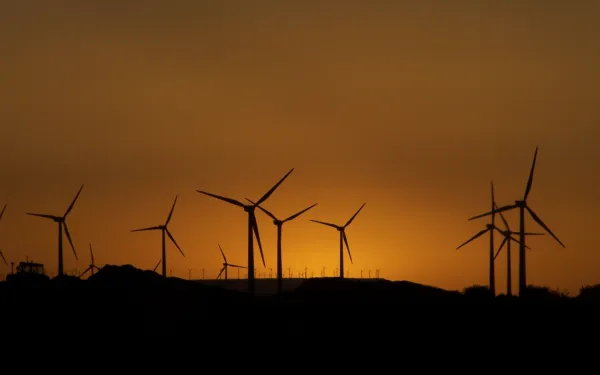
As US withdraws from Paris Climate Agreement, Latin America must step up
Without US participation, other countries must urgently limit greenhouse gas emissions. Now that President Donald Trump has withdrawn the United States from the Paris Climate Agreement, Latin American nations must act with new urgency to combat global climate change. In a blow to the Paris Agreement, Trump’s move sends a message that the U.S. federal government is no longer committed to curbing greenhouse gas emissions. The United States, Syria, and Nicaragua are now the only nations that refuse to join the historic fight against global warming. The Paris Agreement, which directs countries to set targets for the reduction of greenhouse gas emissions, was hailed as the first truly global climate deal to curb climate change. “This has huge implications for the Global South in the fight against climate change,” said Astrid Puentes, Co-Executive Director of the Interamerican Association for Environmental Defense, or AIDA. “We can no longer rely on the U.S. government to set an example for climate progress. Now more than ever, it’s important that Latin American countries step up efforts to curb their greenhouse gas emissions.” Although the United States and China are the largest emitters of greenhouse gases, nine percent of total global emissions come from Latin America, according to the UN Economic Commission on Latin America and the Caribbean. “In a region with immense ecological diversity, Latin America has an opportunity to take a leadership role in protecting natural resources and communities by shaping a clean energy future without reliance on fossil fuels,” Puentes said. “Without the United States, Latin America now needs to lead the global fight against climate change, and AIDA will continue to be at the forefront of that fight.” AIDA has worked with Latin American governments to increase their capacity to secure international funding for climate projects, raised awareness that many dam reservoirs emit significant amounts of methane, built a regional effort to counter the spread of hydraulic fracturing projects, and helped to protect critical carbon sinks, among other projects. As a team of environmental and legal experts, AIDA also works to protect the human rights of people and their communities throughout Latin America. AIDA is the only regional organization in Latin America that provides free legal support to communities and organizations dedicated to protecting human rights and the environment. Press contact: Astrid Puentes Riaño, Executive Co-Director, [email protected]
Read moreAs US withdraws from Paris Climate Agreement, Latin America must step up
Without US participation, other countries must urgently limit greenhouse gas emissions. Now that President Donald Trump has withdrawn the United States from the Paris Climate Agreement, Latin American nations must act with new urgency to combat global climate change. In a blow to the Paris Agreement, Trump’s move sends a message that the U.S. federal government is no longer committed to curbing greenhouse gas emissions. The United States, Syria, and Nicaragua are now the only nations that refuse to join the historic fight against global warming. The Paris Agreement, which directs countries to set targets for the reduction of greenhouse gas emissions, was hailed as the first truly global climate deal to curb climate change. “This has huge implications for the Global South in the fight against climate change,” said Astrid Puentes, Co-Executive Director of the Interamerican Association for Environmental Defense, or AIDA. “We can no longer rely on the U.S. government to set an example for climate progress. Now more than ever, it’s important that Latin American countries step up efforts to curb their greenhouse gas emissions.” Although the United States and China are the largest emitters of greenhouse gases, nine percent of total global emissions come from Latin America, according to the UN Economic Commission on Latin America and the Caribbean. “In a region with immense ecological diversity, Latin America has an opportunity to take a leadership role in protecting natural resources and communities by shaping a clean energy future without reliance on fossil fuels,” Puentes said. “Without the United States, Latin America now needs to lead the global fight against climate change, and AIDA will continue to be at the forefront of that fight.” AIDA has worked with Latin American governments to increase their capacity to secure international funding for climate projects, raised awareness that many dam reservoirs emit significant amounts of methane, built a regional effort to counter the spread of hydraulic fracturing projects, and helped to protect critical carbon sinks, among other projects. As a team of environmental and legal experts, AIDA also works to protect the human rights of people and their communities throughout Latin America. AIDA is the only regional organization in Latin America that provides free legal support to communities and organizations dedicated to protecting human rights and the environment. Press contact: Astrid Puentes Riaño, Executive Co-Director, [email protected]
Read more