
Project
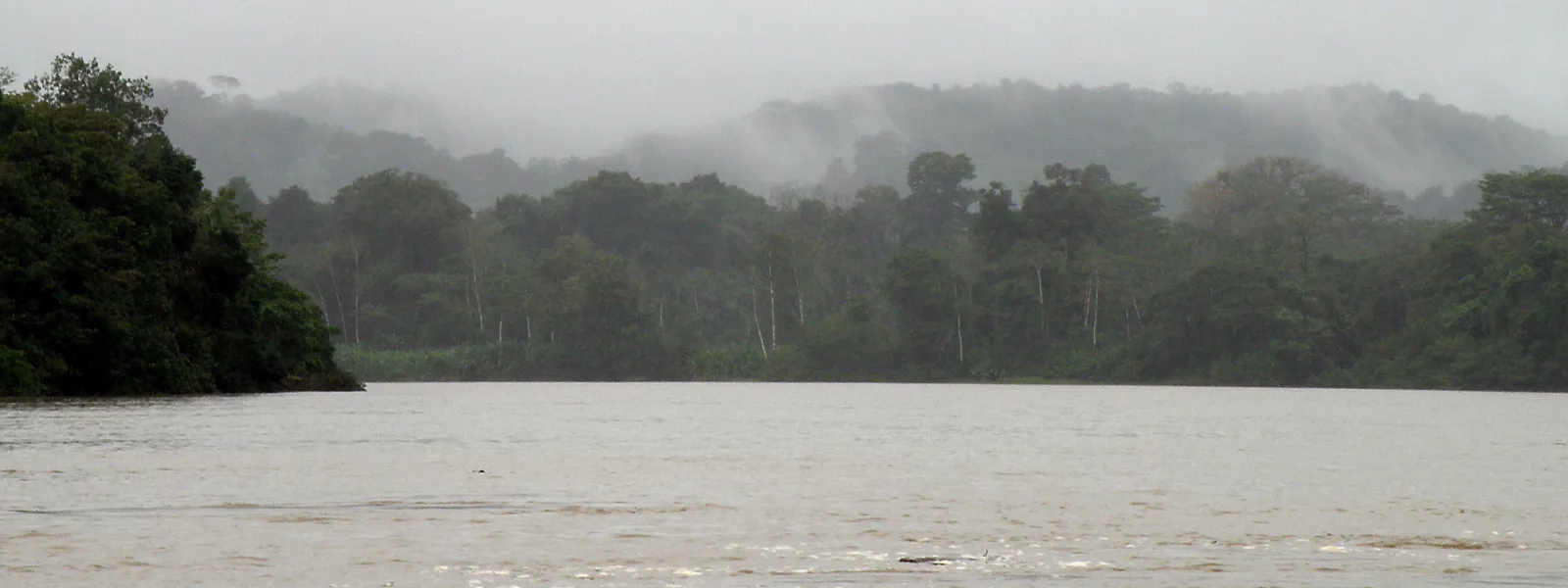
Photo: Thomas Jundt / CC BY-NCVictory: Crucitas gold mine cancelled for environmental harm
In Costa Rica, for the first time, a high-level court cancelled a large-scale mining project for the first time because it violated national laws and threatened the health of the environment. AIDA played an important role in establishing this precedent.
The company, Industrias Infinito, with the support of the previous government, planned to construct an open-pit gold mine in an incredibly biodiverse area near San Juan River, which forms the country’s border with Nicaragua.
The construction and operation of the mine threatened not just the environment but the cultural survival of 32 communities whose way of life depends on tourism and sport fishing in the area.
The fight to stop Crucitas began in 2008 when AIDA warned the Costa Rican government about potential international law violations and environmental impacts that had to be considered before allowing for the project’s implementation. We recommended suspending all work on the project until legal compliance and the protection of the environment and human health were guaranteed.
In November 2010, the Costa Rican Contentious Administrative Court cancelled the project’s concession, reiterating the importance of complying with legal standards when approving projects.
Though the company appealed the ruling, an appeals court later rejected their request and the Crucitas gold mine was cancelled for good.
We congratulate the national NGOs who worked on this case, especially the Environmental and Natural Resources Law Center (CEDARENA), for their tireless efforts in defense of the environment and human rights.
It is our hope that the precedent established in the case will be replicated in nations across Latin America.
Partners:
Related projects
Spending climate dollars on large dams – a bad idea
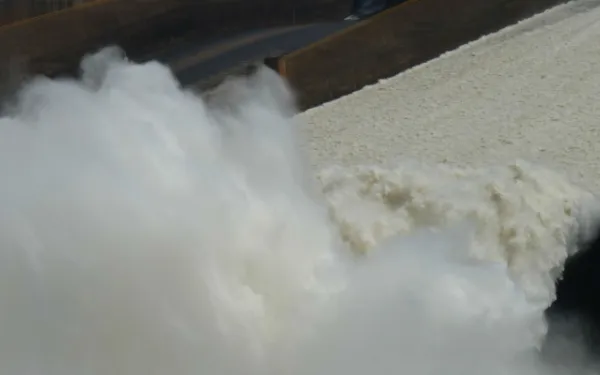
During its last board meeting, the Green Climate Fund—charged with financing developing nations’ fight against climate change—approved two projects related to large dams. That means $136 million will finance large-scale hydropower, contradicting the Fund’s goal of stimulating a low-emission and climate-resilient future. We’ve said it before: large dams are not part of the paradigm shift we need. They worsen climate change and are highly vulnerable to its impacts. They also cause grave economic and socio-environmental problems that make it impossible to label them as sustainable development. dam Projects before the gcf While the two projects will exacerbate climate change, they aren’t the most destructive we’ve seen. The first is expected to generate 15 MW of electricity in the Solomon Islands, an impoverished Pacific archipelago highly vulnerable to climate change. Planned for the Tina River, the dam will be the country’s first major infrastructure project. Today, the Solomon Islands rely almost entirely on imported diesel to produce energy. It is an unreliable, highly polluting energy source for which residents must pay one of the highest rates in the region. We would have liked to see the Solomon Islands leapfrog toward a more sustainable alternative, avoiding the era of large dams altogether. But we were pleased to see the World Bank’s consultation and engagement processes with local communities, which lend legitimacy to the project. The second project will rehabilitate a dam built in the 1950’s in Tajikistan. The repairs will make the dam more resilient to weather and less subject to accidents. Since it is focused on rehabilitation, the project will not generate the socio-environmental impacts typical of ground-up dam construction. Tajikistan already gets 98 percent of its energy from hydropower, an increasingly unreliable energy source. In fact, during colder months, when more energy is needed, more than 70 percent of the population suffers cutbacks due to the malfunctioning of dams. It’s unreasonable to use climate finance to deepen a country’s energy dependency instead of diversifying its matrix and increasing its climate resiliency. Our Campaign against large dams When we learned that large dam proposals would come before the Fund, just before the 14th meeting of the Board of Directors, we drafted a letter explaining why large dams are ineligible for climate funding. Then, in anticipation of the 16th meeting, during which the projects would be discussed, we sent Board Members an informational letter on each of the projects, signed by our closest allies. Finally, during the board meeting, we circulated a statement signed by a coalition of 282 organizations, further strengthening our position against the funding of large dams. We obtained official replies from several members of the Board, the European Bank for Reconstruction and Development (in charge of the project in Tajikistan), and the Designated National Authority of the Solomon Islands. Delegates from Canada and France requested further discussion of the issue. The problems with large dams received international media attention through articles published in The Guardian and Climate Home. Advancing with Optimism Although financing was ultimately granted to both of the projects, we managed to draw international attention to the contradiction inherent in funding large dams with money designated to combat climate change. Several members of the Green Climate Fund expressed doubts about further promoting large hydropower initiatives. We’re confident they’ll raise their voices when faced with projects far more damaging than those recently approved. Cheaper, more effective, and more environmentally friendly alternatives need the support and momentum the Green Climate Fund can provide. Both solar and wind power, for example, have proved to be more efficient and less costly than large-scale hydropower. Other less-developed technologies, such as geothermal, have largely unexplored potential. As part of a coalition of civil society organizations monitoring the Fund’s decisions, AIDA will continue working to ensure that the recent decision to fund large dams does not become a precedent.
Read more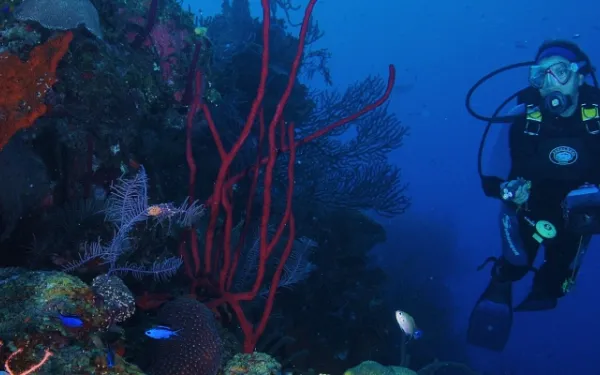
In search of legal protection for Mexico’s reefs
From the coasts of Baja California to the shallows of the Caribbean, Mexico is home to an incredible array of reefs. The coral and rocky reefs found throughout the country are sources of food and potentially life-saving genetic material. They protect people on the coasts from the impacts of storms and hurricanes, stimulate tourism, and provide shelter for a wide variety of plants and animals. Despite their inherent value, Mexico does not yet have an overarching law for reef protection. This vital task is instead governed by a variety of legislation and by international treaties that establish the country’s obligations to preserve these valuable ecosystems. Climate change is one of the most serious threats to reefs. Oceans are becoming warmer and more acidic, conditions that reduce reefs’ capacity to grow and repair themselves. In addition, warmer water disperses the algae that corals feed on, leaving the corals weakened and at risk of death. This month, the Mexican Senate’s Special Climate Change Commission decided to do something about the threats facing corals. They convened a series of meetings to promote the creation of a legislative instrument aimed exclusively at protecting the nation’s many reefs. I participated in these meetings as a representative of AIDA, alongside our colleagues from Wildcoast and scientists, academics, and community members who benefit from the services reefs provide. We drew the Senate’s attention to the serious threats facing reefs, and to the urgency of applying the precautionary principle to guarantee the human right to a healthy environment, which is at risk due to the lack of adequate regulations for reef conservation. To guarantee this right and to protect the oceans against climate change, Mexico has signed international treaties including the American Convention on Human Rights, the Paris Agreement on Climate Change, the Ramsar Convention on Wetlands, and the Inter-American Convention for the Protection and Conservation of Sea Turtles. The Veracruz Reef, an emblematic case Reefs around the country are also being threatened by inadequately planned coastal infrastructure and insufficient environmental impact assessments. This is the case with the expansion of the port of Veracruz, a project that endangers the Veracruz Reef System, the largest coral ecosystem in the Gulf of Mexico. The site was declared a Natural Protected Area in 1992, a priority region for the National Commission for the Knowledge and use of Biodiversity in 2000, a UNESCO biosphere reserve in 2006, and a Ramsar site. Even so, the government reduced the size of that area in 2013 to make way for the port project, violating international conventions such as the Ramsar Convention, under which the Veracruz reef is recognized as a Wetland of International Importance. Learn more about the case in the following video: Hope for Mexico's Marine Heritage We are confident that the Senate initiative will bear fruit and that Mexico will develop a law for the protection of its reefs, and that it will be born from a transparent and participatory process to which we will continue to contribute. To learn more about the topic, see our report The Protection of Coral Reefs in Mexico: Rescuing Marine Biodiversity and its Benefits for Humanity.
Read moreIn search of legal protection for Mexico’s reefs
From the coasts of Baja California to the shallows of the Caribbean, Mexico is home to an incredible array of reefs. The coral and rocky reefs found throughout the country are sources of food and potentially life-saving genetic material. They protect people on the coasts from the impacts of storms and hurricanes, stimulate tourism, and provide shelter for a wide variety of plants and animals. Despite their inherent value, Mexico does not yet have an overarching law for reef protection. This vital task is instead governed by a variety of legislation and by international treaties that establish the country’s obligations to preserve these valuable ecosystems. Climate change is one of the most serious threats to reefs. Oceans are becoming warmer and more acidic, conditions that reduce reefs’ capacity to grow and repair themselves. In addition, warmer water disperses the algae that corals feed on, leaving the corals weakened and at risk of death. This month, the Mexican Senate’s Special Climate Change Commission decided to do something about the threats facing corals. They convened a series of meetings to promote the creation of a legislative instrument aimed exclusively at protecting the nation’s many reefs. I participated in these meetings as a representative of AIDA, alongside our colleagues from Wildcoast and scientists, academics, and community members who benefit from the services reefs provide. We drew the Senate’s attention to the serious threats facing reefs, and to the urgency of applying the precautionary principle to guarantee the human right to a healthy environment, which is at risk due to the lack of adequate regulations for reef conservation. To guarantee this right and to protect the oceans against climate change, Mexico has signed international treaties including the American Convention on Human Rights, the Paris Agreement on Climate Change, the Ramsar Convention on Wetlands, and the Inter-American Convention for the Protection and Conservation of Sea Turtles. The Veracruz Reef, an emblematic case Reefs around the country are also being threatened by inadequately planned coastal infrastructure and insufficient environmental impact assessments. This is the case with the expansion of the port of Veracruz, a project that endangers the Veracruz Reef System, the largest coral ecosystem in the Gulf of Mexico. The site was declared a Natural Protected Area in 1992, a priority region for the National Commission for the Knowledge and use of Biodiversity in 2000, a UNESCO biosphere reserve in 2006, and a Ramsar site. Even so, the government reduced the size of that area in 2013 to make way for the port project, violating international conventions such as the Ramsar Convention, under which the Veracruz reef is recognized as a Wetland of International Importance. Learn more about the case in the following video: Hope for Mexico's Marine Heritage We are confident that the Senate initiative will bear fruit and that Mexico will develop a law for the protection of its reefs, and that it will be born from a transparent and participatory process to which we will continue to contribute. To learn more about the topic, see our report The Protection of Coral Reefs in Mexico: Rescuing Marine Biodiversity and its Benefits for Humanity.
Read more