Mining


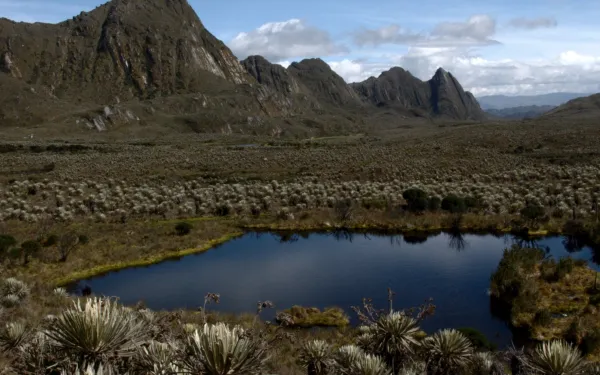
Vista panorámica del páramo de Sumapaz en Colombia.
Freshwater Sources, Mining

Páramos = water = life

Páramos are high-mountain ecosystems that capture water from fog and supply it to the lowlands. They lie between the upper limit of the Andean forest (about 3,000 meters above sea level) and the glaciers or permanent snowfields of the mountains (about 4,500 meters above sea level).Typically, páramos can be found in tropical regions near the equator, especially along the Andes mountain range.In Latin America, páramos cover more than 30,000 km2. South America is home to more than 80% of the world’s páramos, and Colombia accounts for 50% of them.The páramos are not isolated; rather, they form a high-mountain system that maintains ecological connections with other biomes and ecosystems, extending beyond national borders. In the Andean region, they form a corridor known as the "string of pearls," stretching from the Cordillera de Mérida in Venezuela, across Colombia and Ecuador, to the Huancabamba Depression in northern Peru.There, the water retained by low-altitude wetlands gradually flows downward, forming streams and rivers that flow down to the coast or the Amazon basin.Because of their interconnectedness, the páramos also serve as natural bridges or "springboards" for the migration and dispersal of species. Their conservation, therefore, cannot be limited to specific areas; it must extend to protecting the ecological, biological, and cultural relationships they share with other ecosystems. The importance of protecting the páramosWe must protect the páramos because they are essential to sustaining life. Among other reasons, this is because:They feed key watersheds, which in turn support agricultural and livestock systems that contribute to the population's food supply. They are the primary source of water for more than 85 million people. In Colombia, these ecosystems supply 70% of the freshwater consumed in major cities.They are home to a unique biodiversity: more than 3,370 plant species and 250 animal species. Among the endemic species found there are the frailejón (a plant with hairy leaves that trap moisture from the fog and regulate water), the Andean condor, the mountain tapir (or Andean tapir), and the spectacled bear.They serve as living spaces and homes for rural and indigenous communities. According to the 2018 páramo census, more than 76,000 people in Colombia live in the country’s páramo ecosystems. Furthermore, their stunning natural beauty drives nature tourism, thereby sustaining local ways of life.They are extraordinary natural carbon sinks and are indispensable allies in mitigating the climate crisis. They can sequester up to ten times more carbon dioxide per square meter than a tropical forest. In specific areas of a páramo, such as peat bogs, carbon sequestration can reach 2,000 metric tons.   Photo: Aztlec Flickr (Creative Commons).What threats must we protect the páramos from?Despite their great importance, the páramos currently face several threats. One is the climate crisis, which is raising ambient temperatures; because these ecosystems are located high in the mountains, they have no cooler thermal zones to migrate to.On the other hand, extensive livestock ranching and agriculture—particularly potato farming—affect considerable areas of páramos. Deforestation or reforestation with non-native species also endangers them, as does a lack of knowledge about their importance and characteristics.And mining is undoubtedly one of the greatest threats to these ecosystems. Due to their geological formation, these ecosystems contain large quantities of minerals and metals, such as gold and silver. The mining industry poses serious risks to the páramos because:It extracts large volumes of water and builds infrastructure on wetlands, reducing their ability to regulate water flows, and can cause pollution from mercury and other toxic substances, leading to species loss and affecting water quality and availability in low-lying areas.Underground mining can alter groundwater flow dynamics through dewatering processes designed to prevent tunnel collapse. This can lower the water table, cause land subsidence, and dry up water sources, among other impacts.It removes vegetation cover and organic soil, degrading fragile ecosystems such as the páramos, weakening their role as natural carbon sinks, and releasing stored carbon.Its impacts can last in perpetuity—for centuries or millennia—timeframes that cannot be predicted with certainty. Tailings dams and other infrastructure (tailings piles or dumps) where mining waste ends up, for example, have effects that persist indefinitely because they were not designed to be dismantled. Learn more about the true cost of mining in the páramos. The iconic case of the Santurbán páramo in ColombiaThe Santurbán case reflects the socio-environmental conflicts that arise from corporate efforts to establish mining operations in páramos, as well as from citizens’ efforts to protect these ecosystems and the life they sustain. Photo: Alberto Peña Kay. Located in the heart of the Eastern Cordillera of the Colombian Andes, in the departments of Santander and Norte de Santander, the Santurbán páramo covers 129,743 hectares and is home to 57 lagoons, 457 plant species, and 293 vertebrate species.Santurbán is home to mineral deposits—primarily gold, but also silver and copper—that have attracted foreign mining conglomerates for decades, which have sought to establish large-scale projects in the ecosystem, threatening to degrade it.This has raised concerns among the population that relies on the Santurbán water sources—more than two million people—who have mobilized to defend water, their land, and life.The Committee for the Defense of Water and the Santurbán Páramo has led these efforts. This coalition of environmental advocates, supported by AIDA and other civil society organizations, has thwarted the mining industry’s ongoing attempts. The defense of Santurbán has included litigation and national and international advocacy. Learn more about the effort to protect the Santurbán páramo. Protecting Latin America's páramosAs with Santurbán in Colombia, indigenous peoples, rural communities, and citizens in other countries in the region are using legal strategies to protect the Andean páramos.Also in Colombia, rural communities in Cajamarca, in the department of Tolima, succeeded in rejecting the La Colosa mining project—which would have involved gold mining in the Los Nevados páramo region—through a public referendum. They are currently defending the referendum's validity and the páramo demarcation in court.In Ecuador, the Kichwa Saraguro indigenous people are pursuing legal action to protect more than 27,000 hectares of the Fierro Urku páramo, which were granted as mining concessions for gold, silver, and copper without prior consultation. At the same time, they are demanding compliance with a protective order that suspended the Loma Larga mining project in the Quimsacocha páramo until prior consultation is guaranteed and environmental impact studies are conducted.In partnership with communities and allied organizations, AIDA works to protect the páramos and other ecosystems that sustain life in Latin America. 

Read more

Amazonas Brasil

Let's talk about project closure and responsible exit

No mining, fossil fuel extraction or power generation project lasts forever. Their useful life is determined by internal factors, such as the quantity of resource reserves, and external factors, such as declining demand or financial problems.But no matter how long a project lasts or how it is affected, its promoters—whether public or private—must provide for a closure and responsible exit process that considers the natural environment and affected communities, and that is desired and promoted by all stakeholders.This issue is even more relevant in the context of actions needed to address the climate crisis, largely related to the energy transition, which generally implies the substitution of fossil fuel extraction and use projects, as well as the promotion of low-emission renewable energies associated with mineral extraction. In both scenarios, closure and exit issues are of great importance.In the first, it is necessary to incorporate concrete and enforceable commitments to close down and move on from existing projects. In the second, these requirements should be built in from the planning and pre-feasibility stages and should also be included in the environmental impact assessments and subsequent stages.In all projects, the role of the promoters is essential. Likewise, the obligation of the state to supervise and monitor is of great importance in order to protect and guarantee the rights of those who may be affected. In some cases, the responsible exit also includes other key actors that are part of the value and supply chains of the projects: investors, financiers, insurers, suppliers, distributors and buyers, among others.Therefore, the discussion of project closure and responsible exit is essential to environmental protection and climate management in Latin America.What do we mean by project closure and exit?All mining and energy projects have different phases in their life cycle: initiation, planning, execution, monitoring and control, closure, and post-closure. In turn, they have supply and value chains that, as we have said, involve actors from different sectors.In this context, closure refers to the stage of a project in which it ceases to operate and is terminated. Exit, on the other hand, refers to the decision and subsequent process in which the different actors in the project's value and supply chain, in their own roles, completely disengage from the project.  What does it mean for a closing and exit process to be responsible?There is currently no consensus on the definition and scope of responsible exit and fair project closure processes. Sometimes these terms are used indiscriminately, which can lead to confusion about the responsibilities of the actors involved and the scope of the processes to be carried out. However, there are elements that allow these concepts to be explained precisely:Responsible and fair project closure is a planned, upfront process that should be considered from the earliest stages of a project and continually updated as the project evolves. Responsible closure ensures a planned, coordinated and participatory cessation of activities and dismantling, and guarantees the right to a healthy environment.The planning and development of a closure plan should focus on risk management as well as impact prevention and mitigation. This will ensure a responsible closure in which the affected areas can be readapted and made safe for both nature and communities, while allowing the ecosystems to recover their functions.The general obligation of the project developer is to properly identify the impacts that the project may cause and to adequately and timely comply with the measures approved by the State in its environmental management instruments.The main obligation of the State (in addition to its general regulatory duty) is to supervise and monitor the project to verify compliance with the developer's obligations and to prevent environmental and/or social damage.The role of other actors in the value and supply chain is to act with due diligence, to use their influence to encourage the promoter to comply with its obligations and, in the event of non-compliance, to act within their role and influence to ensure that the necessary corrective measures are taken.Responsible and fair exit refers to the process undertaken by the various actors in the value and supply chain when they decide to fully divest from a project, considering the responsibilities inherent in their role, which include fulfilling their obligations with respect to human rights and due diligence.  In Latin America, there has been important progress in regulating aspects related to the permitting, commissioning and implementation of mining and energy projects. However, experience has shown that there are significant challenges in ensuring that the closure and exit processes are responsible for the ecosystems and communities involved.To learn more about this issue, see our report Closure and Responsible Exit. A requirement for environmental and climate justice in Latin America (in Spanish).In the following video, we explain the main findings of the report, which documents and analyzes cases in several countries across the continent:  

Read more

Zona agrícola en el municipio de Cajamarca, Colombia
Freshwater Sources, Mining

Neither AngloGold Ashanti nor Mineros S.A.: Cajamarca is a municipality free of large-scale mining

Even if the companies change, the decision of Cajamarca's citizens remains the same: to defend their territory against large-scale mining. Bogotá / Cajamarca. Following the announcement by Mineros S.A. that it has signed an agreement to acquire 100% of the shares of AngloGold Ashanti Colombia S.A.S. in the La Colosa mining project in Cajamarca, the Legal Coalition for the Defense of Cajamarca (1) reiterates a clear message: Cajamarca has already decided, and its territory must remain free of large-scale mining. For more than a decade, we have been engaged in mobilization, legal defense, and advocacy efforts to protect Cajamarca from the La Colosa mining project promoted by AngloGold Ashanti. Thanks to this collective defense of the territory and environmental regulations, exploration activities for this project are currently suspended. Since 2017, the citizens of Cajamarca have spoken out emphatically through a public consultation, in which 98% of voters rejected mining activities in the municipality. This result has full legal effect, as confirmed by two Colombian judges, and represented a milestone in participation and environmental democracy in Colombia, as well as a clear expression of the territory's desire to protect water, the municipality's agricultural vocation, and the region's strategic ecosystems.   In this context, the change of ownership of the project from AngloGold Ashanti to Mineros S.A. does not change the reality of the territory or the position of the communities. Although the companies may change, Cajamarca's decision remains the same: to defend its territory against large-scale mining. Furthermore, neither of these two companies has the necessary environmental permits to reactivate the La Colosa project, yet they insist on disregarding the community's autonomous and legitimate decisions.    The announcement of this transaction comes just days after the Cajamarca City Council approved a municipal agreement initiated by citizens that declared 33 properties belonging to AngloGold Ashanti as areas of public utility and social interest. This decision reaffirms the municipality's institutional commitment to protecting the territory. The organizations that have signed this statement reiterate that Cajamarca is not and will not be a mining territory. Whether it be AngloGold, Mineros S.A., or any other company, large-scale mining has no place in the municipality. We will continue to take all necessary social, legal, and political actions to defend the territory and ensure that Cajamarca's decision is respected. #LaConsultaSeRespeta (1) The Coalition is made up of the Cajamarca Youth Socio-Environmental Collective (COSAJUCA), the SIEMBRA Socio-Legal Center, the Mining Studies Research Group at the University of Antioquia, the Inter-American Association for Environmental Defense (AIDA), the Public Action Group Legal Clinic (GAP) of the Faculty of Jurisprudence of the University of Rosario, the Legal Clinic on Law and Territory of the Javeriana University, the Colombian Commission of Jurists (CCJ), and Sibelys Mejía Rodríguez (independent researcher).Press contactsRobinson Mejía | COSAJUCA | [email protected] | 300 218 36 41 Sara Sofia Moreno | SIEMBRA | [email protected] | 300 568 33 33 | Lorena Zárate | AIDA | [email protected] | +52 553902 7481Laura Becerra | CCJ | [email protected] | 313 475 5815  

Read more

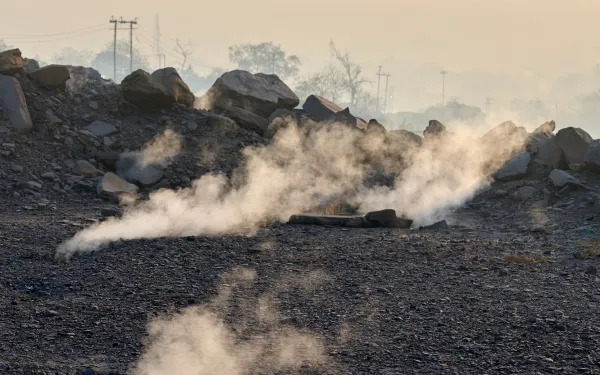
Operación minera para extraer carbón
Climate Change, Mining

Coal, a dirty and obsolete fuel

Historically, coal has been identified as an important source of non-renewable energy. It was the fuel that powered the Industrial Revolution, transforming the world's production methods, and for a long time, it was the main fuel for transportation, electricity generation, and heating.But it is time to leave that era behind. Today, we know that coal is the fossil fuel that generates the highest carbon dioxide (CO2) emissions, one of the main greenhouse gases driving global warming, with effects such as melting glaciers and rising sea levels.In addition to climate and environmental arguments, there are economic, political, and human rights reasons to end the extraction and burning of this fuel.To better understand why coal is so polluting and what its impacts are on the environment and health, we have taken a closer look. Getting to know coalCoal is a rock formed from plant remains that were buried in layers of sediment and did not decompose due to the absence of oxygen.Over millions of years, through geological processes, this organic matter was exposed to high temperatures and pressures. The result was a material composed mainly of carbon.The energy in coal is released during combustion. When burned, coal generates heat. In thermoelectric plants, this heat is used to generate steam and produce electricity.When coal is burned to produce heat or electricity, it releases large amounts of carbon dioxide and, in smaller amounts, methane and nitrous oxide into the atmosphere.All these gases harm the environment and human health. Why is it so polluting?Coal has an impact from the moment it is extracted, as open-pit coal mining involves excavating and removing large amounts of earth to reach the coal-rich layers.This means destroying landscapes, razing vegetation and animals, and even causing the forced displacement of populations.Coal mining also pollutes water and soil at extraction sites, both through mining the mineral and through the waste it generates.But the chain of impacts does not end there. During coal combustion, large amounts of CO2 are generated, the main gas responsible for global warming.At the same time, other gases are released during its extraction, handling, and combustion:Methane, which has a global warming potential up to 30 times greater than CO2 over a 100-year period.Nitrous oxide, whose global warming potential over a 100-year period is up to 273, and whose lifetime in the atmosphere extends up to 109 years. In addition to greenhouse gases, coal combustion also releases other pollutants, such as nitrogen oxides, sulfur dioxide, and black carbon (soot), which affect air quality and have indirect effects on the climate, including altering precipitation patterns and contributing to acid rain. What damage does it cause to health?Despite the known environmental and health impacts of coal, for many economies it remains a reliable and cheap energy source.Following the decline in coal consumption during the COVID-19 pandemic, global demand for coal has grown by more than 1.2 billion tons since 2020, according to the International Energy Agency's Coal 2024 analysis.Despite increased electricity generation from renewable sources, major consumers such as China and India continue to rely on coal.In Latin America, the future of coal is uncertain. On the one hand, the region continues to extract coal for export or for burning to generate energy. The most emblematic case is Colombia, the world's fifth-largest coal exporter.On the other hand, there are efforts towards decarbonization, such as in Chile, where coal-fired power generation has caused serious health and environmental impacts in so-called “sacrifice zones.”The government proposed a plan to have the entire National Electric System generate 100% clean energy by 2050. However, the recent accelerated burning of surplus coal at a thermoelectric plant, as part of its closure process, has put the spotlight on how this decarbonization is being carried out.As a coal-producing and consuming region, Latin America has a share of responsibility in global efforts to curb coal mining and burning and instead promote energy systems based on non-conventional renewable sources that are sustainable over time and respectful of the environment and people.Ending the coal era is possible. It is time to do so. 

Read more

Ciudad costera de Tocopilla en Chile
Climate Change, Human Rights, Mining

The importance of the “how” in the energy transition

Of the global carbon dioxide (CO2) emissions from fossil fuels, one of the main causes of the climate crisis, nearly half come from coal use.  Latin America is no stranger to the problem because it participates in both coal burning and the extraction of the mineral, which, after export, is used as a fossil fuel source in other parts of the world.In this context, the closure of coal-fired power plants—as is happening in Chile—is both great news and an opportunity to steer the energy transition toward justice.But in a just energy transition, the "how" matters: every step toward defossilization must ensure energy systems based on non-conventional renewable sources, respect for the environment and human rights, and responsible closure and exit processes.    Thus, the Chilean case, which we explain below, is an important example of why the region needs to implement responsible decarbonization.     When decarbonization causes more pollutionIn early 2024, AES Andes SA closed the Norgener thermoelectric power plant in Tocopilla, a coastal city in northern Chile.    As part of the closure process, the company rapidly burned the 94,000 tons of coal it had stored at the plant, affecting a city already saturated with pollution and publicly recognized as an environmental sacrifice zone.The population of Tocopilla was exposed to potential health effects, including impacts on the respiratory system, increased risk of heart attacks, and—in children—perinatal disorders, developmental disorders, and impaired lung function, among others.The forced burning of coal was authorized by the National Electricity Coordinator (CNE)—the agency responsible for managing the various energy sources that enter the national electricity system—and displaced the use of renewable energy.    To stop the burning, AIDA, Greenpeace, and Chile Sustentable, together with local communities, filed an appeal with the Santiago Court of Appeals to halt it, but the court's decision came after the coal had already been burned. Furthermore, the court ruled that the case should be reviewed by a specialized court in a more lengthy proceeding. A bad precedent for Chile and for the continentBy authorizing the burning of the remaining coal from the Norgener thermoelectric plant, the National Electricity Coordinator made an exception to the law governing the order of energy dispatch. Shortly thereafter, in September 2024, the agency issued an internal procedure to order the early closure of power plants.  Although it is an attempt to streamline the closure process, the measure opens the door for other companies with coal-fired power plants in the process of closing to replicate what happened at Norgener: burn their remaining coal under the argument of “emptying stock” and generate energy that enters the national electricity system with priority, once again displacing energy from renewable sources.  In Chile, the National Electricity Coordinator decides which unit dispatches its energy to the system at any given time based on a criterion of increasing economic merit, according to which the energy with the lowest variable cost enters first. However, the internal procedure stipulates—without sufficient regulatory backing—that the agency may authorize dispatching energy outside economic order so that coal-fired power plants consume their remaining fuel before closing.    In response, AIDA, Greenpeace, Chile Sustentable, and MUZOSARE (Women in Sacrifice Zones in Resistance) filed a complaint on February 6, 2026, with the Superintendency of Electricity and Fuels against the Coordinator and his advisors for approving and implementing the measure.  The complaint represents an opportunity to do things right: for the sector's regulatory body to ensure that the planning for the closure of thermoelectric power plants does not end up rewarding poor coal inventory management at the expense of communities' health and a just energy transition. What the energy transition needsIn 2019, the Chilean government committed to closing all coal-fired power plants in the country by 2040. Since that public announcement, the timeline has been accelerated. But the urgency of decarbonization should not be used to favor companies operating thermoelectric plants or to harm communities near polluting industries.    Doing so weakens Chile's climate leadership and sets a bad example for any decarbonization process in the region.    In a just energy transition, companies along the entire coal and other fossil fuel supply chain have an obligation to ensure the responsible closure and exit of their operations.    The energy transition is not merely a change in technologies; it is an opportunity to rethink energy and development models and to correct injustices. This requires clear and appropriate rules that promote energy system security, competition, and a healthy environment. 

Read more

Vista aérea de un paisaje de Groenlandia

5 key facts about “rare” earth elements

In recent weeks, you have probably read or heard the term "rare" earth elementsContrary to what their name suggests, they are more common in everyday life than you might think. In fact, many of the technological innovations we use daily would not be possible without them.So why are they being talked about so much right now?Because today, "rare" earth elements and other minerals considered "critical" are at the center of disputes over their control, given their usefulness in the manufacture of technologies for the energy transition and for the military industry.But aside from the geopolitical tensions surrounding the issue, there are basic questions that arise when we hear this term, which is why we answer them here.By understanding where the raw materials behind the technologies we use come from, we can also rethink the kind of future we want. What are "rare" earth elements?There are 17 metallic elements, similar in their geochemical properties, used in many of today's technologies, from cell phones to electric cars.They include the 15 lanthanides of the periodic table of chemical elements—lanthanum, cerium, praseodymium, neodymium, promethium, samarium, europium, gadolinium, terbium, dysprosium, holmium, erbium, thulium, ytterbium, and lutetium—as well as scandium and yttrium.Promethium is usually excluded from this group because under normal conditions its half-life is short. Are they really rare?Contrary to what one might think, they are not "rare" in abundance, but rather in concentration. In other words, deposits with high concentrations are rare, making their exploitation and processing difficult. As a result, most of the world's supply comes from a few sources.But when they were discovered (in the 18th and 19th centuries), they were less well known than other elements.  The most abundant "rare" earth elements are similar in concentration in the Earth's crust to common industrial metals (chromium, nickel, copper, zinc, molybdenum, tin, tungsten, or lead). Even the two least abundant rare earth elements (thulium and lutetium) are almost 200 times more common than gold. What are "rare" earth elements used for?They have unusual fluorescent, magnetic, and conductive properties, making them attractive for a wide range of applications.They are present in everyday objects such as smartphones, screens, and LED lights.In renewable energy, they are used to manufacture wind turbines and electric cars.Its most specialized uses include medical devices and military weapons. Where are they?They exist in various parts of the world, but just because a country has reserves does not mean that it exploits them. The countries with the largest reserves are:China: 44 million tons.Brazil: 21 million tons.India: 6.9 million tons.Australia: 5.7 million tons.Russia: 3.8 million tons.Vietnam: 3.5 million tons.United States: 1.9 million tons.Greenland: 1.5 million tons.In Latin America, besides Brazil, other countries where "rare" earth elements have been identified are Argentina, Chile, Bolivia, Colombia, and Peru. Why is there so much talk about them now?The energy transition is intensifying competition for access to raw materials—including rare earth elements—needed for renewable energy technologies.To promote and facilitate access to these and other resources, some countries and international organizations refer to them as "critical."But they are not only important for renewable energy. "Rare" earth elements are also key to the military industry.Because global supply is concentrated in a few sources, there is growing interest among some countries in the Global North in controlling access to these resources. What are the impacts of their exploitation?The extraction of "rare" earth elements is mainly carried out in open-pit mines, which have serious environmental and social impacts:Water, air, and soil pollution.Heavy use of water and toxic chemicals.Radioactive waste.Loss of biodiversity.Health risks.Forced displacement of communities.Increased risk of economic inequality. "Rare" earth elements and other minerals considered "critical" are at the center of current debates over who controls their exploitation and production.As these are natural resources, often found in indigenous territories and critical ecosystems, a more urgent discussion is what kind of progress we want: one that encourages the excessive exploitation of resources, or one that respects the environment and people? If you would like to learn more about this topic, here are the links to the sources we consulted:- USGS, Rare Earths Statistics and Information: https://www.usgs.gov/centers/national-minerals-information-center/rare-earths-statistics-and-inform… - USGS, "Fact Sheet: Rare Earth Elements-Critical Resources for High Technology": https://pubs.usgs.gov/fs/2002/fs087-02/  - Science History Institute, History and Future of Rare Earth Elements: https://www.sciencehistory.org/education/classroom-activities/role-playing-games/case-of-rare-earth…  - USGS, "The Rare Earth Elements-Vital to Modern Technologies and Lifestyles": https://pubs.usgs.gov/fs/2014/3078/pdf/fs2014-3078.pdf - Institute for Environmental Research and Education, "What Impacts Does Mining Rare Earth Elements Have?": https://iere.org/what-impact-does-mining-rare-earth-elements-have/#environmental_impact_studies- Latin America’s opportunity in critical mineralsfor the clean energy transition: https://www.iea.org/commentaries/latin-americas-opportunity-in-critical-minerals-for-the-clean-ener…- U.S. Geological Survey, Mineral Commodity Summaries, January 2025 : https://pubs.usgs.gov/periodicals/mcs2025/mcs2025-rare-earths.pdf pg 145 

Read more

Flamingos in Laguna Colorada, Bolivia
Climate Change, Human Rights, Mining

Justice for Andean Wetlands and Indigenous Peoples in Climate Action

The growing global demand for transition minerals—including lithium, copper, and nickel—driven by the current energy transition model, but also by the expansion of the digital economy, data infrastructure, and the military and aerospace industries, is causing irreversible ecological damage and violating fundamental human rights across the territories of the Global South. Latin America is the most biodiverse region on the planet and one of the most culturally diverse regions in the world. It is home to numerous Indigenous peoples who inhabit and safeguard these territories.At the same time, the region holds significant mineral deposits, placing it at the center of the growing global interest in mineral extraction. This demand intersects with fragile ecosystems, unique biodiversity and the territories of traditional and Indigenous communities, including the Amazon and the high Andean wetlands, which are crucial for climate adaptation due to their role in water regulation, and in mitigation, as they act as carbon sinks.Intensive mining in these ecosystems exacerbates climate vulnerability and fosters socio-environmental conflicts, compromising the ecological and cultural integrity of these ecosystems and communities. The push to expand extraction contradicts multilateral environmental protection frameworks and the climate and biodiversity commitments adopted by the States Parties. This trend jeopardizes the possibility of a just and equitable transition, reproducing the same patterns of inequality and climate harm that current policies claim to overcome.   In this context, the Alliance for Andean Wetlands calls on States Parties to the UNFCCC to ensure: 1. Human rights and justice must be at the center of any transition and of all strategies for climate change adaptation and mitigation, including the rights of communities living in territories where the transition minerals are located.Human rights are essential to ensuring a just, equitable and people-centred process. States must guarantee the right to self-determination of Indigenous peoples, recognized worldwide as guardians of natural systems. This must encompass their right to define their own development priorities and to exercise Free, Prior and Informed Consent (FPIC), as well as the unequivocal obligation of States to respect their decisions, particularly their right to say “no” to projects that threaten their integrity and that of their territories. States must also ensure protection of environmental defenders, and guarantee public access to information, participation and justice on decisions about transitions that might affect the environment and human rights. These guarantees are crucial for the case of so-called transition minerals, like lithium and copper, found in the high Andean wetlands, ecosystems that are fundamental to life, ecological and climate balance, and the livelihoods of the communities that inhabit them. 2. Respect of planetary boundaries and the protection of the integrity of ecosystems, particularly those that play essential roles in climate adaptation and mitigation.Keeping ecosystems such as Andean wetlands, which are of high ecosystemic and cultural value, free from high-impact activities is a priority for climate and ecological justice. Because lithium mining is water mining, it drains already scarce water sources and severely affects surrounding ecosystems, leaving lasting environmental damage.To preserve the high Andean wetlands and their contributions on which life in the region and on the planet depends, States must fully respect and comply with international environmental law; adopt and strengthen effective protection measures (including the establishment of “no-go zones”, protected areas, ICCAs); and apply robust and science-based environmental planning instruments that seek to prevent environmental damage (i.e. environmental strategic and cumulative impact assessment, environmental impact assessment).Effective environmental protection also requires up-to-date knowledge of ecosystem structure, functioning, and contributions, developed through collective and democratic processes, integrating traditional knowledge and practices of Indigenous Peoples and local communities. Parties should systematically incorporate scientific advances and traditional knowledge into climate-related decisions, including the design and implementation of their Nationally Determined Contributions (NDCs) and related roadmaps, to ensure commitments reflect the realities of the territories they aim to protect. 3. Support for socio-ecological transitions for the Global South.Countries in the Global South need enough fiscal and policy space to devise pathways out of fossil fuels that do not reproduce existing asymmetries and inequalities, or further extractivism. This calls for socio-ecological transitions that protect local economies while ensuring economic diversification, energy access, and energy sufficiency, respect for biodiversity, and human rights.These transition paths should be planned, implemented and monitored in a participatory manner, ensuring intersectional, intercultural and intergenerational participation. The Just Transition Work Programme (JTWP) under the UNFCCC provides a crucial space to integrate these concerns into global climate governance. It must ensure that the transition towards decarbonization also addresses material demand, territorial justice, and the rights of affected communities. Incorporating the realities of mineral extraction and socio-ecological transitions from the Global South within this programme is essential to achieve a truly just transition. 4. Traceability of the projections and uses of mineral demand and commitment of Global North countries to rapidly adopt policies aimed at reducing the consumption of primary minerals and energy.The current production and consumption model of industrialized countries disproportionately affects territories in the Global South by exacerbating environmental degradation and the violation of human rights, deepening North– South inequalities. In order to tackle the triple planetary crisis, unsustainable demand for raw materials and energy has to be addressed by binding targets on demand reduction that take into account planetary boundaries. Parties have the opportunity to include them in policy instruments such as Nationally Determined Contributions (NDC) and Long Term Strategies (LTS).These must be implemented through sufficiency and efficiency measures, as well as global and fair circular economy policies. This should involve considering alternatives to mobility beyond individual EVs. 5. Adequate, quality, accessible and additional financial and technical support, based on needs and priorities, so that the energy and socio-ecological transitions of the Global South are truly just and equitable.Such financing must be sustainable in time and of quality, that is, non-debt-creating and aligned with countries’ priorities, and accessible to enable progressive and sustained climate action. It should also address opportunities and conditions for instruments that foster fair transitions, including debt relief mechanisms and debt swaps. Furthermore, it remains important to discourage the use of trade regimes (including ISDS mechanisms) as pressure tools against countries in the Global South when they seek to regulate their mineral resources and establish no-go zones and other safeguards to protect human rights and environmental integrity.  Download the document 

Read more