
Project
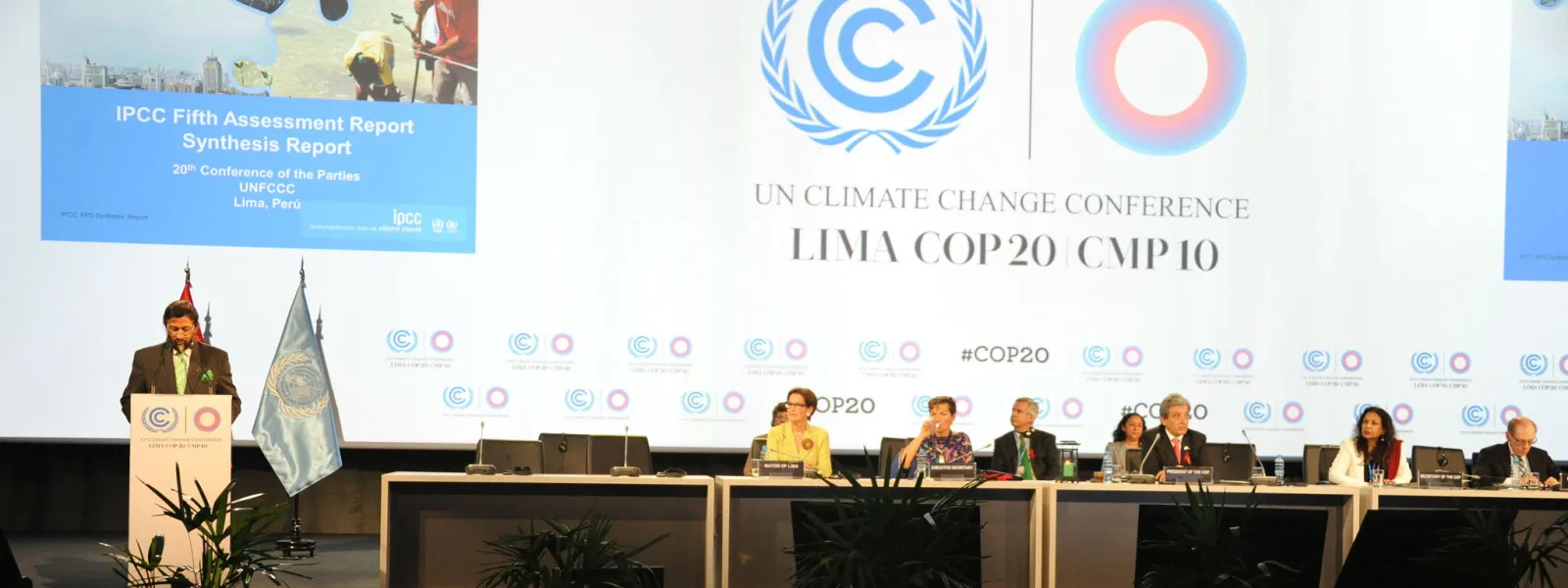
Photo: UNFCCCMonitoring the UN Climate Negotiations
As changes in climate become more extreme, their affects are being hardest felt throughout developing countries. Since 1994, the United Nations Framework Convention on Climate Change has laid out actions to limit the increase of global average temperatures and confront the impacts of climate change.
The States that are Parties to the Convention meet every year in the so-called Conference of the Parties (COP) to review their commitments, the progress made in fulfilling them, and pending challenges in the global fight against the climate crisis.
At COP21 in 2015, they adopted the Paris Agreement, which seeks to strengthen the global response to the climate emergency, establishing a common framework for all countries to work on the basis of their capacities and through the presentation of Nationally Determined Contributions (NDC) that will:
- Limit the increase in global temperatures to 2°C compared to pre-industrial levels and continue efforts to limit it to 1.5°C;
- Increase the capacity of countries to adapt to the impacts of climate change; and
- Ensure that financing responds to the goal of reducing greenhouse gas emissions.
Our focus areas
THE CLIMATE CRISIS AND HUMAN RIGHTS
The climate crisis, due to its transversal character, has repercussions in various fields, geographies, contexts and people. In this regard, the Preamble to the Paris Agreement states that it is the obligation of States to "respect, promote and fulfill their respective obligations on human rights, the right to health, the rights of indigenous peoples, local communities, migrants, children, persons with disabilities and people in vulnerable situations and the right to development, as well as gender equality, the empowerment of women and intergenerational equity."
AIDA at the COP
COP25: Chile-Madrid 2019
At COP25 in Madrid, Spain, we advocated for the inclusion of the human rights perspective in various agenda items. We promoted the incorporation of broad socio-environmental safeguards in the regulation of Article 6 of the Paris Agreement, which refers to carbon markets. We closely followed the adoption of the Gender Action Plan, as well as the Santiago Network, created "to catalyze technical assistance […] in developing countries that are particularly vulnerable to the adverse affects of climate change." We also encouraged the inclusion of ambitious and measurable targets for the reduction of short-lived climate pollutants in the climate commitments of States.
Related projects
In times of climate change, we must respect nature
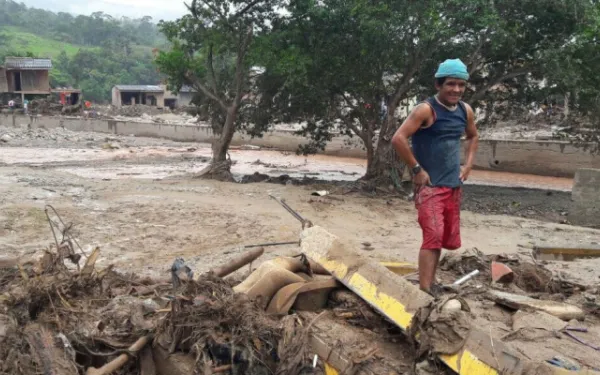
(Column originally published in El País) We are living now with the realities of climate change; to act otherwise would be ignorant and irresponsible. But, in case we forget, nature will surely remind us. Over the last months, severe landslides have devastated communities in Peru and Colombia. Together, they left more than 500 people dead, dozens missing, and more than 100,000 victims. Tragedies like these have some things in common: they occurred in cities and regions with high rates of deforestation and changes in land use; in both areas there was evidence of poor planning and regulation. Effectively, these disasters were foreshadowed. They make clear once again the vital need to care for our forests and riverbanks, and to avoid deforestation and erosion. Climate change means hard rains, fires, and hurricanes will become increasingly frequent and more intense. In Mocoa, Colombia, the equivalent of 10 days of rain fell in just one night, causing flash flooding that devastated much of the small town. In many cases, nature is only taken into account after tragedy strikes. But nature, when well cared for, can literally save lives. In Mocoa, a native forest helped protect one neighborhood from being washed away. That’s why environmental protection must be taken seriously, and any exploitation of natural resources must be well planned and sensible. Yet in Latin America, there remains a regional tendency towards unregulated extractivism. Over the last few years, governments across the region have been weakening environmental regulations in the name of development. Meanwhile, year after year, hundreds of people in Latin America and the Caribbean—especially children and others in vulnerable situations—die from events associated with droughts and floods. Activists, movements, mayors, and others seeking to protect land and water from extractive activities are frequently criticized, even criminalized and attacked. In the small Andean town of Cajamarca, Colombia, 98 percent of voters recently chose to ban all mining in their territory. It’s a decision that has sparked national controversy. Critics of the referendum have questioned whether the results are mandatory, despite the fact that Colombian law clearly states, “the decision of the people is mandatory.” Through their popular vote, the people of Cajamarca reminded their government of its commitment to protect their water and natural resources. Communities in Guatemala, Honduras, Costa Rica, Peru, and El Salvador have done the same. While some extraction is necessary in modern society, there must be a healthy balance. Not every project is safe, and alternative development models must be embraced and explored. It’s time to incorporate the environment into public policy and development, once and for all. Two Latin American nations have shown what is possible. In 2011, Costa Rica banned all open-pit metal mining. In March, El Salvador did the same. In both cases it’s a big yet viable change, because alternatives exist and it’s understood that protecting land and water is necessary to secure a healthy future. El Salvador has the second-highest rates of deforestation and environmental degradation, which has led to severe water scarcity. This is why the ban on metal mining passed there. It was no favor to environmentalists; it was based on years of sound analysis. Social and economic studies of the proposal concluded that the best thing for the country was to care for and restore its remaining forests and water sources. The decision prioritized environmental restoration—particularly its social and economic benefits—above the perceived benefits of mining. Environmental degradation is not a problem that exists in a vacuum. That’s why States have signed treaties and other international instruments that recognize their obligation to protect the environment. The Paris Agreement on Climate Change, signed by 34 of 35 States on the American continent, is the most recent. Now, more than ever, these commitments must be honored and fulfilled. Not all extractive projects are viable. Determining their worth must involve sound planning, coupled with policies and legal frameworks that are strong and effective. Environmental Impact Studies must be done carefully, objectively, and independently. Decisions should consider short- and long-term impacts on both local and national levels. We are living now with the realities of climate change; to act otherwise would be ignorant and irresponsible. But, in case we forget, nature will surely remind us.
Read more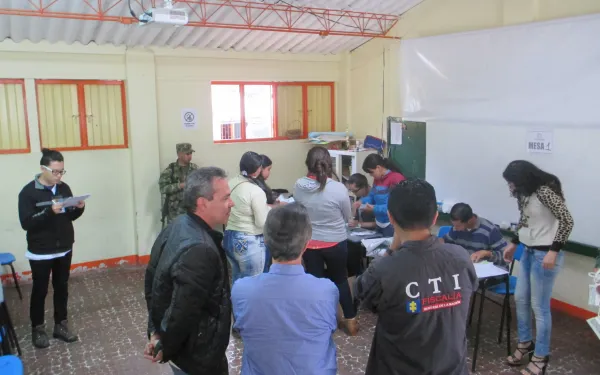
Victory in Colombia: Citizens Vote to Ban Mining in their Territory
On March 26, 2017, 98% of voters in Cajamarca, Colombia decisively rejected mining in their territory. The results of the referendum (or “popular consultation”) are binding under Colombian law. Now municipal authorities must issue regulations to implement the ban. AIDA was part of the legal team that advised the Cajamarca community and developed a strategy, including the referendum, to stop a proposed mine that threatens to pollute the water supply. AngloGold Ashanti was in the exploration phase of a project called La Colosa (the Collosus)—aptly named, because it would be among the world’s 10 largest open-pit gold mines, the second-largest in Latin America. In a country coming out of a 50-year civil war, the referendum is a victory not only for the environment, but also for democracy. Banning mining through popular consultation demonstrates a commitment to solving environmental conflicts in a peaceful and participatory manner. It also allows citizens to exercise their human right to have a voice in public issues that affect them—a key element of true democracy—and to safeguard their human right to a healthy environment.
Read moreVictory in Colombia: Citizens Vote to Ban Mining in their Territory
On March 26, 2017, 98% of voters in Cajamarca, Colombia decisively rejected mining in their territory. The results of the referendum (or “popular consultation”) are binding under Colombian law. Now municipal authorities must issue regulations to implement the ban. AIDA was part of the legal team that advised the Cajamarca community and developed a strategy, including the referendum, to stop a proposed mine that threatens to pollute the water supply. AngloGold Ashanti was in the exploration phase of a project called La Colosa (the Collosus)—aptly named, because it would be among the world’s 10 largest open-pit gold mines, the second-largest in Latin America. In a country coming out of a 50-year civil war, the referendum is a victory not only for the environment, but also for democracy. Banning mining through popular consultation demonstrates a commitment to solving environmental conflicts in a peaceful and participatory manner. It also allows citizens to exercise their human right to have a voice in public issues that affect them—a key element of true democracy—and to safeguard their human right to a healthy environment.
Read more