
Project
Shutterstock.
Pollution of the Motagua River in Guatemala: The Poqomam Maya people’s quest for environmental justice
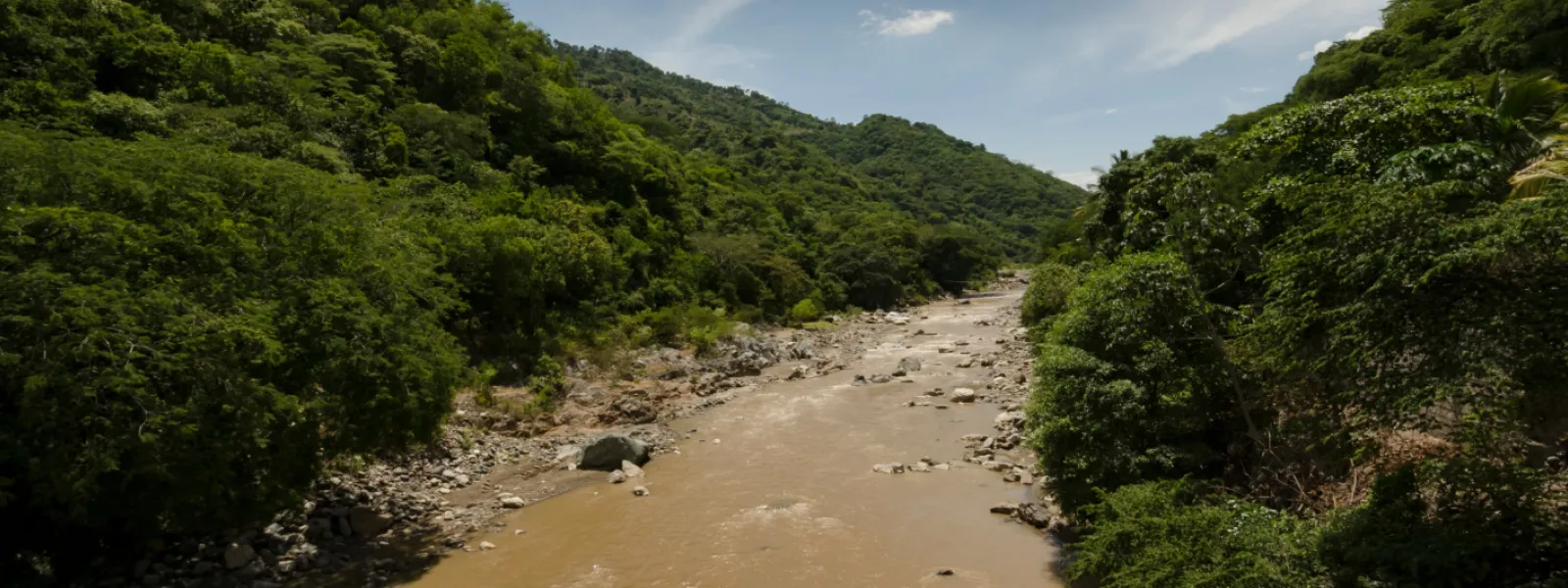
The Motagua River basin—Guatemala’s largest and most important river—is severely polluted with wastewater, solid waste, and other types of debris.
This is a cross-border issue because the Motagua’s polluted waters flow into the Caribbean Sea, reach the coast of Honduras, and threaten the Mesoamerican Reef System.
For decades, this has violated the rights to health, water, development, and a healthy environment of all the people living in the river basin.
In June 2025, the Poqomam Maya community of Santa Cruz Chinautla—supported by AIDA, the Indigenous Peoples’ Law Firm, and allied organizations—achieved an unprecedented legal victory to halt degradation in the basin. In response to the lawsuit it filed, a Guatemalan court ordered the municipality of Chinautla to comply with a series of obligations to curb the pollution of the area’s rivers and soil.
The government's response to the ruling has so far been limited to technical working group meetings. Meanwhile, the community continues to work toward the proper implementation of the ruling and to take other actions to defend its territory and its rights.
Background
The Motagua River, which is 486 km long, flows through 96 municipalities and 14 departments in Guatemala. It originates in Quiché, a department located in the northwest, and empties into the Caribbean Sea.
Polluting activities occur throughout the entire basin, including sub-basins and micro-basins. The largest volume of pollution comes from Guatemala City, the country’s capital, and is carried by the waters of the Las Vacas River, which in turn receives a large amount of waste from the Chinautla River.
The Chinautla River, which flows through the municipality of the same name, carries solid waste from a landfill located in Zone 3 of the capital—where trash from at least 14 municipalities in the department of Guatemala is dumped—as well as sewage generated by some 500,000 people living in the northern part of the capital, which undergoes no prior treatment.
Other sources of pollution include the numerous illegal dumps in the municipality of Chinautla, the waste that private vehicles and garbage trucks dump along the banks of its rivers, as well as the sand-mining companies—which began setting up operations in the area between 1996 and 1997—whose activities weaken the rivers' basins, causing solid waste to be more easily carried away by the river currents.
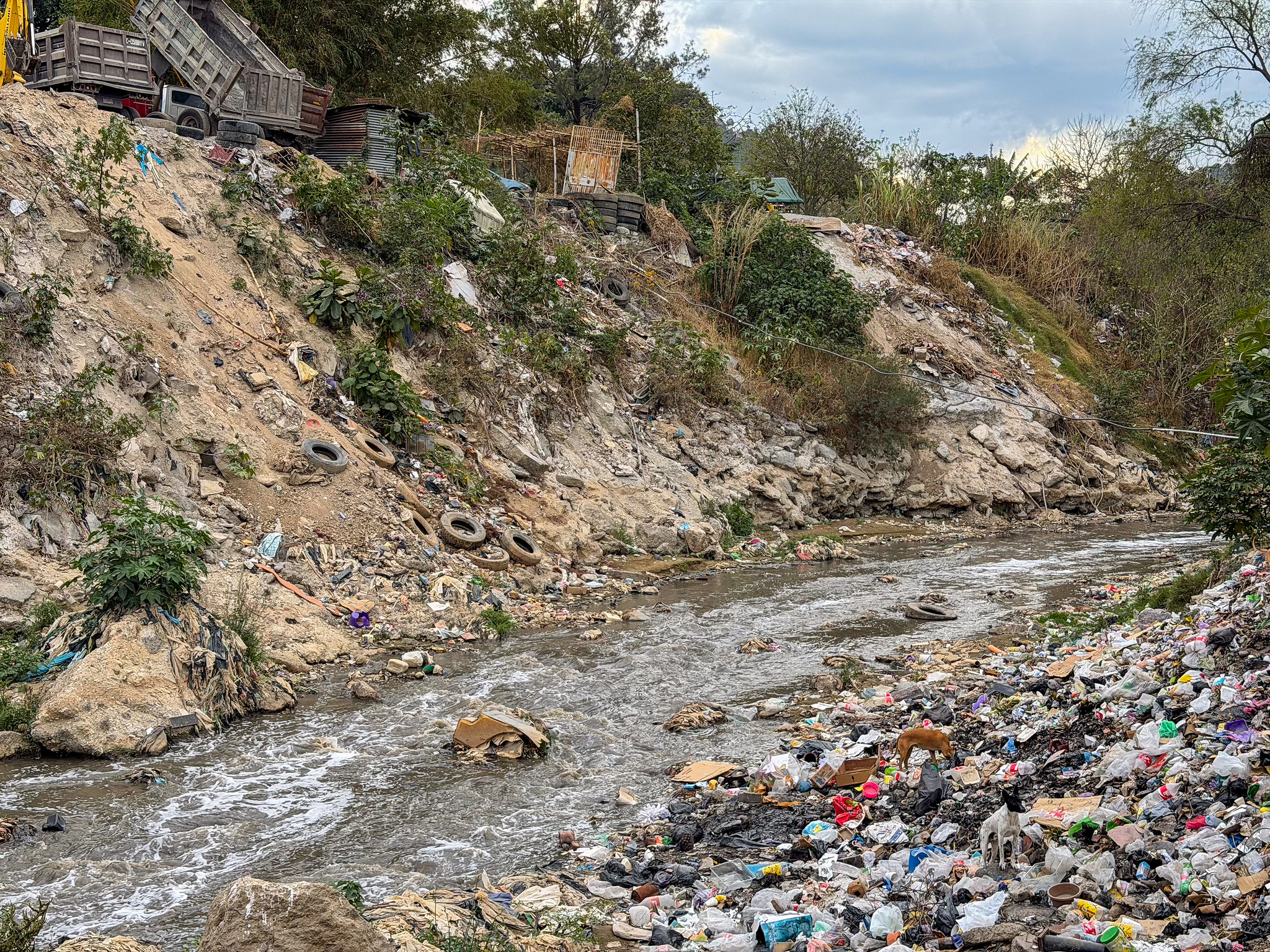
Photo: Mayela Sánchez García.
The situation extends beyond national borders. Every year, the Motagua River discharges some 20,000 metric tons of plastic into the Caribbean Sea, making it one of the rivers that contributes the most plastic pollution to the ocean worldwide, according to estimates contained in a 2025 report by the Inter-American Commission on Human Rights (IACHR).
The river flows into the Mesoamerican Reef at its mouth, so pollution also threatens to degrade one of the largest and most biodiverse transboundary reefs on the planet, which spans the territorial waters of Belize, Guatemala, Honduras, and Mexico.
In addition, the contaminated water reaches the coast of Honduras and spreads into Amatique Bay, located along the eastern coast of Guatemala, affecting the Caribbean Sea.
The roots of this chronic, cross-border problem are structural. Data from the Integrated Environmental Management of the Motagua River Basin project, funded by the United Nations Development Program (UNDP), show that in Guatemala, 66% of municipal solid waste is not collected, and there is no guarantee that the remaining 34% is disposed of properly. Furthermore, of all landfills nationwide, 88.32% are illegal or lack municipal authorization.
In other words, the core issues that need to be addressed are the mismanagement of solid waste and water resources in Guatemala; noncompliance with existing regulations on wastewater discharge and the disposal and treatment of solid waste and residues; and the lack of a water law.
The Poqomam Maya people's quest for justice
The rivers of Santa Cruz Chinautla, a community of the Poqomam Maya people located just twelve kilometers from Guatemala City, have become conduits of pollution that are degrading the Motagua River.
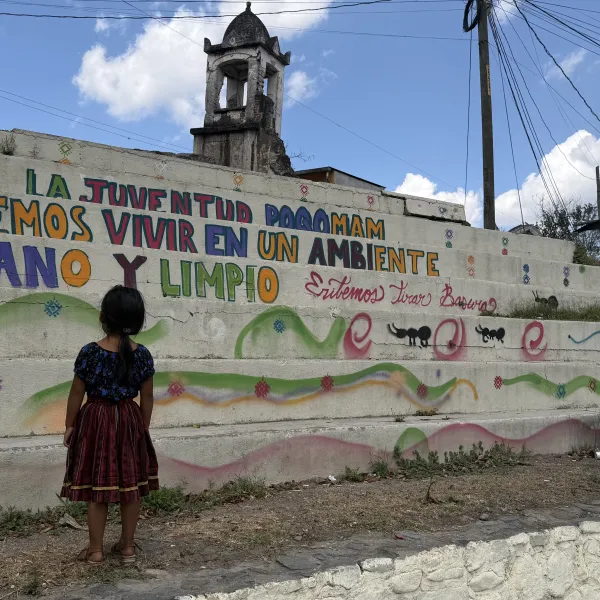
For decades, the local population has seen its health and livelihoods—including pottery, one of the main economic activities and a source of identity—damaged due to the lack of waste management in the municipality of Chinautla and the urban area of the country’s capital, as well as the activities of sand-mining companies.
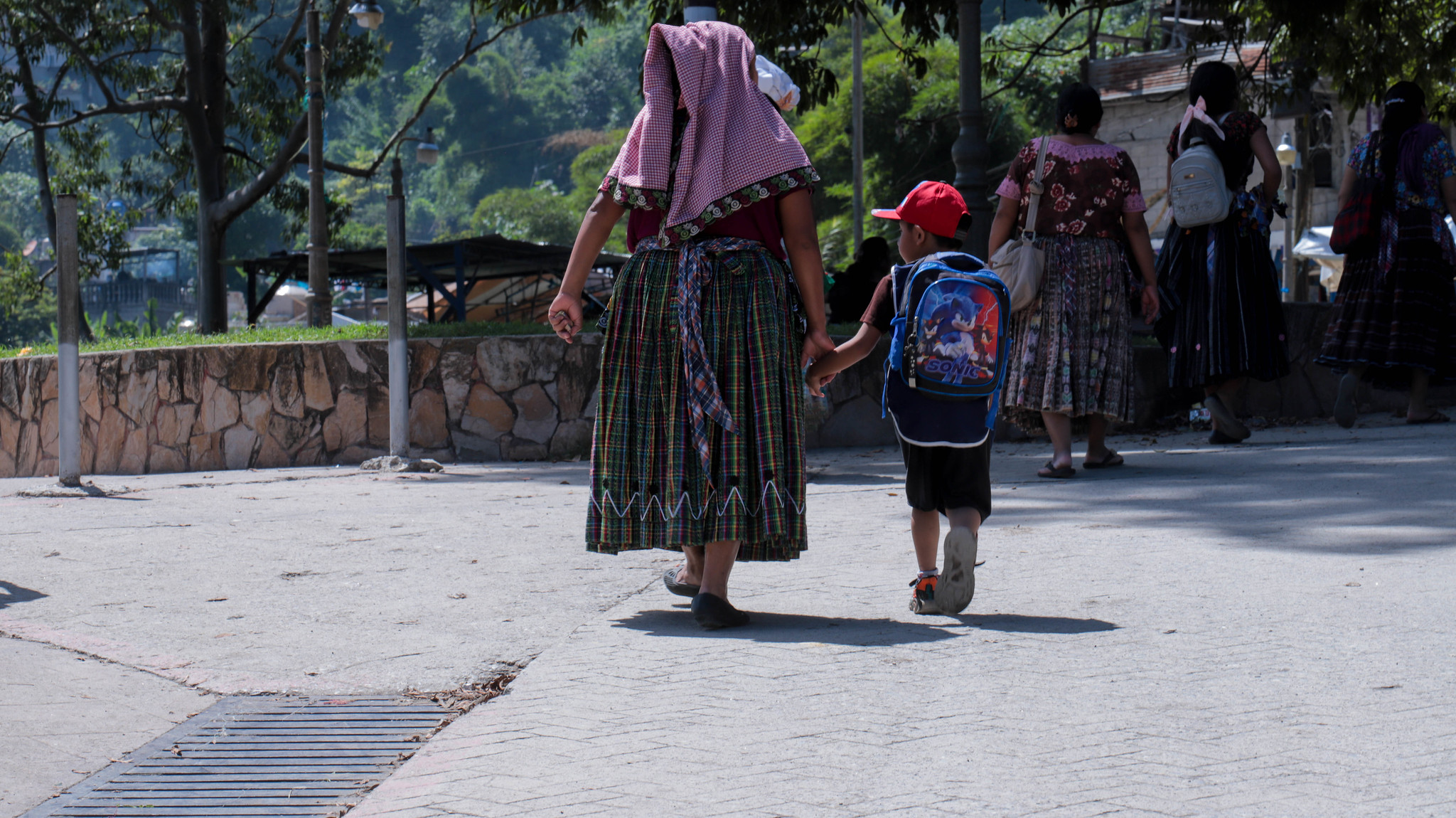
Photo: Mario Winter.
Voices for the Motagua River: Olga Vázquez.
Voices for the Motagua River: Nazario Pascual.
In early 2000, the Maya community organized to stop sand mining on their territory. At that time, the companies held mining permits that remained valid through 2021 and 2022. And although the permits expired, some companies continued to operate after requesting extensions. In June 2022, the indigenous authorities of the Poqomam people began a sit-in protest in front of the Piedrinera San Luis company, which they maintained for four years.
In July 2024, the Special Rapporteur on Economic, Social, Cultural, and Environmental Rights of the IACHR visited Santa Cruz Chinautla. During his visit, traditional authorities and community members spoke about the environmental, water-related, health, economic, and cultural impacts of the pollution in their rivers.
That same year, in October, the community—with support from AIDA, the Indigenous Peoples’ Law Firm, and partner organizations—filed a lawsuit (petition for amparo) against the municipality of Chinautla over its failure to take measures to address the contamination of its rivers and soil caused by improper solid waste management and the existence of illegal landfills.
AIDA’s scientific team, together with local residents and community authorities, collected key information on illegal landfills in the area. This community science initiative supported the litigation by highlighting the severity of the pollution, demonstrating the ongoing use of such practices, and providing evidence of the municipal authorities’ failure to fulfill their legal obligations regarding waste management.
Learn more about this community science initiative.
In June 2025, the Poqomam community won the support of the Guatemalan justice system when a constitutional court ordered the municipality of Chinautla to effectively address the claims in the lawsuit aimed at stopping the pollution of the rivers and soil in Santa Cruz Chinautla.
This is the first time a Guatemalan court has recognized a community's right to a healthy environment and its central role in finding solutions.
Find out the details of the legal victory.
Current situation
Since the ruling was issued, the municipality of Chinautla has held a series of “technical working groups” with representatives from the central government, civil society, and the community. A smaller group of technical experts was later created to develop a work plan with clear goals. Several months have passed without the municipality convening these working groups.
Furthermore, in December 2025, the IACHR noted in its report Human Rights Situation in Guatemala that the Motagua River basin is facing a severe pollution crisis that has had profound impacts on biodiversity and has resulted in systematic violations of the human rights of local communities, including the Maya Poqomam people.
And in May 2026, the Ministry of the Environment and Natural Resources revoked the license of the sand mining company Piedrinera San Luis for "failure to comply with environmental commitments."
AIDA continues to monitor the implementation of the court ruling to ensure the right to a healthy environment for the Poqomam Maya community and all those living in the Motagua River basin. Meanwhile, the residents of Santa Cruz Chinautla remain organized and mobilized to improve their environment and defend their rights.
Related projects
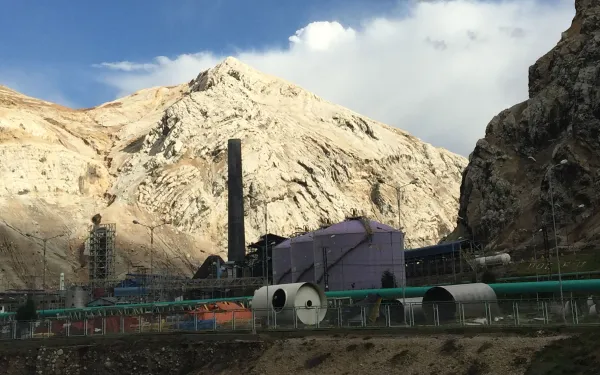
Peru begins testing La Oroya residents affected by toxic pollution
In May 2016, the IACHR required the Peruvian State to protect the life and integrity of 14 additional people affected by the heavy pollution of La Oroya’s metal smelter. Just last week, medical examinations began to evaluate the levels of heavy metals in the beneficiaries. La Oroya, Peru. Last week 7 residents of the city of La Oroya were tested for concentrations of heavy metals in their bodies resulting from long exposure to toxic air pollution from the local metal smelter. The tests come five months after the Inter-American Commission on Human Rights (IACHR) requested that the State extends precautionary measures granted in 2007, increasing the number of beneficiaries from 65 to 79. In May, the Commission urged the State to take necessary measures to protect the life and personal integrity of the 14 additional residents of La Oroya. The measures include “conducting the necessary medical assessments to determine the levels of lead, cadmium and arsenic in the blood in order to provide medical attention in accordance with applicable international standards.” Following pressure from civil society organizations, medical evaluations were finally completed on seven of the new beneficiaries. In addition to testing for heavy metals, evaluations were also made in the areas of nutrition, dentistry, psychology, internal medicine, pulmonology and gastroenterology. The results should be processed by the Center for Occupational Health and Environmental Protection and delivered to the beneficiaries in a period of no more than 45 days. The Ministry of Health promised that those who require medical treatment will be attended to by specialists in Huancayo or Lima, as the Health Center of La Oroya doesn’t have the capacity to do so. The government also promised a new date for the measurement and evaluation of beneficiaries who couldn’t attend the first set of exams. On behalf of the organizations representing the victims, we hope this is the first step towards full compliance with the precautionary measures requested by the Commission. The measures request not only testing, but also specialized medical treatment and appropriate follow-up with each of the beneficiaries—those included in the original 2007 measures, whose protection remains in force, as well as those included in the extension granted this year. “Despite the fact that the precautionary measures were issued nearly 10 years ago—calling for urgent actions to protect the health of beneficiaries—they have not yet been fully implemented. For years the health problems of the beneficiaries have not been properly cared for,” said Christian Huaylinos, attorney with the Asociación Pro Derechos Humanos (APRODEH). The State must urgently address the condition of health services in La Oroya. The local health center is operating in a state of crisis, in a place that has been declared uninhabitable by the National Institute of Civil Defense. It has only five doctors for 66,000 people in La Oroya and in the surrounding Yauli province. “La Oroya’s structural problems with health and the environment must be solved urgently,” said María José Veramendi Villa, attorney with the Interamerican Association for Environmental Defense. “The Commission must immediately issue its final report on this case, which was first presented nearly a decade ago. The victims have been waiting all this time for justice. If the State is truly committed to the people of La Oroya, that commitment must be shown through full compliance with the eventual recommendations of the Commission.”
Read more
Bleeding Green Hearts: The constant state of danger for environmental activists in Latin America
“Wake up humanity, there is no time left!” Berta Cáceres, Goldman Prize acceptance speech, 2015 By María José Veramendi Villa (originally published in Disrupt&Innovate) Being an environmental human rights defender in Latin America is not an easy task. On the contrary, it is one of the most dangerous jobs you can have. Whether you belong to an indigenous, afro-descendant, or peasant community, whether you are an independent activist or affiliated with a civil society organisation, you are at risk. In its most recent report, On Dangerous Ground, Global Witness documented 2015 as the worst year on record for killings of land and environmental activists.[1] The report documented 185 killings in 16 countries, making Brazil (50 killings), Colombia (26 killings), Peru (12 killings), and Nicaragua (12 killings) the most dangerous in Latin America.[2] Unfortunately, the murder of environmental defenders represents a tragic end of the road of a larger problem. We, as a society, all want economic and social progress and governments are mostly elected on this promise. However, increasingly States and various private actors are routinely complicit in actions that aim to silence legitimate voices and the work of environmental defenders. Threats, harassment, and campaigns to discredit or criminalize take a toll on the work of environmental defenders, who end up spending significant time defending themselves before often-complicit criminal justice systems, or even physically protecting themselves from attempts on their lives. Several United Nations Special Rapporteurs and the Inter-American Commission on Human Rights have recognised the important role that environmental defenders play in our societies and, as such, have recommended that States protect them. Nevertheless, the level of danger has continued to rise. Environmental defenders such as Berta Cáceres, whose lives should be protected by precautionary measures recommended by the Commission, continue being threatened or murdered in plain view of authorities — often with the complicity of a State. The Yanacocha mining company keeps harassing Máxima Acuña with the intent of forcing her out of her house to make way for the Conga Mining project, even after a Peruvian Court determined that she had not violated the company’s property rights. In La Oroya, a Peruvian Andean city, a metallurgical complex has operated since 1922. Dozens of victims of toxic pollution have been struggling for years to defend their health and environment, and keep seeking remedy in national and international courts. Their struggle has been plagued by attacks and campaigns to discredit them and the organizations that have assumed their legal representation. They have been labeled “anti-mining” and “anti-development,” harassed in the streets, and intimidated with hanging dead dogs in front of their houses. The list of such incidents in Latin America just keeps getting longer. Poorly planned and developed mines, dams, and other infrastructure projects are linked to them. As members of societies that strive for economic and social development, we need to stop pretending that these and other countless attacks against environmental defenders do not happen or have no impact on the financial, political and social costs that we all end up paying eventually. The costs will come and they will be high. Governments need to wake up now and take action to defend the defenders. There is no time left! To the memory of those who have died defending something that should be precious to all but somehow is cared for by a few: our earth. [1] Global Witness. On Dangerous Ground, June 2016, p. 4. [2] Global Witness. On Dangerous Ground, June 2016, pp. 8 -9.
Read more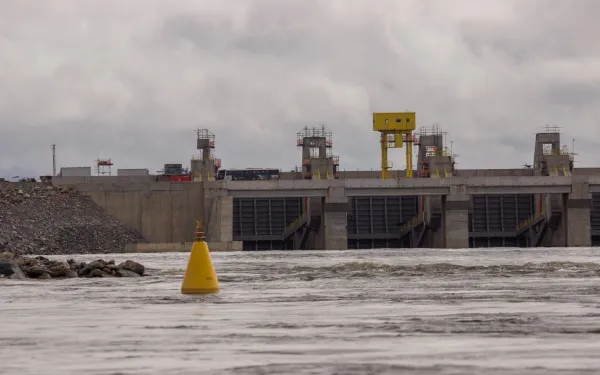
New study confirms large dams to be a principle source of greenhouse gas emissions
Researchers from the Washington State University found that the world’s reservoirs generate 1.3 percent of all greenhouse gases produced by humankind. The finding confirms once more than large dams are unsustainable energy sources that cause great harm to the climate. Seattle, United States. An important new study by researchers at the Washington State University found that large dams are an “underestimated” source of greenhouse gas. The findings show that all reservoirs, not only those built in tropical zones, release far greater quantities of emissions into the atmosphere than previously believed. According to the study, gases are released from the decomposition of organic matter after artificial reservoirs flood natural areas. In fact, over the course of a year reservoirs were found to generate 1.3 percent of the world’s greenhouse gases (more than all of Canada). Eighty percent of those emissions were methane, a pollutant 34 times stronger than carbon dioxide. “Across the Americas, governments are pushing for the construction of hundreds of new large dams, arguing that dams are clean energy and will help to mitigate climate change,” explained Astrid Puentes Riaño, co-director of the Interamerican Association for Environmental Defense (AIDA). “It’s become increasingly clear that large dams are more of a problem than a solution. World leaders must urgently start to plan and implement alternative energy solutions in order to achieve real progress in the fight against climate change.” Along with a coaltion of civil society organizations, AIDA, Amazon Watch and International Rivers have been insisting for years that operating large hydroelectric projects—such as the Belo Monte Dam in Brazil—causes severe damage to the environment, the climate, and the rights of affected communities. “Large dams are one of the most significant causes of environmental destruction in the Amazon,” said Leila Salazar-López, executive director of Amazon Watch. “In addition to emiting methane, they destroy biodiversity and the ancestral forest of thousands of indigenous and traditional communities that have lived for centuries from river ecosystems. It is imperative to calculate the true costs of large dams to understand all their impacts, and avoid causing more harm than good.” As organizations working to promote real solutions to climate change, we are committed to sharing scientific evidence about the harms of large dams to governments, international bodies, and financial institutions. "The new findings lay to rest the myth of hydropower as a clean source of electricity and underline why large hydropower should not receive climate finance," said Kate Horner, executive director of International Rivers. The results of Washington State University's study must be considered in the inventory of emissions that contribute to climate change, as well as in the execution of program and plans aimed at solving energy needs. For more information consult: Washington State University's study. Washington State University’s press release on the study. Short video from Astrid Puentes Riaño, AIDA co-director, with a brief explanation of the research and why it is important. Our Manifesto on 10 reasons why climate initiatives should not include large dams. An open letter to governments, international institutions and financial mechanisms to stop considering large dams as clean energy and to implement real solutions to climate change.
Read more