
Project
Shutterstock.
Pollution of the Motagua River in Guatemala: The Poqomam Maya people’s quest for environmental justice
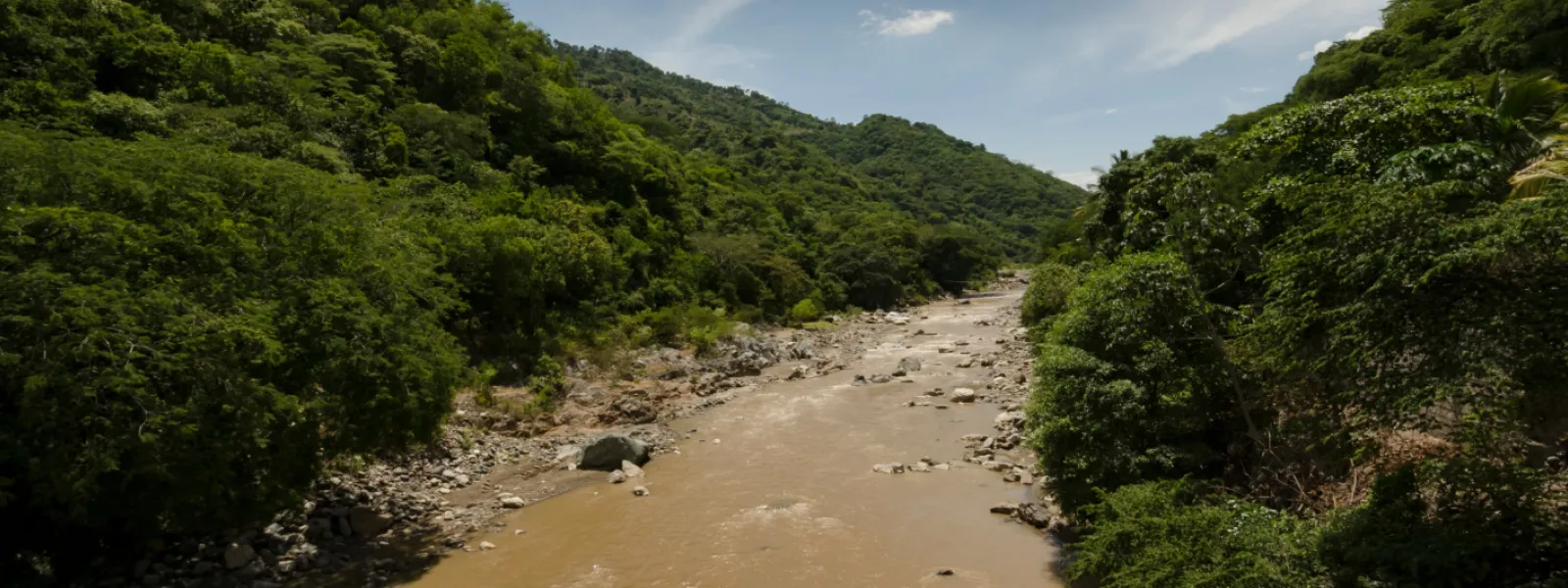
The Motagua River basin—Guatemala’s largest and most important river—is severely polluted with wastewater, solid waste, and other types of debris.
This is a cross-border issue because the Motagua’s polluted waters flow into the Caribbean Sea, reach the coast of Honduras, and threaten the Mesoamerican Reef System.
For decades, this has violated the rights to health, water, development, and a healthy environment of all the people living in the river basin.
In June 2025, the Poqomam Maya community of Santa Cruz Chinautla—supported by AIDA, the Indigenous Peoples’ Law Firm, and allied organizations—achieved an unprecedented legal victory to halt degradation in the basin. In response to the lawsuit it filed, a Guatemalan court ordered the municipality of Chinautla to comply with a series of obligations to curb the pollution of the area’s rivers and soil.
The government's response to the ruling has so far been limited to technical working group meetings. Meanwhile, the community continues to work toward the proper implementation of the ruling and to take other actions to defend its territory and its rights.
Background
The Motagua River, which is 486 km long, flows through 96 municipalities and 14 departments in Guatemala. It originates in Quiché, a department located in the northwest, and empties into the Caribbean Sea.
Polluting activities occur throughout the entire basin, including sub-basins and micro-basins. The largest volume of pollution comes from Guatemala City, the country’s capital, and is carried by the waters of the Las Vacas River, which in turn receives a large amount of waste from the Chinautla River.
The Chinautla River, which flows through the municipality of the same name, carries solid waste from a landfill located in Zone 3 of the capital—where trash from at least 14 municipalities in the department of Guatemala is dumped—as well as sewage generated by some 500,000 people living in the northern part of the capital, which undergoes no prior treatment.
Other sources of pollution include the numerous illegal dumps in the municipality of Chinautla, the waste that private vehicles and garbage trucks dump along the banks of its rivers, as well as the sand-mining companies—which began setting up operations in the area between 1996 and 1997—whose activities weaken the rivers' basins, causing solid waste to be more easily carried away by the river currents.
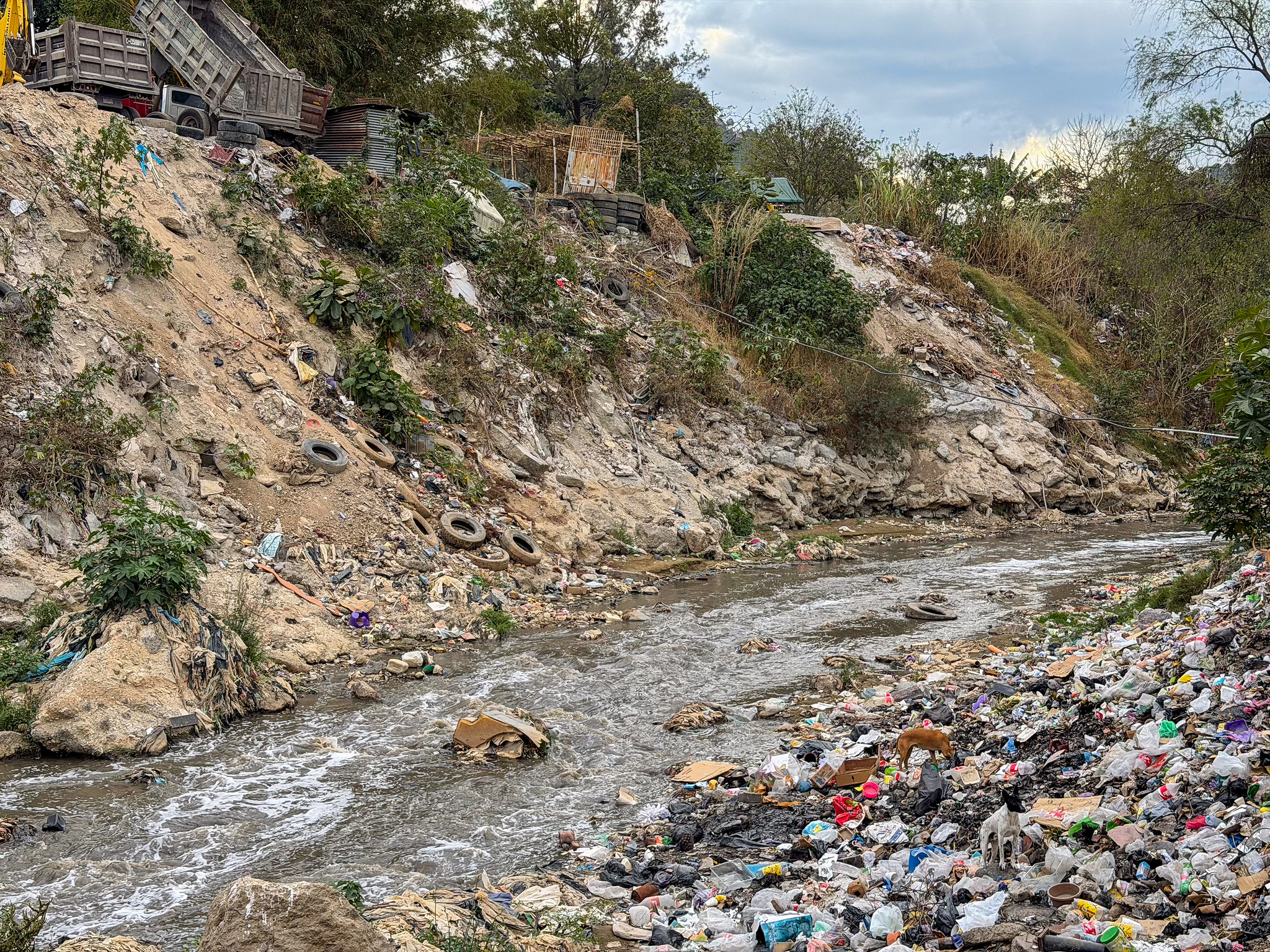
Photo: Mayela Sánchez García.
The situation extends beyond national borders. Every year, the Motagua River discharges some 20,000 metric tons of plastic into the Caribbean Sea, making it one of the rivers that contributes the most plastic pollution to the ocean worldwide, according to estimates contained in a 2025 report by the Inter-American Commission on Human Rights (IACHR).
The river flows into the Mesoamerican Reef at its mouth, so pollution also threatens to degrade one of the largest and most biodiverse transboundary reefs on the planet, which spans the territorial waters of Belize, Guatemala, Honduras, and Mexico.
In addition, the contaminated water reaches the coast of Honduras and spreads into Amatique Bay, located along the eastern coast of Guatemala, affecting the Caribbean Sea.
The roots of this chronic, cross-border problem are structural. Data from the Integrated Environmental Management of the Motagua River Basin project, funded by the United Nations Development Program (UNDP), show that in Guatemala, 66% of municipal solid waste is not collected, and there is no guarantee that the remaining 34% is disposed of properly. Furthermore, of all landfills nationwide, 88.32% are illegal or lack municipal authorization.
In other words, the core issues that need to be addressed are the mismanagement of solid waste and water resources in Guatemala; noncompliance with existing regulations on wastewater discharge and the disposal and treatment of solid waste and residues; and the lack of a water law.
The Poqomam Maya people's quest for justice
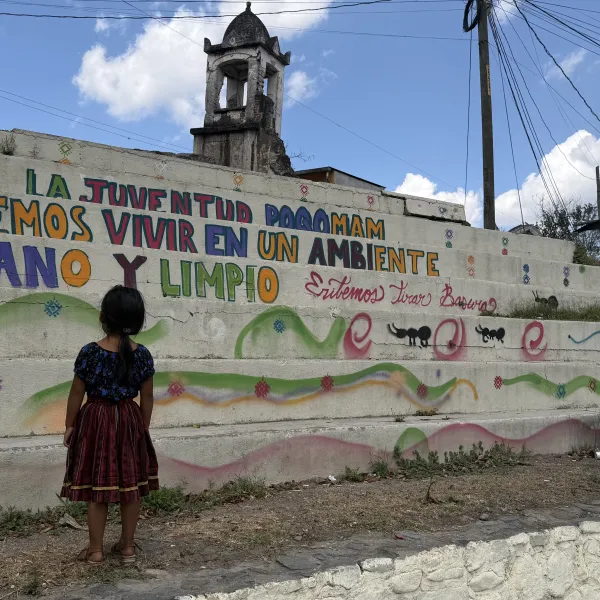
The rivers of Santa Cruz Chinautla, a community of the Poqomam Maya people located just twelve kilometers from Guatemala City, have become conduits of pollution that are degrading the Motagua River.
For decades, the local population has seen its health and livelihoods—including pottery, one of the main economic activities and a source of identity—damaged due to the lack of waste management in the municipality of Chinautla and the urban area of the country’s capital, as well as the activities of sand-mining companies.
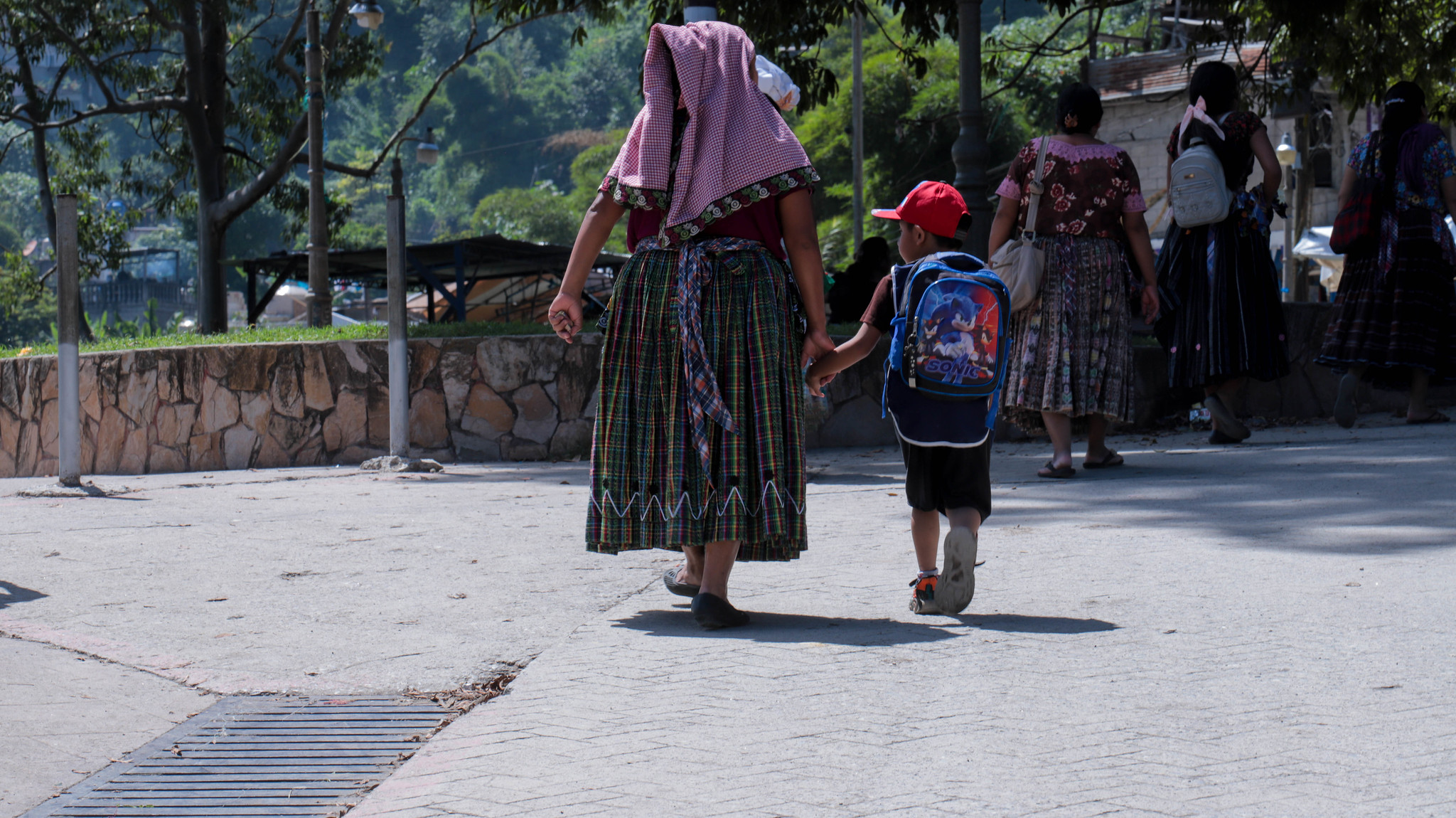
Photo: Mario Winter.
Voices for the Motagua River: Olga Vázquez.
Voices for the Motagua River: Nazario Pascual.
In early 2000, the Maya community organized to stop sand mining on their territory. At that time, the companies held mining permits that remained valid through 2021 and 2022. And although the permits expired, some companies continued to operate after requesting extensions. In June 2022, the indigenous authorities of the Poqomam people began a sit-in protest in front of the Piedrinera San Luis company, which they maintained for four years.
In July 2024, the Special Rapporteur on Economic, Social, Cultural, and Environmental Rights of the IACHR visited Santa Cruz Chinautla. During his visit, traditional authorities and community members spoke about the environmental, water-related, health, economic, and cultural impacts of the pollution in their rivers.
That same year, in October, the community—with support from AIDA, the Indigenous Peoples’ Law Firm, and partner organizations—filed a lawsuit (petition for amparo) against the municipality of Chinautla over its failure to take measures to address the contamination of its rivers and soil caused by improper solid waste management and the existence of illegal landfills.
AIDA’s scientific team, together with local residents and community authorities, collected key information on illegal landfills in the area. This community science initiative supported the litigation by highlighting the severity of the pollution, demonstrating the ongoing use of such practices, and providing evidence of the municipal authorities’ failure to fulfill their legal obligations regarding waste management.
Learn more about this community science initiative.
In June 2025, the Poqomam community won the support of the Guatemalan justice system when a constitutional court ordered the municipality of Chinautla to effectively address the claims in the lawsuit aimed at stopping the pollution of the rivers and soil in Santa Cruz Chinautla.
This is the first time a Guatemalan court has recognized a community's right to a healthy environment and its central role in finding solutions.
Find out the details of the legal victory.
Current situation
Since the ruling was issued, the municipality of Chinautla has held a series of “technical working groups” with representatives from the central government, civil society, and the community. A smaller group of technical experts was later created to develop a work plan with clear goals. Several months have passed without the municipality convening these working groups.
Furthermore, in December 2025, the IACHR noted in its report Human Rights Situation in Guatemala that the Motagua River basin is facing a severe pollution crisis that has had profound impacts on biodiversity and has resulted in systematic violations of the human rights of local communities, including the Maya Poqomam people.
And in May 2026, the Ministry of the Environment and Natural Resources revoked the license of the sand mining company Piedrinera San Luis for "failure to comply with environmental commitments."
AIDA continues to monitor the implementation of the court ruling to ensure the right to a healthy environment for the Poqomam Maya community and all those living in the Motagua River basin. Meanwhile, the residents of Santa Cruz Chinautla remain organized and mobilized to improve their environment and defend their rights.
Related projects
Letter to Green Climate Fund Board: Improve Decision Making
Letter signed by 70 international civil society organizations: As members of civil society following the Green Climate Fund (GCF), we are writing to express our concern about the way the Board reached some of its most important decisions during the 14th Board Meeting (B.14). We would also like to share some thoughts on how to improve upon this process in the future. We are especially referring to the practice of “package approval” that was used to approve funding proposals and new accredited entities. Weak process. The Board approved 10 proposals worth $745 million without discussing each one separately. The Board’s assessment of each of the funding proposals should be made individually and with the utmost care, to ensure that the objectives, principles, policies, and operational modalities of the Fund are respected and complied with. Furthermore, there was no opportunity for active observers to highlight individual comments for each of the funding proposals (they could merely air some concerns during the overarching discussion of all funding proposals). The same can be said with regard to the package approval of eight accredited entities. There was no public discussion of the merits and/or shortcomings of each approved applicant entity and no possibility of civil society input. Civil society has vital contributions to make, and for our engagement to be meaningful, active observers must be given the opportunity to share important points regarding each proposal and accreditation application during Board meetings. Indeed, the Board’s way of working has actually been in conflict with the GCF’s own Governing Instrument, which states that “the Fund will operate in a transparent and accountable manner”. Approval despite clear failures of GCF policy compliance. The Board repeatedly overlooked the failure of a number of proposals to comply with GCF policies and procedures. For example, public notification for a number of projects was out of compliance with the Fund’s information disclosure policy, which requires a 120-day notification period for proposals with high social and environmental risk. Mandatory gender action plans were missing from several projects, and stakeholder consultations in some cases were highly inadequate. Yet the Board approved all of the projects with one package decision. The Board even pushed through proposals without the requisite guiding policy in place. For example, programs to be implemented via sub-projects were approved, yet the GCF does not have a policy regarding whether or not high risk sub-projects must come back to the Board for approval. We believe they should, to ensure the GCF’s accountability, and to preempt some of the serious environmental, development, and social shortcomings widely seen at other multilateral institutions that finance sub-projects via financial intermediaries. Precedent-setting. While the Board stated that “the approach taken to approving funding proposals at B.14 does not constitute a precedent,” we are concerned that, at this point, the Board has taken such an approach multiple times. Steps to put a stop to these modalities becoming the de facto modus operandi must be taken in the lead up to B.15, including: Timely public disclosure on the GCF’s own website that, at minimum, follows GCF rules (i.e. 120 days for ESIAs for high risk funding proposals, 30 days for medium risk, and three weeks prior to board meetings for all other materials). All annexes and the Secretariat’s due diligence should also be disclosed for funding proposals; Publication of applications for accreditation as soon as they are filed, as well as operationalization of formal mechanisms for third party input (from affected communities, indigenous peoples, civil society, etc.); Individual consideration of each funding proposal and each applicant for accreditation during public sessions of the Board; Opportunities to consider civil society interventions during the debate on each individual proposal, rather than at the end of agenda items; Where formal (or informal) working groups are established to consider conditions to be placed on proposals, there should be a clear process to allow the consideration of civil society feedback, at a minimum in writing, but preferably through the direct participation of the CSO active observers or their alternates; Discussions on more complex and/or controversial proposals require several rounds of debate. In these cases, civil society observers should be given the opportunity to make further interventions responding to new proposals, conditions and amendments. Civil society observers are committed to working with the Board to improve the accountability and transparency of Board decisions, in particular on funding and accreditation approvals. As a learning institution, the GCF needs to take the time to look at the merits of individual proposals and applicants in order to clearly elaborate how they can support the paradigm shift in recipient countries. We therefore urge the Board to better prioritize valuable time during the upcoming Board meetings to allow for meaningful discussions.
Read more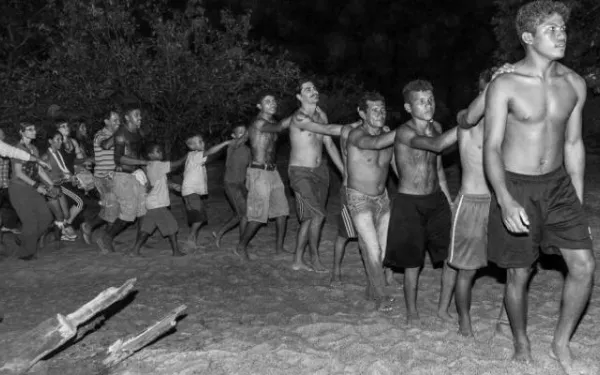
In the Hamlet of Mïratu, the Juruna mourn the death of Jarliel
By Marcelo Salazar, Instituto Socioambiental (ISA) AIDA translation of a blog originally published by ISA Jarliel died while diving for fish in water 25 meters deep. One of his brothers blames the Belo Monte Dam, which pushed all the fish into deeper waters, forcing fishermen to follow. Before the dam, fish were plentiful in the waterfalls and shallows of the river. Jarliel Juruna, known as Jarla, died on October 26, 2016 while diving for brown acari, a common Amazonian catfish. He was 20 years old. Jarliel was roughly 25 meters deep when he stopped breathing; his lifeless body floated to the surface. It was a tragedy for Mïratu, in the Paquiçamba indigenous territory; it was a tragedy for the Juruna people* of the Volta Grande; and it was a tragedy for the Xingu River, in the Brazilian Amazon. He left his parents, siblings, wife, and newborn son, all in shock. They had no idea where to go or what to do next. In near total silence, Giliarde Juruna, chief of Mïratu and one of Jarliel’s brothers, kept his gaze fixed on the forest behind the straw house that holds the community kitchen. Another brother, Jair Juruna, known as Negão, was outraged: "We’ve never had to fish acari in such deep waters. But because of the dam, the fish that have always been right here, in the waterfalls and in the shallows, have disappeared. And we have families to support. Norte Energía [the dam-building consortium] is playing with our lives. Where are the productive projects? If things were working, we would have other jobs and we wouldn’t need to risk our lives to support our families. Now look what’s happened." On the other side of the continent, Bel Juruna was in Peru representing her people in a meeting of Latin American indigenous leaders. She was speaking about the violence that the Belo Monte operators brought to her community and the people of the Xingu. When she heard the news, she was devastated. She wasn’t able get home in time to attend Jarliel’s burial; to say goodbye to her youngest brother, whom she had helped to raise. Jarla was a happy and playful young man, dedicated, completing his high school degree and dreaming of college. He was one of his village’s fighters, present in many of the peaceful occupations of the Belo Monte Dam complex, fighting for the rights of the indigenous people of the Xingu. One day, the full story behind Belo Monte will be told. The very real impacts the dam has had on the life of the people of the Xingu will be recognized. May Jarla now join the great Mïratu fighters on another plane—and unite his efforts with those who remain on Earth to fight against Belo Monte and against other forms of destruction of the indigenous and traditional communities of the Xingu. *Proprietors of the River The Yudja, or Juruna (as they’re know in the region), live on the islands and banks of the Xingu. They are known as “proprietors of the river” for their great ancestral knowledge of its flow, and for having migrated for centuries from the mouth of the Xingu to its headwaters. Mïratu, one of the villages in Paquiçamba indigenous territory, sits roughly 10 km below one of Belo Monte’s reservoirs. The hamlet suffers various impacts from the dam, including changes in their traditional fisheries. In collaboration with (the?) Universidad Federal do Pará and ISA, and with the support of the Mott Foundation, the Juruna people are engaged in independent monitoring of their fisheries, which reveals the damages suffered in recent years. Jariel was one of the monitors in Mïratu.
Read more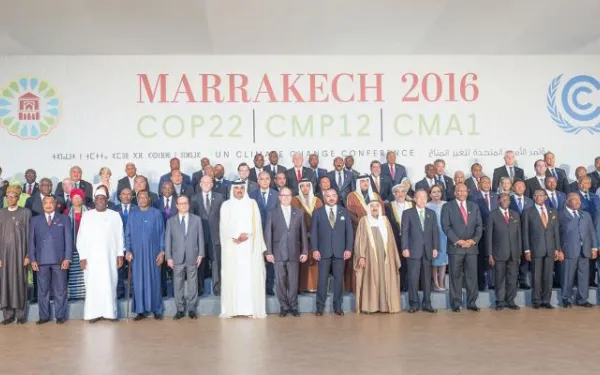
Climate finance advances, but lacks ambition
The 22nd Conference of the Parties to the United Nations Framework Convention on Climate Change (COP22) was held in Morocco from November 7-18, 2016. The delegates made progress on issues related to finance for developing countries facing the impacts of climate change. But their decisions needed to be more ambitious. Global governments must provide adequate and predictable financial contributions so countries can plan and execute adaptation and mitigation strategies. COP22 was the first climate conference held after the Paris Agreement became binding on November 4. In Marrakech, signatory countries began to establish procedures to implement the new global accord. “The meeting sent a strong political message to the world: the commitments established under the Paris Agreement will stand above the results of the US presidential elections, whose winner has denied the very existence of climate change,” said Andrea Rodriguez, AIDA attorney and civil society participant in the climate negotiations. Funding the fight against climate change Important progress was made at COP22 in terms of climate finance, a key component in the global fight against climate change. Developing countries presented a roadmap for mobilizing $100 billion per year by 2020, a commitment made in the Paris Agreement. Although the plan is valid, the contributions of developed nations must be even more ambitious to achieve the financial target and ensure that economic resources will be available when required. Important recommendations were made to the Green Climate Fund—the largest fund for climate adaptation and mitigation. They focused on increasing direct access to funding and simplifying the process of accessing funds. But the recommendations did not, as hoped, focus on helping to develop and implement climate plans agreed under the Convention (such as Nationally Appropriate Mitigation Actions, National Adaptation Programs of Action, and Intended Nationally Determined Contributions). Together with our allies, AIDA organized two side events to share views on progress made in the Green Climate Fund, from the perspective of several actors involved in the process. The panelists emphasized the need to strengthen national governments’ capacities to plan and design funding proposals based on each country’s priority needs. Such increased capacity would allow developing countries not to rely on outside entities to make decisions with far-reaching consequences for the environment and national economies. Emphasis was also placed on the importance of including non-governmental actors in decisions about how to use climate finance, so more comprehensive and legitimate proposals can be produced. The event educated a wide variety of participants from organizations and governments, and provided an opportunity for them to exchange views with the Secretariat and with Accredited Entities on ways to improve processes ahead. The fate of the Adaptation Fund, which was created under the Kyoto Protocol to support adaptation activities in developing countries, was uncertain throughout the two weeks of COP22 negotiations. Fortunately, Parties decided that the Adaptation Fund will also serve to implement the Paris Agreement. Its continuity was guaranteed thanks to an infusion of $81 million from four developed nations (Germany, Belgium, Italy and Sweden). In terms of long-term financing, Parties decided to prioritize the mobilization of public resources and guarantee financial support for adaptation actions, with greater participation of the private sector. We were also hoping the Parties would make new financial commitments for the post-2020 period, but this did not happen.
Read more