
Project
Shutterstock.
Pollution of the Motagua River in Guatemala: The Poqomam Maya people’s quest for environmental justice
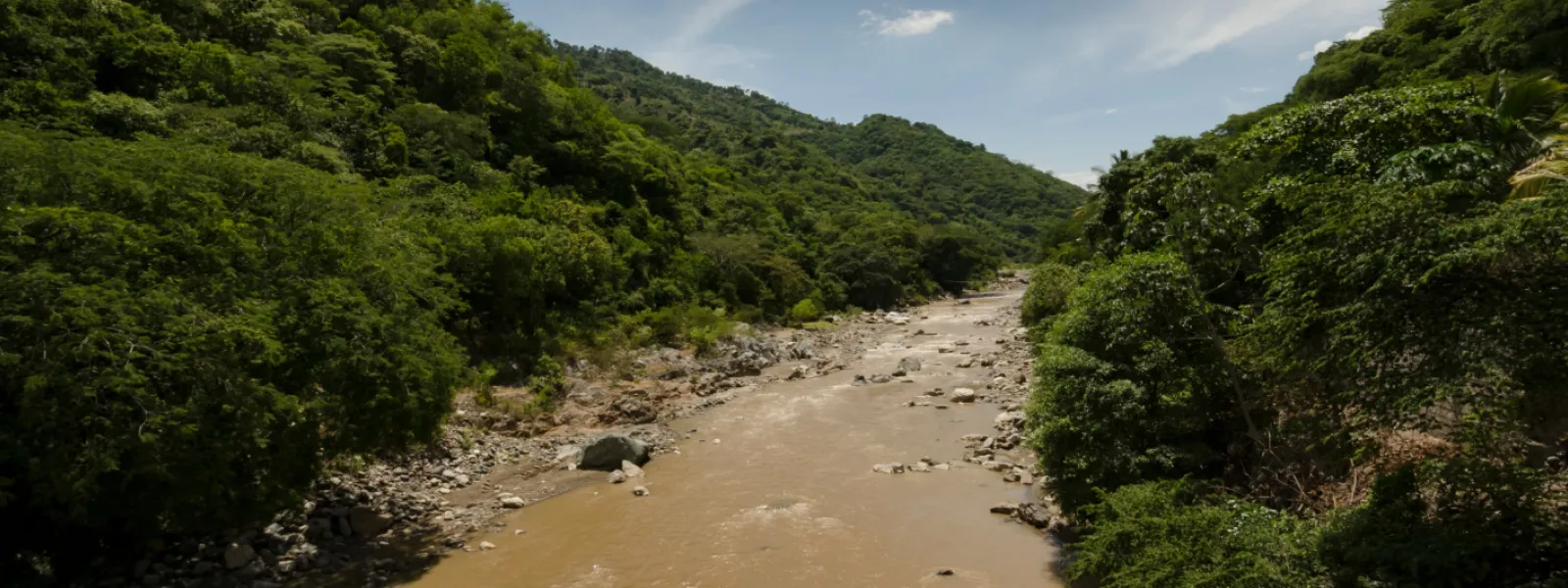
The Motagua River basin—Guatemala’s largest and most important river—is severely polluted with wastewater, solid waste, and other types of debris.
This is a cross-border issue because the Motagua’s polluted waters flow into the Caribbean Sea, reach the coast of Honduras, and threaten the Mesoamerican Reef System.
For decades, this has violated the rights to health, water, development, and a healthy environment of all the people living in the river basin.
In June 2025, the Poqomam Maya community of Santa Cruz Chinautla—supported by AIDA, the Indigenous Peoples’ Law Firm, and allied organizations—achieved an unprecedented legal victory to halt degradation in the basin. In response to the lawsuit it filed, a Guatemalan court ordered the municipality of Chinautla to comply with a series of obligations to curb the pollution of the area’s rivers and soil.
The government's response to the ruling has so far been limited to technical working group meetings. Meanwhile, the community continues to work toward the proper implementation of the ruling and to take other actions to defend its territory and its rights.
Background
The Motagua River, which is 486 km long, flows through 96 municipalities and 14 departments in Guatemala. It originates in Quiché, a department located in the northwest, and empties into the Caribbean Sea.
Polluting activities occur throughout the entire basin, including sub-basins and micro-basins. The largest volume of pollution comes from Guatemala City, the country’s capital, and is carried by the waters of the Las Vacas River, which in turn receives a large amount of waste from the Chinautla River.
The Chinautla River, which flows through the municipality of the same name, carries solid waste from a landfill located in Zone 3 of the capital—where trash from at least 14 municipalities in the department of Guatemala is dumped—as well as sewage generated by some 500,000 people living in the northern part of the capital, which undergoes no prior treatment.
Other sources of pollution include the numerous illegal dumps in the municipality of Chinautla, the waste that private vehicles and garbage trucks dump along the banks of its rivers, as well as the sand-mining companies—which began setting up operations in the area between 1996 and 1997—whose activities weaken the rivers' basins, causing solid waste to be more easily carried away by the river currents.
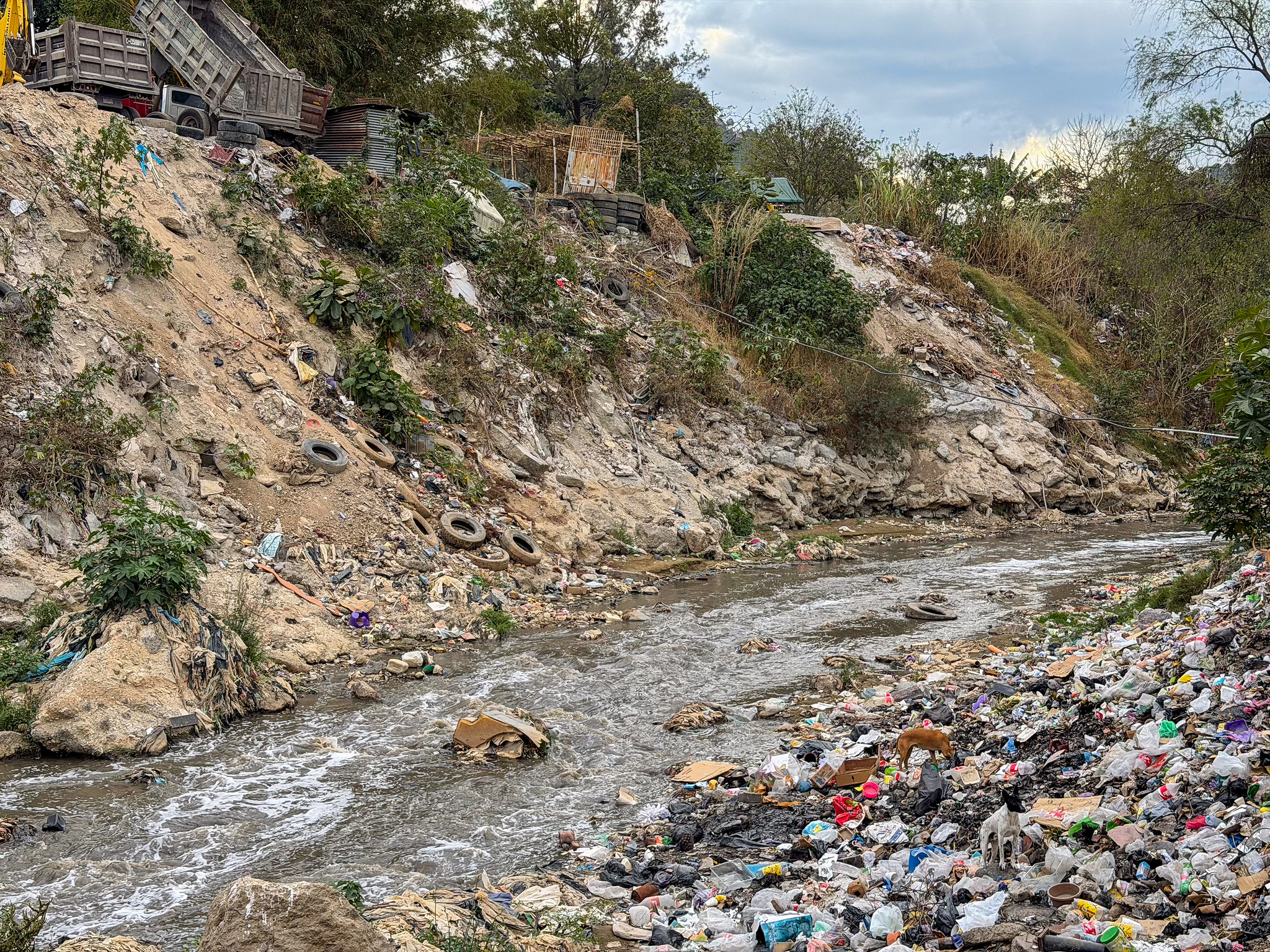
Photo: Mayela Sánchez García.
The situation extends beyond national borders. Every year, the Motagua River discharges some 20,000 metric tons of plastic into the Caribbean Sea, making it one of the rivers that contributes the most plastic pollution to the ocean worldwide, according to estimates contained in a 2025 report by the Inter-American Commission on Human Rights (IACHR).
The river flows into the Mesoamerican Reef at its mouth, so pollution also threatens to degrade one of the largest and most biodiverse transboundary reefs on the planet, which spans the territorial waters of Belize, Guatemala, Honduras, and Mexico.
In addition, the contaminated water reaches the coast of Honduras and spreads into Amatique Bay, located along the eastern coast of Guatemala, affecting the Caribbean Sea.
The roots of this chronic, cross-border problem are structural. Data from the Integrated Environmental Management of the Motagua River Basin project, funded by the United Nations Development Program (UNDP), show that in Guatemala, 66% of municipal solid waste is not collected, and there is no guarantee that the remaining 34% is disposed of properly. Furthermore, of all landfills nationwide, 88.32% are illegal or lack municipal authorization.
In other words, the core issues that need to be addressed are the mismanagement of solid waste and water resources in Guatemala; noncompliance with existing regulations on wastewater discharge and the disposal and treatment of solid waste and residues; and the lack of a water law.
The Poqomam Maya people's quest for justice
The rivers of Santa Cruz Chinautla, a community of the Poqomam Maya people located just twelve kilometers from Guatemala City, have become conduits of pollution that are degrading the Motagua River.
For decades, the local population has seen its health and livelihoods—including pottery, one of the main economic activities and a source of identity—damaged due to the lack of waste management in the municipality of Chinautla and the urban area of the country’s capital, as well as the activities of sand-mining companies.
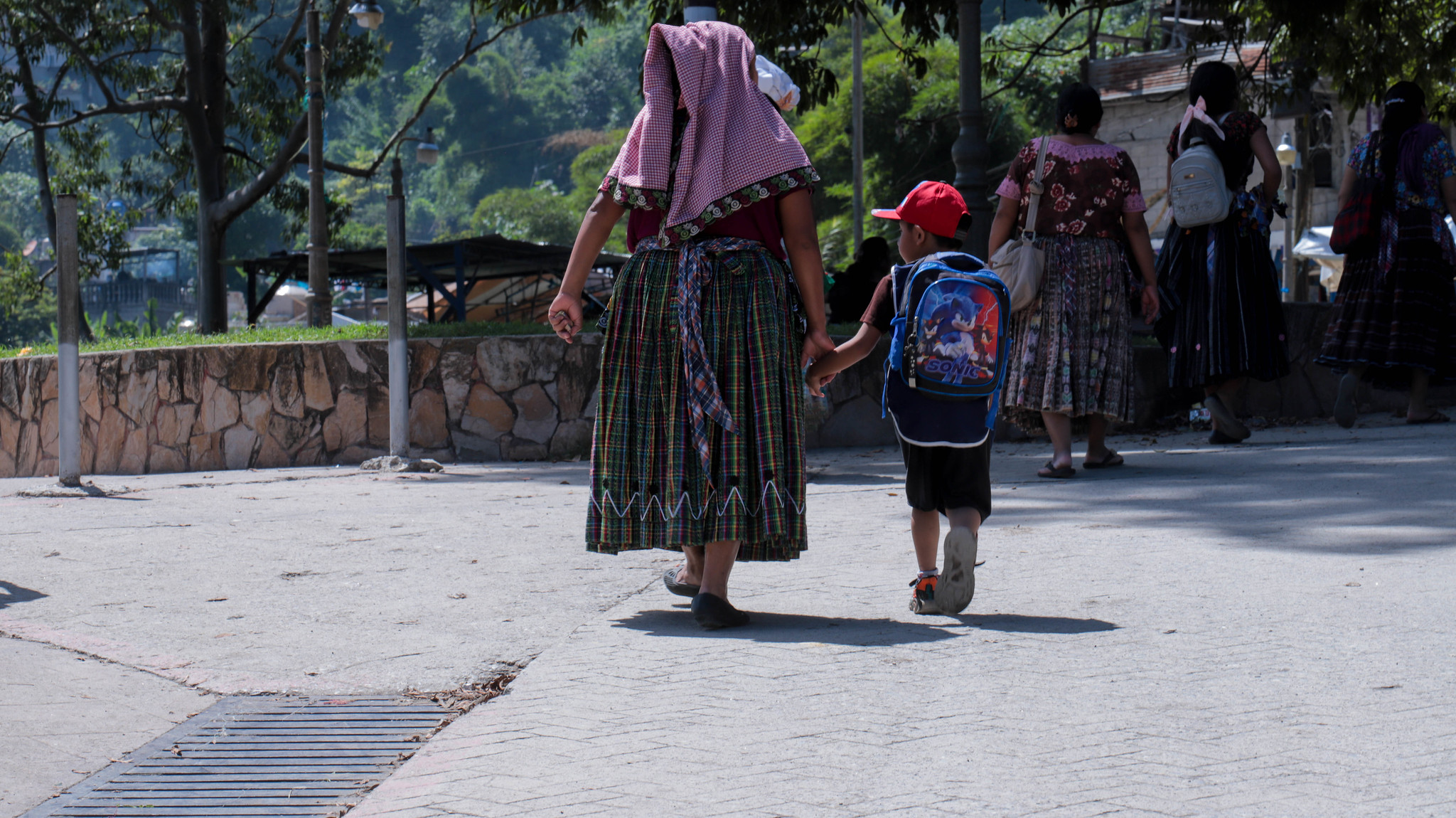
Photo: Mario Winter.
Voices for the Motagua River: Olga Vázquez.
Voices for the Motagua River: Nazario Pascual.
In early 2000, the Maya community organized to stop sand mining on their territory. At that time, the companies held mining permits that remained valid through 2021 and 2022. And although the permits expired, some companies continued to operate after requesting extensions. In June 2022, the indigenous authorities of the Poqomam people began a sit-in protest in front of the Piedrinera San Luis company, which they maintained for four years.
In July 2024, the Special Rapporteur on Economic, Social, Cultural, and Environmental Rights of the IACHR visited Santa Cruz Chinautla. During his visit, traditional authorities and community members spoke about the environmental, water-related, health, economic, and cultural impacts of the pollution in their rivers.
That same year, in October, the community—with support from AIDA, the Indigenous Peoples’ Law Firm, and partner organizations—filed a lawsuit (petition for amparo) against the municipality of Chinautla over its failure to take measures to address the contamination of its rivers and soil caused by improper solid waste management and the existence of illegal landfills.
AIDA’s scientific team, together with local residents and community authorities, collected key information on illegal landfills in the area. This community science initiative supported the litigation by highlighting the severity of the pollution, demonstrating the ongoing use of such practices, and providing evidence of the municipal authorities’ failure to fulfill their legal obligations regarding waste management.
Learn more about this community science initiative.
In June 2025, the Poqomam community won the support of the Guatemalan justice system when a constitutional court ordered the municipality of Chinautla to effectively address the claims in the lawsuit aimed at stopping the pollution of the rivers and soil in Santa Cruz Chinautla.
This is the first time a Guatemalan court has recognized a community's right to a healthy environment and its central role in finding solutions.
Find out the details of the legal victory.
Current situation
Since the ruling was issued, the municipality of Chinautla has held a series of “technical working groups” with representatives from the central government, civil society, and the community. A smaller group of technical experts was later created to develop a work plan with clear goals. Several months have passed without the municipality convening these working groups.
Furthermore, in December 2025, the IACHR noted in its report Human Rights Situation in Guatemala that the Motagua River basin is facing a severe pollution crisis that has had profound impacts on biodiversity and has resulted in systematic violations of the human rights of local communities, including the Maya Poqomam people.
And in May 2026, the Ministry of the Environment and Natural Resources revoked the license of the sand mining company Piedrinera San Luis for "failure to comply with environmental commitments."
AIDA continues to monitor the implementation of the court ruling to ensure the right to a healthy environment for the Poqomam Maya community and all those living in the Motagua River basin. Meanwhile, the residents of Santa Cruz Chinautla remain organized and mobilized to improve their environment and defend their rights.
Related projects
U.S. Congress Conditions: Spraying in National Parks
Astrid Puentes, AIDA (510) 550-6753 [email protected] Gastón Chillier, WOLA (202) 797-2171 [email protected] US CONGRESS CONDITIONS ANTI-NARCOTICS SPRAYING IN COLOMBIAN NATIONAL PARKS OAKLAND, CA, DECEMBER 10, 2003 — For the first time, the US Congress has officially acknowledged that US funds for the “Plan Colombia” drug eradication program may be used to spray coca and poppy crops located in Colombian national parks and other natural protected areas. However, the Congress conditioned funding for such spraying on compliance with Colombian law and a determination by the Department of State that “there are no effective alternatives to reduce drug cultivation in these areas.” The decision is part of the 2004 appropriations bill for the Andean Counterdrug Initiative, a key element of the US “War on Drugs” in Bolivia, Colombia, Ecuador, and Peru. The authors of the bill that will be voted in January of 2004, agreed that while there is concern that coca growers are moving into Colombia’s national parks, aerial fumigation in the parks and reserves should be used only as a last resort. Instead, Congress favors alternatives such as manual eradication, training and equipping the police to protect the parks, and relocating families that have moved into these areas. “The policy of using aerial spraying to eradicate illicit crops poses significant threats to human health and the environment,” says Astrid Puentes, Legal Director for AIDA. She adds that “The conditions imposed by the US Congress are a step in the right direction, though to truly protect the environment in Colombia we must ensure that the eradication forces begin complying with Colombian laws and stop trying to weaken them.” Each year, Congress has conditioned the State Department’s use of funds for the spraying program on actions intended to help protect human rights and the environment. As in previous years, the Congress required that in 2004 the State Department certify that: the use of these herbicides in Colombia does not pose unreasonable risks or adverse effects to humans or the environment; the eradication program complies with the Colombian Environmental Management Plan; and the governments investigate and fairly compensate meritorious complaints about health harms and the destruction of legal crops. For the first time, however, the Congress also referred to and conditioned the spraying of national parks and reserves. In 2001, Colombia’s environmental authorities specifically excluded national parks and natural reserves from the regions that are subject to aerial herbicide spraying. Instead, they ordered that manual or mechanical means be used to destroy coca and poppy crops in these areas. The authorities also prohibited the spraying of significant buffer areas surrounding the parks to avoid harms from spray drift or accidental spraying. These special protections are in line with the Colombian Constitution and environmental laws that establish special protections for these environmentally sensitive areas. Therefore, spraying in natural parks and natural reserves in Colombia is clearly illegal. Nevertheless, the Colombian National Anti-narcotics Agency that collaborates closely with the US Department of State has sprayed in Colombia’s national parks. Moreover, in June 2003, the Colombian National Council on Narcotics attempted to legalize such spraying. This action is being contested in Colombian courts for violating the Constitution and other laws. According to Anna Cederstav, a scientist with AIDA, “A policy that creates no viable economic alternatives for farmers simply perpetuates the cycle of farmers cutting forests to plant coca and the government spraying herbicides to destroy the fields. The US and Colombian governments should make a good-faith effort and give manual eradication and alternative development projects a chance to work, instead of relying on massive aerial spraying and military campaigns to destroy the crops.” She adds that “As the US Congress has now recognized for the National Parks, spraying should be the last recourse, but unfortunately it is the only one that has been systematically implemented until now.” The extensive spraying of potent herbicides could have devastating environmental impacts in the National Parks of Colombia, one of the most biodiverse nations on the planet. Important regions of the Amazon basin, the Tropical Andes, and the Chocó coastal rainforest are all located in Colombia. These vital ecosystems are being destroyed not only by illicit drug cultivation, but now also by the eradication program.
Read more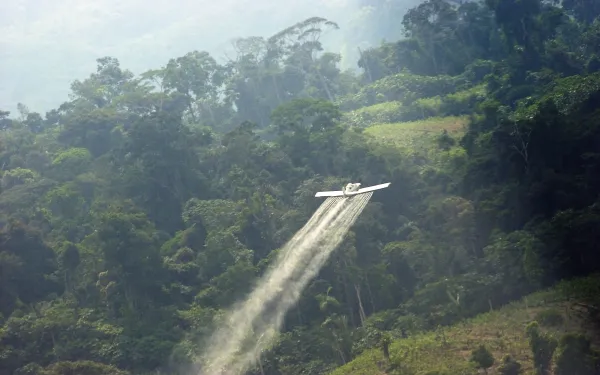
Colombian Court Orders the Suspension of Plan Colombia Spraying
FOR IMMEDIATE RELEASE: June 26, 2003 CITING RISK TO HUMAN HEALTH AND THE ENVIRONMENT, COLOMBIAN COURT ORDERS THE SUSPENSION OF THE US-FINANCED SPRAYING OF COCA AND POPPY CROPS OAKLAND, CA/BOGOTA, COLOMBIA – A recent decision by the Superior Administrative Court of Cundinamarca, Colombia, (released to the public on June 25) declared that the aerial spraying with herbicides to eradicate coca and poppy crops violates the Colombian constitutional rights to a healthy environment, security and public health. As a result, the court ordered that the aerial spraying of potent glyphosate herbicides be suspended until the government complies with the Environmental Management Plan for the eradication program, and conducts a series of required studies intended to protect human health and the environment. This verdict supplements earlier declarations by the Colombian Constitutional Court and the State Council, which respectively ordered the suspension of spraying in indigenous territories and full compliance with the Environmental Management Plan approved by the Ministry of Environment. According to Yamile Salinas of the Colombian Ombudsman’s Office, “This ruling recognizes the potential risks that the herbicide and the manner in which it is being applied pose to human health and the environment in Colombia,” She added that, “The application of the precautionary principle is of singular importance because the Court affirms that the significant and potentially irreparable risk posed by the spraying is reason enough to suspend the fumigation program.” “The US Congress has required the State Department to evaluate environmental and health impacts of Plan Colombia. This decision by a court in Colombia must be taken into account by the US State Department,” said Anna Cederstav, staff scientist with Earthjustice and AIDA. “In light of the evidence presented and the court’s clear decision on this matter, the Department of State cannot certify to Congress that the herbicide mixture, in the manner it is being used, poses no unreasonable risks or adverse effects to humans or the environment, or that the herbicide is being used in compliance with the Environmental Management Plan for the program.” She concluded that, “It would be highly irresponsible for the United States to continue the eradication program in contravention of the Colombian court order to suspend the spraying until appropriate public health and environmental protections are in place.” “This court order formally adopts many of the requirements for environmental and human protection that the Colombian Ombudsman and Comptroller General, along with both national and international non-government organizations, have been demanding for years,” said Yamile Salinas. “This decision is a victory for both public health and the environment of Colombia.” Press Contacts: Anna Cederstav, Staff Scientist with Earthjustice and AIDA, (Oakland, CA) tel. 510-550-6700 Yamile Salinas, Colombian Ombudsman’s Office, (Bogotá, Colombia) tel. 571-314-7300 Ext. 2324
Read more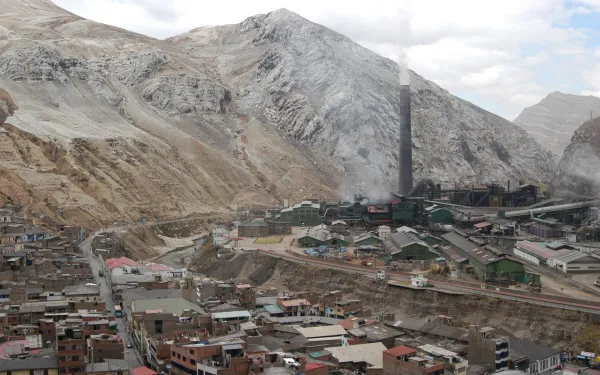
La Oroya Cannot Wait
This publication is the product of a careful analysis of official environmental monitoring reports submitted for the Doe Run multi-metal smelter to the Peruvian Ministry of Energy and Mines between 1996 and 2001. By finally filling the void in public information about contamination levels in La Oroya, this work demonstrates that the right to access information is an essential pillar of citizen participation. Only with these type of facts in hand can civil society protect itself against the powerful interests of giant mining companies like Doe Run. The reader will come to understand the severe health problems and risks suffered by the local population and particulary the children in La Oroya. But the authors go beyond this. They suggest the implementation of corrective and preventive measures that will require the participation of not only the company but also the Peruvian State. These are actions that cannot be postponed if we are to guarantee the human right to health, improve quality of life, and permit development in Peru. The authors also provide a legal analysis of environmental protection in the minerals sector, and recommendations for making this system more effective. Above all, this publication is an invitation to take meaningful and timely steps toward solving the extraordinary environmental and human health problems in La Oroya. Read and download the publication
Read more