
Project
Shutterstock.
Pollution of the Motagua River in Guatemala: The Poqomam Maya people’s quest for environmental justice
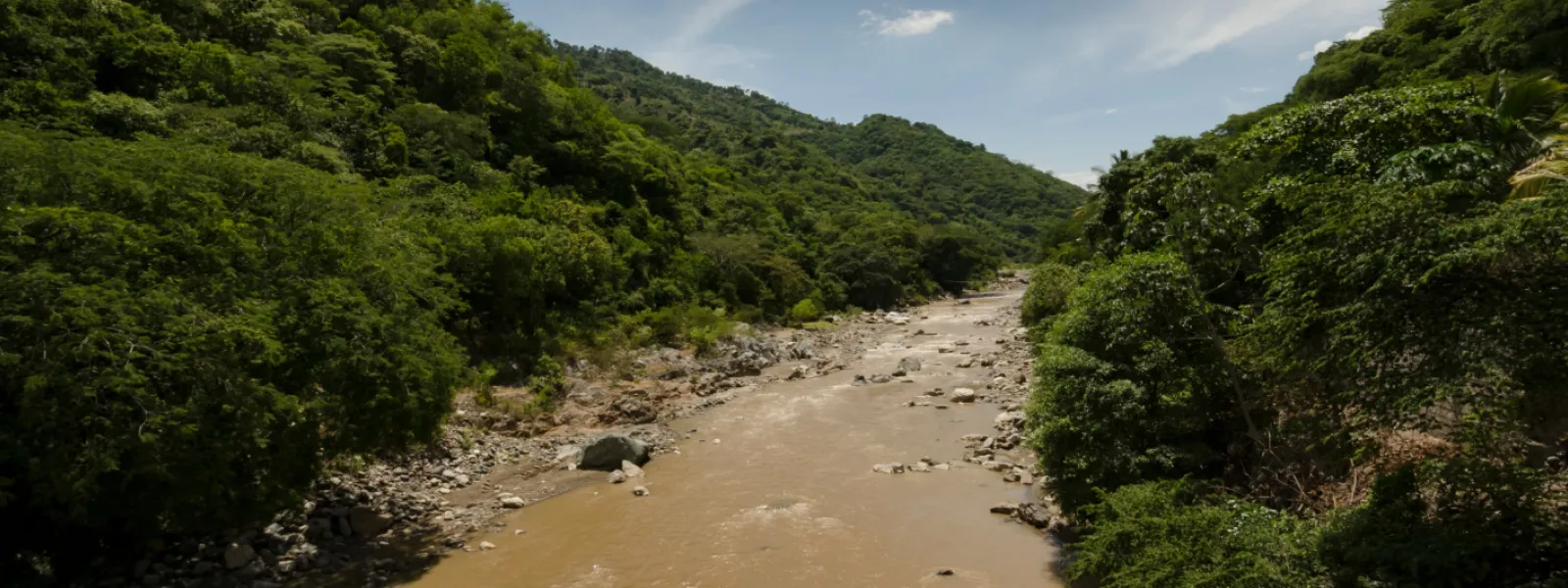
The Motagua River basin—Guatemala’s largest and most important river—is severely polluted with wastewater, solid waste, and other types of debris.
This is a cross-border issue because the Motagua’s polluted waters flow into the Caribbean Sea, reach the coast of Honduras, and threaten the Mesoamerican Reef System.
For decades, this has violated the rights to health, water, development, and a healthy environment of all the people living in the river basin.
In June 2025, the Poqomam Maya community of Santa Cruz Chinautla—supported by AIDA, the Indigenous Peoples’ Law Firm, and allied organizations—achieved an unprecedented legal victory to halt degradation in the basin. In response to the lawsuit it filed, a Guatemalan court ordered the municipality of Chinautla to comply with a series of obligations to curb the pollution of the area’s rivers and soil.
The government's response to the ruling has so far been limited to technical working group meetings. Meanwhile, the community continues to work toward the proper implementation of the ruling and to take other actions to defend its territory and its rights.
Background
The Motagua River, which is 486 km long, flows through 96 municipalities and 14 departments in Guatemala. It originates in Quiché, a department located in the northwest, and empties into the Caribbean Sea.
Polluting activities occur throughout the entire basin, including sub-basins and micro-basins. The largest volume of pollution comes from Guatemala City, the country’s capital, and is carried by the waters of the Las Vacas River, which in turn receives a large amount of waste from the Chinautla River.
The Chinautla River, which flows through the municipality of the same name, carries solid waste from a landfill located in Zone 3 of the capital—where trash from at least 14 municipalities in the department of Guatemala is dumped—as well as sewage generated by some 500,000 people living in the northern part of the capital, which undergoes no prior treatment.
Other sources of pollution include the numerous illegal dumps in the municipality of Chinautla, the waste that private vehicles and garbage trucks dump along the banks of its rivers, as well as the sand-mining companies—which began setting up operations in the area between 1996 and 1997—whose activities weaken the rivers' basins, causing solid waste to be more easily carried away by the river currents.
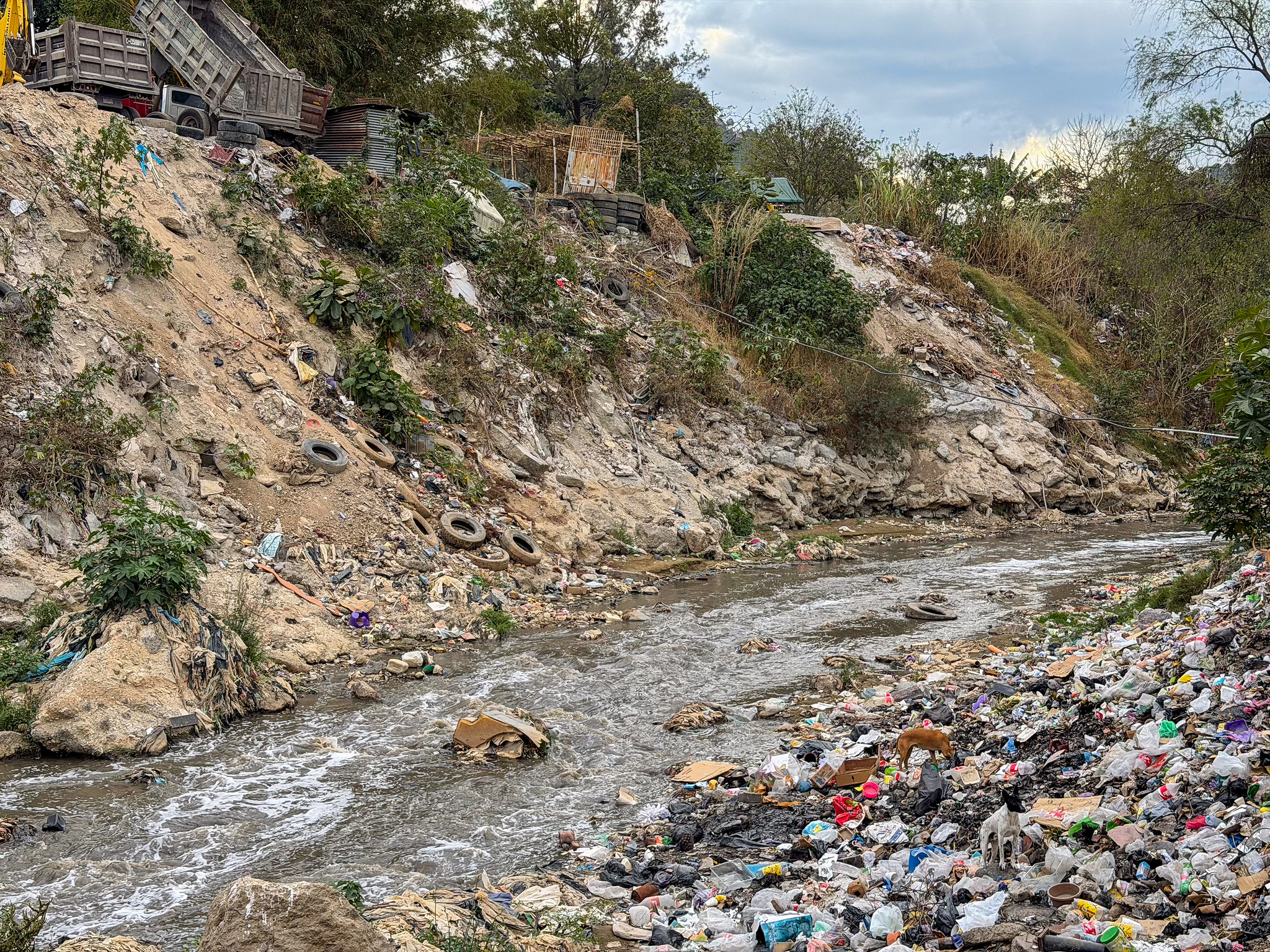
Photo: Mayela Sánchez García.
The situation extends beyond national borders. Every year, the Motagua River discharges some 20,000 metric tons of plastic into the Caribbean Sea, making it one of the rivers that contributes the most plastic pollution to the ocean worldwide, according to estimates contained in a 2025 report by the Inter-American Commission on Human Rights (IACHR).
The river flows into the Mesoamerican Reef at its mouth, so pollution also threatens to degrade one of the largest and most biodiverse transboundary reefs on the planet, which spans the territorial waters of Belize, Guatemala, Honduras, and Mexico.
In addition, the contaminated water reaches the coast of Honduras and spreads into Amatique Bay, located along the eastern coast of Guatemala, affecting the Caribbean Sea.
The roots of this chronic, cross-border problem are structural. Data from the Integrated Environmental Management of the Motagua River Basin project, funded by the United Nations Development Program (UNDP), show that in Guatemala, 66% of municipal solid waste is not collected, and there is no guarantee that the remaining 34% is disposed of properly. Furthermore, of all landfills nationwide, 88.32% are illegal or lack municipal authorization.
In other words, the core issues that need to be addressed are the mismanagement of solid waste and water resources in Guatemala; noncompliance with existing regulations on wastewater discharge and the disposal and treatment of solid waste and residues; and the lack of a water law.
The Poqomam Maya people's quest for justice
The rivers of Santa Cruz Chinautla, a community of the Poqomam Maya people located just twelve kilometers from Guatemala City, have become conduits of pollution that are degrading the Motagua River.
For decades, the local population has seen its health and livelihoods—including pottery, one of the main economic activities and a source of identity—damaged due to the lack of waste management in the municipality of Chinautla and the urban area of the country’s capital, as well as the activities of sand-mining companies.
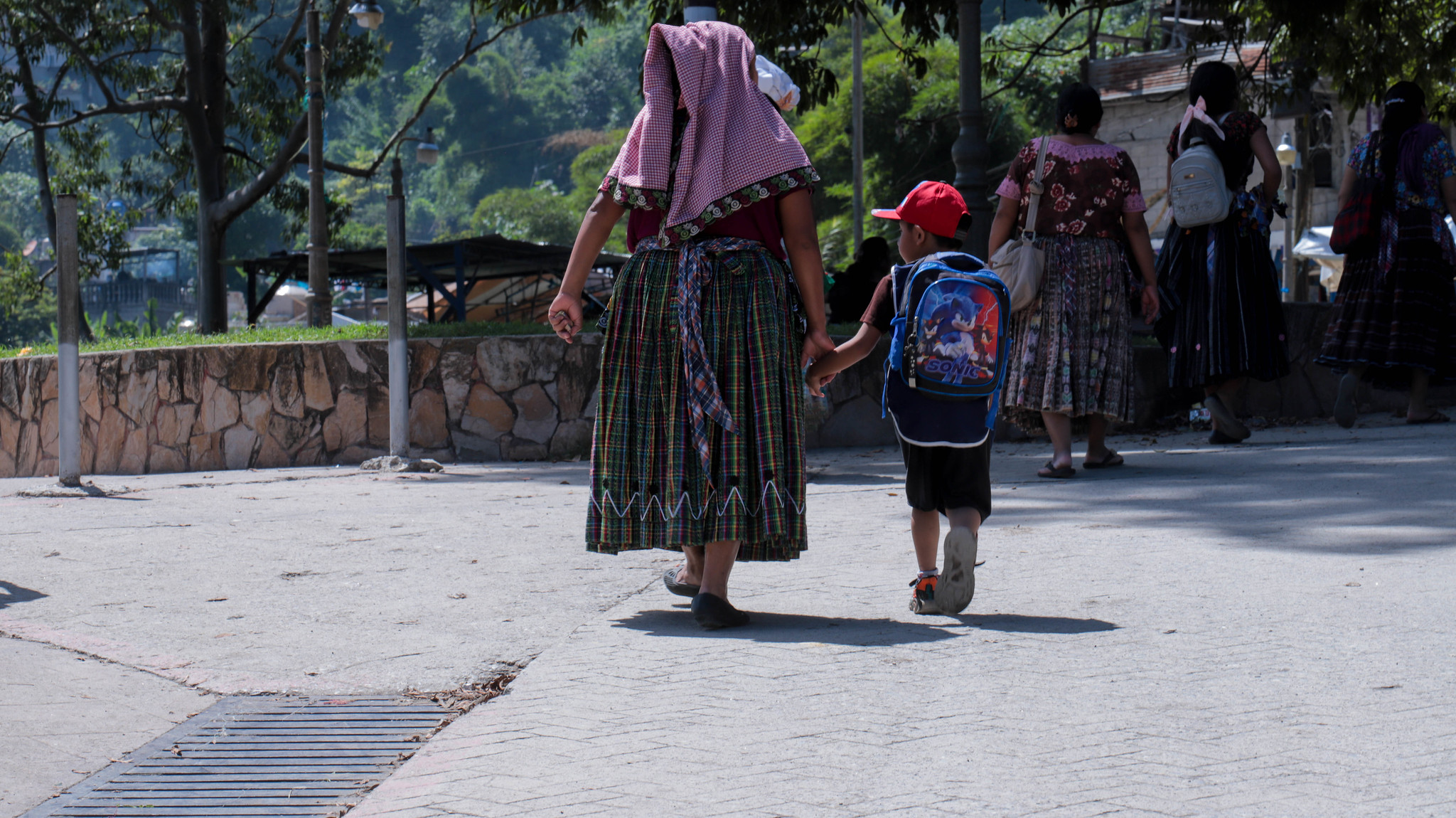
Photo: Mario Winter.
Voices for the Motagua River: Olga Vázquez.
Voices for the Motagua River: Nazario Pascual.
In early 2000, the Maya community organized to stop sand mining on their territory. At that time, the companies held mining permits that remained valid through 2021 and 2022. And although the permits expired, some companies continued to operate after requesting extensions. In June 2022, the indigenous authorities of the Poqomam people began a sit-in protest in front of the Piedrinera San Luis company, which they maintained for four years.
In July 2024, the Special Rapporteur on Economic, Social, Cultural, and Environmental Rights of the IACHR visited Santa Cruz Chinautla. During his visit, traditional authorities and community members spoke about the environmental, water-related, health, economic, and cultural impacts of the pollution in their rivers.
That same year, in October, the community—with support from AIDA, the Indigenous Peoples’ Law Firm, and partner organizations—filed a lawsuit (petition for amparo) against the municipality of Chinautla over its failure to take measures to address the contamination of its rivers and soil caused by improper solid waste management and the existence of illegal landfills.
AIDA’s scientific team, together with local residents and community authorities, collected key information on illegal landfills in the area. This community science initiative supported the litigation by highlighting the severity of the pollution, demonstrating the ongoing use of such practices, and providing evidence of the municipal authorities’ failure to fulfill their legal obligations regarding waste management.
Learn more about this community science initiative.
In June 2025, the Poqomam community won the support of the Guatemalan justice system when a constitutional court ordered the municipality of Chinautla to effectively address the claims in the lawsuit aimed at stopping the pollution of the rivers and soil in Santa Cruz Chinautla.
This is the first time a Guatemalan court has recognized a community's right to a healthy environment and its central role in finding solutions.
Find out the details of the legal victory.
Current situation
Since the ruling was issued, the municipality of Chinautla has held a series of “technical working groups” with representatives from the central government, civil society, and the community. A smaller group of technical experts was later created to develop a work plan with clear goals. Several months have passed without the municipality convening these working groups.
Furthermore, in December 2025, the IACHR noted in its report Human Rights Situation in Guatemala that the Motagua River basin is facing a severe pollution crisis that has had profound impacts on biodiversity and has resulted in systematic violations of the human rights of local communities, including the Maya Poqomam people.
And in May 2026, the Ministry of the Environment and Natural Resources revoked the license of the sand mining company Piedrinera San Luis for "failure to comply with environmental commitments."
AIDA continues to monitor the implementation of the court ruling to ensure the right to a healthy environment for the Poqomam Maya community and all those living in the Motagua River basin. Meanwhile, the residents of Santa Cruz Chinautla remain organized and mobilized to improve their environment and defend their rights.
Related projects
Doe Run Smelter in La Oroya, Peru, Loses Environmental Certification
FOR IMMEDIATE PUBLICATION: April 9, 2008 Press Contacts: Perry Gottesfeld, Executive Director OK International 415-362-9898 [email protected] Anna Cederstav, Ph.D. AIDA and Earthjustice 510-550-6700 [email protected] DOE RUN SMELTER IN LA OROYA, PERU, LOSES ENVIRONMENTAL CERTIFICATION Lima, Peru – Doe Run Peru, which operates one of the largest metal-smelters in the hemisphere, has lost its Environmental Certification in a highly unusual move taken by the company’s independent third-party auditors. TUV Rheinland initially granted the certification less than two years ago, but revoked it March 11, 2008 citing non-compliance with Peruvian environmental laws and the lack of adequate pollution prevention measures. The loss of the certification comes on the heels of a $234,000 US fine imposed last year against Doe Run Peru for several serious violations of environmental laws in Peru. This week, Peruvian authorities released a report detailing those violations, including noncompliance with the standards for lead and particulate matter. Doe Run Peru obtained the environmental certification under ISO 14001 in 2006 calling it a “significant milestone in delivering on our commitments to our communities, our employees and the environment." The Doe Run Company’s web site calls the ISO certification an “internationally recognized symbol of a company’s dedication to superior quality, customer satisfaction and continuous improvement.” Nevertheless, a number of studies conducted by the government as well as international health experts have shown that almost all of the children living in the area surrounding Doe Run Peru’s smelter have unacceptably high levels of lead in their bodies. Many are severely exposed and require immediate medical treatment. “TUV Rheinland acted responsibly in taking this unprecedented action to underscore the need for Doe Run Peru to do more to protect public health in La Oroya” said Perry Gottesfeld, Executive Director of Occupational Knowledge International (USA). “Revoking the certification should send a strong message to Doe Run that they have much more work to do,.” said Anna Cederstav, Staff Scientist with AIDA and Earthjustice, and author of the book La Oroya Cannot Wait. “Nevertheless, we are still concerned that, if paid enough, another certifying body will agree to provide Doe Run with a similar certification.” she added. In 2006, several organizations filed a petition with the Inter-American Commission on Human Rights of the Organization of American States, seeking a recommendation that the Peruvian government implement urgent measures to halt the grave violations against the health and lives of the citizens of La Oroya. Last year, the Commission agreed and requested that the state implement such precautionary measures. The World Health Organization (WHO) estimates that 120 million people are overexposed to lead (approximately three times the number infected by HIV/AIDS) and 99 percent of the most severely affected reside in the developing world. Lead affects both children and adults and causes brain damage, metal retardation, and other learning disabilities in children. In addition to lead, the population of La Oroya is also exposed to extreme levels of other harmful contaminants, including arsenic, cadmium, and sulfur dioxide.
Read moreThreats from Proposed Dam in La Parota, Mexico, Challenged in Amicus Curiae Legal Brief
AIDA and other international and Mexican organizations submitted a legal brief (Amicus Curiae) to the Collegiate Tribunal of Guerrero in Acapulco in support of a constitutional lawsuit brought by CECOP and the Mexican Center for Environmental Law against the Federal Commission of Electricity (CFE) and other authorities. The lawsuit alleges that the Mexican authorities failed to consult with affected parties and adequately evaluate the environmental impacts of the construction of La Parota dam. Approval of the hydroelectric project disregards national laws, as well as international human rights and environmental laws, including those that protect the rights to a fair trial and economic, social and environmental rights. Among other things, the project’s major human rights violations are a lack of information provided to those affected by the dam and gaps in the comprehensive environmental impact study, which is designed to evaluate damages the dam will cause, measures to prevent impacts, as well as alternatives to the project. Considering these flaws and the human rights violations of people affected by the La Parota megaproject, we appealed to the Collegiate Tribunal of Guerrero, arguing that it should make use of its power, accept the arguments of the Amicus, and cancel all work related to the construction of the La Parota dam until the Mexican government completely complies with local people’s demands and applicable national and international laws. AIDA will continue pursing this paradigmatic case because it is an example of how infrastructure development can cause severe environmental damages and human rights violations in the hemisphere.
Read moreHuman Rights Body Calls on Peru to Protect Citizens from Contamination by American-Owned Smelter
For immediate release: September 5, 2007 PRESS CONTACTS: Astrid Puentes, AIDA (+5255) 52120141 [email protected] Martin Wagner, (510) 550-6700 [email protected] Human Rights Body Calls on Peru to Protect Citizens from Contamination by American-owned Smelter Oakland, CA; Lima, Peru – The Inter-American Commission on Human Rights (IACHR) has asked the government of Peru to take immediate steps to protect the health of inhabitants of La Oroya, Peru, who suffer severe health impacts due to contamination from a smelter owned by American billionaire Ira Rennert. Rennert’s company, Doe Run Peru, owns and operates the smelter. La Oroya residents suffer health problems related to emissions of lead, arsenic, cadmium, sulfur dioxide and other pollution from the smelter. In 2006, the Blacksmith Institute identified La Oroya as one of the ten most polluted places in the world (http://www.blacksmithinstitute.org/ten.php). The Commission ordered Peru to conduct comprehensive medical examinations to determine the extent of the injury to local people and to provide medical treatment to those who need it. The Commission acted in response to a petition submitted by lawyers from the Peruvian Society for Environmental Law (SPDA), the Inter-American Association for Environmental Defense (AIDA), Earthjustice, and the Center for Human Rights and Environment. The petition was filed on behalf of a group of La Oroya residents claiming that Peru’s failure to control the smelter pollution violates their human rights, and especially those of the most vulnerable population – the children impacted by the severe lead contamination. “Controlling contamination from the smelter is crucial to protect the rights and lives of these people,” said Astrid Puentes of AIDA. “The Commission’s action confirms that neither Peru nor the company have taken adequate steps to protect health and human rights in La Oroya,” she added. Since 1999, the Government of Peru has known that almost all the children living near the complex suffer from lead poisoning, yet has failed to remedy the situation. A March 2005 study showed that 99 percent of the children tested had blood lead levels vastly exceeding the safe limits established by the US EPA and the World Health Organization. “We are celebrating, with the hope that we will finally have positive results for the protection of the health of our children, and ourselves,” said one La Oroya petitioner, who, like all the petitioners, has asked to remain anonymous for fear of retaliation by company workers. “In calling on Peru to protective the people of La Oroya, the Commission is indicating its support for people throughout the hemisphere who are threatened by extreme toxic contamination,” said Earthjustice’s Martin Wagner. “The Commission is acknowledging that this kind of pollution violates human rights, and that international law thus requires governments to prevent such tragedies and to take steps to remedy them when they happen. The Commission’s request is based on its interpretation of Peru’s international legal obligations, and it is the government’s responsibility to satisfy those obligations.” “We hope to see the transparent, effective, and rapid implementation of these precautionary measures by Peruvian government authorities” declared Carlos Chirinos, from the SPDA. “The government has moved far too slow in addressing this health crisis,” he added. The Commission’s decision is a preliminary step in its consideration of the petition from the residents of La Oroya. “The Commission has clearly decided that the people in La Oroya cannot afford to await the outcome of the full petition process,” said Wagner. “No matter what the details of its final decision, the Commission is obviously convinced that rights are being violated and the government must act now.”
Read more