
Project
Shutterstock.
Pollution of the Motagua River in Guatemala: The Poqomam Maya people’s quest for environmental justice
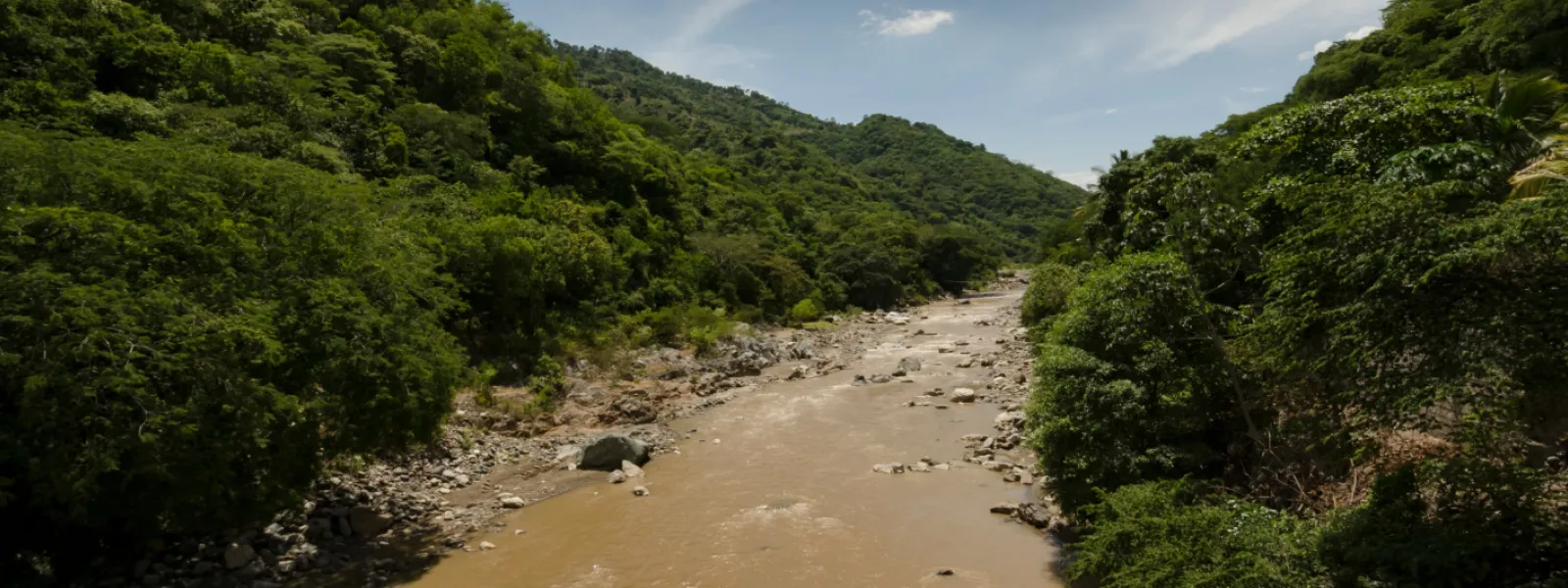
The Motagua River basin—Guatemala’s largest and most important river—is severely polluted with wastewater, solid waste, and other types of debris.
This is a cross-border issue because the Motagua’s polluted waters flow into the Caribbean Sea, reach the coast of Honduras, and threaten the Mesoamerican Reef System.
For decades, this has violated the rights to health, water, development, and a healthy environment of all the people living in the river basin.
In June 2025, the Poqomam Maya community of Santa Cruz Chinautla—supported by AIDA, the Indigenous Peoples’ Law Firm, and allied organizations—achieved an unprecedented legal victory to halt degradation in the basin. In response to the lawsuit it filed, a Guatemalan court ordered the municipality of Chinautla to comply with a series of obligations to curb the pollution of the area’s rivers and soil.
The government's response to the ruling has so far been limited to technical working group meetings. Meanwhile, the community continues to work toward the proper implementation of the ruling and to take other actions to defend its territory and its rights.
Background
The Motagua River, which is 486 km long, flows through 96 municipalities and 14 departments in Guatemala. It originates in Quiché, a department located in the northwest, and empties into the Caribbean Sea.
Polluting activities occur throughout the entire basin, including sub-basins and micro-basins. The largest volume of pollution comes from Guatemala City, the country’s capital, and is carried by the waters of the Las Vacas River, which in turn receives a large amount of waste from the Chinautla River.
The Chinautla River, which flows through the municipality of the same name, carries solid waste from a landfill located in Zone 3 of the capital—where trash from at least 14 municipalities in the department of Guatemala is dumped—as well as sewage generated by some 500,000 people living in the northern part of the capital, which undergoes no prior treatment.
Other sources of pollution include the numerous illegal dumps in the municipality of Chinautla, the waste that private vehicles and garbage trucks dump along the banks of its rivers, as well as the sand-mining companies—which began setting up operations in the area between 1996 and 1997—whose activities weaken the rivers' basins, causing solid waste to be more easily carried away by the river currents.
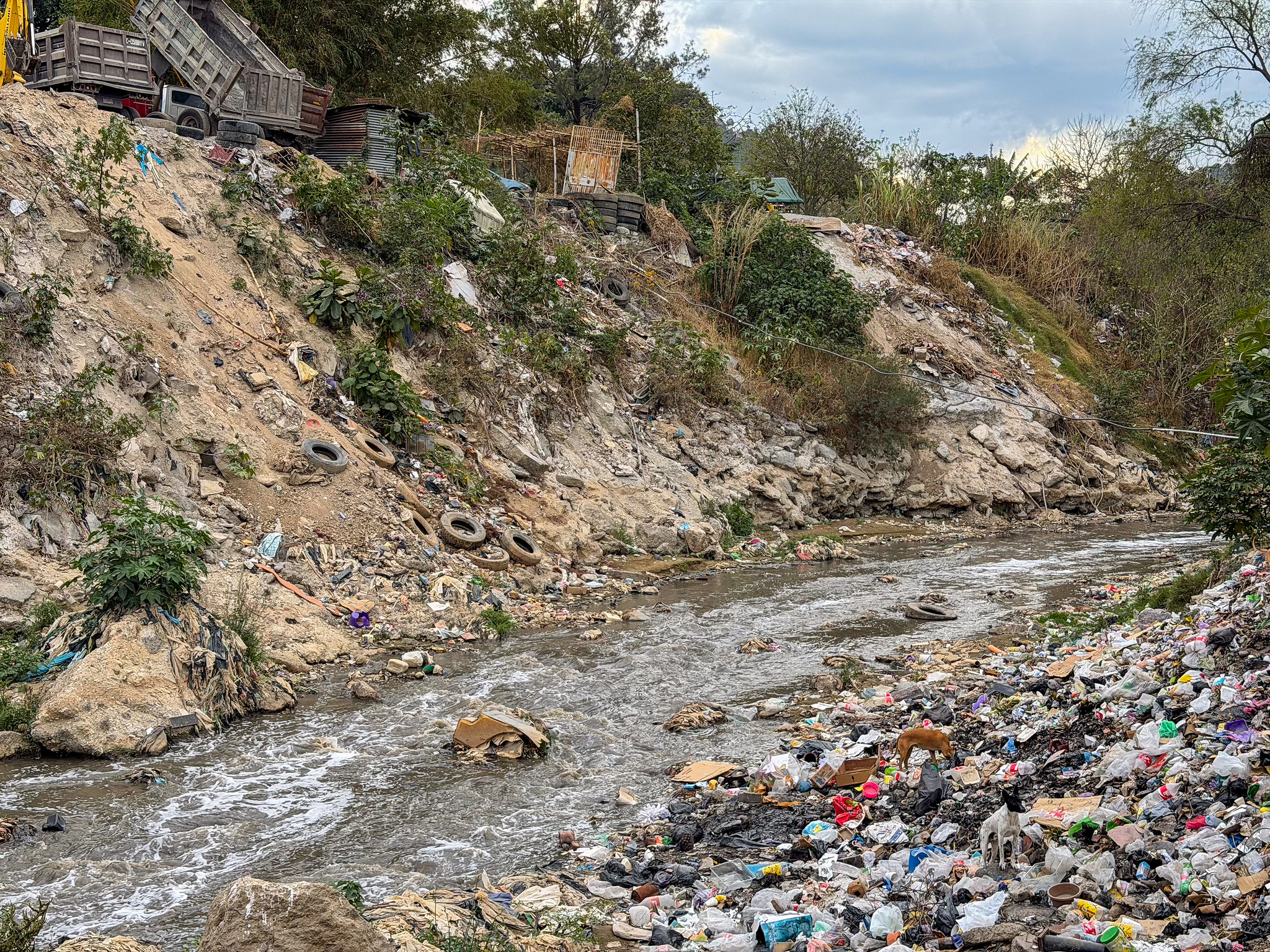
Photo: Mayela Sánchez García.
The situation extends beyond national borders. Every year, the Motagua River discharges some 20,000 metric tons of plastic into the Caribbean Sea, making it one of the rivers that contributes the most plastic pollution to the ocean worldwide, according to estimates contained in a 2025 report by the Inter-American Commission on Human Rights (IACHR).
The river flows into the Mesoamerican Reef at its mouth, so pollution also threatens to degrade one of the largest and most biodiverse transboundary reefs on the planet, which spans the territorial waters of Belize, Guatemala, Honduras, and Mexico.
In addition, the contaminated water reaches the coast of Honduras and spreads into Amatique Bay, located along the eastern coast of Guatemala, affecting the Caribbean Sea.
The roots of this chronic, cross-border problem are structural. Data from the Integrated Environmental Management of the Motagua River Basin project, funded by the United Nations Development Program (UNDP), show that in Guatemala, 66% of municipal solid waste is not collected, and there is no guarantee that the remaining 34% is disposed of properly. Furthermore, of all landfills nationwide, 88.32% are illegal or lack municipal authorization.
In other words, the core issues that need to be addressed are the mismanagement of solid waste and water resources in Guatemala; noncompliance with existing regulations on wastewater discharge and the disposal and treatment of solid waste and residues; and the lack of a water law.
The Poqomam Maya people's quest for justice
The rivers of Santa Cruz Chinautla, a community of the Poqomam Maya people located just twelve kilometers from Guatemala City, have become conduits of pollution that are degrading the Motagua River.
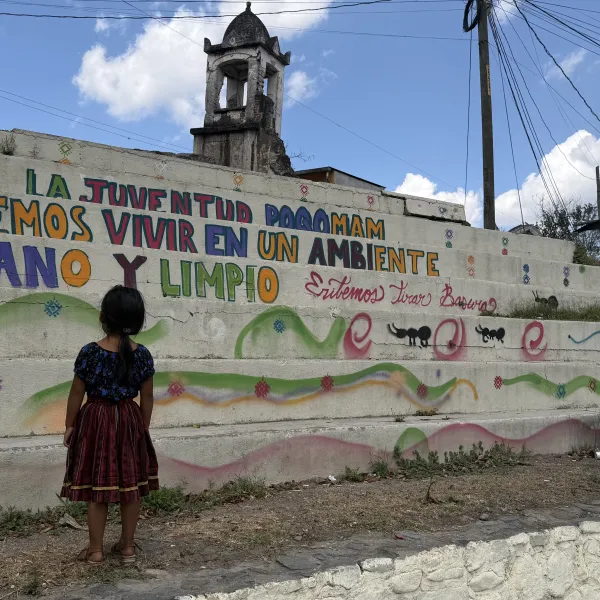
For decades, the local population has seen its health and livelihoods—including pottery, one of the main economic activities and a source of identity—damaged due to the lack of waste management in the municipality of Chinautla and the urban area of the country’s capital, as well as the activities of sand-mining companies.
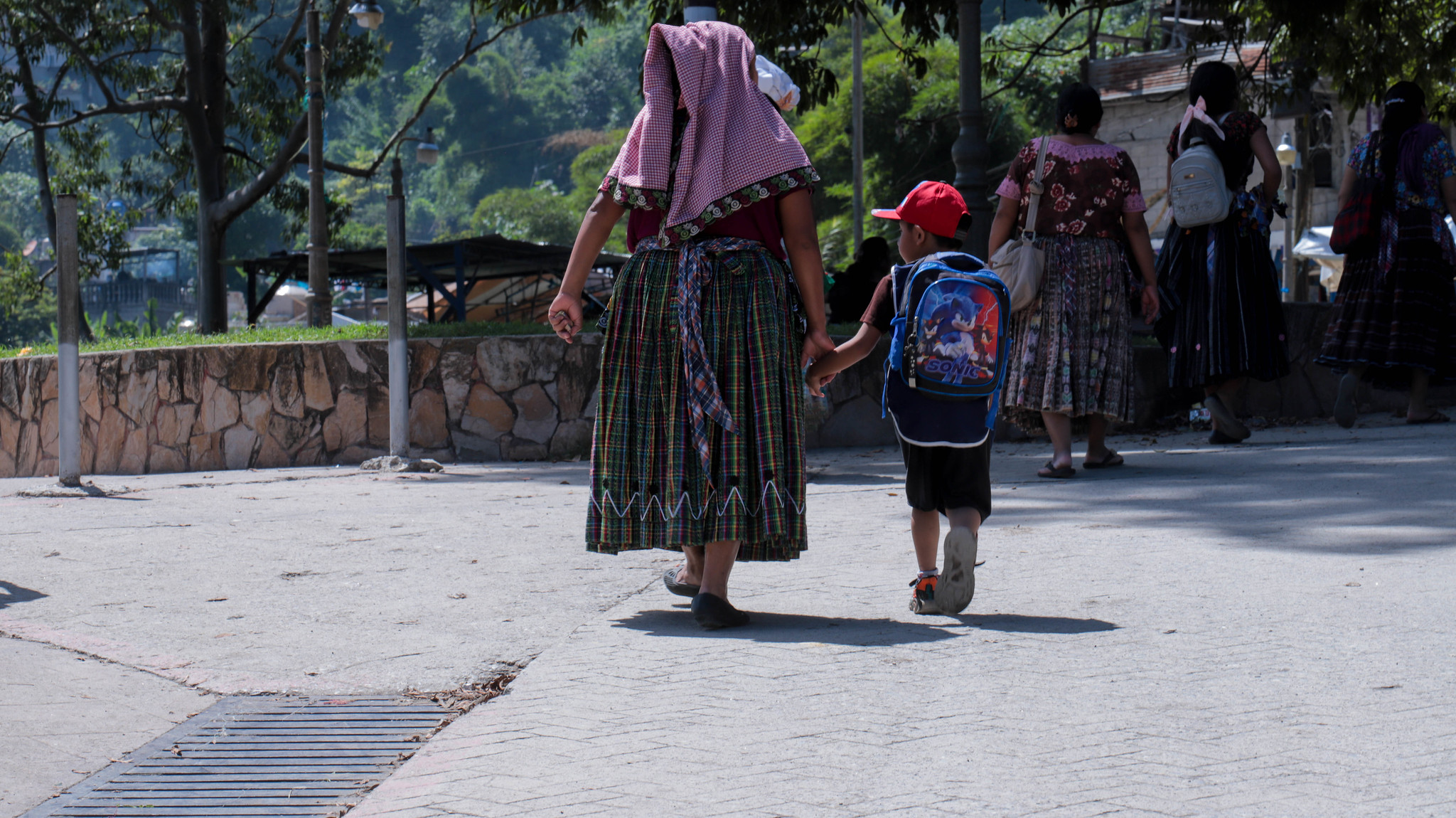
Photo: Mario Winter.
Voices for the Motagua River: Olga Vázquez.
Voices for the Motagua River: Nazario Pascual.
In early 2000, the Maya community organized to stop sand mining on their territory. At that time, the companies held mining permits that remained valid through 2021 and 2022. And although the permits expired, some companies continued to operate after requesting extensions. In June 2022, the indigenous authorities of the Poqomam people began a sit-in protest in front of the Piedrinera San Luis company, which they maintained for four years.
In July 2024, the Special Rapporteur on Economic, Social, Cultural, and Environmental Rights of the IACHR visited Santa Cruz Chinautla. During his visit, traditional authorities and community members spoke about the environmental, water-related, health, economic, and cultural impacts of the pollution in their rivers.
That same year, in October, the community—with support from AIDA, the Indigenous Peoples’ Law Firm, and partner organizations—filed a lawsuit (petition for amparo) against the municipality of Chinautla over its failure to take measures to address the contamination of its rivers and soil caused by improper solid waste management and the existence of illegal landfills.
AIDA’s scientific team, together with local residents and community authorities, collected key information on illegal landfills in the area. This community science initiative supported the litigation by highlighting the severity of the pollution, demonstrating the ongoing use of such practices, and providing evidence of the municipal authorities’ failure to fulfill their legal obligations regarding waste management.
Learn more about this community science initiative.
In June 2025, the Poqomam community won the support of the Guatemalan justice system when a constitutional court ordered the municipality of Chinautla to effectively address the claims in the lawsuit aimed at stopping the pollution of the rivers and soil in Santa Cruz Chinautla.
This is the first time a Guatemalan court has recognized a community's right to a healthy environment and its central role in finding solutions.
Find out the details of the legal victory.
Current situation
Since the ruling was issued, the municipality of Chinautla has held a series of “technical working groups” with representatives from the central government, civil society, and the community. A smaller group of technical experts was later created to develop a work plan with clear goals. Several months have passed without the municipality convening these working groups.
Furthermore, in December 2025, the IACHR noted in its report Human Rights Situation in Guatemala that the Motagua River basin is facing a severe pollution crisis that has had profound impacts on biodiversity and has resulted in systematic violations of the human rights of local communities, including the Maya Poqomam people.
And in May 2026, the Ministry of the Environment and Natural Resources revoked the license of the sand mining company Piedrinera San Luis for "failure to comply with environmental commitments."
AIDA continues to monitor the implementation of the court ruling to ensure the right to a healthy environment for the Poqomam Maya community and all those living in the Motagua River basin. Meanwhile, the residents of Santa Cruz Chinautla remain organized and mobilized to improve their environment and defend their rights.
Related projects
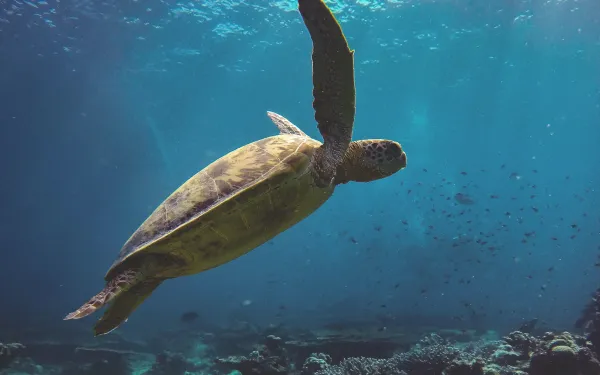
Agreement reached to advance High Seas Treaty
New Treaty agreed to protect half the planet but formal adoption still required. Late this evening governments meeting at the United Nations in New York reached agreement on key substantive issues for a new treaty to protect high seas marine life. To ensure this hard won progress is not lost, The High Seas Alliance is calling for the UN to conclude the formalities of adoption as soon as possible in the final resumed session. "Following a two week long rollercoaster ride of negotiations and super-hero efforts in the last 48 hours, governments reached agreement on key issues that will advance protection and better management of marine biodiversity in the high seas," said Rebecca Hubbard, Director of the High Seas Alliance. The high seas, the area of ocean that lies beyond countries’ national waters, is the largest habitat on Earth and home to millions of species. With currently just over 1% of the high seas protected, the new treaty will provide a pathway to establish marine protected areas in these waters. It is also a key tool to help deliver the recently agreed Kunming-Montreal target of at least 30% protection of the world’s ocean by 2030 that was just agreed in December- the minimum level of protection scientists warn is necessary to ensure a healthy ocean. But time is of the essence. The new Treaty will bring ocean governance into the 21st century, including establishing modern requirements to assess and manage planned human activities that would affect marine life in the high seas as well as ensuring greater transparency. This will greatly strengthen the effective area-based management of fishing, shipping and other activities that have contributed to the overall decline in ocean health. The issue of sufficient financing to fund the implementation of the treaty, as well as equity issues surrounding the sharing of benefits from marine genetic resources was one of the key sticking points between North and South throughout the meeting. However, right up to the final hours of the meeting, governments were able to land an agreement that provided for equitable sharing of these benefits from the deep sea and high seas. "It’s been a very long journey to get to a treaty. We will be looking to the 52 states that make up the High Ambition Coalition to lead the charge to adopt, ratify and identify important high seas areas to protect," said Hubbard. High Seas Alliance Member Quotes Gladys Martínez de Lemos, Executive Director, Interamerican Association for Environmental Defense (AIDA): "Governments have taken an important step that strengthens the legal protection of two-thirds of the ocean and with it marine biodiversity, the livelihoods of coastal communities and global food sovereignty. The agreement sets out a path for establishing areas of high and full protection on the High Seas, as well as for the environmental assessment of projects and activities that may harm this vast area." Laura Meller, oceans campaigner, Greenpeace Nordic: "This is a historic day for conservation and a sign that in a divided world, protecting nature and people can triumph over geopolitics. We praise countries for seeking compromises, putting aside differences and delivering a treaty that will let us protect the oceans, build our resilience to climate change and safeguard the lives and livelihoods of billions of people. We can now finally move from talk to real change at sea. Countries must formally adopt the treaty and ratify it as quickly as possible to bring it into force, and then deliver the fully protected ocean sanctuaries our planet needs. The clock is still ticking to deliver 30x30. We have half a decade left, and we can’t be complacent." Matthew Collis, Deputy Vice President for Policy, IFAW: "The agreement of a new Treaty to conserve the high seas is a wonderful way to celebrate World Wildlife Day for ocean animals and their high seas homes. IFAW congratulates governments on this significant step, which charts a course to protect 30% of the ocean by 2030. To achieve 30x30, governments must now adopt, ratify and implement the new Treaty without delay." Minna Epps, Director of Global Marine and Polar Programme, IUCN: "The High Seas Treaty opens the path for humankind to finally provide protection to marine life across our one ocean. Its adoption closes essential gaps in international law and offers a framework for governments to work together to protect global ocean heath, climate resilience, and the socioeconomic wellbeing and food security of billions of people." Lance Morgan, President, Marine Conservation Institute: "Coming on the heels of the Global Biodiversity Framework, this historic agreement is a huge step towards ensuring marine protected areas in the High Seas and reaching 30x30." Lisa Speer, Director of the International Ocean program, Natural Resources Defense Council (NRDC): "This text provides the basis for protecting key biodiversity hotspots in the high seas. We now have a pathway to achieve the goal of meaningfully protecting at least 30% of the ocean by 2030, a goal that scientists tell us is crucial to maintaining ocean health in the face of ocean warming, acidification and other impacts of climate change. Now let’s get started." Fabienne McLellan, Managing Director, OceanCare: "This Treaty will be the game-changer the ocean urgently needs. We particularly welcome the conservation focused elements, such as environmental impact assessments. EIAs are one of the most effective and important mechanisms to prevent, mitigate and manage harmful activities in cases where there is severe harm to marine life through, for instance, underwater noise pollution. While we advocated for more ambition in the EIA provisions, these requirements will nevertheless strengthen ocean conservation." Susanna Fuller, VP Conservation and Projects, Oceans North: "Following the Kunming Montreal Agreement, which sets out a global path for biodiversity protection, this treaty will bring a similar ambition to the high seas. Because Canada’s waters are bounded by three international ocean basins, it has an outsized role in ensuring that the treaty is fully implemented, once formally adopted." Liz Karan, Director of Ocean Governance project, Pew: "The effective implementation of this landmark treaty is the only pathway to safeguard high seas biodiversity for generations to come and provides a pathway for nations to fulfill the 30 by 30 target. Governments and civil society must now ensure that the agreement is adopted and rapidly enters into force." Christopher Chin, Executive Director, The Center for Oceanic Awareness, Research, and Education (COARE): "With this finalized text, the world is now one great step closer to embracing the importance of the High Seas, and to achieving the 30x30 objectives. Once adopted, however, member States must still ratify the treaty, and we call upon them to do so swiftly." Andrew Deutz, Director of Global Policy, Institutions & Conservation Finance, The Nature Conservancy: "While the treaty leaves room for improvement, we should nevertheless celebrate the fact that –after more than a decade of discussions and three concerted attempts to wrestle it across the line – we finally have a global framework in place for the conservation and sustainable use of biodiversity for almost half of our planet’s surface. Whether this has arrived in time to slow the accelerating ecological crisis happening in our ocean will depend on how quickly countries can ratify the treaty at national level and start mainstreaming ambitions like 30x30 into both their own decision-making, and that of the global bodies which manage human activity on the high seas. If they can do so swiftly, putting people and planet above politics, we may yet have a chance to move beyond the damaging status quo and into a new era of nature-positive stewardship for this most critical of ecosystems." Farah Obaidullah, Ocean Advocate and Founder, Women4Oceans: "This is an historic moment for humanity and for the protection of all living beings in our global ocean. A rare and welcome moment of hope for all of us rightfully concerned with the state of the world. Almost half our planet will now have a chance of some sort of protection from the ever-increasing onslaughts to the ocean. This treaty comes not a moment too soon. With the climate and global wildlife crises worsening and a reckless new industry of deep-sea mining on the horizon, we cannot afford any delays in putting this treaty into force." Press contacts: Patricia Roy (EU), +34 696 905 907 Michael Crocker (US), +1 (207) 522-1366 Mirella von Lindenfels, + 44 7717 844 352 Julio Whalen-Valeriano (UN), +1 (850) 292-4689
Read more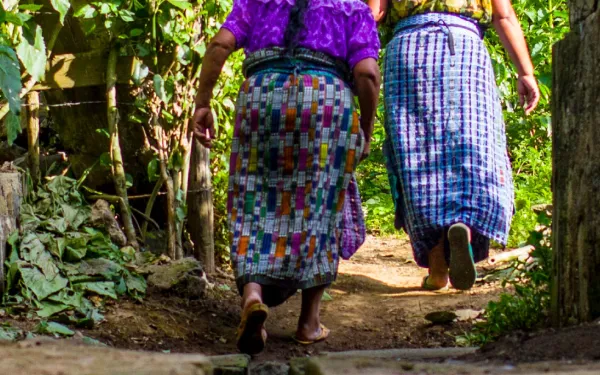
Open Letter from Civil Society Organizations to the President of the Inter-American Development Bank
The undersigned group of civil society organizations greet you as you begin your term as President of the Inter-American Development Bank. We extend to you our best wishes as you assume this task of great responsibility for the people of Latin America and the Caribbean.We take this opportunity to introduce ourselves and express our willingness to continue contributing to the Bank's actions pursuing the region's development. Since 2017, our organizations have been monitoring and making recommendations on the IDB policies and projects, in partnership with local communities and populations. In particular, we promote the Bank’s establishment of better social and environmental policies and practices, as well as adequate and transparent spaces for participation that allow improving the IDB's link and interaction with civil society. To mention just a few examples, we highlight our contributions to the Environmental and Social Policy Framework (ESPF), to the updates of the MICI policy and in the accompaniment of specific cases, and in the revision process of the Access to Information Policy and in the dialogues on the IDB-Amazon Initiative.In conjunction, we are permanently monitoring the Bank's policies and investments throughout the region, including in projects involved in the response to and recovery from the Covid pandemic and many others.We consider it essential that the Bank strengthen its practices and operations, facilitating the promotion and respect for human rights, with special attention paid to the needs of communities and indigenous peoples who are at the forefront in the defense of nature, as well as the protection of key ecosystems in the fight against climate change.Given the relevance of public participation in promoting full development, we reiterate our request to the Bank to generate constructive and lasting participation mechanisms. In particular, we request that the space for dialogue with civil society be reopened in the framework of the next IDB Annual Meetings. This space was a traditional practice that was interrupted in 2014 and has not been resumed to date.We understand that a space for IDB articulation with civil society (social organizations and movements, Indigenous groups, and others who are affected) is not only a good practice that other multilateral agencies are already implementing, but would also contribute to advance the objectives of your administration. As stated in your inaugural speech last January, you stressed your desire to "seize all opportunities for dialogue" and collaborate with different actors to address the most pressing problems of our region.Thus, your administration has an historic opportunity to generate greater openness towards civil society organizations and communities potentially affected by Bank-financed operations. We believe that this demand can no longer be postponed, and that this long-standing claim must be addressed in order to strengthen the work together with the peoples of the region.We remain at your disposal to discuss the points raised in this letter and other matters of common interest at your convenience. Kind regards, Accountability CounselAMATE El SalvadorArticulación Salvadoreña de Sociedad Salvadoreña de Sociedad Civil para la Incidencia en las Instituciones Financieras Internacionales (ASIFI)Asociación Ambiente y Sociedad (Environment and Society Association)Interamerican Association for the Defense of the Environment (AIDA)International Accountability ProjectBank Information CenterCenter for International Environmental Law (CIEL)Coalition for Human Rights In DevelopmentCohesión Comunitaria e Innovación Social A.C. (Mexico)Conectas Direitos HumanosDerecho, Ambiente y Recursos Naturales (DAR, Perú)Ecoa - Ecology and ActionFoundation for the Development of Sustainable Policies (Fundeps)CAUCE Foundation: Environmental Culture - Causa Ecologista (Argentina)Gender ActionInternational RiversMesa de Discapacidad y Derechos (Perú)International Platform against ImpunityProtection International MesoamericaSociedad y Discapacidad - SODIS (Perú)Sustentarse (Chile)Wetlands International / Fundacion Humedales (Argentina) Read and download the letter
Read moreOpen Letter from Civil Society Organizations to the President of the Inter-American Development Bank
The undersigned group of civil society organizations greet you as you begin your term as President of the Inter-American Development Bank. We extend to you our best wishes as you assume this task of great responsibility for the people of Latin America and the Caribbean.We take this opportunity to introduce ourselves and express our willingness to continue contributing to the Bank's actions pursuing the region's development. Since 2017, our organizations have been monitoring and making recommendations on the IDB policies and projects, in partnership with local communities and populations. In particular, we promote the Bank’s establishment of better social and environmental policies and practices, as well as adequate and transparent spaces for participation that allow improving the IDB's link and interaction with civil society. To mention just a few examples, we highlight our contributions to the Environmental and Social Policy Framework (ESPF), to the updates of the MICI policy and in the accompaniment of specific cases, and in the revision process of the Access to Information Policy and in the dialogues on the IDB-Amazon Initiative.In conjunction, we are permanently monitoring the Bank's policies and investments throughout the region, including in projects involved in the response to and recovery from the Covid pandemic and many others.We consider it essential that the Bank strengthen its practices and operations, facilitating the promotion and respect for human rights, with special attention paid to the needs of communities and indigenous peoples who are at the forefront in the defense of nature, as well as the protection of key ecosystems in the fight against climate change.Given the relevance of public participation in promoting full development, we reiterate our request to the Bank to generate constructive and lasting participation mechanisms. In particular, we request that the space for dialogue with civil society be reopened in the framework of the next IDB Annual Meetings. This space was a traditional practice that was interrupted in 2014 and has not been resumed to date.We understand that a space for IDB articulation with civil society (social organizations and movements, Indigenous groups, and others who are affected) is not only a good practice that other multilateral agencies are already implementing, but would also contribute to advance the objectives of your administration. As stated in your inaugural speech last January, you stressed your desire to "seize all opportunities for dialogue" and collaborate with different actors to address the most pressing problems of our region.Thus, your administration has an historic opportunity to generate greater openness towards civil society organizations and communities potentially affected by Bank-financed operations. We believe that this demand can no longer be postponed, and that this long-standing claim must be addressed in order to strengthen the work together with the peoples of the region.We remain at your disposal to discuss the points raised in this letter and other matters of common interest at your convenience. Kind regards, Accountability CounselAMATE El SalvadorArticulación Salvadoreña de Sociedad Salvadoreña de Sociedad Civil para la Incidencia en las Instituciones Financieras Internacionales (ASIFI)Asociación Ambiente y Sociedad (Environment and Society Association)Interamerican Association for the Defense of the Environment (AIDA)International Accountability ProjectBank Information CenterCenter for International Environmental Law (CIEL)Coalition for Human Rights In DevelopmentCohesión Comunitaria e Innovación Social A.C. (Mexico)Conectas Direitos HumanosDerecho, Ambiente y Recursos Naturales (DAR, Perú)Ecoa - Ecology and ActionFoundation for the Development of Sustainable Policies (Fundeps)CAUCE Foundation: Environmental Culture - Causa Ecologista (Argentina)Gender ActionInternational RiversMesa de Discapacidad y Derechos (Perú)International Platform against ImpunityProtection International MesoamericaSociedad y Discapacidad - SODIS (Perú)Sustentarse (Chile)Wetlands International / Fundacion Humedales (Argentina) Read and download the letter
Read more